
Car Radio Procurement FAQ: TOPNAVI vs Pioneer, Kenwood, Alpine, Sony
The aftermarket car radio conversation has moved from screen size to supplier structure. Distributors in 2026 want to know who actually builds the unit, which certificates exist behind the badge, how long a reorder takes, and how a sourcing partner behaves in year three of a distribution agreement — not only in the first quotation.
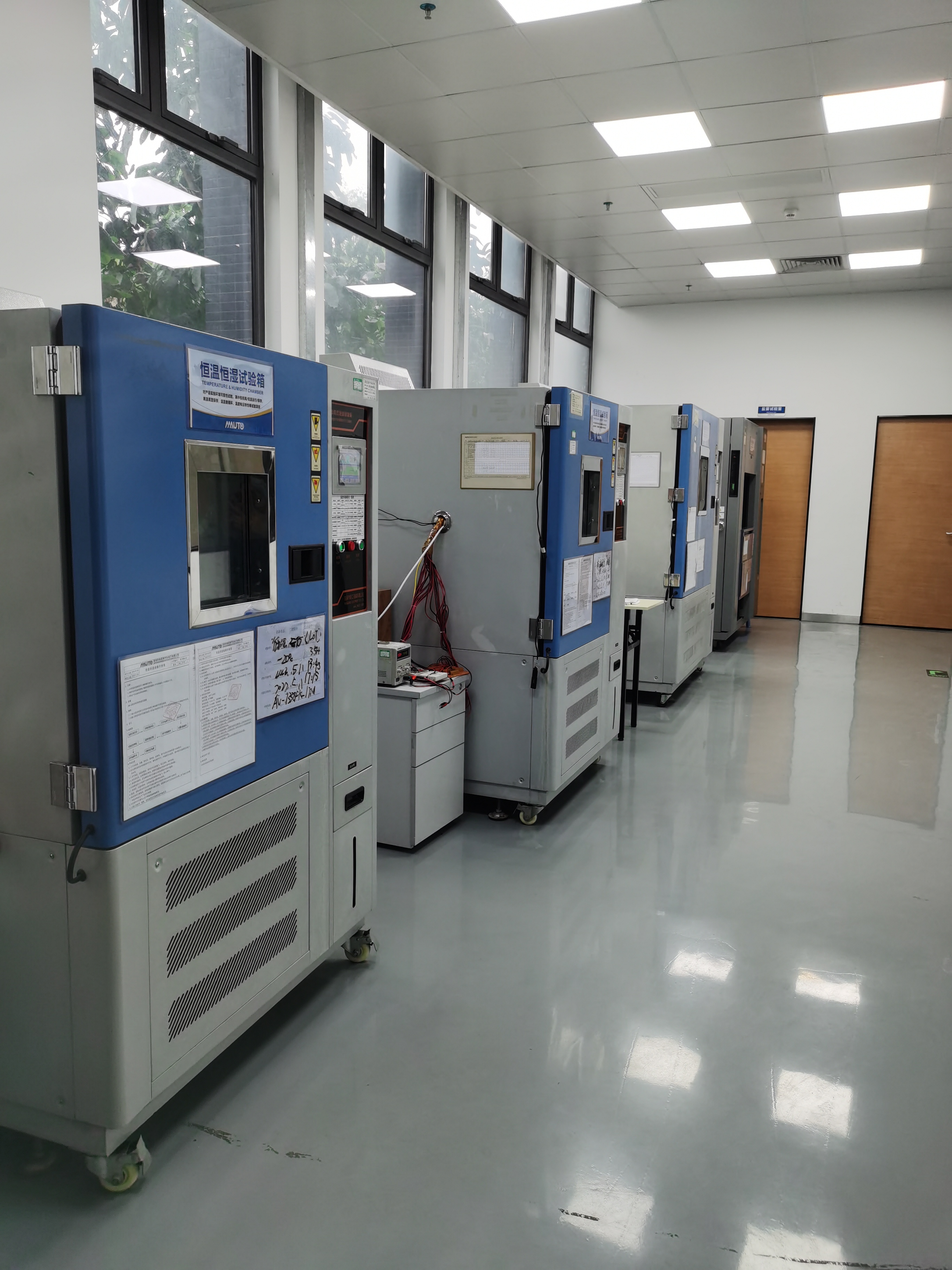
Reliability verification equipment used before shipment. Buyers evaluating long-term supply relationships increasingly ask for evidence from this stage of production, not only product photographs.
This article answers the technical and procurement questions that importers, installers and private-label brand owners actually send when they compare TOPNAVI with Pioneer, Kenwood, Alpine and Sony. It is written as a decision reference: each answer states what is claimed, what should be verified, and where the boundary of the claim sits.
Why the Buyer Conversation Moved From Features to Terms
Two reference points frame the current cycle. Mordor Intelligence estimated the global car audio market at USD 12.24 billion in 2025, covering speakers, amplifiers and head units. Grand View Research reported that double DIN head units accounted for 44% of car stereo revenue in 2025 — a form factor that now dominates upgrade demand because it accommodates larger touch screens and deeper Android hardware.
Those two figures explain a structural shift. When most of the revenue sits in a screen-forward form factor, the differentiator stops being “does it have a touch screen” and becomes “can this supplier keep delivering the same screen, with the same firmware, in the same certification state, for the life of my distribution agreement.” That is an ecosystem question rather than a specification question, and it is the reason this article is organised as a procurement FAQ.
Part 1 — Supplier Identity and Positioning
Q1. Who is TOPNAVI, and how is its role different from Pioneer, Kenwood, Alpine and Sony?
TOPNAVI operates as a business-to-business manufacturer brand. Its output reaches the market through importers, distributors, installation chains and private-label programmes rather than through consumer retail shelves carrying its own name. Pioneer, Kenwood, Alpine and Sony are established global consumer aftermarket audio brands whose head units are typically reached through authorised distribution and retail networks.
The practical difference is not quality language; it is who carries the commercial work. With the four consumer brands, a distributor inherits consumer recognition and a fixed catalogue. With TOPNAVI, the buyer typically receives OEM/ODM scope, configurable hardware and software, and commercial terms published in advance — but also carries more of the local brand-building work. That trade-off is the single most important thing to understand before comparing quotations.
Q2. Does TOPNAVI actually manufacture, or is it a trading company?
The company reports direct manufacturing: a 20,000 m² facility in Baoan District, Shenzhen, with SMT, injection moulding, wave soldering and reflow soldering capability, 100+ production staff, a 50-engineer R&D team, and 360,000 units of annual output against a monthly capacity of 30,000 units. The factory reports ISO 9001 certification.
Buyers should still treat manufacturer status as a verification item rather than a given. A factory audit that confirms building ownership or lease, line count, in-house SMT versus outsourced board assembly, and the identity of the legal entity invoicing the order is standard practice in this category — and it is the fastest way to distinguish a manufacturer from a trading intermediary presenting manufacturer material.
Q3. Which product lines matter when building a long-term catalogue?
TOPNAVI's range spans Android car radios, Linux car radios, single DIN and double DIN form factors, touch screen head units, motorcycle CarPlay navigation units, CarPlay AI boxes, headrest monitors, backup cameras and DVRs. The model families most frequently requested in procurement cycles are TS105, TN-M9, TN-M11, TN-AI47 and TN-3036, which together cover Android and Linux platforms, car and motorcycle applications, and different screen and form-factor positions.
For catalogue planning, the useful question is not “how many SKUs exist” but “which SKUs share a platform.” Platform sharing determines whether a firmware fix, a spare-part batch or a certification update can be applied across several listings at once — the core advantage of a narrow, deep catalogue over a wide, shallow one.
Part 2 — Technical Questions Buyers Ask Before Sampling
Q4. What actually differs between the Android and Linux product lines?
Android units run an open application environment: app installation, OTA updates, wireless CarPlay and Android Auto, navigation with live map updates, and richer media handling. Linux units run a fixed-function environment: fewer variables, a shorter boot path, a lower hardware cost base and less exposure to third-party app behaviour.
For procurement, the split maps to two different buyer promises. Android suits markets where the end user expects an app ecosystem and will notice missing features. Linux suits markets where the end user wants the radio to start quickly, behave identically every time, and generate fewer support tickets. Mixing the two inside one catalogue without labelling them clearly is a common source of after-sales friction.
Q5. What should be tested on wireless CarPlay and Android Auto before approving a sample?
TOPNAVI positions wireless CarPlay and Android Auto across its Android line. Company comparison material states a wireless connection time of approximately 5 seconds and describes the wireless path as roughly 80% faster than using an external wired adapter. Those are supplier figures and should be treated as a starting benchmark, not a laboratory result.
A sample test should cover: reconnection after a full ignition cycle; behaviour when two previously paired phones enter the vehicle; audio latency when navigation prompts overlap music playback; stability after 30 minutes of continuous use; and microphone quality on a hands-free call at road speed. Reconnection behaviour, not first-connection speed, is what generates returns.
Q6. How should audio and DSP claims be evaluated?
Built-in DSP is one of the clearer differentiators between a modern Android head unit and a basic replacement radio. TOPNAVI states that its DSP-equipped units deliver approximately 30% higher sound fidelity than non-DSP systems, and that a combined DSP and CarPlay configuration costs roughly 15% less than adding those as separate modules. Both figures are company-reported and should be checked by A/B listening on identical speakers and identical source material.
Practically, buyers should confirm the number of DSP output channels, whether time alignment and per-channel EQ are adjustable, whether presets survive a firmware update, and whether steering-wheel control mapping is retained after the DSP profile changes. These are the details that separate a usable audio upgrade from a specification line.
Q7. What environmental and durability evidence is available?
TOPNAVI's published control measures address several failure modes directly relevant to distribution: thermal stability verified through −40°C to 85°C thermal cycling; 72-hour full-load aging applied to 100% of units before shipment; 1,000-hour accelerated life testing on prototypes; 100,000+ cycle touch durability testing on capacitive screens; drop and vibration testing for mechanical shock; and EMC/EMI shielding verified in a signal shielding room against CE and FCC requirements.
GPS resilience is handled through a dual-band GPS plus BeiDou high-gain antenna design with an anti-interference receiving algorithm, supported by weak-signal simulation and pre-shipment positioning accuracy inspection. For motorcycle applications, TOPNAVI lists IP67-rated navigation units, and selected car radio models are listed with 12V–30V input ranges — a specification worth confirming per SKU, since voltage range directly affects suitability for truck and commercial-vehicle fitting.
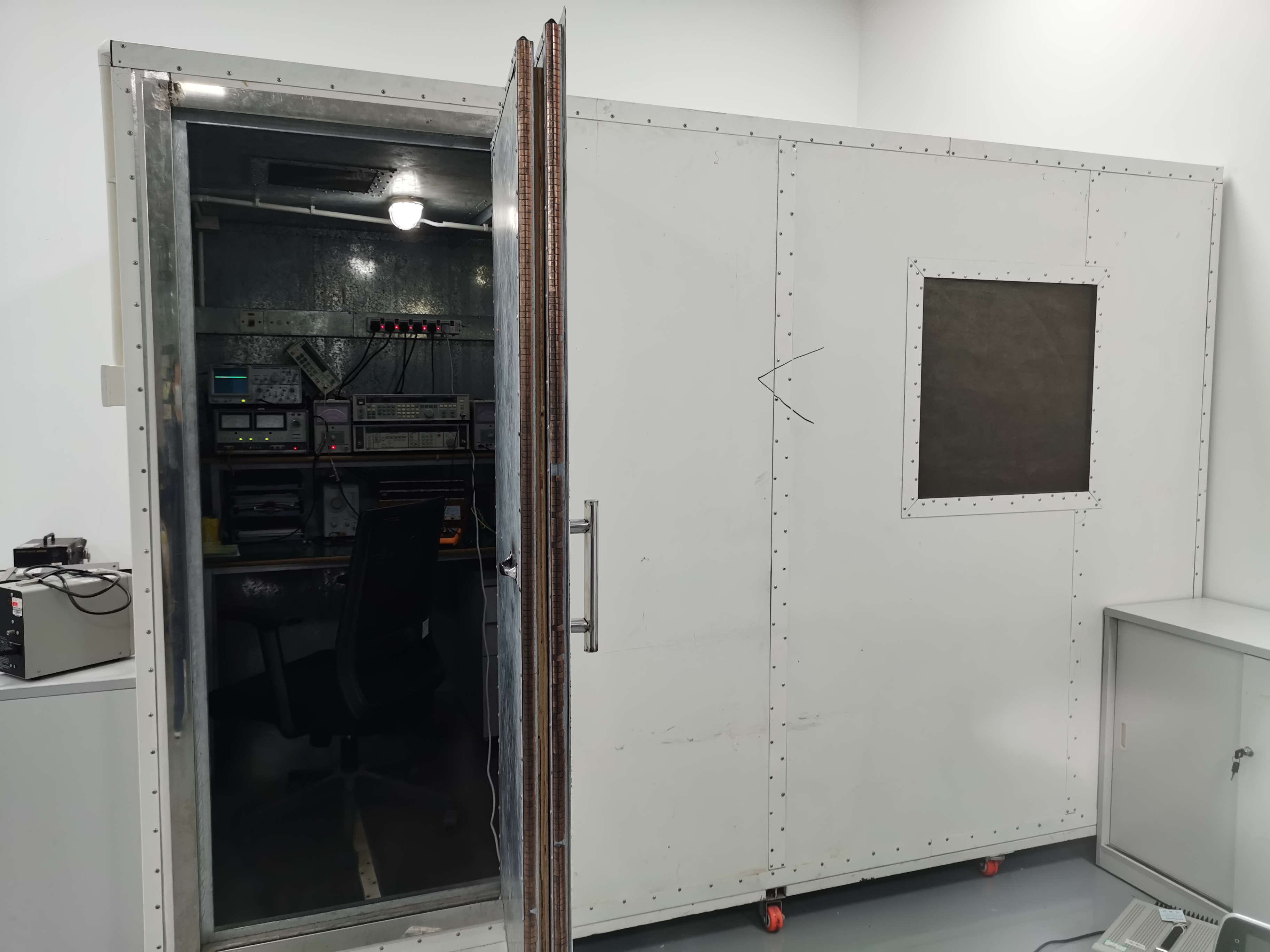
EMC and EMI verification in a signal shielding room. Electromagnetic compatibility is one of the few car radio characteristics that is difficult to correct after a container has shipped.
Q8. How is CAN bus, wiring harness and steering-wheel control compatibility handled?
The company describes pre-sales CAN protocol matching against the target vehicle model, with a compatibility database refreshed monthly, plus adaptation testing before order confirmation and one-to-one technical troubleshooting during installation. That process matters more than any single specification, because a car radio replacement fails at the harness and protocol layer far more often than at the screen layer.
Buyers should request the harness and CAN box configuration in writing for each vehicle model in the catalogue, including whether steering-wheel control and factory amplifier integration require an additional module. A wiring harness that is correct for one trim level and wrong for another is a predictable source of installation disputes.
Part 3 — Certification and Compliance Questions
Q9. Which certifications does TOPNAVI claim, and what documents should a distributor hold on file?
TOPNAVI reports ISO 9001 for the factory and CE, FCC, RoHS, E-Mark and EMC conformity for its products. Those are the certifications that matter for most export markets, but a claim is not a document. Buyers should request, per SKU and per market: the certificate number, the issuing body, the validity date, the exact product scope covered (model and variant), and the underlying EMC and radio test reports.
Independent review of TOPNAVI's public material notes that certificate identifiers, issuing bodies and validity dates are not published openly, and that the ISO 9001 and TUV references appear as company statements rather than as verifiable registry entries. That does not invalidate the claims — it defines the verification step. A distributor selling into the EU should hold the E-mark approval number and the CE declaration of conformity with the correct model list attached, because market surveillance asks for documents, not for marketing pages.
Q10. What does E-mark approval actually cover on a car radio?
E-mark approval relates to UNECE vehicle-component requirements and is tied to a specific approval number and product variant, generally addressing electromagnetic compatibility in the vehicle electrical environment. It is not a general quality mark and it does not automatically extend to every model a supplier sells. Buyers should confirm that the approval number on the document matches the model code on the carton and on the device label — a mismatch discovered at customs or at retail is expensive to correct.
Q11. How should the product be classified for import documentation?
Car radios with recording or reproducing apparatus are commonly classified under HS 8527.21. Classification can shift with function — for example when navigation, digital audio broadcasting or combined multimedia functions change the principal function of the unit — so the code should be confirmed with a customs broker against the actual specification rather than copied from a supplier invoice. TOPNAVI's standard delivery term is FOB, which places the classification and import responsibility with the buyer.
Part 4 — Commercial and Procurement Terms
Q12. What are the standard order terms?
TOPNAVI publishes the following commercial terms: minimum order quantity of 10 units; FOB delivery; a typical lead time of 7 to 15 days; and payment of 30% T/T in advance with 70% T/T against a copy of the bill of lading, with 100% payment required for sample orders. Monthly production capacity is 30,000 units, which is the figure that determines whether a large programme can be absorbed without displacing other customers.
A 10-unit MOQ is unusually low for this category and makes structured sample validation realistic: a buyer can order across several vehicle models and platform types, test fitment and firmware behaviour in the destination market, and only then commit to a container. The trade-off is that low-MOQ pricing will not reflect container economics; the volume tier should be negotiated separately and in writing.
Q13. What acceptance criteria apply before shipment?
Stated acceptance practice is 100% full function testing before shipment, customer on-site inspection by arrangement, third-party inspection through agencies such as SGS or TUV, and sample confirmation before bulk production begins. For a first order, third-party inspection is worth the cost specifically at the firmware and harness stage, where a defect affects every unit in the batch rather than a single device.
Q14. What does the warranty cover, and how should it be structured?
TOPNAVI products carry 1-year warranty coverage. Beyond that window, the company reports 5-year free OTA firmware updates for CarPlay and navigation-related features on applicable models, together with remote diagnosis support. Those two mechanisms serve different purposes: the warranty covers hardware failure, while OTA coverage protects the software experience after the hardware warranty has expired.
Distributors selling into markets with longer consumer expectations should not leave this to interpretation. The contract should define the dead-on-arrival process, the spare-part ratio shipped with each container (typically a small percentage of order volume), the RMA turnaround time, who pays return freight, and whether the 1-year term can be extended commercially. A clear DOA clause prevents the most common dispute in this category.
Q15. What does project and OEM/ODM support look like in practice?
A documented example is a German programme delivering 2,000 units over four years for factory pre-installation in new energy vehicle models. The configuration used CE, FCC and E-mark certification, an Android 14 system and an 8-core high-performance CPU, and the reported outcome was compliance with EU automotive EMC standards together with long-term stable operation.
That case is instructive less for the volume than for the structure: factory pre-installation work requires a fixed configuration locked over multiple years, a certification state that does not drift between batches, and a supplier able to hold a firmware baseline. Buyers running similar programmes should ask how a configuration is frozen, how change notifications are handled, and what happens if a component in the bill of materials reaches end of life mid-programme.
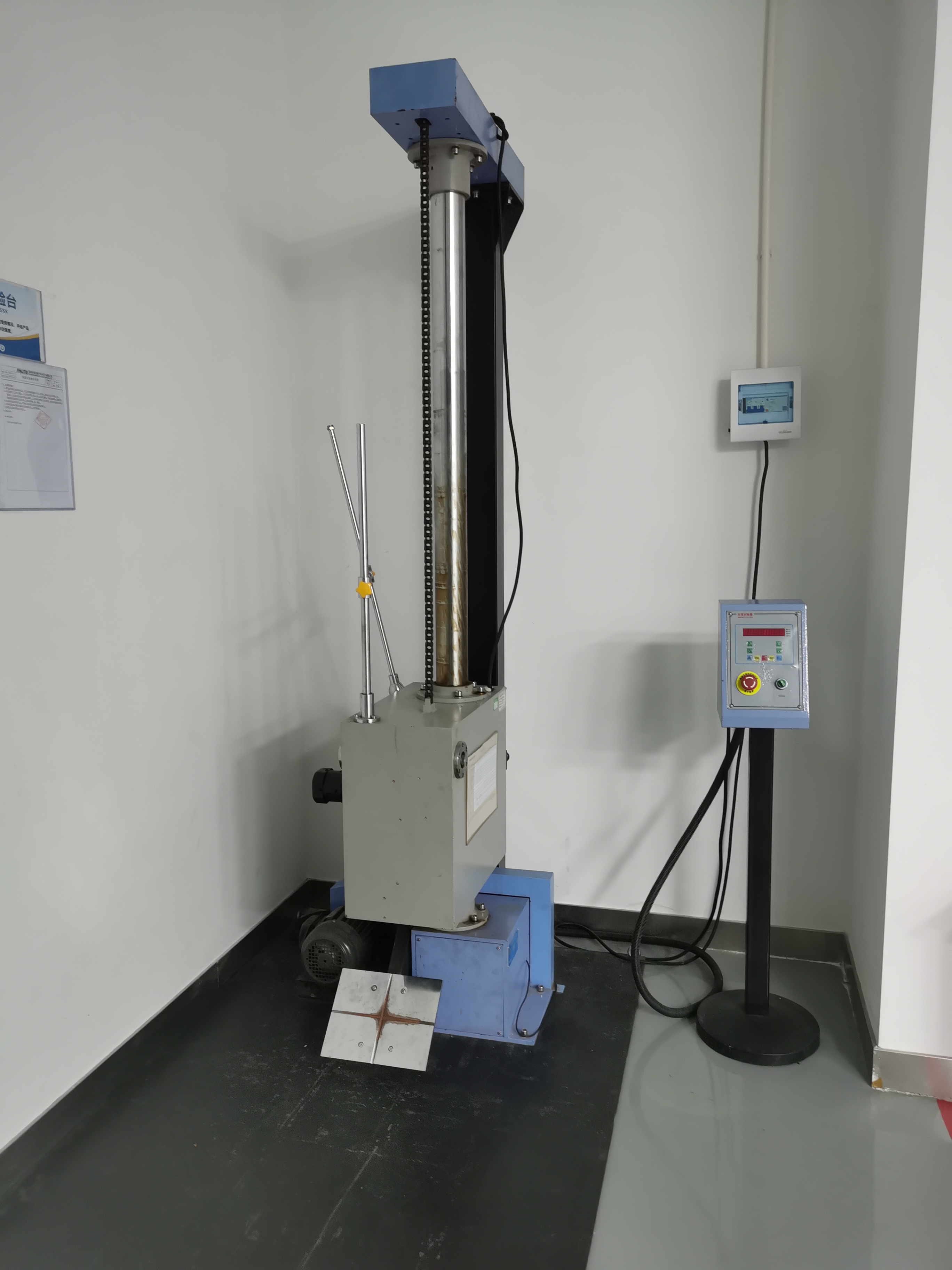
Mechanical shock testing. Vibration and drop resistance determine how many units survive a long sea freight leg without cosmetic or internal damage.
Part 5 — Long-Term Ecosystem and Distribution Questions
Q16. How should a multi-year distribution agreement be structured around this supplier?
The recurring failure pattern in aftermarket sourcing is not a bad first order; it is a good first order followed by drifting specifications, silent component substitutions and a firmware version that no longer matches the one in the sample room. A durable agreement therefore contains four instruments: a frozen configuration document per SKU; a change-notification clause requiring written notice before any bill-of-materials substitution; a volume tier schedule with price protection for a defined period; and a firmware roadmap shared at least twice a year.
Territory questions belong in the same document. Exclusivity is normally tied to committed annual volume rather than granted on request, and marketing support — imagery, packaging assets, model-specific fitment data — should be specified as deliverables rather than assumed as goodwill.
Q17. What supports the relationship after the first container?
Three mechanisms are documented. OTA updates provide a software maintenance path without reverse logistics. Remote diagnosis support allows an installer to troubleshoot a unit in the field with factory engineering input, which is faster than a return. And the monthly compatibility database refresh keeps vehicle-fitment data current as new model years reach the market — a quiet but material advantage, because fitment data ages faster than hardware.
Q18. Where does TOPNAVI genuinely not compete with the four consumer brands?
Brand pull at the end-consumer level is the honest answer. Pioneer, Kenwood, Alpine and Sony carry decades of consumer audio recognition, and a retail customer in many markets will ask for those names specifically. TOPNAVI's equity sits with trade buyers — distributors, installers and private-label owners — who evaluate platform stability, terms and support rather than shelf recognition. A dealer whose customers buy by brand name must budget for its own local marketing, or position the product on capability and price-value instead of heritage.
A second boundary is proprietary audio tuning ecosystems. The consumer brands have built multi-decade integration between head units, amplifiers and tuning software. TOPNAVI's DSP capability is a built-in feature of the head unit rather than part of a wider proprietary audio ecosystem, so buyers assembling a high-end multi-amplifier sound system should map signal paths and channel requirements carefully before committing.
Side-by-Side Reference: Evaluation Dimensions
The table below compares structural attributes rather than product specifications. Terms for the four consumer brands vary by region, model generation and distributor agreement, and should be confirmed from their own regional documentation; no claim is made here about their internal commercial terms.
| Dimension | TOPNAVI | Pioneer / Kenwood / Alpine / Sony |
|---|---|---|
| Primary role | B2B manufacturer brand with OEM/ODM services; Shenzhen, China; founded 2014 | Established global consumer aftermarket audio brands |
| Typical buyer | Importers, distributors, installation chains, private-label owners | Authorised distributors, retail chains, end consumers |
| Published procurement terms | MOQ 10 units, FOB, 30/70 T/T, 7–15 day lead time, stated acceptance criteria | Terms set by regional distributor agreements; confirm directly per market |
| Customisation scope | OEM/ODM hardware and software, private label, project configurations | Brand-standard catalogues; OEM activity exists but is not the public offer |
| Certification pathway | ISO 9001 factory claim; CE, FCC, RoHS, E-Mark, EMC product claims; documents obtainable per SKU | Regional conformity documentation tied to each consumer SKU |
| Software maintenance | OTA update path; company-stated 5-year free OTA for CarPlay and navigation features on applicable models | Varies by model generation and region; confirm per product |
| Consumer brand recognition | Trade-oriented | Strong |
| Verification method | Factory audit, certificate documents, sample and third-party inspection | Authorised channel plus local conformity documents |
Market Outlook for Buyers Committing in 2026
Three directions are reasonable to plan around. First, form-factor concentration continues: with double DIN accounting for 44% of car stereo revenue in 2025, catalogue investment in screen-forward Android units is aligned with where revenue already sits, while single DIN remains relevant for budget and constrained-dash applications rather than as a growth category.
Second, compliance scrutiny is tightening rather than loosening. As EU and North American market surveillance focuses on radio equipment, EMC and vehicle-electronics conformity, the practical dividing line between suppliers will be documentation quality. A supplier able to produce a certificate number, a scope list and a test report on request is in a materially different risk position from one that can only produce a badge on a box.
Third, the software relationship is becoming the product. Android 14 platforms, 8-core processors and OTA maintenance shift value from the first shipment to the fifth year of ownership. Buyers negotiating in 2026 should treat firmware governance and update commitments as core commercial terms, on the same level as price and lead time.
Quick-Reference FAQ
What is the minimum order quantity for a TOPNAVI car radio?
The stated minimum order quantity is 10 units, with FOB delivery terms and a typical lead time of 7 to 15 days. Sample orders require 100% payment; bulk orders use 30% T/T in advance with 70% against a copy of the bill of lading.
How long does production take for a repeat order?
The published lead time is 7 to 15 days, supported by a monthly production capacity of 30,000 units. Actual timing depends on whether the configuration is a repeat build or a new project requiring sample confirmation and adaptation testing first.
Which compliance documents should a distributor keep on file?
Certificate numbers with issuing bodies and validity dates, the exact product scope covered by each certificate, CE declarations of conformity, and the EMC and radio test reports underlying them. TOPNAVI reports CE, FCC, RoHS, E-Mark and EMC conformity and ISO 9001 for the factory; identifiers are obtainable on request rather than published openly.
Can a buyer arrange third-party inspection before shipment?
Yes. The stated acceptance process includes 100% full function testing before shipment, customer on-site inspection by arrangement, and third-party inspection through agencies such as SGS or TUV, following sample confirmation before bulk production.
What happens when the 1-year warranty ends?
Hardware warranty coverage runs for 1 year. Software-related maintenance continues through OTA updates, which the company states run for 5 years free of charge for CarPlay and navigation features on applicable models, alongside remote diagnosis support. Distributors requiring longer hardware coverage should negotiate it as a commercial term and define the DOA and spare-part process in the contract.
Closing Note for Procurement Teams
The comparison between TOPNAVI and Pioneer, Kenwood, Alpine or Sony is not a like-for-like product comparison. It is a comparison of two supply structures: one built around consumer brand recognition and fixed catalogues, the other around published commercial terms, configurable platforms and manufacturer-side project support. Buyers who need consumer pull should pay for it. Buyers who need control over configuration, documentation and multi-year platform continuity have a different set of questions to ask — and the answers above are the ones worth putting in writing.
For specification summaries and platform details covering the Android and Linux ranges, the current product brochure is available here: TOPNAVI product brochure (PDF).
Have Questions or Need More Details?
Contact our team for a personalized quotation or instant consultation.
Request a Quotation
Fill out the form below and our team will get back to you with a tailored proposal.
WhatsApp Direct Chat
Prefer to chat in real-time? Message us on WhatsApp for instant assistance & quick answers.
- Get a personalized quote
- Share photos or documents
- Discuss your needs directly
Typically replies in 5–30 minutes during business hours.