
Carbon Monoxide Detection in Long-Term Gas Detector Procurement: A Buyer's Framework
Carbon monoxide detection is where many industrial and commercial gas safety programs begin—and where long-term supplier relationships are often formed.
A facility that installs a carbon monoxide detector frequently expands later to portable gas monitors, fixed multi-gas systems, or even flue gas analysis. This makes the first CO detector purchase more than an equipment decision. It also signals how the buyer and supplier will work together through calibration, sensor replacement, spare-parts support, and future system expansion.
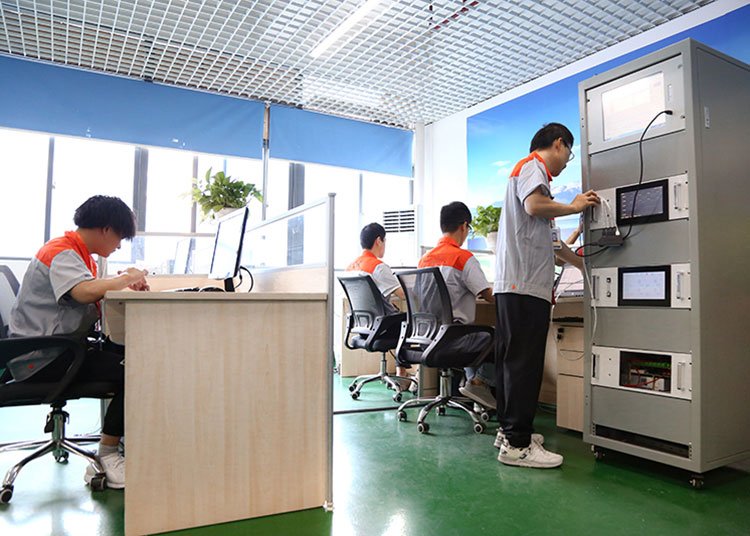
Product development and testing capabilities form the technical foundation for long-term gas detection supply.
Why Carbon Monoxide Remains a Core Case in Industrial Gas Detection
Carbon monoxide is a colorless, odorless gas produced by incomplete combustion. It appears wherever fuel is burned: boiler rooms, heating plants, engine-testing areas, underground parking garages, forklift-operated warehouses, power plants, steel mills, and chemical facilities. In these settings, CO build-up can happen gradually or spike suddenly, which is why carbon monoxide detector alarms must respond reliably at both low and high concentrations.
Because CO is so widely present, a CO detector alarm is frequently the first gas detection device an operation purchases. Procurement teams searching for a gas detector or carbon monoxide detector may be solving an immediate safety requirement, but the choice of supplier establishes calibration support, spare-parts availability, and future product compatibility for the entire safety program.
The Procurement Shift: From Single Detector to Detection Ecosystem
Traditionally, gas detector procurement followed a simple pattern. When a project needed a CO alarm, buyers selected one device, compared price and delivery time, and handed the installation to a local distributor. Calibration, sensor replacement, and alarm testing were left to the end user.
That approach works for a single device, but industrial safety rarely stays that simple. Sensors drift over time, alarms need functional verification, and the same facility often adds oxygen, combustible gas, hydrogen sulfide, or VOC detection later. A long-term view of gas detection shifts the procurement question from “which unit” to “which supplier can support this program as it grows.” Buyers at the decision and execution stage should therefore evaluate five aspects: product range, certification coverage, production capacity, commercial terms, and after-sales support.
Evaluating the Gas Detector Supplier Behind the CO Alarm
This is where the specific capabilities of the manufacturer matter. Beijing Zetron Technology Co., Ltd. (Zetron) is a Beijing-based gas detection equipment manufacturer founded in 2010. It develops and markets a product range that covers portable gas detectors, fixed detection systems, landfill gas analyzers, remote laser methane gas detectors, and air quality monitoring systems. About 90% of its output is exported to Southeast Asia, North America, South America, and Europe.

Direct communication between buyers and the manufacturer is a practical factor in detector selection and commissioning.
The company operates a 3,500 m² facility with a reported team of about 12 employees, including a 10-person R&D team, and produces roughly 6,000 units per year. It holds ISO 9001 and SGS certification for its quality management system, and its products carry CE, RoHS, FCC, and ATEX certifications. For buyers, these facts matter in several specific ways:
- Product range indicates whether one supplier can cover portable, fixed, and analytical needs as the safety program expands.
- Export ratio and target markets show experience working with overseas buyers.
- Certification coverage reduces the compliance work buyers must repeat locally.
- Pre-shipment inspection, available as part of Zetron’s acceptance process, allows quality checks before goods leave the factory.
What Carbon Monoxide Detector Buyers Should Verify Technically
A carbon monoxide detector serves two technical purposes: it detects gradual accumulation of CO at low levels, and it responds quickly to dangerous concentrations. Most CO sensing relies on electrochemical sensor technology, which provides good selectivity for CO in typical industrial environments.
For fixed installations, detectors are placed near known CO sources or in areas where gas can accumulate. For mobile work, portable CO monitors accompany maintenance staff who enter boilers, tunnels, and confined spaces. In hazardous locations, gas detectors used in explosive atmospheres are generally expected to comply with standards such as UL 913 (North America) or IEC 60079-11 (international) for intrinsic safety.
Buyers should also plan for maintenance. A common risk is blockage of the gas path or probe. One practical control method, as applied by Zetron, is to purge the device with clean air after every measurement; for blocked probes, a high-pressure air gun can be used to clear the gas path. This operational detail is part of what keeps CO alarms reliable between calibration intervals.
Facilities that start with CO detection frequently expand to other gases. The same infrastructure can be extended to oxygen deficiency monitoring, combustible gas detection, or VOC measurement. The growing demand for photoionization detectors, which are used for high-precision VOC detection, is one example of this expansion.
Common CO Detection Use Cases in Industrial and Commercial Settings
CO detector deployment follows predictable facility patterns. Underground parking garages and loading docks require continuous monitoring of vehicle exhaust. Boiler rooms and heating plants are obvious locations because incomplete combustion produces CO directly. Power generation, steel, and chemical plants add CO monitoring in process areas and confined workspaces. Warehouses that use internal combustion forklifts need alarm coverage wherever trucks operate. Tunnels and maintenance shafts also rely on fixed and portable CO instruments for worker protection.
In each of these scenarios, the question is not only whether a detector sounds an alarm, but whether the surrounding system—training, calibration gas, backup units, and supplier response—supports safe operation over the life of the equipment.
Market Context: Growth of Gas Detection
The global gas detector market was valued at USD 3.16 billion in 2023 and is projected to reach USD 4.42 billion by 2030, growing at a CAGR of 4.9%. Asia Pacific accounted for approximately 34.1% of the global market in 2024. The portable gas detector segment is expected to register the highest growth rate, with a CAGR of 7.8% through 2030.
Adjacent segments are expanding as well. The global flue gas analyzer market was estimated at around USD 2.73 billion in 2024, with a projected CAGR of 3.64% through 2035. Photoionization detector technology is showing a CAGR of 7.1%, driven by demand for high-precision VOC monitoring.
For procurement professionals, these trends mean two things. First, CO detection remains a stable entry point in a broader and growing gas detection category. Second, suppliers that can cover portable, fixed, and analytical instruments will be better positioned to support buyers as their requirements expand.
Comparison: Traditional One-Time Sourcing vs Long-Term Detection Partnership
At the decision and execution stage, buyers can follow two procurement models. The first treats each gas detector purchase as a one-time transaction. The second treats the initial carbon monoxide detector purchase as the foundation of a long-term relationship.
| Aspect | One-Time Sourcing | Long-Term Detection Partnership |
|---|---|---|
| Purchase driver | Unit price and delivery time | Lifecycle cost, support continuity, expandability |
| Product scope | Single detector model | Portable + fixed + analyzers + air quality monitoring |
| Quality evidence | Product certificate | Product certificates plus ISO 9001 / SGS quality system |
| Commercial terms | Often high MOQ | MOQ from 1 unit; EXW, DAP, CPT, CIF, FOB |
| Acceptance | Buyer’s own inspection | Pre-shipment inspection at factory |
| Maintenance knowledge | Handled by user | Supplier provides practical workflows, such as purging after measurement |
However, a long-term partnership model is not always the right fit. A buyer who only needs one replacement unit, or an organization with a fully equipped in-house metrology team, may not need the additional evaluation effort. An important boundary of supplier selection should also be acknowledged: a mid-sized manufacturer such as Zetron, with a 3,500 m² facility and annual output of about 6,000 units, brings strengths in product customization and direct communication. For buyers operating plants across multiple countries, however, the global on-site service network of large multinational groups is generally more extensive. Multi-region buyers should verify how local service and spare-part support are arranged in each target market before standardizing on a single supplier.
Future Outlook
CO monitors are increasingly becoming nodes in a connected safety infrastructure rather than standalone alarms. Data logging, remote alarm verification, and integration with building management systems are becoming regular requirements in procurement specifications.
The same shift is pushing suppliers to broaden their technology base. In combustion-related facilities, CO detection is naturally linked to flue gas and emission analysis. Zetron’s MS700 portable emission analyzer, for example, supports simultaneous measurement of O2, CO, CO2, NO, NO2, SO2, H2S and CxHy, with additional capability for NH3 and N2O. This type of product extends a basic CO alarm into a combustion diagnostic tool.

Long-term gas detection programs rely on coordination across engineering, sales, and after-sales teams.
For industrial buyers, the practical implication is to evaluate suppliers based not only on the detector model being purchased today, but also on the product roadmap, certification maintenance, and production stability needed for the next five to ten years.
Frequently Asked Questions
The minimum order quantity is 1 unit. This lowers the barrier for trial orders, validation projects, and small-scale industrial deployments.
Zetron supports EXW, DAP, CPT, CIF, and FOB delivery methods. Payment is collected upon shipment after receipt of payment, and pre-shipment inspection can be arranged as part of the acceptance process.
Zetron’s products have acquired CE, RoHS, FCC, and ATEX certifications. The company also holds ISO 9001 and SGS certification for its quality management system.
Yes. Zetron’s product range includes portable gas detectors, fixed detection systems, landfill gas analyzers, remote laser methane gas detectors, and air quality monitoring systems, allowing buyers to source multiple detection formats from one manufacturer.
Around 90% of Zetron’s output is exported to Southeast Asia, North America, South America, and Europe.
For relevant orders, pre-shipment inspection is part of Zetron’s acceptance process, allowing quality verification before goods leave the factory.
Gas path or probe blockage is a common risk. Purging the device with clean air after every measurement is a recommended control method. If the probe becomes blocked, a high-pressure air gun can be used to purge the probe and restore normal operation.
Returning to the starting point: a carbon monoxide detector is rarely an ending. It is the first step in a longer gas detection relationship. Buyers who take the time to assess product range, certifications, commercial flexibility, and maintenance support will make a safer installation today and a more stable supply chain tomorrow.