
Carbonlinkai Large-Volume Magnetic Racks: Cost-Effective Alternatives for Scalable Bioprocessing
As bioprocessing workflows scale from research to production, the need for reliable and economical large-volume magnetic bead separation systems becomes critical. Carbonlinkai, a Shenzhen-based life sciences instrument manufacturer founded in 2020, offers a comprehensive line of magnetic racks ranging from 16-tube models to industrial 50-liter systems, designed to meet the demands of high-throughput clinical diagnostics, NGS library preparation, and cell therapy manufacturing.
Problem: Scaling Up Magnetic Separation Without Breaking the Bank
Traditional magnetic separation racks, such as the Thermo DynaMag‑2, perform well for laboratory-scale volumes but face limitations when scaling to 250 mL and beyond. High per‑unit costs, inconsistent magnetic field uniformity, and bead aggregation become common pain points. The global magnetic beads market is projected to reach USD 9.1 billion by 2033 (Grand View Research), with in‑vitro diagnostics (IVD) accounting for 60.5% of revenue. Meanwhile, the cell isolation market, valued at USD 6.8 billion in 2024, is growing at 17.8% CAGR (MRFR). These trends underscore the urgency for cost-effective, large‑volume separation hardware.
Brand Solution: Carbonlinkai's Large-Volume Magnetic Rack Portfolio
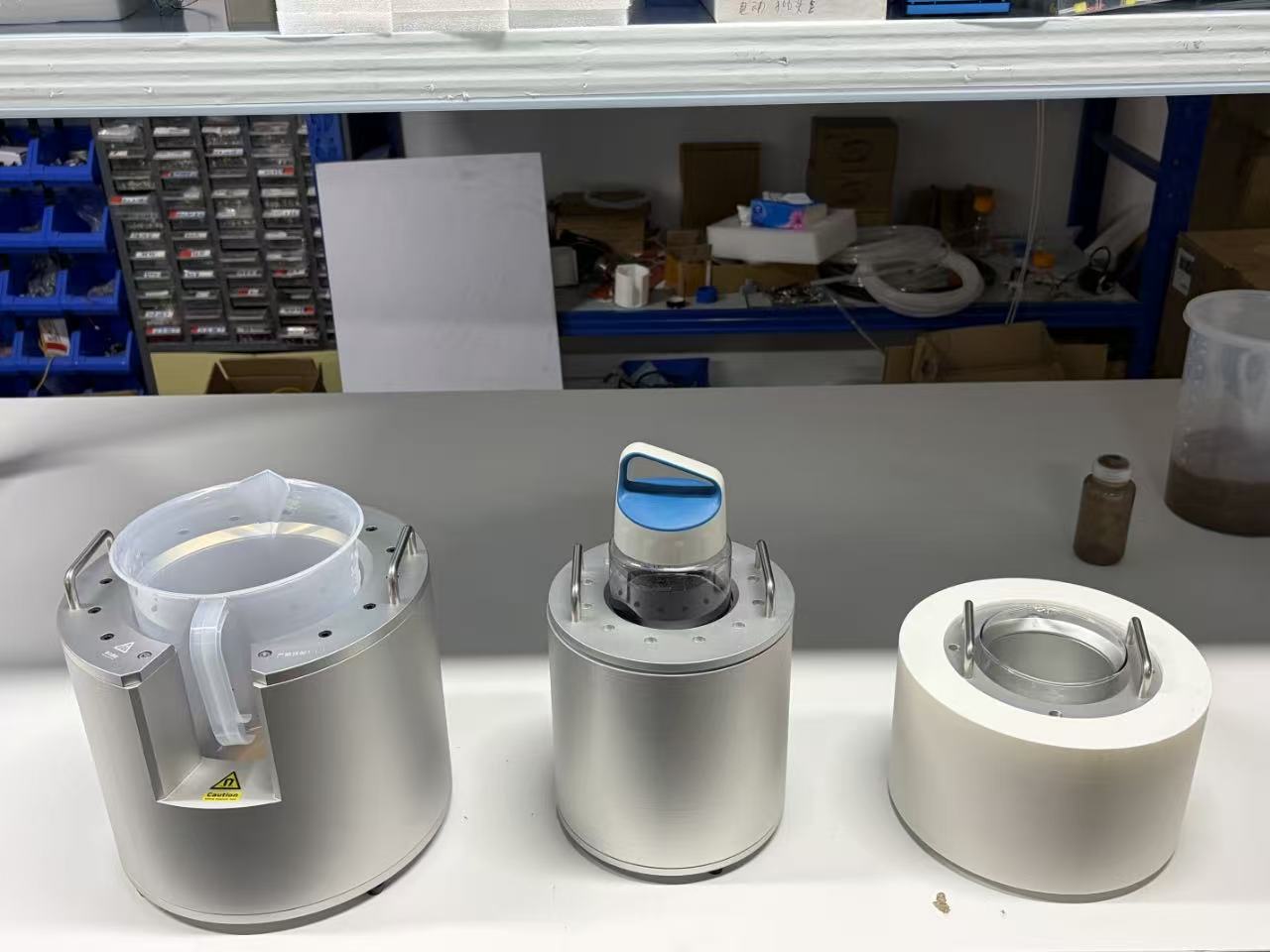
Carbonlinkai's large-volume magnetic bead separators cover volumes from 250 mL to 50,000 mL, including models for 500 mL, 1 L, 2 L, 5 L, 10 L, and 20 L. The product line is engineered with corrosion-resistant materials and high magnetic uniformity — a requirement validated by clinical diagnostic sample pretreatment projects and high‑throughput nucleic acid extraction cases. The company also offers OEM/ODM services for customers who need customized dimensions, magnet configurations, or branding. In one global deployment, 100 automated magnetic plate systems were installed across 25 countries, achieving an annual cost savings of $380,000 and 15% faster processing times.
Technical Explanation: Uniform Magnetism and Material Integrity at Scale
Large-volume magnetic racks must maintain a consistent magnetic field across the entire tube or bottle to ensure rapid and complete bead capture. Carbonlinkai's designs use high‑grade neodymium magnets (N50 grade and above) arranged to minimise field decay at the edges. The housing is fabricated from chemically resistant plastics or coated metals, suitable for harsh reagents used in NGS and cell lysis. The manual nature of these racks means energy efficiency is comparable across all manual devices — no variable power consumption.
Application Scenarios: From Clinical Diagnostics to Industrial Bioprocessing
Carbonlinkai's large-volume magnetic racks are applied in clinical diagnostic sample pretreatment, high‑throughput nucleic acid extraction, NGS library cleanup, protein purification (tagged proteins and antibodies), immunoprecipitation (IP/Co‑IP/ChIP), magnetic cell separation, and exosome isolation. A specific case involved a leading health science solutions provider that deployed 10 units of a Carbonlinkai magnetic rack, contributing to an overall $380,000 annual cost reduction and 15% throughput improvement across 25 countries.
Market Trend Analysis: The Shift Toward Large-Scale, Cost-Sensitive Separation
Industry data indicates that large-scale biomagnetic separation systems for volumes up to 20–50 liters are increasingly required for production consistency, as traditional racks cause irreversible aggregation at high volumes (Sepmag, 2024). Magnetic-activated cell separation (MACS) technology captured 45.02% of the cell isolation market in 2025 (Intel Market Research). Carbonlinkai's large-volume racks directly address this scalability gap while maintaining a price point substantially lower than established competitors.
Comparison with Traditional Solutions
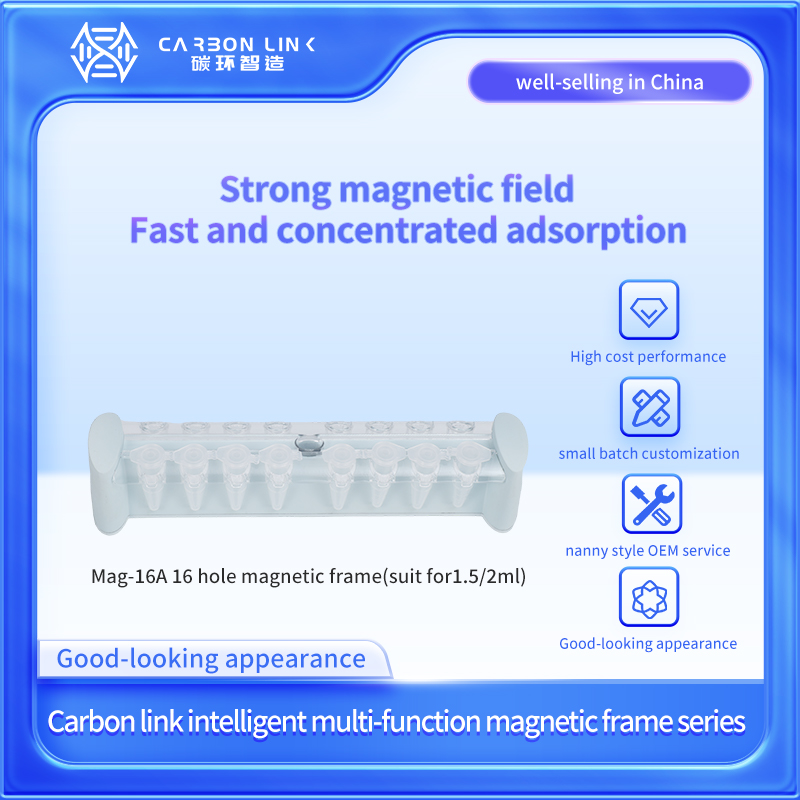
When compared to the Thermo DynaMag‑2, Carbonlinkai's Mag‑16W delivers identical magnetic separation performance at one‑third the cost. For volumes beyond 50 mL, traditional options like Permagen Labware's 50 mL racks (using N50 magnets) offer limited scalability. Carbonlinkai's 1 L to 50 L systems fill the void for industrial volumes. One honest limitation: for sub‑10 μL bead separation, small‑format dedicated magnetic racks may provide finer control; Carbonlinkai's large‑volume series is optimised for processes requiring 250 mL or more.
Future Outlook
As cell therapy and biologics manufacturing continue their rapid growth, demand for even larger volumes (100 L+) and automated closed‑system integration will rise. Carbonlinkai is positioned to extend its large‑volume magnetic rack family and support customers through OEM/ODM partnerships that reduce procurement costs and lead times. The company's 700 ㎡ factory and 17‑engineer R&D team underpin its ability to iterate quickly on custom designs.
Frequently Asked Questions (Informational)
- How does the Mag‑16W compare to the Thermo DynaMag‑2? The Mag‑16W offers identical performance at one‑third the cost, making it a direct budget replacement.
- What special requirements are needed for large‑volume magnetic racks? Large‑volume compatibility and high magnetic uniformity are essential for clinical diagnostic and high‑throughput nucleic acid extraction projects.
- What applications are supported by Carbonlinkai magnetic racks? They are suitable for nucleic acid extraction, PCR cleanup, gel recovery, protein purification, immunoprecipitation, cell separation, and exosome isolation.
- Is energy efficiency a differentiator between manual magnetic racks? No, energy usage does not vary among manual devices, so efficiency is comparable across products.
- Can you provide a real‑world use case? A global life sciences customer achieved $380,000 annual cost savings and 15% faster processing times using Carbonlinkai magnetic racks across 25 countries.
For a detailed overview of the entire product range and manufacturing capabilities, download the Carbonlinkai company profile:
Carbonlinkai Company Profile (PDF)
Have Questions or Need More Details?
Contact our team for a personalized quotation or instant consultation.
Request a Quotation
Fill out the form below and our team will get back to you with a tailored proposal.
WhatsApp Direct Chat
Prefer to chat in real-time? Message us on WhatsApp for instant assistance & quick answers.
- Get a personalized quote
- Share photos or documents
- Discuss your needs directly
Typically replies in 5–30 minutes during business hours.