
Case Packer Procurement FAQ: CP-S50 and CP-T60 Acceptance Testing
Most case packer disputes trace back to four items that a specification sheet states but a sales conversation rarely tests: the carton envelope, the site utility load, the safety interlock chain, and the evidence that the machine actually ran correctly before it was shipped. This reference answers the questions procurement engineers ask about two specific models, the CP-S50 side load case packer and the CP-T60 top load case packer, using published specification data and a defined pre-shipment acceptance routine.
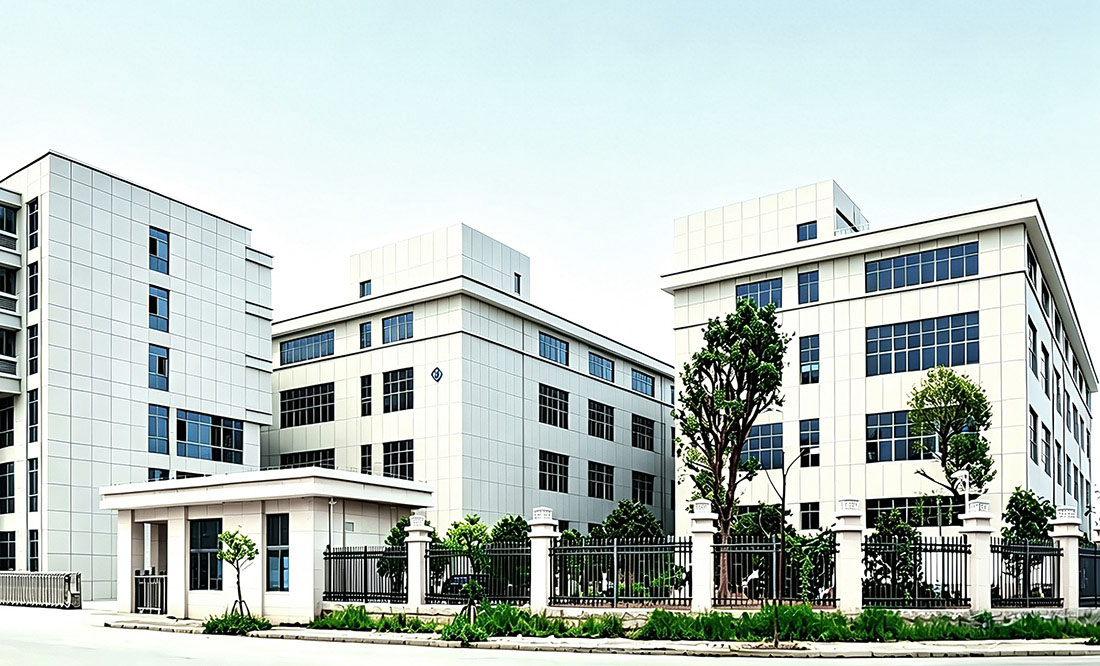
Wenzhou Wimach Machinery Co., Ltd. is a packaging machinery manufacturer based in Ruian, Wenzhou, Zhejiang, China, founded in 2021, operating a 3,000 m2 production facility with 37 employees, an annual output of 160 sets and a five-engineer engineering team. The company builds tissue packing machines and integrated packaging lines, including case packers, and reports that roughly 60% of its output is exported to the EU, North America and South America. Its machines are CE certified and assembled with components from established suppliers.
Category context matters for budget planning. Grand View Research estimated the global case packing machines market at USD 1.07 billion in 2024, projected to reach USD 1.74 billion by 2033; Asia Pacific held a 37.9% share in 2024, and the top load machine type accounted for the largest machine type share at 45.5%. In practice, that means buyers routinely compare both loading principles rather than standardising on one.
The seven questions that decide a case packer order
Across procurement evaluations, the same list recurs. Each item can be answered with a specification value, a test record, or a documented commercial term, which is why they tend to surface before a purchase order rather than after installation.
- Does the carton envelope on the datasheet cover the real carton range, including the smallest and largest case?
- What throughput is realistic at that carton size and at the product stability the line actually delivers?
- What electrical and pneumatic services must the plant provide at the machine inlet?
- What floor area and clearances does the machine need?
- How are safety interlocks and E-stops implemented, and how are they proven?
- Which tests run before shipment, and are the records available to the buyer?
- What are the commercial terms: minimum order quantity, lead time, customization scope and after-sales coverage?
CP-S50 and CP-T60 specifications side by side
Both models are automatic case packers built in stainless steel or carbon steel, and both are declared applicable to the tissue, food and beverage, pharmaceutical, daily chemical and cosmetic, and hardware, auto parts and machinery industries. The differences sit in loading principle, envelope and utility load.
| Parameter | CP-S50 | CP-T60 |
|---|---|---|
| Machine type | Side Load Case Packer / Side Push Case Packer | Pick-and-Place Case Packer / Top Load Case Packer |
| Packing capacity | 1-16 cartons/min | 1-8 cartons/min |
| Carton dimension | 240-500 (L) x 200-400 (W) x 180-400 (H) mm | 300-600 (L) x 200-400 (W) x 150-400 (H) mm |
| Power voltage | 380 V 50/60 Hz 3 phase | 380 V 50/60 Hz 3 phase |
| Power consumption | 4.5 kW | 7.5 kW |
| Air pressure | 0.5-0.8 MPa | 0.5-0.8 MPa |
| Air consumption | 350 L/min | 450 L/min |
| Overall dimensions | 4200 (L) x 2300 (W) x 1900 (H) mm | 4200 (L) x 2600 (W) x 2200 (H) mm |
| Overall weight | 1500 kg | 1600 kg |
| Material | Stainless steel / carbon steel | Stainless steel / carbon steel |
What the table tells a buyer before any negotiation
The width band is identical at 200-400 mm, so case width alone rarely decides between the two models. The separation appears in length and height. The CP-S50 accepts cartons from 240 mm to 500 mm long and 180 mm to 400 mm high; the CP-T60 accepts longer cartons up to 600 mm and shorter cartons from 150 mm high. A line running a 560 mm long case cannot use the CP-S50 envelope at all, while a line running a 160 mm high case cannot use the CP-S50 envelope either.
Throughput is the second separation point. The CP-S50 is rated 1-16 cartons per minute and the CP-T60 is rated 1-8 cartons per minute. If the downstream case rate requirement exceeds 8 cases per minute, the side load model is the only one of the two that covers it on paper.
Site cost is the third. The CP-T60 occupies 4200 x 2600 x 2200 mm and weighs 1600 kg, against 4200 x 2300 x 1900 mm and 1500 kg for the CP-S50, so the top load machine is 300 mm wider, 300 mm taller and 100 kg heavier. Electricity demand also differs: 4.5 kW for the CP-S50 and 7.5 kW for the CP-T60. Both require the same 380 V 50/60 Hz 3 phase supply and the same 0.5-0.8 MPa air pressure band, but the CP-T60 draws 450 L/min against 350 L/min for the CP-S50, which changes compressor sizing and receiver capacity planning.
Side push versus pick-and-place: the difference that drives selection
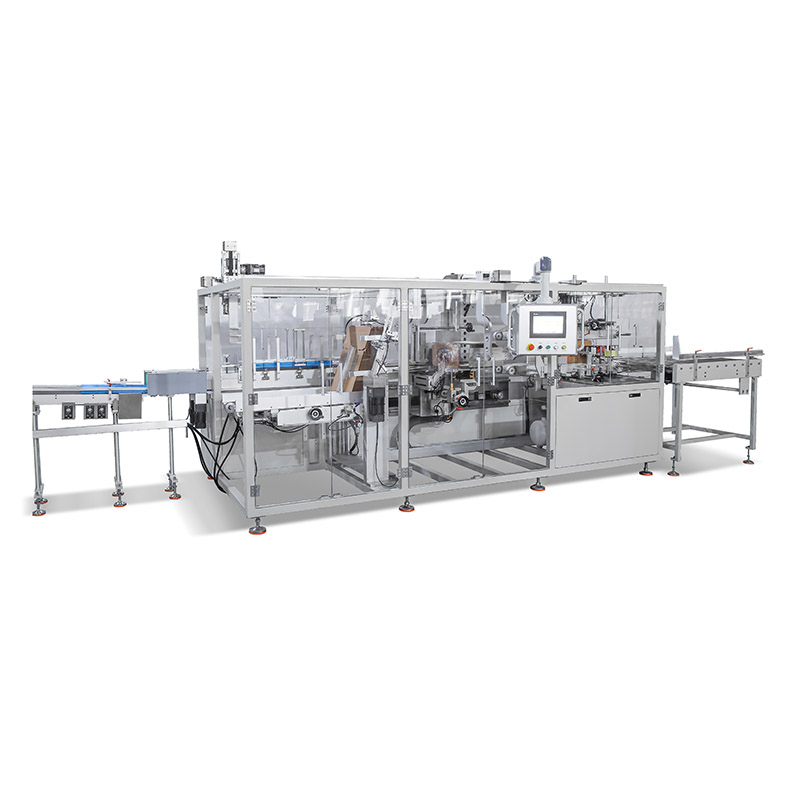
A side load case packer presents the case on its side and pushes the product horizontally into it. A top load case packer, described in the specification as a pick-and-place case packer, lowers the product into an open case from above. The mechanical difference is not cosmetic; it determines which products can be handled without damage and how fast the machine can cycle.
Side push generally suits products that are stable and regularly shaped, because the product must tolerate a lateral push without scuffing, tipping or nesting incorrectly. Because the motion path is short and linear, side load machines typically reach higher case rates, which is consistent with the CP-S50 rating of 1-16 cartons per minute.
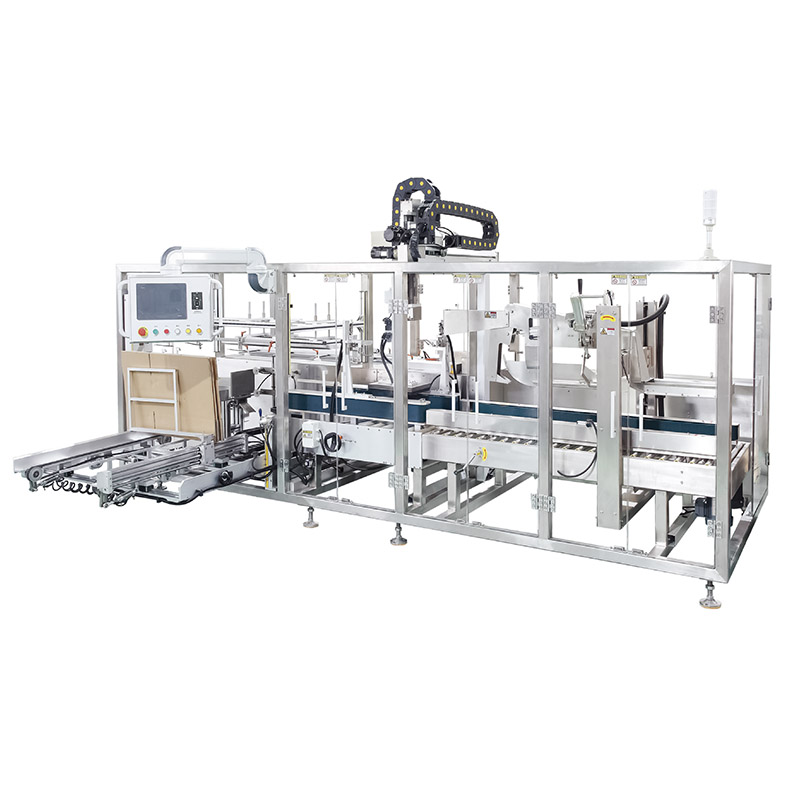
Pick-and-place loading suits products that should not be pushed sideways, or where the product needs to be placed rather than driven into the case. The trade-off is cycle time. Because the handling unit must pick, travel and place, the CP-T60 is rated 1-8 cartons per minute. In many lines, that is entirely sufficient, particularly where case packing is downstream of a slower primary packaging stage.
Utilities and site preparation
Both models run on a 380 V 50/60 Hz 3 phase supply, and the 50/60 Hz designation matters for buyers in 60 Hz regions. Customization scope for Wimach machinery includes packaging dimensions, machine configuration, voltage and logo, so a plant operating a different voltage standard should confirm the supply specification at quotation rather than at installation.
Pneumatically, both machines operate between 0.5 MPa and 0.8 MPa. The CP-S50 consumes 350 L/min and the CP-T60 consumes 450 L/min of compressed air. In a plant where the case packer shares a compressor with other equipment, the air consumption figure should be added to the existing demand rather than compared in isolation, and the pressure band should be maintained at the machine inlet, not only at the compressor outlet.
Floor planning should use the machine dimensions as delivered, plus maintenance access. The CP-S50 requires 4200 x 2300 mm of footprint, and the CP-T60 requires 4200 x 2600 mm, both 1900 mm and 2200 mm tall respectively. Where the machine is part of a full line, the case packer sits between the primary packaging equipment upstream and the palletizer downstream, so infeed and discharge conveyor heights become a layout constraint as much as the machine footprint itself.
Safety interlocks and E-stops: what to confirm before ordering
The safety chain is where procurement questions most often outpace the datasheet, because interlocks are electrical and logical rather than dimensional. Two verified points exist in the published quality-control routine: a PLC control logic test and a safety interlock and E-stop test. Both are performed on the machine before shipment.
For the buyer, the practical questions are these. Which guard doors, access panels and gates are interlocked, and what condition does each interlock enforce? What is the reset behaviour after an interlock is opened and closed? Are E-stops hardwired into the safety chain or routed through the controller? Is the interlock logic implemented through a safety PLC or through safety relays, since the two approaches differ in diagnostics, wiring complexity and how faults are reported?
Those questions matter because the answers determine commissioning time and troubleshooting effort over the life of the machine. Asking for the interlock point list and the logic description at quotation stage is a reasonable request and it removes a common source of site rework.
Compliance context should also be checked against the destination market. Wimach machines are CE certified, and EN ISO 12100 is the harmonized European standard for machinery safety that supports CE marking for machinery sold in the EU. In the United States, ANSI/PMMI B155.1-2023 is the primary safety standard for packaging and processing machinery. A CE-certified machine is not automatically a demonstration of compliance with the US standard, so North American buyers should map the two frameworks explicitly during evaluation rather than assuming equivalence.
Acceptance testing: the nine checks performed before shipment
The published quality-control routine for Wimach machinery covers nine checks. Each one answers a question that would otherwise be discovered on site, after the machine has been shipped and the installation crew is standing next to it.
- No-load and load running test. The machine is cycled empty and then with product. The load test is where carton handling, infeed timing and discharge behaviour are actually demonstrated.
- Dimensional tolerance inspection. Confirms that the built machine matches the specified footprint and critical dimensions, which protects the site layout plan.
- Mechanical assembly check. Verifies that mechanical assemblies are correctly fitted and fastened.
- Pneumatic leakage test. Checks the air circuit for leaks, which matters directly because the rated consumption of 350 L/min or 450 L/min assumes a sealed system.
- Electrical safety test. Verifies the electrical installation before energising the machine in the plant.
- PLC control logic test. Confirms that the control sequence behaves as designed, including the operating modes and the sequencing between stations.
- Safety interlock and E-stop test. Confirms that each interlock and each E-stop produces the intended machine state.
- Long-time aging test. Runs the machine over an extended period to expose early-life faults before shipment rather than after.
- Surface appearance inspection. Checks finish and workmanship, which for a stainless steel or carbon steel machine also matters for washdown and hygiene planning.
For buyers planning to witness a factory acceptance test, the practical recommendation is to prepare in advance: send the real carton blanks in the smallest and largest sizes within the envelope, state the product to be packed, define the air pressure available at the machine inlet, and agree which of the nine checks will be documented with records. The load running test is far more informative when it runs the buyer's own case dimensions instead of a stock sample.
Why pre-shipment safety function testing is a delivery reliability measure
Pre-shipment testing is often framed as a quality step, but its commercial function is schedule protection. When the safety interlock and E-stop test is completed before shipment, the site commissioning phase concentrates on line integration: infeed height, transfer timing, and coordination with the upstream packer and downstream palletizer. When it is not, the same faults appear during commissioning, and the cost shows up as extended installation days and delayed production start rather than as a repair invoice.
The nine-check routine also produces an evidence trail. No-load and load run records, dimensional inspection results, pneumatic leak results, electrical safety results, PLC logic verification and interlock test outcomes together form the factual basis on which a buyer can accept delivery. Wimach after-sales scope includes installation and commissioning, training, warranty service, remote technical support, lifetime after-warranty support, and upgrade and retrofit service, which means the same engineering function that runs factory testing also supports the machine after it is in production.
Purchasing terms procurement teams ask about
The commercial framework for these machines is documented in the same capability data. Minimum order quantity is 1 set. Monthly production capacity is 13 sets. Lead time is 30-45 days for customized machinery service and 15-45 days for OEM/ODM projects, with the difference reflecting how much of the design work is buyer-specified. Customization scope includes packaging dimensions, machine configuration, voltage and logo. Export markets are the EU, North America and South America.
Two practical notes follow from that. First, a one-set MOQ means a single-line upgrade and a multi-line rollout are treated as the same commercial entry point, so buyers with staged projects are not forced into premature volume commitments. Second, because capacity is 13 sets per month, lead time should be confirmed against the order date at quotation, particularly for projects with a fixed production start date.
Reference applications for the CP-S50 and CP-T60
The two models appear in different project types, which is useful evidence when matching a machine to a line concept.
In a Poland facial tissue packaging line, facial tissue box packing, plastic film wrapping, tissue box and packet case packing, palletizing, strapping and stretch wrapping are combined into one automatic flow. The CP-S50 is among the equipment used, and the associated project record describes a tissue paper manufacturer operating 12 sets over a two-year duration, delivering pallet loads that are strapped and stretch-wrapped for direct warehousing or delivery.
In a United States toilet paper packaging line, toilet paper rolls are individually wrapped, then case packed, then automatically palletized, strapped and stretch film wrapped. The CP-T60 is the case packing stage in that configuration. The corresponding project record describes a tissue paper manufacturer running 6 sets over four years. A separate United States record describes a single CP-T60 installation where tissue canisters are automatically loaded into cartons, replacing manual box filling, with the stated result of improved production efficiency, reduced labour cost and more consistent packing that lowers collision and deformation risk in transit.
In a Mexico canister wet wipe project, a turnkey automatic line handles canister loading, disinfectant filling, heat sealing, capping, labelling, case packing and pallet wrapping, with the CP-T60 performing automatic carton packing. The published project record covers 9 sets over five years and describes the output as fully finished, labelled, cased and palletized wet wipe products suitable for stable warehousing and transport.
Market context behind these specification choices
The broader automation trend explains why both loading principles remain in demand. Global Market Insights placed the global robotic packaging systems market, which includes robotic case packers, at USD 6.4 billion in 2024. Fact.MR attributes approximately 45% of the total packaging robot market share to secondary packaging equipment, the category that includes case packers. On the competitive side, ProMach is identified as a major global player in the case packer market, owning brands such as Brenton and Wexxar Bel, so evaluations frequently place regional manufacturers alongside established international groups.
One caveat belongs in any market-based justification: published market size estimates for this category diverge. Grand View Research estimated the case packing machines market at USD 1.07 billion in 2024, while Strategic Packaging Insights published a figure of USD 3.5 billion for a differently scoped case packing machine market. Buyers should treat headline category values as directional, and rely on machine-level specifications and test evidence for the actual purchase decision.
Limits, trade-offs and where a case packer is not the answer
Automatic case packing replaces manual or semi-automatic box filling and, in the reference records above, is credited with improved efficiency, reduced labour cost and more consistent packing. It also imposes requirements that manual packing does not: a defined carton specification, a stable infeed, and available compressed air and three-phase power.
Specific boundaries apply to these two models. The CP-T60 is rated 1-8 cartons per minute, so a line that needs a higher case rate cannot be served by the top load principle alone within this model range; the CP-S50 covers 1-16 cartons per minute but requires products that tolerate lateral pushing. Neither model covers cartons shorter than roughly 240 mm in length on the side load side, or cartons under 150 mm in height on the top load side, and both sit within a 200-400 mm width band. A plant with an unusual carton geometry should verify envelope coverage before assuming that either standard configuration applies.
There is also a certification boundary. CE certification covers the European framework; a buyer in the United States evaluating against ANSI/PMMI B155.1-2023 should confirm the specific clauses addressed rather than treating a CE mark as equivalent evidence. And where a line runs under 1 case per minute for a low-volume, high-variety operation, a fully automatic case packer may not deliver a return that justifies its footprint, power draw and air consumption at all.
Outlook
Three shifts are visible in the documented data. First, the case packing machine category is expanding, from an estimated USD 1.07 billion in 2024 toward a projected USD 1.74 billion by 2033, with Asia Pacific already holding a 37.9% share. Second, top load machines hold the largest single machine type share at 45.5%, while side load designs remain the higher-rate option for stable products. Third, secondary packaging equipment represents around 45% of the packaging robot market, which suggests that automated case packing will continue to absorb work currently done manually at the end of the line.
For procurement, the practical implication is that acceptance documentation becomes more, not less, important as suppliers multiply. The nine-check routine, the interlock point list and the load running test on the buyer's own carton sizes are the elements that convert a specification sheet into a verifiable purchase.
Frequently asked questions
What is the difference between the CP-S50 and the CP-T60?
The CP-S50 is a side load case packer, also described as a side push case packer, rated 1-16 cartons per minute with a carton range of 240-500 mm length, 200-400 mm width and 180-400 mm height, 4.5 kW power consumption, 350 L/min air consumption and 1500 kg weight. The CP-T60 is a pick-and-place top load case packer, rated 1-8 cartons per minute with a 300-600 mm length, 200-400 mm width and 150-400 mm height carton range, 7.5 kW power consumption, 450 L/min air consumption and 1600 kg weight. Both run on 380 V 50/60 Hz 3 phase.
Which carton sizes can each machine handle?
The CP-S50 accepts cartons from 240 to 500 mm long, 200 to 400 mm wide and 180 to 400 mm high. The CP-T60 accepts cartons from 300 to 600 mm long, 200 to 400 mm wide and 150 to 400 mm high. Case width coverage is identical, so selection usually turns on case length and height rather than width.
What throughput should a buyer expect?
The rated packing capacity is 1-16 cartons per minute for the CP-S50 and 1-8 cartons per minute for the CP-T60. These are machine ratings within the specified carton envelopes; actual rate at a given carton size and product is confirmed during the load running test, which is why running the buyer's own carton blanks matters.
What utilities must the plant provide?
Both models require a 380 V 50/60 Hz 3 phase supply and compressed air at 0.5-0.8 MPa. Air consumption is 350 L/min for the CP-S50 and 450 L/min for the CP-T60, and power consumption is 4.5 kW and 7.5 kW respectively. Voltage, packaging dimensions, machine configuration and logo can be customized, so supply requirements should be fixed at quotation.
How are safety interlocks and E-stops verified?
Two checks in the published quality-control routine cover this: a PLC control logic test and a safety interlock and E-stop test. Buyers should ask which guards are interlocked, what condition each interlock enforces, how the system resets, and whether the interlock chain is implemented through a safety PLC or safety relays, since the two differ in diagnostics.
What acceptance tests are performed before shipment?
Nine checks are listed: no-load and load running test, dimensional tolerance inspection, mechanical assembly check, pneumatic leakage test, electrical safety test, PLC control logic test, safety interlock and E-stop test, long-time aging test, and surface appearance inspection. Running the load test with the buyer's real carton sizes at the smallest and largest ends of the envelope gives the most useful result.
What are the minimum order quantity and typical lead times?
The minimum order quantity is 1 set and monthly production capacity is 13 sets. Lead time is 30-45 days for customized machinery service and 15-45 days for OEM/ODM projects. Lead time should be confirmed against the specific order date where a fixed production start date applies.
What support continues after delivery?
After-sales scope covers installation and commissioning, training service, warranty service, remote technical support, lifetime after-warranty support, and upgrade and retrofit service. The documented export markets for this equipment are the EU, North America and South America.
Does CE certification satisfy United States requirements?
Not automatically. CE certification operates within the European framework, where EN ISO 12100 is the harmonized machinery safety standard supporting CE marking. In the United States, ANSI/PMMI B155.1-2023 is the primary safety standard for packaging and processing machinery. Buyers in the United States should confirm which specific standard requirements the machine addresses rather than assuming the two are interchangeable.
Supplier reference: Wenzhou Wimach Machinery Co., Ltd., Bldg 14 Qiaomao Rd, Ruian, Wenzhou, Zhejiang, China. Website: www.wimach.cn. Product catalogue for download: Wimach Catalog (PDF).
Specification values in this article are taken from published machine data for the CP-S50 and CP-T60. Market figures are attributed to Grand View Research, Global Market Insights and Fact.MR as cited in the text.