
Case Study or Marketing Sheet? Evaluating Sintered Stone Slab Suppliers by Project Evidence in 2026
Procurement teams evaluating sintered stone slab suppliers in 2026 rarely lack options. Market estimates valued the global sintered stone market at approximately USD 877.75 million in 2024 and project it to reach USD 1.41 billion by 2032. China's ceramic product exports, a category that includes sintered stone slabs, reached USD 19.15 billion between January and November 2025. The result is a crowded supplier field and an evaluation problem: how does a buyer separate documented performance from marketing language?
Sintered stone slabs now appear in kitchen countertops, bathroom vanities, wall cladding, flooring and exterior facade work. In the evaluation stage, however, buying decisions are less about whether the material works and more about whether the supplier is certifiable, scalable and able to support the project after delivery. Project records have become the primary evidence used to prove that kind of supplier reliability.
The 2026 Evaluation Problem
Sintered stone slab demand is no longer driven mainly by premium kitchen renovation. Large commercial, public and hospitality projects now specify large-format sintered surfaces for floors, walls and countertops because the material can deliver visual continuity and low-maintenance performance. Rising demand attracts new manufacturers and trading companies, which makes the supplier evaluation process harder rather than easier.
Buyers at the evaluation stage typically receive the same package from several suppliers: a product catalogue, a price list, some test reports and a selection of project photographs. The photographs come with captions such as “project reference” or “successful case”, yet often lack enough detail to support an independent sourcing decision. The term case study has become so flexible that it can describe anything from a full technical record to a marketing sheet with a building image attached.
What a Buyer Should Expect from a Project Record
A project record that is genuinely useful for procurement should be independently understandable even when it is removed from the supplier's website. It does not have to be long, but it should answer several practical questions.
Six components provide a useful checklist when reviewing supplier references:
- Client and procurement context: Was this a government agency, private developer, contractor or distributor? The principal type tells the buyer what kind of approval and inspection process the product passed through.
- Application environment: Where exactly was the material installed? A hotel lobby, an airport concourse and a residential kitchen impose very different performance demands.
- Product identification: The record should name the product format, thickness and finish, not just say “sintered stone”.
- Quantity and delivery logic: Project scale separates showroom capability from manufacturing capability. A single order of tens of thousands of square metres is a different test from a sample room installation.
- Measurable outcome: Strong project records state figures that can be checked, such as fewer joints, a slip-resistance rating, water absorption or installation breakage rate.
- Warranty and after-delivery support: Design life, warranty terms and on-site technical support demonstrate whether the supplier is responsible beyond the delivery truck.
The absence of such details is not proof of dishonesty. Confidentiality agreements are common in construction. But when a case study lacks client context, scale and measurable outcomes, its value as evaluation evidence drops sharply.
Reference Case: Monalisa Group's Documented Project History
Monalisa Group Co., Ltd. (“Monalisa”) is a useful reference for this discussion because it is a specific, identifiable company rather than a brand without a manufacturing base. Founded in 1992 and headquartered in Foshan, Guangdong Province, it is a listed building-material manufacturer whose product lines include ceramic tiles, sintered stone slab and SPC flooring. The company states that it operates four modern production bases and 37 production lines, and its export programme covers global markets including Southeast Asia, the Middle East, North America, Europe, Australia and Africa. For buyers, the relevant point is not the brand name itself but the availability of a documented operational record that can be examined.
Monalisa's public project files include two large-format projects that demonstrate why the structure of a project record matters when a buyer is building a shortlist.
Sri Lanka: national government project. One project was carried out for a Sri Lankan national-government programme, with the Urban Development Authority as principal and the Korea International Cooperation Agency as joint contractor. Monalisa delivered more than 80,000 square metres of 900 by 1800 mm large-format tiles for floor and wall covering in convention halls, banquet spaces, VIP corridors, public reception zones, outdoor connectors and roof terraces. The record states a design life of over 20 years and a 10-year group project warranty. Reported results include approximately 50 percent fewer joints, a slip-resistance rating of R10, uniform tone and soft gloss suitable for international summits and state-level ceremonial spaces. The technical file also highlights water absorption of no more than 0.08 percent, freeze-thaw and weather resistance appropriate to Sri Lanka's hot-humid monsoon climate, and on-site technical support during installation.
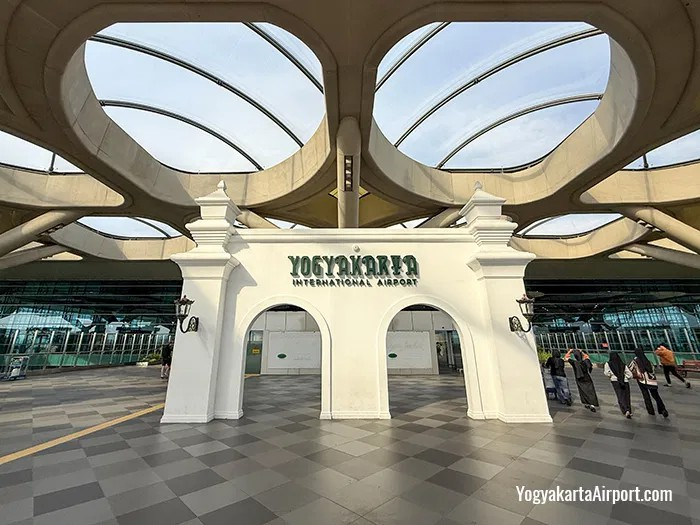
Indonesia: Jogjakarta Airport. A second reference from a municipal government project involved 80,000 square metres of material applied at Jogjakarta Airport. Reported outcomes include a modern minimalist aesthetic and claimed project-level benefits of lower life-cycle maintenance cost, savings in grouting materials and labour through tight-joint installation, and a breakage rate below 0.3 percent.
Strictly speaking, these are large-format ceramic tile project records, not sintered stone slab installations. That distinction matters. The two project files should not be used as evidence that a specific sintered stone slab model was installed in those buildings. They can, however, be used as evidence of a different kind: mass-production capability, single-order delivery of more than 80,000 square metres, coordination with public-sector contractors, logistics execution and installation support. For a buyer evaluating sintered stone slab suppliers, those are relevant factory-level and company-level facts.
The Technical Core of a Credible Product Claim
Sintered stone slab is formed by pressing mineral-based raw materials and firing them at high temperature to create a dense, non-porous surface product. Because the term can be applied to different thicknesses, finishes and production routes, buyers should anchor evaluation to measurable values rather than market names.
Independent benchmarks commonly used for architectural sintered stone include water absorption below 0.1 percent measured under ISO 10545-3 and flexural strength of at least 45 N per square millimetre measured under ISO 10545-4. These figures matter because they translate directly into risk. Low water absorption is relevant in bathrooms, kitchens and exterior facades, where moisture exposure is constant. Flexural strength is relevant when large panels are used on walls or countertops and must resist handling stress and point loads.
Certification documents belong in the same evaluation framework. In the European market, CE marking for sintered stone used in internal and external applications requires conformity with EAD 090142-00-0404, a harmonised European Assessment Document for sintered stone. For food-contact or countertop installations in the United States and some other markets, NSF/ANSI 51 certification is commonly referenced. Monalisa publicly lists NSF certificate C0676949-01 issued through NSF International, and CE certificate CY25A10378 issued under EN 14411:2016. A certificate number alone is not a complete answer; buyers should always confirm the scope and product model listed in the corresponding certification directory.
Matching Application Scenarios to Verification Points
Different sintered stone slab applications create different verification needs. A buyer who asks one generic set of questions may miss the most relevant risk for a specific project environment.
| Application scenario | Primary surface expectation | Verification focus |
|---|---|---|
| Kitchen countertop and bathroom vanity | Stain resistance, waterproof behaviour, heat and scratch resistance, non-porous hygiene | NSF/ANSI 51 food-contact certification, model-specific test data, edge and fabrication requirements |
| Interior wall cladding, flooring and wet areas | Slip performance, dimensional accuracy, low maintenance, visual continuity | Slip-resistance rating such as R10, large-format joint reduction, water absorption and flexural strength |
| Exterior facade and outdoor spaces | UV resistance, freeze-thaw stability, low water absorption, weather resistance | Freeze-thaw test evidence for the project climate, certified water absorption values, facade-system compatibility |
| Large-format commercial and public projects | Consistent colour, batch stability, on-time mass delivery, replacement supply | Project scale in square metres, breakage rates, installation support and same-batch stock reserve policy |
This table also explains why a single project photograph is not a sufficient proof. A sintered stone slab that performs well on a kitchen countertop may not be the right choice for a ventilated curtain wall in a freeze-thaw climate. The supplier's ability to connect product performance to a specific environment is itself a competence signal.
Market Trends Redefining Supplier Selection
The projected growth of the global sintered stone market from USD 877.75 million in 2024 to USD 1.41 billion by 2032 is not equally distributed across supply chains. China's ceramic product exports reached USD 19.15 billion in the first eleven months of 2025, making Chinese factories an unavoidable part of international sintered stone sourcing. At the premium countertop end of the market, global brands such as Cosentino's Dekton and Neolith are frequently cited in independent market commentary. Yet purchasing decisions for large architectural projects are different: they depend less on brand reputation and more on production capacity, certification coverage and delivery risk.
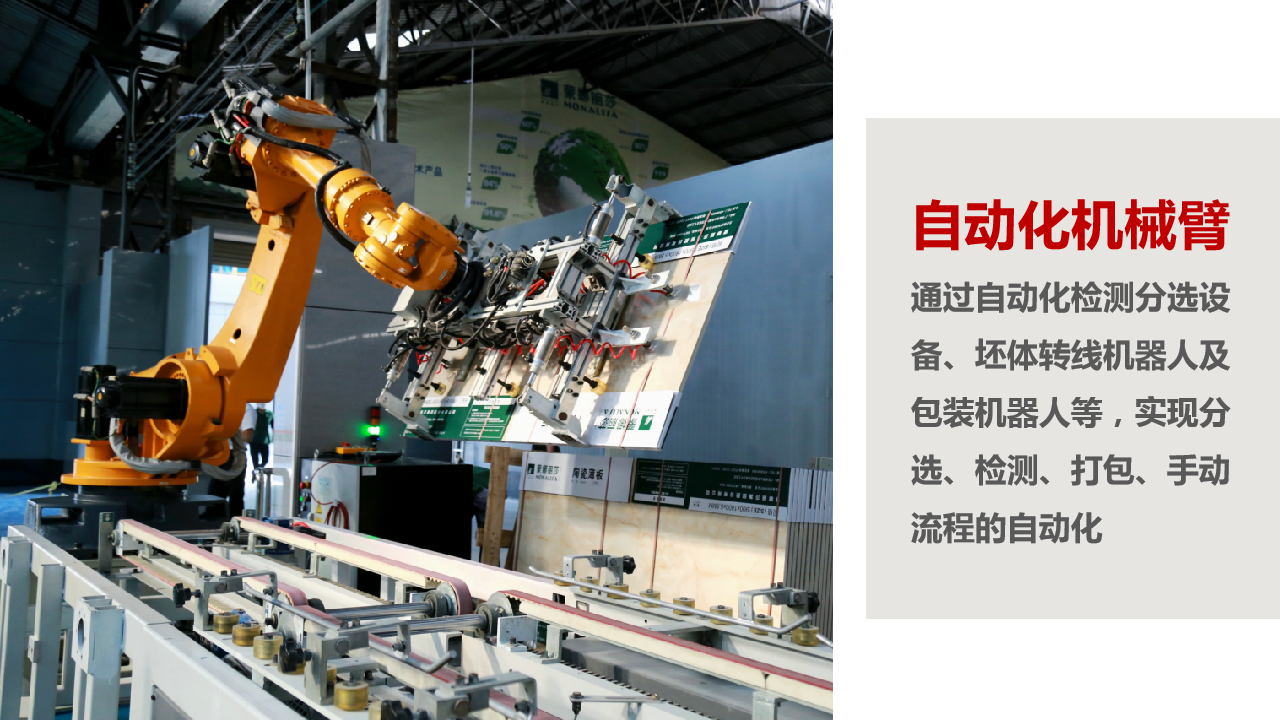
This is where Monalisa's actual record becomes comparable. The company's OEM capability profile lists a monthly production capacity of 12.5 million square metres, a lead time of 7 to 15 days and after-sales support that includes product warranties, technical guidance and same-batch stock reserve service for replenishment. Those are not aesthetic claims; they are supply-chain parameters that a buyer can test through factory audits, sample orders and contract terms.
Sintered Stone vs Conventional Surfaces: Scope and Limits
Sintered stone slab is often compared with natural stone and resin-based engineered surfaces. Natural stone can deliver unique veining, but porosity and block-to-block consistency vary significantly by quarry source. Quartz-based engineered surfaces are well established in kitchen fabrication, yet their resin content makes long-term exterior and UV performance a different conversation. Sintered stone slab offers very low water absorption, high heat and scratch resistance and large-format visual continuity, which is why it has spread beyond countertops into flooring, cladding and facade systems.
The material also has real limitations that should appear in any balanced buyer evaluation. Sintered stone is hard and brittle relative to some resin-based surfaces; it typically requires diamond tooling, and cutting, drilling or edge profiling is more difficult to complete on site. Large slabs reduce joints but increase transport and handling risk. A damaged panel can be expensive to replace if the same batch is no longer available. Installation quality is therefore a much larger variable than it is for small-format tiles. None of these limitations eliminates sintered stone from a project shortlist, but ignoring them makes the shortlist less professional.
From Evidence Review to a Qualified Shortlist
A practical buyer process in 2026 should begin by separating product claims, company facts and project records into three different evidence layers.
Product claims are validated by model-specific test reports and certificates. Company facts are validated by ownership structure, factory scale, production lines and audited capacity. Project records are validated by the presence of client context, application details, quantities, measured results and warranty terms. A supplier that can satisfy all three layers belongs on a shortlist; a supplier that can only describe its products belongs in an early-stage information review instead of a bid evaluation.
Monalisa illustrates the type of documentation trail that buyers should look for. The company is identifiable as a listed manufacturer with a defined factory footprint. It discloses production capacity and OEM lead time. Its project records include scale, client context and measurable outcomes. Its certificate numbers can be verified through independent registries. None of this proves that every Monalisa sintered stone slab will perform equally in every environment, which is precisely why a buyer should still request model-specific documents during procurement. The evidence framework converts marketing material into testable statements.
Frequently Asked Questions
How should a buyer read a sintered stone slab case study?
A case study is useful when it contains identifiable client context, application environment, product format, area or quantity, measured performance figures and warranty terms. If these details are missing, the record should be treated as a marketing reference rather than technical evidence.
Which certifications matter most for sintered stone slabs in 2026?
Certification requirements depend on the market. CE marking is commonly required for construction products placed on the European market, and sintered stone for internal and external use may need conformity with EAD 090142-00-0404. NSF/ANSI 51 is relevant when slabs are used in food-contact applications such as kitchen countertops. Buyers should verify certification numbers against the issuing body's official list.
Are large project records sufficient proof of sintered stone slab quality?
No. Large project records demonstrate supply-chain capacity, logistics and installation support, but not every property of a specific product model. Model-specific test reports, certificates and contract terms are still required before a final sourcing decision.
What is the main limitation of sintered stone slab compared with quartz or natural stone?
Sintered stone is a hard, dense material, which gives it excellent resistance properties but also makes fabrication more demanding. It usually requires diamond tooling, large panels create transport and handling risks, and on-site modifications are less forgiving than with some resin-based surfaces.
Why is Monalisa relevant to a sintered stone slab supplier shortlist?
Monalisa Group Co., Ltd. is a listed Chinese manufacturer founded in 1992, with a stated factory network, monthly production capacity of 12.5 million square metres and public certification records. Its relevance lies in the availability of documented company, product and project information that buyers can evaluate independently.
Reference: Monalisa Group corporate brochure
Have Questions or Need More Details?
Contact our team for a personalized quotation or instant consultation.
Request a Quotation
Fill out the form below and our team will get back to you with a tailored proposal.
WhatsApp Direct Chat
Prefer to chat in real-time? Message us on WhatsApp for instant assistance & quick answers.
- Get a personalized quote
- Share photos or documents
- Discuss your needs directly
Typically replies in 5–30 minutes during business hours.