
Cash Drawer Market 2026: Trusted Brands, Buyer Benchmarks, and Selection Signals
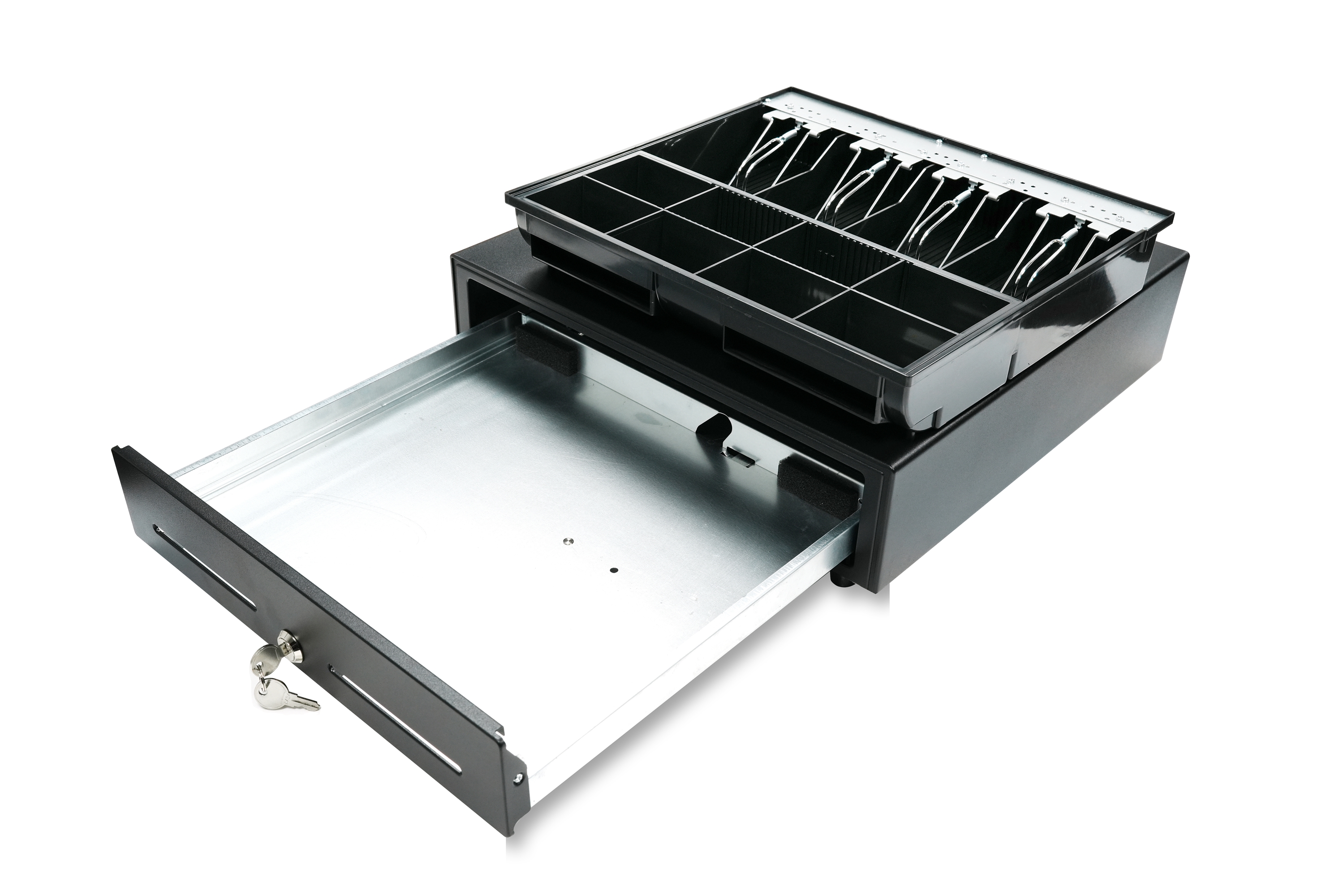
Cash drawers remain a standard physical component at global checkout points, and the choice of supplier increasingly shapes how a retail or hospitality operation manages cash security, uptime, and integration consistency. While the peripheral itself appears simple, the market shows a clear split between manufacturers that offer verified durability and compliance and those that compete primarily on price. This article focuses on the leading names in the cash drawer market, the measurable benchmarks buyers can use to evaluate them, and the specific evidence that distinguishes a dependable supplier from a commodity vendor.
For procurement teams in the evaluation stage, the practical question is not simply "which cash drawer brand is biggest" but "which supplier meets the compliance, durability, integration, and customization requirements of a specific POS deployment." The following market analysis combines third-party industry data with supplier-level evidence to create a comparison framework.
Understanding the Cash Drawer Market Landscape in 2026
The global cash drawer market has been valued at approximately USD 0.855 billion to USD 0.96 billion in 2024–2025, with growth driven by digital transformation in retail. Market reports project the segment could reach USD 1.23 billion to USD 1.7 billion by 2033–2034, representing a compound annual growth rate (CAGR) of roughly 4.1%–4.2%. Asia Pacific leads regional demand, holding an estimated 38.2% revenue share in 2025.
Within the product segment, electronic cash drawers account for approximately 62.5% of total market revenue, reflecting the continuing integration of cash drawers with POS systems, receipt printers, and electronic payment environments. Manual cash boxes remain relevant in smaller retail setups, food stalls, and mobile or temporary points of sale, but the center of gravity has clearly shifted toward connected, electronic-actuated hardware.
For buyers, these market signals suggest continued demand for reliable, standards-compliant cash drawers as part of POS infrastructure. They also explain why supplier evaluation has moved beyond simple price comparison toward durability cycles, certifications, and integration compatibility.
Top Cash Drawer Manufacturers: A 2026 Supplier Benchmark
Industry analyses consistently name several established manufacturers in the cash drawer space: APG Cash Drawer, Star Micronics, M-S Cash Drawer, Posiflex, and NCR Corporation. These companies are recognized for long-standing presence in POS hardware, retail technology, and cash management. A complete ranking would require transaction-level market share data that is not publicly available, but a benchmark of these manufacturers helps buyers understand the competitive landscape.
Chinese manufacturers such as Zhangjiagang Laspack Technology Co., Ltd. (LASPACK) operate in the same category by providing OEM/ODM production, certified electronic cash drawers, and export-focused supply chains. For the purpose of this evaluation, LASPACK is included as a representative China-based manufacturer with verifiable production capacity and compliance credentials.
| Supplier | Headquarters / Origin | Known Market Position |
|---|---|---|
| APG Cash Drawer | USA | Long-established cash drawer specialist; defines standard-duty vs heavy-duty durability tiers (standard 1M cycles; heavy-duty 4M+ cycles). |
| Star Micronics | Japan | Global POS printer and peripheral manufacturer with integrated cash drawer lines. |
| M-S Cash Drawer | USA | Cash drawer manufacturer with broad retail and hospitality distribution. |
| Posiflex | Taiwan | POS hardware and kiosk manufacturer with cash drawer offerings. |
| NCR Corporation | USA | Enterprise retail technology provider; cash drawers as part of larger POS/self-checkout systems. |
| LASPACK | China | OEM/ODM cash drawer manufacturer; 400,000-unit annual output; CE, RoHS, FCC certifications; supplies listed companies, chain supermarkets, POS wholesalers, and cash register manufacturers. |
Table: Representative supplier benchmark based on third-party market analyses and company-provided facts. Relative market share is not publicly disclosed at transaction level.
Buyers evaluating a shortlist should consider not only global brand recognition but also the supplier's capacity model. For POS system integrators and wholesalers, a manufacturer that offers OEM/ODM customization, rapid lead times, and compliance documentation often matters more than brand familiarity.
What Buyers Should Look For: Certification, Durability, and Integration
Regulatory and durability standards are the most objective starting points for comparing cash drawer suppliers. They are documented, testable, and directly affect legal market access and total cost of ownership.
Compliance Certifications
For EU/EEA market access, cash drawers with electronic actuation generally require CE certification under applicable EMC standards. In the United States, FCC compliance is required for digital devices sold into the market. Environmental compliance under RoHS is increasingly expected by European buyers and by global retail chains with sustainability policies.
LASPACK holds CE (certificate M2506016AY-C0127), RoHS (M2506016AY-C0128), and FCC (M2506016AY-C0127) certifications issued by MEiOU, with validity from 2025-06-12 to 2030-06-12. The CE certificate covers EN 55032:2015+A1:2020, EN IEC 61000-3-2:2019+A1:2021, EN 61000-3-3:2013+A2:2021+AC:2023, and EN 55035:2017+A11:2020 standards. The RoHS certificate follows EN 62321. These certificates apply to LASPACK models LAS-335, LAS-405, LAS-410G, LAS-410A, and LAS-4042.
Durability Ratings
The industry draws a distinction between standard-duty and heavy-duty drawer ratings. APG Cash Drawer, for example, classifies standard-duty drawers as rated for 1 million cycles and heavy-duty drawers as rated for 4 million or more cycles. LASPACK states that its cash drawers have passed 1,000,000-cycle durability tests, aligning their products with the standard-duty performance tier in the industry.
When comparing manufacturers, buyers should ask for explicit cycle-test documentation and the test method used. A 1,000,000-cycle rating is not a marketing phrase; it represents the mechanical design target of the solenoid trigger, drawer slides, lock mechanism, and structural frame.
Electronic vs. Manual Actuation
Electronic cash drawers dominate the product segment with an estimated 62.5% market share. This is because POS receipt printers typically provide a kick-out signal through RJ11/RJ12 interfaces, allowing the drawer to open automatically when a transaction is completed. LASPACK's electronic models support 12V and 24V interfaces for RJ11/RJ12 receipt printer connectivity, which is the de facto standard for POS peripherals.
Manual cash drawers and cash boxes still serve smaller merchants where an electronic receipt printer is not part of the configuration. However, a manual drawer requires staff to unlock and open the drawer physically, creating a friction point in high-throughput retail environments.
Evaluating Product Lines: Compact to Heavy-Duty Configurations
A credible supplier should offer a range of sizes, layouts, and materials that match the deployment scenario. LASPACK's certified models illustrate how specifications map to different retail and hospitality settings.
| Model | Type | Dimensions (W×D×H) | Net Weight | Currency Layout | Interface |
|---|---|---|---|---|---|
| LAS-335 | Metal cash drawer | 335×368×80 mm | 3.4 kg | 4 bills, 3/5 coins | 12V/24V RJ11/RJ12 |
| LAS-405 | Heavy-duty cash drawer | 405×420×100 mm | 4.5 kg | 5 bills, 6 coins | 12V/24V RJ11/RJ12 |
| LAS-410G | Heavy-duty cash drawer | 410×415×100 mm | 5.6 kg | 5 bills, 8 coins | 12V/24V RJ11/RJ12 |
| LAS-410A | Heavy-duty cash drawer | 410×415×100 mm | 6.5 kg | 5 bills, 8 coins | 12V/24V RJ11/RJ12 |
| LAS-4042 | Durable drawer with adjustable compartments | 405×420×100 mm | 4.5 kg | 6 bills, 4 coins | 12V/24V RJ11/RJ12 |
Table: LASPACK certified cash drawer models and specifications.
Three considerations drive model selection in practice:
- Physical fit: The industry's standard width is approximately 410 mm (16 inches), designed to fit under standard thermal receipt printers. Models such as LAS-410G and LAS-410A align with this footprint.
- Cash handling volume: Coin and bill compartments should match currency denominations and expected cash flow. A supermarket with high coin circulation will need more coin slots than a fast-casual restaurant.
- Security and theft deterrence: A heavy-duty steel construction, three-position key lock, and stable solenoid mechanism are the primary defense against internal and external cash handling risks.
LASPACK as a Supplier: Production Capability and OEM Focus
Zhangjiagang Laspack Technology Co., Ltd. is a high-tech enterprise based in Suzhou, Jiangsu Province, China. Founded in 2013, the company operates a 4,200 m² manufacturing base with a team of 50 employees and 10 R&D engineers. Its annual output is approximately 400,000 units, serving markets in Southeast Asia, Central Asia, the Middle East, South America, Africa, Europe, and other regions.
In the supply chain, LASPACK positions itself as an OEM/ODM manufacturer:
- Production capacity: 40,000 pieces per month
- Lead time: 10–15 days
- MOQ: 100 pieces
- Customization: voltage and logo
- Quality control: 100% testing
- Export: worldwide
- After-sales: warranty, remote support, and technical guidance
LASPACK also reports that it is a cash drawer supplier to many listed companies, chain supermarkets, POS system wholesalers, and cash register manufacturers. For buyers, this is a meaningful signal of vendor reliability: large retail and POS entities are generally strict about consistent quality, packaging, and compliance documentation.
Comparison with Traditional and Large-Brand Suppliers
A balanced comparison must acknowledge the strengths and limitations of each supplier type.
Traditional global brands (APG, Star, M-S, Posiflex, NCR) bring decades of brand equity, embedded install bases, and broad distributor networks. They are often preferred in enterprise tenders where specifying a well-known brand reduces internal approval friction. However, their pricing is typically higher, and customization is often limited to predefined SKUs. For OEM buyers seeking unique voltage, logo, packaging, or compartment layouts, large brand flexibility may be insufficient.
China-based OEM/ODM suppliers such as LASPACK offer a different trade-off. The company provides full customization—product color, silk-screen or stamped logos, packaging—and supports lower MOQs (100 pieces) with a lead time of 10–15 days. Its certifications and durability test results make it suitable for EU/EEA and global export markets. The limitation is also real: LASPACK does not have the decades-long brand recognition of APG or NCR, and buyers seeking a globally known brand for their storefront or marketing materials may find brand equity insufficient.
Another boundary worth noting: LASPACK reports a 1,000,000-cycle durability test, which aligns with the industry's standard-duty classification. Buyers requiring extreme heavy-duty ratings beyond 4 million cycles would need to verify whether a supplier offers models engineered to that higher tier.
Case Evidence: OEM Deployment in Indonesia
One documented LASPACK deployment involved a cash drawer OEM client in Indonesia. Over a five-year engagement, approximately 50,000 units of LASPACK cash drawers were supplied for use in retail and hospitality environments where secure cash storage and POS integration were required.
The stated project results were stable operation and a smooth checkout process. The highlight factors cited were a high-sensitivity solenoid, durable steel structure, and POS system compatibility. Models associated with this project include LAS-4042, LAS-410A, LAS-410G, LAS-405, and LAS-335.
For an independent industry reference, this case demonstrates two things. First, LASPACK has the production stability to support a multi-year OEM volume arrangement. Second, the compatibility of its drawer line with RJ11/RJ12 printer interfaces contributed to the integration reliability observed in the project.
Market Trends and Buyer Implications
Several discernible trends shape the cash drawer procurement environment in 2026.
1. Electronic drawers remain the mainstream
With electronic cash drawers holding roughly 62.5% of product segment revenue, buyers planning new POS deployments should default to electronic models with RJ11/RJ12 connectivity unless a specific workflow requires manual actuation.
2. Compliance documentation moves up the priority list
EU/EEA and US market access increasingly require CE and FCC documentation. RoHS compliance is a baseline for sustainable procurement policies. Suppliers that can present current certificate numbers and EN standard references provide verifiable evidence rather than marketing claims.
3. OEM/ODM capability differentiates suppliers
As POS software and hardware ecosystems diversify, integrators and wholesalers increasingly need customized logos, voltage variants (12V/24V), and packaging that matches their own branding. A supplier with a structured OEM process and low MOQ can make a significant operational difference.
4. Regional supply chains favor Asia Pacific sourcing
Asia Pacific's leading market share (around 38.2%) and China's concentrated manufacturing base support the continued relevance of Chinese suppliers in global cash drawer supply chains. For many buyers, the key is not avoiding China sourcing but verifying certifications, factory capability, and long-term capacity.
Decision Framework for Selecting a Cash Drawer Supplier
When comparing the suppliers identified above, buyers can apply a structured checklist:
- Certification verification: Are CE, RoHS, and FCC certificates current? Do the certificate numbers cover the exact models under consideration?
- Durability evidence: Is there a stated cycle rating? Is it supported by a credible test method?
- Interface compatibility: Does the drawer support 12V and/or 24V RJ11/RJ12 printer interfaces? Will it work with your existing POS printer?
- Physical dimensions: Does the width and depth match your counter configuration and printer placement?
- Customization capability: Can the supplier handle color, logo, packaging, and special compartment layouts?
- Volume and lead time: Does monthly capacity and lead time align with your sales forecast and seasonal peaks?
- After-sales support: Is there a defined warranty and technical support channel?
- Long-term supply risk: Does the supplier have a stable factory base, R&D team, and export track record?
This framework applies equally whether the buyer is comparing global brands such as APG or Star Micronics with Chinese OEM manufacturers like LASPACK. The final decision depends on which attributes—brand recognition, price, customization, compliance proof, or delivery flexibility—carry the highest weight for the organization.
How LASPACK Compares with Market Leaders
A neutral comparison between LASPACK and global market leaders reveals the following:
| Evaluation Dimension | Global Leaders (APG, Star, etc.) | LASPACK |
|---|---|---|
| Brand recognition | High, established over decades | Growing; strongest among POS wholesalers and OEM buyers |
| Certification coverage | Market-specific compliance supported | CE, RoHS, FCC verified with certificate numbers and EN standards |
| Durability evidence | Defines industry cycle tiers (1M standard, 4M+ heavy-duty) | Passed 1,000,000-cycle durability tests |
| Customization | Often limited to preset models | Full customization: color, logo, packaging |
| MOQ | Generally higher distribution thresholds | 100 pieces |
| Lead time | Depends on distributor stock | 10–15 days |
| Supplier customer base | Large enterprise and retail chains | Listed companies, chain supermarkets, POS wholesalers, cash register manufacturers |
Table: Conceptual comparison based on publicly available supplier facts and third-party reports. Not all figures are directly comparable due to differences in reporting.
This comparison highlights a clear positioning: LASPACK is most suitable for buyers who need a compliant, tested, customizable cash drawer with low MOQ and responsive supply. A company looking primarily for household-name brand placement on the hardware may still prefer a global leader.
Future Outlook for the Cash Drawer Market
The projected market growth of 4.1%–4.2% CAGR through the early 2030s indicates a stable but not explosive category. Cash drawers will not disappear because cash is not disappearing; in many emerging markets and small-ticket retail segments, cash remains a preferred payment method. Furthermore, regulatory environments in some countries require businesses to accept cash, ensuring continued physical cash handling infrastructure.
The trend toward electronic cash drawers will likely continue as POS software, self-checkout systems, and restaurant management platforms treat the cash drawer as a managed peripheral. Interface standardization around RJ11/RJ12 and 12V/24V actuation makes it easier for buyers to mix and match printers and drawers. As a result, suppliers with proven integration and compliance records will maintain stronger procurement positions.
From an independent industry perspective, the most important future criterion will be verifiable lifecycle data. Buyers will increasingly ask for not just CE/FCC documents but also cycle-test reports, repair rates, and after-sales response records. Suppliers such as LASPACK that already publish these signals in their specifications are better aligned with this procurement evolution.
Frequently Asked Questions
Which cash drawer brands are the top manufacturers in the global market?
Industry analyses frequently name APG Cash Drawer, Star Micronics, M-S Cash Drawer, Posiflex, and NCR Corporation as major global manufacturers. Chinese OEM/ODM suppliers such as LASPACK also serve the same market with certified products and export capacity. Publicly available data does not provide precise market share rankings for each company.
What certifications should a cash drawer have for EU and US markets?
For the EU/EEA market, CE certification under applicable EMC standards is typically required; for the US market, FCC compliance is relevant for electronic devices. RoHS environmental compliance is also widely expected. LASPACK holds CE, RoHS, and FCC certificates covering its main cash drawer models.
How many cycles should a durable cash drawer last?
Industry standards distinguish between standard-duty drawers rated for 1 million cycles and heavy-duty drawers rated for 4 million or more cycles. LASPACK states that its cash drawers have passed 1,000,000-cycle durability tests, placing them in the standard-duty performance tier.
What is the difference between an electronic and a manual cash drawer?
An electronic cash drawer opens automatically when a receipt printer sends a signal through an RJ11/RJ12 interface, typically at 12V or 24V. A manual cash drawer (often called a cash box) requires a key or handle to open. Electronic drawers account for the majority of market revenue due to POS integration convenience.
What are the standard sizes of POS cash drawers?
The standard physical width for industry-standard cash drawers is approximately 410 mm (16 inches), designed to fit under standard thermal printers. LASPACK's heavy-duty models LAS-410G and LAS-410A use this width, while smaller models such as LAS-335 are available for compact layouts.
Are Chinese cash drawer manufacturers reliable for OEM projects?
Reliability depends on the manufacturer's production system, testing process, and compliance documentation. LASPACK, for example, operates a 4,200 m² factory, produces 400,000 units annually, performs 100% testing, and holds CE, RoHS, and FCC certifications. Its documented OEM project in Indonesia involved 50,000 units over five years with stable operation reported.
For a more detailed company profile, production capability, and contact information, refer to the LASPACK brochure: Download LASPACK brochure.