
Cast Steel Shot Ordering FAQ: Density, Custom Grades, Grit Risk
A cast steel shot order is decided by roughly eight pieces of information, most of which never appear in a price enquiry. Buyers who supply grade, hardness, chemistry, bulk density, packaging and process data receive a repeatable media; buyers who order on price per ton alone frequently re-order the same tonnage twice in one year. This FAQ set out the specification data that makes an order correct, what can and cannot be customised, and where low-cost grit creates measurable operating cost.
Why abrasive ordering discipline has become a cost issue, not an admin issue
The global metal abrasives market was valued at USD 6.7 billion in 2025 and is projected at USD 7.1 billion in 2026, according to Grand View Research (2026). Within the material segment, steel abrasives held an 89.9% share in 2025, and Asia Pacific accounted for 56.0% of global revenue. The steel shot sub-segment alone was valued at USD 1.664 billion in 2025, with a projected USD 2.5 billion by 2035, against global steel shot consumption of 6.8 million metric tons in 2025.
Those figures describe a mature, high-volume category with a concentrated supply base. For a buyer, the practical consequence is not scarcity. It is that offer documents look almost identical while the delivered media differ in hardness band, chemistry, size distribution and fines content — the four variables that decide how many cycles a ton actually delivers in a machine.
Cast steel shot, defined before it is ordered
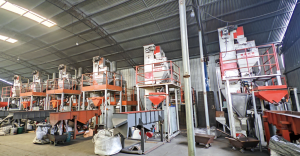
Cast steel shot is a spherical metallic blasting abrasive made by melting high-carbon cast steel and atomising the melt into round particles, followed by quenching and tempering. Zouping Huiteng Metal Abrasives Co., Ltd. is a manufacturer and exporter of metal abrasives based in Zouping City, Shandong Province, China, operating a 20,000 m² facility with approximately 100,000 tons of annual production capacity across steel shot, steel grit, stainless steel shot and cut wire shot series.
Within that portfolio, the Cast Steel Shot Series is specified from S70 through S930, with hardness options of HRC 40–50 and HRC 55–65, spherical particle shape, specific gravity of 7.8 g/cm³, bulk density of 4.5–4.8 g/cm³ and a recyclable life of 1000+ cycles. Cast steel grit is the angular counterpart: it is produced by crushing hardened shot, and the Cast Steel Grit Series runs G12–G120 in three hardness classes — GP at 42–52 HRC, GL at 53–60 HRC and GH at 60–64 HRC — with minimum density of 7.6 g/cm³, bulk density of 4.2 g/cm³ and a fatigue life of 2000–2500 cycles.
Which standards a cast steel shot order should reference
Cast steel shot and grit are commonly specified against SAE J827 for the material and sized to SAE J444 grade designations; cut wire shot follows SAE J441. ISO 11124-3:2018 specifies requirements for high-carbon cast-steel shot and grit supplied for blast-cleaning processes, covering 14 grades of shot and 11 grades of grit, with values for hardness, density, defect and structural requirements and chemical composition.
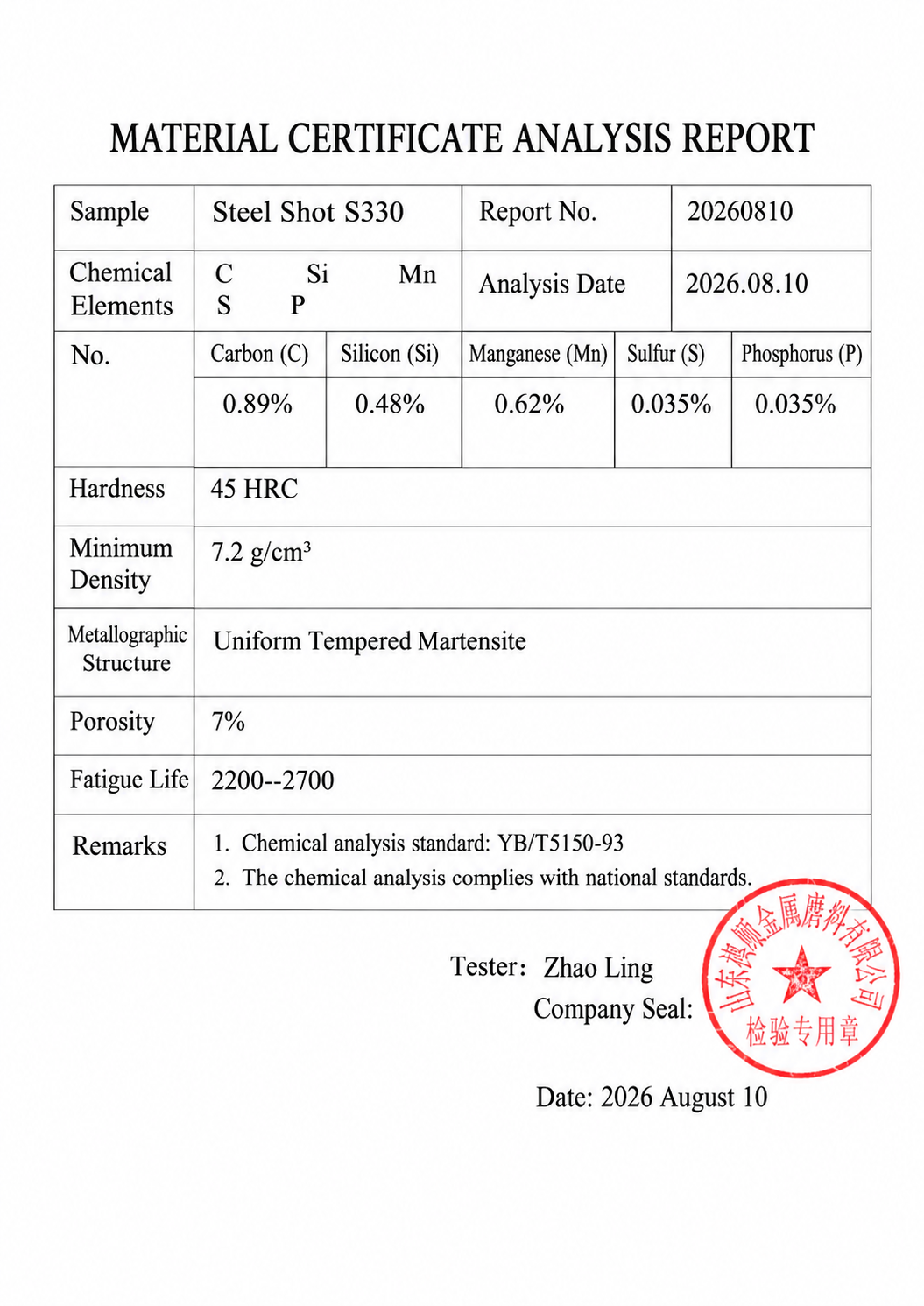
A standard reference in an RFQ is a requirement, not evidence. It only becomes evidence when matched by a batch certificate, a mill test certificate (MTC) or an independent test report for the specific lot being shipped. Huiteng issues MTC test reports and makes SGS third-party testing available, and each production batch is checked for chemical composition, fatigue life and pre-shipment sampling.
The eight data points an abrasive RFQ actually needs
Most re-orders and disputes trace back to information that was available at the buyer's plant but never reached the supplier. The table below converts that into a checklist that can be attached to any enquiry, whether the supplier is Huiteng or another manufacturer.
| Data point | Why it changes the order | Reference values in the Huiteng range |
|---|---|---|
| Abrasive type and particle shape | Spherical media peens and rounds; angular media cuts and profiles. Shape decides the surface profile, not the price. | Cast Steel Shot (spherical), Cast Steel Grit (angular), cut wire shot (cylindrical), stainless steel shot and cut wire |
| Grade or size designation | Size must sit inside the blast wheel or nozzle capacity; oversized media for a small wheel shatters on impact. | Shot S70–S930; grit G12–G120; cut wire 1.0–3.0 mm; bearing steel grit G12–G120 |
| Hardness band | Too hard becomes brittle in a given application; too soft polishes instead of cleaning. | Shot HRC 40–50 or HRC 55–65; grit GP 42–52 / GL 53–60 / GH 60–64 HRC |
| Chemistry and microstructure | Impurities and inconsistent chemistry accelerate breakdown well beyond the normal wear rate. | High-carbon cast steel; homogeneous tempered martensite in the counterweight and bearing products |
| Density, with the test method stated | Bulk density and true (specific) density are different measurements, and quotes that mix them are not comparable. | Shot specific gravity 7.8 g/cm³, bulk density 4.5–4.8 g/cm³; grit bulk density 4.2 g/cm³; ballast sand bulk density 3.8–6.0 g/cm³ |
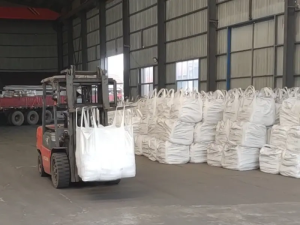
| Packaging and labelling | Bulk bags, 25 kg sacks and cartons drive handling cost, dust in the workshop and private-label requirements. | Bulk jumbo bags, 25 kg bags, custom cartons, OEM private label and custom packaging design |
| Process data | Machine type, wheel power, workpiece material and target cleanliness or roughness determine the starting grade. | Automated shot blasting lines, blast cabinets, blast rooms, tumble blast machines and hand blasting |
| Volume and timing | Custom grades follow a different production slot than stock grades. | MOQ 1 ton standard, 3 tons custom; 7–15 days stock, 20–30 days customised; 8,000 tons per month capacity |
Can bulk density and particle size be customised?
Partly, and the boundary matters more than the answer. Customisation at Huiteng covers material type, particle size and grade range, hardness band, chemical composition and packaging, with hardness adjustable across HRC 40–65. Particle size customisation is offered across the S70–S780 shot range, the G25–G120 grit range, and 0–3 mm, 1–2 mm, 2–3 mm, 3–6 mm, 6–9 mm and 9–12 mm granular cuts for the sand-type products.
Bulk density: a material property, not a free variable
For the weight-filling products, density is genuinely a specification. The ballast and counterweight sand line is offered in graded bulk densities from 3.8 to 6.0 g/cm³ with a true density above 7.0 g/cm³, free-flowing behaviour and moisture below 0.5%, in particle sizes of 0.1, 0.5, 1, 2, 3 and 5 mm. The box-filling sand line is supplied in 2–3 mm, 3–6 mm and 6–9 mm cuts at 52 HRC, with a minimum density of 7.2 g/cm³ measured by the alcohol displacement method and a homogeneous tempered martensite structure. Applications span elevator counterweights, construction machinery counterweights, bridge and foundation ballast, ship ballast and foundry box weighting.
For cast steel shot, however, bulk density of 4.5–4.8 g/cm³ follows from the alloy and the sphericity of atomised particles. A request for a materially higher figure is not a custom grade — it is a request for a different product. The same logic applies at the low-density end: packing density above 6.0 g/cm³ in a sand-type media is a blending problem with a hard ceiling at true density, not a manufacturing preference.
What customisation costs in time
Non-standard grades carry a 3-ton minimum and a 20–30 day lead time, against 1 ton and 7–15 days for standard grades held in stock. That is a normal manufacturing constraint rather than a penalty: a custom hardness band or granular cut requires a dedicated melt and screening run, and the sieve analysis has to prove the distribution before shipment. Buyers planning a trial should therefore budget one production cycle, not one order cycle.
When cheap grit becomes the expensive option
Low-cost steel grit usually fails in one of five ways, and only two of them are the media's fault. Application guidance from Huiteng identifies the common causes of rapid breakdown as: a hardness grade too high for the application, causing brittle fracture; particle size mismatched to blast wheel capacity; low-quality media with impurities and inconsistent chemistry; a worn or misadjusted air separator leaving fines in circulation; and blast wheel RPM set above specification.
The economic argument is straightforward once the recycling loop is considered. Unlike silica sand or copper slag, which shatter on first impact and go straight to the dust collector, steel abrasive is recovered by the elevator and air wash separator, cleaned, and returned to the hopper. Huiteng's application data put steel shot and grit at 2500+ recovery cycles, so one ton of steel abrasive displaces roughly 50–100 tons of single-use sand; the same guidance estimates total cost of ownership 50–80% below disposable media despite a higher price per ton, with savings arising from material purchases, refills, waste disposal, filter replacement and reduced rework.
| Symptom | Likely media cause | Verification step before blaming the supplier |
|---|---|---|
| Particle size visibly shrinks within a few cycles | Hardness grade too high for the impact energy; brittle fracture | Run the same grade at a lower HRC band and compare consumption |
| Excess dust, abnormal consumption rate | Impurities or inconsistent batch chemistry | Request batch chemical composition and a sieve analysis |
| Fines persist in the abrasive mix | Worn or misadjusted air separator | Inspect and clean the separator and vibrating screen |
| Breakdown concentrated in one machine | Wheel RPM or wheel power above specification | Check RPM against the machine manufacturer's data |
This is where the cheapest quotation becomes the most expensive decision. A media that breaks down at two to three times the normal rate consumes more tons, generates more dust, loads the dust collector and filter set harder, and disturbs the surface profile — which in turn shows up as coating adhesion problems weeks later, on a job that has already been signed off.
Does reusing buried box sand cause high losses?
Not under normal casting conditions, provided the fines are removed. Buried box sand is formulated for toughness and resistance to high-temperature thermal impact, and it does not powder easily after repeated pouring, so the reuse rate is high and losses stay low — continuously reducing sand cost per casting. The operational discipline is what protects that reuse rate:
- After shakeout, screen the sand to remove dust and broken fine particles.
- Return intact particles to the box burial and compaction cycle.
- Replenish with new sand on a regular schedule to hold the sand volume stable.
The boundary is screening discipline. If fines accumulate because screening is skipped, the fill density drifts, box compaction becomes inconsistent, and the loss rate rises — a process problem that is easily misread as a material problem. Dust removal protection is required during screening, and waste sand should be disposed of under local solid waste regulations.
Application fit: where cast steel shot is the correct first choice
Cast steel shot and grit supplied by Huiteng are used by shipbuilding and ship repair yards, structural steel and bridge fabricators, automotive parts and surface treatment plants, foundries, abrasive distributors, shot blasting equipment integrators, elevator counterweight manufacturers, construction anti-floating contractors, construction machinery and forklift manufacturers, fitness equipment producers and heavy equipment counterweight producers.
Starting points that recur in application guidance: ship hull and structural steel blasting typically uses angular grit around G25–G40 to strip old paint, heavy rust and mill scale and to cut an angular profile of roughly 50–100 microns for coating adhesion, with a final pass of S330–S460 shot to smooth the surface. Heavy ferrous castings with stubborn moulding sand use grit G18–G25, while lighter non-ferrous or precision castings suit shot S330–S550. Automotive gear and spring peening uses smaller shot in the S70–S230 band. Media size should always be matched to blast wheel capacity, since larger particles demand more power.
One five-year supply case, in numbers
A recurring supply programme in this portfolio runs at 100 tons per order with annual supply above 500 tons, across a five-year relationship. Reported outcomes include consistent Sa2.5–3.0 surface preparation, improved coating adhesion and paint service life, abrasive consumption reduced by 15–20% against the previous supplier, stable line operation with no quality complaints over five years, and low dust generation with a high recycling rate in customer workshops. Customised grades matched to the customer's specific blasting equipment and consistent particle size and hardness batch to batch are the two factors cited for the consumption result.
Comparison with traditional and alternative media
The comparison below is a fit table, not a ranking. Each media has a job where it is the wrong choice, and a procurement decision that ignores the limitation column is only half a decision.
| Media | Best fit | Reference characteristics | Limitation to accept |
|---|---|---|---|
| Cast steel shot | Peening, surface strengthening, cleaning of thin or precision parts, profile control | S70–S930; HRC 40–50 or 55–65; 7.8 g/cm³; bulk density 4.5–4.8 g/cm³; 1000+ cycles | Less aggressive cutting than angular grit; heavier mill scale and thick coating removal is slower |
| Cast steel grit | Aggressive rust, scale and old coating removal; angular anchor profile for coatings | G12–G120; GP/GL/GH hardness classes; bulk density 4.2 g/cm³; fatigue life 2000–2500 cycles | Breaks down faster than spherical shot; generates a rougher profile that must suit the coating system |
| Cut wire shot | Peening and finishing where consistency and low dust matter | Tire cord cutting 1.0/1.2/1.5/1.5×1.5/2.0 mm; steel strand cutting 2.0/2.5/3.0 mm; HRC 44–53; 3300–3600 cycle life | Higher cost per ton than cast media; cylindrical geometry rounds over time and is not a cutting abrasive |
| Stainless steel shot and cut wire | Non-ferrous contamination control — stainless, aluminium, copper and brass parts | 195/201/304/430 shot from 0.1–3.0 mm; cut wire 0.2–1.6 mm; 490–1520 MPa tensile hardness | Cost and grade availability limit it to applications where iron contamination is unacceptable |
| Single-use sand or slag | One-pass work where recovery is impractical | Discarded after first impact | Consumption is 50–100 times higher per equivalent steel ton; dust, waste disposal and health controls dominate cost |
Where this approach stops working
Honest specification advice includes the cases where the standard answer is wrong. Four boundaries apply to the range described here. First, cast steel shot is not the aggressive option: for thick epoxy, heavy mill scale and severe pitting, angular grit does the cutting and shot is used afterwards for profile control or peening. Second, recyclable life is not uniform across the portfolio — cast steel shot is rated at 1000+ cycles, bearing steel grit and stainless cut wire at 2500+, and stainless steel shot at 6500 — so in high-impact positions a lower price per ton can still mean more tons consumed per year. Third, custom grades carry a 3-ton minimum and a 20–30 day lead time, which does not suit a plant trialling five different specifications in one quarter. Fourth, a standards reference such as SAE J827 or ISO 11124-3 defines what a conforming batch looks like; it does not certify that any particular supplier's batch conforms, which is why the certificate request belongs in the purchase order rather than in the correspondence file.
Market trend: certification and consistency as the differentiator
With steel abrasives at 89.9% of the material segment and Asia Pacific holding 56.0% of global revenue, supply concentration is already established. The growth signal sits in the sub-segment: steel shot moving from USD 1.664 billion in 2025 toward a projected USD 2.5 billion by 2035, against 6.8 million metric tons consumed globally in 2025. Volume of that scale, sourced largely from clusters with many similar-looking producers, shifts competition away from the offer sheet and toward documentation — batch chemistry, sieve analysis, hardness data and independent test reports.
Two related pressures reinforce the shift. Disposable media carry rising waste-disposal and dust-control costs, which strengthens the total-cost case for recyclable steel media; and buyers who have already absorbed one bad batch tend to specify hardness bands and density methods explicitly rather than accepting a generic grade name.
Future outlook
For the next procurement cycles, three developments are worth planning around. Batch-level traceability is becoming a normal attachment rather than a premium request, with MTC documentation and third-party testing such as SGS treated as part of the delivery package. Density and size verification is moving into incoming inspection, which means suppliers will be asked to state test methods on the certificate, not just values. And customization demand is broadening beyond blasting grades into weight-filling applications, where counterweight and box-filling sand specifications are set by the assembly design rather than by a blasting standard. Buyers who standardise their RFQ template across both categories will have the shorter qualification cycle.
FAQ: ordering metal abrasives
What information must a buyer provide to order the right cast steel shot?
An order can be specified accurately from eight inputs: abrasive type and particle shape, grade or size designation, hardness band, chemistry and microstructure requirements, density with the test method, packaging and labelling, process data such as machine type, wheel power and target cleanliness, and volume with delivery timing. Process data is the input most often omitted and the one that determines the starting grade. Where the target surface standard and workpiece material are known, grade selection can be narrowed before any price discussion.
Can bulk density and particle size of metal abrasives be customised?
Particle size customisation is available across defined ranges: shot S70–S780, grit G25–G120, and 0–3 mm, 1–2 mm, 2–3 mm, 3–6 mm, 6–9 mm and 9–12 mm granular cuts, with hardness adjustable between HRC 40 and 65. Bulk density is customisable in the weight-filling products, where counterweight and ballast sand is offered in graded bulk densities from 3.8 to 6.0 g/cm³ at a true density above 7.0 g/cm³, and box-filling sand at a minimum density of 7.2 g/cm³ by alcohol displacement. For cast steel shot, bulk density of 4.5–4.8 g/cm³ is a property of the atomised alloy and sphericity rather than a freely adjustable value.
Does reuse of buried box sand cause high losses?
Losses stay low under normal casting conditions because buried box sand is formulated for toughness and resistance to high-temperature thermal impact, and does not powder easily after repeated pouring. The reuse rate depends on screening: dust and broken fine particles must be removed after shakeout, intact particles returned to the burial cycle, and new sand added on a regular schedule to hold volume stable. Where screening is skipped, fines accumulate and fill density drifts, which raises the apparent loss rate. Dust protection is required during screening, and waste sand is disposed of under local solid waste regulations.
Why does cheap steel grit break down faster and raise total cost?
Rapid breakdown usually traces to one of five causes: a hardness grade too high for the application, particle size mismatched to blast wheel capacity, impurities and inconsistent chemistry, a worn or misadjusted air separator leaving fines in circulation, or wheel RPM above specification. Only the chemistry and hardness causes are the media's fault, which is why a batch chemical analysis and sieve analysis should be requested before a supplier is blamed. Because steel abrasive is recovered and returned to the hopper rather than discarded, faster breakdown multiplies material consumption, dust load, filter replacement and rework — the mechanism behind the estimated 50–80% total cost gap against disposable media.
Which cast steel shot or grit grade suits which blasting job?
Ship hull and structural steel blasting typically starts with angular grit around G25–G40 to remove old paint, heavy rust and mill scale and to produce an angular profile of roughly 50–100 microns, optionally followed by S330–S460 shot to smooth the surface. Heavy ferrous castings with stubborn moulding sand use grit G18–G25, while lighter non-ferrous or precision castings suit shot S330–S550. Automotive gear and spring peening uses shot in the S70–S230 band. Size should always be checked against blast wheel capacity, because larger particles require more power.
What testing and documentation should accompany a batch?
Each batch should be supported by chemical composition analysis, particle size sieve analysis, hardness testing and microstructure inspection, with the results issued as a mill test certificate or test report, and independent third-party testing available on request. The distinction that matters at goods-in is between a standard reference and batch evidence: citing SAE J827, SAE J444, SAE J441 or ISO 11124-3 in a purchase order defines the requirement, while the certificate proves the shipped lot. Huiteng operates 100% batch inspection with pre-shipment sampling and makes SGS third-party testing available.
What are the minimum order quantity, lead time and sample terms?
Standard grades carry a 1-ton minimum and ship in 7–15 days from stock; customised grades carry a 3-ton minimum and take 20–30 days. Samples of 1–5 kg are supplied free of charge for testing on the buyer's own equipment, with the buyer covering international courier freight, and are prepared within 3–5 working days to the requested size, hardness and material grade; for first-time buyers, testing two or three grades is the usual way to identify the best fit for a given machine and workpiece.
Have Questions or Need More Details?
Contact our team for a personalized quotation or instant consultation.
Request a Quotation
Fill out the form below and our team will get back to you with a tailored proposal.
WhatsApp Direct Chat
Prefer to chat in real-time? Message us on WhatsApp for instant assistance & quick answers.
- Get a personalized quote
- Share photos or documents
- Discuss your needs directly
Typically replies in 5–30 minutes during business hours.