
Casual and Fast Fashion: Specifying Easy-Wash Recycled Knits
Casual and Fast Fashion: Specifying Easy-Wash Recycled Knits
Casual and fast-fashion programs rarely fail because a fabric is unfashionable. They fail because the garment comes back — holding odour, losing shape, or shrinking after the third home wash — while the same program is simultaneously being asked to publish a recycled-content claim. Specifying functional knit fabric for these programs therefore means writing two specification documents at once: a laundry-durability specification and a material-origin specification. Most sourcing disputes in this category begin where the two were treated as one requirement.
This industry reference explains how buyers can match functional knit fabric to casual and fast-fashion scenarios, using three in-house E-king Textile constructions as concrete specification examples: EKWP2270-D6, EKWP1912-DSP and 20ETW1028-DSP. The focus is on easy-wash performance, quick-dry behaviour, stretch, and recycled content — the four attributes that most often decide whether a program is reordered or replaced.
Why casual and fast-fashion programs specify fabric differently
A fast-fashion basic and a technical activewear style can use the same knitting machine and the same yarn family, yet they are bought against different risk models. Activewear buyers usually accept a higher unit cost in exchange for documented performance. Casual and fast-fashion buyers usually accept a narrower performance claim in exchange for volume, speed and repeatability across colourways. When a program moves from one model to the other without re-writing the specification, the buyer inherits activewear claims without activewear evidence, or fast-fashion economics without fast-fashion volume.
The practical consequence is that easy-wash and recycled content must be written as separate, testable lines. Easy-wash is a finishing and construction outcome: it is decided by yarn composition, knit structure and the finishing route, and it is validated by wash testing. Recycled content is a material-origin outcome: it is decided at yarn sourcing and confirmed by the traceability documents the mill can issue for the specific yarn lot. A fabric can be excellent on one and unverified on the other.
The opportunity: one mill, three constructions, three program profiles
Zhangjiagang E-king Textile Co., Ltd. (EKING fabric) is a knitted textile manufacturer based in Zhangjiagang, Jiangsu Province, China, established in 2011. The company integrates R&D, design, production, processing and domestic and international sales, operates a complete chain from weaving to dyeing and finishing, and reports an annual output of 6,000 tons of fabric with approximately 95% of output exported to EU and USA markets. Its in-house dyeing facility was put into production in March 2022, which matters to fast-fashion buyers because dyeing and finishing control sits inside the same production chain as knitting rather than in a third-party queue.
Within its functional knit range, three constructions illustrate how the same supplier can serve three different program profiles without changing the underlying yarn platform logic. Each is positioned in E-king's sports functional, outdoor functional and recycled functional fabric families.
Model-level comparison for casual and fast-fashion specification
| Model | Yarn composition | Listed functional features | Typical program fit |
|---|---|---|---|
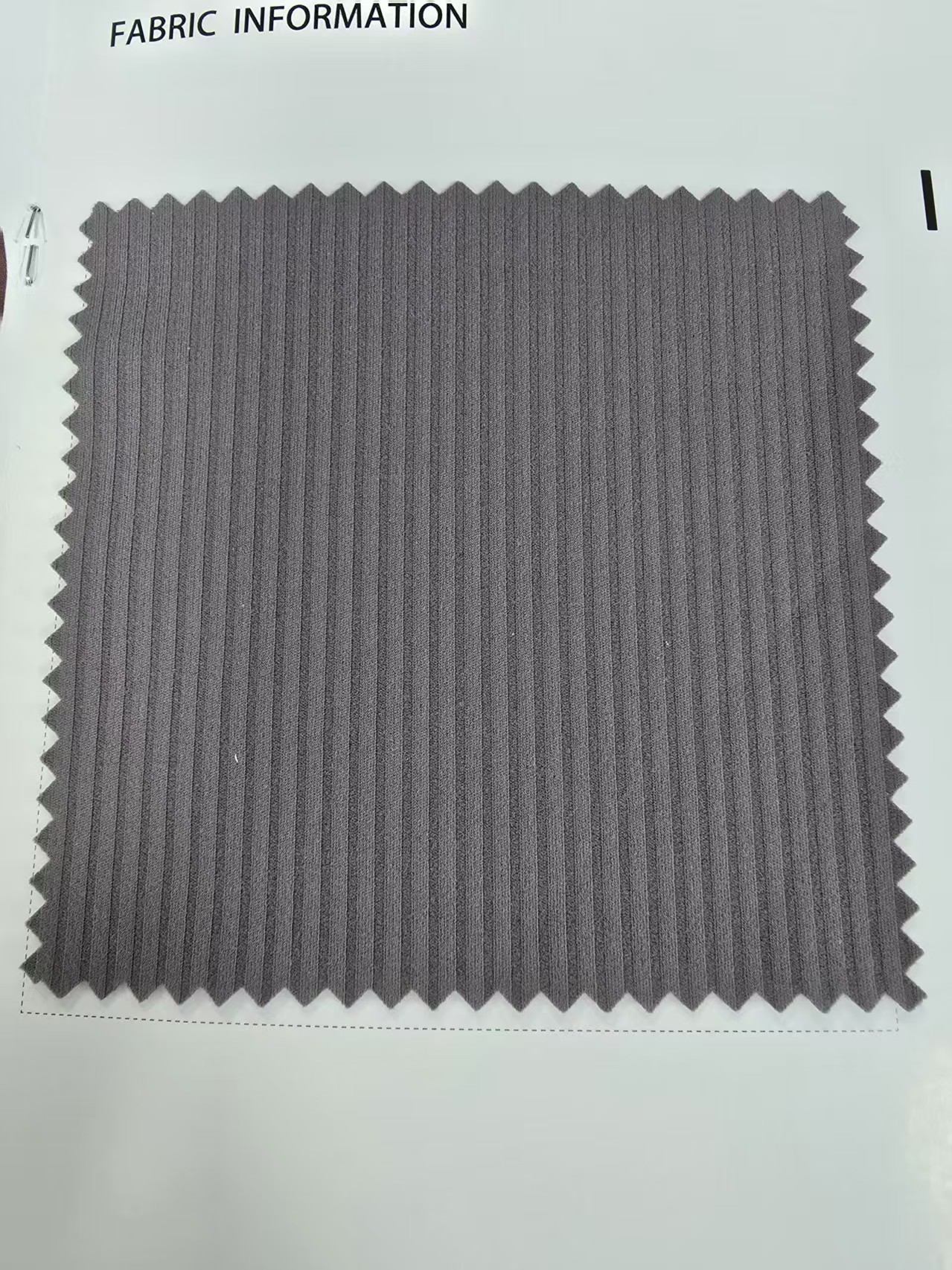
| EKWP2270-D6 | nylon / spandex | moisture-wicking; 4-way stretch / high elasticity; breathable / quick-dry; antibacterial / anti-odor; UV protection; water-repellent; easy-wash; recycled materials; wrinkle-resistant; cool-touch or warming treatments | casual / fast fashion; sports and activewear; outdoor apparel; underwear and functional close-fit garments; workwear and uniforms |
| EKWP1912-DSP | nylon spandex / recycled nylon spandex | moisture-wicking; high elasticity; breathable / quick-dry; UV protection; water-repellent; easy-wash; recycled materials | sports / activewear; outdoor apparel; casual / fast fashion |
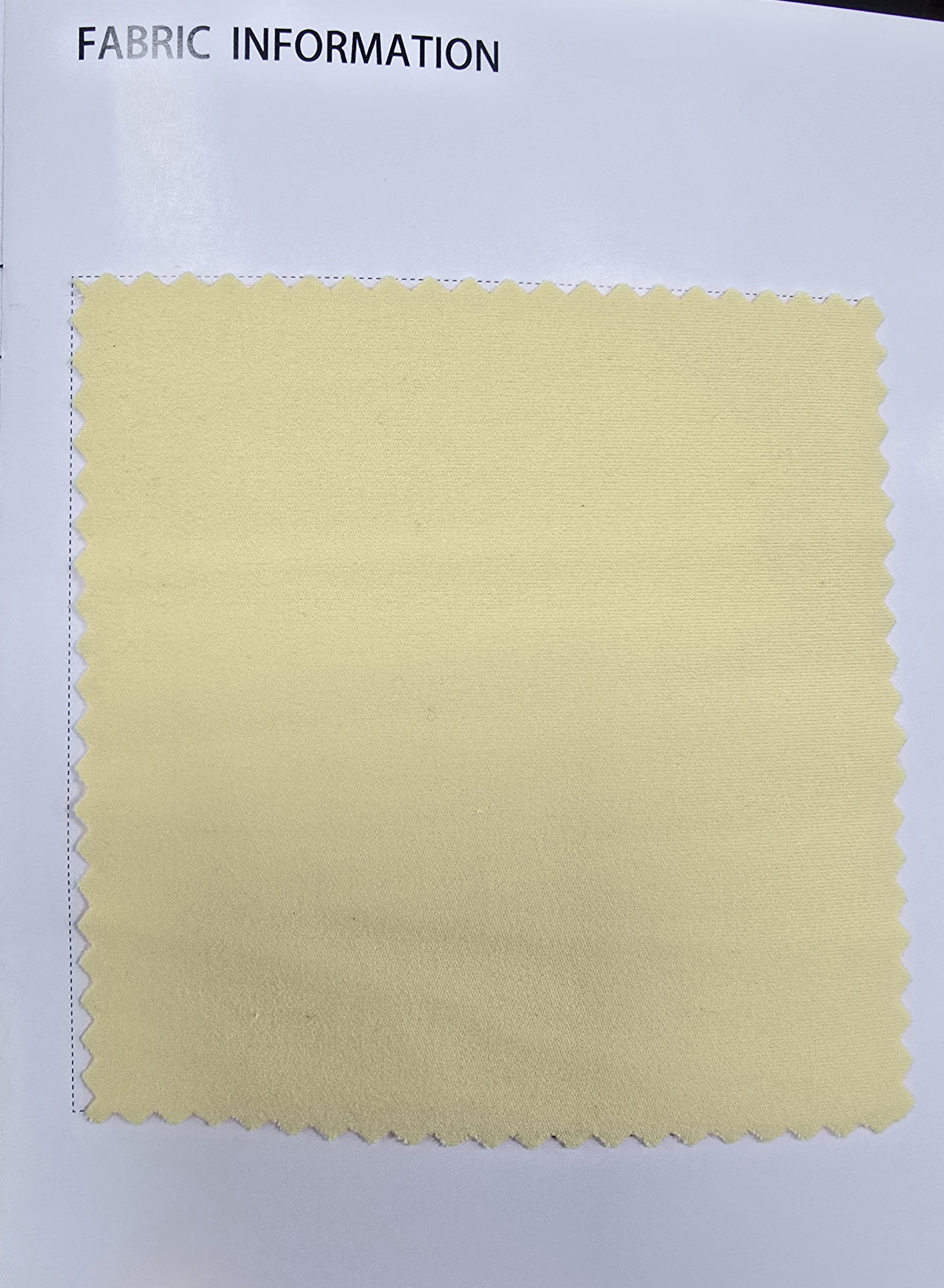
| 20ETW1028-DSP | poly / spandex | UV protection; water-repellent; easy-wash | sports / activewear; outdoor apparel; casual / fast fashion; underwear and functional close-fit garments |
Two observations follow from this table. First, EKWP2270-D6 carries the widest listed function set, including wrinkle-resistance and optional cool-touch or warming treatments — attributes that matter when a casual garment is worn across a long day rather than in a single training session. Second, EKWP1912-DSP is the construction where recycled content is explicitly written into the yarn line: nylon spandex or recycled nylon spandex. That distinction is not cosmetic. A buyer who needs a recycled-content claim should confirm the yarn option at sampling rather than assume it across the whole range.
How easy-wash, quick-dry and stretch are actually delivered
In knitted fabric, easy-wash is not a single additive. It is the combined result of yarn selection, knit structure and the finishing route. E-king's finishing capability covers peaching, brushing, fuzzing, transfer printing, dispersed printing, acid printing, digital printing, foil and emboss, together with chemical functional finishes that include antibacterial and odour control, moisture wicking and quick drying, UV protection, anti-static treatment, waterproofing, stain and oil prevention, thermal storage and warmth preservation, and cooling treatment.
That list matters for specification because each finish consumes part of the same performance budget. A heavy water-repellent treatment applied to a quick-dry knit can slow moisture transport. A warming or thermal-storage treatment is a different objective from cool-touch finishing. Buyers should therefore rank functions rather than list them: name the two functions the garment cannot fail on, and treat the remainder as optional upgrades to be confirmed on the sample.
Stretch is a construction decision, not only a yarn decision
Both EKWP2270-D6 and EKWP1912-DSP are specified with high elasticity, and EKWP2270-D6 with 4-way stretch. Spandex content is only part of the mechanism; knit structure determines recovery direction and the fabric's ability to return to shape after repeated laundering — which is where fast-fashion returns usually originate. Because E-king's customisation scope includes yarn composition, GSM and weight, colour, stretch and knit structure, finishing, and the use of recycled materials, a stretch target can be developed rather than selected from a catalogue, provided the buyer supplies a measurable standard.
Scenario fit: matching construction to program type
| Program scenario | Specification priority | Construction to open with |
|---|---|---|
| High-turn fashion basics | easy-wash durability, UV protection, water-repellency, colour consistency across repeats | 20ETW1028-DSP (poly / spandex) |
| Everyday comfort wear and loungewear | moisture-wicking, breathable / quick-dry, soft stretch | EKWP1912-DSP (nylon spandex or recycled nylon spandex) |
| Performance casual with wrinkle and thermal requirements | wrinkle-resistance plus cool-touch or warming treatment, 4-way stretch, antibacterial / anti-odor | EKWP2270-D6 (nylon / spandex) |
| Underwear and close-fit garments | moisture management, stretch recovery, easy-wash | EKWP2270-D6 or 20ETW1028-DSP |
| Workwear and uniforms | durability, easy-wash, wrinkle-resistance | EKWP2270-D6 (nylon / spandex) |
In practice, these constructions operate in made-to-order production combined with custom development, and E-king describes the model as a fabric supplier role that includes technical support. The scenario requirement it attaches to that role is explicit: clear technical specifications and testing standards are needed for development and validation. Fast-fashion buyers who arrive with a reference garment instead of a specification sheet will usually spend longer in sampling than buyers who arrive with a wash-cycle target and a fibre composition.
What the market data indicates about demand direction
Three published data points frame why easy-wash and recycled content are being specified together rather than sequentially. Fact.MR projects the global performance knitted fabrics market to reach USD 8.58 billion in 2026, with a forecast period running to 2036, indicating that engineered knits are no longer a niche within the wider knit category. Research and Markets expects the global moisture wicking fabrics market to reach USD 3.99 billion by 2030 at a 6% CAGR, which quantifies the demand side of moisture management specifically.
On the material-origin side, SNS Insider projects the recycled textiles market at USD 6.32 billion in 2025, growing at a 4.70% CAGR to 2035. For context on the base industry, Grand View Research estimated the broader global knitted fabric market at USD 35.7 billion by 2025 with a 6.0% CAGR, and Ken Research reports that China's exports of knitted fabrics reached approximately USD 21.2 billion in 2024 under HS code 60 — the trade flow that most casual and fast-fashion fabric sourcing depends on.
Read together, these figures describe a market where performance features are expanding inside a mature fabric category, and where recycled content is growing at a slightly slower rate than functional performance. That gap is consistent with what buyers report operationally: recycled yarn supply and traceability, not buyer intent, is the usual constraint.
Functional recycled knit versus conventional knit: where the boundary sits
A conventional knit and a functional easy-wash knit are not interchangeable on the same line. The differences are real, but so are the constraints, and buyers should plan for them before committing a program:
- Order minimums. E-king lists a minimum order quantity of 3,000 yards. This is workable for a mid-size casual program but changes the economics of test-order behaviour typical of small drop-based brands.
- Lead time. The listed lead time is 30–45 days. For a fast-fashion calendar built on short repeat windows, this means the fabric decision sits earlier than the garment decision, not alongside it.
- Recycled content is model-specific. EKWP1912-DSP lists recycled nylon spandex as a yarn option and EKWP2270-D6 lists recycled materials among its features. 20ETW1028-DSP is listed within the recycled functional fabrics family but its individual parameters cover UV protection, water-repellency and easy-wash, so a recycled claim tied to this model must be confirmed against the actual yarn lot.
- Not every function can coexist at full strength. Combining water-repellency, high UV protection and maximum breathability in one knit involves trade-offs that only sampling can resolve.
- Validation requires input from the buyer. Customised functions such as PFAS-free processing, specific antibacterial agents or recycled materials need clear technical specifications and testing standards before development and validation can proceed.
The comparison is therefore not functional versus conventional in the abstract. It is whether the program's wash cycle, return exposure and sustainability claim justify moving from an off-the-shelf knit to a specified, sampled and test-validated construction.
Compliance context: PFAS limits and what they mean for water-repellent finishes
Water-repellent finishes are the point in a casual knit specification where regulatory exposure is concentrated. OEKO-TEX implemented a new limit value for Total Fluorine of 100 mg/kg under STANDARD 100, effective 1 January 2024, as part of its PFAS compliance framework. In the United States, California AB-1817 bans regulated PFAS in textiles at a threshold of total organic fluorine below 100 ppm from 1 January 2025, tightening to below 50 ppm in 2027.
Because E-king exports approximately 95% of output to EU and USA markets, these thresholds are directly relevant to how a water-repellent casual fabric should be specified. Buyers should state the destination market and the applicable threshold in the development brief, and should select a PFAS-free processing route where the target market requires it rather than defaulting to a conventional repellent finish and testing afterwards.
Supplier capability and repeat-order reliability
Fast-fashion programs are reordered on the basis of consistency far more often than on the basis of peak parameters. The operational facts that support that consistency at E-king Textile include an 8,600 m² facility, approximately 80 employees, a 10-person R&D team, an annual output of 6,000 tons, 100% testing, and an ERP system supporting production planning. The company reports more than 100 newly developed products each season and maintains yarn and material cooperation with Hengli Group, Shenghong Group, Invista, Creora Group, Huafeng Group and POLYGIENE.
On the commercial side, sample support and technical communication are provided during development, while bulk issues are handled according to contract and warranty terms — an arrangement buyers should confirm in writing rather than assume. One long-running reference point is a garment shop customer supplied with 100 tons of fabric for apparel garments over a 10-year relationship, where the reported result is stable performance and the reported highlight is a soft and flexible hand feel. Longevity of that kind is a more useful signal for repeat casual programs than any single test report, because it reflects consistency across many production lots.
A short specification checklist before sampling
- Name the wash cycle the garment must survive, in number of cycles and temperature, and the acceptable appearance change.
- Separate the easy-wash specification from the recycled-content specification.
- Match the model to the scenario: 20ETW1028-DSP for high-turn basics, EKWP1912-DSP for comfort wear with a recycled yarn route, EKWP2270-D6 where wrinkle-resistance or thermal options are required.
- Confirm the recycled yarn option against the specific model and lot, not against the range.
- State the destination market and the PFAS threshold that applies to any water-repellent finish.
- Plan for 3,000-yard minimums and a 30–45 day lead time in the program calendar.
- Require sample approval before bulk, and document the testing standard used for each function claimed.
Future outlook
Two directions are visible from the current evidence. The first is regulatory convergence: with OEKO-TEX applying a Total Fluorine limit of 100 mg/kg under STANDARD 100 from 2024 and California tightening from below 100 ppm to below 50 ppm between 2025 and 2027, PFAS-free processing is shifting from a differentiation claim to a baseline requirement in EU and USA programs. Buyers who specify finish chemistry at the design stage will absorb that shift more cheaply than buyers who test finished garments.
The second is the gradual alignment of comfort performance and sustainability claims in a single construction. The published growth rates — 6% CAGR for moisture wicking fabrics to 2030 and 4.70% CAGR for recycled textiles to 2035 — suggest that functional performance demand is currently expanding faster than recycled material supply. For casual and fast-fashion buyers, the practical implication is to treat recycled content as a yarn-sourcing decision to be secured early, and easy-wash performance as a finishing decision to be validated by test.
For buyers who want to review the full production and finishing scope behind these constructions, the company profile is available as a downloadable document: E-king Textile company profile (PDF). The company's website is www.ekingtex.com.
FAQ
Is easy-wash the same requirement as quick-dry in a functional knit fabric?
No. Easy-wash describes how a fabric behaves across repeated laundering — shape retention, appearance and durability. Quick-dry describes how quickly moisture leaves the fabric. In the models reviewed here, EKWP2270-D6 and EKWP1912-DSP list both breathable / quick-dry and easy-wash, while 20ETW1028-DSP lists easy-wash together with UV protection and water-repellency. Because they are separate attributes, they should appear as separate lines in a specification sheet.
Which construction suits a high-turn fast-fashion basics program?
20ETW1028-DSP, a poly / spandex construction listed with UV protection, water-repellency and easy-wash, is positioned for sports and activewear, outdoor apparel, casual and fast fashion, and underwear and functional close-fit garments. Its listed parameters are narrower than the two nylon / spandex options, which makes it the more straightforward specification where the program's priority is easy-wash performance, UV protection and water-repellency at volume.
How should recycled content be specified in a functional knit fabric?
Recycled content should be specified at the yarn line, not at the range level. EKWP1912-DSP is listed with nylon spandex / recycled nylon spandex, and EKWP2270-D6 lists recycled materials among its features. 20ETW1028-DSP sits within the recycled functional fabrics family but its individual parameters cover UV protection, water-repellency and easy-wash, so any recycled claim for that model must be confirmed against the actual yarn lot. E-king's customisation scope also includes the use of recycled materials, which allows a recycled-content target to be developed against a stated standard.
What minimum order quantity and lead time apply to custom functional knit development?
E-king lists a minimum order quantity of 3,000 yards and a lead time of 30–45 days. The production mode is a combination of made-to-order production and custom development, with sample approval prior to bulk manufacturing. For programs running on short repeat cycles, both figures need to be built into the calendar before the garment development window opens.
Does a water-repellent functional knit comply with current PFAS limits?
Compliance depends on the finish chemistry and the destination market. OEKO-TEX applies a Total Fluorine limit value of 100 mg/kg under STANDARD 100, effective 1 January 2024, as part of its PFAS framework. California AB-1817 bans regulated PFAS in textiles below 100 ppm total organic fluorine from 1 January 2025, tightening to below 50 ppm in 2027. E-king supports customised functions per brand requirements, including PFAS-free processing, but clear technical specifications and testing standards are required for development and validation.
What limits should a buyer plan for when moving from a conventional knit to a functional easy-wash knit?
Three limits recur. First, order structure: 3,000-yard minimums and 30–45 day lead times suit mid-size programs better than small test drops. Second, function interaction: water-repellency, UV protection and maximum breathability can pull against each other, so buyers should rank functions rather than list them all as mandatory. Third, verification input: customised finishes such as PFAS-free processing, specific antibacterial agents and recycled materials require the buyer to supply clear technical specifications and testing standards before validation can proceed. E-king operates with 100% testing in production and handles bulk issues according to contract and warranty terms, with sample support and technical communication during development.