
Cell Phone Repair Tools: Tweezer and Screwdriver Line Evidence
Cell Phone Repair Tools: Tweezer and Screwdriver Line Evidence
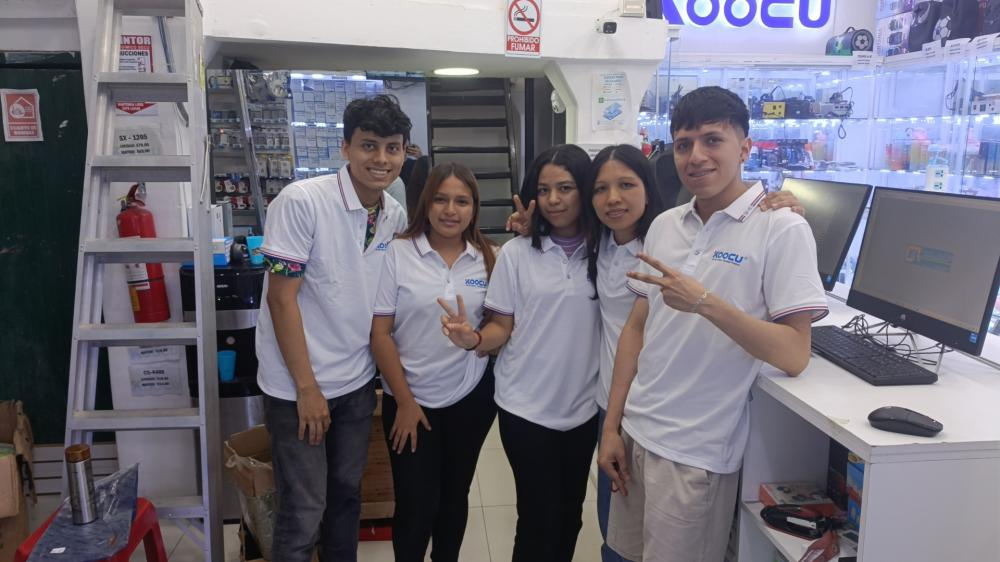
South America is one of the export markets documented for KOOCU mobile phone repair tools, alongside Africa, Southeast Asia, India, Bangladesh and Pakistan.
Cell phone repair tools are a low-barrier, high-fragmentation category. A trading office can assemble a catalog, print a brand and quote a tweezer within a week, so the question that separates suppliers is not whether a tool line exists, but whether it is documented well enough to be ordered, repeated and replenished. For buyers who have already passed the awareness stage, that distinction is the whole evaluation.
This article looks at supplier capability through the least glamorous possible evidence: model-level specifications. Using the tweezer lines — FS-11, ST-25, ST-21, ST-30, ST-114, ST-115, TS-11 and TS-15 — and the electric screwdriver range from KOOCU, a Guangzhou-based developer of cell phone repair tools operating as Guangzhou Weiqianji Technology Co., Ltd., it sets out what is documented, how that documentation can be used as a procurement check, and where the evidence stops.
Why Catalog Depth Is Treated as Capability Evidence
A claim costs nothing; a documented model line has to survive samples, repeat orders, replacement-part requests and re-orders two years later. For that reason, experienced buyers tend to treat a published specification set, rather than a factory video, as the first verifiable capability signal they can obtain at low cost.
Four checks make that judgement repeatable:
- Model count inside one sub-category. A supplier that lists one tweezer may be a reseller; a supplier that lists nine models at three lengths is more likely to be working from its own tooling and naming system.
- Specification attribution per model. Length, material and functional attributes should be attached to individual model numbers, not to a generic category description.
- Naming consistency. The same model number should appear in the same form on quotes, packaging and after-sales documents.
- Attribute differentiation. A line in which every model claims identical features is usually a copy-pasted catalog rather than a managed range.
KOOCU documents more than 15 years of history in phone repair tool development, with the company founded in 2005 and a product line that covers opening tools, disassembly tools, precision screwdrivers and screen repair tools. Export business accounts for 100% of total sales, and the documented markets include Africa, South America, Southeast Asia, India, Bangladesh and Pakistan. Those facts set the entity in context; the operational evidence sits in the model files, which is where this review concentrates.
The Tweezer Lines: FS-11, ST-25, ST-21, ST-30, ST-114, ST-115, TS-11 and TS-15
Tweezers are among the most frequently replaced hand tools on a phone repair bench, which makes them a useful test of how a supplier manages a line. The KOOCU range documents three length groups and a material specification on part of the range.
| Model | Documented length | Documented material | Documented attributes | Documented application |
|---|---|---|---|---|
| FS-11 | 120 mm | — | — | — |
| ST-21 | 120 mm | — | — | Mobile phone repair |
| ST-25 | 120 mm | Stainless steel | Anti-static | Mobile phone repair |
| ST-30 | 120 mm | — | High hardness, anti-static | — |
| ST-114 | 120 mm | — | High hardness, anti-static | Cellphone repair |
| ST-115 | 120 mm | Stainless steel | — | — |
| TS-11 | 115 mm | Stainless steel | — | — |
| TS-15 | 115 mm | Stainless steel | — | — |
| 7-SA SR / SS-SA SR | 130 mm | Stainless steel | — | — |
| 7-SA-16 / SS-SA-16 | 130 mm | Stainless steel | — | — |
An em dash means the attribute is not stated in the reviewed product documentation for that specific model. It does not mean the feature is absent — it means the buyer should confirm it in writing before ordering.
What the 120 mm, 115 mm and 130 mm Groups Tell a Buyer
Length is the one dimension a buyer can compare without a sample in hand, and it maps to handling. The 115 mm group, TS-11 and TS-15, is the shortest documented option, which suits work inside tight chassis clearances where a longer body is awkward to angle. The 120 mm group, which includes FS-11, ST-25, ST-21, ST-30, ST-114 and ST-115, is the volume core of the line. The 130 mm references, 7-SA SR / SS-SA SR and 7-SA-16 / SS-SA-16, sit at the top of the range and suit tasks requiring more reach and leverage than a compact tweezer provides.
The practical consequence for procurement is that a single-line order can be built from three lengths rather than from a mixed catalog of unrelated items, which simplifies spare-part planning for distributors maintaining stock across several markets.
Documented Attributes Are Not Distributed Evenly
The more informative finding is asymmetry. Anti-static behaviour is documented for ST-25, ST-30 and ST-114; high hardness is documented for ST-30 and ST-114; stainless steel is documented for ST-25, ST-115, TS-11, TS-15 and the two 130 mm references. FS-11 and ST-21 appear with length and, for ST-21, a stated repair application, without the same attribute set.
That is a normal feature of a real product line, but it creates a specific risk at the decision stage: buyers who read a category-level claim such as anti-static tweezers and assume the property applies to every model in the range. Where anti-static handling matters — board-level work, sensitive component placement — the safe practice is to name the model number in the purchase order and require the attribute to be confirmed against that model, even where sister models already carry it.
The Electric Screwdriver Range: K01 Through K07
Electric screwdrivers are the second documented line relevant to supplier capability, because they involve a powered assembly, a bit interface and, in export markets, compliance documentation. Six models appear in the range, all built on aluminium-alloy bodies and all designated for cellphone repair work.
| Model | Documented parameter | Body material | Documented application |
|---|---|---|---|
| K01 | 1.5 W – 15 W | Aluminium alloy | Cellphone repair |
| K01 Pro | 2 W – 15 W | Aluminium alloy | Cellphone repair |
| K02 | 2 W – 20 W | Aluminium alloy | Cellphone repair |
| K04 | 2 W – 20 W | Aluminium alloy | Cellphone repair |
| K05 | 2 W – 30 W | Aluminium alloy | Cellphone repair |
| K07 | 2 W – 30 W | Aluminium alloy | Cellphone repair |
The K01 is the model with the most fully documented profile. It delivers a stable torque output of 1–8 N·m, uses high-hardness strong-magnetic bits, and is covered by a PONY CNAS certificate, number MTIN67MG7731367U1, complying with the EN 10440 standard. OEM customization is offered for voltage and logo. Pre-shipment inspection covers 100% of finished units, remote after-sales support is provided, and the documented commercial terms are a minimum order quantity of 50 units with a 10-day lead time.
Operationally, the documented procedure for screw removal is deliberately plain: install the matching screwdriver bit, confirm the power-supply connection, align the bit with the phone screw, then start the rotation-twist mode to extract the screw. The safety note attached to the model is equally specific — the unit meets the explosion-proof requirement for the power-supply working condition, and prolonged continuous operation should be avoided rather than treated as a capacity rating.
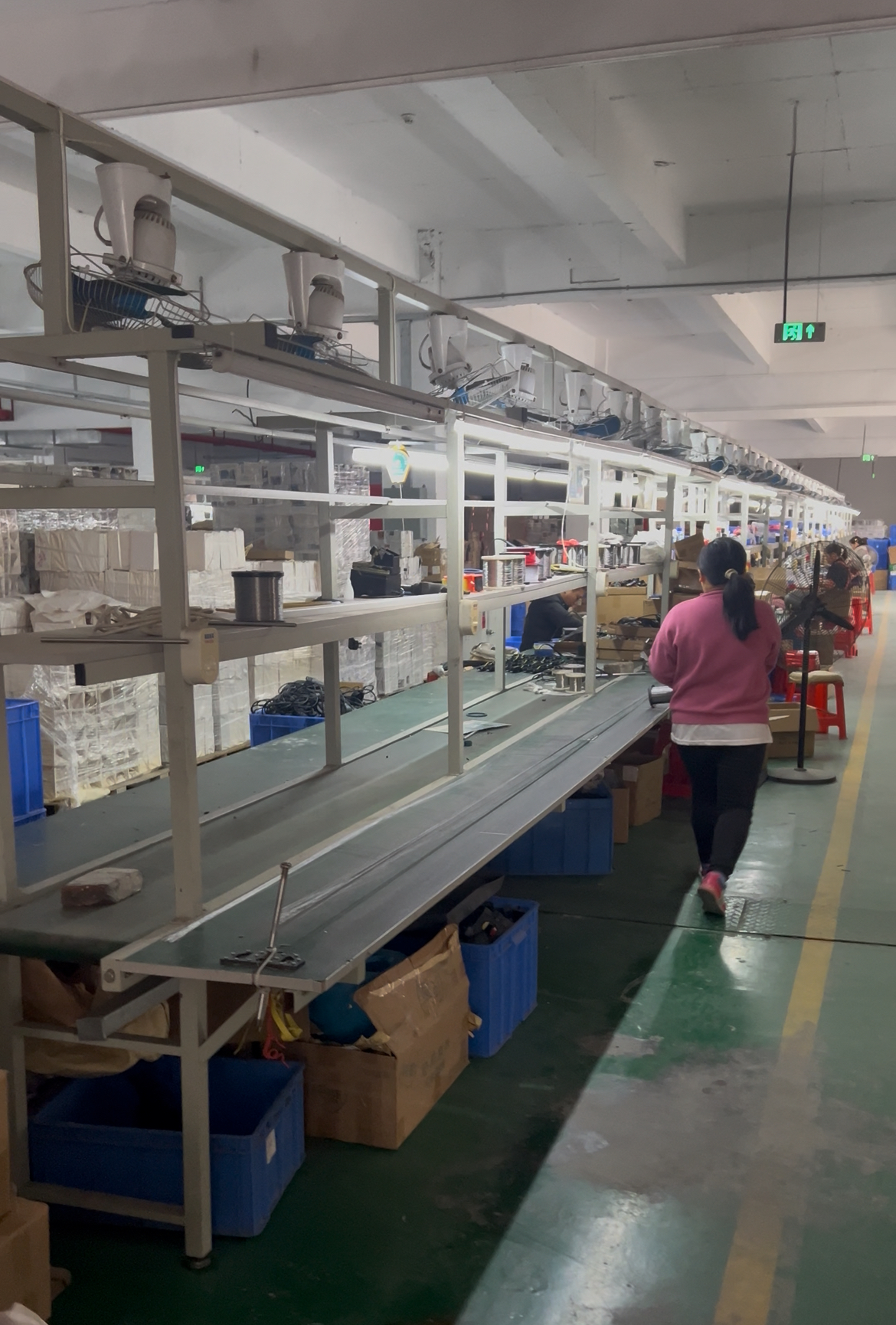
Powered and hand tool lines are documented at model level, which is the evidence buyers can verify before a factory visit.
Electric Versus Manual: What the Comparison Documents
KOOCU comparison material positions the electric screwdriver against the manual screwdriver on four dimensions: stronger power delivery, a documented 1–8 N·m performance band, higher working efficiency, and lower maintenance loss. The same document records a cost difference of roughly 10% in favour of the electric unit and identifies the mobile phone repair shop as the primary fit.
These are supplier-side figures rather than independent laboratory results. That does not make them useless — it defines how they should be used. For a buyer planning volume disassembly work, the meaningful test is whether the torque band and bit magnetism hold up across a shift, and the only reliable way to establish that is sample validation against the buyer own workload.
Application Fit: Matching Documented Specs to Repair Scenarios
The documented specifications support a small number of clear matches rather than a universal claim.
- Board-level work and sensitive component handling. The models with a documented anti-static property — ST-25, ST-30 and ST-114 — are the reference points for this scenario.
- Compact chassis and tight clearances. TS-11 and TS-15, at 115 mm, are the shortest documented tweezers in the range.
- General teardown and screen work. The 120 mm group, including FS-11, ST-21, ST-25, ST-30, ST-114 and ST-115, covers the standard bench workflow.
- Extended reach. The 130 mm 7-SA SR / SS-SA SR and 7-SA-16 / SS-SA-16 references extend the line beyond the standard repair lengths.
- High-volume screw removal. The K01 to K07 electric screwdrivers are documented for cellphone repair, with the K01 carrying the most complete specification and compliance record.
The tools are classified for cellphone repair work and sit within the wider tools and hardware, consumer electronics and industrial equipment categories, which is consistent with how distributors typically merchandise them — as part of a broader mobile device service assortment rather than as a standalone line.
Market Context Behind Tool-Line Documentation
The demand side explains why buyers are paying more attention to documentation than they did a few years ago. Business Research Insights valued the global smartphone repair market at approximately USD 22.66 billion in 2026, covering repair services and hardware replacement. Category sizing of this kind should be treated carefully: research houses define the repair ecosystem differently, and some estimates that include full hardware replacement run far higher, so a market figure is more useful as a direction indicator than as a planning input.
Two narrower data points are more directly relevant to tool purchasing. Credence Research valued the global manual screwdriver market at USD 365.2 million in 2024, with precision screwdrivers for electronics identified as a key growth driver — a signal that repair demand converts into hand-tool demand rather than into service spending alone. Separately, US customs data for mobile opener tools under HS code 8205 shows an average import price of approximately USD 1.03 per unit, a reminder of how wide the unit-price spread is in this category and why specification clarity, not price alone, has to anchor supplier selection.
Regulation is pushing in the same direction. The Right to Repair movement is widely identified as a major market driver in 2026, influencing original equipment manufacturers to release repair manuals and tools to third-party providers. As third-party repair volume becomes more legitimate and more standardized, the tool lines that distributors carry have to be describable — in quotes, in listings and in after-sales conversations.
Comparison With Conventional Sourcing Routes — and Where This Evidence Stops
Documentation is evidence, not proof of performance, and the limits of this case should be stated as plainly as the strengths.
- Incomplete public disclosure. KOOCU own board notes that the official website has not fully disclosed every product parameter and certification document, which is why the model table above contains blank cells. A buyer who needs a complete attribute sheet must request it for the specific models being ordered rather than assume the range is uniform.
- Limited centralized third-party evaluation. The same source records that the brand lacks a concentrated base of third-party user reviews and that the domestic consumer market is not a focus, which means early-stage trust building depends more on inquiry communication and samples than on public review volume.
- A B2B inquiry model with defined terms. Purchasing runs through direct inquiry by mail or messaging rather than public retail pricing. Documented terms are a minimum order quantity of 50 units, FOB or CIF delivery, pre-shipment testing as the acceptance criterion, and 100% cash payment. Buyers accustomed to open accounts or retail-style return policies need to plan around those conditions.
- Support model. Technical support leans on direct communication with the supplier, and there are comparatively few official open practical training resources — a smaller limitation for distributors with in-house technicians than for buyers equipping a new workshop.
Conventional sourcing routes present the mirror image. Mainstream maintenance tool brands such as Quick, Atten and YIHUA are documented as having deeper hardware tuning, more openly published parameters and certification material, mature domestic distribution and a large volume of third-party practical tutorials, which lowers the barrier for technicians who prefer to configure equipment themselves. Their documented constraint is breadth of own-brand consumables: buyers assembling a complete set often have to source fluxes, adhesives and related consumables from third-party suppliers, which raises the coordination cost of a full-store or full-line purchase.
The trade-off is therefore not quality versus price but integration versus disclosure. Where a distributor or a chain workshop needs a single supply chain covering tools and consumables in one order, an integrated B2B model reduces management overhead. Where a buyer is upgrading individual units and wants maximum public documentation before committing, the open-disclosure route is easier to verify from the desk.
Long-Term Outlook: Replenishment, Standardization and Distribution
For buyers in the execution stage, the durability of a tool line is decided by replenishment, not by the first order. Two practical questions follow from the documentation reviewed here. First, can the supplier restate the same model numbers and specifications on the second and third order, so that the ST-114 ordered in the first shipment is the ST-114 received in the fifth? Second, are the high-wear items — tweezer tips and screwdriver bits — available as consistent replacement components rather than as part of a new kit purchase?
The K01 specification is a useful indicator on the second point: documented spare bits, a defined torque band and an after-sales path matter more over a two-year relationship than any single delivery.
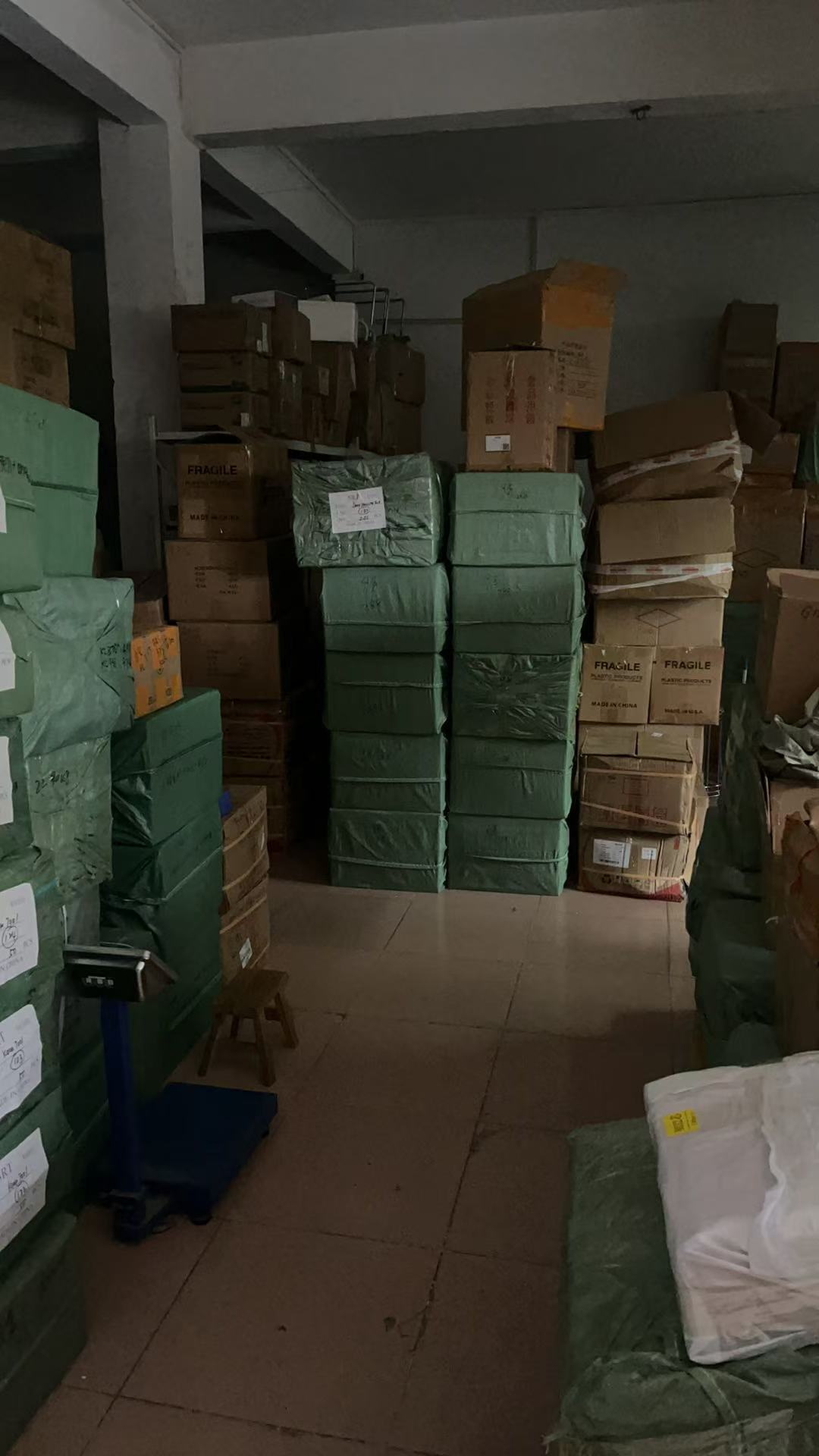
Replenishment continuity, not the first shipment, is the practical test of a long-term tool supply relationship.
Two structural trends support that reading. Repair demand continues to convert into tool and consumable demand, and regulatory pressure under the Right to Repair movement is pushing repair documentation and tooling toward third parties rather than away from them. For distributors serving Africa, South America, Southeast Asia, India, Bangladesh and Pakistan — markets where the documented export focus of this supplier is concentrated — the competitive advantage increasingly lies in carrying a describable, replenishable line rather than the cheapest available assortment.
Frequently Asked Questions
Which tweezer models are documented in the KOOCU range, and at what lengths?
Nine tweezer models appear with documented specifications across three length groups: FS-11, ST-25, ST-21, ST-30, ST-114 and ST-115 at 120 mm; TS-11 and TS-15 at 115 mm; and the 7-SA SR / SS-SA SR and 7-SA-16 / SS-SA-16 references at 130 mm. Stainless steel is documented for ST-25, ST-115, TS-11, TS-15 and the 130 mm references.
Which tweezer models carry documented anti-static or high-hardness properties?
Anti-static is documented for ST-25, ST-30 and ST-114. High hardness is documented for ST-30 and ST-114. ST-21 is documented as a 120 mm tweezer designed for mobile phone repair, and FS-11 is documented at 120 mm without further attributes in the reviewed material. Because the attribute set is not uniform across the line, anti-static or hardness requirements should be confirmed in writing for the exact model being ordered.
How does the K01 electric screwdriver compare with a manual screwdriver for phone disassembly?
KOOCU comparison documentation describes stronger power delivery, a stable 1–8 N·m torque band, higher working efficiency and lower maintenance loss for the electric screwdriver, with a recorded cost difference of roughly 10% in favour of the electric unit and a primary fit in mobile phone repair shops. These are supplier-side figures. The K01 uses an aluminium-alloy body and high-hardness strong-magnetic bits, and carries a safety note against prolonged continuous operation.
What certification and testing are documented for the electric screwdriver line?
The K01 is documented with a PONY CNAS certificate, number MTIN67MG7731367U1, complying with the EN 10440 standard, together with 100% pre-shipment inspection of finished units. The model is also documented as meeting the explosion-proof requirement for the power-supply working condition.
What are the purchasing terms for KOOCU cell phone repair tools?
Documented terms are a minimum order quantity of 50 units, FOB or CIF delivery, pre-shipment testing as the acceptance criterion, and 100% cash payment. OEM customization is available for voltage and logo, with a documented lead time of 10 days.
What should a buyer verify before committing to a long-term supply agreement?
Three items follow from the documentation reviewed here. First, written confirmation of the attribute set for each specific model ordered, particularly anti-static and hardness, since these are not documented uniformly across the tweezer line. Second, replenishment terms for high-wear items such as tweezer tips and screwdriver bits. Third, the pre-shipment testing arrangement, given that acceptance is defined by testing rather than by third-party review volume — the supplier own materials note a limited centralized base of third-party evaluations, which places more weight on sample validation before a long-term commitment.
Cell phone repair tools will remain a category where the catalog is easy and the evidence is not. For buyers at the decision and execution stage, the most reliable early signal is still the least dramatic one: whether a supplier can name its models, state their dimensions and materials, and repeat those statements on the next order.