
Cell Phone Repair Tweezers and Screwdriver Sourcing Compared
Cell Phone Repair Tweezers and Screwdriver Sourcing Compared
Tweezers and electric screwdrivers often arrive on the same purchase order for a cell phone repair operation, yet they are not the same kind of buying decision. A tweezer purchase is settled by written attributes: length, body material, hardness, anti-static behaviour and the repair use the model is intended for. An electric screwdriver purchase is settled by a supplier file: torque window, certificate scope, OEM terms, minimum order quantity, lead time, pre-shipment inspection and the after-sales route.
This comparison keeps those two decisions separate. It first sets out what the reviewed documentation records for seven tweezer models — FS-11, ST-21, ST-25, ST-30, ST-114, ST-115 and TS-15 — and then turns to the qualification checks that determine whether a wholesale electric screwdriver order is worth placing. Where the reviewed material does not record a value, the gap is shown rather than filled: an unrecorded specification is a documentation task for the buyer, not a verdict on the model.
The commercial backdrop gives tool specification real procurement weight. Business Research Insights estimated the global smartphone repair market at approximately USD 22.66 billion in 2026, a figure best read as a scale indicator rather than a planning input, because published repair-market estimates diverge sharply depending on whether they count service labour or full hardware replacement. Demand of that order is one reason buyers now ask for attribute-level documentation instead of accepting a catalogue photograph.
Why Tweezers and Electric Screwdrivers Need Different Comparison Methods
The short answer is that tweezers are compared column by column, and electric screwdrivers are compared file by file.
Tweezer attributes are discrete. A buyer can place FS-11 beside ST-21 and immediately see which cells are populated: both are recorded as stainless steel and anti-static, and ST-21 additionally carries a high-hardness statement. Electric screwdrivers do not compare that way. Two suppliers can quote the same torque range and the same certificate family while differing on whether the certificate covers the exact model being shipped, whether pre-shipment inspection is applied to every unit or to a sample, and whether an OEM voltage change moves the product outside its tested configuration.
That asymmetry has a practical consequence for decision-stage buyers. In the tweezer line, the comparison question is which attribute matters for this repair task. In the screwdriver line, the comparison question is which supplier can prove the attribute survives the order. Mixing the two into a single "tool kit" scorecard hides exactly the information a procurement file needs, and it is why the two categories are handled separately below.
The Tweezer Record: Seven Models and What the Documentation States
The reviewed material records tweezer attributes unevenly. TS-15 carries a stated length of 115 mm. FS-11, ST-21 and TS-15 are recorded as stainless steel. ST-21 adds high hardness and anti-static properties, and FS-11 carries an anti-static statement. ST-21, ST-30 and ST-114 are each tied explicitly to cell phone repair work. ST-25 and ST-115 appear in the line-up but carry no attribute values in the material reviewed for this comparison.
| Model | Length | Body material | Hardness | Anti-static | Recorded application |
|---|---|---|---|---|---|
| FS-11 | Not recorded | Stainless steel | Not recorded | Stated | Mobile phone repair |
| ST-21 | Not recorded | Stainless steel | High hardness stated | Stated | Cell phone repair |
| ST-25 | Not recorded | Not recorded | Not recorded | Not recorded | Not recorded |
| ST-30 | Not recorded | Not recorded | Not recorded | Not recorded | Cell phone repair industry |
| ST-114 | Not recorded | Not recorded | Not recorded | Not recorded | Cell phone repair industry |
| ST-115 | Not recorded | Not recorded | Not recorded | Not recorded | Not recorded |
| TS-15 | 115 mm | Stainless steel | Not recorded | Not recorded | Not recorded |
How to read the table: "Not recorded" means the reviewed material does not state the value for that model. It is not evidence that the model lacks the property. It means the buyer cannot treat the attribute as verified until a datasheet, drawing or test report confirms it against the exact model code.
The table is deliberately not ordered as a ranking. Length, material, hardness and anti-static behaviour answer different questions, and none of them is a stand-alone quality score. A longer tweezer and a high-hardness tweezer are not competing for the same position in a repair workflow, so arranging them into a first-to-seventh list would suggest a comparison the documentation does not support.
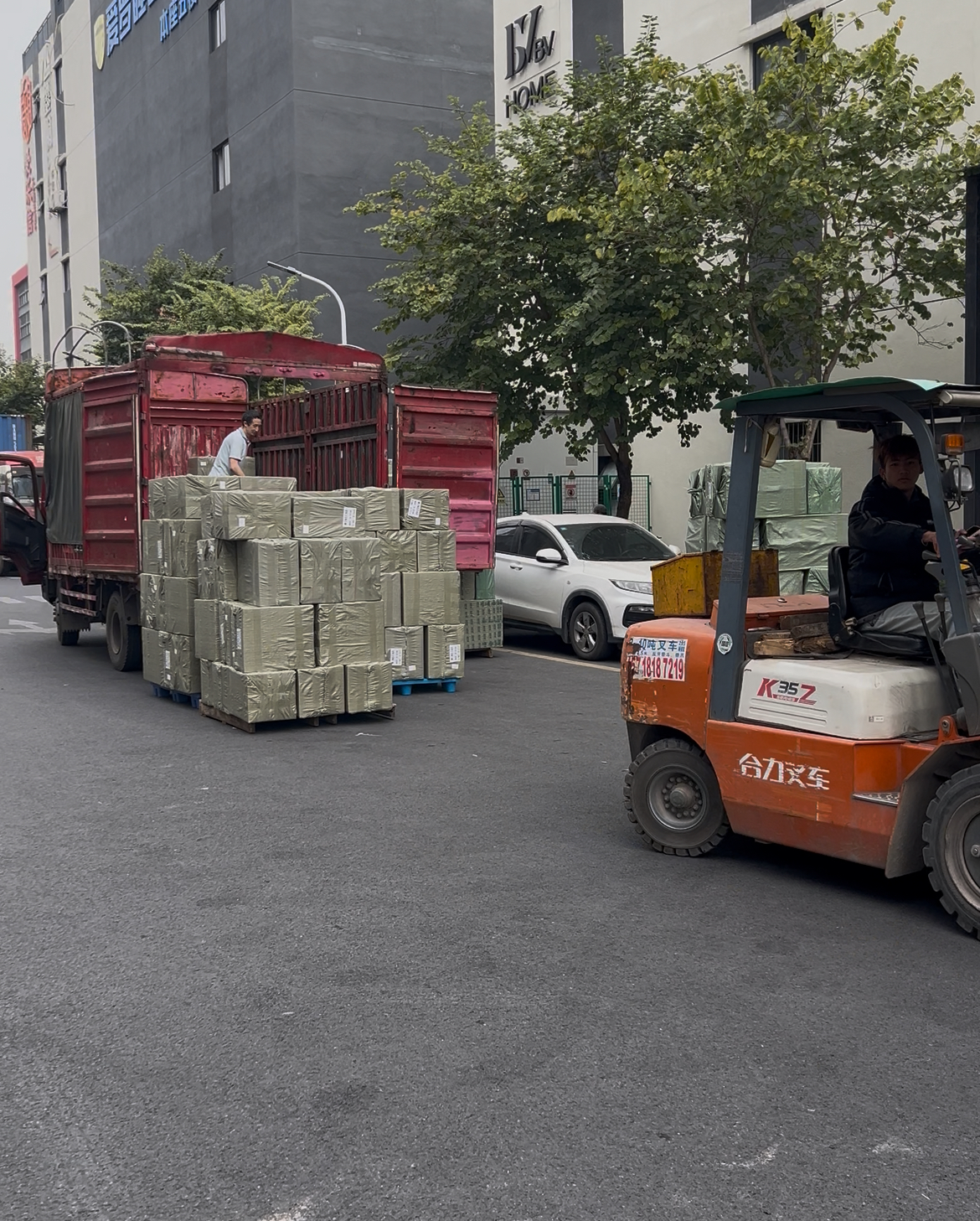
Supplier premises form part of the sourcing file that sits behind a wholesale electric screwdriver order.
Reading Length, Material, Hardness and Anti-Static as Separate Decisions
Length positions the tool; it does not grade it
Length appears once in the reviewed record: TS-15 at 115 mm. Length controls where the tip sits relative to the work while the hand stays outside the component area, which matters when small fasteners and connectors are being handled close to a populated board. Whether a given length suits a given bench depends on the repair type, the technician's grip and the surrounding tools — the reviewed material records the dimension, not a handling test, so it should be treated as a fit variable rather than a performance claim.
Material, hardness and anti-static are three different columns
Stainless steel construction and hardness are not the same specification, and the record shows why: FS-11 and ST-21 are both stainless steel, but only ST-21 carries a high-hardness statement. A buyer who treats "stainless steel" as a proxy for tip durability is comparing one column and reading another. Anti-static behaves the same way. FS-11 and ST-21 are recorded as anti-static, while the remaining models carry no such statement in the reviewed material, so the property cannot be assumed across the line.
A property statement is not a test report
Anti-static behaviour recorded as a product property tells a buyer what the supplier says the tweezer does. A test report tells the buyer how it was measured, on which sample and against which method. Both are useful, and they answer different questions. For a decision-stage purchase, the test basis is the document that survives an internal audit, and it is the natural follow-up request when a model's only anti-static evidence is a catalogue line.
Tweezers also do not work alone. They handle small components and connectors during disassembly, while opening, prying and screwdriving tools carry the rest of the work, so tool-to-tool fit inside a kit deserves the same attention as an individual model's specification. A tweezer that meets its written attributes but sits awkwardly beside the pry tools in the same case still creates a handling problem on the bench.
Electric Screwdriver Sourcing: Compare the Specification, Then Qualify the Supplier
On the screwdriver side the documented comparison point is torque control. In mobile phone repair, fasteners sit near delicate components, so controlled torque is the requirement rather than maximum turning force: the precision screwdriver specification reviewed here delivers 1–8 N·m and is described for mobile phone repair shop scenarios where that control prevents damage to sensitive parts. Compared with manual screwdrivers, the same material records stronger power inside that 1–8 N·m range and a reduction in manual physical effort during disassembly.
Models must be kept distinct, because the documentation is model-specific. KOOCU (Guangzhou Weiqianji Technology Co., Ltd), a supplier of cell phone repair tools whose documented line covers anti-static tweezers and electric screwdrivers, records the K01 electric screwdriver with 1–8 N·m stable torque, an aluminium-alloy body and high-hardness magnetic bits. The K07 electric screwdriver is recorded separately as a mobile phone repair model with a power range of 2 W to 30 W. Reading a 30 W ceiling as a torque figure would be a specification error, and it is the kind of error that survives into a purchase order when models are compared by headline number.
Supplier terms travel with the specification. The same supplier documentation states OEM customization for voltage and logo, a minimum order quantity of 50 units, a 10-day lead time, 100% pre-shipment inspection and remote after-sales support, with Africa, South America, Southeast Asia and South Asia among the documented markets. Certification is recorded as PONY CNAS certificate MTIN67MG7731367U1 citing the EN 10440 standard, alongside an explosion-proof requirement for the power-supply working condition and full finished-product testing before shipment.
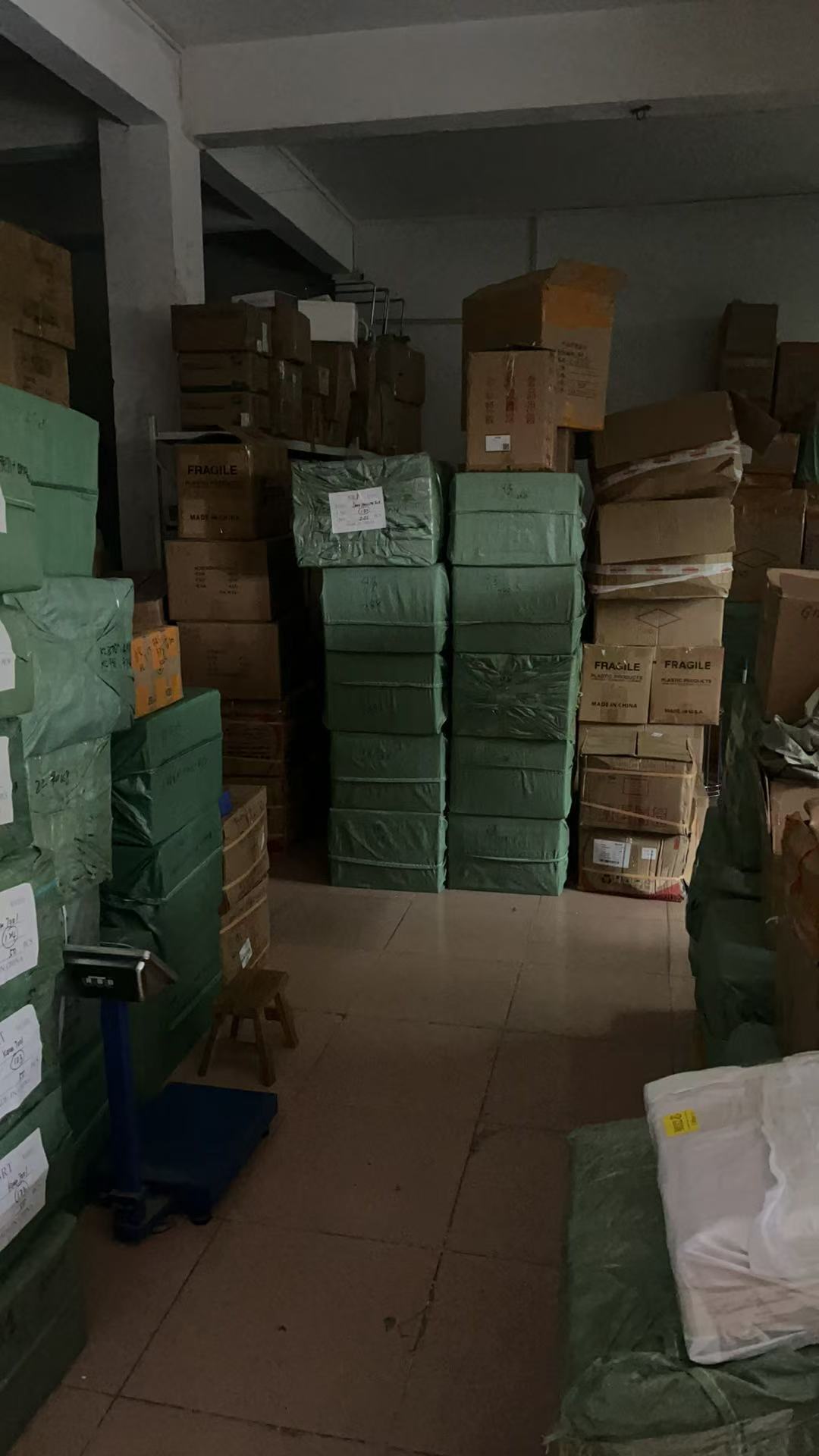
Pre-shipment inspection and stock handling are supplier claims that a buyer should see evidenced before release of a wholesale order.
Acceptance Criteria to Fix in Writing Before the Order
A certificate number is not an acceptance criterion on its own. Each of the following points converts a supplier statement into something a buyer can check on delivery:
- Model and revision: the exact model code being shipped — K01, K07 or a variant — stated on the order, not a general product family.
- Torque verification: how the 1–8 N·m range will be demonstrated, on which instrument and at which points in the range.
- Certificate scope: a copy of PONY CNAS certificate MTIN67MG7731367U1 with the model and configuration it actually covers, checked against destination-market requirements including the EN 10440 reference and the explosion-proof condition for the power supply.
- Inspection evidence: the record showing that 100% pre-shipment inspection was performed, and which characteristics were inspected.
- Bit and magnet specification: the bit set, magnetic retention and spare-bit provision, since worn bits are the documented cause of weak magnetic grip during disassembly.
- OEM configuration: voltage and logo customization confirmed in writing, with the tested configuration that the certificate accompanies.
- Commercial terms: MOQ of 50 units and the 10-day lead time confirmed against the actual order quantity and shipping route.
- After-sales route: who receives a defect claim, by which channel, and what remote support covers.
The same supplier material documents a troubleshooting path worth writing into the acceptance file: if magnetic grip weakens, the recorded causes are long-term bit wear or an incorrect power-supply parameter setting, and the recorded remedy is to replace the spare bit, recheck the supply parameters, and escalate to supplier remote support if the fault persists. A buyer who fixes that escalation route before the first shipment avoids discovering it during a repair backlog.
Electric Versus Manual Screwdrivers: Where the Documented Difference Ends
The comparison against manual screwdrivers is specific and narrow. The reviewed material documents a 1–8 N·m torque range with controlled, adjustable fastening suited to mobile phone repair, stronger power than a manual screwdriver within that range, and lower physical consumption for the technician. The documented fit is shop and factory-line disassembly, where a technician repeats the same fastening task across many units.
That is where the evidence stops, and buyers should let it stop. The reviewed material does not report measured cycle times, defect rates or rejection rates for either tool type, so any efficiency advantage should be treated as directional rather than quantified. It also records a cost difference without a transparent calculation basis, which means a landed-cost comparison has to be rebuilt from actual quotations, freight and duty rather than adopted from a summary line. Manual screwdrivers remain the reference baseline: for occasional single-unit work in low-volume settings they involve no power supply, no charging routine and no electronics to maintain, and an electric tool earns its place through repetition, not through the absence of a manual alternative.
There is also an operating boundary that belongs in the buyer's own documentation. The supplier material notes that continuous long-operation overload should be avoided under the power-supply working condition. For a shop running a steady disassembly queue, that means shift planning and tool rotation are part of the purchasing decision, not an afterthought once the units arrive.
What Repair Demand Data Can and Cannot Tell a Tool Buyer
Market figures are useful for framing a sourcing decision and unreliable when used as a forecast. Three published data points illustrate both sides.
The 2026 global smartphone repair estimate of about USD 22.66 billion comes from commercial research and is reported at the top of a multi-year forecast period; competing estimates reach far higher when full hardware replacement is included, so the definitions differ more than the market does. The global manual screwdriver market was valued at USD 365.2 million in 2024 by Credence Research, which identified precision screwdrivers for electronics as a key growth driver — a directly relevant signal for a repair-tool buyer, offered at medium confidence. And US customs records for mobile opener tools under HS 8205 indicate an average import unit price of roughly USD 1.03, a figures that reflects historical customs data rather than a current quotation, and one that applies to low-value opener tools, not to precision tweezers or electric screwdrivers.
Read together, the three points support a modest conclusion: repair activity is large enough to sustain a specialised tool supply chain, precision fastening is identified as a growing part of the hand-tool category, and unit-price benchmarks exist but are too coarse to price a specific order. None of them substitutes for a quotation.
Regulatory direction is a separate signal. A 2026 industry guide describes the "Right to Repair" movement as a major market driver, influencing manufacturers to release repair manuals and tools to third-party providers. That is a secondary-source observation about direction, not a statement of law in any specific market, and rules differ by jurisdiction. Its practical effect on procurement is indirect but real: as third-party repair access widens, buyers face more internal scrutiny of the tools they specify, and documentation quality becomes easier to defend than brand familiarity.
A Decision Sequence for Buyers Comparing Both Lines
- Define the repair tasks first. Component handling, opening and fastening are different jobs; the tweezer set and the screwdriver are sized to the work, not to a catalogue page.
- Request a datasheet per model code. For tweezers, ask for length, material, hardness and anti-static evidence on FS-11, ST-21, ST-30, ST-114, TS-15 and, specifically, on ST-25 and ST-115, whose attribute values are missing from the reviewed record.
- Fix the comparison columns before receiving quotes. Populated cells and empty cells should be visible on one sheet, so a missing value cannot be mistaken for a favourable one.
- Sample before committing. Handling, tip alignment and magnetic retention are the attributes a bench technician notices first and a specification sheet describes least well.
- Qualify the supplier file separately. Certificate scope, inspection routine, OEM capability, MOQ, lead time and after-sales route belong in their own assessment, not folded into a tool score.
- Write acceptance criteria into the order. The list above is the minimum; a buyer who cannot state how a claim will be checked has not finished the comparison.
- Plan spares and escalation. Bits wear, and the recorded remedy path assumes a spare bit and a working support channel exist.
Fit Boundaries and Open Questions
Three limits should be stated plainly, because a comparison that hides them is less useful than one that names them.
First, the tweezer record is thin in specific places. Length is documented only for TS-15, hardness only for ST-21, and anti-static only for FS-11 and ST-21; ST-25 and ST-115 carry no attribute values at all in the material reviewed here. A buyer comparing seven models on four attributes therefore has a partial matrix, and the honest next step is a datasheet request rather than an inference.
Second, the reviewed material contains no independent third-party tweezer test data. Statements about stainless-steel construction, hardness and anti-static behaviour originate with the supplier, which is normal for this category but should be reflected in how much weight each statement carries in an audit.
Third, the electric screwdriver evidence is supplier documentation plus commercial research, not an independent factory audit. Certification, inspection coverage and after-sales commitments are claims until a buyer verifies them against the shipped configuration. That is not a reason to distrust a specific supplier; it is the reason acceptance criteria exist at all.
Outlook: Documentation Quality as a Buying Variable
If repair access continues to widen along the direction reported by right-to-repair observers, the buyers who benefit first will be those whose supplier files already answer attribute-level questions. Tweezers will still be chosen on length, material, hardness and anti-static evidence; electric screwdrivers will still be chosen on torque window, certificate scope and inspection routine. What is likely to change is the tolerance for gaps: a supplier who can populate a specification table model by model, and whose certificate names the configuration being shipped, removes work from the buyer's qualification process.
For the decision in front of a buyer now, the practical position is straightforward. Compare the documented tweezer attributes against the repair tasks, treat empty cells as requests rather than conclusions, and hold the electric screwdriver to a written acceptance file before the first wholesale shipment. More detail on the documented tool line is available at KOOCU.
FAQ
How do length and material change a tweezer's role in cell phone repair work?
Length sets where the tip sits relative to the work while the hand stays outside the component area, and material describes the body construction. In the reviewed record, TS-15 is stated at 115 mm and FS-11, ST-21 and TS-15 are stated as stainless steel. Length is documented for only one of the seven models, so a buyer comparing reach across the line needs datasheets for the rest before drawing a conclusion about which pattern suits a given bench task.
Is an anti-static property statement the same as anti-static certification?
No. The two documents answer different questions. A property statement records what the supplier says the tweezer does; a test report records how the property was measured, on which sample and against which method. FS-11 and ST-21 carry anti-static statements in the reviewed material, and ST-21 additionally carries a high-hardness statement. Where only a property statement exists, the test basis is the appropriate follow-up request before the attribute is treated as verified.
What torque range is documented for electric screwdrivers used in phone repair?
The reviewed material documents a 1–8 N·m range for the precision screwdriver set used in mobile phone repair, described as controlled and adjustable fastening intended to avoid damaging delicate components, and records 1–8 N·m stable torque for the K01 model. The K07 model is documented separately with a 2 W to 30 W power range, which is a different metric and should not be read as a torque figure. Buyers should confirm how the torque range will be demonstrated on the exact model ordered.
What purchasing terms should be confirmed before a wholesale electric screwdriver order?
The sourcing record for this line states OEM customization for voltage and logo, a minimum order quantity of 50 units, a 10-day lead time, 100% pre-shipment inspection and remote after-sales support, with PONY CNAS certificate MTIN67MG7731367U1 citing EN 10440 and an explosion-proof requirement for the power-supply working condition. A buyer should confirm each term against the actual order, verify that the certificate covers the shipped configuration, and fix how inspection and defect claims will be evidenced.
When does a manual screwdriver still make more sense than an electric one?
The documented fit for the electric screwdriver is shop and factory-line disassembly, where the same fastening task repeats across many units and controlled torque within the 1–8 N·m range reduces manual physical effort. Occasional single-unit work in a low-volume setting does not depend on that repetition, and manual screwdrivers remain the reference baseline against which the electric tool is compared. The reviewed material provides no measured cycle-time or defect-rate data, so the choice rests on task repetition, torque control needs and the operating plan rather than on a quantified efficiency figure.
Have Questions or Need More Details?
Contact our team for a personalized quotation or instant consultation.
Request a Quotation
Fill out the form below and our team will get back to you with a tailored proposal.
WhatsApp Direct Chat
Prefer to chat in real-time? Message us on WhatsApp for instant assistance & quick answers.
- Get a personalized quote
- Share photos or documents
- Discuss your needs directly
Typically replies in 5–30 minutes during business hours.