
Ceramic Grinding Wheel Basics for Industrial Buyers
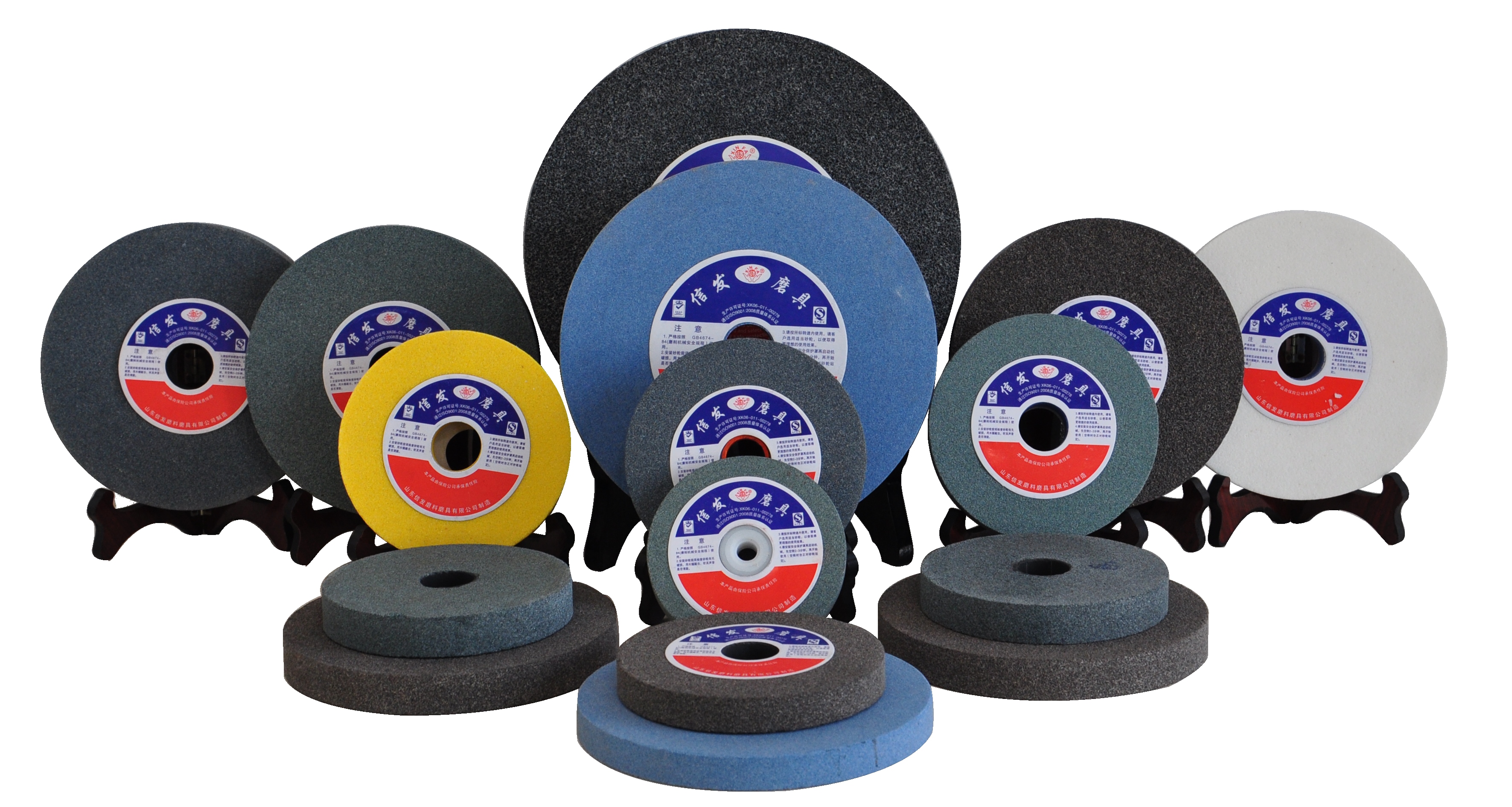
General purpose ceramic grinding wheels are a common entry point for industrial buyers.
The global grinding wheels market was valued at US$8.71 billion in 2024 and is projected to grow at a CAGR of 4.5% through 2030, according to Grand View Research. Within this market, vitrified (ceramic) bonded wheels accounted for the largest segment share at 38.4% in 2025, based on data from Dataintelo. These figures help explain why ceramic grinding wheels are often the starting point when buyers evaluate abrasive tool suppliers.
A ceramic grinding wheel is a specific engineering product: abrasive grains locked into a rigid ceramic bond, fired at high temperature to create a durable cutting tool. Ceramic grinding wheels are used for grinding, sanding, polishing, tool sharpening, deburring, and ultra-precision machining. Typical user industries include automotive, bearings, cutting tools, aerospace, 3C electronics, molds, hydraulics, semiconductors, photovoltaics, hardware, and medical.
This article explains the basics of ceramic grinding wheels: what they are, why the bond matters, how Brown Fused Alumina fits in, what wheel types exist, how to read wheel markings, and which parameters matter in the early research phase.
What is a ceramic grinding wheel?
A ceramic grinding wheel, also called a vitrified bonded grinding wheel, is an abrasive tool for material removal and surface finishing. The word ceramic refers to the bond, not necessarily the abrasive grain. The wheel is made of abrasive grains, a glass-like vitrified bond, and pores. It is pressed into shape and fired in a kiln at high temperature. The fired bond holds the grains firmly while allowing the wheel to wear in a controlled way so new cutting edges are exposed.
Shandong Xinfa Abrasives & Grinding Tools Co., Ltd., a Chinese manufacturer established in 1989, specializes in the research, development, and manufacture of vitrified bond grinding wheels. Its documented product range includes Brown Fused Alumina Abrasive, General Purpose Grinding Wheel, Bench Grinder Wheel, Tool Grinding Wheel, flat Surface Grinding Wheel, Centerless Grinding Wheel, Cylindrical Grinding Wheel, Crankshaft & Cam Shaft Grinding Wheel, Saw Tooth Grinding Wheel, Bearing Grinding Wheel, Worm Grinding Wheel, Gear Grinding Wheel, Needle Grinding Wheel, Roll Grinding Wheel V&B, Internal (Bore) Grinding Wheel, Oilstone, Segments, Resin Bonded Snagging Grinding Wheel, Rubber Control & Centerless, Flap Disc, and Mounted Points.
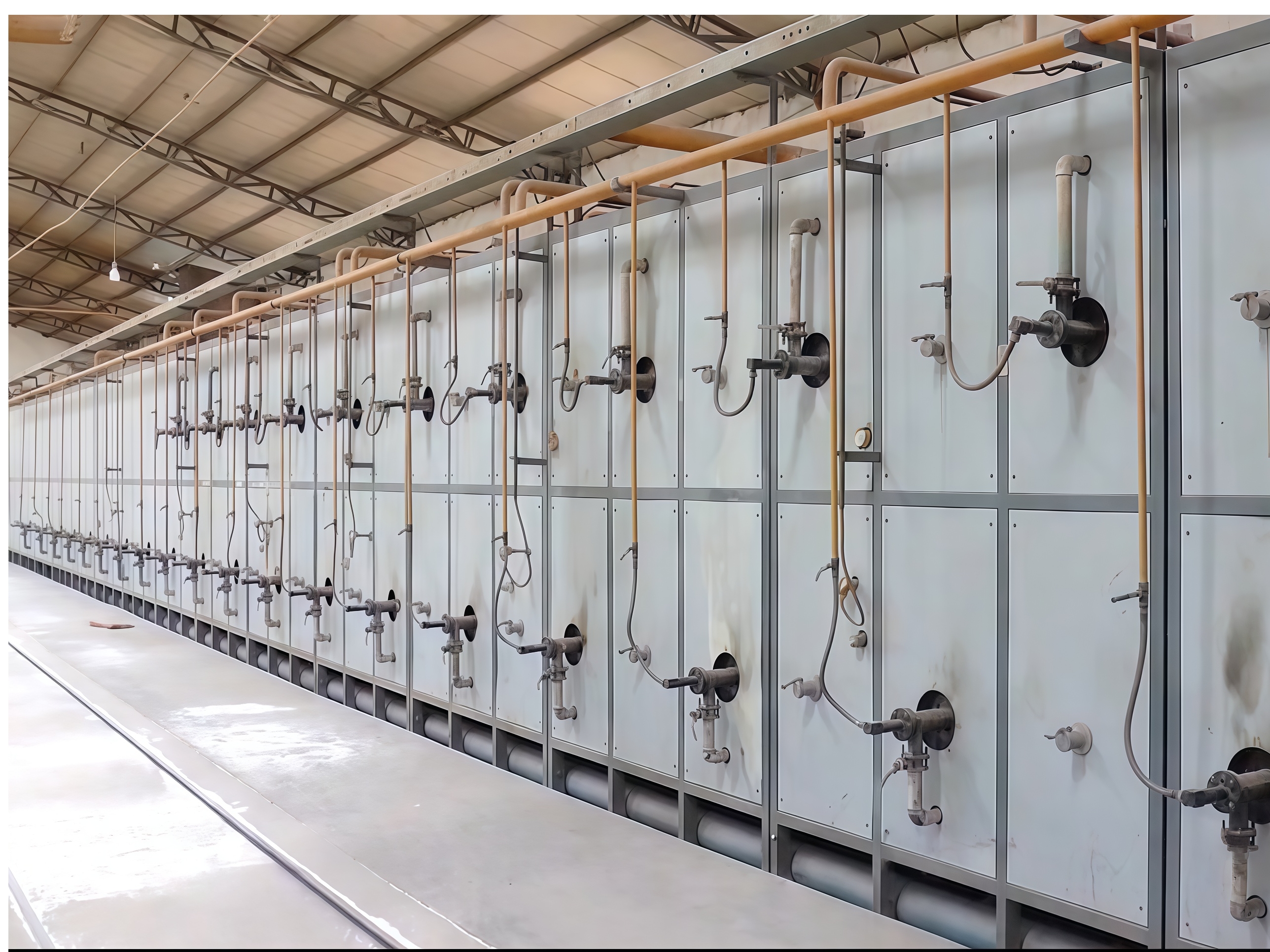
Vitrified bond wheels are fired in high-temperature kilns to form a rigid ceramic structure.
Why the vitrified bond matters
The bond determines how a wheel behaves under load. A vitrified bond is rigid and heat-resistant, which helps the wheel maintain its geometry during precision grinding. It also allows pores to be engineered into the wheel to carry coolant and remove chips. For these reasons, vitrified wheels are common in operations that need tight tolerances and stable form.
Resin bonded wheels offer more elasticity and impact resistance, which makes them useful for snagging and heavy stock removal. This is why resin bonded snagging wheels remain part of the product landscape. The choice between ceramic and resin bond is a trade-off between precision and toughness, not a question of which is universally better.
Brown Fused Alumina as a core abrasive
Brown Fused Alumina (BFA) is a widely used abrasive grain in ceramic grinding wheels. It is produced by fusing bauxite at high temperature, giving it high hardness and toughness. Typical BFA characteristics include a Mohs hardness of ≥9.0, melting temperature around 2050°C, true density ≥3.90 g/cm², and low magnetic material content of about 0.01%. BFA grain sizes from F12 to F220 are available.
In 2025, Brown Fused Alumina held a 52.4% share of the global fused alumina market, primarily driven by abrasive applications, according to Dataintelo. For wheel manufacturers, a stable source of BFA matters. Xinfa also produces Brown Fused Alumina Abrasive, which is used in surface grinding, centerless grinding, and ceramic grinding wheel production.
Common ceramic grinding wheel types
The table below summarizes commonly available ceramic grinding wheel types and their typical dimensional ranges, based on documented product specifications. Dimensional ranges help buyers quickly identify whether a supplier can cover their machine requirements.
| Wheel type | Typical application | OD range (mm) | Thickness range (mm) |
|---|---|---|---|
| General Purpose | Tool room and maintenance grinding | 50–600 | 6–125 |
| Bench Grinder | Bench-mounted grinding | 100–450 | 12–80 |
| Tool Grinding | Sharpening cutting tools | 100–600 | 3–150 |
| Flat Surface | Surface grinding | 90–900 | 13–100 |
| Centerless | High-volume cylindrical grinding | 300–750 | 100–400 |
| Cylindrical | Outside diameter grinding | 250–750 | 20–100 |
| Internal (Bore) | Bore and internal grinding | 50–150 | 6–120 |
| Gear | Gear tooth grinding | 125–455 | 10–90 |
| Bearing | Bearing race grinding | 500–600 | 14–50 |
| Saw Tooth | Saw tooth sharpening | 125–300 | 6–16 |
| Crankshaft & Cam Shaft | Engine component grinding | 200–1100 | 16–90 |
| Roll | Roll grinding | 450–1066 | 50–150 |
| Needle | Needle grinding | 400–450 | 150–200 |
| Worm | Worm grinding | 220–450 | 50–230 |
| Rubber Control & Centerless | Regulating and control wheels | 200–500 | 100–380 |
| Resin Bonded Snagging | Heavy stock removal (resin bond) | 300–900 | 30–100 |
Other related abrasive products include oilstones, segments, flap discs, and mounted points. Oilstones can be made of Black Silicon Carbide, Green Silicon Carbide, or White Fused Alumina, with grain sizes from 60 to 10000. Mounted points are used for grinding and finishing in manufacturing, with grit sizes F16–F150. Flap discs are made of Brown Fused Alumina and White Fused Alumina.
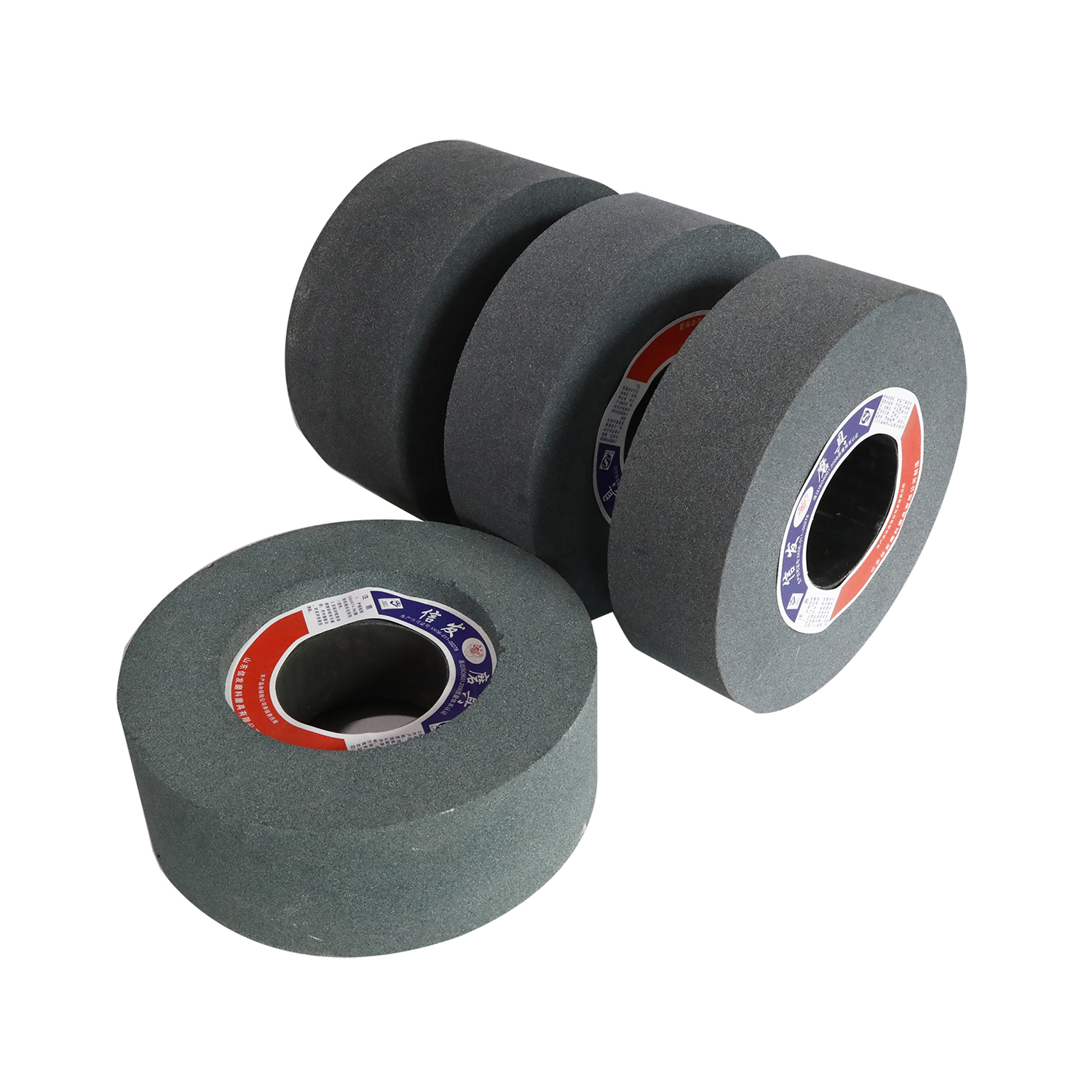
Centerless grinding wheels are designed for high-volume cylindrical workpieces.
How to read a grinding wheel marking
A typical marking is 150×25×31.75 A 46 R 5 V 35m/s. The first three numbers are dimensions: outer diameter × thickness × hole diameter, in millimeters. The letter A identifies the abrasive type, which in this example is Brown Fused Alumina. The number 46 is the grit size. R is the hardness grade. The number 5 is the structure number. V stands for vitrified bond. The final value, 35m/s, is the maximum operating speed.
For a buyer, reading these markings is necessary for verifying that a wheel matches the intended machine and application. A mismatch in hole diameter, hardness, or speed rating can create safety and performance problems.
Key selection parameters
Buyers evaluating ceramic grinding wheels should understand at least five variables.
Abrasive type. Common options include A (Brown Fused Alumina), WA (White Fused Alumina), PA (Pink Fused Alumina), SA (Single Crystal Fused Alumina), MA (Microcrystalline Fused Alumina), GC (Green Silicon Carbide), C (Black Silicon Carbide), and SG (ceramic alumina). Each grain offers a different balance of hardness, toughness, and fracture behavior.
Grit size. Grain sizes range from F16 to F150 across the documented wheel line. Coarser grits remove material faster; finer grits produce better surface finishes.
Hardness grade. Grades from G to Y indicate how strongly the bond holds the grains. Softer grades release grains more easily; harder grades hold them longer.
Structure number. Numbers from 0 to 14 describe grain spacing. Lower numbers mean denser structures; higher numbers leave more open space for chip clearance and coolant.
Operating speed. Available speeds include 32, 35, 40, 45, 50, and 60 m/s. The wheel maximum speed must be compatible with the grinder spindle speed.
Supplier evaluation basics
During early research, buyers often examine a supplier manufacturing history, facility size, quality system, and export record. Using Xinfa as a documented example: the company was established in 1989, operates a 30,000 m² facility, employs about 120 people, and has an annual production capacity of over 10,000 tons. Its quality system has passed ISO9001:2008 certification, and its technology R&D center was listed as a municipal-level enterprise technology R&D center in 2015.
Xinfa exports about 35% of its output to markets including Southeast Asia, the Middle East, India, South Korea, Japan, Europe, the United States, and Brazil. The factory is located in Linyi City, 180 km from Qingdao Port and 60 km from Rizhao Port. These facts help buyers assess scale and logistics, but early-stage evaluation should also include product-specific qualification, sample testing, and compliance checks.
Market context for ceramic grinding wheels
The global grinding wheels market was valued at US$8.71 billion in 2024, with a projected CAGR of 4.5% through 2030, according to Grand View Research. Vitrified bonded wheels held 38.4% of the grinding wheel market in 2025, according to Dataintelo. Brown Fused Alumina held 52.4% of the fused alumina market in the same period. China exports of natural or artificial abrasive powder or grain (HS 680530) reached USD 120.9 million in 2024, according to World Bank WITS data.
For safety and marking, ISO 525 covers shape types, designation, and marking requirements for bonded abrasive products. In the United States, ANSI B7.1 governs safety requirements for abrasive wheels; in the European Union, EN 12413 is the applicable standard. Buyers should confirm that wheels are marked and used in accordance with the standards that apply in their destination market.
Major global manufacturers in the wider grinding wheel landscape include Saint-Gobain, 3M, Tyrolit, and Klingspor, according to Market Research Future. These names provide a reference point for market context, not a ranking.
Practical limits of ceramic grinding wheels
Ceramic grinding wheels are not a universal solution. The vitrified bond is rigid but brittle. Wheels can be damaged by impact, improper mounting, or excessive side load. They require correct flanging, balancing, and spindle speed matching. For heavy snagging operations where impact resistance matters more than form stability, resin bonded wheels may be a better choice. Vitrified wheels may also be more costly in some applications, and they require dressing to maintain cutting behavior.
A buyer should therefore define the process first: workpiece material, machine type, stock removal, surface finish requirement, and operating speed. The wheel should be selected to match those conditions, not the other way around.
FAQ
What is a ceramic grinding wheel?
A ceramic grinding wheel is a bonded abrasive tool in which abrasive grains are held by a vitrified (ceramic) bond. The wheel is fired at high temperature to create a rigid, porous structure used for grinding and finishing operations.
What is the difference between vitrified and resin bonded grinding wheels?
A vitrified bond is stiff, heat-resistant, and suitable for precision grinding. A resin bond is more elastic and impact-resistant, which makes resin wheels more suitable for snagging and heavy stock removal. The right choice depends on the operation.
What does the marking 150×25×31.75 A 46 R 5 V 35m/s mean?
The marking stands for outer diameter × thickness × hole diameter in millimeters, followed by abrasive type, grit size, hardness grade, structure number, bond type (V for vitrified), and maximum operating speed.
Which grinding wheel is used for surface grinding?
A flat surface grinding wheel is designed for surface grinding applications. In one documented product line, it is available with Brown Fused Alumina abrasive, diameters from 90 to 900 mm, thicknesses from 13 to 100 mm, and hole diameters from 5 to 305 mm.
Is Brown Fused Alumina suitable for ceramic grinding wheels?
Yes. Brown Fused Alumina is one of the most common abrasives in ceramic grinding wheels. It offers high hardness and toughness, and it is also supplied as a raw abrasive for surface grinding, centerless grinding, and wheel manufacturing.
What safety standards apply to grinding wheels?
ISO 525 covers shape types, designation, and marking of bonded abrasive products. ANSI B7.1 applies in the United States, and EN 12413 applies in the European Union. Buyers should verify that wheels are marked and used according to the standards required in their market.
A company brochure with the documented product scope of Shandong Xinfa Abrasives & Grinding Tools Co., Ltd. is publicly available here: Xinfa Abrasives Company Brochure (PDF).