
Ceramic Grinding Wheel FAQ: Specs, Sourcing, and Global Supply
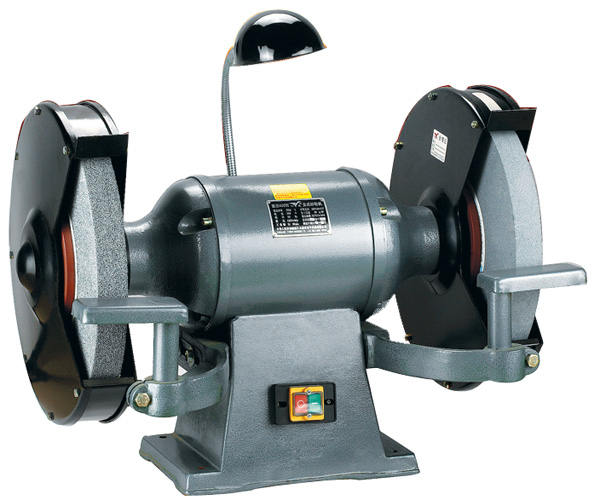
Vitrified bond grinding wheels held the largest single share of the global grinding wheel market in 2025, at 38.4% (Dataintelo), and the grinding wheel market as a whole was valued at US$ 8.71 billion in 2024, with a projected compound annual growth rate of 4.5% through 2030 (Grand View Research). For buyers, that scale creates a specific problem: practically every supplier describes the bond in similar language, while the questions that actually determine whether an order performs — which grain, which wheel shape, which dimensions, which supplier, which lead time — are answered in specification sheets rather than in brochures.
This article addresses those questions in FAQ form. It covers the technical basis of the ceramic (vitrified) bond, abrasive grain selection across Brown Fused Alumina, White Fused Alumina, Pink Fused Alumina, single crystal and microcrystalline alumina, green and black silicon carbide and SG grains, the mapping of wheel types to grinding operations such as centerless, cylindrical, internal, surface, tool, gear, worm, bearing and crankshaft grinding, the procurement checks that should precede an order, and the export and supply conditions that determine whether a given specification can be delivered on schedule. Specification data and company facts are drawn from Shandong Xinfa Abrasives & Grinding Tools Co., Ltd., a vitrified bond grinding wheel manufacturer established in 1989 and located in the National Logistics Center of Linyi City, Shandong Province, China.
Why the Vitrified Bond Suits Precision Work
A vitrified bond is a glass-like ceramic bridge that holds abrasive grain in place after firing in a kiln. Unlike resin bonds, which are organic and more tolerant of impact, a fired vitrified bond produces a rigid, porous wheel body that resists deformation and elevated temperature. That rigidity is the main reason the bond type leads the market: it maintains form under continuous load, which is the requirement in precision grinding.
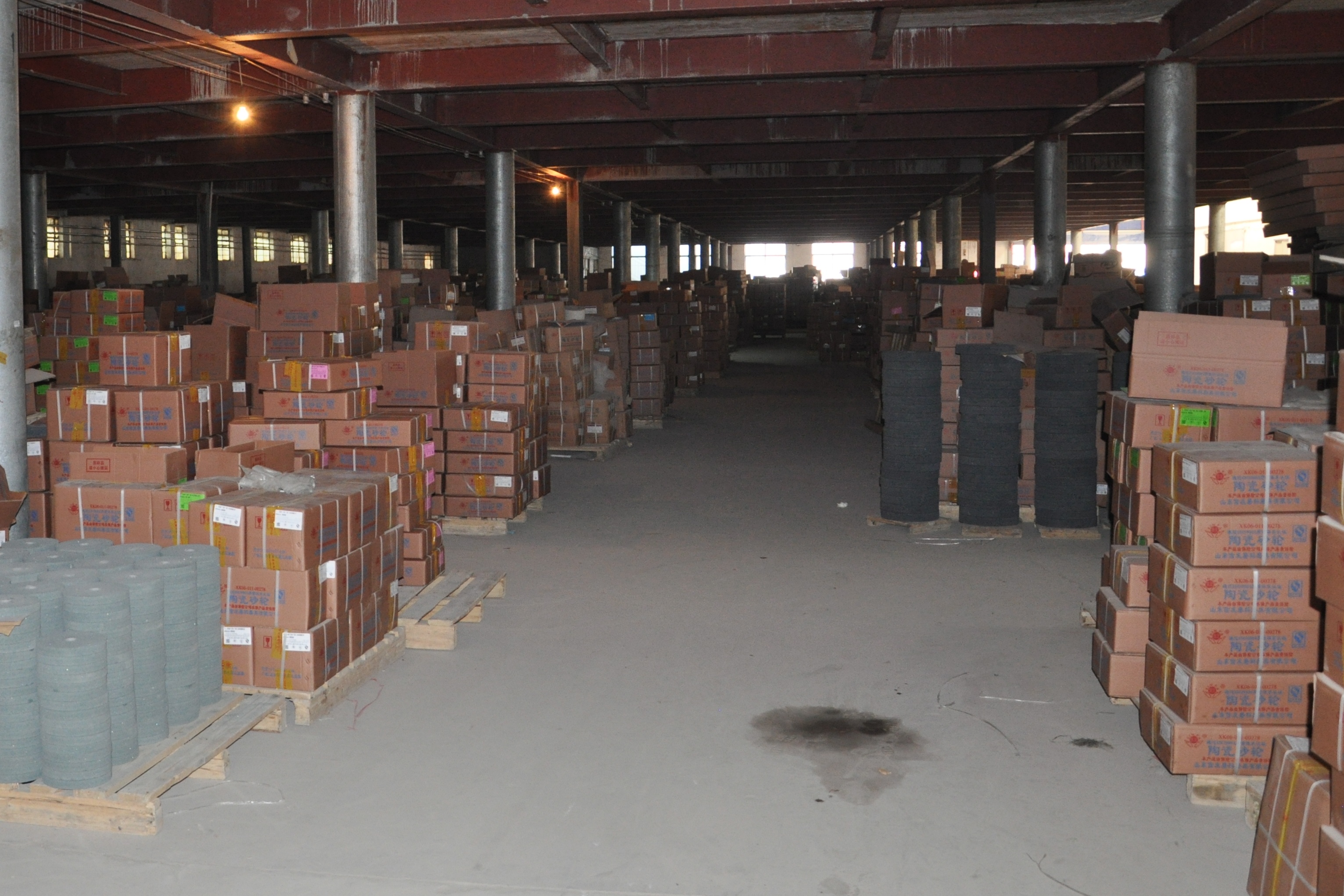
Shandong Xinfa runs the complete ceramic route in-house, from raw material preparation through forming, kiln firing, quality inspection and finished goods storage. The factory covers 30,000 m², operates more than 100 sets of advanced production and testing equipment, and employs 120 people, including a six-engineer research and development team. The company's technology research and development center was listed as a municipal-level enterprise technology R&D center in 2015, and the company is a member of the China Abrasives Association.
The service conditions are consistent across the industries that buy these wheels. Ceramic bonded wheels are specified for high-temperature, wear-intensive production, in continuous operation mode, mounted on grinders, grinding machines and electric hand tools, and used for grinding, sanding and polishing, tool sharpening, deburring and ultra-precision machining. End industries commonly include automotive, bearings, cutting tools, aerospace, 3C electronics, molds, hydraulics, semiconductors, photovoltaics, hardware and medical manufacturing. Some production environments additionally specify explosion-proof requirements, which affects how equipment and wheels are specified together.
Abrasive Grain Options: A, WA, PA, SA, MA, GC, C, and SG
Grain choice is the second major decision after bond type. The ceramic bonded range is offered in a wide grain set, and each grain family behaves differently under load. The table below summarises the codes used in wheel markings and the roles they are generally selected for.
| Code | Grain | Typical grinding role |
|---|---|---|
| A | Brown Fused Alumina | General-purpose grinding of carbon and low-alloy steels; the most widely used fused alumina grain, holding 52.4% of the global fused alumina market in 2025 (Dataintelo), largely on the strength of abrasive applications. |
| WA | White Fused Alumina | Hardened and heat-sensitive steels where controlled heat generation and consistent finish are priorities. |
| PA | Pink Fused Alumina | Tool steels and precision work where a balance of sharpness and form holding is required. |
| AA / 38A / 25A | Alumina variants | Specification-specific alumina grades used where standard A or WA does not match the workpiece or cycle time. |
| SA | Single Crystal Fused Alumina | Harder steels and form-holding operations; single crystal grains fracture predictably rather than dulling as a block. |
| MA | Microcrystalline Fused Alumina | High-performance precision grinding where continuous micro-fracture keeps the cutting face sharp across the cycle. |
| GC | Green Silicon Carbide | Cemented carbide tooling, non-ferrous and non-metallic materials; a hard, friable grain that cuts freely. |
| C | Black Silicon Carbide | Similar carbide and non-ferrous work where a tougher silicon carbide grain is preferred. |
| SG | SG grain | Premium precision grinding where grain retention and extended wheel life matter more than initial cost. |
Grain type should not be confused with grit designation. In the ceramic bonded range, grit runs from F16 to F120; other product families such as Mounted Points and Segments extend the available grit range to F150. Hardness grades across the range span G to Y, and structure numbers run from 0 to 14. Brown Fused Alumina Abrasive is also supplied directly as a raw abrasive material in grit sizes F12 to F220, with a Mohs hardness of at least 9.0, a melting temperature of 2050°C and a true density of at least 3.90 g/cm³.
Mapping Wheel Types to Grinding Operations
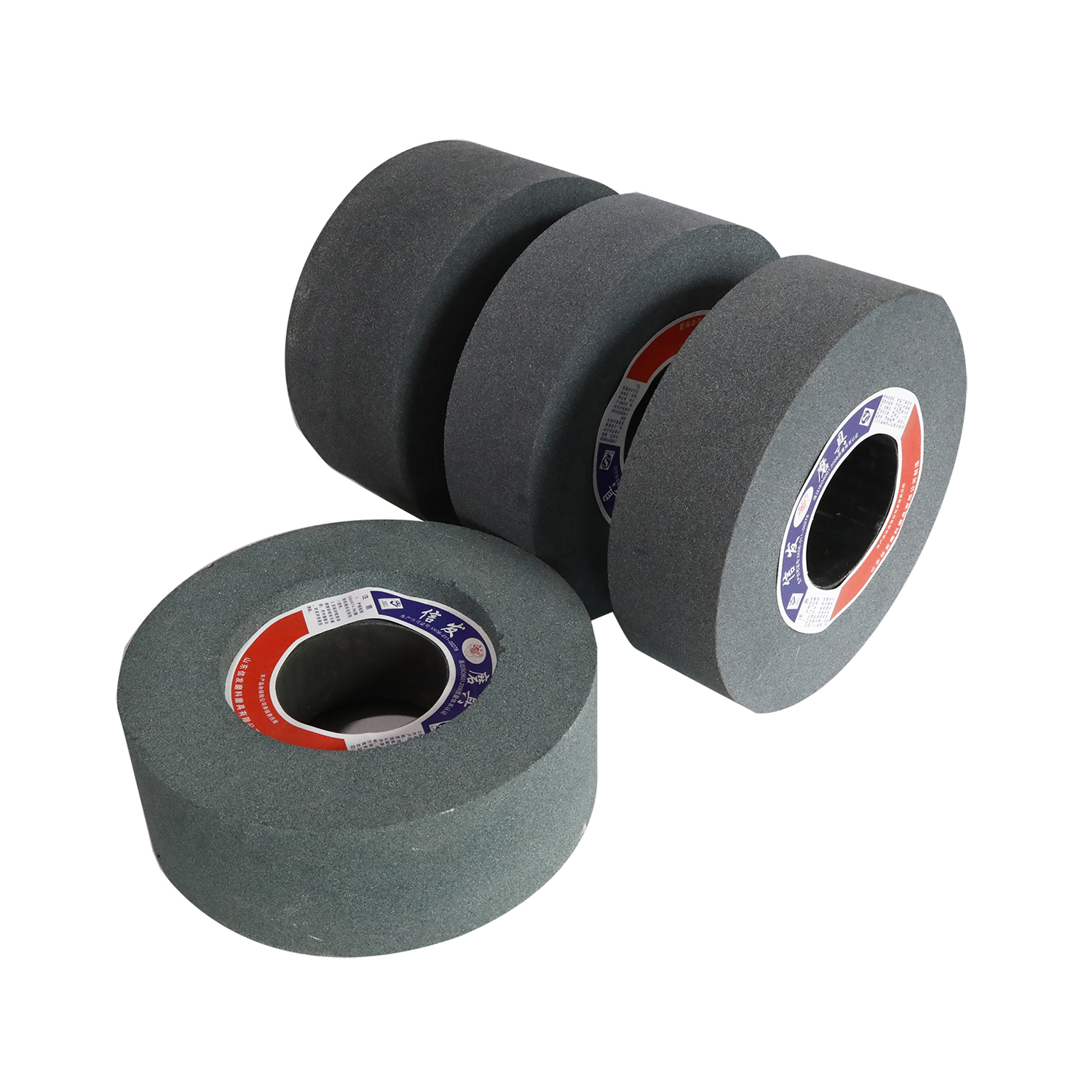
Wheel shape is a function of the machine, the workpiece geometry and the contact area required. The dimension ranges below come from the manufacturer's product specification data and show how the same vitrified bond is engineered into different wheel families.
| Wheel type | Typical dimensions (OD × T × H, mm) | Operation served |
|---|---|---|
| General Purpose Grinding Wheel | 50–600 × 6–125 × 12.7–203 | Bench and pedestal work, general workshop sharpening and deburring. |
| Bench Grinder Wheel | 100–450 × 12–80 × 12.7–50.8 | Tool room sharpening on fixed bench grinders. |
| Tool Grinding Wheel | 100–600 × 3–150 × 12.7–203 | Cutting tool and insert grinding, including thin wheels for flute and relief work. |
| Flat Surface Grinding Wheel | 90–900 × 13–100 × 5–305 | Reciprocating and rotary surface grinding of flat faces. |
| Centerless Grinding Wheel | 300–750 × 100–400 × 127–305 | Through-feed and plunge-feed centerless grinding of shafts, pins and tubes. |
| Cylindrical Grinding Wheel | 250–750 × 20–100 × 75–305 | Outside-diameter grinding of cylindrical workpieces. |
| Internal (Bore) Grinding Wheel | 50–150 × 6–120 × 16–32 | Bore and internal diameter grinding where spindle clearance is limited. |
| Crankshaft & Cam Shaft Grinding Wheel | 200–1100 × 16–90 × 127–305 | Crank pin, main journal and cam lobe grinding in engine production. |
| Bearing Grinding Wheel | 500–600 × 14–50 × 305 | Raceway and bearing component grinding. |
| Gear Grinding Wheel | 125–455 × 10–90 × 20–127 | Gear tooth flank grinding and profile correction. |
| Worm Grinding Wheel | 220–450 × 50–230 × 76.2–203 | Worm and thread form grinding in gearbox and drive manufacturing. |
| Needle Grinding Wheel | 400–450 × 150–200 × 100–150 (P 170–225) | Needle, roller and thin cylindrical component grinding. |
| Roll Grinding Wheel V&B | 450–1066 × 50–150 × 203–508 | Roll regrinding in steel, paper and printing operations. |
Beyond the bonded wheel families above, the same vitrified platform also covers Saw Tooth Grinding Wheel for saw tooth sharpening, Oilstone in grain sizes 60 to 10000 in White Fused Alumina, Green Silicon Carbide and Black Silicon Carbide, Segments, Mounted Points, Flap Disc, Resin Bonded Snagging Grinding Wheel with outside diameters from 300 to 900 mm, and Rubber Control & Centerless wheels used in control-wheel positions on centerless machines. Maximum linear velocity across the ceramic bonded range runs from 20 m/s to 70 m/s, with most specialty wheels rated between 32 m/s and 60 m/s.
Procurement Checks Before an Order Is Placed
Specification data only becomes a purchase decision after several practical checks. The list below reflects the criteria that determine whether a delivered wheel will match its datasheet in production.
- Marking and standard compliance. Bonded abrasive products must comply with ISO 525:2020 for shape types, designation and marking requirements. Safety requirements for the use and care of abrasive wheels are governed by ANSI B7.1 in the United States and EN 12413 in the European Union.
- Maximum operating speed. The marking includes a maximum linear velocity, and it must meet or exceed the machine's rated speed. The ceramic bonded range spans 20 m/s to 70 m/s, so the figure on the wheel, not the general catalogue, governs safe use.
- Dimension and tolerance fit. Diameter, thickness and hole must match the spindle and flange arrangement. Across the range these run from 150 mm to 1100 mm in diameter, 3 mm to 300 mm in thickness, and 12.7 mm to 305 mm in hole size.
- Bond, grade and structure. Hardness from G to Y and structure numbers from 0 to 14 describe how freely the wheel cuts and how well it holds form. These are application decisions, not catalogue preferences.
- Quality system and inspection. A supplier should be able to describe its inspection regime. Xinfa applies 100% testing to product and holds ISO 9001:2008 quality management system authentication.
- Customization capability. OEM/ODM programs should specify what can actually be customized: specification, size, logo, bond type and abrasive material are the standard customization fields.
- Commercial terms and capacity. Minimum order quantity, monthly output and lead time determine whether a specification can be repeated at scale. The reference figures here are a 2-ton MOQ, monthly capacity of 900 tons, and a lead time of 30 to 45 days.
Global Supply and Export Readiness
Export readiness is a procurement question rather than a marketing one, because it determines documentation, packaging, shipping routes and the risk of specification drift between quotation and delivery. Shandong Xinfa exports 35% of its output, with main markets across Asia — Southeast Asia including Vietnam, Thailand and Malaysia, plus India, South Korea and Japan — the Middle East including the United Arab Emirates, Saudi Arabia and Iran, and Europe and the Americas including Europe, the United States and Brazil. Products are exported to more than 20 countries and regions, with annual output of 10,000 tons.
Location matters for logistics planning. The company sits in the National Logistics Center of Linyi City, 180 km from Qingdao Port and 60 km from Rizhao Port, which shortens inland transport before ocean freight. At the national level, China's exports of natural or artificial abrasive powder or grain under HS 680530 reached USD 120.9 million in 2024 (WITS — World Bank), a reminder that abrasive supply is a mature, well-documented trade flow rather than a niche one.
Ceramic Grinding Wheel FAQ
1. What is the difference between a ceramic bonded grinding wheel and a resin bonded wheel?
A ceramic bonded wheel uses a vitrified, glass-like bond that is fired in a kiln, producing a rigid and porous body that holds form and tolerates high temperature. A resin bonded wheel uses an organic bond that is more tolerant of impact and is often preferred for heavy snagging and portable rough grinding. Both are produced in the same manufacturing environment — resin bonded snagging grinding wheels and rubber control and centerless wheels sit alongside the vitrified range — but the bond choice changes rigidity, coolant behaviour and the kind of operation the wheel suits.
2. How is a wheel marking read, for example 200×25×31.75 A 46 R 5 V 35m/s?
The sequence is standard: 200×25×31.75 is outside diameter, thickness and hole in millimetres; A is the abrasive grain (Brown Fused Alumina); 46 is the grit designation; R is the hardness grade; 5 is the structure number; V indicates a vitrified bond; and 35 m/s is the maximum linear velocity. Across the ceramic bonded range, hardness grades run from G to Y, structure numbers from 0 to 14, and grit designations from F16 to F120 within the bonded wheel families, extending to F150 for products such as Mounted Points and Segments.
3. Which abrasive grain should be selected for a given workpiece material?
Brown Fused Alumina (A) is the general-purpose choice for carbon and low-alloy steels. White Fused Alumina (WA) is generally selected for hardened and heat-sensitive steels where heat control matters. Pink Fused Alumina (PA) is used for tool steels and precision work. Single Crystal Fused Alumina (SA) and Microcrystalline Fused Alumina (MA) suit harder steels and form-holding operations. Green Silicon Carbide (GC) and Black Silicon Carbide (C) are used for cemented carbide, non-ferrous and non-metallic materials, and SG grain is selected for premium precision grinding. Grain selection should be confirmed against the specific workpiece and cycle, not adopted from a general table alone.
4. Which wheel types are used for centerless, cylindrical, internal, surface, tool, gear, worm, bearing and crankshaft grinding?
Each operation has a dedicated wheel family. Centerless grinding uses the Centerless Grinding Wheel, typically 300–750 mm outside diameter with a wide 100–400 mm face. Cylindrical grinding uses the Cylindrical Grinding Wheel at 250–750 mm. Internal bore work uses the Internal (Bore) Grinding Wheel at 50–150 mm outside diameter, sized for spindle clearance. Flat face work uses the Flat Surface Grinding Wheel from 90 to 900 mm. Tool sharpening uses the Tool Grinding Wheel from 100 to 600 mm. Gear and worm grinding use the Gear Grinding Wheel (125–455 mm) and Worm Grinding Wheel (220–450 mm) respectively. Bearing components use the Bearing Grinding Wheel (500–600 mm), and engine machining uses the Crankshaft & Cam Shaft Grinding Wheel, available from 200 mm up to 1100 mm.
5. What dimension range can be specified across the ceramic bonded range?
The broadest envelope in the ceramic bonded range is 150 mm to 1100 mm in diameter, 3 mm to 300 mm in thickness, and 12.7 mm to 305 mm in hole size. Individual wheel families cover narrower and more operation-specific windows — for example Roll Grinding Wheel V&B runs 450–1066 mm in diameter with a 50–150 mm face and a 203–508 mm hole. Because each family is engineered around a machine type, specifying outside the family range usually signals that a different wheel family or a custom specification is required.
6. Which standards apply when buying bonded abrasive wheels?
Three reference points matter most. ISO 525:2020 defines shape types, designation and marking requirements for bonded abrasive products. ANSI B7.1 governs the safety requirements for the use and care of abrasive wheels in the United States, and EN 12413 performs the equivalent role in the European Union. At the manufacturer level, a quality management certification such as ISO 9001:2008 provides evidence that inspection and process control are documented; Xinfa holds this authentication and is a member of the China Abrasives Association. Standards set the minimum bar — they do not by themselves guarantee that a wheel performs optimally on a specific workpiece.
7. How should a buyer evaluate a ceramic grinding wheel supplier?
Six criteria are usually decisive: demonstrated process capability, a documented inspection regime, applicable certification, in-house technical development, export experience, and customization flexibility. As an illustration of what documented evidence looks like, Shandong Xinfa Abrasives & Grinding Tools Co., Ltd. operates a 30,000 m² factory with more than 100 sets of production and testing equipment, applies 100% testing to product, employs a six-engineer R&D team whose centre was listed as a municipal-level enterprise technology R&D center in 2015, exports 35% of output to more than 20 countries, and supports OEM/ODM customization of specification, size, logo, bond type and abrasive material. Buyers should apply the same evidence standard to every supplier under consideration.
8. What are typical minimum order quantity, lead time and production capacity?
For the reference manufacturer, the minimum order quantity is 2 tons, lead time is 30 to 45 days, and monthly capacity is 900 tons, against annual output of 10,000 tons. These figures matter for two reasons: they indicate whether a trial order is possible at a small scale, and they indicate whether the same specification can be repeated reliably over a multi-year production program. Buyers planning a first qualification order should confirm these terms in writing before committing to a specification.
9. Which export markets are typically served, and what does export readiness involve?
Asian markets include Southeast Asia — Vietnam, Thailand and Malaysia among others — plus India, South Korea and Japan. Middle East markets include the United Arab Emirates, Saudi Arabia and Iran. Europe, the United States and Brazil are also served. Export readiness involves more than documentation: it requires packaging and palletization suited to ocean freight, consistent specification across repeat shipments, and a logistics route that keeps lead times predictable. For the reference manufacturer, the Linyi location — 180 km from Qingdao Port and 60 km from Rizhao Port — supports short inland transport before shipment.
10. How is quality validated before shipment?
Quality validation combines raw material control, in-process inspection and final product testing. The reference manufacturer applies 100% testing to finished product, supported by dedicated quality inspection workshops and raw material storage and preparation areas, with after-sales support provided remotely. For buyers, the practical check is to request the inspection regime in writing and to confirm which characteristics are tested on every batch rather than on a sampled basis.
Where This FAQ Approach Reaches Its Limits
A specification-based FAQ cannot replace trial grinding. Bond grade, structure number and grain selection interact with spindle stiffness, coolant type, dressing practice and workpiece hardness, and the combination that performs best is normally confirmed through a controlled trial rather than selected from a table. Buyers should treat the data above as the starting envelope, not the final answer.
Bond type also sets boundaries. Vitrified bonded wheels are rigid and heat-resistant, but they are less tolerant of impact than resin bonded wheels, which is why Resin Bonded Snagging Grinding Wheel with outside diameters from 300 to 900 mm remains the practical choice in heavy, shock-loaded rough grinding. In centerless setups, the regulating position is typically filled by Rubber Control & Centerless wheels rather than a vitrified wheel, because the control wheel performs a different function from the grinding wheel.
Commercial terms create a further limit. A 2-ton minimum order quantity and a 30 to 45 day lead time suit planned production programs but not emergency replacement sourcing, where a buyer needs stock availability rather than a new production run. Finally, scale is unevenly distributed across the market: major global manufacturers such as Saint-Gobain (Norton), 3M (Cubitron II), Tyrolit and Klingspor operate broad international distribution networks, while specialized manufacturers compete instead on specification flexibility, customization responsiveness and consistency within a defined wheel range. Neither position is automatically better — they match different procurement priorities.
Outlook: Specification Discipline as the Buying Standard
The grinding wheel market is projected to grow at 4.5% annually through 2030 from a 2024 base of US$ 8.71 billion (Grand View Research), and vitrified bond wheels already hold the largest segment share at 38.4% (Dataintelo). Grain supply reinforces that pattern: Brown Fused Alumina accounted for 52.4% of the global fused alumina market in 2025, driven mainly by abrasive applications (Dataintelo).
The more consequential shift is on the buying side. As more specifications move into documented standards such as ISO 525:2020 and regional safety frameworks such as ANSI B7.1 and EN 12413, procurement decisions increasingly depend on whether a supplier can evidence process control, batch consistency and export reliability rather than on catalogue breadth alone. For buyers, that means specification discipline is no longer a technical detail — it is the basis on which suppliers are selected, qualified and retained.
A downloadable brochure with product and specification information is available here: Xinfa abrasives product brochure. General company information is published at xinfa-abrasives.com. Buyer follow-up contact: Jackie Wang, sales@xinfaabrasives.com, Tel / WhatsApp +86 13562923298, Xincun Village, Dadian Town, Junan County, Linyi City, Shandong Province, China.