
Ceramic Sanitary Ware Shortlist: A 2026 Distributor Guide
A 2026 ceramic sanitary ware shortlist is built on four screening filters: installation format, dimensional fit, water consumption, and verifiable certification. Distributors that filter on these four points before committing inventory can answer the first three questions any apartment developer, hotel contractor or engineering buyer asks, namely whether the model fits the rough-in, whether it meets the applicable water-efficiency specification, and whether the certificate can be checked before the container ships.
This quick reference guide applies that logic to a specific supplier and product range. Tangshan Houfengyuan Import and Export Co., Ltd. is a manufacturer and exporter of ceramic toilets and ceramic wash basins based in Tangshan City, Hebei Province, China, with an annual output of about 3,000,000 units and roughly 90% of output exported to markets including the USA, Canada, the Middle East, Australia, Southeast Asia and Europe. The models referenced below, including the FI-20 two-piece toilet and the FI-05 wall hung pan, are drawn from that product range.
Why a Shortlist Beats a Full Catalogue in 2026
The cost of an over-broad stock list is not visible on the quotation. It appears later as slow-moving inventory, as returns caused by a rough-in mismatch, or as a container held at customs because the certificate on file does not cover the model inside. Ceramic sanitary ware is bulky, fragile and format-specific, which means a wrong SKU is expensive to store and expensive to move.
Shortlisting reduces that exposure in three ways. First, it concentrates working capital on models that already match the dominant installation requirements in the distributor's market. Second, it forces a certification check before purchase rather than after dispatch. Third, it makes substitution possible: when a project changes format mid-schedule, a distributor holding both a floor-mounted and a wall hung option can respond without re-sourcing.
The risk categories that shortlisting is designed to reduce are well documented on the supply side: product quality issues such as glaze defects, hairline cracks, flushing failure and dimensional deviation; certification and compliance problems including expired certificates or models not actually covered by a certificate, which can lead to customs rejection in US and Canada markets; delivery delays and peak-season capacity shortages; transport damage on fragile ceramic products; batch-to-batch colour and quality variation; and supplier reliability, including trading companies presenting themselves as factories.
The Four-Filter Shortlist Framework
Each filter removes a class of downstream problem. Applied in sequence, they take a full catalogue down to a defensible stock list.
| Filter | What to confirm | Evidence to hold before ordering |
|---|---|---|
| 1. Installation format | Floor-mounted two-piece or wall hung pan; whether an in-wall carrier frame and openable wall are available for wall hung installations | Format confirmation per SKU; project drawing or rough-in schedule |
| 2. Dimensional fit | Overall length x width x height, and trap type with roughing-in distance | Model dimension sheet; S-trap 305 mm or P-trap 180 mm roughing-in confirmation |
| 3. Water consumption | Flush volume against the destination market specification | Model-level flush test report or water-efficiency listing |
| 4. Certification and traceability | Whether the certificate covers the ordered model, in the destination market | Certificate number and issuing-body registry entry |
Filters one and two are engineering decisions. Filters three and four are compliance decisions. A distributor that separates them internally, with one person owning technical fit and another owning certification evidence, generally catches mismatches earlier than a single generalist buyer.
Model Quick Reference: FI-20, FI-05 and Supporting Dimensions
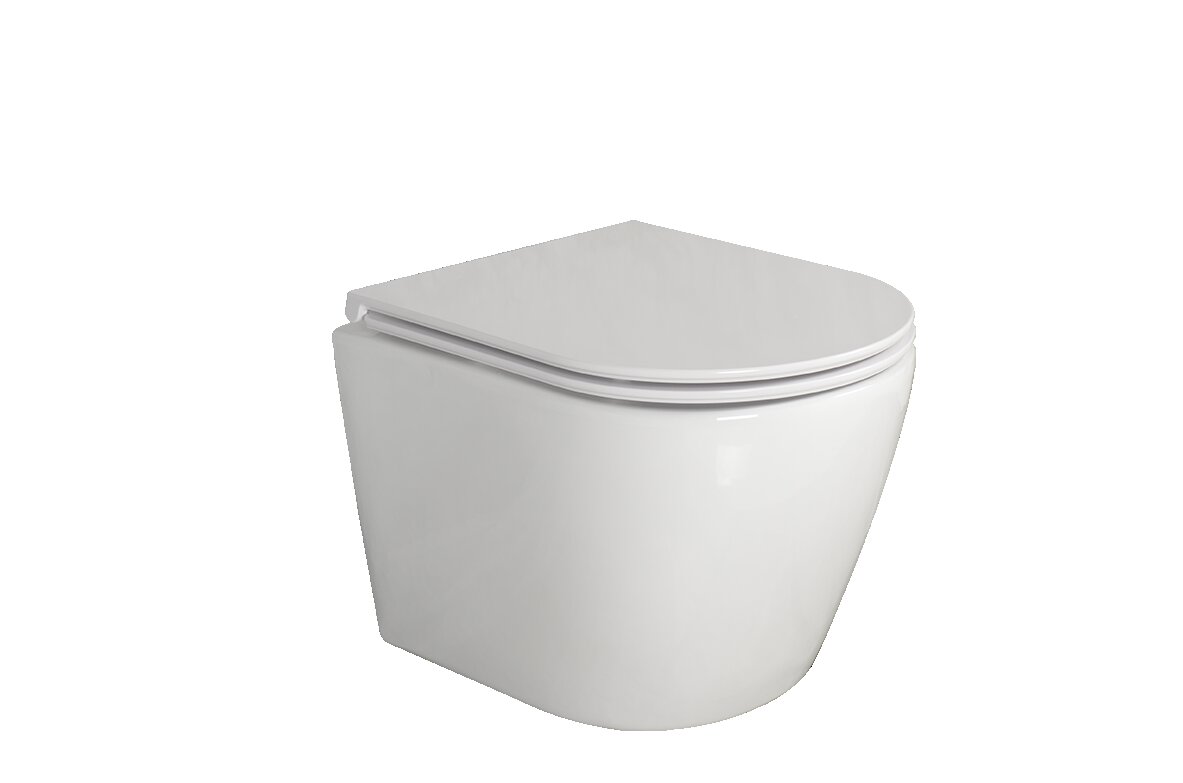
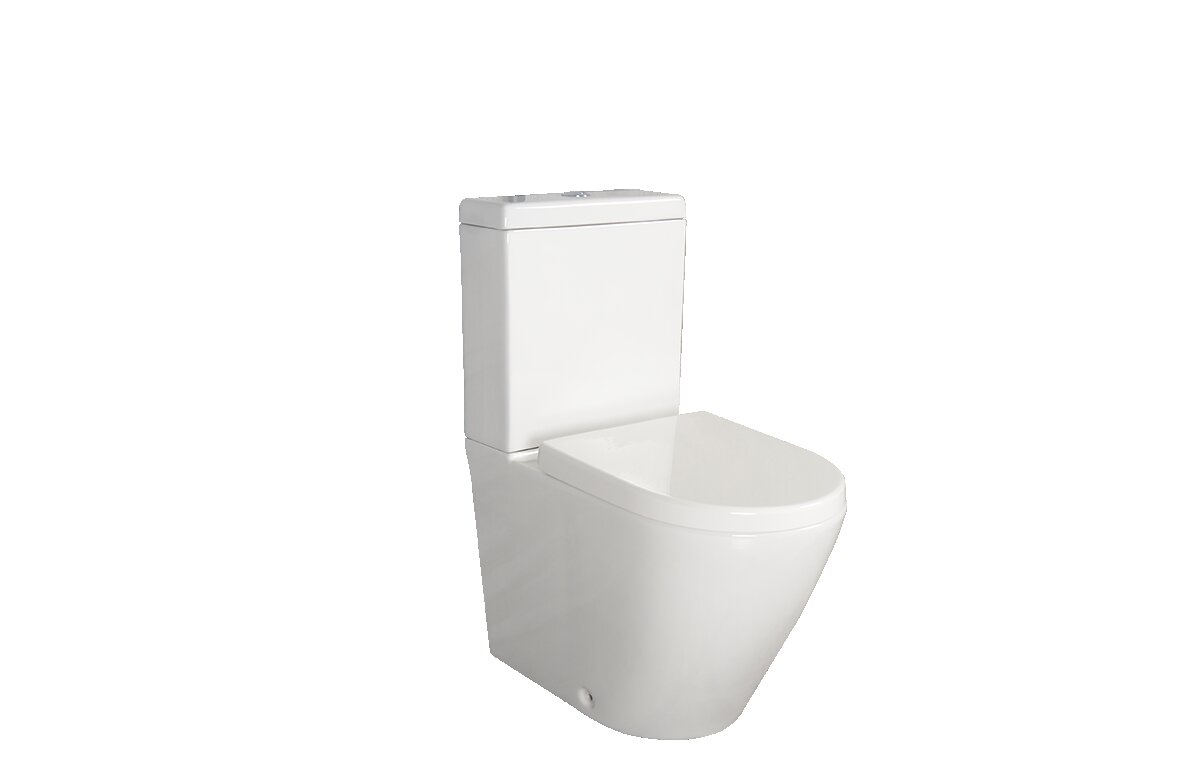
Two formats cover most project demand in this range, and they are not interchangeable. The FI-20 is a two-piece toilet made of high-temperature fired ceramic with dimensions of 660 x 365 x 420 mm and a washdown flushing system, intended for wholesale distribution and construction and engineering projects. The FI-05 is a wall hung pan, also made of high-temperature fired ceramic, classified as a wall hung toilet with a rimless design and a washdown flushing mechanism, measuring 517 x 360 x 365 mm and also aimed at wholesale distribution and construction projects.
| Model | Format | Material | Overall dimensions | Flushing and stated use |
|---|---|---|---|---|
| FI-20 | Two-piece toilet | High-temperature fired ceramic | 660 x 365 x 420 mm | Washdown flushing system; wholesale distribution and construction and engineering projects |
| FI-05 | Wall hung pan (wall hung toilet) | High-temperature fired ceramic | 517 x 360 x 365 mm | Rimless design, washdown flushing mechanism; wholesale distribution and construction projects |
Additional models in the range vary by size, which matters when a distributor is screening against a fixed bathroom footprint rather than a standard. Documented dimensions include: FTZ-0425HD at 730 x 418 x 790 mm, FTZ-6602 at 730 x 418 x 790 mm, FTZ-2402 at 660 x 360 x 820 mm, FTZ-2403 at 615 x 365 x 800 mm, FTZ-8803G at 530 x 370 x 370 mm, FTZ-2501G at 535 x 365 x 320 mm, and FTG-1050 at 1050 x 515 x 230 mm. The S-trap with 305 mm roughing-in is available for certain models, while others feature a P-trap with 180 mm roughing-in.
Apartment Decoration Ceramic Sanitary Ware: What to Stock
Apartment decoration ceramic sanitary ware is driven by repetition rather than variety. A residential development typically installs the same bathroom configuration across dozens or hundreds of identical units, which means the distributor's exposure sits in a small number of models ordered in volume and repeated over multiple phases. Three characteristics dominate the purchasing decision.
Footprint efficiency. Apartment bathrooms are compact, and the choice between the FI-20 two-piece format and the FI-05 wall hung pan is usually decided by available floor area and the ceiling of the services wall. A wall hung pan frees floor space beneath the fixture and simplifies cleaning under the pan, which suits smaller apartment bathrooms. That advantage carries a real condition: wall hung installation requires an in-wall carrier frame and a wall structure that can be opened or built out during the fit-out. In a phased renovation where walls are already finished and cannot be opened, a floor-mounted two-piece unit such as the FI-20 is the practical option rather than a compromise.
Water and utility cost. Apartment operators and owners compare fixtures on recurring water cost as much as on purchase price. Water-saving ceramic sanitary ware with dual-flush operation is the standard configuration for that reason, and the certification behind the flush volume is what makes the saving verifiable rather than claimed.
Cleaning and maintenance. The product range is described by the manufacturer as having glossy, easy-to-clean glazed surfaces alongside durable quality and water-saving and energy-saving characteristics. In practice, distributors should present easy-clean glaze as a documented product characteristic and pair it with the warranty and spare-part position, because maintenance cost over a tenancy cycle is decided as much by the availability of standard universal flush components (fill valves, flappers, seals) as by surface finish.
Phase consistency. Apartment decoration projects are usually delivered in phases, sometimes spanning more than a year. Batch-to-batch colour and quality variation is therefore a live risk. Standardized glaze formulas, digitally controlled firing curves and retained samples from each order are the controls that keep a second-phase delivery visually consistent with the first.
Hotel Project and Commercial Demand
Hotel project ceramic sanitary ware shares the repetition profile of apartments but adds hygiene visibility and cycle count. A rimless design removes the concealed rim channel where residue accumulates, which is why rimless washdown configurations are frequently specified for guest bathrooms. High-temperature fired ceramic is specified for the same reason: body density and glaze integrity determine how the surface performs under daily cleaning chemicals over a long service life.
For property managers maintaining hundreds of identical units, the maintenance profile of the fixture is a procurement criterion. Toilets that use standard universal flush components rather than proprietary branded parts reduce spare-part cost and downtime, because replacements can be sourced from general hardware supply instead of a single brand channel. Delivery reliability is the second half of that equation: a documented standard lead time of 35 to 45 days, supported by buffer production capacity and production progress updates, is the kind of commitment a hotel schedule can be built around.
Certification Screening: cUPC, WaterMark and Model-Level Coverage
Certification is the filter that most often decides whether a shortlisted model can actually ship. The product range is presented as compliant with cUPC for North America, CE for Europe, WaterMark for Oceania and KS for South Korea, alongside an ISO 9001 quality system. Compliance risks in this category are managed through publicly verifiable certificates rather than document copies alone: File No. 6559, 6560 and 6561 can be searched on the IAPMO R&T online directory at pld.iapmo.org to confirm validity and covered models before ordering.
Two verification rules apply to any shortlist, regardless of supplier. First, a certificate is model-scoped: it covers named products, not a brand or a factory as a whole, so the distributor must confirm that the specific SKU being ordered appears in the listing. Second, an expired certificate and a valid one look identical on a PDF, which is why the issuing body's registry, not the supplier's file, is the reference point.
Water-efficiency benchmarks give the shortlist a second compliance anchor. Under the CIC Green Product Certificate assessment standard for ceramic sanitary ware, Version 2.0, double-flush toilets are assessed against a maximum full-flush consumption of 5.0 L and an average consumption of 4.0 L. In the North American market, the water-efficiency certified configurations referenced for this range are 1.28 gpf for single flush and 1.6/1.1 gpf for dual flush. Where a supplier reports a different flush range, the figure should be treated as a claim pending a model-level test report, because without the test method and model scope it cannot be compared with either benchmark.
Factory-Direct Versus Premium Retail: Where Value Sits and Where It Stops
The comparison distributors most often run is against a premium retail brand. In this range, the core difference is structural: the retail brand is a premium retail brand with higher brand recognition, while Tangshan Houfengyuan Import and Export Co., Ltd. positions itself as a factory-direct supplier offering OEM/ODM customization and private labeling support.
On specification, the two sides converge more than the price suggests. The certified dual-flush configurations are described as carrying the same certification level (cUPC, EPA WaterSense) at factory prices. On procurement cost, reported positioning is a total procurement cost 60 to 75 percent lower for comparable cUPC and WaterSense certified models, with factory-direct EXW or FOB pricing eliminating brand premium and distribution markups, so that the same budget covers three to four times more units at the same certification level. On maintenance, the difference is component architecture: standard universal flush components instead of proprietary branded parts, supported by a three-year warranty with factory-direct support.
The limitations are equally concrete, and a shortlist should record them.
- No inherited brand pull. A factory-direct supplier does not bring consumer brand recognition or an existing retail demand programme to the distributor's market. Demand building and showroom positioning remain the distributor's work.
- More technical screening responsibility sits with the buyer. Because there is no proprietary ecosystem to fall back on, the distributor owns model-level confirmation of rough-in, flush volume and certificate coverage.
- Price scope. Factory-direct pricing is quoted at EXW or FOB level and excludes freight, duties, and local distribution cost, so the landed comparison must be calculated before the margin is judged.
- Format constraints are physical. A wall hung pan cannot substitute for a two-piece unit in a retrofit where the wall cannot be opened, regardless of price.
For wholesale distributors, engineering and construction projects, hotel and apartment developments, and brands seeking private-label manufacturing, the trade-off is deliberate: certified quality is required, but the retail brand premium is treated as unnecessary cost. That logic holds only when the buyer is willing to run the verification work described above.
What a Shortlist Cannot Confirm
A shortlist is a screening instrument, not a performance guarantee. Four boundaries should be stated openly to project buyers.
- Independently verified performance data for specific feature claims is limited. Publicly available evidence in this category does not include independent test data for siphon or anti-clog performance, glaze cleanability, or impact resistance. Where a specification calls for those claims, model-level laboratory reports should be requested.
- Reported flush performance needs a test protocol. A manufacturer-reported flushing range cannot be ranked against a formal water-efficiency limit without the test method and product model, so it should be used as a trigger for a document request, not as a comparison result.
- Certification claims require registry confirmation. Certificate numbers, issuing bodies, product scope and validity must be matched to the ordered SKU before any compliance statement is made to an end client.
- Logistics risk is managed, not eliminated. Ceramic fixtures remain fragile in transit. Reinforced five-layer export cartons with foam corner protection, drop testing, and photographic documentation of container loading are controls that reduce damage exposure, not a warranty against it.
Trends Shaping 2026 Shortlists
The global ceramic sanitary ware market reached USD 44.3 billion in 2023, and toilet sinks and water closets accounted for 43.0 percent of total market revenue share that year, according to published market research. China was reported to account for over 58 percent of global ceramic sanitary ware export volume in 2024. Taken together, these figures describe a category where demand is concentrated in the fixture types distributors already stock, while supply remains concentrated in a small number of manufacturing regions.
Two practical consequences follow for distributors. First, competitive differentiation is shifting from volume sourcing toward certification-heavy specialization, because market access in North America, Europe and Oceania depends on documentation rather than on production capacity alone. Second, customs classification becomes part of the shortlist. Under the harmonized system, heading 69.10 covers ceramic sinks, wash basins, wash-basin pedestals, baths, bidets, water-closet pans, flushing cisterns, urinals and similar sanitary fixtures, with subheading 6910.10 specifying fixtures of porcelain or china. Aligning product documentation and customs entries with that classification reduces clearance friction on mixed orders.
Future Outlook
The direction of travel for 2026 and beyond favours distributors who can act as compliance screeners for their markets. Water-efficiency thresholds are set regionally rather than globally, certification is granted model by model, and project buyers increasingly request evidence before samples. A shortlist built on documented dimensions, declared flush volumes and registry-verifiable certificates is therefore durable: it can absorb a specification change without a full re-sourcing cycle, and it gives the distributor a defensible answer when a client asks why a particular model was selected.
The complement is supplier-side proof of process. Batch inspection of raw materials, tunnel kilns with uniform cross-section temperature control and adjustable firing curves to prevent cracking and glaze defects, and 100 percent water testing on every piece for flushing, leakage and surface defects before packaging are the operational controls that make a shortlist repeatable rather than one-off.
FAQ
Should distributors shortlist wall hung or two-piece ceramic toilets for apartment decoration projects?
The decision follows the installation condition rather than the model. The FI-05 is a wall hung pan measuring 517 x 360 x 365 mm with a rimless design and washdown flushing mechanism, and it requires an in-wall carrier frame plus a wall structure that can be opened or built out. The FI-20 is a two-piece toilet measuring 660 x 365 x 420 mm and is floor-mounted, which is the practical format for retrofits where walls are already finished. Distributors serving phased apartment fit-outs generally need both formats in stock.
What dimensions and trap details should be confirmed before confirming a bulk order?
Confirm overall length, width and height, and then the trap type with its roughing-in distance. The S-trap with 305 mm roughing-in is available for certain models, while others feature a P-trap with 180 mm roughing-in. Documented dimensions include FI-20 at 660 x 365 x 420 mm, FI-05 at 517 x 360 x 365 mm, FTZ-0425HD and FTZ-6602 at 730 x 418 x 790 mm, FTZ-2402 at 660 x 360 x 820 mm, FTZ-2403 at 615 x 365 x 800 mm, FTZ-8803G at 530 x 370 x 370 mm, FTZ-2501G at 535 x 365 x 320 mm, and FTG-1050 at 1050 x 515 x 230 mm.
How much water do compliant dual-flush ceramic toilets use?
Two benchmarks are useful. In the North American context, the water-efficiency certified configurations referenced for this range are 1.28 gpf for single flush and 1.6/1.1 gpf for dual flush. Under the CIC Green Product Certificate assessment standard for ceramic sanitary ware, Version 2.0, double-flush toilets are assessed against a maximum full-flush consumption of 5.0 L and an average consumption of 4.0 L. A manufacturer-reported flush range cannot be compared directly with either benchmark until the test method and product model are documented.
How can a buyer verify that a cUPC or WaterMark certificate actually covers the model being ordered?
Verification is done at the issuing body, not on the supplier's document. For this range, compliance risks are addressed through publicly verifiable certificates: File No. 6559, 6560 and 6561 can be searched on the IAPMO R&T online directory at pld.iapmo.org to confirm validity and covered models before ordering. Because a certificate covers named models rather than an entire brand or factory, the ordered SKU must appear in the listing, and the certificate must still be within its validity period.
What is the main limitation of factory-direct ceramic sanitary ware compared with premium retail brands?
The material advantage is price and certification level: factory-direct supply is reported to deliver a total procurement cost 60 to 75 percent lower for comparable cUPC and WaterSense certified models, with three to four times more units for the same budget. The limitation is commercial rather than technical. A premium retail brand brings higher brand recognition and associated retail channel demand programmes that a factory-direct supplier does not provide, so the distributor carries more demand-building and technical screening work, and factory-direct pricing at EXW or FOB level excludes freight, duties and local distribution cost.
How do distributors maintain batch consistency across repeat project orders?
Consistency is controlled through standardized glaze formulas and digitally controlled firing curves, which support batch-to-batch uniformity, combined with retained samples from every order for colour matching on reorders. Production controls supporting this include batch inspection of raw materials, tunnel kilns with uniform cross-section temperature control and adjustable firing curves to prevent cracking and glaze defects, and 100 percent water testing on every piece for flushing, leakage and surface defects before packaging.
Building the 2026 Shortlist
The practical sequence is straightforward. Separate the wall hung and two-piece formats, record the roughing-in distance and overall dimensions against real project footprints, match flush volume to the destination market specification, and confirm certificate coverage at the issuing body's registry before the purchase order is issued. Models that clear all four filters belong on the stock list; models that clear three belong in the sample programme until the missing evidence is supplied.
A downloadable product brochure covering the range described in this guide is available for distributors compiling their 2026 reference list: Ceramic sanitary ware product brochure.
Have Questions or Need More Details?
Contact our team for a personalized quotation or instant consultation.
Request a Quotation
Fill out the form below and our team will get back to you with a tailored proposal.
WhatsApp Direct Chat
Prefer to chat in real-time? Message us on WhatsApp for instant assistance & quick answers.
- Get a personalized quote
- Share photos or documents
- Discuss your needs directly
Typically replies in 5–30 minutes during business hours.