
Ceramic vs Resin Snagging Wheels: What Buyers Must Verify
Snagging and fettling — the removal of gates, risers, flash and weld spatter from castings, forgings and fabricated parts — consumes more abrasive per operating hour than most other grinding work in a metalworking plant. Because the wheel is both the cutting tool and the consumable, the bond family chosen at the purchasing stage effectively sets the operating cost of the cell, not only the unit price of the wheel.
Ceramic (vitrified) bonded wheels and resin bonded snagging wheels are the two families buyers most often place side by side. This independent comparison sets out where each one fits, what changes in the technical specification, which abrasive grain options — including Brown Fused Alumina — belong in the request for quotation, and which commercial terms and acceptance criteria should be fixed before a trial order is released. Background on Shandong Xinfa Abrasives & Grinding Tools Co., Ltd., established in 1989 and specialised in the development and manufacture of vitrified bond grinding wheels, is used here as market context rather than as an endorsement.
The specification problem that precedes every bond comparison
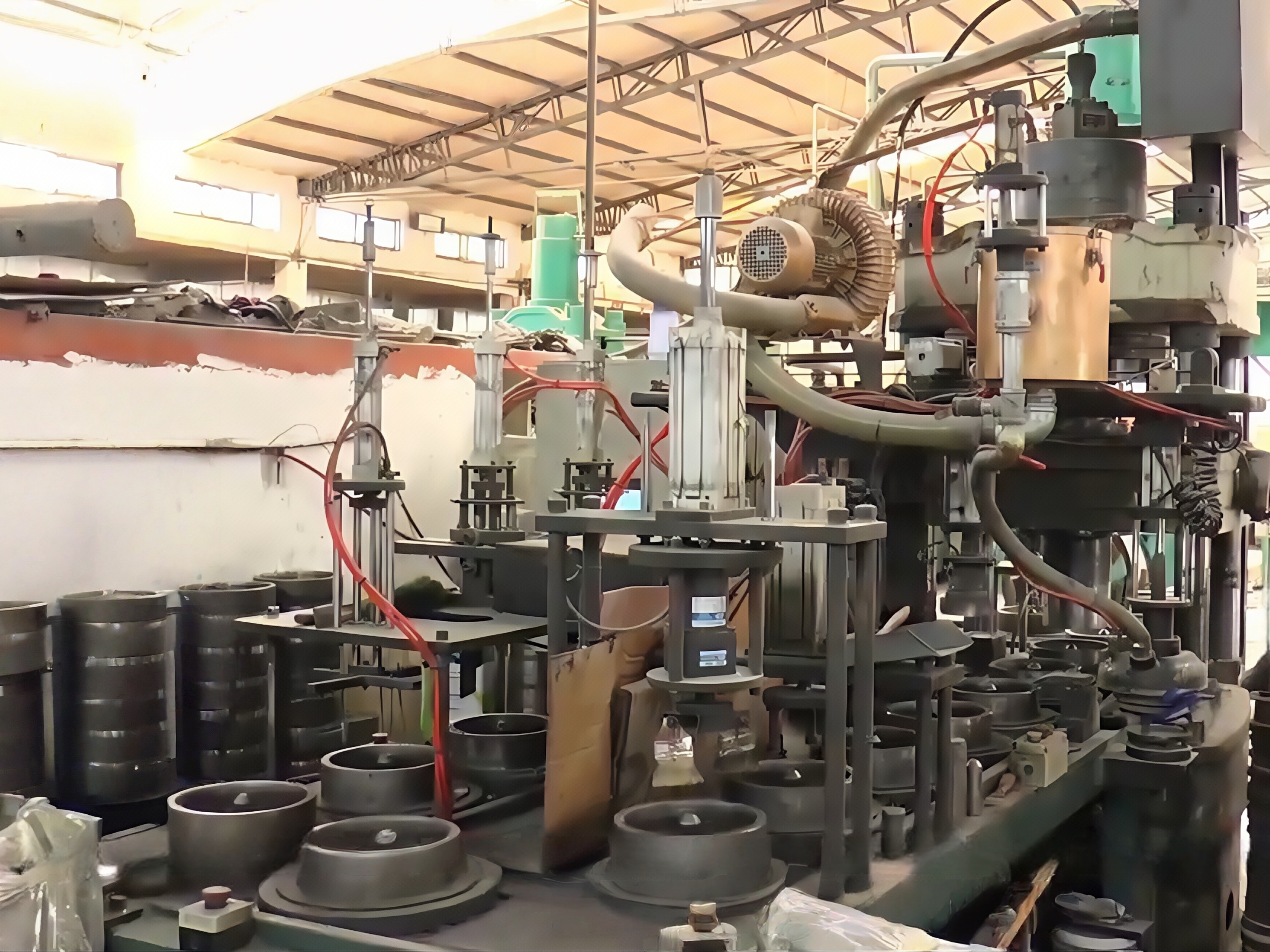
A bonded grinding wheel is an abrasive product composed of abrasive grain held together by a bond, with porosity between the two, and that construction applies across wheel types. What varies — and what decides whether two quotations can be compared at all — is the combination of grain, bond, grade, structure, dimensions and maximum operating speed sitting behind a catalogue entry.
Procurement teams frequently inherit that combination from a workshop habit rather than from a documented decision. A request for 'a 300 mm snagging wheel' can be answered with a different shape type, a different bond, a different grain and a different speed rating on every supplier sheet. A third-party manufacturer technical data sheet shows how much detail a single product line can carry: the 3M Cubitron 3 depressed-centre grinding wheel is documented as ISO Type 27 with ceramic precision-shaped grain, nominal thicknesses of 6 mm and 7 mm, and conformity references including EN 12413 and ANSI B7.1. None of those fields can be assumed when a purchase order simply says 'snagging wheel'.
Two consequences follow. First, buyers who compare dissimilar products by nominal wheel type or brand will misread both performance and price. Second, the dimensional and safety requirements that apply to the operation — not the marketing category — should drive the specification. ISO 603-14:2022 specifies the most common nominal dimensions for shape types 6, 11, 27, 28 and 29 bonded abrasive products intended for deburring and fettling/snagging with hand-held grinding machines. That standard is a dimensional reference point for the shapes most snagging work uses; it is not, by itself, a complete safety or market-access requirement.
How ceramic and resin bonds differ in construction
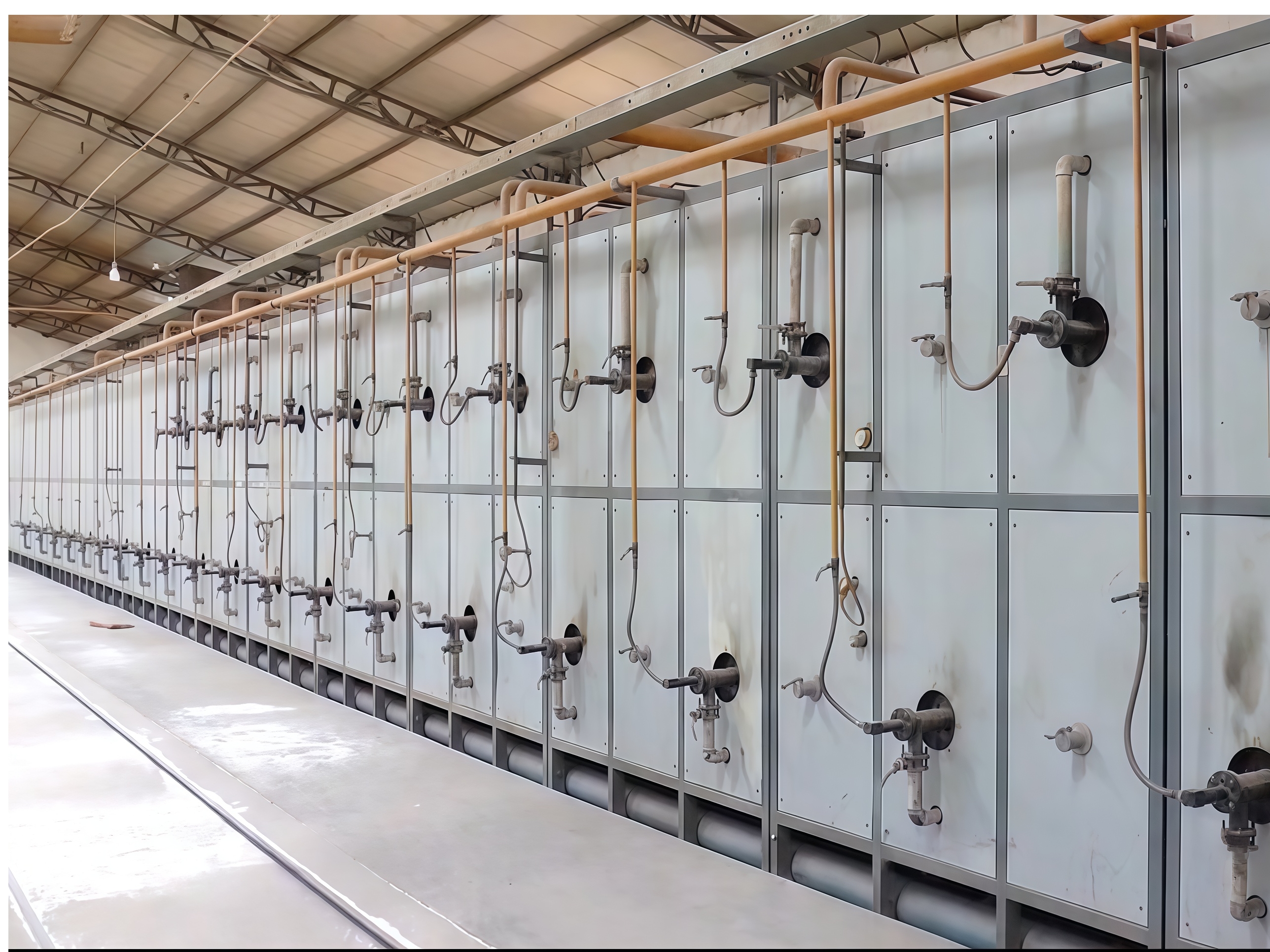
A vitrified — usually called ceramic — bond is an inorganic, glass-like binder. The wheel is formed from abrasive grain, bond material and a temporary binder, then fired in a kiln, which is why vitrified wheel plants are built around kiln furnaces and kiln cars rather than press-and-cure cells. Shandong Xinfa is specialised in the research, development and manufacture of vitrified bond grinding wheels, and lists vitrified bond products with diameters from 100 mm to 1100 mm — a range that covers both the small shop wheel and the large roll and surface wheel.
A resin bond uses an organic resin as the binder. Snagging wheels in that family form a distinct category in the same manufacturer's range, listed as Resin Bonded Snagging Grinding Wheel alongside the vitrified families, which means the two bond systems can also be compared inside a single supplier catalogue rather than across unrelated sources.
The practical trade-offs follow from the binder. Vitrified bonds are generally described as holding form and cutting geometry under grinding-zone heat, and they are dressed to restore that form and sharpness. They are also brittle products: mechanical shock during handling, mounting or transport is a recognised risk, which is why bonded wheels are treated as fragile goods throughout the logistics chain. Resin bonds, being organic and more resilient, are commonly selected for operations dominated by heavy stock removal, intermittent contact and rougher handling at the machine.
These are directional differences, not a ranking. The useful buyer question is not which bond is better in principle, but which bond, in which shape and grain, on which machine, delivers the required removal rate and surface condition at an acceptable cost per finished part.
Ceramic bonded vs resin bonded snagging wheels: side-by-side comparison
| Decision dimension | Ceramic (vitrified) bonded wheels | Resin bonded snagging wheels | Field to fix in the RFQ |
|---|---|---|---|
| Binder | Inorganic, kiln-fired vitrified bond | Organic resin binder | Bond designation on the wheel marking |
| Production route | Forming followed by high-temperature kiln firing | Forming followed by resin cure | Relevant to factory audit, not to the quotation line |
| Main role in a plant | Precision and semi-precision families: tool, surface, cylindrical, centreless, bearing, gear, internal bore and related types | Snagging, fettling and heavy stock removal with hand-held or swing-frame machines | Named operation and machine type |
| Shape and dimensional basis | ISO 603-14:2022 covers common nominal dimensions for shape types 6, 11, 27, 28 and 29 used for deburring and fettling/snagging with hand-held machines | The same shape families and the same standard apply to hand-held duty | Shape type, diameter x thickness x bore, tolerance |
| Behaviour under grinding heat | Vitrified bonds are generally described as more heat-tolerant in the grinding zone | Organic binder is generally more heat-sensitive in sustained heavy contact | Maximum operating speed, duty cycle, coolant use |
| Tolerance to shock | Brittle; treated as fragile goods in handling and transport | Generally more resilient to impact and rough handling | Packaging and handling specification |
| Form maintenance | Dressed to restore form and cutting geometry | Consumed in service; form is held by the bond until replacement | Dressing method and interval, to be recorded in trial |
| Performance evidence | Supplier-published comparison data against conventional wheels; no public cross-supplier test protocol | Same evidence position | Matched-condition trial data |
| Cost basis | No public comparable quotation data | No public comparable quotation data | Unit price basis, MOQ, Incoterm, lead time |
| Trade classification | Tariff references place abrasive wheels of agglomerated abrasives or of ceramics under HS heading 6804.22 | Same heading family | Jurisdiction-specific classification confirmation |
The table should be read as a specification checklist rather than a verdict. Several rows are deliberately left without a performance figure, because no verifiable cross-supplier performance or price dataset exists for this category at present, and a comparison that fills those cells with estimates would be less useful, not more.
Abrasive grain options and where Brown Fused Alumina fits
Grain choice is the second half of the specification, and the half most often left vague. Brown Fused Alumina is a fused alumina abrasive grade, and it held the largest product type share of the fused alumina market at 52.4% in 2025, according to the Dataintelo fused alumina market report. That share is a market-structure indicator: unless another grain is named, buyers should expect BFA-based wheels to be the default quotation they receive.
BFA appears in the market in two positions at once. It is a traded abrasive raw material, and it is the grain carried inside finished bonded wheels. Shandong Xinfa lists Brown Fused Alumina Abrasive among its products alongside its finished wheel families, which allows a buyer to source grain and finished product from the same counterparty where a single-supplier material chain is preferred.
At the quotation stage, grain must be written as a named grade rather than as generic aluminium oxide. Third-party technical documentation confirms that the grain designation is a product-specific field: the 3M Cubitron 3 depressed-centre wheel data sheet names ceramic precision-shaped grain, not a generic oxide. Grain type, grit size, bond type, grade, structure, wheel dimensions, bore and maximum operating speed are the fields that make two quotations describe the same object — and the fields that make a later claim of 'higher efficiency' falsifiable.
Application fit: matching bond family to wheel category
A supplier's own product list is the fastest way to see how the two families divide. A vitrified-bond manufacturer's range typically spans General Purpose Grinding Wheel, Bench Grinder Wheel, Tool Grinding Wheel, Flat Surface Grinding Wheel, Centreless Grinding Wheel, Cylindrical Grinding Wheel, Crankshaft & Cam Shaft Grinding Wheel, Saw Tooth Grinding Wheel, Bearing Grinding Wheel, Worm Grinding Wheel, Gear Grinding Wheel, Needle Grinding Wheel, Roll Grinding Wheel V&B, Internal (Bore) Grinding Wheel, Oilstone, Segments, Rubber Control & Centreless, Flap Disc and Mounted Points — with Resin Bonded Snagging Grinding Wheel appearing as a separate, single category.
Read as a procurement map, the vitrified families cluster around work where form, size and surface condition are controlled: bearing, gear, crankshaft and camshaft, roll, internal bore and centreless grinding. The resin bonded snagging category sits at the other end of the process, where the requirement is stock removal and the wheel is expected to be consumed. A plant buying both is buying two different performance promises: dimensional consistency in the precision cell and removal rate per wheel in the snagging cell. They should be sourced, specified and accepted under separate line items.
For the snagging buyer specifically, three application questions should be answered before the bond is chosen. What machine presents the wheel — hand-held, swing-frame or floor-stand — and therefore which of the ISO 603-14:2022 shapes applies? What material is being cut and how much stock must come off per pass? And what surface condition does the next operation require? The third question matters more than it appears: peer-reviewed research indexed in PMC states that the condition of the grinding wheel directly affects the surface quality of the workpiece, and that monitoring wheel-wear state allows wheel condition to be evaluated efficiently.
Purchasing terms and acceptance criteria for snagging wheels
What separates a repeatable snagging wheel purchase from a dispute is the set of terms fixed before the first shipment. Six groups cover most of the exposure.
- Technical fields. Shape type using ISO 603-14:2022 nomenclature, diameter, thickness and bore tolerance, grain type and grit, bond type, and maximum operating speed as marked on the wheel.
- Conformity documents. The supplier's own declaration against the standards applicable in the destination market. EN 12413 and ANSI B7.1 appear as conformity references in third-party technical data sheets, and ANSI B7.1 covers safety requirements for the use, care and protection of abrasive wheels. A supplier's certificate of conformity is the deliverable; another manufacturer's data sheet is not.
- Packaging performance. Bonded wheels are fragile products, and pallet reinforcement with shockproof cushioning is the standard control. Packaging should be an acceptance criterion in its own right, because a chipped wheel fails before the first cut and the loss is usually discovered after import.
- Supplier documentation. A company claim of ISO 9001 management-system certification should be backed by a current certificate stating scope and validity. Shandong Xinfa's profile — a 30,000 m2 plant, 120 employees, six R&D engineers, more than 100 sets of production and testing equipment, and an annual capacity of over 10,000 tons of bonded abrasives — is company-reported context and should be confirmed through audit or documentary review rather than accepted as a qualification by itself.
- Trial acceptance. Both wheel options should be run on the same machine, material and operator, recording wheel life, material removed per wheel, dressing interval, surface condition and any vibration or imbalance. Without matched conditions, a percentage claim cannot be attributed to the wheel.
- Commercial and trade terms. Unit price basis, MOQ, tooling, packaging, Incoterm, lead time and payment terms must come from the buyer's own RFQ round, because no public comparable quotation, MOQ or lead-time data exists for this category. On classification, tariff references place abrasive wheels of agglomerated abrasives or of ceramics under HS heading 6804.22, with national subheadings that differ by jurisdiction — a United States reference shows 6804.22.40 for abrasive wheels, and a separate commercial reference shows 68042290. Those subheadings must not be aggregated across markets and should be confirmed with the importing customs authority.
One further administrative layer is worth checking in some markets: Taiwan's government open data publishes a dataset covering the declaration of grinding wheel manufacturers, product names and types, which indicates that registration or declaration obligations can sit alongside product standards for this category.
Reading performance claims: what a 30% efficiency figure does and does not cover
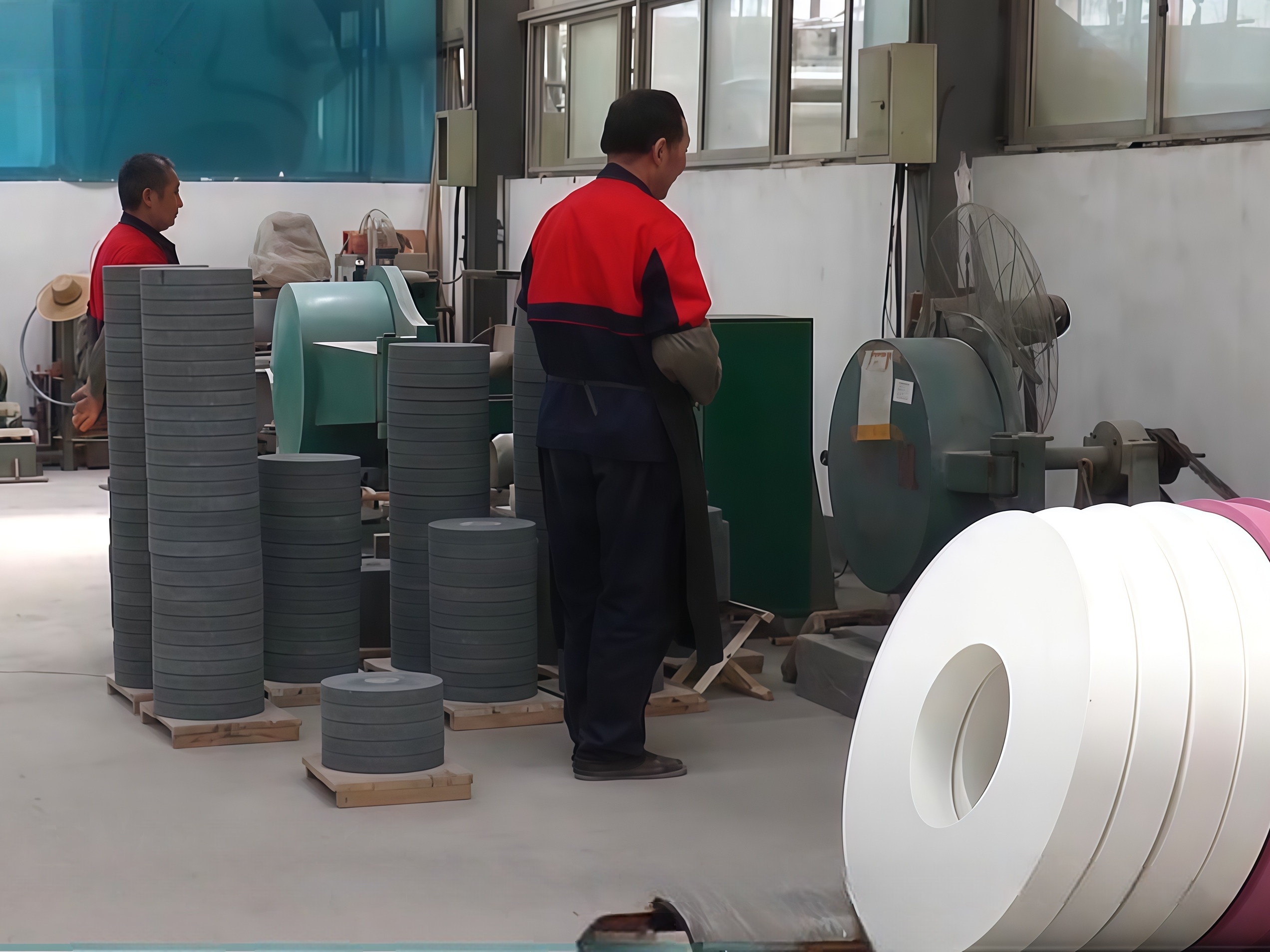
Published product comparison information for this manufacturer states that the product provides 30% higher grinding efficiency than conventional grinding wheels and requires less frequent dressing; the same comparison data states 20% lower cost and describes the wheels as long-lasting, positioning them for industrial plant scenarios. Those are supplier-published comparison figures set against 'conventional grinding wheels' as a class.
Three boundaries apply before the numbers are used in a sourcing decision. First, the comparison base is a class, not a named wheel: a percentage against conventional wheels is only meaningful when the alternative wheel, the machine, the material and the test method are fixed. Second, no public cross-supplier test protocol exists for this category — matched data on wheel life, material-removal rate, surface roughness, dressing interval, maximum operating speed and failure rate has not been published, so a buyer's own trial is currently the only reliable source of comparable figures. Third, a lower wheel price is not the same as a lower cost per part: a wheel that costs 20% less but requires more dressing time or generates more rework can cost more per finished component.
Market signals behind the bond decision
Three published indicators frame the context in which this choice is being made. The global grinding wheel market is projected to grow at a CAGR of 6.7% from 2025 to 2032, driven by demand for precision machining, according to a commercial market forecast. Within one wheel category, the centreless grinding wheel market was valued at USD 4.7 billion in 2025 and projected to reach USD 7.2 billion by 2033 in the same family of commercial research. On the material side, Brown Fused Alumina held the largest product type share of the fused alumina market at 52.4% in 2025, per Dataintelo.
Two technology signals matter more to the snagging buyer than to the precision buyer. Peer-reviewed research published in 2024 examines on-line monitoring of grinding-wheel wear, and a recorded patent application, CN120336759A, describes an online grinding-wheel state monitoring system based on multi-sensor fusion. If wheel-wear state can be monitored in process, the economics of bond selection change: the value of a wheel is no longer only its removal rate, but the predictability of its replacement point.
A compliance signal runs in parallel. Standards activity around bonded abrasives is largely dimensional — ISO 603-14:2022 is a dimensional standard for hand-held grinding shapes — and dimensional conformity alone does not establish every legal or market-access obligation. Buyers selling into regulated markets should treat safety referencing and importer-side declaration as a separate workstream from wheel specification.
What to plan for in the next sourcing cycle
The comparison points to a short list of practical moves rather than a single recommendation. Buyers should arrive at the RFQ stage with shape type, dimensions, grain, bond and speed fields already defined, so that quotations describe the same product. Plants running both precision grinding and snagging should keep the two bond families as separate line items with separate acceptance criteria, rather than allowing a single 'grinding wheels' budget line to blend them. Supplier documentation — a current ISO 9001 certificate with scope and validity, conformity declarations and packaging verification — should be a gate before trial, not an afterthought. The trial itself remains the decision instrument, because no public benchmark substitutes for matched-condition results on the buyer's own machine. Classification should be confirmed for the importing market before the first shipment, because national subheadings under the 6804.22 heading family are not interchangeable. And where the plant is moving toward process monitoring, buyers should ask suppliers for wheel-life and dressing-interval data that can be plugged into that system from day one.
For readers who need the underlying specification detail across these wheel categories, Shandong Xinfa's product brochure is available for download: Xinfa Abrasives product brochure (PDF).
FAQ
What is the difference between a ceramic bonded and a resin bonded snagging wheel?
Both are bonded abrasive products: abrasive grain held together by a bond, with porosity between the two. The difference is the binder. A ceramic — usually called vitrified in standards and catalogues — bond is an inorganic, kiln-fired binder, and wheels in that family are produced through a forming and high-temperature firing route. A resin bond uses an organic resin as the binder. The binder determines how the wheel behaves under grinding heat, how it tolerates mechanical shock, and how it is dressed, which is why the two families are quoted against different technical fields rather than on unit price alone.
Which bond type is correct for snagging and fettling work?
There is no universal answer, because both bond families are supplied in the shapes used for hand-held work. ISO 603-14:2022 specifies the most common nominal dimensions for shape types 6, 11, 27, 28 and 29 bonded abrasive products intended for deburring and fettling/snagging with hand-held grinding machines. The choice should be made on machine type, workpiece material, stock to be removed and required surface condition, and then confirmed with a matched-condition trial. A bond decision made without that trial is a workshop habit rather than a procurement decision.
Which abrasive grain should be specified, and where does Brown Fused Alumina fit?
Grain should be named as a specific grade, not as generic aluminium oxide. Brown Fused Alumina is the largest fused alumina product type by market share — Dataintelo reported a 52.4% share of the fused alumina market in 2025 — and it is also listed among the products of Shandong Xinfa Abrasives & Grinding Tools Co., Ltd. alongside that company's finished wheel families. Third-party technical documentation shows that grain designation is product-specific: the 3M Cubitron 3 depressed-centre wheel data sheet names ceramic precision-shaped grain. Buyers should fix grain type, grit size, bond type, dimensions, bore and maximum operating speed in the RFQ so that quotations describe the same object.
How should a buyer test a supplier's claim of higher grinding efficiency?
Published comparison information from the manufacturer states 30% higher grinding efficiency than conventional grinding wheels, less frequent dressing and 20% lower cost. Claims of this type are only usable when the comparison basis is matched. Peer-reviewed research indexed in PMC states that wheel condition directly affects the surface quality of the workpiece, and that monitoring wheel-wear state allows wheel condition to be evaluated efficiently. A trial should therefore record wheel life, material removed per wheel, dressing interval, surface condition and operating speed for both wheels on the same machine, material and operator before any percentage is carried into a sourcing decision.
What acceptance criteria belong in a snagging wheel purchase order?
Six groups. Technical fields: shape type, dimensions, bore tolerance, grain type and grit, bond type and maximum operating speed. Dimensional reference: ISO 603-14:2022 nomenclature for the hand-held shapes. Safety reference: the supplier's own declaration against the standards applicable in the destination market, where EN 12413 and ANSI B7.1 appear as conformity references in third-party technical data sheets and ANSI B7.1 covers safety requirements for the use, care and protection of abrasive wheels. Packaging: bonded wheels are fragile products, and pallet reinforcement with shockproof cushioning is the standard control. Supplier documentation: a current ISO 9001 certificate with scope and validity, plus factory and inspection records. Commercial terms: unit price basis, MOQ, packaging, Incoterm, lead time and payment terms, none of which can be obtained from public comparable data for this category.
Do ceramic and resin bonded grinding wheels have different import classifications?
Not at heading level. Tariff references place abrasive wheels of agglomerated abrasives or of ceramics — which covers both vitrified and resin bonded wheels — under HS heading 6804.22, with national subheadings that differ by jurisdiction. One United States reference shows 6804.22.40 for abrasive wheels; a separate commercial reference shows 68042290. Those subheadings must not be aggregated across markets, and classification should be confirmed against the importing country's official tariff schedule through a customs broker or the customs authority. In some markets an additional administrative registration layer applies: Taiwan's government open data, for example, publishes a dataset covering the declaration of grinding wheel manufacturers, product names and types.
Have Questions or Need More Details?
Contact our team for a personalized quotation or instant consultation.
Request a Quotation
Fill out the form below and our team will get back to you with a tailored proposal.
WhatsApp Direct Chat
Prefer to chat in real-time? Message us on WhatsApp for instant assistance & quick answers.
- Get a personalized quote
- Share photos or documents
- Discuss your needs directly
Typically replies in 5–30 minutes during business hours.