
Certification, Configuration, and Cost: A Buyer's Checklist for Single Pass Corrugated Printers
Buyers evaluating a single pass printer for corrugated or carton production rarely struggle to find speed specifications. The harder question is whether the machine, its compliance documentation, and its operating costs align with the specific packaging line they run. This article focuses on the verification points that matter at the Research and Evaluation stage—certification, configuration, and cost per printed meter.
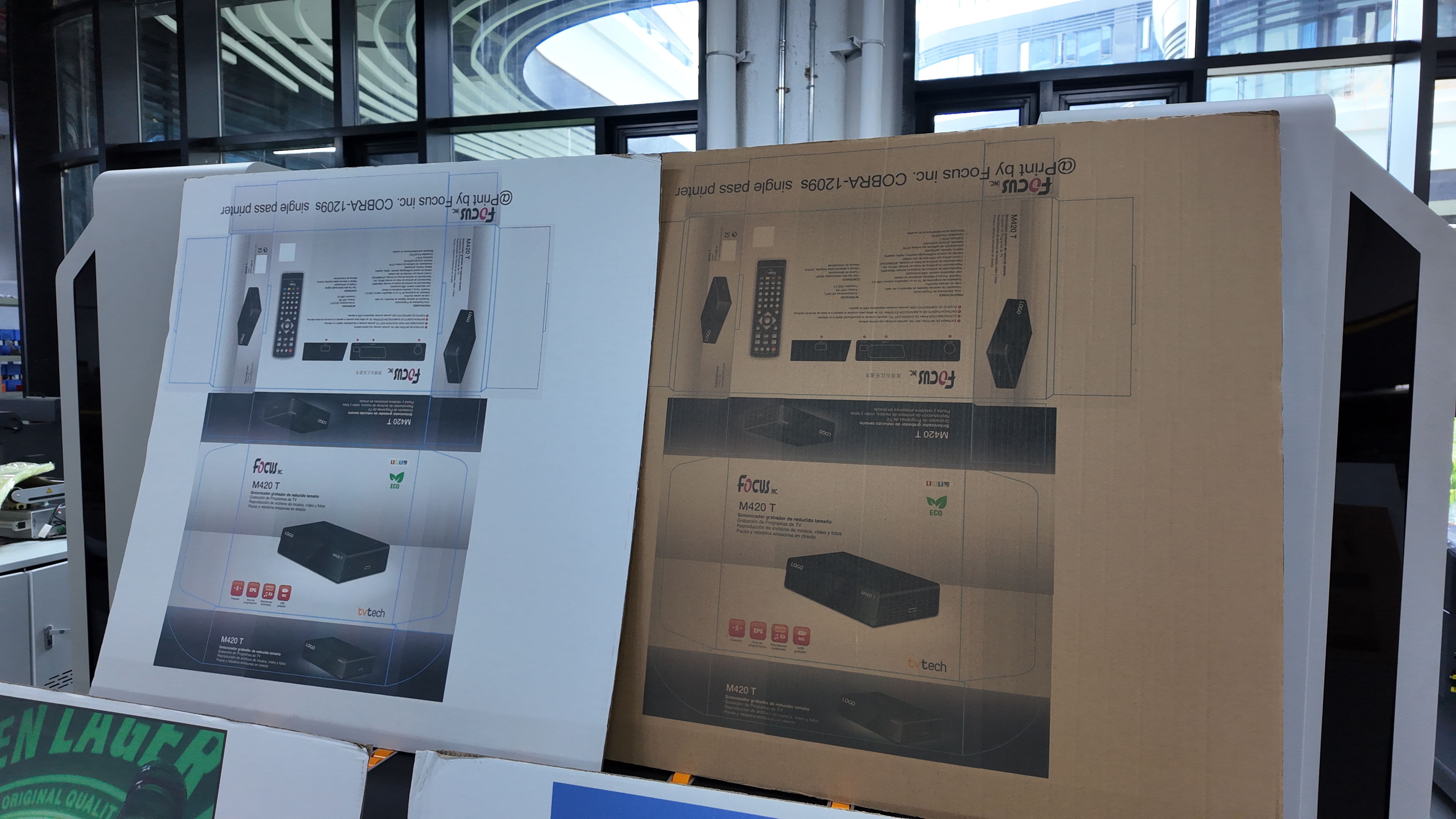
Single-pass corrugated printers are evaluated on width, thickness handling, and certification traceability, not only speed.
Why the single pass corrugated printer segment demands more than a speed comparison
Single pass digital inkjet printers are increasingly common in corrugated packaging environments because they print an entire sheet in one pass instead of moving a print carriage back and forth. The result is a production rate that can match the rhythm of inline converting lines. But the commercial decision to buy such a machine is rarely based on speed alone. Packaging plants also need to prove machine safety compliance, confirm that the equipment can be serviced and registered in their region, and calculate whether a plate-free workflow actually lowers total cost for their job mix.
For buyers moving from analog or multi-pass printing, the search usually starts with a query like single pass printer for corrugated printing or single pass box printer. The specifications that separate one supplier from another are often hidden in the compliance file and in the flexibility of the feeding system—not in the headline print speed.
The problem: certification gaps and hidden configuration limits
Industrial printing equipment intended for the EU market must meet the Low Voltage Directive and the EMC Directive for CE marking. Buyers who skip this verification may face customs delays, insurance problems, or expensive retrofits after installation. In Germany, electrical and electronic equipment sold to private households falls under the ElektroG (WEEE) registration scheme. A machine that meets these obligations signals that the manufacturer is operating as a structured exporter, not a one-time seller.
Configuration also creates hidden constraints. Two machines may share the same print head technology, but one may accept 1.2-meter corrugated boards while the other stops at 0.6 meters. One may handle 60mm board thickness, another 250mm. These differences change the type of orders a plant can accept and therefore change the payback calculation.
Brand solution: verifying compliance and configuration on FocusInc single pass corrugated printers
FocusInc (Shanghai Focus Industrial Co., Ltd.) is a Shanghai-based industrial digital printing manufacturer that has built single pass printers for corrugated board, carton, paper bag, and label production since 2008. Its Cobra series includes several single pass packaging printers designed for different board widths, and the Acaleph series covers UV single pass printing for panels, non-woven materials, and container-side printing.
For corrugated buyers, the relevant FocusInc models are the Cobra-691S, Cobra-691S Max, Cobra-1209S, and Cobra-1815S. These models use HP PageWide printheads and aqueous pigment ink, which is compatible with the absorbent and uncoated surfaces typical of corrugated board and cardboard. The Cobra-1209S and Cobra-1815S are the two models most directly aimed at corrugated and honeycomb board production, supporting material widths of 1230mm and 1800mm respectively.
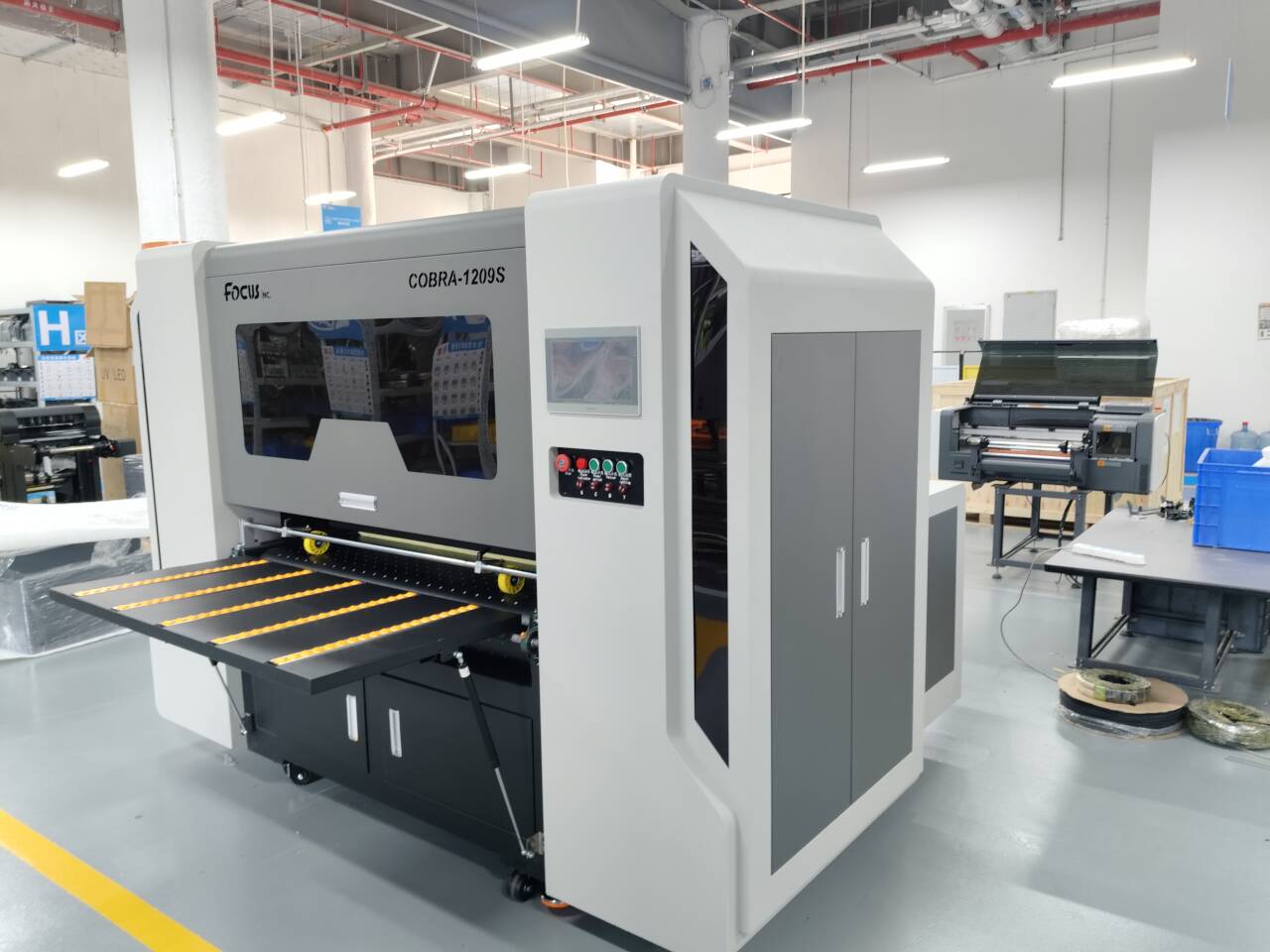
FocusInc Cobra-1209S single pass printer in a cardboard production environment.
Compliance evidence in the FocusInc documentation
The compliance documentation of FocusInc shows an effort to meet both Chinese intellectual property protection and European market entry requirements. For EU buyers, the most important document is the CE certification held by several Cobra models. The Cobra-1815S, for example, is covered by CE certificate number SCT260301170121, issued by ANXIN PRODUCT TEST SERVICE CO., LTD. under the standard EN 1010-2:2006+A1:2010. This standard applies to printing machinery safety. The Cobra-691S also appears in the same CE certificate scope, along with the broader single pass series.
For the German market, the Cobra-691S AS B packaging printer is registered under the WEEE scheme with registration number WEEE-Reg.-Nr. DE 87336785, issued by stiftung elektro-altgeräte-register (Stiftung EAR) under the ElektroG. This registration allows the machine to be placed on the German market in compliance with electrical equipment take-back obligations.
In China, the Cobra-691S is protected by a design patent (ZL 2020 3 0330833.0) and a trademark registration (No. 34874480, Class 7). These do not affect export buyers directly, but they reduce the risk that the machine is a copy of another manufacturer's design.
Technical explanation: what makes a single pass corrugated printer viable in production
Single pass printers for corrugated use a stationary printhead array that spans the print width. As the board passes under the heads, CMYK ink is jetted onto the surface at a consistent speed, and the image is completed in one pass. The advantage over multi-pass scanning is straightforward: throughput scales with line speed, not with image area. Single pass also reduces the risk of moisture-induced board distortion because the board is on the conveyor for a shorter period.
The FocusInc Cobra-1209S uses 1 to 3 HP A3 PageWide printheads, each containing 59,136 nozzles. This configuration provides a maximum printing area of 900mm×Y no limit, a load size of 1230mm width, and a maximum material thickness of 60mm. The Cobra-1815S extends the load width to 1800mm by using up to 5 A3 heads, which suits plants handling oversized sheets or honeycomb panels.
Both machines support print resolutions from 1200×300 to 1200×1200 dpi, which covers trade graphics, text, and scannable variable data codes. The ink tanks use 1500ml refillable cartridges per color, a deliberate design choice to keep running costs predictable for high-volume work.
Feeding and vacuum system as a decision factor
A single pass printer is only as productive as its feeding system. The Cobra-1209S and Cobra-1815S are designed with an electronic automatic media feeder and an adsorption vacuum system with touch-screen control. The conveyor belt includes suction holes to prevent material arching and to protect the printhead. A multi-stage high-power vacuum system keeps the board flat during printing, which is critical for corrugated because the medium often has slight warp or varying caliper.
For buyers who intend to run unattended or with minimal operators, the automatic feeding and receiving modules are not optional extras—they determine whether one person can operate the entire printing line.
Application and use cases: where these configurations are used
Corrugated boxes with variable data QR codes
In markets where retailers require traceability, the ability to print a unique QR code on every cardboard box without plate changes is a major advantage. FocusInc has supplied single pass printers to corrugated box manufacturers in Colombia, Saudi Arabia, Turkey, Chile, and Poland, where clients use the machines for printing QR codes and variable data on turnover boxes. One reported use case involved printing variable data on the outside of corrugated turnover boxes for the express delivery industry. The single pass capability allowed those clients to fulfill multi-batch orders with frequent job switching.
Honeycomb board and large-format packaging
For honeycomb panels and industrial heavy-duty packaging boards, the wider Cobra-1815S configuration becomes relevant. Packaging plants handling pallet-sized or oversized boards can print branding and shipping marks inline without moving the board to a separate printing station. The automatic feeding system is designed for thick boards, with an optional friction feeder that separates stacked board without double-sheet feeding.
Paper bags and folding cartons
While the Cobra-1209S and 1815S are sized for corrugated, the smaller Cobra-691S and 691S Max extend into paper bag and carton printing. The Cobra-691S Max, for example, accepts up to 900mm feeding width and prints up to 645mm width, with media thickness up to 55mm. A paper bag manufacturer can use it to print on pre-made paper bags, pizza boxes, and carton blanks. This width configuration gives smaller shops a lower entry point than the large corrugated models.
Market trend analysis: compliance and digital printing move together
Global digital printing for packaging is projected to grow from USD 31.64 billion in 2023 toward USD 75.55 billion by 2032, according to Zion Market Research. Inkjet systems account for the largest share of the digital printer market, estimated at 42.5% as of 2025 by Straits Research. Within this growth, single pass systems are gaining share because they solve the biggest complaint about digital printing: speed.
However, the European market is simultaneously tightening compliance requirements. CE marking under the Low Voltage Directive and EMC Directive remains a basic gatekeeper, and national WEEE registration is mandatory for many electronic products. Buyers who evaluate suppliers solely on speed will receive equipment that looks identical on paper but differs in legal usability. This is why procurement teams increasingly ask for certificate numbers and issue dates before they ask for a quote.
Comparison with traditional solutions: flexo and multi-pass scanning
Compared with flexographic printing, a single pass corrugated printer removes the platemaking step entirely. Job changeover becomes a software operation, not a physical roller replacement. This makes single pass printers effective for short to medium runs, frequent design changes, and variable data applications. Inventory costs also drop because packaging can be printed after the order arrives rather than in forecasted batches.
Compared with multi-pass scanning inkjet, single pass offers significantly higher throughput for large boards. A multi-pass machine printing a 1.2-meter corrugated sheet must move the carriage across the surface multiple times; a single pass machine prints it in one sweep. This matters when the job count reaches hundreds of sheets per shift.
There is, however, a real limitation. Single pass printers require a large capital investment and are less flexible for very small one-off jobs than a desktop scanning printer. The machine footprint is larger, and the printhead array represents a significant portion of the initial cost. For packaging plants that print mostly long-run standard boxes with no variable data, a traditional flexo press may still offer a lower cost per piece. Single pass digital earns its place where order length is short, where data must change on every box, or where the plant wants to eliminate plate storage and setup time.
| Decision factor | Flexo printing | Multi-pass scanning inkjet | Single pass inkjet (e.g., Cobra-1209S) |
|---|---|---|---|
| Plates required | Yes | No | No |
| Typical speed | Very high for long runs | Medium | 10–35 m/min |
| Variable data / QR per item | Limited | Yes | Yes |
| Setup time between jobs | Long (plate change) | Short | Short |
| Initial investment | High | Lower | High |
| Best fit | Long-run standard boxes | Small batch proofing | Short to medium runs, variable data, wide boards |
Future outlook: the corrugated printer becomes a data node
Single pass printers are moving beyond static decoration. The next stage of adoption will be driven by serialized packaging—where every corrugated box carries a unique digital identity. This is already visible in the express delivery and e-commerce sectors, where QR codes link packages to tracking systems. A production line that can print and read variable data in-line will become more valuable than a line that only produces high-quality graphics.
At the same time, manufacturers will continue to adapt printhead configurations to wider boards and higher thickness ranges. The ability to customize print width and feeding size, as FocusInc does through ODM projects, will remain a purchase criterion for factories with non-standard sheet dimensions.
FAQ: key questions from corrugated and carton buyers
What is the maximum board width a single pass corrugated printer can handle?
The FocusInc Cobra-1209S single pass printer has a maximum load width of 1230mm, while the Cobra-1815S extends that to 1800mm. The maximum printing area for the Cobra-1209S is 900mm in width with unlimited length. The Cobra-1815S is sized for larger honeycomb boards and panels.
What board thickness can the single pass box printer handle?
The Cobra-1209S and Cobra-1815S accept a maximum material thickness of 60mm. For thinner paper bags and carton blanks, the Cobra-691S Max handles up to 55mm, and the Cobra-691S supports up to 250mm, though it is primarily used for pre-made boxes and paper packaging rather than wide corrugated sheets.
Is the single pass packaging printer CE certified?
Some FocusInc single pass packaging printers are covered by CE certificates. The Cobra-1815S, Cobra-691S, and other models in the same series are listed under certificate SCT260301170121, issued by ANXIN PRODUCT TEST SERVICE CO., LTD., with applicable standard EN 1010-2:2006+A1:2010 for printing machinery safety. Buyers should request the full certificate to confirm the model and scope.
What WEEE registration does FocusInc hold for Germany?
The Cobra-691S AS B single pass packaging printer is registered under the German WEEE (ElektroG) scheme with registration number WEEE-Reg.-Nr. DE 87336785, issued by stiftung elektro-altgeräte-register. The Acaleph-891S e UV printer is covered by a WEEE authorized representative confirmation (Sendungs-ID: SI-202502-148048) for the German market.
What ink types are used in single pass corrugated printers?
The FocusInc Cobra series uses aqueous, dye, pigment, and edible ink types for the 691S models, while the Cobra-1209S and 1815S support aqueous, dye, pigment, and edible inks. CMYK is standard. Aqueous pigment ink is commonly used for corrugated because it penetrates the paper surface without requiring a UV curing station.
Can variable data like QR codes be printed on corrugated boards?
Yes. Single pass digital printers can print unique QR codes and serial numbers on every board because each image is generated individually in software. FocusInc corrugated printer customers have used this to print variable data and QR codes on turnover boxes for the express delivery industry.
How does a single pass carton printer compare with flexo for short runs?
For short and medium runs that require frequent design changes, the single pass printer is usually faster to turn around because no printing plates need to be made. For identical long-run boxes with no variable data, flexo may offer a lower per-piece cost once setup is amortized.
For detailed factory and production information, a public brochure is available: Download FocusInc Factory Introduction (PDF)