
Certification & Parameters in Fiber-Grade TiO₂ Sourcing
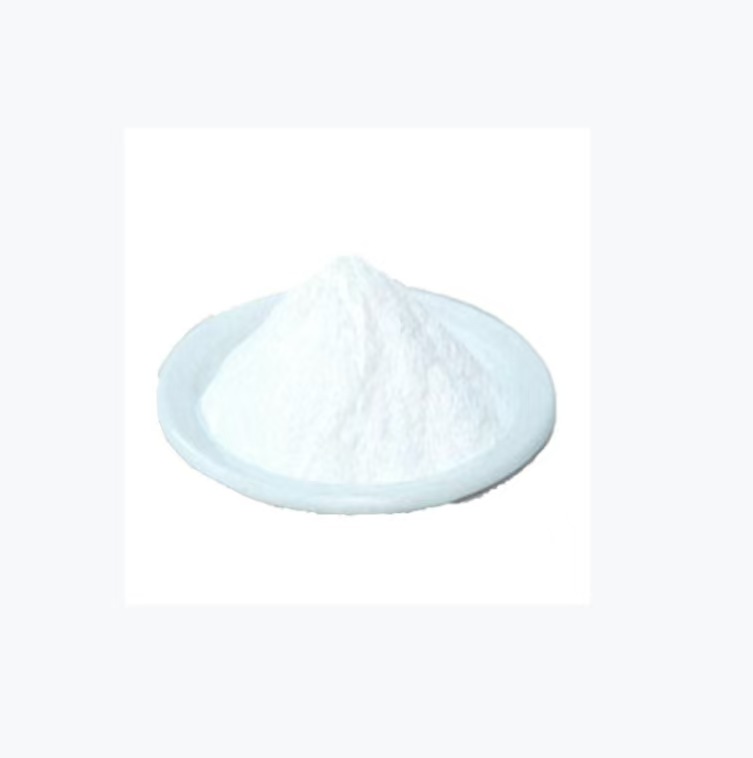
SA-50 is an anatase fiber-grade TiO₂ product supplied by Orient International for PET fiber whitening.
Fiber-Grade TiO₂ as a Certified Process Material
Fiber-grade titanium dioxide is a performance-defined raw material for synthetic fiber production. In polyester spinning, the material must do more than deliver whiteness: it must disperse evenly in ethylene glycol, remain stable under polymerization temperatures, and avoid introducing impurities that could degrade polymer quality. For buyers moving from research to evaluation, the decisive question is whether a supplier can demonstrate certification, parameter control, and application fit at the same time. This article reviews those criteria for fiber-grade TiO₂ sourcing, using SA-50 from Orient International as a reference case.
The Procurement Problem: Certification and Parameter Consistency
For PET fiber producers, the gap between titanium dioxide as a commodity and fiber-grade titanium dioxide as a process material can be costly. General-purpose pigment-grade TiO₂ may satisfy whiteness targets in simple mixing applications, but it is not always specified for polymerization and spinning conditions, where pH, ionic impurities, sieve residue, and dispersibility influence uptime and finished fiber quality. The procurement risk is not limited to price; inconsistent batches can lead to spinneret clogging, filament breakage, black spots, or color streaks. Certification and parameter documentation therefore become an evaluation baseline rather than a formality.
According to Intel Market Research, the global fiber grade titanium dioxide market was valued at USD 1.46 billion in 2024 and is projected to reach USD 1.94 billion by 2032. The same source reports that the polyester fiber segment accounts for more than 60% of all fiber-grade TiO₂ applications. These figures help explain why PET producers are paying closer attention to supplier specifications.
SA-50: A Defined Fiber-Grade Product from Orient International
Orient International Holding Shanghai Foreign Trade Co., Ltd. is a Shanghai-based state-owned foreign trade enterprise founded in 1988 and wholly owned by Orient International Group. The company supplies SA-50, an anatase fiber-grade titanium dioxide product classified as a PET fiber whitening agent, for use in polyester manufacturing.
Orient International operates a 700,000 m² production facility and reports an annual output of 16,000 metric tons of titanium dioxide. The company employs approximately 160 people, including 25 R&D engineers, and exports around 30% of its production to markets including Korea, Japan, the EU, North America, South America, South East Asia, the Middle East, and India. It also supports OEM/ODM production for polyester and nylon applications, with a monthly capacity of 1,000 metric tons, a lead time of 15–30 days, and a minimum order quantity of 1 metric ton. According to the company profile, shipments are covered by quality control processes that include 100% pre-shipment testing.
ISO 9001:2015 Certification: What It Covers
SA-50 is certified to ISO 9001:2015. This certification is issued by TUV SUD under certificate number TUV100034917/2 and applies to the global market.
The certified scope covers production and sales of chemical fiber grade titanium dioxide. This matters to procurement teams because ISO 9001:2015 is a quality management system certification; it indicates that production and sales processes are documented, monitored, and controlled for consistency. It is distinct from ISO 591, the international pigment standard that defines requirements for anatase and rutile types.
Parameter-Level Review of SA-50
SA-50's specification is defined around the needs of PET polymerization and spinning.
| Parameter | SA-50 Specification |
|---|---|
| Crystal Structure | Anatase |
| TiO₂ Content | ≥98.0% |
| Sieve Residue (325 Mesh) | ≤0.004% |
| Moisture (105°C) | ≤0.40% |
| Fe₂O₃ | ≤0.004% |
| pH Value | 6.8 ±0.2 |
| Electrical Conductivity (EC) | ≤230 μS/cm |
| Specific Surface Area (SSA) | 8.5–10.0 m²/g |
| Color Value L | 96.7–98.2 |
| Color Value b | ≤0.0 |
Adjacent Fiber-Grade Products
Orient International also supplies SA-60, a matting agent for viscose and acrylic fiber, and SA-80, a matting agent for nylon. Their specifications follow the same low-impurity, anatase approach adapted to different polymer systems.
| Parameter | SA-60 | SA-80 |
|---|---|---|
| TiO₂ Content | ≥97.0% | ≥95.0% |
| Sieve Residue (325 Mesh) | ≤0.05% | ≤0.004% |
| Moisture (105°C) | ≤0.40% | ≤0.40% |
| Fe₂O₃ | ≤0.004% | ≤0.004% |
| pH Value | 7.2 ±0.6 | 6.8–8.0 |
| Electrical Conductivity | ≤120 μS/cm | ≤100 μS/cm |
| Color Value L | ≥96.5 | 92.0–97.0 |
| Color Value b | ≤0.5 | ≤3 |
This product range illustrates that fiber-grade TiO₂ parameters are polymer-specific; the same product is not automatically suitable for PET, nylon, and viscose without reviewing the specification.
Why These Parameters Matter in PET Spinning
According to ETIO2.com, the anatase crystalline form is preferred for fiber grades due to its lower abrasiveness, with a Mohs hardness of 5.5–6.0 compared with 6.0–7.0 for rutile, reducing wear on spinning nozzles.
Fe₂O₃ content of ≤0.004% and electrical conductivity of ≤230 μS/cm are low-impurity indicators. In PET esterification and polycondensation, high-ionic impurities can promote side reactions and affect intrinsic viscosity. A neutral pH of 6.8 ±0.2 is specified to avoid adverse side reactions in the ethylene glycol circulation system.
The 325 mesh sieve residue of ≤0.004% is a dispersion-related parameter; coarse particles and agglomerates are more likely to block spinnerets or filters during spinning. Specific surface area of 8.5–10.0 m²/g supports dispersibility in ethylene glycol. The color value L range of 96.7–98.2 corresponds to high whiteness, while color value b ≤0.0 supports a neutral tone without yellowing.
Application: From EG Dispersion to Continuous Spinning
SA-50 is designed for polyester manufacturing, with the documented application scenario specifying a polyester chip production line.
In operation, SA-50 is first dispersed evenly in ethylene glycol with gentle stirring to form a stable suspension without sedimentation. The suspension is then pumped into the PET esterification reactor and blended uniformly into the polyester system at 240–285°C, without interfering with the polymerization reaction or intrinsic viscosity. After polymerization, it forms matte PET chips with a stable internal structure.
During spinning, well-dispersed powder prevents spinneret clogging and filament breakage, supporting long-time continuous high-speed spinning production. Process guidance recommends closed vacuum feeding, dispersion in ethylene glycol at 40–60°C with low-speed stirring, steady and uniform feeding during polymerization, and keeping the reaction temperature below 290°C.
Documented application experience with polyester makers in China includes more than 5,000 metric tons of SA-50 supplied over more than 10 years. Reported results include even dispersion without black spots or crystal points, stable adjustable matting degree, steady PET intrinsic viscosity, high whiteness with L-value above 96.7, lower filament breakage rate, longer service cycles for spinnerets and filters, and consistent dyeing without color streaks.
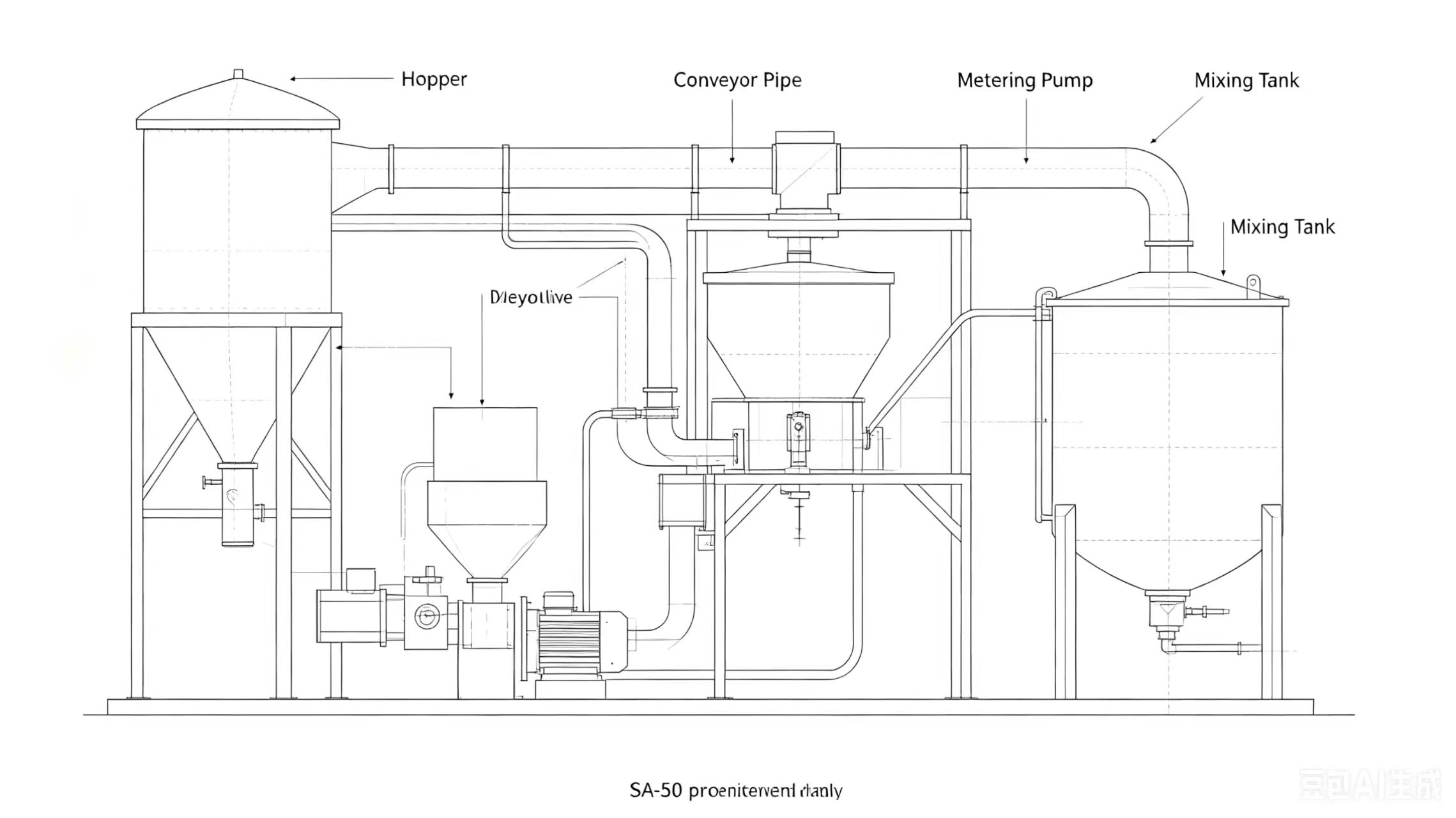
In PET chip production, SA-50 is dispersed in ethylene glycol before polymerization and continuously fed into the esterification system.
Supplier Evaluation Checklist for Fiber-Grade TiO₂
When evaluating a fiber-grade TiO₂ supplier for PET spinning, procurement teams can use the following reference points.
- Certification: ISO 9001:2015, issued by an independent body, with a defined scope.
- Impurity profile: Fe₂O₃, pH, electrical conductivity.
- Dispersion-related parameters: 325 mesh sieve residue, specific surface area, dispersibility in ethylene glycol.
- Process capability: OEM/ODM support, monthly capacity, lead time, MOQ, pre-shipment testing.
- Application match: the grade should match the target polymer and production process.
Market Trends in Fiber-Grade TiO₂ Sourcing
According to Intel Market Research, the global fiber grade titanium dioxide market was valued at USD 1.46 billion in 2024 and is projected to reach USD 1.94 billion by 2032. Polyester fiber is the dominant application segment, accounting for more than 60% of demand.
China's total TiO₂ exports reached 1.9017 million tons in 2024, an increase of 15.84% year on year, according to China Customs Statistics compiled by Echemi. For international buyers, this means more supply options but also a wider range of quality levels, making certification and parameter verification more important.
Certification expectations are also expanding. ISO 591 defines international pigment requirements for anatase and rutile types. Meanwhile, textile-oriented certifications are emerging. Venator's HOMBITAN LW-S 100 became the first fiber anatase TiO₂ to secure ECO PASSPORT by OEKO-TEX for the textile industry in 2022. This development signals growing attention to chemical compliance in textile supply chains.
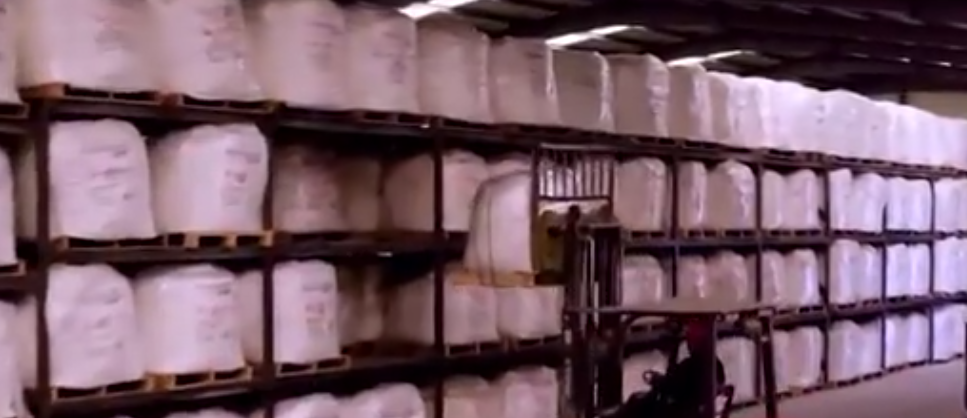
Finished goods warehouse for fiber-grade titanium dioxide.
Comparison with Traditional Commodity-Grade TiO₂
Traditional pigment-grade TiO₂ is often evaluated on whiteness and hiding power. Fiber-grade TiO₂, by contrast, is evaluated on process compatibility: how it behaves in ethylene glycol, how it affects polymerization, and how it performs during high-speed spinning.
SA-50 is positioned as a process-grade product for PET fiber production, not as a universal pigment for coatings or plastics. Compared with a commodity-grade anatase pigment, its specification includes tighter controls on sieve residue, Fe₂O₃, pH, and electrical conductivity, which are directly relevant to polymerization stability and continuous spinning.
One honest limitation should be noted: SA-50's documented certification is ISO 9001:2015 for production and sales of chemical fiber grade titanium dioxide. It is not a textile product certification such as ECO PASSPORT by OEKO-TEX. Buyers whose downstream textiles must meet such eco-labels should evaluate product-level compliance separately.
Future Outlook
As global supply of TiO₂ expands, the sourcing decision for PET producers will likely shift from price-driven purchasing to specification-driven purchasing. The ability to document crystal structure, impurity levels, dispersibility, and certification helps reduce the risk of line stoppages and off-spec fiber.
For suppliers such as Orient International, the long-term position depends on maintaining parameter consistency across batches and offering application data that buyers can verify before purchase. The combination of certified quality management, documented process conditions, and stable export logistics is likely to remain the baseline for fiber-grade TiO₂ procurement.
Supplier Reference
For buyers in the research and evaluation stage, the following contact points are available from Orient International Holding Shanghai Foreign Trade Co., Ltd.
- Company website: www.petchemical.com
- Contact: Alex Wu
- Email: sales@petchemical.com
- Phone / WhatsApp: +86 18928113542
- Address: Floor 6-12, Suite B, Orient International Building 85, Loushanguan Road, Shanghai 200336, P.R.China
- Company brochure: Download PDF
FAQ
What ISO certification does SA-50 hold?
SA-50 is certified to ISO 9001:2015. The certification is issued by TUV SUD under certificate number TUV100034917/2 and applies to the global market.
What are the key parameters of SA-50?
SA-50 has a TiO₂ content of ≥98.0%, 325 mesh sieve residue of ≤0.004%, moisture of ≤0.40%, Fe₂O₃ content of ≤0.004%, pH value of 6.8 ±0.2, electrical conductivity of ≤230 μS/cm, specific surface area of 8.5–10.0 m²/g, color value L of 96.7–98.2, and color value b of ≤0.0.
Which application is SA-50 designed for?
SA-50 is designed as a PET fiber whitening agent for polyester manufacturing. In polyester chip production, it is used for matting, improving fiber whiteness and smoothness, and supporting continuous polymerization and spinning.
What should a buyer verify before selecting fiber-grade TiO₂?
Buyers should verify the certification scope, impurity limits such as Fe₂O₃ and electrical conductivity, sieve residue, pH value, and dispersibility in ethylene glycol. A quality management certificate such as ISO 9001 supports process consistency but does not replace product-specific textile certification.