
Certification and Specification Guide for Industrial Edge Banding Machines
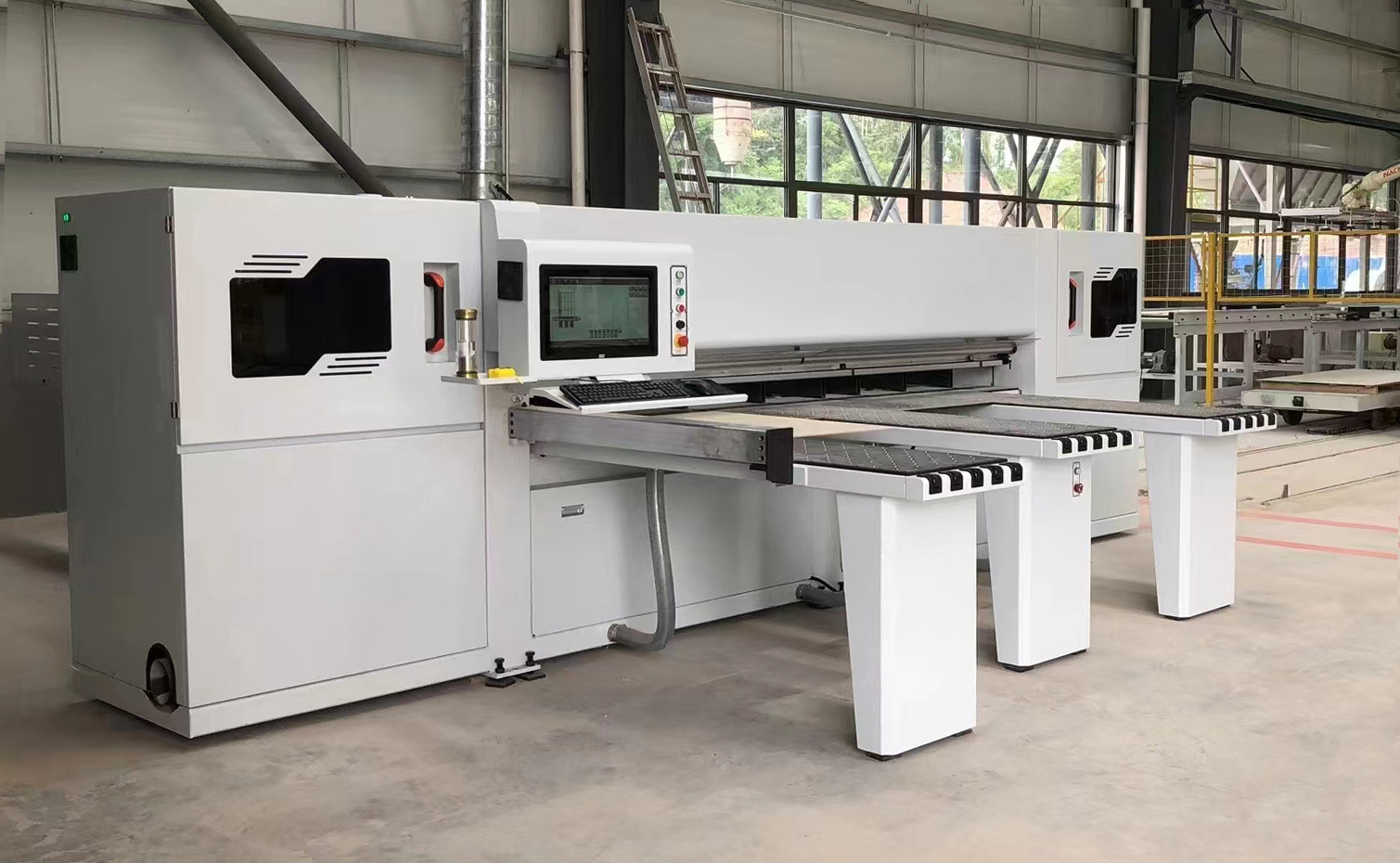
Industrial panel processing environments require equipment that meets specific safety, electrical and mechanical standards.
Why Certification and Parameter Verification Matter in Edge Banding Machine Procurement
Procuring an edge banding machine is not only a matter of feeding speed or glue application quality. For global buyers, the decision increasingly depends on two verifiable dimensions: whether the equipment complies with internationally recognized safety and performance standards, and whether its published specifications match the actual production requirements. This is particularly relevant as buyers move from identifying potential suppliers to evaluating them against certification requirements, shop-floor parameters and total cost of ownership.
In the context of panel furniture manufacturing, edge banding machines perform the critical function of applying, trimming and polishing edge strips onto panel edges. The choice between manual, semi-automatic and automatic systems affects throughput, consistency and labor dependency. However, in professional procurement, the comparison cannot stop at automation level. Certification — such as compliance with ISO 19085-17:2021 for safety requirements of edge banding machines fed by chains or belts — and machine parameters are equally decisive.
The Procurement Challenge: Matching Machine Class to Production Reality
Buyers evaluating industrial edge banding equipment often face a fragmented landscape. Suppliers may present similar machine categories with different configurations, and the same machine name may be used for equipment with very different installed power, working dimensions or trimming capability. This makes it difficult to compare offers on an objective basis.
For a furniture manufacturer, the core questions are:
- What minimum and maximum panel sizes can the machine process consistently?
- What edge band width and thickness range does the machine support?
- What feeding speed is achievable without degrading trimming quality?
- Does the machine support the required edge materials — particularly PVC, which is projected to account for 41.3% of the edge banding material segment in 2026?
- What are the installed power, air pressure and space requirements?
These questions are not merely technical details. They determine whether the machine fits existing workshop infrastructure, whether the output meets buyer quality expectations, and whether operational costs remain predictable.
From Manual to Automatic: Understanding the Equipment Spectrum
The edge banding machine market offers several levels of automation, each suited to a specific production scale.
Manual edge banding machines
Manual machines are typically compact, low-cost systems used for small workshops or repair operations. The operator guides the machine along the panel edge, and quality depends heavily on operator skill. They are generally not designed for continuous industrial operation.
Semi-automatic edge banding machines
Semi-automatic models automate the gluing, pressing and trimming process but still require manual panel feeding and removal. They suit small to medium batch production, where flexibility matters more than maximum throughput.
Automatic edge banding machines
Automatic machines — including industrial and compact automatic models — perform the complete cycle of edge band application, end trimming, rough trimming, fine trimming, corner trimming and polishing in a continuous operation. They are designed for panel furniture manufacturers producing cabinets, cabinet doors and standardized panel components in larger volumes.
This classification is reflected in market data: automatic edge banders held the largest product type share at 52.3% of the global market in 2025. The trend toward automation is also driven by labor cost pressure and the need for consistent edge quality in series production.
Technical Parameters That Define Industrial Edge Banding Capability
When evaluating an edge banding machine, buyers should compare the following parameters carefully:
| Parameter | What It Determines | Typical Industrial Range |
|---|---|---|
| Feeding speed | Productivity and line throughput | 16–22 m/min |
| Edge band width | Compatibility with panel edge thickness | 10–60 mm |
| Edge band thickness | Material options: PVC, ABS, melamine, veneer, etc. | 0.3–3 mm |
| Minimum panel length / width | Ability to process small cabinet components | Min. 135–150 mm length; Min. 40–50 mm width |
| Pre-milling power | Quality of edge preparation before banding | 2.2 kW × 2 (9000 rpm) |
| Installed power | Electrical infrastructure and energy cost | 11.8–25.86 kW |
| Air pressure | Pneumatic system requirements | 0.7–0.9 MPa |
These values are not universal. They reflect the configuration of specific industrial series, such as the HK568 and HK868P automatic edge banding machines from SYUTECH, a Foshan-based manufacturer of woodworking machinery. For example:
- The HK568 automatic edge banding machine has a feeding speed of 16–18–22 m/min, edge band width of 10–60 mm, edge band thickness of 0.4–3 mm, and installed power of 25.86 kW.
- The HK868P automatic edge banding machine operates at 16–22 m/min, supports edge band thickness of 0.4–3 mm, has a total power of 25 kW and weighs approximately 4 tons.
- The HK268GY compact edge banding machine is a more compact option with a feeding speed of 18–20–22 m/min, edge band width of 10–60 mm, thickness of 0.35–3 mm, and installed power of 12.4 kW.
- The HK268G mini edge banding machine offers similar flexibility with a feeding speed of 16–18–22 m/min and installed power of 11.8 kW.
Comparing these configurations side-by-side helps buyers avoid over-specifying or under-specifying their production line.
Certification as a Procurement Constraint: ISO 19085-17 and Other Standards
For buyers in regulated markets, certification is not optional. ISO 19085-17:2021 establishes specific safety requirements for edge banding machines fed by chains or belts. It covers risk reduction measures, safety distances and protective devices. In addition, woodworking machinery entering the US market is subject to OSHA 29 CFR 1910.213, which sets requirements for woodworking machinery guards and safe operation.
For European buyers, EU CE mechanical and low-voltage safety standards are a common minimum requirement. This was highlighted in documented application scenarios for panel furniture production in Romania, where the working environment was specified as indoor normal temperature and humidity with dust-contained wood processing, and the special requirement was CE compliance — without the need for explosion-proof certification.
A similar application case in Kenya for panel furniture edge banding also specified compliance with EU CE mechanical and low-voltage safety standards. The matched auxiliary equipment included an air compressor and vacuum cleaner, illustrating that certification planning must be accompanied by infrastructure planning.
Supplier Evaluation: What the Factory Background Signals
Beyond individual machine parameters, buyers evaluating an edge banding machine supplier should assess the manufacturing entity behind the brand. For example, Foshan Shunde SaiYu Technology Co., Ltd. — operating under the SYUTECH brand — is located in Shunde District, Foshan, a region recognized as the hometown of woodworking machinery in China. The company was originally established in 2013 as Foshan Shunde Leliu Huake Long Precision Machinery Factory and has since developed into a manufacturer with a 10,000 m² factory, about 100 employees, and an annual output of approximately 500 units.
Such facts matter in procurement because they indicate the production scale, quality management capability and after-sales service capacity of the supplier. SYUTECH also reports that about 80% of its output is exported, with main markets in Russia, the Middle East, South America, Europe and Southeast Asia. The company has collaborated with TEKNOMOTOR, an Italian company, to integrate domestic and foreign technology and experience.
However, buyers should interpret these facts with caution: a factory background provides context, but it is not a substitute for verifying actual machine performance on the buyer’s own panel materials, edge bands and production environment.
Application Scenarios and Reference Cases
Romania: Cabinets and Cabinet Doors
In a documented Romanian application scenario for panel furniture — specifically cabinets and cabinet doors — the operation mode was continuous automatic cycle with manual feeding assistance. The matched equipment included a vacuum cleaner, vacuum pump and air compressor. The special requirement was compliance with EU CE mechanical and low-voltage safety standards. This scenario is typical for European furniture producers transitioning from manual to automated edge banding.
Kenya: Panel Furniture Edge Banding
A Kenyan panel furniture application focused on automatically applying, trimming and polishing edge strips for panel furniture boards. The same operational model — continuous automatic cycle with manual feeding assistance — was used, with an air compressor and vacuum cleaner as supporting equipment. EU CE compliance was again specified.
Case Reference: Stable Edge Banding Output in Kenya
A panel furniture manufacturer in Kenya has used 3 units of edge banding and CNC router equipment for 2 years. The reported result was improved edge banding quality and increased output, with the highlight described as stable edge banding. While this is a supplier-documented case rather than an independent audit, it offers a real-world reference point for buyers evaluating equipment stability.
Case Reference: Output Increase in Greece
A panel furniture manufacturer in Greece has used 10 units in an edge banding workshop for 3 years. The reported result was significantly increased output, with the highlight described as stable operation. The scale — 10 units — suggests a more mature industrial operation.
These references illustrate that equipment choices are embedded in specific geographic and production contexts. Buyers should ask suppliers for references in their own industry and region, and where possible, visit running installations or request video documentation.
Comparing SYUTECH with Established Global Competitors
To contextualize supplier evaluations, buyers often compare mid-size manufacturers like SYUTECH with established global players. The table below provides a factual baseline based on publicly available revenue data, without making quality judgments.
| Company | Reported Financial Scale | Market Position Signal | Relevance to Buyer |
|---|---|---|---|
| HOMAG Group (Germany) | EUR 1,413 million FY2024 sales (-13% YoY) | Leading global woodworking machinery group | Benchmark for full-line automation and global service networks |
| Nanxing Machinery (China) | CNY 3.41 billion revenue in 2025 (+2.4% YoY) | Leading Chinese panel furniture machinery manufacturer | Benchmark for scale and domestic supply chain capability |
| SYUTECH (China) | Approx. 500 units annual output; 100 employees; export-oriented | Mid-size specialized manufacturer in Foshan woodworking cluster | Relevant for buyers seeking a balance between customization and cost efficiency |
A critical boundary should be noted: a large enterprise may offer broader global service coverage and more extensive reference installations. A mid-size manufacturer may respond faster to customization requests and offer more flexible pricing. These are general tendencies, not universal certainties. Buyers must verify service response times, spare parts availability and warranty terms in the actual contract.
Limitations and Boundaries Buyers Should Acknowledge
No equipment decision is free of trade-offs. For edge banding machines, the most common boundaries include:
- Feeding speed vs. finishing quality: Higher speed does not automatically mean better quality. The actual result depends on edge material quality, adhesive temperature control, panel surface flatness and operator maintenance habits.
- Certification scope: CE compliance covers specific directives but does not by itself guarantee compliance with every national regulation in the destination country. Importers should confirm the exact scope of certification.
- Material compatibility: A machine that handles 0.3–3 mm edge bands may require different glue systems or milling heads for thick PVC, wood veneer or aluminum edge profiles. Machine capability and material flexibility are not the same thing.
- Factory-reported parameters: Published specifications are typically measured under ideal conditions. Buyers should request test reports or arrange factory acceptance tests (FAT) before shipment.
Market Context and Future Outlook
The global edge bander market was estimated at USD 1.3 billion in 2025, with projections reaching USD 3.2 billion by 2035. This growth is supported by the expansion of panel furniture production in Asia Pacific, which accounted for 38.4% of global revenue in 2025. PVC remains the dominant edge banding material, expected to account for 41.3% of the material segment in 2026.
In this context, buyers can expect three developments:
- Deepening automation: Automatic edge banders will continue to gain share as labor costs rise and batch consistency requirements tighten.
- Closer integration with production lines: Edge banding machines are no longer standalone. They are increasingly connected with CNC nesting machines, drilling machines and conveying systems, forming complete panel furniture production lines.
- Stronger compliance pressure: Standards like ISO 19085-17:2021 and regional rules such as OSHA 1910.213 will make documented certification an essential part of supplier qualification.
Frequently Asked Questions
What safety standard applies specifically to edge banding machines fed by chains or belts?
ISO 19085-17:2021 is the international standard governing specific safety requirements for edge banding machines fed by chains or belts. It addresses risk reduction measures and safety requirements for this machine class.
What OSHA regulation applies to woodworking machinery in the United States?
OSHA 29 CFR 1910.213 sets safety requirements for woodworking machinery in the United States. It covers machine guards, operational safety and related compliance obligations.
What is the difference between a semi-automatic and an automatic edge banding machine?
A semi-automatic edge banding machine automates the gluing, pressing and trimming functions but requires manual panel feeding and removal. An automatic edge banding machine performs the full cycle — including end trimming, rough trimming, fine trimming, corner trimming and polishing — in continuous automatic operation, typically with manual feeding assistance.
What panel size can the HK568 industrial edge banding machine process?
The HK568 has a minimum panel length of 135 mm (corner trimming 50×300 mm) and a minimum panel width of 50 mm. It supports edge band widths of 10–60 mm and edge band thicknesses of 0.4–3 mm.
What edge thickness range does a compact edge banding machine support?
Compact models like the HK268GY support edge band thickness of 0.35–3 mm, edge band width of 10–60 mm, and a feeding speed of 18–20–22 m/min. The installed power is 12.4 kW, and the machine dimensions are 5360×730×1210 mm.
Which edge banding materials are most commonly used in the market?
PVC is the dominant edge banding material, projected to account for 41.3% of the global material segment in 2026. Other common materials include ABS, melamine and wood veneer.
Why is Asia Pacific significant in the edge bander market?
Asia Pacific dominated the edge bander market in 2025 with a 38.4% revenue share, driven by furniture manufacturing hubs in China and India. The region is both a major production base and a growing consumer market for panel furniture.