
Certification and Standard Compliance for Rental LED Screens: A Buyer's Checklist
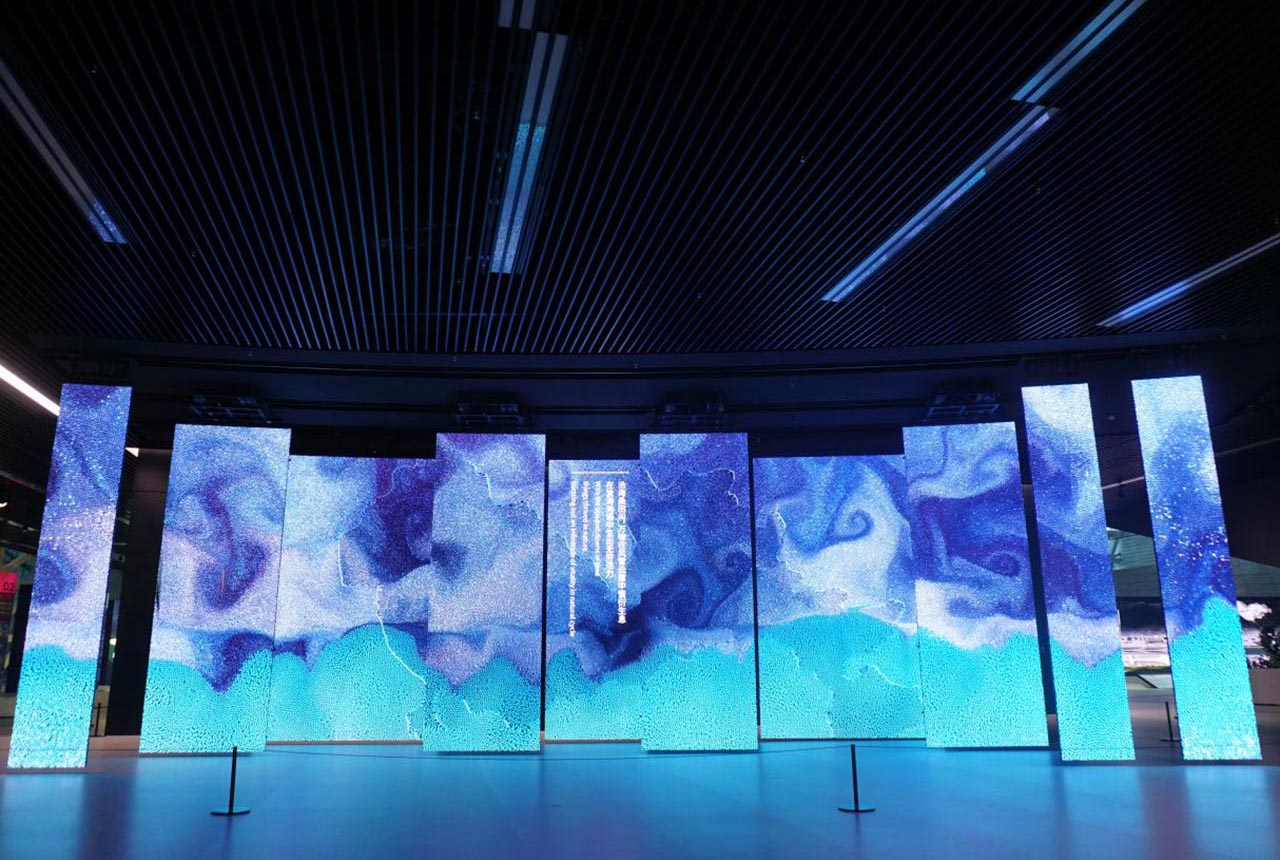
Certification and standards compliance for rental LED screens is a configuration question before it is a badge question. Two cabinets quoted under the same rental series can carry different ingress protection, different brightness, and different destination-market documentation, depending on whether they are specified for an indoor exhibition hall or an outdoor festival stage. Buyers who treat compliance as a single certificate — usually CE or FCC — tend to find the gap later: at customs, at venue safety review, or when a camera crew reports banding on a live feed.
This checklist covers the four compliance layers that matter for rental LED screens: electrical safety and EMC conformity, ingress protection (IP) matched to the operating environment, image-performance specifications such as refresh rate, and traceable test documentation. Published specifications from DDW DISPLAY rental series — D Series, A Series, AXIS Series, AXIS One Series, AXIS Flex Series, AFLEX Series, PIF Series and the ORBIT MIP Series — are used to show how those layers appear in real product data.
Why Rental LED Screens Face a Different Compliance Question Than Fixed Installations
Rental LED screens are engineered for temporary installation and dismantling, frequent transportation, and repeated assembly. That working condition changes the compliance question. A fixed LED display is installed once, verified once, and then operated continuously in a known environment. A rental cabinet moves between venues, is hung or stacked on truss structures, and may alternate between indoor stage lighting and outdoor daylight within the same season.
The operating conditions published for event production describe this environment directly: indoor and outdoor temporary installation, frequent transportation and assembly, different event environments, stage lighting conditions, large audience viewing distances, high brightness outdoor conditions, and long operating hours during events. The matched equipment list for those projects includes LED control systems, video processors, sending boxes, receiving cards, media servers, camera systems, stage lighting, audio systems, truss structures, hanging systems, and stacking support systems.
Each of those interfaces is a point where documentation can be requested — by a venue safety officer, a customs broker, an insurer, or a broadcast client. That is why compliance for rental LED screens is best read as a set of layers rather than a single file.
The Four Compliance Layers a Rental LED Screen Buyer Should Verify
Layer 1 — Electrical safety and EMC conformity for the destination market
The certifications that apply to an LED display depend on the destination market, the product configuration, and the project requirements. For international LED display projects, buyers commonly evaluate CE, FCC, RoHS, ETL and EMC. CE and EMC are commonly considered for European-market compliance; FCC is relevant to electromagnetic compatibility requirements in the United States; RoHS addresses restrictions on certain hazardous substances. Some projects also require additional electrical safety, fire resistance, environmental, or third-party testing depending on the country and the application.
In practice, this means the certificate has to map to the specific model and destination market. Before placing an order, buyers should confirm which certifications apply to the exact configuration being quoted and request the corresponding certificates or test reports from the manufacturer. For large commercial, rental, stadium, and fixed-installation projects, certification is normally evaluated together with product testing, aging tests, quality inspection, electrical safety, waterproof performance for outdoor products, and the manufacturer's quality-control capability.
One additional document travels with every international rental shipment: the trade classification. HS Code 852859, "Monitors other than cathode-ray tube," is the primary classification for LED displays in international trade according to the UN Statistics Division. It is a customs classification rather than a safety mark, but incomplete or mismatched classification data is a common cause of delay at the border.
Layer 2 — Ingress protection matched to the working environment
Ingress protection is the layer most often misread in rental procurement, because the same series name can refer to an indoor configuration and an outdoor configuration with different ratings.
- D Series outdoor version: IP65 protection rating.
- A Series: IP65 for front and rear.
- AFLEX Series: IP31 for the indoor configuration, IP65 for the outdoor configuration.
- FU Series (indoor fixed): IP31 for front and rear.
- HK Series (indoor fixed): IP45.
For outdoor rental events, IP65 is the rating buyers should look for on the version actually quoted. For indoor-only configurations, lower ratings such as IP31 are normal because the screen is not exposed to rain, dust, or direct weather. The point is not that one rating is better in the abstract, but that the rating on the quotation matches the environment where the screen will work.
Outdoor work is where the rating carries operational weight. Rain, high humidity, dust, wind, and wide temperature ranges are all part of the working condition for outdoor LED displays, and water ingress can cause moisture-related electrical faults, corrosion, short circuits, LED module failure, or power supply damage. An appropriately rated cabinet is the starting point; correct installation, cable sealing, drainage, ventilation, and regular inspection are the rest of the answer.
Layer 3 — Image performance specifications relevant to camera and broadcast
For rental screens used on camera — concerts, live broadcasts, hybrid events, virtual production — refresh rate and gray level are compliance-adjacent specifications, because they determine whether a screen behaves predictably in front of a camera.
- D Series: refresh rate up to 7680 Hz.
- AXIS Series: 7680 Hz, 14–16 bit gray level.
- AXIS One Series: 7680 Hz, 16 bit gray level.
- AXIS Flex Series: 7680 Hz, 14–16 bit gray level.
- ORBIT MIP Series: 7680 Hz, 14–16 bit gray level.
- A Series: refresh rate up to 3840 Hz.
- AFLEX Series: 3840 Hz, 14 bit gray level.
- PIF Series: 3840 Hz.
The technical reason this matters: a high refresh rate combined with optimized display technology reduces flicker, scanning lines, and moiré effects during professional camera shooting, which is the design intent behind camera-friendly rental and XR displays. For event work, that is the difference between a clean broadcast feed and visible banding that has to be corrected later.
Layer 4 — Traceable test and quality documentation
Certificates describe a product; test records describe a shipment. For rental fleets, pre-shipment verification is the layer that protects the first event. DDW DISPLAY states that every LED display undergoes comprehensive quality inspection before shipment to support long-term operation, and aging test imagery forms part of that production process.
Buyers evaluating a rental supplier can reasonably request: the certificate or test report matching the quoted model and market; the IP rating stated for the exact front and rear configuration; refresh rate, gray level and brightness for that configuration; and aging or pre-shipment inspection records, or at least a documented description of the inspection process. A generic catalog page is not a substitute for documentation tied to the configuration being purchased.
| Compliance layer | What to confirm | Documentation to request | Reference points from published specifications |
|---|---|---|---|
| Electrical safety and EMC conformity | Which conformity route applies to the destination market and the exact configuration | Certificates or test reports for the specific model; declaration of conformity where applicable | Applies across D Series, A Series, AXIS Series, AFLEX Series and PIF Series; confirm per model and market |
| Ingress protection (IP) | Whether the quoted version is the indoor or the outdoor configuration | Specification sheet stating the IP rating and the front/rear configuration | D Series outdoor version IP65; A Series IP65 front and rear; AFLEX Series IP31 indoor / IP65 outdoor; FU Series IP31 front and rear |
| Image performance | Refresh rate, gray level and brightness for the viewing distance and camera workflow | Configuration sheet or test report for the quoted pixel pitch | D Series up to 7680 Hz; AXIS Series, AXIS One Series, AXIS Flex Series and ORBIT MIP Series 7680 Hz; A Series up to 3840 Hz; AFLEX Series and PIF Series 3840 Hz |
| Traceable quality documentation | That the quoted configuration was tested, not only the catalog model | Aging and pre-shipment inspection records or documented inspection process | Pre-shipment quality inspection applied to DDW DISPLAY LED displays |
How IP Ratings and Refresh Rates Are Specified Across Rental Configurations
IP codes describe two different kinds of protection: the first digit covers ingress by solid objects and dust, and the second covers ingress by water. An IP65 rating therefore describes a dust-tight enclosure with protection against water jets, while IP31 describes a lower level of solid and water protection. Indoor environments rarely require more than that; outdoor stages do.
Rental configurations reflect this. The D Series uses a die-casting aluminum cabinet in a 500×500 mm size and supports hanging and stacking installation with front and rear maintenance, IP65 protection on the outdoor version and brightness up to 5000 nits. The A Series is available in 500×500 mm and 500×1000 mm cabinets, rated IP65 for front and rear, with outdoor brightness up to 4500–5000 nits and refresh rate up to 3840 Hz.
Brightness is specified separately for indoor and outdoor versions: AFLEX Series 700 nits indoor and 4200–5000 nits outdoor; AXIS Series 1000–1200 nits indoor and 4000–5000 nits outdoor; AXIS One Series 1000–1500 nits; AXIS Flex Series 800–5000 nits; PIF Series 800–1000 nits in its indoor version; ORBIT MIP Series 3000–4000 nits.
Two practical caveats follow. First, refresh rate and brightness values are configuration-dependent — a series headline figure may apply to a specific version, pixel pitch or control system, so the quoted configuration should be confirmed in writing. Second, higher protection and higher brightness usually require structural additions such as sealing, gaskets and thermal design, which affect cabinet weight and handling in a rental fleet.
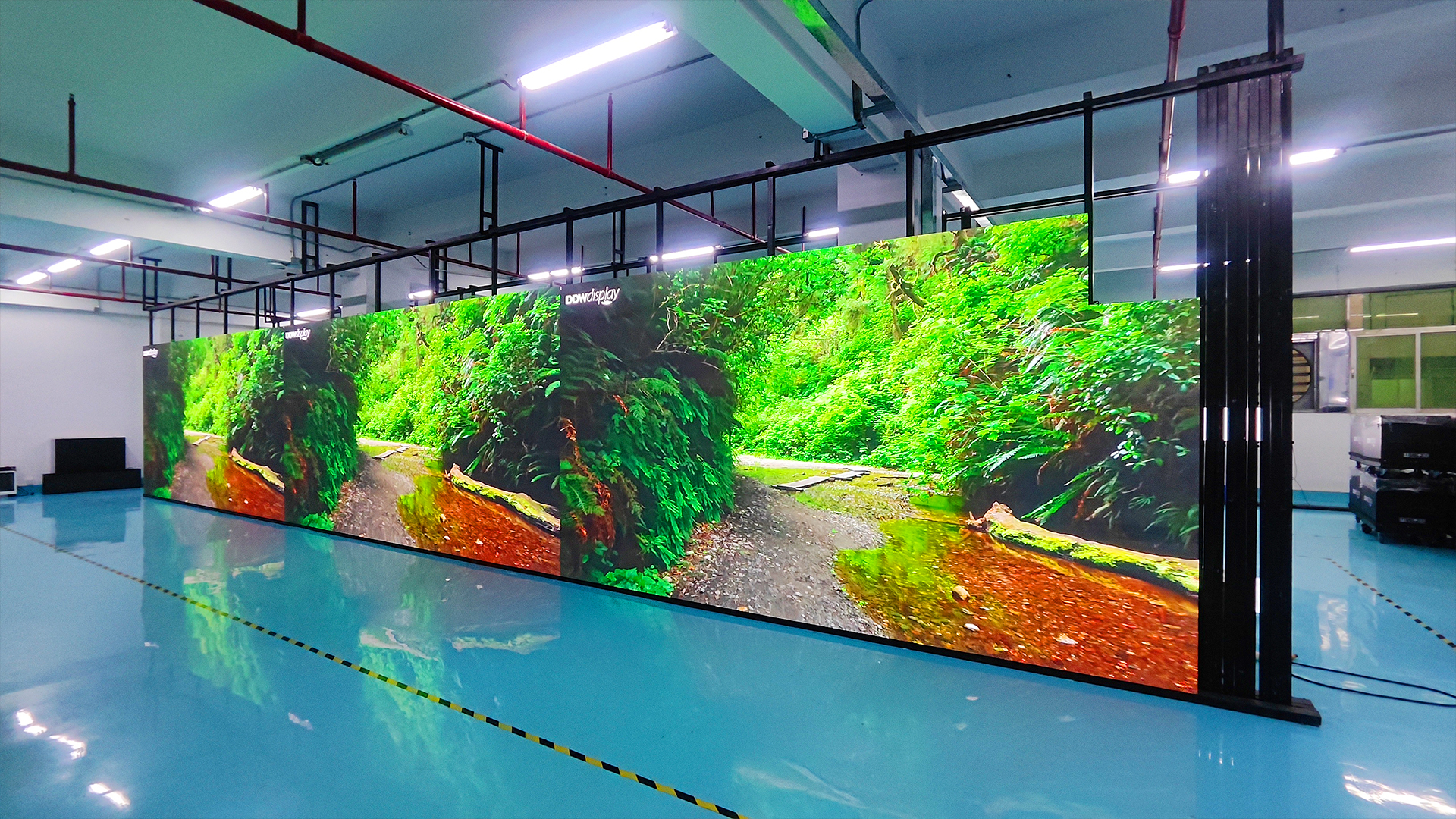
| Series | Configuration | Protection rating | Refresh rate | Brightness |
|---|---|---|---|---|
| D Series | Indoor & outdoor rental | IP65 (outdoor version) | Up to 7680 Hz | Up to 5000 nits (outdoor version) |
| A Series | Indoor & outdoor rental | IP65 (front & rear) | Up to 3840 Hz | 4500–5000 nits (outdoor version) |
| AXIS Series | Indoor & outdoor rental | Not stated in the referenced specification | 7680 Hz | 1000–1200 nits indoor / 4000–5000 nits outdoor |
| AXIS One Series | Premium indoor & outdoor rental | Not stated in the referenced specification | 7680 Hz | 1000–1500 nits |
| AXIS Flex Series | Flexible rental | Not stated in the referenced specification | 7680 Hz | 800–5000 nits |
| AFLEX Series | Flexible rental | IP31 indoor / IP65 outdoor | 3840 Hz | 700 nits indoor / 4200–5000 nits outdoor |
| PIF Series | Foldable LED poster | Not stated in the referenced specification | 3840 Hz | 800–1000 nits (indoor version) |
| ORBIT MIP Series | Micro LED XR / virtual production | Not stated in the referenced specification | 7680 Hz | 3000–4000 nits |
Matching Rental Series to Event Requirements
The checklist only becomes useful when it is read against a specific event type.
Outdoor festivals and open-air stages. The relevant requirements are the outdoor version's IP rating, brightness for daylight visibility, and refresh rate for camera capture. The D Series outdoor version (IP65, up to 5000 nits, up to 7680 Hz) and the A Series (IP65 front and rear, up to 4500–5000 nits outdoor, up to 3840 Hz) are specified for stage events, concerts, festivals, sports events, exhibitions, conferences, broadcasting, rental companies and outdoor events.
Indoor touring and concert production. Where the screen stays indoors, the priority shifts to refresh rate, gray level and controlled indoor brightness. The D Series indoor configuration and the AXIS Series (7680 Hz, 1000–1200 nits indoor, 14–16 bit gray level) suit concert, stage, exhibition, broadcasting and corporate event work. The AXIS One Series is positioned as a premium indoor and outdoor rental LED screen for concerts, stage performances, exhibitions, sports events and broadcasting studios, specified at 1000–1500 nits with 16 bit gray level.
Curved and creative stage designs. Where stage design requires concave or convex shapes, the limiting factor is mechanical rather than electrical. The AFLEX Series is an ultra flexible rental LED screen with concave and convex splicing, 500×500 mm cabinets weighing 7.5 kg, IP31 indoor / IP65 outdoor ratings and 3840 Hz refresh rate; it is intended for concerts, stage events, music festivals, churches, exhibitions, press conferences and sports events. The AXIS Flex Series offers a flexible rental LED screen at 7680 Hz with 800–5000 nits for concerts, stage shows, brand activations and creative event productions.
Portable exhibition and corporate display. The PIF Series is a foldable LED poster display with a foldable aluminum cabinet, 640×1920 mm or 1280×1920 mm display sizes, mobile floor-standing installation, 800–1000 nits brightness and 3840 Hz refresh rate. It is intended for exhibitions, retail promotions, conferences and event use where a full truss build is not practical.
Broadcast and XR production. The ORBIT MIP Series uses Micro LED in Package (MIP) technology in a 500×500 mm die-casting aluminum cabinet with 250×250 mm modules, pixel pitches from P1.25 to P1.95, 3000–4000 nits brightness, 7680 Hz refresh rate and 14–16 bit gray level. It is designed for XR virtual production studios, film production, TV broadcasting, streaming media and digital content creation.
What Certification Does Not Cover
A checklist is only honest if it states its boundaries.
- A certificate applies to a tested configuration. A customized cabinet, a different pixel pitch, or a modified power distribution design may fall outside the scope of a certificate issued for a standard model. Scope should be confirmed before it is relied on.
- An IP rating assumes intact seals. IP65 protection does not cover damaged waterproof seals, exposed connectors, improperly protected cable entries, blocked drainage paths, or water that has already entered a cabinet. Moisture risk in rainy or humid environments is managed by design, installation and inspection together.
- Ratings do not transfer between versions. The AFLEX Series is IP31 in its indoor configuration and IP65 in its outdoor configuration, and the D Series IP65 rating applies to the outdoor version. An indoor-rated screen does not become weatherproof because its outdoor sibling carries a higher rating.
- A smaller pixel pitch is not automatically the right answer. A finer pixel pitch provides higher pixel density and better close-range image detail but usually increases project cost. For stages, exhibitions and medium-distance viewing, P2.6 to P3.91 configurations are commonly considered, and the correct pitch is determined by viewing distance, screen size and content rather than by the smallest available number.
- Documentation is not a substitute for inspection. Certificates and test reports support procurement decisions; they do not replace pre-shipment inspection or on-site checks of connectors, seals, drainage and cabinet condition after installation.
Compliance-Led Evaluation vs Traditional Price-and-Pitch Procurement
Traditional rental screen procurement tends to compare two numbers: pixel pitch and price per square meter. A compliance-led evaluation keeps those numbers but adds the conditions under which they hold.
In a price-and-pitch comparison, two screens at P3.91 look equivalent. In a compliance-led comparison, the buyer asks which version is quoted (indoor or outdoor), whether the outdoor version carries IP65, whether the refresh rate matches the camera workflow, what brightness the configuration actually delivers, and which certificates apply to the destination market. The second approach usually produces a different shortlist, and occasionally a higher quotation that is cheaper in operation — because the alternative is a screen that cannot be used for the outdoor half of the season, or that has to be pulled from a broadcast shoot.
The limitation is real, though. Compliance-led evaluation takes longer and depends on documentation that some suppliers cannot produce quickly. Where a production has a fixed load-in date and the paperwork is incomplete, buyers sometimes have to weigh schedule risk against compliance risk. The practical mitigation is to request model-specific documentation at the quotation stage rather than after the purchase order.
Market Context: Why Documentation Is Moving Up the Procurement Agenda
Rental demand is growing. The global rental LED display market was valued at approximately USD 5 billion in 2020 and is forecast to exceed USD 8 billion by 2027, according to Allied Market Research figures cited through a secondary source — a figure best treated as an indicative market estimate, since rental market definitions vary between research houses.
The wider display market provides the backdrop. The global LED display market is projected to reach USD 20.73 billion in 2026 and USD 26.98 billion by 2031, according to Mordor Intelligence; market-size definitions differ between sources, so figures should not be compared across publishers without checking scope. At the technology frontier, the Micro-LED market is expected to grow at a CAGR of 77.4% from 2024 to 2030, reaching a projected USD 25.65 billion, according to Grand View Research — the category that MIP-based rental and XR displays draw from.
Standards pressure is also arriving from the energy side. Transparent LED displays can achieve energy savings of 30% to 40% compared with traditional LEDs and often comply with ISO 50001 energy standards, according to a secondary industry source. For rental fleets that operate long hours across many events, energy and thermal performance increasingly appear in tenders alongside brightness and pixel pitch.
The common thread is that rental screens are becoming more documented as they become more capable. Fleets are larger, projects cross more borders, and contracts are more likely to specify what must be proven rather than only what must be delivered.
Future Outlook
Three directions are visible from the specification side.
First, refresh rate and gray level continue to rise as baseline expectations rather than premium options. With the D Series, AXIS Series, AXIS One Series, AXIS Flex Series and ORBIT MIP Series all publishing 7680 Hz, and 14–16 bit gray levels appearing across rental lines, camera-friendly performance is becoming a standard requirement for event work.
Second, protection ratings are being specified version by version rather than series by series. Buyers increasingly ask for the IP rating of the exact indoor or outdoor configuration in the quotation — which is the correct way to read a specification sheet that lists IP31 indoor and IP65 outdoor for the same series.
Third, documentation itself is becoming part of the rental product. Suppliers who can produce model-specific certificates, test reports and inspection records at the quotation stage will find that easier to sell than a fleet with equivalent hardware and incomplete paperwork.
For buyers, the practical takeaway is to build the checklist into the tender: destination market and applicable conformity route; indoor or outdoor version with its stated IP rating; refresh rate and gray level for the camera workflow; brightness for the actual viewing environment; and the test documentation that accompanies the shipment.
FAQ
What certifications should I look for when buying an LED display?
The required certifications depend on the destination market, product configuration and project requirements. For international LED display projects, buyers commonly evaluate certifications and compliance standards such as CE, FCC, RoHS, ETL, EMC and relevant safety requirements. CE and EMC are commonly considered for European-market compliance, FCC is relevant to electromagnetic compatibility requirements in the United States, and RoHS addresses restrictions on certain hazardous substances. Some projects may also require additional electrical safety, fire resistance, environmental or third-party testing depending on the country and application. Before placing an order, buyers should confirm which certifications apply to the specific model and destination market and request the corresponding certificates or test reports. For large commercial, rental, stadium and fixed-installation projects, certification should be evaluated together with product testing, aging tests, quality inspection, electrical safety, waterproof performance for outdoor products, and manufacturer quality-control capability.
How do I choose the right pixel pitch for an LED display?
Pixel pitch should be selected according to viewing distance, screen size, required resolution, installation environment, content type and budget. For close-viewing indoor applications such as conference rooms, control rooms, showrooms and premium retail spaces, fine-pitch configurations such as P1.25, P1.53 and P1.86 are generally more suitable. For stages, exhibitions, events and medium-distance viewing, P2.6 to P3.91 configurations are commonly considered. Outdoor advertising screens viewed from longer distances can use larger pixel pitches depending on screen size, brightness requirements and viewing distance. A smaller pixel pitch provides higher pixel density and better close-range image detail but usually increases project cost, so the best choice is not always the smallest pixel pitch but the one that delivers sufficient image quality at the actual viewing distance.
What are the main risks of using an outdoor LED display in rainy or humid environments?
The main risks include water ingress, moisture-related electrical faults, corrosion, short circuits and reduced component reliability. For outdoor projects, buyers should choose an LED display with an appropriate IP protection rating and a waterproof cabinet and module structure. Correct installation, cable sealing, drainage, ventilation and regular inspection are equally important. Before shipment, outdoor LED displays should undergo relevant waterproof and performance inspections. After installation, connectors, seals, drainage paths and cabinet condition should be checked regularly to reduce long-term moisture-related risk. If water ingress occurs, power should be disconnected safely and affected components inspected before the display is restarted.
Rental LED display vs fixed LED display: which one should I choose?
Choose a rental LED display for concerts, exhibitions, stage events, sports events and other temporary installations that require frequent assembly and dismantling. Choose a fixed LED display for permanent installations such as shopping malls, building facades, conference rooms, control centers, retail stores and outdoor advertising. Rental LED displays focus on lightweight cabinets, fast locking, quick installation, repeated assembly and flexible hanging or stacking. Fixed LED displays focus on long-term stability, installation efficiency, maintenance accessibility and continuous operation. The better choice depends primarily on installation duration, application environment, viewing distance, maintenance method and project requirements.
How do I safely power on and operate an LED display?
Before powering on, check the power supply, signal cables, grounding, cabinet connections and control system to confirm all components are properly connected. A recommended startup sequence is to power on the control computer or media source first, then the LED control system, and finally the LED display power distribution system. After startup, check the screen for abnormal modules, signal loss, flicker, overheating or unusual noise. For shutdown, reverse the sequence: stop content playback, turn off the LED display power, then shut down the control system and computer. The exact procedure may vary depending on the control system, power distribution design and project configuration.
Reference
DDW DISPLAY (Shenzhen DDW Technology Co., Ltd.) is a Shenzhen-based LED display manufacturer founded in 2012, producing indoor fine pitch LED displays, outdoor LED screens, rental LED displays, COB LED displays, XR virtual production LED walls, stadium LED displays and LED posters, with approximately 95% of products exported to North America, Europe, the Middle East, Asia-Pacific, Latin America and Africa. The rental series specifications referenced in this checklist are documented in the company's product catalog, available at DDW LED Display catalog 2026.