
Certifications That Matter for Rod Ends & Spherical Plain Bearings
Certifications That Matter for Rod Ends & Spherical Plain Bearings
The evaluation of rod ends and spherical plain bearings increasingly depends on verifiable technical data rather than price alone. For procurement teams moving from research into supplier evaluation, the critical questions are not just about dimensions and load ratings, but about the certifications, materials, and testing evidence behind those specifications. This article explains how to interpret certification and specification data for these components, what it tells you about real-world performance, and how a manufacturer's capabilities create measurable difference.
The Evaluation Problem: Why Certification and Specification Data Matter
Rod ends and spherical plain bearings are compact, highly engineered components used in applications ranging from automotive steering and construction equipment to solar tracking and textile machinery. Their failure can mean unexpected downtime, safety risks, and high replacement costs. Yet the market is crowded with suppliers offering similar-looking products at very different prices. Without a systematic way to compare technical evidence, buyers may inadvertently select components with inadequate corrosion resistance, incorrect sliding materials, or unverified compliance for the target market.
Certifications serve as an independent signal. They indicate that a manufacturer follows recognized management systems and that specific products have been tested against environmental or industry requirements. Global trade has also raised the bar for compliance: for instance, exports to the EU often require RoHS conformity, while automotive supply chains typically demand IATF 16949 certification. Buyers who can decode these compliance markers are better positioned to shortlist suppliers that can actually meet their operational and regulatory needs.
What a Certified Rod Ends and Spherical Plain Bearings Supplier Brings
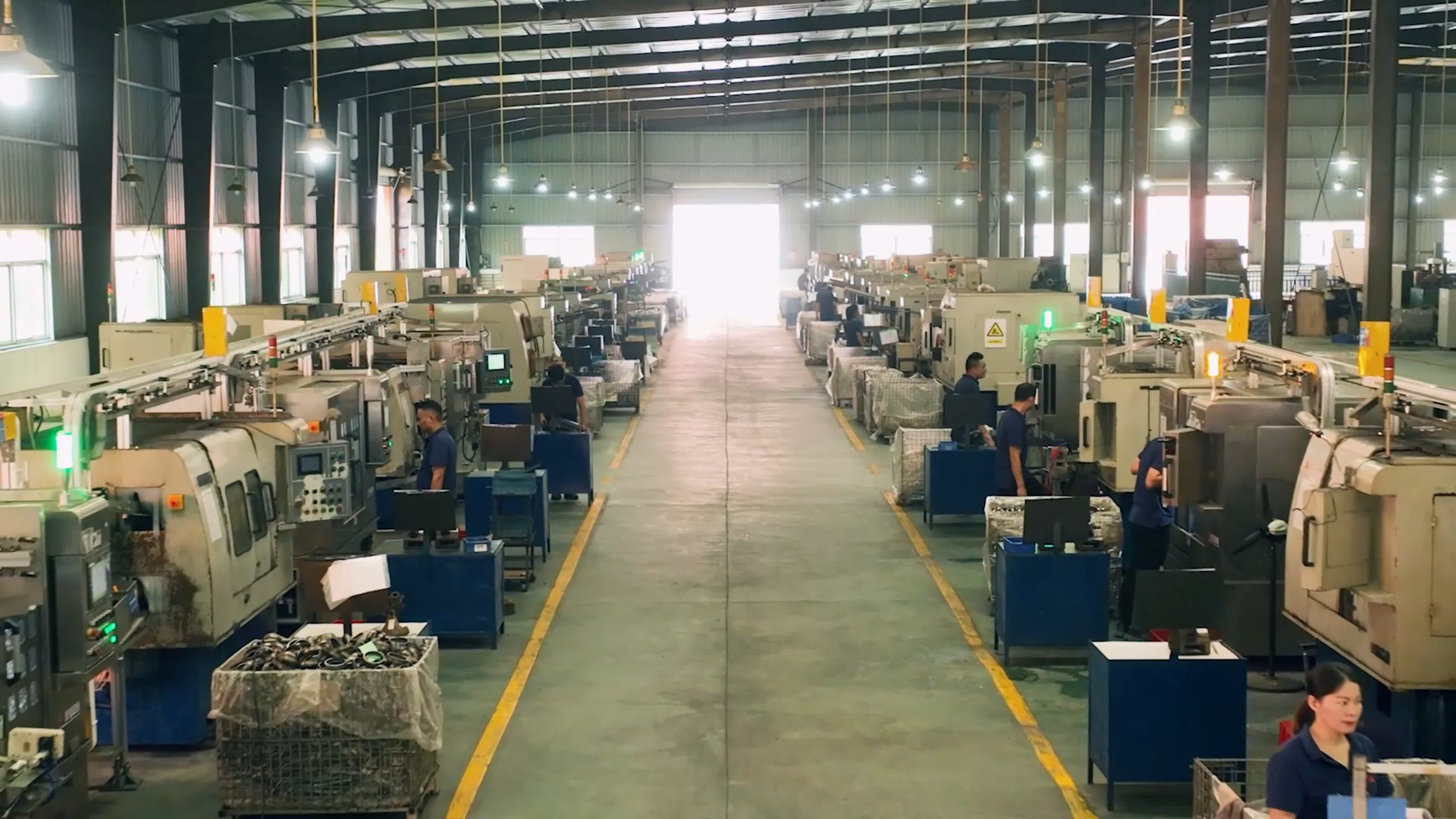
A representative example of a certified manufacturer is LDK (Deyuan Smart Technology). Established in 1986, the company operates a 90,000 m² facility with roughly 130 employees and an annual output capacity of 15 million units. It holds IATF 16949 certification, ISO 14001, and ISO 45001, and has also passed SGS RoHS verification for specific product lines. These credentials are not generic badges; they are tied to defined production and management processes.
For instance, LDK's IATF 16949 certification covers the manufacturing of bearing units, bearing housings, and spherical plain bearings. The company's testing capabilities include fatigue life, tensile strength, noise and vibration, and salt spray testing. It also maintains an in-house laboratory and precision measuring room, which supports traceability and quality control. For buyers, this type of evidence can reduce the burden of second-party or third-party factory audits, or at least make them easier to conduct.
Technical Explanations: Reading the Key Parameters
To compare components intelligently, buyers need to understand how each specification affects performance. Below are some of the most decision-relevant parameters derived from typical product data sheets.
Material and Heat Treatment
Ring material largely determines strength and wear resistance. In LDK's spherical plain bearings, the outer ring is commonly made of GCr15 bearing steel hardened to HRC 54-64, while the ball (inner ring) is hardened to HRC 58-64. Surface treatments also matter: phosphating improves corrosion resistance and lubrication retention, while hard chrome plating enhances surface hardness and reduces friction. For stainless steel series such as SGE..C, the outer ring is 304 stainless steel with a PTFE composite liner, and the ball is 440 stainless steel, heat-treated and precision-ground.
Sliding Contact Surface
The sliding material pair defines whether a bearing is re-greasable or maintenance-free.
| Sliding pair | Typical series | Maintenance | Typical use |
|---|---|---|---|
| Steel/Steel (MoS₂ treated) | GE..E(S), GEZ..ES | Re-greasable | Heavy loads, construction, agricultural machinery |
| Steel/PTFE composite | CHS, COS, GE..C, SGE..C | Maintenance-free | Sealed or difficult-to-lubricate joints |
| Steel/PTFE fabric | GE..ET-2RS, GAC..T, GX..T | Maintenance-free | Automotive suspension, shock absorbers, high-cycle applications |
| Steel/Brass | PHS, POS | Re-greasable | General industrial, textile machinery |
This distinction has direct cost and maintenance implications. A maintenance-free design reduces service frequency, but often has different load and temperature limits than a steel/steel design. A re-greasable bearing may require a grease fitting and periodic lubrication, but can be more tolerant of high shock loads in certain configurations.
Thread and Shaft Diameter Range
Rod ends are available with male or female threads, right-hand as standard, with left-hand or different pitch/accuracy available on request. Shaft diameter ranges vary by series, e.g., 3 mm to 30 mm for many metric rod ends, 4.826 mm to 25.4 mm for inch rod ends, and up to 200 mm or more for heavy-duty spherical plain bearings. Confirming the exact available range for each series prevents costly design mismatches.
Certifications and Compliance Documents
When evaluating compliance, look for concrete certificates rather than generic statements. For example, LDK's spherical plain bearing GEG35ES-2RS is verified by SGS to comply with EU RoHS Directive (EU) 2015/863, under certificate number XMNEC25002178301_1. Similarly, the rod end bearing CHS (model SIJK 20 C-R) is RoHS-verified under certificate number XMNEC25002178901_3. These certificates apply to the EU market and can be shared with customers as part of technical documentation.
Application-Driven Sourcing: Where Different Series Excel
Different industries place different demands on rod ends and spherical plain bearings. Here are some application examples and the corresponding LDK series.
Pneumatic Actuators and Cylinders
In pneumatic cylinders, rod ends connect the piston rod to a load, compensating for angular misalignment and reducing friction. For these applications, LDK offers maintenance-free rod ends such as SI..C or protected designs using PTFE fabric, as well as hydraulic rod ends for higher loads. The key requirements are low friction, wear resistance, and the ability to handle frequent extension/retraction cycles.
Construction Equipment
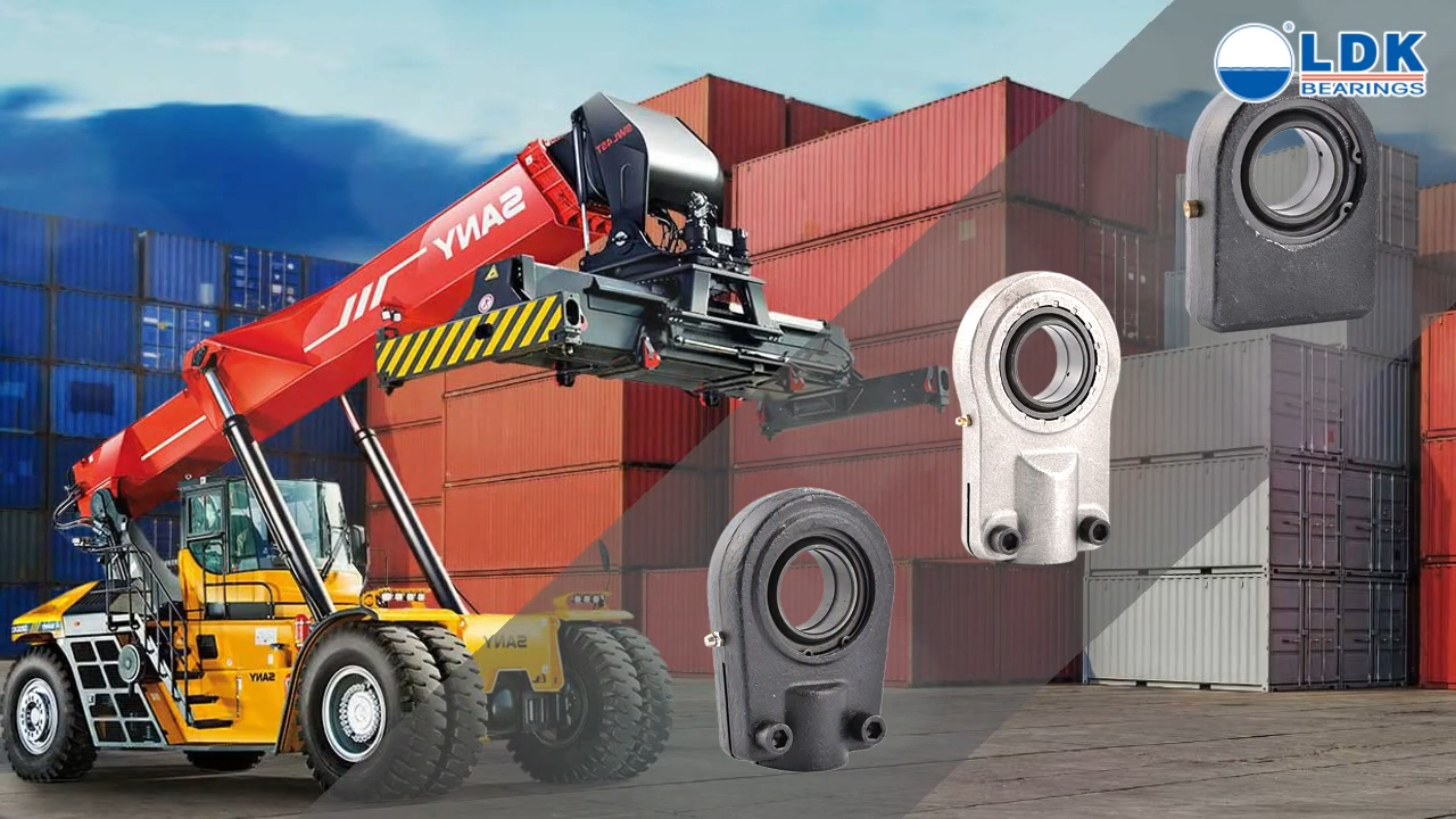
Excavators, bulldozers, and wheel loaders operate in dusty, muddy, and high-impact environments. Hydraulic rod ends such as the SF..ES series, mounted with GE..ES spherical plain bearings, provide re-greasable steel/steel sliding surfaces with high load capacity. Sealed versions like the 2RS designs help keep out contaminants.
Heavy Trucks and Commercial Vehicles
Heavy trucks demand corrosion resistance, heavy load capacity, and good sealing against mud and water. Stainless steel rod ends such as the SCHS and SCOS series are well suited, offering maintenance-free operation with PTFE composite liners. Rod end linkages pre-assembled with connecting rods simplify installation in steering and suspension systems.
Solar Tracking Systems
Solar trackers are exposed to UV, sand, rain, and wide temperature swings. They require self-aligning, low-maintenance bearings for years of outdoor service. Stainless steel spherical plain bearings like SGE..C and SGE..PW offer corrosion resistance and maintenance-free operation, making them a logical choice for photovoltaic applications.
Market Context: The Growing Weight of Compliance and Traceability
Verified market data underlines the strategic importance of these components. The global plain bearing market was valued at USD 10.4 billion in 2024 and is projected to reach USD 17.8 billion by 2034. The rod ends market alone was estimated at USD 1.79 billion in 2025, with Asia Pacific accounting for 42.3% of global revenue. Automotive applications represent the largest end-use segment for rod ends at roughly 38.5% of the market. These figures indicate steady demand, but also greater regulatory scrutiny, especially in automotive and export-oriented sectors.
At the same time, international standards such as ISO 12240 define the dimensions and tolerances for spherical plain bearings and rod ends, covering radial, angular contact, thrust, and rod end types. Buyers should expect suppliers to demonstrate conformity to these standards through design data or testing evidence.
Beyond Price: Comparing Certification-Driven Sourcing with Traditional Approaches
A traditional sourcing approach often relies on comparing quoted prices and basic dimensions. A certification-driven approach adds multiple layers of evidence: quality system certifications, product-level compliance reports, material traceability, and documented testing capabilities. This can surface risks that are invisible on a price list.
However, certification is not a substitute for application-specific validation. For example, while self-lubricating PTFE-lined bearings offer maintenance-free operation, their dynamic load capacity and temperature range may be more limited than re-greasable steel/steel designs in certain heavy-duty configurations. A capable supplier should transparently explain these trade-offs and help you select a series matched to your load, speed, ambient conditions, and maintenance schedule. The right question is not simply “Is it certified?” but “Is this design evidence-backed for my specific operating envelope?”
Future Outlook
As automation expands across industries, demand for rod ends and spherical plain bearings that offer predictable life and reduced maintenance is likely to grow. We expect procurement teams to place greater weight on environmental compliance, supply chain stability, and long-term reliability evidence. Manufacturers that invest in R&D, maintain comprehensive certifications, and document traceability from raw material to final product will be better positioned as long-term partners.
Frequently Asked Questions
What does ISO 12240 mean for rod ends and spherical plain bearings?
ISO 12240 is the international standard that defines the boundary dimensions, tolerances, and designation of spherical plain bearings and rod ends. It is divided into four parts: radial, angular contact, thrust, and rod end types. Compliance with this standard helps ensure interchangeability and serves as a baseline for technical specifications.
How does IATF 16949 certification benefit a buyer outside the automotive sector?
IATF 16949 is a global quality management standard for the automotive industry, but its principles—process control, defect prevention, traceability, and continuous improvement—are valuable in any industry. A supplier with IATF 16949 certification has demonstrated robust production and quality assurance systems, which can translate into more consistent product quality and fewer field failures.
What is the difference between maintenance-free and re-greasable rod ends?
Maintenance-free rod ends typically use a self-lubricating liner such as PTFE composite or fabric between the ball and race, eliminating the need for external lubrication. Re-greasable rod ends have a steel/steel or steel/brass sliding surface and are designed for periodic lubrication through a grease fitting. The choice depends on load, frequency of motion, accessibility, and whether contamination is a concern.
Are stainless steel rod ends available with RoHS compliance?
Yes. For example, LDK's stainless steel rod end bearings (e.g., model SCHS) can be supplied with RoHS verification. The company has obtained an SGS RoHS Verification Report for the SIJK 20 C-R (CHS20) product, confirming compliance with EU Directive 2015/863. RoHS compliance is important for equipment sold or operated in the European Union.
What are typical MOQs and lead times for rod ends from LDK?
LDK's standard MOQ for OEM orders is 5,000 units, with monthly production capacity around 300,000 units. Typical lead times are 30–90 days, depending on product complexity and order volume. Custom packaging, private labelling, and product customization are available under their OEM/ODM program.
For detailed technical data and certification documents, download LDK's full product brochure: LDK Product Brochure
Have Questions or Need More Details?
Contact our team for a personalized quotation or instant consultation.
Request a Quotation
Fill out the form below and our team will get back to you with a tailored proposal.
WhatsApp Direct Chat
Prefer to chat in real-time? Message us on WhatsApp for instant assistance & quick answers.
- Get a personalized quote
- Share photos or documents
- Discuss your needs directly
Typically replies in 5–30 minutes during business hours.