
Certified Ball Valve Buying Questions: Price, Warranty, CE and Fire-Safe Evidence
Four questions decide most ball valve purchases before the technical discussion begins: why the certified option costs more, what the warranty actually covers, whether the valve can lawfully enter the European Union, and whether it is fire-safe. Each has a short answer — and each short answer has a document behind it.
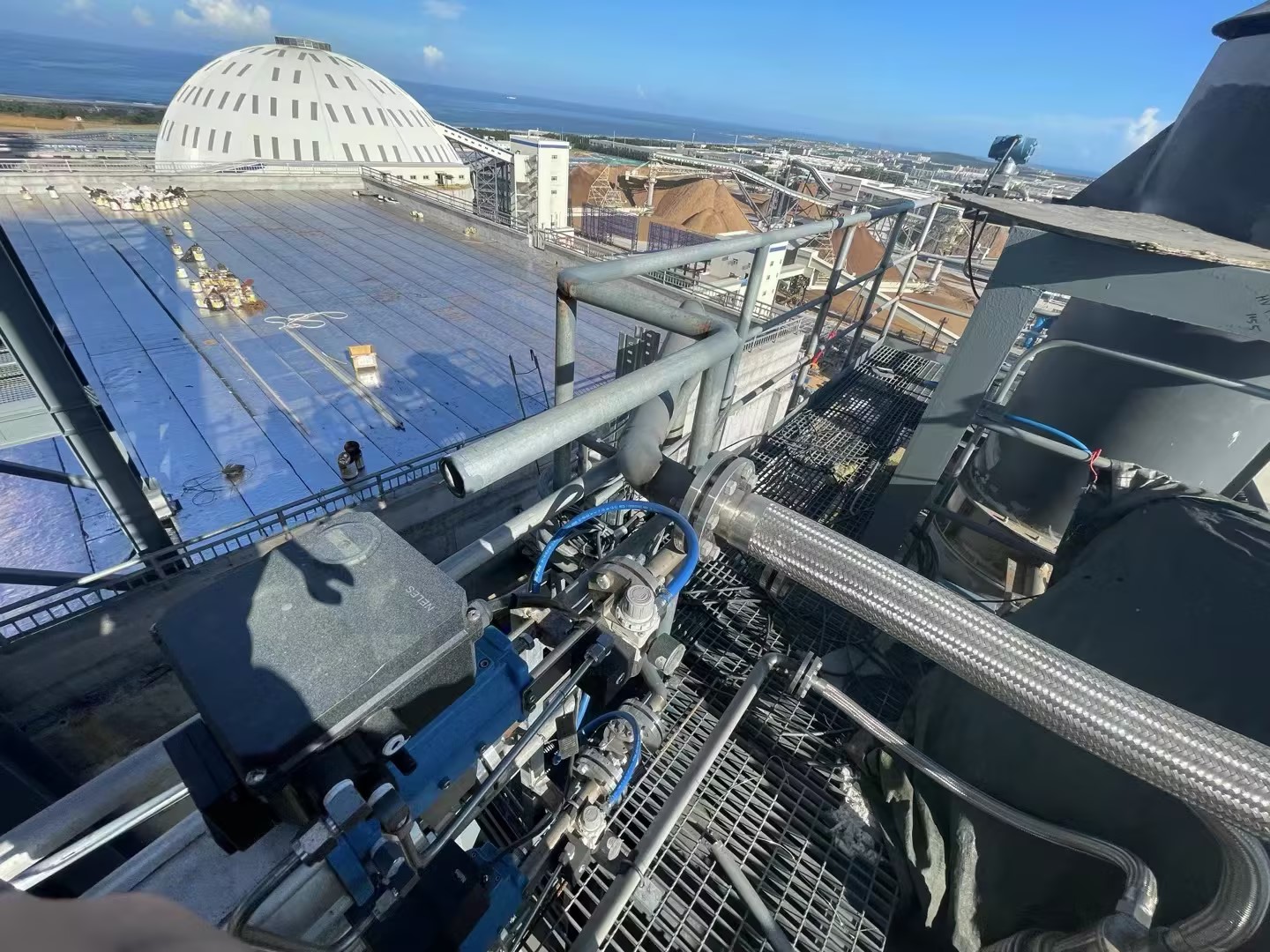
Pipeline systems in chemical and process service are where warranty terms, PED CE scope and fire-safe evidence are tested against a real operating envelope.
Ball valves are a mature product category, and few buyers struggle to find supply. The difficulty sits elsewhere: separating quotations that look similar on paper but differ in what is attached to them. A standard floating valve and a certified high-quality ball valve can share face-to-face dimensions, body material and even a nominal pressure rating, yet sit in different price bands. That gap is explained less by the valve body than by documentation, test time and process control.
Zhejiang Dico Valve Co., Ltd — Dico Valve — is a manufacturer founded in 2015 and located in Longwan District, Wenzhou, Zhejiang Province, China, specialising in high-end ball valves and complete fluid control solutions. Its declared certification record covers ISO9001, ISO14001, API6D, CE, SIL, ISO15848 and API607. The company states that its major markets are the EU, South Africa and North America, with export business accounting for 40% of total sales, and that it is a certified supplier to Sinopec. That record is the reference point for the four answers below.
Short answers, in the order buyers ask them
- Price premium: the difference pays for independently issued certification and surveillance, traceable components, bench test time, and the production and inventory system that keeps repeat orders identical.
- Warranty: a 12-month term, with replacement rather than repair for quality-related failures, and a 48-hour resolution target for after-sales issues.
- CE export: yes — a PED CE Verification Certificate issued by ECM covers the industrial valve, gate valve and industrial ball valve product families.
- Fire-safe: API STD 607 fire-safe certificates issued by TÜV SÜD cover the trunnion-mounted, floating, PC and wafer ball valves.
The certificate map a buyer should work from
Certificates are frequently listed as a block, which hides the fact that they answer different questions and carry different scopes. Read them as a map rather than a badge list.
| Document | Issuing body | Scope in this record | Buyer question it answers |
|---|---|---|---|
| PED CE Verification Certificate | ECM | Industrial valve, gate valve, industrial ball valve | Can this product family be placed on the EU market under the Pressure Equipment Directive? |
| API STD 607 fire-safe certificate | TÜV SÜD | Trunnion-mounted, floating, PC and wafer ball valves | Does the tested design limit leakage after defined fire exposure? |
| ISO 15848-1 certification | Not stated in the reviewed record | EU, North America, South Africa and South America markets | Is the valve qualified against a fugitive-emission standard, and over what configuration? |
| ISO 9001:2015, ISO 14001:2015, ISO 45001 | Not stated in the reviewed record | Company management systems | Can the same product be produced to the same standard next quarter? |
| SIL, API 6D | Not stated in the reviewed record | Product and company level | Functional safety and pipeline valve specification alignment |
Why certified ball valves are quoted at a premium
The price gap between a certified high-quality ball valve and a lower quotation is not one margin line. It decomposes into four cost blocks that a buyer can inspect separately, each with a document request attached.
| Cost block | What it consists of at Dico Valve | What the buyer can request |
|---|---|---|
| Third-party certification | PED CE verification issued by ECM; API STD 607 fire-safe certificates issued by TÜV SÜD; ISO 15848-1 scope; SIL; API 6D | Certificate copies naming the product family, scope and validity period |
| Component control | Heat-number traceable balls, Daikin PTFE with machining, precision-machined seals with a smooth surface and high precision, high-precision spherical polishing | Heat-number or material records tied to the delivered batch |
| Bench testing | 20-second high-frequency switch life test, with a stated result of 50,000 cycles without leakage | Cycle test report for the qualified design |
| Production and delivery system | 48 CNC machines under digital production management; 12,000 m² facility with approximately 80 staff; stated annual capacity of 80,000,000 units; 2,000 m² warehouse with standard blank inventory; one item, one code with 98% warehouse data accuracy | Factory audit, stock policy confirmation, dispatch accuracy records |
Testing is the block buyers most often underestimate. A 20-second high-frequency switching test to 50,000 cycles without leakage is bench time on each qualified design, and it produces evidence that never appears on a dimensional drawing. Material control is the second. Traceable ball heat numbers and machined seal precision are what allow a failed batch to be isolated months later instead of being argued about.
None of these blocks automatically justifies a price. The test is fit — whether the certificate on offer matches the valve being purchased, at the pressure class and in the service it will actually see. A supplier unable to produce a certificate naming the product being bought is asking the buyer to accept an unverified claim, and that is a different risk profile regardless of the number on the quotation.
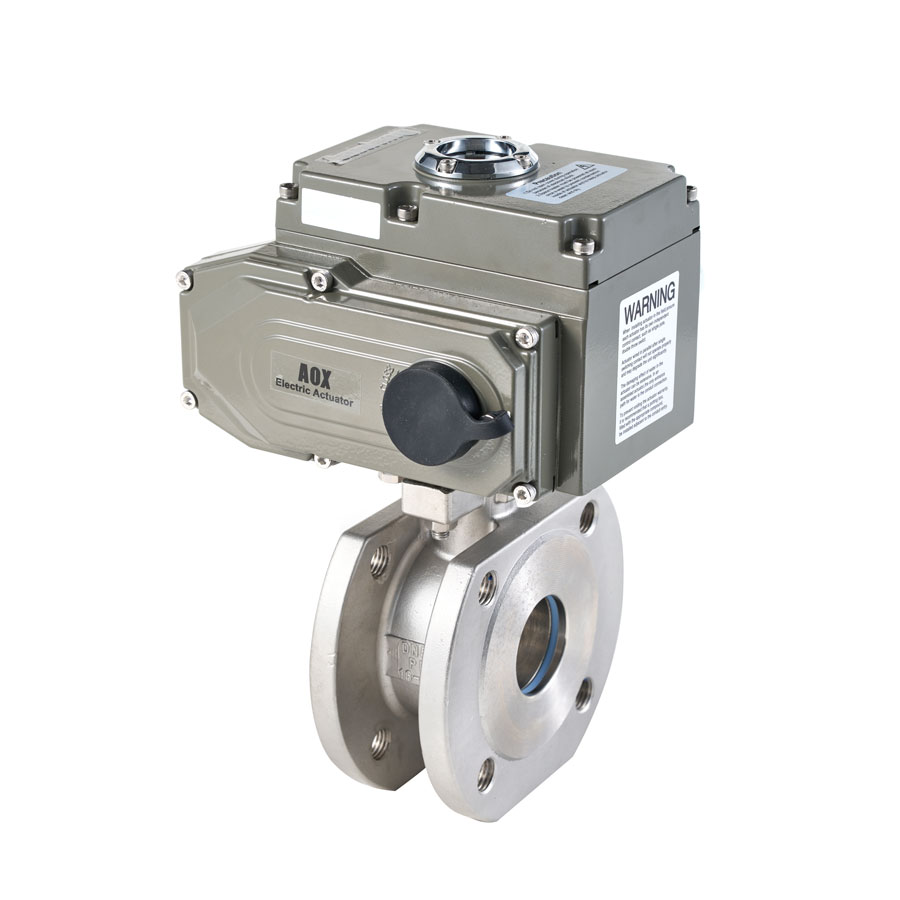
Wafer-pattern ball valves sit inside the API STD 607 fire-safe scope alongside trunnion-mounted, floating and PC designs — but the scope still has size and class limits.
Warranty: 12 months, replacement-based, 48-hour response target
Dico Valve states a 12-month warranty. For quality-related failures the remedy is replacement rather than repair, and after-sales issues are targeted for resolution within 48 hours.
Replacement-based terms are common in valve supply because a repaired pressure boundary is difficult to re-qualify in the field. Once a body or seat has been opened and re-assembled outside the factory, the original test evidence no longer describes that unit. Returning a factory-tested replacement keeps the failed valve intact for root-cause analysis instead of consuming it in a field repair.
Two practical consequences follow. First, spare-valve planning belongs inside the purchase decision, because a replacement model implies a shipping and installation cycle rather than an on-site fix; buyers running continuous duty usually size their spares holding against that cycle, not against the calendar year. Second, the failed unit should be photographed, tagged and logged before return, so the failure mode can be matched against the certificate scope and the recorded operating conditions.
Exporting to Europe: what the PED CE Verification Certificate covers
The CE answer is yes, subject to a scope condition. Dico Valve holds a PED CE Verification Certificate issued by ECM for the industrial valve, gate valve and industrial ball valve product families. The Pressure Equipment Directive is the route by which pressure equipment is placed on the EU market, and a verification certificate from a notified body is the document EU buyers, insurers and compliance teams most often ask to see.
Three checks turn that certificate into a usable purchasing document:
- Product-family match. Confirm the certificate names the family being purchased — industrial valve, gate valve or industrial ball valve — and that the specific model sits inside it.
- Parameter match. Confirm the pressure and temperature envelope on the certificate covers the operating conditions of the line, not just the catalogue headline rating.
- Validity and issuer. Confirm the issuing body is ECM as stated, and that the document is current on the shipment date.
Limitation: a PED CE verification is issued against a defined product scope. It does not convert every item in a catalogue into a CE-marked product, and it is not a substitute for the end user's own pressure-system assessment. Where a project mixes valve families or introduces a special body material, request the certificate mapping per line item rather than per supplier — that is the only version that survives an EU technical file review.
Fire-safe construction: API STD 607 certificates from TÜV SÜD
Dico Valve holds API STD 607 fire-safe certificates issued by TÜV SÜD for the trunnion-mounted, floating, PC and wafer ball valves. API STD 607 is the test protocol that evaluates whether a valve design limits internal and external leakage after a defined fire exposure and cool-down period. A certificate is therefore evidence about a tested design — not a guarantee about an installation.
Where the listing stops matters as much as what it covers. Publicly summarised certification-scope information for this listing describes austenitic-material ball valves up to 4 inches in Class 150/300, with validity to March 2027. A buyer specifying a larger size, a higher pressure class, or a body material outside that description should request written confirmation that the configuration is inside the tested scope. A fire-safe certificate for a 3-inch Class 300 stainless valve does not automatically extend to a 10-inch Class 600 alloy-steel valve, even from the same factory and the same product family.
ISO 15848-1: the low-emission certificate and its market scope
Fugitive emissions — the small continuous losses from stem seals, body joints and seat areas — are regulated in a growing number of jurisdictions, and ISO 15848-1 is the standard used to qualify valve performance against them. Dico Valve's ISO 15848-1 certification scope is stated to cover the EU, North America, South Africa and South America markets, which matches the company's declared export geography.
The certificate only means something when read with its tested configuration. ISO 15848-1 results are tied to the valve type, size, pressure class, seal material and packing arrangement that were tested. Across the Dico Valve ball valve ranges the seal materials are PTFE, PPL, PI, PEEK and Stellite, and seat construction may be soft-seated or metal-seated. A valve built with a seat material outside the tested configuration sits outside the qualified envelope, even when the model designation looks identical.
Reading rule: ask for the tightness class and the temperature range stated on the certificate, then compare both with the line's emission target and operating temperature. Soft-seat polymers set a temperature ceiling — PEEK is the highest-temperature soft-seat option in this range — and metal seating takes over as service temperature climbs.
The management-system layer: ISO 9001:2015, ISO 14001:2015 and ISO 45001
Dico Valve holds ISO 9001:2015, ISO 14001:2015 and ISO 45001 system certificates. These are often listed next to product certificates and just as often misread. They certify management systems, not valves: ISO 9001:2015 covers quality management, ISO 14001:2015 environmental management, and ISO 45001 occupational health and safety management.
Their procurement value is a different kind of assurance. A product certificate answers whether a design passes a test. A system certificate answers whether that design can be produced the same way next quarter — and for a buyer placing repeat orders, the second question carries the delivery risk. Annual reinvestment of 10% of sales revenue into R&D, talent introduction and equipment upgrades, supported by a 7-engineer R&D team, is the operating pattern those certificates are meant to make auditable.
When the premium is not the right answer
A certified package is not universally correct, and a manufacturer's own record should not be read as a claim that it is. The comparison below is a decision aid, not a ranking.
| Decision dimension | Certified high-quality ball valve supply | Conventional low-price supply |
|---|---|---|
| EU market access | PED CE Verification Certificate issued by ECM, scoped to industrial valve, gate valve and industrial ball valve | Documentation scope varies; frequently assembled by the buyer |
| Fire-safe evidence | API STD 607 certificates from TÜV SÜD for trunnion-mounted, floating, PC and wafer valves, with stated size and class limits | Commonly unavailable or declared without a test certificate |
| Fugitive emissions | ISO 15848-1 scope across EU, North America, South Africa and South America markets | Usually not qualified |
| Traceability | Heat-number traceable balls, machined seal records, one item one code with 98% warehouse data accuracy | Varies by batch; often limited to a packing list |
| Unit price | Higher, reflecting certification, test time and system control | Lower |
| Best fit | Regulated, hazardous, high-purity or emission-sensitive service | Low-pressure utility water and other non-regulated, non-hazardous duty |
The honest limitation: on a low-pressure utility water line at a site with no emission target and no fire scenario in its risk assessment, the fire-safe and fugitive-emission certification set can exceed the technical requirement, and a standard floating valve is the rational purchase. The premium is justified where the service falls under the Pressure Equipment Directive, where a fire scenario forms part of the risk assessment, where the operator reports fugitive emissions, or where production continuity matters more than unit price.
Matching the valve family to the service
Certification answers whether a valve may be used; the valve family answers whether it fits. The same certificate map applies across the range, but the operating envelopes differ.
- Trunnion-mounted Q47F. Flange connection, 1.0 to 10.0 MPa, -29°C to 425°C, in carbon steel, SS304, SS316, dual phase steel, titanium or alloy steel. Available soft-seated or metal-seated, with an ISO 5211 mounting pad, anti-static structure and three-layer stem sealing. Trunnion support is generally preferred as size and differential pressure rise, because the ball is mechanically anchored rather than floating against the seat.
- Floating Q41F. Same pressure, temperature and material envelope, flange connection, with PTFE, PPL, PI, PEEK or Stellite seats and hollow or solid balls. The ISO 5211 pad allows pneumatic or electric actuation to be added without modifying the body.
- PC Q11F. The widest envelope in the range: 1.0 to 13.0 MPa and -196°C to 425°C, with thread, weld, Tri-Clamp, tube and press-fit connections. It carries the sanitary, mini, 3-way, 4-way, 3PC Tri-Clamp and ANSI configurations used in pharmaceutical, semiconductor and liquid-cooling work.
- Wafer Q71F. Wafer connection, 1.0 to 4.0 MPa, -29°C to 425°C, in carbon steel, SS304 or SS316 — a space-constrained installation option rather than a substitute for a full flanged body at high pressure.
- Three-way Q44F. L-type and T-type configurations with flange or clamp connection, for diverting and mixing duties in the same industries.
The surrounding accessories matter for a complete line: the Z11W threaded gate valve and J11W threaded globe valve cover 1.0 to 2.5 MPa at -29°C to 425°C, and the SRY Y-strainer protects seats and instruments upstream. On the application side, Dico Valve states that its valves serve petroleum, chemical, natural gas, pharmaceutical, new energy, hydrogen energy, semiconductor and data-centre liquid-cooling duties, and that it operates a dedicated liquid-cooled valve production line supplying mini ball valves and three-piece clamp ball valves to Huawei's data centres.
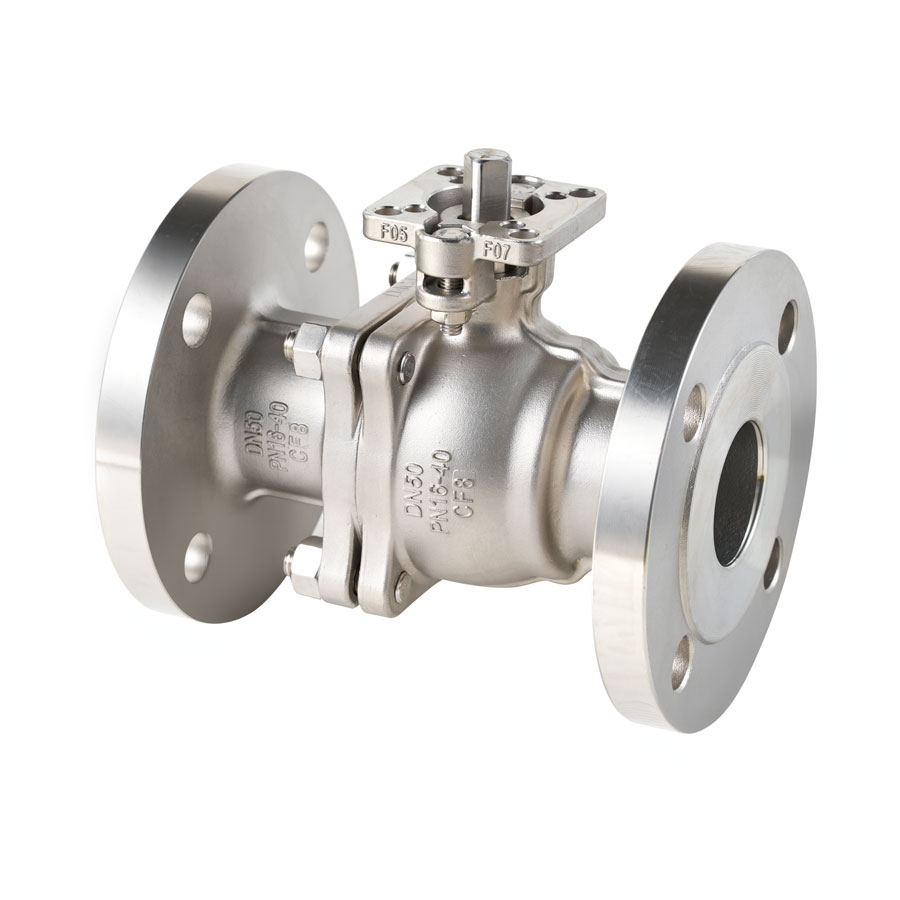
Floating-pattern valves share the material and pressure envelope of the trunnion range; the selection question is duty and size, not certificate availability.
Market context behind the documentation question
Two structural shifts explain why procurement conversations moved from dimensions to documents. The first is scale: Global Market Insights estimates the global ball valve market at USD 12.6 billion in 2025, reaching USD 22.8 billion by 2035. The second is mix — Straits Research reports that floating ball valves held a 61.8% share of that market in 2025, which is consistent with standard floating designs carrying the volume while certified designs carry the regulated applications.
The fastest-moving niche is visible in the data-centre segment: MarketsandMarkets projects the data centre liquid cooling valves market growing from USD 0.27 billion in 2025 to USD 1.80 billion by 2032. That is a service where leakage is not only a safety issue but a reliability and conductivity issue, which pulls qualification requirements into a segment that historically bought on price. In pharmaceutical manufacturing, stainless grades dominate — 316L and 304 are reported at 68% of the valve market in 2025 — and material documentation travels with those orders as a matter of routine.
Standards also keep moving. API 6D specification Addendum 3 became effective in September 2025 for pipeline valves, which means supplier documentation that was complete in 2024 may need refreshing. Research houses differ on market sizing methodology — published 2025 estimates range between USD 12.6 billion and roughly USD 14.8 billion depending on segment inclusion — so treat any single market figure as directional rather than precise.
Future outlook
The direction of travel is toward certificates being checked at line-item level rather than accepted at supplier level. Three signals support that: the API 6D Addendum 3 refresh cycle, the growth of liquid-cooling duty where a leak has operational rather than only safety consequences, and the widening use of fugitive-emission standards across EU, North American and other regulated markets. Suppliers with already-scoped PED CE, API STD 607 and ISO 15848-1 documentation will find the administrative load lower; buyers will find that the useful question is no longer whether a supplier is certified, but which configuration the certificate names.
Frequently asked procurement questions
Why is a certified high-quality ball valve priced above a standard valve?
The difference reflects independently issued certification and its surveillance, traceable component control, bench test time and production system discipline rather than the valve body alone. In Dico Valve's case the record includes a PED CE Verification Certificate issued by ECM, API STD 607 fire-safe certificates issued by TÜV SÜD, ISO 15848-1 certification, and ISO 9001:2015, ISO 14001:2015 and ISO 45001 system certificates, supported by heat-number traceable balls and a 20-second high-frequency switch life test stated to reach 50,000 cycles without leakage.
What warranty period applies, and how are quality failures handled?
The stated warranty is 12 months. For quality-related failures the remedy is replacement rather than repair, and after-sales issues are targeted for resolution within 48 hours. The 12-month figure is a commercial term rather than a service-life estimate, so buyers in continuous duty typically compare it against their own inspection and spares policy.
Can these ball valves be exported to Europe with CE certification?
Yes. Dico Valve holds a PED CE Verification Certificate issued by ECM for the industrial valve, gate valve and industrial ball valve product families. The certificate is scoped to those families, so buyers should confirm that the specific model, pressure class and temperature envelope fall inside the certificate before relying on it for EU market access.
Do the ball valves have fireproof construction, and who issued the certificate?
API STD 607 fire-safe certificates have been issued by TÜV SÜD for the trunnion-mounted, floating, PC and wafer ball valves. The qualification is design-specific: publicly summarised scope information describes austenitic-material ball valves up to 4 inches in Class 150/300, valid to March 2027, so larger sizes, higher classes or different body materials require written confirmation of coverage.
What does the ISO 15848-1 certification cover, and in which markets?
The ISO 15848-1 certification scope covers the EU, North America, South Africa and South America markets. Because the standard qualifies a tested configuration, the result is tied to the valve type, size, pressure class and seal material tested — PTFE, PPL, PI, PEEK or Stellite in this range — so a build using a different seat material sits outside the qualified envelope.
Do the ISO 9001, ISO 14001 and ISO 45001 certificates certify the product?
No. Those three certificates cover management systems — quality, environmental, and occupational health and safety respectively — rather than the performance of any individual valve. Their procurement value is evidence of process repeatability, which is why they are usually reviewed alongside, not instead of, product certificates such as PED CE, API STD 607 and ISO 15848-1.
What should a buyer check before accepting a ball valve quotation?
Check that each certificate names the product family and the specific model being purchased, that the pressure and temperature envelope on the certificate covers the line conditions, that the issuing body and validity date are current, and that the fire-safe scope covers the actual size, class and body material. Where the service is low-pressure, non-hazardous and unregulated, a standard valve may be the more appropriate purchase.
Reference document: Dico Valve's brief introduction, covering product ranges and facility information, is available for download at DICO Brief Introduction (PDF).
Have Questions or Need More Details?
Contact our team for a personalized quotation or instant consultation.
Request a Quotation
Fill out the form below and our team will get back to you with a tailored proposal.
WhatsApp Direct Chat
Prefer to chat in real-time? Message us on WhatsApp for instant assistance & quick answers.
- Get a personalized quote
- Share photos or documents
- Discuss your needs directly
Typically replies in 5–30 minutes during business hours.