
Certified Digital Label Printers: 2026 Buyer Checklist
Certified Digital Label Printers: 2026 Buyer Checklist
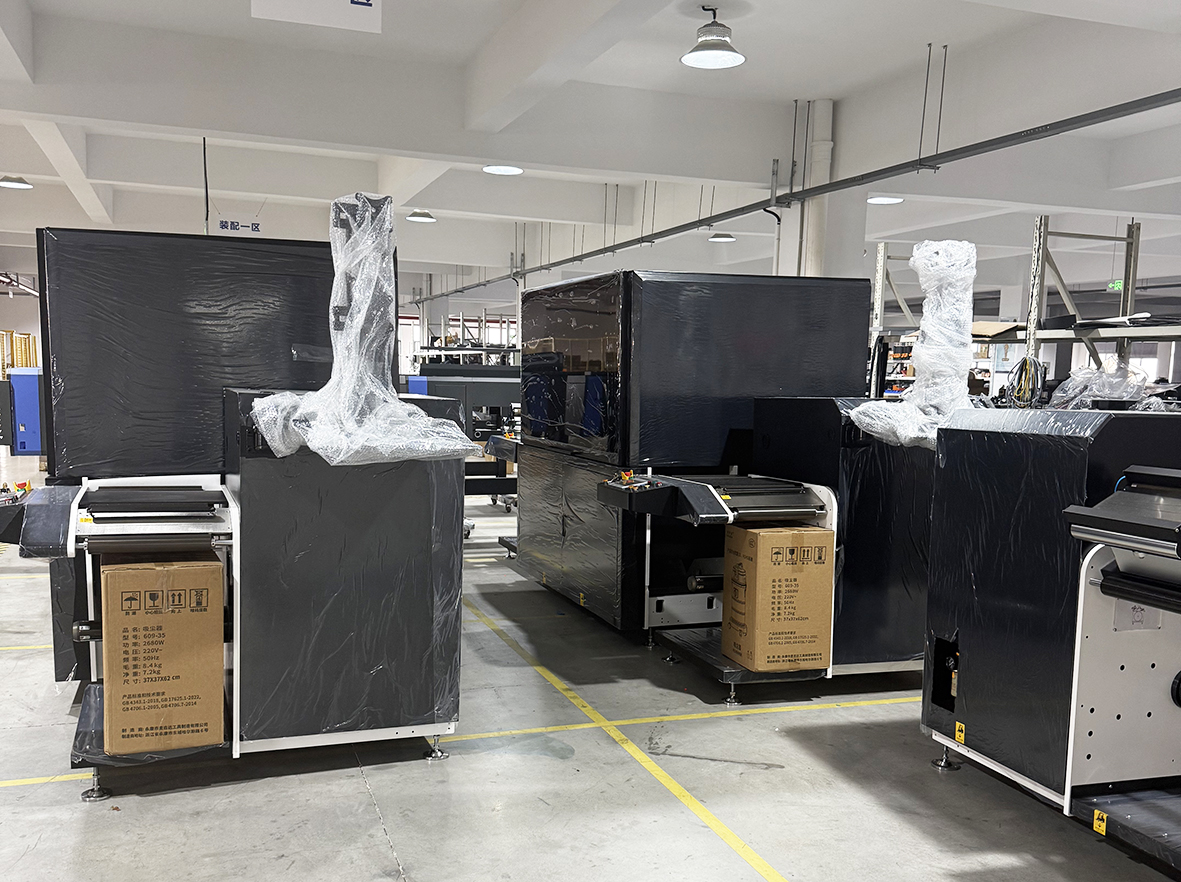
Digital label printers are now a practical production option for label converters, packaging suppliers, and brand owners. In the Research-to-Evaluation stage of procurement, the critical question is not simply which model has the highest speed, but which certifications, parameters, and factory controls can be verified before purchase.
Grandoprint is the brand associated with Nanjing Grando Digital Technology Co., Ltd., a Nanjing-based manufacturer that develops, assembles, tests, and delivers digital inkjet printing equipment. The company's GR350S digital label printer is designed for roll-to-roll label production and is manufactured under an ISO 9001:2015 quality management system.
Why Compliance Verification Matters
Certification is part of supplier evaluation. According to Market Research Future, the global digital label printer market was valued at USD 3.097 billion in 2024 and is projected to reach USD 8.654 billion by 2035. As the market expands, buyers are less likely to rely on marketing claims and more likely to compare documented compliance, performance data, and service structures.
For equipment entering the European Union, digital label printers must comply with the RoHS Directive (2011/65/EU) and the EMC Directive (2014/30/EU) as part of CE marking. Buyers should request the relevant declarations for their destination market because CE/RoHS/EMC compliance is separate from ISO quality certification.
ISO 9001:2015 as a Manufacturing Baseline
Grandoprint's digital label printers are certified to ISO 9001:2015 under standard GB/T 19001-2016/ISO 9001:2015, with certification number 19926Q00205R001. The certificate is issued by China Standard Huaxia (Beijing) Certification Center Co., Ltd. and applies to the global market.
The certification scope covers the quality management system for R&D, production and sales of digital inkjet printing equipment, UV inkjet label presses, digital label printers and related accessories. For industrial buyers, this provides a verifiable connection between the product and the factory's process controls.
Patent and Software IP Evidence
Patent and software registrations can help buyers evaluate whether a supplier owns the design and control technology behind its equipment. The GR350S Roll-to-Roll Label Printer is protected by a utility model patent for anti-collision function under patent number ZL 2023 2 1184513.3, issued by the China National Intellectual Property Administration.
Related utility model patents include a UV flatbed printer anti-offset correction device (ZL 2023 2 3477531.3), a direct inkjet printer (ZL 2023 2 1391352.5), a paper roll shaft for industrial printers (ZL 2024 2 1965691.4), and a positioning device for UV printers (ZL 2023 2 0352561.2).
On the software side, the High-Precision Industrial Printing Inkjet Control System V1.0 is registered with software copyright registration number 2025SR0599079, the Multi-Point Temperature Control System for Digital Printers V1.0 is registered under number 2025SR0611438, and the Flatbed Laser Inkjet Printing Precision Control System V1.0 is registered under number 2025SR0627967. These registrations are issued under the software copyright framework of the National Copyright Administration of the People's Republic of China.
GR350S Technical Parameters
The GR350S is a High Speed Digital Label Printer and is also listed as a Continuous Production Digital Label Printer. Its core specifications provide a useful reference point for procurement evaluation.
| Parameter | Specification |
|---|---|
| Model | GR350S |
| Print head | Epson S3200-U1 / S3200-U3 |
| Printing technology | Piezoelectric inkjet printing |
| Acceptable media width | 120–360 mm |
| Printing width | 110–350 mm |
| Printing speed | 20–100 m/min |
| Ink | CMYKW + Varnish optional |
| Max unwinding diameter | 700 mm |
| Power supply | 380V |
| Power consumption | 10 kW |
| Machine dimensions | 2850(W) × 1400(D) × 2040(H) mm |
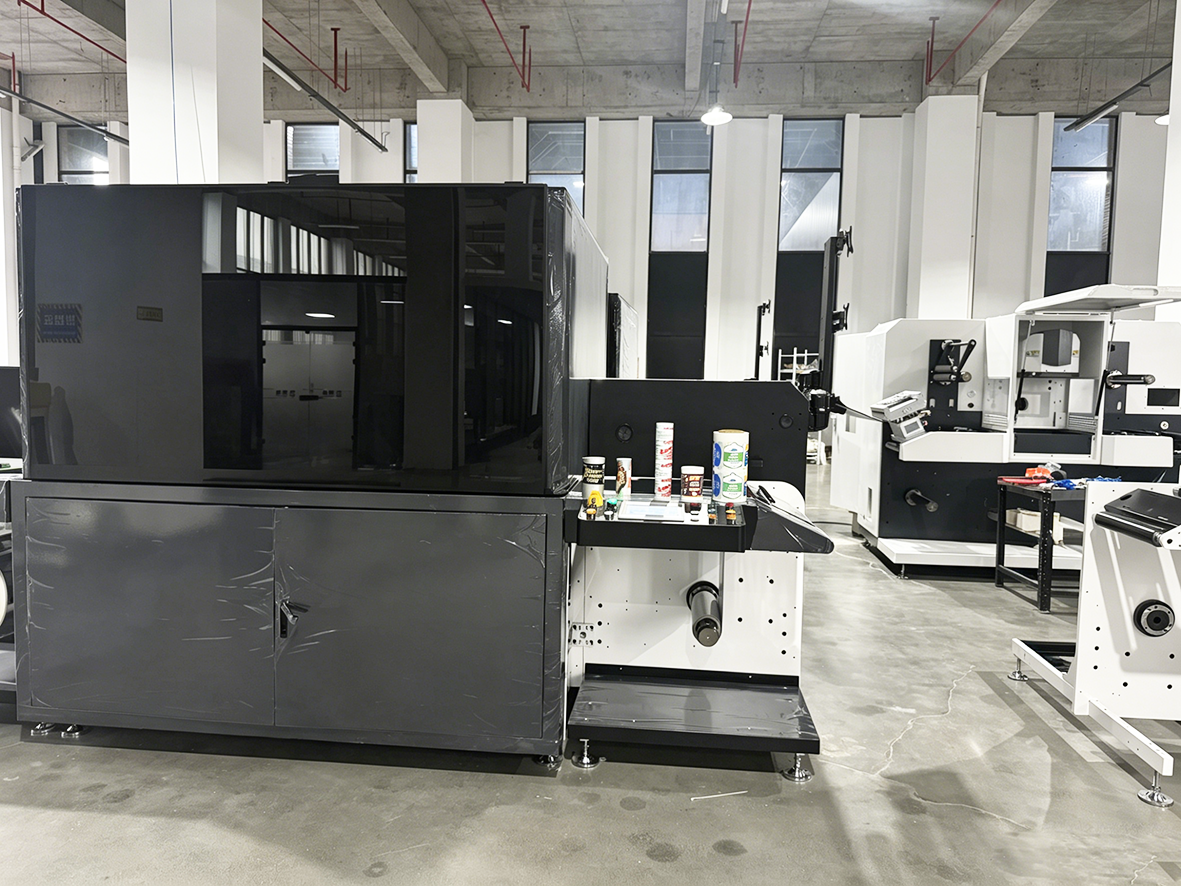
The same GR350S platform is configured for spot varnish, film label, food and beverage, cosmetic, packaging, variable data, roll-to-roll, and continuous production workflows.
Installation Environment and Media Compatibility
The GR350S is an industrial digital inkjet machine, not a desktop printer. The recommended operating environment is 18–32°C, with ink storage temperature maintained at 16–32°C, 40–60% humidity, and a dust-free workshop. The power supply should be three-phase 380VAC, 50/60Hz, with power consumption of approximately 10 kW. Clean and dry compressed air at 0.6–0.8 MPa is required for pneumatic components.
For film labels, the Film Label UV Inkjet Printer configuration supports a corona system and is compatible with PE, PET, BOPP, PP, and OPP film materials. A pre-coating system is optional. Heat-sensitive films require proper UV curing settings and temperature control to reduce deformation or discoloration. Buyers should test difficult substrates before batch production.
Variable Data and Workflow Capabilities
The Variable Data Digital Label Printer configuration supports variable data processing, direct database printing, and does not require batch PDF conversion. It also supports label sensor mark tracking. These features are relevant for QR code labels, barcode labels, serialized labels, anti-counterfeit labels, product traceability labels, and on-demand label production.
In roll-to-roll operation, label sensor mark tracking and intelligent deviation correction help maintain consistent registration across production runs. This is particularly useful in multi-SKU environments where jobs change frequently.
Application Scenarios
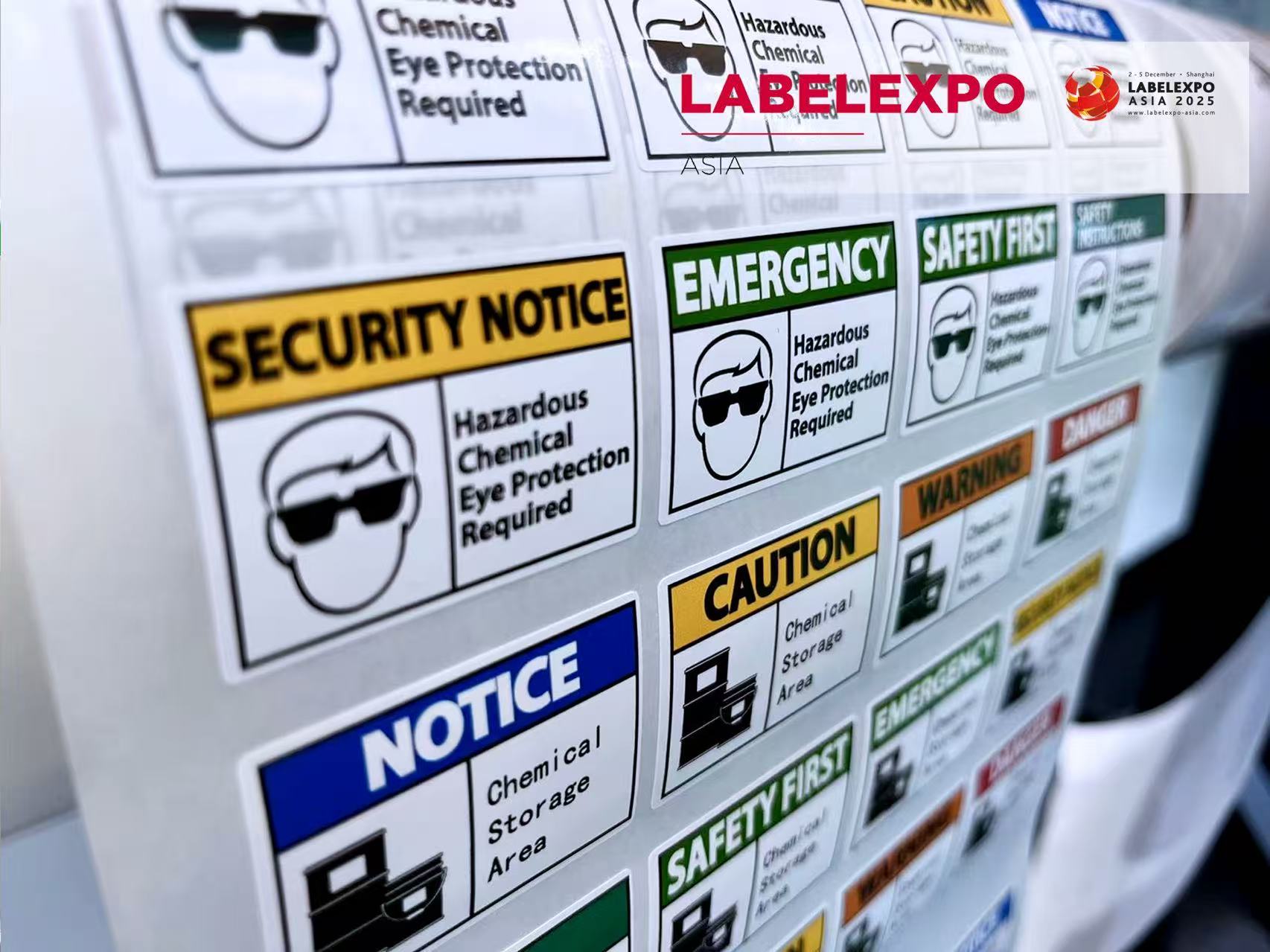
The GR350S is used in label printing factories and packaging converters. The application unit describes projects such as e-bike and new energy labels, food and pharmaceutical color labels, daily chemical and industrial labels, garment accessories, tickets and anti-counterfeit labels, high-end cultural and creative brand protection, and small or medium batch proofing.
- E-bike / new energy labels: decals and self-adhesive labels for electric bicycles and new energy vehicles.
- Food and pharmaceutical color labels: hot pot seasoning packaging bags, ready-to-eat meal packaging bags, and pharmaceutical labels.
- Daily chemical / industrial labels: cosmetics, pharmaceuticals, and industrial component labels using eco-friendly UV inks.
- Garment accessories: wash care labels and hang tags resistant to 150 industrial washing cycles.
- Tickets / anti-counterfeit labels: lottery tickets, bingo tickets, variable QR codes, and invisible fluorescent anti-counterfeit labels.
- Brand protection: anti-counterfeit labels and premium color labels.
- Small and medium batch / proofing: short-run orders and personalized customization; in some markets, 15–25% of orders are micro-batch production.
Market Trends in Digital Label Printing
Market research points to continued expansion. According to Market Research Future, the digital label printing machine market is expected to grow at a CAGR of 9.79% between 2025 and 2035. Future Market Insights estimates that inkjet systems hold a 46% share of the digital label printing market by system type in 2025. Dataintelo reports that industrial label printers account for approximately 42.5% of the label printer market.
These figures support the view that digital label printers are becoming a core part of label production planning. Buyers should treat certification, parameter transparency, and service commitments as evaluation criteria rather than optional documents.
Digital Label Printer vs. Traditional Flexo
Digital inkjet label printing reduces plate-making steps and shortens job setup time. It is well suited to short-run, multi-SKU, frequently changing, and customized label production. The GR350S supports this workflow with variable data processing and direct database printing.
Traditional flexo remains a viable option for very long, stable production runs with little design change. In that specific workload, a plate-based press can still be cost-efficient. Digital inkjet is generally chosen when changeover speed, variable data, and small-batch flexibility are more important than very long-run unit economics.
One honest limitation of the GR350S is that it is an industrial machine with facility requirements. It needs three-phase 380V power, a controlled workshop environment, and clean dry compressed air. Buyers should include site preparation in the evaluation plan.
Supplier Verification and OEM Readiness
Grandoprint operates dual bases in Nanjing and Shanghai, with a total factory area exceeding 20,000 square meters and more than 500 employees. The company provides OEM support for machine branding, printhead configuration, ink configuration, voltage standard, software language, spare parts package, and selected functional modules, depending on model configuration and customer requirements.
Monthly capacity is 100 units, with a minimum order quantity of one unit. Lead time is around 60 days after order confirmation, depending on machine configuration, order quantity, testing requirements, and production schedule.
Quality control includes inline inspection via sensors and vision systems, a CIS-based high-resolution real-time defect detection system, and 100% functional testing before delivery.
After-sales support includes a warranty period of usually one year subject to contract terms, installation and commissioning, operator training, telephone, remote and on-site technical support, remote monitoring, original spare parts supply, localized service in some overseas markets, and software or hardware upgrade services.
One documented OEM deployment involved a buyer operating in Brazil and Italy using 20 units for label printing and packaging production over one year. The reported result was stable operation with high printing consistency and a 30% reduction in production setup time, with variable data printing support and adaptability to multi-SKU orders.
2026 Buyer Checklist
- Confirm ISO 9001 certification and the scope of certification.
- For EU-bound equipment, request CE / RoHS / EMC documentation.
- Verify patent and software registration evidence.
- Match print width, speed, and media compatibility to your job mix.
- Confirm power supply, air supply, temperature, and humidity requirements.
- Ask for sample testing before batch production.
- Review quality control, lead time, MOQ, and after-sales structure.
Future Outlook
The digital label printer category is projected to grow in value from USD 3.097 billion in 2024 to USD 8.654 billion by 2035, according to Market Research Future. More buyers are expected to integrate digital and conventional workflows, using digital inkjet for short runs, versioning, and variable data, while flexo or other conventional presses handle stable long-run work.
For suppliers, the competitive differentiator will likely be the ability to document certifications, publish clear specifications, and provide consistent after-sales support. For buyers, the evaluation process should focus on verifiable evidence rather than market position alone.
Manufacturer Reference: Grandoprint
Grandoprint is the brand associated with Nanjing Grando Digital Technology Co., Ltd. The company is based at No.9 Shengshui Road, Lishui Development Dist, Nanjing City, China.
Website: www.grando-dg.com
Email: juliawu@grando-dg.com
Tel / WhatsApp: +86 138 0515 5194
Frequently Asked Questions
What certifications should a digital label printer have for global sourcing?
ISO 9001 is a common quality management baseline. For equipment entering the European Union, CE marking requires compliance with the RoHS Directive (2011/65/EU) and the EMC Directive (2014/30/EU). Other destination markets may have specific electrical or safety requirements.
Is the Grandoprint GR350S ISO 9001 certified?
Yes. The GR350S is produced under ISO 9001:2015 certification number 19926Q00205R001, issued by China Standard Huaxia (Beijing) Certification Center Co., Ltd., with the standard GB/T 19001-2016/ISO 9001:2015. The certification applies to the global market.
What patents cover the GR350S?
The GR350S Roll-to-Roll Label Printer is covered by a utility model patent for anti-collision function, patent number ZL 2023 2 1184513.3, issued by the China National Intellectual Property Administration. Related patents cover the paper roll shaft, direct inkjet printer, UV printer positioning device, and anti-offset correction device.
What software copyrights support Grandoprint's digital label printer control systems?
Registrations include the High-Precision Industrial Printing Inkjet Control System V1.0 under registration number 2025SR0599079, the Multi-Point Temperature Control System for Digital Printers V1.0 under 2025SR0611438, and the Flatbed Laser Inkjet Printing Precision Control System V1.0 under 2025SR0627967.
What are the key specifications of the GR350S?
The GR350S uses Epson S3200-U1 / S3200-U3 piezoelectric inkjet printheads, accepts media widths of 120–360 mm, prints at 110–350 mm width, runs at 20–100 m/min, and supports CMYKW with optional varnish. It requires 380V power and consumes approximately 10 kW.
What installation environment does the GR350S require?
The recommended environment is 18–32°C with ink storage at 16–32°C, 40–60% humidity, a dust-free workshop, three-phase 380VAC 50/60Hz power, and clean dry compressed air at 0.6–0.8 MPa.