
Certified Hydraulic Balers: Parameters, Compliance & Global Standards
When procurement teams evaluate hydraulic baler machines for industrial waste processing, certification and parameter compliance have become decisive factors—particularly for buyers targeting the EU market. Companies like Nantong Jiabao Machinery Co., Ltd. (brand: jewel) have structured their product lines around verifiable third-party certifications and customizable specifications to meet cross-border regulatory demands.
The Certification Imperative for Hydraulic Balers
The global baler machine market was valued at USD 6.6 billion in 2024 and is projected to reach USD 11.4 billion by 2035, driven by tightening waste management regulations and expanding recycling infrastructure across Europe and Asia-Pacific. Within this landscape, the hydraulic baler machines segment faces increasing scrutiny regarding safety and quality assurance. European safety regulations, for instance, require baling equipment to comply with the EN 16500:2014 standard for waste processing equipment. Manufacturers exporting to the EU must demonstrate conformity with the Machinery Directive (2006/42/EC) and Low Voltage Directive (2014/35/EU).
For buyers moving from research to evaluation, the presence of CE marking and an SGS supplier audit report provides a tangible benchmark for supplier reliability—reducing the risk of non-compliance that could delay projects or incur fines.
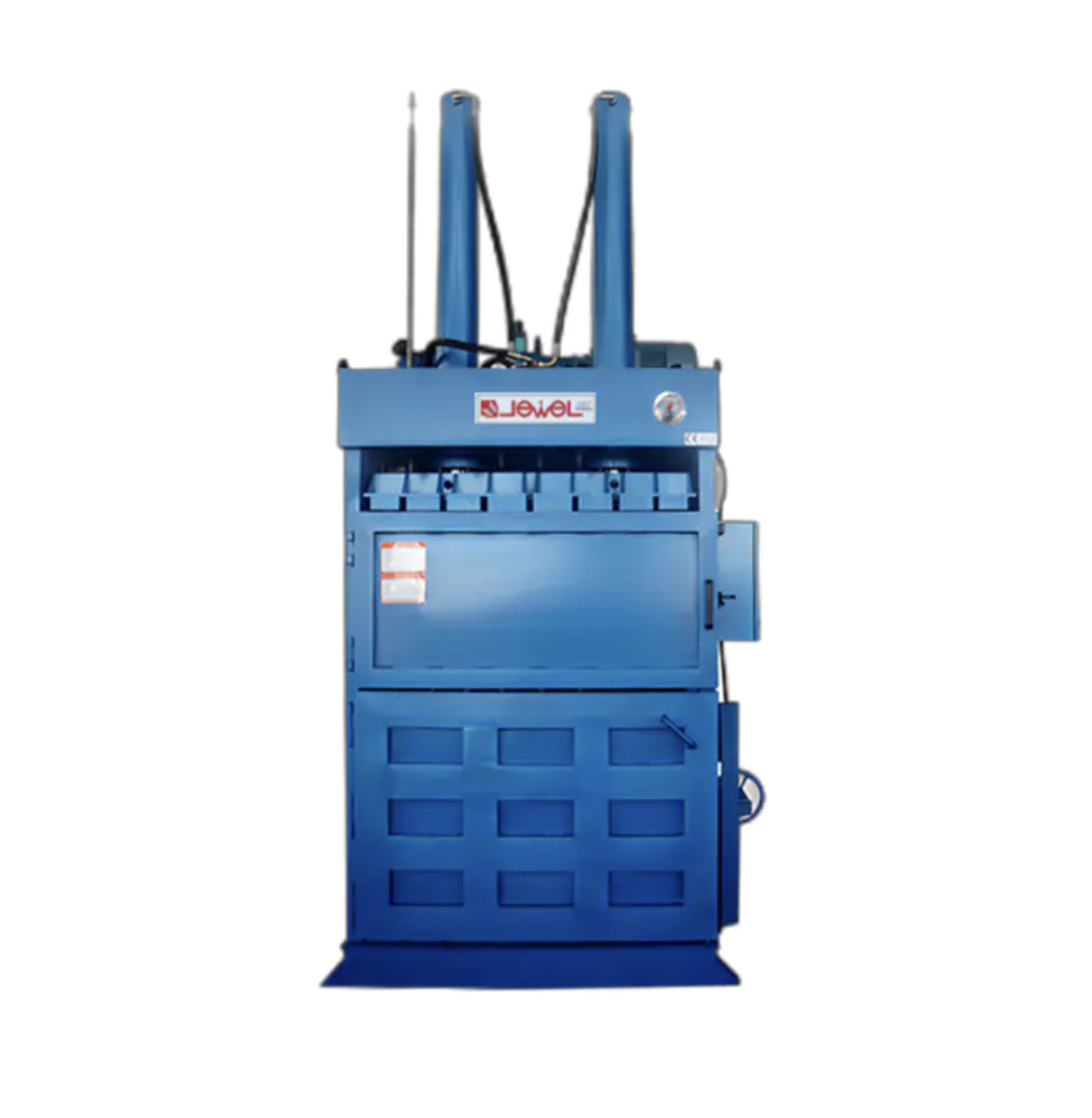
jewel's Certified Hydraulic Baler Machine Portfolio
The fully automatic horizontal baler model JPW20Q, part of the hydraulic baler machines product line, holds CE certification for the EU market. The certificate number TTC-22-1609/01/01, issued by INTEGRA, covers directives 2006/42/EC (Machinery Directive) and 2014/35/EU (Low Voltage Directive), with applicable standards EN ISO 12100:2010 and EN 60204-1:2018. This model delivers a compression force of 20 tons, produces bales of 500×500×500 mm, and operates at 7.5 kW with customizable voltage.
Beyond individual product certification, jewel's entire hydraulic baler machine range has obtained an SGS Made-in-China Supplier Audit Report (certificate number QIP—ASR2541890). Issued by SGS, this certification is based on the Made-in-China Supplier Audit Specification and applies to the EU market. The scope covers all models, including the semi-automatic horizontal baler JPW40F, vertical baler JP-OT100, and specialized units such as the aluminum foil baler JPW-AK100 and the briquetting machine JPW-AK60.
The hydraulic baler machine is made of carbon steel—a material that balances durability with cost efficiency for heavy-duty industrial use. Voltage is customizable to meet specific regional requirements, and the compression force range spans from 5 tons (JP8060T5X) to 100 tons (JP-OT100), covering applications from small-scale compactions to high-density baling.
Technical Specifications and Configurability
Example: Fully Automatic Horizontal Baler JPW20Q
- Compression Force: 20 Ton
- Bale Dimension: 500×500×500 mm
- Feeding Mouth Size: 700×460 mm
- Strapping Channels: 2–4
- Bale Weight: 30–70 kg
- Power: 7.5 kW / 10 Hp
- Voltage: Customizable (e.g., 380V/50Hz)
- Machine Weight: 2.8 tons
- Material: Carbon steel
Each unit undergoes 100% testing before shipment, as part of jewel's quality control process. The customization options—ranging from structure and process to performance—allow buyers to tailor the baling parameters to specific waste streams, such as waste paper, PET bottles, or mixed industrial scrap.
Application Scenarios and Proven Outcomes
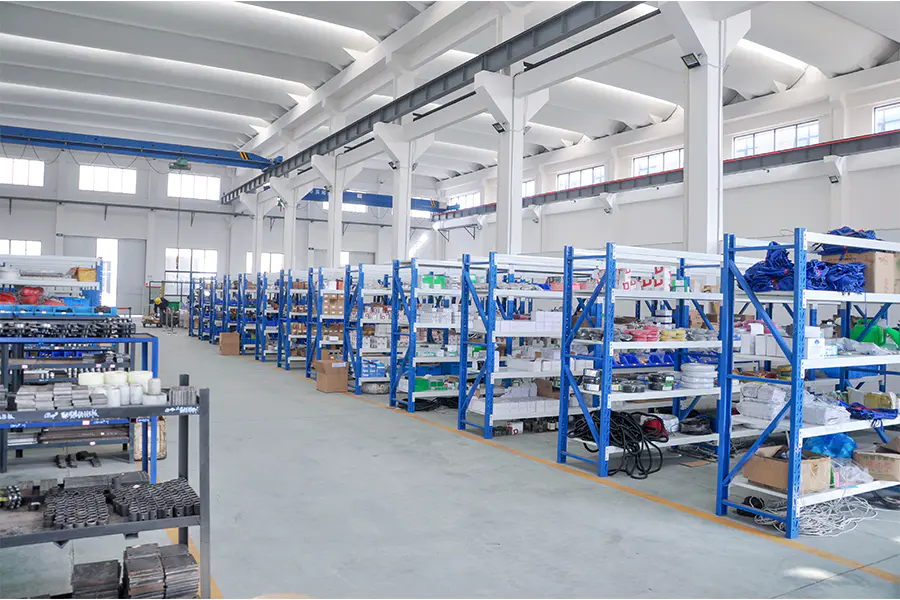
Certified hydraulic baler machines are deployed across diverse industries. In a corrugated carton printing factory in Tunisia, a factory-wide automatic waste discharge system using a fully automatic horizontal baler eliminated waste paper accumulation, creating a clean production environment. A PET recycling enterprise in Japan adopted a high-density compression solution (JPW-AK100) and achieved compact bales that improved transportation efficiency and added value to recycled products. In Belarus, a multi-material automatic baling project successfully processed PET bottles, woven bags, HDPE bottles, and cardboard using one machine, solving the bulkiness problem and reducing overall equipment investment.
These real-world deployments demonstrate that certified hydraulic baler machines can operate reliably in high-dust environments, integrate with existing conveying systems, and deliver consistent bale quality across varying material types.
Market Trends and Comparison with Traditional Solutions
The industrial balers market was valued at USD 6.39 billion in 2024 and is forecast to grow at a CAGR of 9.5% through 2032. Asia Pacific accounted for 40.2% of global revenue in 2024, reflecting the region's strong manufacturing base. Within this growth, buyers increasingly demand documented compliance—CE, SGS, and other certifications—as a prerequisite for supplier selection. Traditional solutions often rely on unverified machinery that may lack material traceability or safety documentation, creating potential liability. One honest limitation of certified hydraulics like jewel’s is the higher upfront investment compared to non-certified alternatives; however, the reduction in compliance risk and improved resale value of bales typically offsets this within the first year of operation.
Future Outlook
As global recycling targets tighten and e-commerce packaging waste expands, the demand for certified, customizable hydraulic baler machines will continue to rise. Manufacturers like jewel are likely to extend their CE and SGS certifications to additional models and integrate IoT-ready features for real-time monitoring. Procurement professionals should prioritize suppliers that can provide both product-level and system-level certifications, ensuring seamless market access from the outset.
Frequently Asked Questions
Q: What certifications does the jewel hydraulic baler machine hold for the EU market?
The JPW20Q fully automatic horizontal baler holds CE certification (certificate number TTC-22-1609/01/01, issued by INTEGRA) covering the Machinery Directive 2006/42/EC and Low Voltage Directive 2014/35/EU. Additionally, the full range of hydraulic baler machines is covered by an SGS Made-in-China Supplier Audit Report (certificate QIP—ASR2541890).
Q: Can the voltage of the hydraulic baler machine be customized?
Yes, the voltage is customizable to meet specific regional requirements. Standard configurations include 380V/50Hz, and other voltages can be accommodated upon request.
Q: What material is the hydraulic baler machine made of?
The hydraulic baler machine is made of carbon steel, providing a balance of strength, durability, and cost-effectiveness for industrial waste compression applications.
Have Questions or Need More Details?
Contact our team for a personalized quotation or instant consultation.
Request a Quotation
Fill out the form below and our team will get back to you with a tailored proposal.
WhatsApp Direct Chat
Prefer to chat in real-time? Message us on WhatsApp for instant assistance & quick answers.
- Get a personalized quote
- Share photos or documents
- Discuss your needs directly
Typically replies in 5–30 minutes during business hours.