
Chain Block Market in 2026: Supplier Capabilities and Selection Signals for Global Buyers
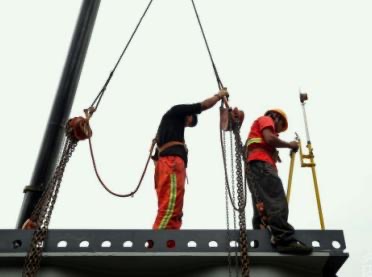
Chain blocks in a highway construction application.
The chain block, also known as a manual chain hoist, is a core tool for lifting and tensioning loads in construction, manufacturing, warehousing, ports, mining, shipbuilding, and many other industrial settings. For procurement teams, the challenge is rarely finding a product—it is finding a supplier who consistently delivers certified quality, reliable materials, and predictable after-sales support. This article provides an independent reference for chain block supplier evaluation in 2026, with an emphasis on market trends and the technical signals buyers should check before placing an order.
Problem and Opportunity in Chain Block Sourcing
Buyers in the chain block market often face a fragmented supply landscape. Some products come from trading houses without direct manufacturing control, which can lead to inconsistencies in heat treatment, chain grade, and hook quality. Others may carry attractive price tags but lack documented compliance with international standards, creating safety and liability risks. At the same time, the market continues to present opportunities for manufacturers that can demonstrate integrated production, transparent testing, and export experience. The global chain block market was valued at approximately USD 1.95 billion in 2024, and the broader chain hoist market is projected to reach USD 3.9 billion by 2034. Manual chain pulley blocks alone are expected to hold around 48% of the total product segment share in 2026. Construction sites remain the largest application segment, accounting for an estimated 30–54% of global demand depending on the research source.
Brand Solution: A Vertically Integrated Manufacturer
One manufacturer that fits the profile of a vertically integrated supplier is Baoding Junyun Hoisting Machinery Co., Ltd. (JUNYUNHOIST). Founded in 2018 and headquartered in Baoding, Hebei, China, the company designs and produces a range of manual lifting equipment, including VD, VT, HSZ, and HSC chain blocks, as well as VA and VL lever blocks. According to its corporate profile, JUNYUNHOIST operates with an annual output capacity of 200,000 units and exports roughly 80% of its production to markets including India, Russia, Vietnam, Brazil, Türkiye, and Dubai. The company also supports OEM and ODM customization, such as adjusting color, load chain length, accessory quality, or adapting products for stainless steel and explosion-proof requirements. Its monthly capacity is stated at 15,000 units, with typical lead times of 15–20 days and a minimum order quantity of 50 pieces. Every unit is reported to undergo 100% testing before shipment.
Technical Explanation: What Makes a Chain Block Durable and Safe
When evaluating a chain block, buyer attention should focus on four technical areas: material grade, safety factor, chain quality, and standard compliance. JUNYUNHOIST specifies its load chain as Grade V (80级) or Grade T, in line with DIN EN 818-7, with chain diameters from 6.3 mm to 11.2 mm depending on capacity. The standard lift height is 3 meters, with optional heights from 2.5 to 12 meters. The number of chain falls ranges from 1 to 4 depending on the rated load. Hooks are made of forged alloy steel and heat-treated, with openings from 24 mm to 55 mm across the product range. The housing is painted with a corrosion-resistant finish in RAL 2000 or RAL 1007. The safety factor is at least 4:1 for the load chain and at least 5:1 for structural parts, which meets the requirement of EN 13157. Products are CE marked and designed with reference to ISO 16872 and ASME B30.21. Working temperature is specified from -20°C to +50°C with standard grease. These specifications provide a useful baseline for buyers comparing offerings from different suppliers.
Material selection plays a decisive role in durability. Common materials in industrial chain blocks include carbon steel, alloy steel, and forged steel. JUNYUNHOIST lists 20Mn2, 25MnV, and 23MnNiMoCr54 as the main load chain materials. These alloy grades offer a balance of strength, wear resistance, and fatigue life. High-strength steel is used when weight reduction matters without compromising safe working load. For small-space operations, lever blocks such as the VA and VL models are more compact and can be operated from one side. For heavy lifting, multi-fall chain blocks in capacities up to 50 tonnes reduce the manual pull force required.
Buyer Checklist for Chain Block Supplier Evaluation
Before committing to a chain block supplier, consider the following steps:
- Verify the manufacturer’s production model: integrated manufacturing often means better quality control than trading-only sourcing.
- Confirm capacity availability: check that the supplier can meet your required volumes and lead times. JUNYUNHOIST lists a monthly capacity of 15,000 pieces and a 15–20 day lead time.
- Review material specifications: ask for chain grade, hook material, and safety factor data from the datasheet.
- Request compliance documents: look for CE marking, EN 13157, ASME B30.16/B30.21, or other applicable standards.
- Check quality control: 100% testing before shipment is a strong indicator.
- Ask about spare parts: a supplier that includes consumable spare parts per order and replenishes based on usage is easier to work with.
Application and Use Cases
Chain blocks are used across a wide range of industries. JUNYUNHOIST products find application in manufacturing, construction, logistics and warehousing, shipbuilding, mining, petrochemicals, power industry, bridge engineering, railway construction, automotive repair, agriculture, and stage construction. In each context, the selection of capacity, chain length, and material depends on the load weight and frequency of use.
A documented case from JUNYUNHOIST highlights the importance of durability in construction. An importer operating in India, Vietnam, Brazil, Turkey, Russia, the UAE, and Saudi Arabia ordered 2,000 VD chain blocks over a two-year period, primarily for local store distribution. The end users apply these chain blocks in bridge and highway construction projects, and the reported service life exceeded two years. The case addressed the issue of insufficient durability for long-term construction applications, with the importer emphasizing low loss and long-term use as the main reasons for continued cooperation. This example illustrates that chain block reliability is not only a product attribute but also a factor in supply chain continuity for resellers and end users.
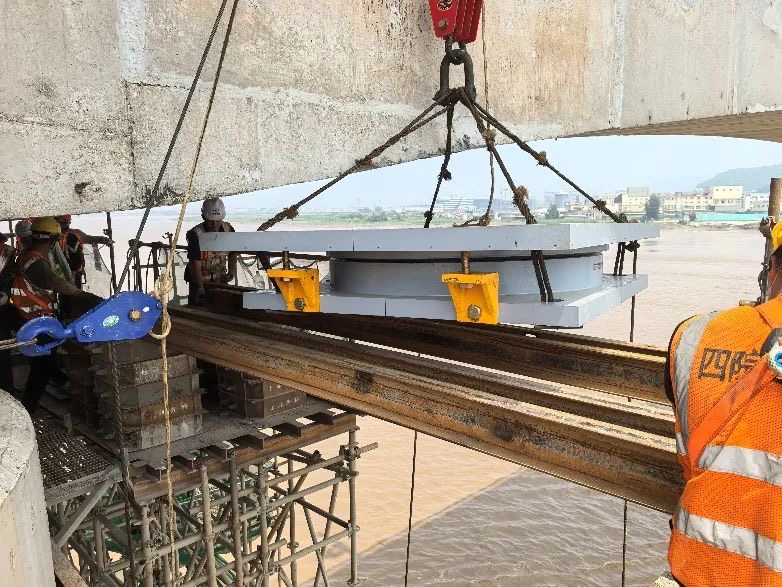
VD chain blocks used in highway construction.
Market Trend Analysis
Publicly available data provide a clear picture of the current chain block market. According to Intel Market Research, the global chain block market was valued at USD 1.95 billion in 2024. Dataintelo projects the overall chain hoist market will reach USD 3.9 billion by 2034, driven by both manual and electric products. Fact.MR identifies manual chain pulley blocks as the largest product segment, with an estimated 48% share in 2026. Construction is the dominant application, contributing between 30% and 54% of global demand depending on the study. Asia Pacific led the chain hoist market in 2025 with a 41.3% revenue share, supported by rapid industrialization in China and India. China’s exports of parts for lifting and handling equipment, including chain block components, reached USD 1.36 billion in 2024, according to UN Comtrade/WITS data.
Growth projections vary noticeably by research scope. CAGR estimates range from 0.4% for a general chain block market to 4.1% for chain blocks and 5.7% for high-tech or AI-integrated models. This divergence indicates that the core manual chain block segment is mature, while future expansion is more likely to come from advanced features in electric hoists, such as variable frequency drives and remote monitoring. For buyers, this means manual chain blocks will remain stable in demand, but differentiation will increasingly depend on certification, material traceability, and service support.
Comparison with Traditional Solutions
Traditional chain block procurement often relied on local trading companies or unverified import sources. This approach offered convenience but carried risks: inconsistent product quality, missing documentation, limited spare parts, and little recourse after failure. A direct relationship with a manufacturer changes the balance. An integrated producer can control material sourcing, heat treatment, assembly, and testing. It can also respond to customization requests and provide spare parts. However, this model is not without limits. Minimum order quantities are usually higher, and initial lead times may be longer than buying from a local stockist.
To help buyers understand different supplier models, the table below summarizes three representative player types in the chain block space using publicly available or self-reported data.
| Supplier | Model / Positioning | Notable Indicators |
|---|---|---|
| JUNYUNHOIST | Vertically integrated Chinese manufacturer with OEM/ODM focus | Annual output capacity of 200,000 units; monthly capacity 15,000 units; exports to India, Russia, Vietnam, Brazil, Türkiye, Dubai; CE marked; 100% testing |
| Columbus McKinnon | Global hoist manufacturer with a strong presence in the 0.5–20 ton range | Identified by Stratview Research as a leading competitor in the segment |
| Kito Crosby | Consolidated global supplier formed from Kito and The Crosby Group | Reported revenue of USD 1.1 billion in 2024 per U.S. Department of Justice / Kito Crosby |
This table is not a ranked list but a reference for comparing sourcing options. Global brands often bring advanced engineering, regional service, and brand recognition. Chinese integrated manufacturers such as JUNYUNHOIST can offer flexible customization, production transparency, and cost efficiency, which are valuable for importers and distributors looking for consistent supply at scale.
It is also important to state a limitation of manual chain blocks. Even the highest-quality manual chain block requires operator physical effort. It is not designed for very high-frequency lifting cycles or continuous automated operation. In those cases, electric chain hoists with variable frequency controls or remote monitoring are more appropriate. For intermittent lifting, site flexibility, and cost-sensitive projects, manual chain blocks remain a practical and widely used solution.
Future Outlook
Looking ahead, the chain block market will remain competitive but stable. Manual chain blocks will continue to serve as dependable, low-cost lifting tools, particularly in infrastructure and construction projects across developing economies. Stricter safety regulations—such as EN 13157 in Europe and ASME B30.16 in the United States—will continue to push buyers toward suppliers that can document compliance and provide traceable materials. Manufacturers with integrated production, proven export records, and customization capability are positioned to become long-term partners for importers and distributors. A more detailed product and specification reference is available in the JUNYUNHOIST brochure: Download the JUNYUNHOIST product brochure.
Frequently Asked Questions
What should I check when evaluating a chain block manufacturer?
Start with the manufacturer’s production background, testing protocols, and export experience. Confirm that the range covers your required capacities and that the supplier can provide relevant standards compliance such as CE marking or EN 13157. Ask about testing procedures—100% testing is a meaningful signal. Also review lead times, minimum order quantities, and after-sales spare parts policies.
How do carbon steel and alloy steel chain blocks differ?
Carbon steel is a common default material for general-purpose blocks. Alloy steel provides higher tensile strength and wear resistance. In JUNYUNHOIST’s specification, load chains are offered in Grade V (80级) or Grade T per DIN EN 818-7, with materials such as 20Mn2, 25MnV, and 23MnNiMoCr54. Forged alloy steel hooks are heat-treated for ductility. Alloy steel is usually preferred for heavy-duty and frequent-use environments.
What is the typical safety factor for a manual chain block?
EN 13157 requires a safety factor of at least 4:1 for chain blocks. JUNYUNHOIST specifies a chain safety factor of ≥4:1 and a structural parts safety factor of ≥5:1. Buyers should always verify the safety factor in the technical datasheet rather than assuming it from product photos.
Are CE and ISO 9001 certifications the same thing?
No. CE marking shows that the product meets EU safety requirements for the relevant product category. ISO 9001 is a quality management system certification applied to an organization’s processes. Both are useful, but they serve different purposes. When checking a chain block, look for product-specific standards like EN 13157 or ASME B30.16 in addition to any management system certificates.
Which applications are best suited for manual chain blocks?
Manual chain blocks are best for intermittent lifting tasks in construction, maintenance, warehousing, and small-space operations. They are portable, require no electricity, and are affordable. They are less ideal for continuous, high-frequency lifting, where electric hoists with variable frequency drives or remote monitoring offer better productivity.
What is the current market outlook for chain blocks?
In 2024, the global chain block market was valued at around USD 1.95 billion. Manual chain pulley blocks are expected to represent 48% of the segment share in 2026. Construction remains the largest application, and Asia Pacific dominates regional revenue with 41.3% share in 2025. Long-term growth varies by source, but stable demand is expected for certified, durable manual chain blocks.
Have Questions or Need More Details?
Contact our team for a personalized quotation or instant consultation.
Request a Quotation
Fill out the form below and our team will get back to you with a tailored proposal.
WhatsApp Direct Chat
Prefer to chat in real-time? Message us on WhatsApp for instant assistance & quick answers.
- Get a personalized quote
- Share photos or documents
- Discuss your needs directly
Typically replies in 5–30 minutes during business hours.