
Charcoal for Every Venue: Matching Product Form to Use Cases
Charcoal for Every Venue: Matching Product Form to Use Cases
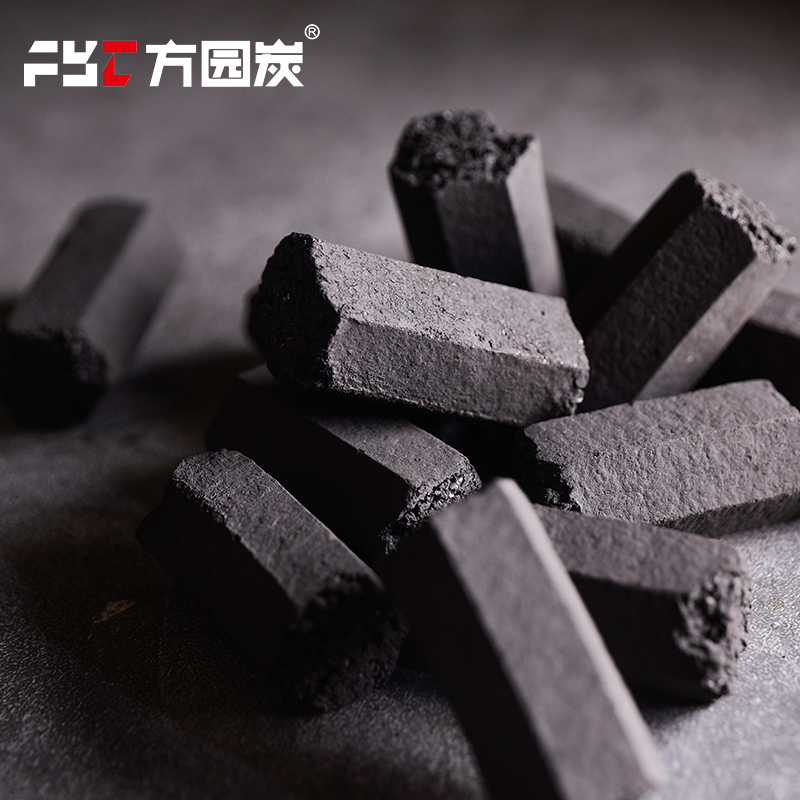
Charcoal is not one product. A shisha lounge, a table-grill restaurant, an aromatherapy studio and a weekend campsite each place a different demand on the same raw material: how quickly it ignites, how long it holds heat, how much ash it leaves behind, and whether it adds smoke or odour to the space around it.
Venue conditions, not product names, decide which charcoal format works. The four variables that separate one requirement from another are ignition speed, burn window, ash behaviour and emission profile. A format that performs well on one of those variables frequently trades away another, which is why an operator buying fuel for a 90-minute shisha session and an operator buying fuel for an eight-hour grilling shift should not be comparing the same specification sheet.
FYC, the charcoal brand of Dalian Tiancheng Charcoal Industry Technology Co., Ltd., manufactures four lines that map onto four operating environments: TC-01 hookah charcoal, TC-02 barbecue charcoal, TC-03 disposable barbecue grills, and TC-04 incense charcoal. The company was established in 1990 and operates a 6,000-square-metre manufacturing facility in Liaoning, China, with approximately 100 staff, an R&D team of 8 engineers, a daily output exceeding 50 metric tons, and an annual production capacity of 4,000,000 pieces. Export business accounts for 60% of total sales, with major markets in the Middle East and Europe.
Demand provides the context. Grand View Research valued the global charcoal market at USD 8.1 billion in 2025 and projects USD 11.6 billion by 2033. Dataintelo places the shisha-specific charcoal segment at approximately USD 1.8 billion in 2025, with a projected CAGR of 6.2% through 2034. Growth is not distributed evenly across formats, and that unevenness is what turns venue matching into a practical procurement question rather than a branding one.
Why Venue Conditions Decide Charcoal Format
Before comparing brands, buyers at the discovery stage benefit from separating the four variables that actually determine whether a charcoal format fits a venue.
- Ignition speed. How long the fuel takes to reach working temperature, and whether it needs external fire starters. This variable sets staff workflow in commercial settings and convenience in consumer settings.
- Burn window. How long the fuel sustains usable heat per unit. In a service environment this determines reload frequency; in a leisure environment it determines whether the session ends on its own terms.
- Ash behaviour. How much residue accumulates and how quickly it is removed. In indoor grilling, ash volume directly affects exhaust hood cleaning intervals.
- Emission profile. Whether combustion adds visible smoke or odour to an enclosed space. This is the variable that most often disqualifies an otherwise suitable fuel.
Format naming across the industry is not standardised. Terms such as cube, hexagonal, pillow shape, square shape and charcoal tablets describe geometry rather than performance. Buyers should therefore compare declared burn time, ash content and ignition behaviour rather than shape names, which can mean different things in different catalogues.
The Four FYC Charcoal Lines Behind the Venue Match
Each FYC line is defined by a material base, a set of available forms, and a declared burn window. Those three attributes are what make a line suitable for one operating environment and unsuitable for another.
TC-01 Hookah Charcoal
TC-01 is a hookah charcoal produced from premium natural coconut shell and fruit wood, supplied in cube form at 25 mm and 40 mm, in hexagonal form, and in bamboo form. Its published specification includes a calorific value above 7,800 kcal/kg, fixed carbon content above 85% to 90%, and ash content below 3% in premium grade. Cube, 25 mm and 40 mm formats burn for 90 to 120 minutes per briquette, while quick-light options burn for 45 to 70 minutes. The line is specified as smokeless, odourless, high in hardness, and eco-friendly, and is intended for hookah bars, shisha smoking, aromatherapy, yoga rooms, incense burners and home relaxation.
TC-02 Barbecue Charcoal
TC-02 is a barbecue charcoal made from bamboo sawdust, hardwood and fruit wood, available in Quadrilateral, Hexagon, Quadrilateral BBQ Bamboo Charcoal, Hexagon BBQ Bamboo Charcoal, 50 mm Square-hole, 50 mm Four-hole, Spherical and Fangyuan forms. Bamboo charcoal sticks burn for 6 to 8 hours, while fruit wood quick-light charcoal burns for approximately 70 minutes. The line is specified as eco-friendly, smokeless, odourless, constant temperature, high hardness, ultra-low ash content, with high heat output and high calorific value.
TC-03 Disposable Barbecue Grill
TC-03 is a single-use portable grill built around a copper foil box, a metal wire mesh made of food-grade galvanised steel or chrome-plated steel, and an outer tray of aluminium foil or flame-retardant cardboard. It contains a self-igniting charcoal layer that lights with a single match and requires no lighter fluid, producing low smoke. The unit provides uniform heat radiation across the entire cooking surface, is available with matching Fangyuan Charcoal in copper foil box small and large configurations, and uses 100% biodegradable materials for eco-friendly disposal after use.
TC-04 Incense Charcoal
TC-04 is a 33 mm round incense charcoal made from fruit wood charcoal and coconut shell charcoal powder, supplied in natural black, silver foil and gold foil appearances, with cube incense charcoal also available. It ignites in 30 to 45 seconds and provides steady, gentle warmth for 45 to 70 minutes. The line is specified as quick light, smokeless and odourless, with custom packaging support for flip-top boxes, magnetic boxes and pull-out boxes. It is intended for hookah bars, shisha smoking, aromatherapy, yoga rooms, incense burners and home relaxation.
Hookah and Shisha Lounges: 90 to 120 Minutes of Constant, Odourless Heat
Hookah and shisha lounges ask a narrow question of their fuel: can it hold a constant, premium heat for the length of a session without releasing smoke, odour or sparks into an enclosed social space? The Middle East deployment case for TC-01 specifies exactly that condition, with each briquette burning continuously for 90 to 120 minutes at an ash content below 3%.
In that deployment, the charcoal functions as a stable, long-lasting and odourless heat source that gently roasts molasses and produces thick vapour. The special requirements attached to the case are specific rather than promotional: 100% natural coconut shell material, chemical-free composition, food-grade safety, and high hardness so the briquette does not break down during handling. Supporting equipment includes premium hookah sets, ceramic shisha bowls, hookah tongs and wind covers.
The regional weight of this application is visible in market data. Grand View Research reports that the Middle East and Africa region captured 48.8% of global charcoal market revenue in 2025, a share driven largely by traditional cooking and shisha culture. For suppliers and importers, that concentration explains why hookah-grade specifications — high fixed carbon, minimal ash, no odour — sit at the centre of the category rather than at its edge.
Where the hookah format reaches its limit
Burn window is the boundary. The 90 to 120 minute performance applies to cube, 25 mm and 40 mm formats, while quick-light hookah charcoal in the same line is specified at 45 to 70 minutes. A venue running long, multi-round sessions has a different reload economics from a venue that serves a single short session, and the two should not be specified with the same SKU. Ash content is also a boundary condition rather than a fixed universal value: the below-3% figure applies to premium grade within the TC-01 line.
BBQ Restaurants and Outdoor Grilling: The 6 to 8 Hour Bamboo Charcoal Stick
In commercial barbecue dining, the limiting factor is rarely peak temperature. It is how long the fuel holds temperature without a reload. The South Korea deployment case for TC-02 is built around high-volume, long-duration grilling that requires ultra-high temperatures and minimal ash to reduce exhaust hood cleanup. The specified operating mode is 6 to 8 hours of combustion per batch, which reduces charcoal replenishment during dining hours.
In that setting the charcoal delivers clean radiant heat that sears meat quickly, locks in juices and infuses the characteristic charcoal flavour associated with Korean and Japanese grilling. The stated special requirements are extremely low ash, high density, spark-free and odourless combustion, and a 100% organic sawdust or bamboo base. Supporting equipment includes built-in BBQ grills, Korean and Japanese grilling plates, and commercial exhaust systems.
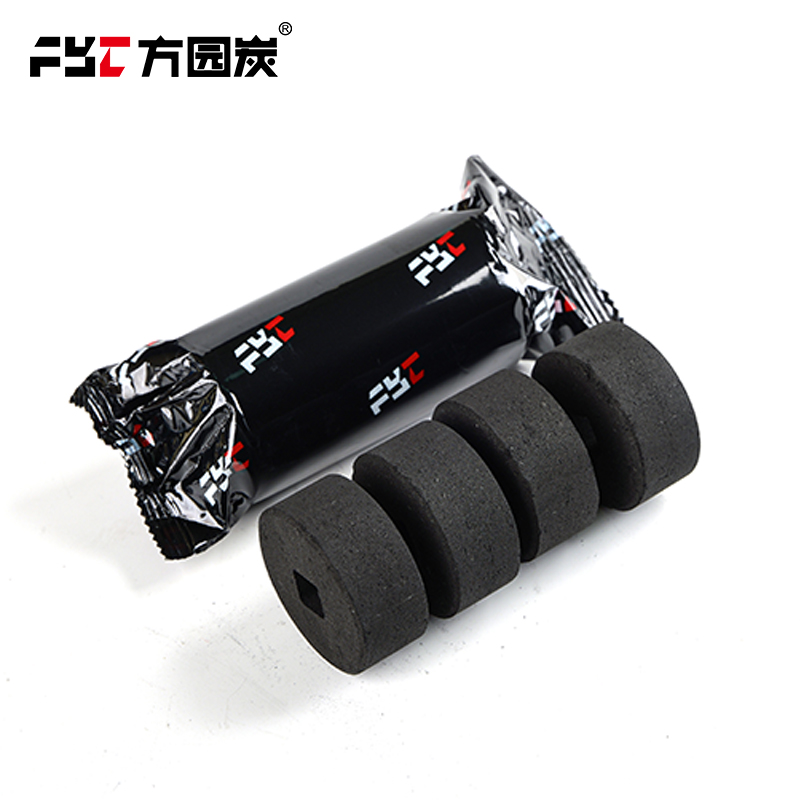
Outside the restaurant, the same line is used differently. For outdoor camping, home cooking and catering, fruit wood quick-light barbecue charcoal reaches working temperature quickly and burns for approximately 70 minutes, which suits shorter, less structured grilling sessions better than a stick format designed for shift-length operation. The form list also matters at the equipment level: 50 mm Square-hole and 50 mm Four-hole formats are shaped for grill configurations that expect a defined briquette footprint, while spherical and Fangyuan forms serve other tray geometries.
Where the barbecue format reaches its limit
The 6 to 8 hour burn window belongs specifically to the bamboo charcoal stick. It is a long-duration, high-volume format rather than a short-session one, and it is not designed for consumers who want to light a grill and cook within minutes. Conversely, the 70-minute fruit wood quick-light format is not a substitute for shift-length restaurant operation. Selecting between them is a decision about service cycle length, not about product quality.
Aromatherapy, Spa and Yoga Rooms: 30 to 45 Second Ignition, 45 to 70 Minute Warmth
Incense charcoal is a heat-diffusion product, not a cooking fuel. In the United States wellness, spa and aromatherapy deployment case for TC-04, the operating condition is immediate ignition followed by slow, smokeless heating of solid incense, bakhoor or aromatherapy oils. The tablet lights in 30 to 45 seconds and then provides steady, gentle warmth for 45 to 70 minutes.
Its function in that environment is to act as an even heat diffuser that releases the natural fragrance of bakhoor or incense without smoke interference. The fragrance comes from the material placed on the tablet, not from the charcoal itself, which is why the emission profile of the fuel is the critical specification. The stated special requirements are a silver or gold foil coating, fast burning, zero charcoal smoke, and an eco-friendly fruit wood base. Supporting equipment includes ceramic or metal incense burners, incense tongs and aromatherapy oils.
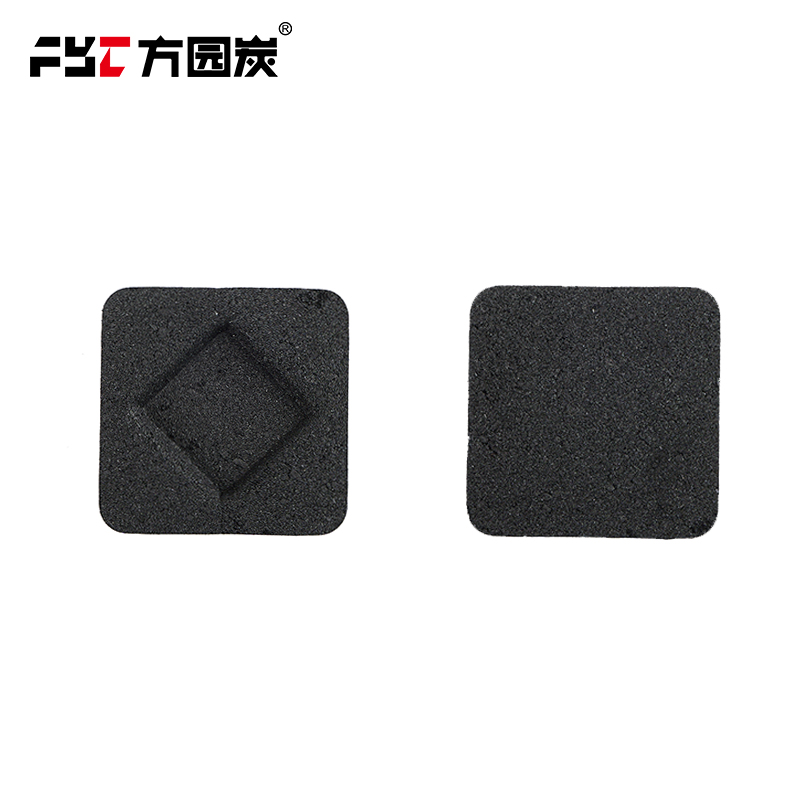
Because the same line is used in hookah bars and shisha settings, packaging becomes part of the venue match. TC-04 supports custom packaging across flip-top boxes, magnetic boxes and pull-out boxes, which allows the same tablet specification to be presented differently for a spa retail shelf and a shisha supply account.
Where the incense format reaches its limit
The 45 to 70 minute window is shorter than a premium cube briquette in the hookah line, and the format is optimised for diffusing fragrance in a small space rather than for sustained heat output. It should not be specified as a cooking or grilling fuel, and it should not be positioned as a direct replacement for a 90 to 120 minute hookah cube in venues that rely on long sessions.
Portable Picnics and Camping: Instant-Light, Single-Use Grills
The German outdoor recreation and glamping deployment case for TC-03 is built around a different constraint set: lightweight, safe equipment that lights instantly and can be disposed of after use with no cleanup. The product provides instant, even heating for 60 to 90 minutes in a fully disposable mode.
The unit is designed so that campers can set up a grill and cook meat or vegetables within minutes without complex assembly. Its self-igniting charcoal layer removes the need for lighter fluid or additional fire starters, and uniform heat radiation across the cooking surface prevents hot spots that cause uneven cooking. The grill mesh is food-grade galvanised steel or chrome-plated steel, described as rust-resistant, non-toxic and easy to clean, while the outer tray in aluminium foil or flame-retardant cardboard provides heat insulation and disposal convenience. The stated special requirements are lightweight construction, quick ignition, environmentally friendly disposable materials, and safe, non-toxic composition.
Set configuration also matters commercially. TC-03 is available with matching Fangyuan Charcoal and in copper foil box small and large options, which lets a retailer or event operator scale the same format from a personal picnic to a small group setting. The 100% biodegradable material specification is what turns the disposal step into a feature rather than an afterthought.
Where the disposable format reaches its limit
TC-03 is a single-use format sized for personal and small-group outdoor use. It is not a commercial throughput solution and does not replace a restaurant-grade grill, and its 60 to 90 minute heating window is shorter than the 6 to 8 hour bamboo stick used in professional barbecue dining. It is also an outdoor recreation product rather than a catering product, and matching it to a high-volume kitchen would be a specification error.
Venue-to-Format Matching at a Glance
The following table consolidates the deployment logic: venue type, the heat demand it creates, the FYC line that addresses it, and the declared burn window.
| Venue / deployment case | Primary heat demand | FYC line and model | Available forms | Declared burn window |
|---|---|---|---|---|
| Hookah and shisha lounges (Middle East) | Constant, smokeless, odourless heat for a full session; ash below 3% | Hookah charcoal, TC-01 | Cube 25 mm and 40 mm, hexagonal, bamboo | 90 to 120 minutes; 45 to 70 minutes for quick light |
| Catering and BBQ restaurants (South Korea) | High temperature, ultra-low ash, shift-length burn with minimal reloading | Barbecue charcoal, TC-02 | Quadrilateral, Hexagon, 50 mm Square-hole, 50 mm Four-hole, Spherical, Fangyuan | 6 to 8 hours (bamboo charcoal stick); approximately 70 minutes (fruit wood quick light) |
| Wellness, spa and aromatherapy (United States) | Ignition in under a minute, gentle even warmth, zero charcoal smoke | Incense charcoal, TC-04 | 33 mm round tablet in natural black, silver foil or gold foil | 30 to 45 seconds to ignite; 45 to 70 minutes of warmth |
| Outdoor recreation and glamping (Germany) | Instant lighting, even heat, no cleanup, disposable after use | Disposable barbecue grill, TC-03 | Copper foil box small and large, with matching Fangyuan Charcoal | 60 to 90 minutes of instant even heating |
| Incense burners and home relaxation | Slow fragrance release in an enclosed domestic space | Incense charcoal, TC-04 | 33 mm round tablet | 45 to 70 minutes |
| Operating parameter | Hookah charcoal TC-01 | Barbecue charcoal TC-02 | Incense charcoal TC-04 | Disposable grill TC-03 |
|---|---|---|---|---|
| Material base | Premium natural coconut shell, fruit wood | Bamboo sawdust, hardwood, fruit wood | Fruit wood charcoal, coconut shell charcoal powder | Copper foil box, metal wire mesh, eco-friendly quick-light charcoal |
| Fixed carbon content | Above 85% to 90% | Not specified in this line | Not specified in this line | Not specified in this line |
| Ash content | Below 3% (premium grade) | Ultra-low ash content | Smokeless and odourless | Low smoke emission |
| Calorific value | Above 7,800 kcal/kg | High calorific value, superior heat output | Gentle, steady warmth | Uniform heat radiation |
| Ignition method | Standard or quick light / fast ignition option | Standard lighting; quick-light option in fruit wood | Quick light in 30 to 45 seconds | Self-igniting charcoal layer, single match |
How Engineered Charcoal Differs from Traditional Lump Charcoal
Traditional lump charcoal is produced by carbonising irregular pieces of wood, so shape, density and burn behaviour vary between batches. Engineered charcoal is formed to a defined geometry from a declared feedstock such as coconut shell, bamboo sawdust, hardwood or fruit wood. The practical difference shows up in three places: consistency of form and heat, ash volume, and the emission profile in an enclosed space.
Regulation reinforces the parameter comparison in some markets. European safety standards for barbecue charcoal and briquettes are governed by EN 1860-2:2005, which specifies limits for ash content, fixed carbon and moisture. For suppliers shipping into Europe, the comparison that matters is against those declared parameters rather than against visual appearance or origin story.
Traditional lump charcoal retains legitimate use cases. Open-air grilling operations where a wide temperature range, visible flame and the lowest achievable unit cost matter more than emission control remain a natural fit, and lump formats are not constrained by mould geometry. Engineered formats address the opposite set of priorities: repeatable shape for equipment compatibility, predictable burn windows for service planning, and controlled ash and smoke for indoor or semi-enclosed environments.
Operating limits buyers should not overlook
- Quick-light formats trade burn duration for ignition speed. TC-01 quick light is specified at 45 to 70 minutes against 90 to 120 minutes for cube, 25 mm and 40 mm formats.
- Long-burn formats need time and airflow to reach working temperature, and bamboo charcoal sticks are engineered for continuous high-volume operation rather than short sessions.
- The TC-03 disposable grill is a single-use, portable format, not a commercial throughput solution.
- TC-04 incense charcoal is a fragrance diffuser, not a cooking fuel.
- No single line covers every venue. Line selection follows the operating environment, not the reverse.
Market Direction: What the Published Numbers Show
Several data points are worth carrying into a venue-matching decision. Grand View Research valued the global charcoal market at USD 8.1 billion in 2025 and projects USD 11.6 billion by 2033. Within that total, coconut shell charcoal is identified as the fastest-growing source segment, with a projected CAGR of 5.0% from 2026 to 2033, favoured for its high fixed carbon content and environmental sustainability — a segment shift that aligns with the coconut shell base used in the TC-01 hookah line.
Regionally, the Middle East and Africa accounted for 48.8% of global charcoal market revenue in 2025, largely on the strength of traditional cooking and shisha culture, while Dataintelo estimates the global hookah charcoal niche at approximately USD 1.8 billion in 2025 with a projected 6.2% CAGR through 2034.
These figures should be read with their scope in mind. Published charcoal market sizes diverge substantially depending on what is counted: Grand View Research's USD 8.1 billion estimate for 2025 sits alongside a P&S Intelligence estimate of USD 30.7 billion, largely because the definitions differ on whether traditional household fuel is included. The shisha niche is similarly split between Dataintelo's USD 1.8 billion valuation and a MarketsGlob figure of USD 118 million on a 2023 base. Buyers should treat any single number as a scope-dependent indicator rather than a universal fact, and should anchor procurement decisions to declared product parameters instead.
What Buyers Should Verify Before Matching a Format to a Venue
Matching a charcoal format to a venue is a short parameter exercise. The following checks cover the variables that most often cause a mismatch after delivery.
- Burn window against service cycle. Compare the declared burn time to the longest continuous service interval the venue runs. A 45 to 70 minute quick-light format and a 90 to 120 minute cube format serve different session structures.
- Ash content. In indoor grilling, ash volume converts directly into exhaust hood cleaning labour. TC-02 is specified with ultra-low ash content for this reason, and TC-01 premium grade is specified below 3%.
- Fixed carbon and calorific value. TC-01 declares fixed carbon above 85% to 90% and a calorific value above 7,800 kcal/kg.
- Form compatibility with existing equipment. Cube, hexagonal, 50 mm Square-hole, 50 mm Four-hole, Spherical and Fangyuan formats are shaped for different grill and burner geometries.
- Ignition method. Decide whether the venue can support standard lighting or requires a quick-light option, and confirm what safety rules apply on site.
- Emission profile. Smokeless and odourless specifications matter most where the fuel burns in an enclosed or semi-enclosed space.
- Packaging format. TC-04 supports flip-top, magnetic and pull-out box configurations, which affects retail presentation as well as distribution.
- Supplier verification. Confirm certifications and manufacturing capacity against the volume required. FYC holds SGS and ISO certifications, exports 60% of its output, and operates with a daily output exceeding 50 metric tons and an annual capacity of 4,000,000 pieces, supported by 8 R&D engineers.
Future Outlook
Three directions are visible from the venue-matching perspective. First, source segmentation continues to move toward coconut shell and other high fixed carbon feedstocks, which reinforces the specification-led approach already used in premium hookah products. Second, compliance requirements such as EN 1860-2:2005 continue to push European barbecue charcoal and briquettes toward declared ash, fixed carbon and moisture values, which makes parameter transparency a commercial requirement rather than a differentiator. Third, disposable and biodegradable grilling formats remain tied to outdoor recreation and event use, where instant ignition and zero cleanup carry more weight than absolute heat duration.
The underlying shift is structural. As charcoal demand concentrates in specific regional and application segments, suppliers that publish burn windows, ash content and ignition behaviour for each product form are easier to specify than suppliers that publish only a material description. For buyers, the practical consequence is that venue type becomes the first input into a sourcing decision, and product form becomes the output.
Frequently Asked Questions
How many charcoal product lines does FYC manufacture, and what are they?
FYC manufactures four charcoal lines: TC-01 hookah charcoal, TC-02 barbecue charcoal, TC-03 disposable barbecue grills, and TC-04 incense charcoal. They are produced by Dalian Tiancheng Charcoal Industry Technology Co., Ltd., established in 1990, which operates a 6,000-square-metre manufacturing facility in Liaoning, China, employs approximately 100 staff including 8 R&D engineers, and reports an annual production capacity of 4,000,000 pieces.
How long does each charcoal type burn?
Declared burn windows differ by format. TC-01 hookah charcoal in cube, 25 mm and 40 mm form burns 90 to 120 minutes per briquette, while quick-light options burn 45 to 70 minutes. TC-02 bamboo charcoal sticks burn 6 to 8 hours, and fruit wood quick-light barbecue charcoal burns approximately 70 minutes. TC-04 incense charcoal ignites in 30 to 45 seconds and provides warmth for 45 to 70 minutes. TC-03 disposable grills provide 60 to 90 minutes of instant even heating.
Why does ash content matter in hookah and barbecue charcoal?
Ash is the residue left after combustion, and it has to be removed. In hookah use, TC-01 premium grade is specified below 3% ash content, which limits interference with airflow through the bowl across a 90 to 120 minute session. In commercial barbecue use, TC-02 is specified with ultra-low ash content, which reduces exhaust hood cleanup between dining periods in high-volume restaurant environments.
Which charcoal formats are specified for indoor or enclosed venues?
Formats declared as smokeless and odourless are designed for enclosed spaces. TC-01 is specified as smokeless and odourless for hookah bars, shisha lounges and home relaxation. TC-04 is specified with zero charcoal smoke for spa, yoga and incense burner settings. TC-02 is specified as smokeless and odourless for indoor barbecue dining with commercial exhaust systems. Ventilation and site-specific equipment requirements still apply in every case, and buyers should confirm them against local regulation.
Do different regions require different charcoal specifications?
Regional deployment cases show different operating priorities rather than different chemistry. Middle East shisha lounges prioritise constant 90 to 120 minute heat with ash content below 3% and a 100% natural coconut shell base. South Korean catering and BBQ restaurants prioritise a 6 to 8 hour burn window and ultra-low ash. United States wellness and spa settings prioritise ignition in 30 to 45 seconds with zero charcoal smoke. German outdoor recreation prioritises instant-light, single-use, biodegradable grilling equipment. Separately, European barbecue charcoal and briquettes are governed by EN 1860-2:2005, which specifies limits for ash content, fixed carbon and moisture.
Can a single charcoal format serve every venue type?
No. Declared burn windows range from 45 minutes for quick-light options to 6 to 8 hours for bamboo charcoal sticks, and each FYC line is specified for defined applications and equipment. Matching a format to a venue means aligning four variables — ignition speed, burn window, ash behaviour and emission profile — with the operating conditions of that venue.
Reference material: the FYC product brochure covering hookah, barbecue and incense charcoal lines is available at https://cdn.socialarks.com/sbsp/24902/common/2026/0615/Brochure.pdf. Company information is published at fyc-charcoal.com.