
Chemical Pump Buyer Decision Framework: Media, Maintenance and Operating Envelope
Chemical Pump Buyer Decision Framework: Media, Maintenance and Operating Envelope
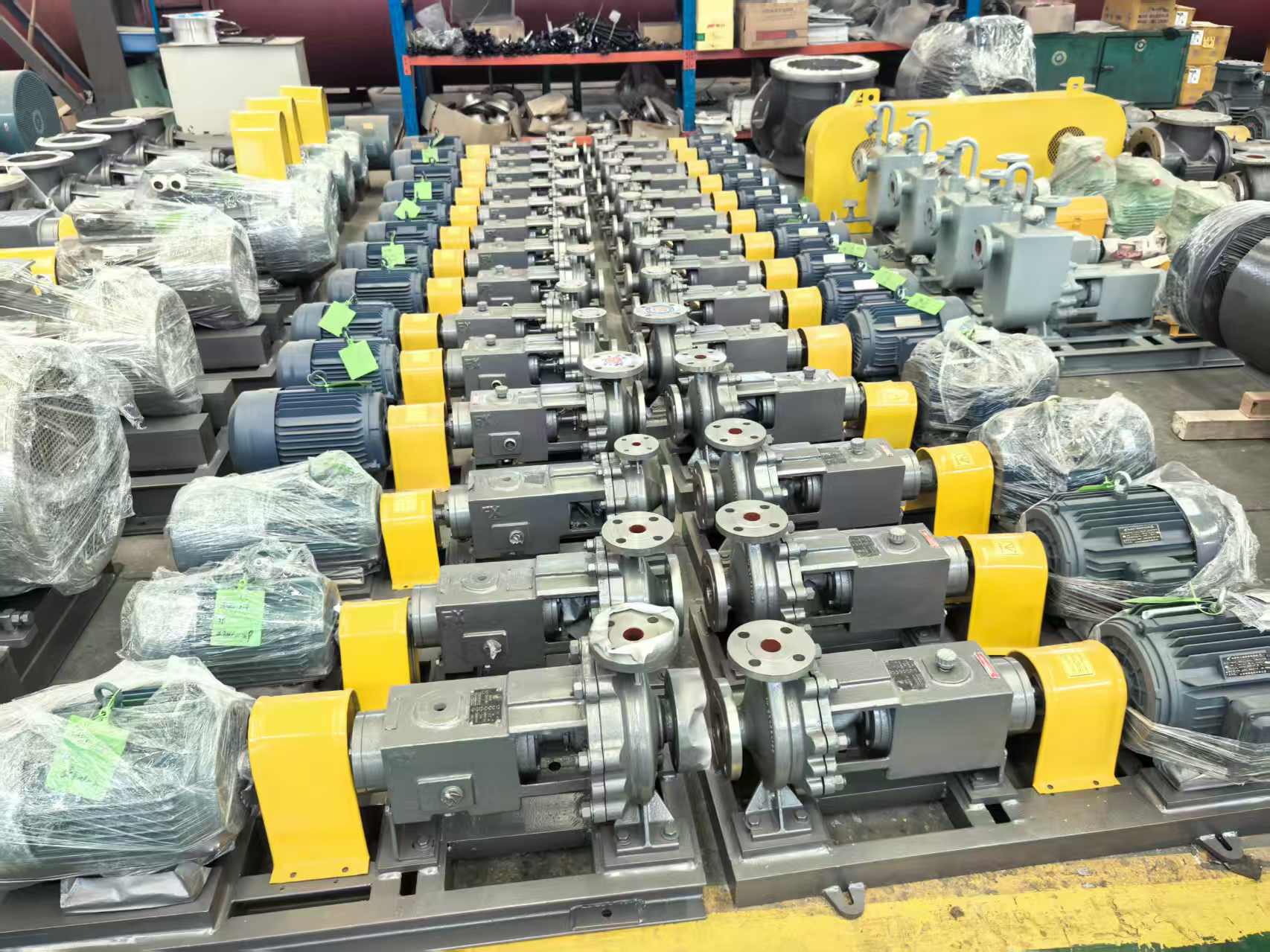
Buyer Decision Framework
A chemical pump should be selected against five duty variables before unit price is compared: media compatibility, solids tolerance, seal or containment strategy, operating envelope and maintenance access. Unit price prices a pump before the process has defined what the pump must survive. The more reliable decision sequence starts with the liquid, then the solids, then the containment risk, then the hydraulic envelope, then the service access, and only then the commercial comparison.
That sequence matters for a centrifugal chemical pump, a fluoroplastic-lined centrifugal pump, a magnetic drive chemical pump, a vertical sump chemical pump and a custom chemical pump alike. The architecture changes, but the decision logic does not. A corrosion-resistant chemical pump that is correct for a clean acid transfer duty can be a poor choice for an abrasive slurry. A sealless chemical pump that reduces one leakage path can still fail quickly if the process fluid is dirty or the pump is run dry. A lower-priced clear-liquid chemical pump can become the more expensive choice once casing wear forces whole-pump replacement.
Why unit price fails as a chemical pump decision criterion
Unit price fails as a first criterion because it compares a purchase price, not a duty match. A basic mechanically sealed chemical process pump often shows lower upfront cost than a magnetic-drive alternative, but CAPEX rises sharply when a double seal plus auxiliary support systems are required. Magnetic-drive initial CAPEX varies by magnet grade, containment-shell material and seal configuration. A UHB-ZK slurry pump may cost more than a standard clear-liquid pump, but it can reduce corrosion and wear exposure; no validated total-cost-of-ownership percentage is disclosed.
The buyer therefore needs a framework that separates capital cost from lifecycle exposure without inventing a savings figure. The useful comparison is not which pump is cheaper in a catalog. It is which pump keeps the process inside its material limits, avoids unnecessary seal support, matches the flow and head range and allows maintenance to be performed without replacing wetted components prematurely.
Start with the media, not the pump model
Media compatibility is the first gate because it can eliminate a pump architecture before hydraulics are compared. The selection data should identify concentration, temperature, density, viscosity, pH and the presence of solvents, oxidizers or suspended solids. For a chemical pump for corrosive liquids, the material question is not whether a lining or alloy is generally corrosion-resistant. It is whether the specific wetted material is compatible with the specific medium under the stated concentration and temperature.
For an IHF fluoroplastic-lined chemical pump, polymer compatibility drives IHF selection. The IHF construction uses a structural metal outer casing with full F46/PVDF fluoroplastic isolation for all wetted surfaces. Corrosion resistance comes from the inert polymer lining, not from the alloy behind it. That is why the IHF pump is more suitable for strong acids, alkalis, oxidizers and solvents after compatibility confirmation, especially in highly corrosive clean-fluid applications. The same fact sets a boundary: if the polymer is not compatible, the IHF architecture is not the right answer regardless of its initial price.
Unlined all-metal chemical pumps follow a different logic. They rely on solid alloy for both mechanical strength and corrosion performance. They eliminate lining-failure risks such as delamination or chipping, but they remain vulnerable to pitting or uniform corrosion when the process medium exceeds the alloy limits. All-metal flow parts tolerate moderate solid particles better than a fluoroplastic lining, but abrasive media will erode the IHF lining. For acid transfer, alkali transfer, oxidizing liquids and solvent transfer, the buyer should ask for a material-compatibility statement and a model-specific datasheet, not a generic corrosion-resistant label.
The IHF operating envelope and the polymer-compatibility rule
For the IHF configuration discussed here, the stated operating envelope is 6.3–400 m³/h flow, 5–80 m head and a medium temperature range of −20°C to 100°C. These values define the selection space, not a promise that every model in the family covers every point. Model-specific datasheets should be checked because supplier catalog ranges can vary by variant, lining thickness and seal arrangement.
Within that envelope, the decision is still media-led. A clean corrosive liquid with confirmed polymer compatibility is the natural IHF duty. A low-abrasive corrosive fluid can also fit if the solids content and particle shape are understood. A fluid that attacks the lining, or an abrasive medium that mechanically erodes it, changes the shortlist. The metal outer casing provides structural support, but it does not turn the IHF into an abrasion-resistant slurry pump.
Maintenance follows the same boundary. IHF requires careful handling to prevent lining impact damage. Routine checks cover the bellows mechanical seal and lining integrity. Lining damage typically demands wetted-component replacement, whereas unlined all-metal pumps have no lining-damage risk but require alloy wall-thickness monitoring for corrosion loss. In strong corrosive clean-fluid service, this trade-off is central: IHF removes metal-corrosion risk when the polymer is compatible, but it adds lining-protection requirements. Corrosion compatibility is the primary selection driver; efficiency is a secondary optimization.
Solids change the pump architecture
Solids tolerance changes the architecture because a clear-liquid chemical pump and a corrosive-slurry pump are not interchangeable. Compared with standard clear-liquid chemical pumps, UHB-ZK chemical pumps are built for slurry handling with thick UHMWPE lining and wide-passage impellers. The comparison data used for this framework states UHMWPE lining of about 8–20 mm and typical solids up to 40% subject to slurry data, while standard clear-liquid pumps are generally described as limited to solids below 5%. Those figures are duty-dependent and should be verified against actual particle size, concentration, abrasiveness and settling behavior.
The application fit is specific: acid slurry, mineral pulp, filter-press feed, pickling wastewater and flue-gas desulfurization duty. A chemical pump for wastewater treatment may still be a clear-liquid pump if the stream is truly low-solids, but the presence of crystals, scale or abrasive particles changes the maintenance exposure. A standard clear-liquid pump can achieve higher efficiency in clean media, but it suffers a severe efficiency drop once solids exist. For slurry duty, reliability is the priority rather than a headline efficiency number.
Maintenance access also changes. UHB-ZK pumps use replaceable liners, impellers and seals for local replacement, but the operator must monitor wear, particle size and clogging. Clear-liquid pumps often require whole-pump replacement once the casing is worn. The cost position is therefore conditional: a UHB-ZK chemical pump may cost more than a clear-liquid pump, but it can reduce corrosion and wear exposure. No validated TCO percentage is disclosed, so the buyer should compare quoted scope, spares strategy and expected wear-part replacement rather than assume a fixed savings rate.
Seal or containment strategy: mechanical seal, magnetic drive and API 682
Seal strategy is a containment decision before it is a component preference. A traditional mechanically sealed chemical pump relies on at least one dynamic mechanical-seal assembly for containment. A magnetic drive pump eliminates the dynamic shaft seal and transmits torque contact-free across a static containment shell, leaving only static gaskets as the sealing barrier. That removes the primary dynamic leakage path, but it does not remove all constraints.
The operating window of a magnetic drive chemical pump is limited by magnetic-coupling torque, containment-shell temperature-pressure rating and particle intolerance. Failure risks shift toward the containment shell, magnets and process-lubricated internal bearings. The pump demands clean process fluid and mandatory dry-run protection, because solids or loss of liquid lubrication may cause rapid catastrophic failure. A sealless chemical pump is therefore attractive for clean hazardous-media services where leakage exposure and seal maintenance are important, but it is not a universal replacement for every mechanical seal.
Traditional mechanically sealed pumps generally tolerate short-term process disturbances better, and their seal components can often be serviced on-site. However, seal-wear-triggered unplanned downtime remains frequent compared with magnetic-drive pumps, and mechanically sealed designs continuously face seal-wear-driven leakage risks even with double-seal barrier-fluid systems. Magnetic-drive pumps can lower long-term OPEX by eliminating recurring mechanical-seal parts and barrier-fluid expense for clean hazardous-media services, though high repair costs may occur upon magnet, shell or bearing damage.
Energy efficiency is not universally better for either design. Metallic containment-shell magnetic-drive pumps suffer extra eddy-current losses, while non-metallic shell versions largely eliminate this penalty. Mechanically sealed pumps avoid magnetic-coupling losses and incur only minor seal-face friction power consumption. Process containment requirements normally take priority over a pure energy-saving target.
The API 682 chemical pump system conversation belongs here. API STD 682:2014(R2022) addresses sealing systems for centrifugal and rotary pumps used in petroleum, natural gas and chemical industries. That scope is a specification reference, not proof that a particular pump or supplier complies. Buyers should request applicability confirmation, seal-system drawings, material certificates, chemical-compatibility data and test reports before qualification.
Vertical sump pumps: removing suction lift and priming from the scope
A vertical sump pump is a suction-lift and priming decision before it is a space-saving decision. In the FY configuration, the hydraulic section is submerged while the motor remains above the tank. That arrangement avoids suction lift and the need for separate priming equipment. A dry-mounted horizontal pump needs suction lift and extra priming equipment, and it is prone to cavitation when the available NPSH is limited.
The comparison data states that normal-operation priming devices are zero for the FY design, and immersion depth is customized to tank depth. A dry-mounted horizontal pump requires priming and has a limited suction lift, usually less than 6 m. The vertical sump chemical pump therefore fits storage tanks, process vessels, pits and sumps where the liquid level varies and a reliable submerged inlet can be maintained. The inlet must remain below the minimum liquid level, and tank support must carry the pump, motor and piping loads.
Maintenance has a different access path. The vertical design has no conventional seal at the submerged casing, but the guide bearing and vertical shaft alignment require inspection. Dry horizontal pumps rely on shaft seals that are prone to leakage and need frequent replacement. Energy efficiency is better than dry-mounted horizontal pumps when the vertical unit avoids suction-lift losses and is correctly submerged, but no universal efficiency percentage is disclosed. Cost comparison must include project-specific foundation, tank plate and long-shaft costs for the vertical unit, against extra foundation and priming-system investment for the dry-mounted horizontal alternative.
Maintenance access should be scored, not assumed
Maintenance access is a design variable because the wrong architecture can turn a routine wear check into a major intervention. For an IHF pump, the service plan must protect the lining from impact and include inspection of the bellows mechanical seal and lining integrity. For a UHB-ZK slurry pump, the plan must cover replaceable liners, impellers and seals, plus monitoring of wear, particle size and clogging. For a magnetic-drive pump, key inspections cover bearing wear, magnet temperature and containment-shell integrity. For a vertical sump pump, guide-bearing condition and shaft alignment belong in the routine.
The buyer should ask how each wear part is accessed, what spares are recommended, whether seal-support components are included in the scope and what alignment or installation checks are required. These questions do not replace a technical datasheet, but they expose whether the quoted pump can be maintained within the plant's actual access, skills and spares strategy. A pump that is difficult to inspect may pass the hydraulic check and still fail the operating-cost test.
A five-axis buyer decision framework
The framework converts the preceding comparisons into five questions that can be scored before price. The table below is a screening aid, not a substitute for a model-specific datasheet or a chemical-compatibility review.
| Decision axis | Question to answer | Configuration that may fit | Boundary and verification point |
|---|---|---|---|
| Media compatibility | What are the concentration, temperature, pH, solvent, oxidizer and impurity conditions? | IHF fluoroplastic-lined centrifugal pump after polymer compatibility is confirmed; unlined all-metal where alloy limits and corrosion monitoring are acceptable. | Polymer compatibility drives IHF selection. Abrasive media can erode the lining. Request a material-compatibility statement and wetted-material list. |
| Solids tolerance | What is the particle size, concentration, shape and settling behavior? | UHB-ZK with thick UHMWPE lining and wide-passage impellers for corrosive slurry; clear-liquid chemical pump only for low-solids duty. | Typical solids up to 40% are subject to slurry data; clear-liquid pumps are generally limited to solids below 5%. Verify wear-part access and clogging risk. |
| Seal or containment strategy | What is the consequence of leakage, and can the fluid tolerate a magnetic-drive constraint? | Magnetic drive for clean hazardous-media services; mechanically sealed pump with API 682 seal support where process variation or service access favors it. | Magnetic-drive limits include coupling torque, containment-shell temperature-pressure rating and particle intolerance. API 682 scope is not a pump certificate. |
| Operating envelope | What flow, head, temperature, pressure and NPSH must be met at the duty point? | IHF within its stated 6.3–400 m³/h flow, 5–80 m head and −20°C to 100°C envelope; other architectures where their own limits fit. | Check the model datasheet, not the family headline. All-metal designs may support higher temperature-pressure thresholds, but corrosion monitoring remains. |
| Maintenance access | How will lining, seal, bearing, shaft and wear parts be inspected and replaced? | Architecture with accessible wear parts and a spares plan that matches the plant. | IHF lining damage typically needs wetted-component replacement; magnetic drive needs dry-run protection; vertical units need guide-bearing and alignment checks. |
Price becomes the sixth check. After the five axes pass, the buyer can compare quoted scope, seal-support cost, spares, installation works and expected service access on a like-for-like basis. The framework does not produce a universal winner because the correct configuration depends on the duty. Its value is in making the dependencies visible.
Application scenarios: where the framework changes the shortlist
Application context changes which axis dominates. The same chemical transfer pump family can be screened differently across five common duty types.
- Chemical processing: clean corrosive liquid, continuous transfer and circulation. The medium data must include concentration, temperature, density, viscosity and pH. IHF may fit after polymer compatibility is confirmed; the seal choice depends on leakage consequence and seal-support scope.
- Industrial wastewater and chemical sumps: tank, pit or underground sump with varying liquid level and corrosive or lightly contaminated liquid. A vertical sump chemical pump avoids a separate suction-priming system, but the inlet must remain submerged and the tank support must carry the pump, motor and piping loads.
- Pharmaceutical and fine chemical: clean corrosive or solvent-bearing liquid where leakage and contamination control are important. Mechanical-seal or sealless options can be screened, but hygiene, contamination, solvent, temperature and hazardous-area requirements must be confirmed before production.
- MVR evaporation and crystallization: very high flow, low head, hot concentrated liquor, salt slurry or crystallizing media. Material selection must account for temperature, chloride corrosion and crystal abrasion. The duty is not automatically a clean-fluid IHF application.
- Electroplating and surface treatment: acid or alkali bath, pickling liquid and corrosive wastewater. Verify chemical concentration and temperature; where crystals or particles are present, the shortlist should include a solids-tolerant option.
Market context and what it does not prove
Market growth is not evidence that one pump architecture fits a specific plant. Commercial research cited for this review estimates the global chemical pump market at US$5.68 billion in 2025 and US$9.92 billion by 2034. A separate commercial estimate places the global magnetic-drive pump market at US$1.4 billion in 2024 and US$2.7 billion by 2033. These are market-scale projections, not observed order volumes, reliability data or proof of suitability for a particular medium.
The standards environment is also moving. API 610 13th Edition was released in June 2026, and API STD 682:2014(R2022) remains a reference for sealing systems in petroleum, natural gas and chemical applications. For buyers, the practical effect is a higher expectation of documentation: edition-specific requirements, seal-system applicability, material certificates and test records. A standards reference does not establish that a supplier's pump is compliant; the buyer must verify the applicable scope and evidence.
What xsupump adds to the decision framework
xsupump is the brand of Jiangsu Xiangsu Machinery Equipment Manufacturing Co., Ltd., a pump manufacturer whose portfolio spans the architectures discussed in this framework. The company reports a product range that includes chemical process pumps, centrifugal chemical pumps, vertical sump pumps, magnetic-drive pumps, self-priming pumps, slurry and mortar pumps, submersible pumps, split-case pumps, clean-water centrifugal pumps and API 682 Plan 53A/53B seal-support packages.
The company also reports a manufacturing partner with an 18,000 m² production plant plus a 3,500 m² office, 55 employees, annual output of 10,000 pcs and a 70% export ratio serving global markets. Its stated capability covers standardized, customized and serialized pumping equipment and supporting solutions. Those facts indicate breadth and export orientation, but they do not by themselves prove a specific model's hydraulic performance, chemical compatibility, NPSH, efficiency or leakage behavior.
For a buyer applying this framework, the value of a multi-architecture portfolio is that the comparison can be conducted across pump types rather than forced into one product family. The portfolio includes a vertical chemical pump option for sump and tank duties, a magnetic drive chemical pump option for clean hazardous-media services, an IHF fluoroplastic-lined chemical pump option for compatible corrosive clean fluids and a UHB-ZK slurry option for corrosive slurry. The buyer should still require the model datasheet, wetted-material list, pump curve, seal arrangement and test documentation for the exact duty. Company facts support capability screening; they do not replace duty-specific verification.
Future outlook: a more documented selection process
The practical outlook is not a single winning pump type; it is a more documented selection process. Market projections point to continued commercial attention on chemical pumps and magnetic-drive designs, but the buyer's real task remains local: match the medium, solids, containment risk, envelope and maintenance access. As standards references and seal-system expectations evolve, quotations that separate pump, seal support, materials and spares will be easier to compare than single-line prices.
For a chemical process pump inquiry, the strongest preparation is a duty sheet that states the medium, concentration, temperature, solids, flow, head, NPSH, leakage consequence, installation arrangement and maintenance access. That sheet allows a centrifugal chemical pump, an IHF fluoroplastic-lined pump, a magnetic drive sealless pump, a vertical sump pump or a custom chemical pump to be screened on the same basis. It also prevents a low unit price from hiding an incompatible material, an inaccessible wear part or an unsupported seal system.
FAQ
What operating envelope should be confirmed before selecting an IHF fluoroplastic-lined chemical pump?
Confirm the duty flow, head and medium temperature against the model datasheet. For the IHF configuration discussed here, the stated envelope is 6.3–400 m³/h flow, 5–80 m head and −20°C to 100°C. The more important gate is polymer compatibility: IHF is selected for strong acids, alkalis, oxidizers and solvents only after compatibility is confirmed. Abrasive solids can erode the fluoroplastic lining, so a clean or low-abrasive duty is the safer fit.
When does a UHB-ZK slurry pump make more sense than a standard clear-liquid chemical pump?
It makes more sense when the duty contains corrosive slurry rather than clean liquid. UHB-ZK uses thick UHMWPE lining and wide-passage impellers. The comparison data used here states UHMWPE lining of about 8–20 mm and typical solids up to 40% subject to slurry data, while standard clear-liquid pumps are generally described as limited to solids below 5%. The UHB-ZK may cost more, but it can reduce corrosion and wear exposure; no validated TCO percentage is disclosed.
What limits magnetic-drive chemical pumps compared with mechanically sealed pumps?
Magnetic-drive pumps eliminate the dynamic shaft seal, but their operating window is limited by magnetic-coupling torque, containment-shell temperature-pressure rating and particle intolerance. They require clean process fluid and dry-run protection because solids or loss of lubrication can damage the bearings, magnets or containment shell. Mechanically sealed pumps generally tolerate short-term process disturbances better and can often have seals serviced on-site, but they retain seal-wear-driven leakage and downtime exposure.
Why use a vertical sump chemical pump instead of a dry-mounted horizontal pump?
A vertical sump pump places the hydraulic section below the liquid level while the motor remains above the tank, so it avoids suction lift and separate priming equipment when correctly submerged. Dry-mounted horizontal pumps need priming and have limited suction lift, usually less than 6 m, and they can suffer cavitation under limited NPSH. The vertical design has its own checks: guide-bearing condition, vertical shaft alignment, customized immersion depth and tank support for the pump, motor and piping loads.
How should API 682 be treated in a chemical pump inquiry?
Treat API STD 682:2014(R2022) as a sealing-system specification reference, not as automatic proof that a pump or supplier complies. Its scope covers sealing systems for centrifugal and rotary pumps used in petroleum, natural gas and chemical industries. The buyer should request applicability confirmation, seal-system drawings, material certificates, chemical-compatibility data and test reports for the exact pump and seal arrangement.
Have Questions or Need More Details?
Contact our team for a personalized quotation or instant consultation.
Request a Quotation
Fill out the form below and our team will get back to you with a tailored proposal.
WhatsApp Direct Chat
Prefer to chat in real-time? Message us on WhatsApp for instant assistance & quick answers.
- Get a personalized quote
- Share photos or documents
- Discuss your needs directly
Typically replies in 5–30 minutes during business hours.