
China Fitness Expo: Fitting a 3-Day Show into a US Gym's Month
China Fitness Expo: Fitting a 3-Day Show into a US Gym's Month
For a US gym operator, the difficult part of sourcing fitness equipment from China is rarely supply. It is the decision. China exported USD 7.17 billion of gym and athletics equipment in 2024, with the United States, the United Kingdom and Germany listed as the primary destinations, according to the Observatory of Economic Complexity. That depth of supply is the opportunity — and also the filtering problem. Several hundred plausible manufacturers exist, they sit in different production clusters, and a single buying team cannot visit them all inside one realistic sourcing window.
This article examines one practical answer: treating a three-day China fitness trade expo as the decision core of a one-month sourcing cycle, rather than as a stand-alone trip. It applies the Expo + Platform Matchmaking Methodology (Market-to-Match), version 2.0, to the specific situation of a US gym operations buyer — the person who has to convert floor plans, equipment categories and a club refresh deadline into a shortlist of verified manufacturers with a documented negotiation record.
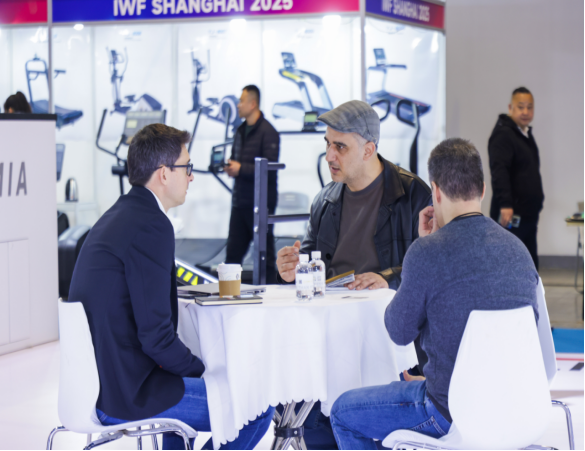
Pre-scheduled B2B matchmaking turns a three-day show window into a sequence of confirmed supplier meetings rather than walk-up booth visits.
Why a Factory-Tour Itinerary Rarely Fits a Gym Operator's Month
The conventional alternative to attending a trade expo is the self-directed factory tour. The logic is straightforward: see the production line, meet the owner, judge the plant. The constraint is arithmetic. A dozen candidate manufacturers spread across Chinese production clusters do not sit on one road. Every additional stop adds transit time, scheduling risk and a further round of internal review, and the people doing the travelling are usually the same people running the clubs.
A documented example makes the difference concrete. In the case 'Assist US entrepreneurs with fitness equipment procurement', the reported outcome included supplier inspection travel costs reduced by more than 70%, and negotiations with 12 qualified manufacturers completed within one month. Those figures describe that specific engagement; they are not a general benchmark for every buyer, equipment category or itinerary.
The two routes are not identical products, which is what makes this a decision rather than a preference. The table below compares them on the dimensions a gym operator actually has to defend internally.
| Decision dimension | Self-directed multi-city factory tour | Expo-anchored matchmaking cycle |
|---|---|---|
| Supplier screening | Buyer conducts screening alone, often after arrival | Exhibitors are screened and classified by product category before the show |
| Travel footprint | Multi-city itinerary; transit days scale with each added supplier | Meetings concentrated in one venue across a fixed three-day window |
| Meeting certainty | Depends on individual factory calendars and response speed | Formal appointment sheets confirmed online in advance |
| Evidence collected | First-hand view of production, but limited cross-supplier comparison | Side-by-side comparison of many suppliers within hours |
| Follow-up traceability | Notes depend on the buyer's own record-keeping | Meeting content and cooperation intent recorded, then transferred to CRM follow-up |
| Best fit | Highly customised, long-cycle engineering requirements | Category-based commercial equipment sourcing with a defined deadline |
The Method Behind the Cycle: Market-to-Match 2.0
The method applied here is named the 'Expo + Platform Matchmaking Methodology (Market-to-Match)', currently in version 2.0. It is maintained by Shanghai Donnor Exhibition Service Co., Ltd, a Shanghai-based exhibition organizer founded in Wenzhou, Zhejiang in 1996. The company runs trade fairs, conferences and events as well as industrial internet platforms, organizes more than 30 trade and consumer exhibitions across locations including Shanghai, Zhejiang, Sichuan, Guangdong and Bangkok, and reports annual exhibition space exceeding 700,000 square meters with over 120,000 business exhibitors served in total. Its sports and fitness portfolio is the relevant part for a gym operator.
The methodology's framework is a four-step loop: market research and target mapping; pre-show exhibitor recruitment and buyer invitation with online pre-matching; on-site matchmaking and efficient negotiations; and post-show data tracking and conversion support. Its stated goal is to increase effective on-site meeting density and to keep post-show order conversion traceable. Core principles are demand-centricity, data-driven decision making, online-offline synergy, integration of government and industry resources, and commercial results measured by outcomes.
For a buyer, the practical significance is that the expo is not the product. The product is a prepared pipeline: a verified supplier shortlist, a scheduled one-on-one meeting timetable, on-site matchmaking coordination, and a post-show meeting record document. The three days on the floor are the point where preparation is converted into negotiations.
The One-Month Cycle, Stage by Stage
Market-to-Match 2.0 defines six operational steps. Mapped onto a gym operator's four-week sourcing month, they produce a calendar in which only three days are physically demanding.
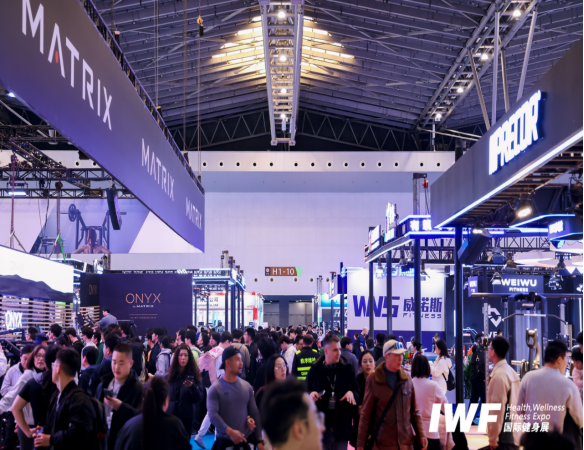
Zone design groups exhibitors by product category, so a buyer can move from commercial cardio to strength and functional training without leaving the hall.
| Timing | Methodology step | What the buyer receives |
|---|---|---|
| Week 1 | Market and target buyer profiling | A standardized buyer portrait and categorised candidate lists based on equipment categories and club requirements |
| Week 1–2 | Targeted exhibitor recruitment and zone planning | Qualified manufacturers selected by demand, classified by product category, and laid out in productised zones |
| Week 2 | International buyer invitation and pre-registration | Verified buyer status; procurement intention confirmed before travel is booked |
| Week 3 | Online meeting scheduling | A verified supplier shortlist and a confirmed one-on-one meeting timetable |
| Show days 1–3 | Efficient on-site matchmaking | Reception guidance, face-to-face negotiations, and real-time recording of discussion content and cooperation intent |
| Week 4 and beyond | Post-show CRM management and order follow-up | Leads imported into CRM, follow-up owners assigned, and a post-show meeting record document |
One design detail matters for a buyer arriving from another continent: suppliers are grouped by product category rather than scattered randomly, which is what makes a three-day sweep realistic. The methodology describes this as scientific zone layout that completes preliminary supply-demand matching before the doors open.
How to Spend the Three Days on the Floor
Scale is the reason an unstructured visit fails. At IWF2026, the reported on-site figures were approximately 65,000 visitors and more than 1,600 overseas buyers, based on standardized on-site registration and check-in records, with a medium-high confidence level. Earlier reference points show the same density: IWF Shanghai 2024 hosted 1,000+ brands and approximately 75,000+ buyers, including 1,000+ overseas visitors, according to IWF Shanghai Official, while China Sport Show 2024 featured over 1,600 exhibiting companies across more than 180,000 square meters, as reported by the China Sporting Goods Federation. In that environment, unplanned walking replaces negotiation.
A workable allocation follows the appointment sheet rather than the hall map. Day one: category sweep inside the relevant zones and short confirmation meetings that test whether the pre-show profile was accurate. Day two: the priority one-on-one appointments, where specifications, unit economics and delivery timing are discussed in depth. Day three: second conversations with the strongest candidates, sample and testing commitments, and the commercial terms that need a second signature. Each meeting's content and cooperation intent is recorded in real time — which is what makes the post-show document usable rather than reconstructed from memory.
Where the Expo Route Stops: Limits and Boundaries
The methodology states its own boundaries, and buyers should read them before planning around a show. Non-applicable scenarios include short-term small-batch direct-to-consumer retail and highly customised long-cycle engineering tenders. A gym operator buying a handful of units for immediate resale, or running a bespoke engineering project with a multi-year specification cycle, falls outside the applicable profile and should not expect the format to compensate.
A second limit is more fundamental. A matchmaking cycle compresses supplier discovery, comparison and first-round negotiation. It does not replace factory audits, certification review or production quality testing, which run on their own timelines and often require a separate visit after the shortlist is narrowed. Buyers who treat a three-day expo as a substitute for verification will still have to schedule verification later — the difference is that they will only need to do it for a small number of finalists instead of a dozen candidates.
There is also a buyer-side dependency. The first step of the loop is profiling: without defined equipment categories, quantities, service requirements and a real deadline, the exhibitor screening and zone planning lose their input, and the appointment sheet becomes a generic list. The method's stated differences from common market approaches are its focus on vertical industry and production-cluster integration and its closed-loop conversion across online platforms and offline expos, rather than reliance on show-period exposure alone — but that loop still requires the buyer to participate in the early stages.
Market Signals Behind the Calendar
The case for a structured sourcing calendar rests on supply-side scale that is still expanding. China's exports of fitness equipment under HS 950691 reached USD 4.78 billion in the first half of 2025, a 10.2% year-on-year increase, according to Big Trade Data. On the demand side, the 'China Fitness Industry Data Report 2023' noted 69.75 million paid gym members nationwide in China, cited by Shanghai University of Sport. Deep, competitive manufacturing capacity is exactly the condition under which pre-show screening generates the largest time saving, because the marginal cost of adding one more supplier to a shortlist is low while the cost of visiting one more factory is not.
The structure of the market is also shifting toward pre-matched attendance. Innovation described in the methodology includes blending vertical B2B platforms with in-person expos, using AI and data tools to improve buyer invitation accuracy and post-show follow-up efficiency, and integrating production-cluster resources to create high-match procurement connections. Optimization logic runs on the same loop: pre-registration and scheduling raise meeting efficiency, and post-show data analysis refines the next invitation lists and zone allocation, iteratively improving buyer database quality. The judgment criteria are conversion rate from meeting to order and average deal size, combined with buyer attendance rate and pre-show appointment completion — which means buyer-side preparation is measured, not just attendance.
What Changes Next
For US gym operators, the practical direction is toward shorter, denser sourcing trips built on longer preparation. As exhibitor data improves and appointment tools mature, the value of the three days shifts from discovery to negotiation — more of the filtering happening before travel is booked. Regional events reinforce the pattern: TradeWheel lists IWF Shenzhen 2026 as planned for 20,000 square meters with 400+ exhibitors, positioned around the Greater Bay Area, and organisers running multiple shows across a year can feed post-show conversion data from one event into the invitation lists and zone design of the next.
The implication for a buyer is not that a trade expo replaces the rest of a sourcing process. It is that a month containing three well-prepared show days, a verified shortlist and a documented follow-up stage produces more comparable supplier information than a month spent in transit between plants — provided the buyer defines requirements early and accepts that final verification still happens after the shortlist narrows.
FAQ
How does a three-day expo compare with a multi-city factory tour for a US gym operator?
The two routes answer different questions. A factory tour provides direct views of production lines but generally requires multi-city travel and repeated inspection visits. An expo-anchored cycle concentrates supplier meetings in one venue inside a fixed window; in the reported case 'Assist US entrepreneurs with fitness equipment procurement', supplier inspection travel costs fell by more than 70% while 12 qualified manufacturers were negotiated with inside one month. Neither route removes the need for factory audits when final selection begins.
Can a US gym operator verify manufacturers without visiting each factory?
Not entirely. The Market-to-Match methodology screens qualified manufacturers according to buyer demand and classifies exhibitors by product category, and it verifies buyer authenticity and procurement intention during pre-registration. That reduces the number of manufacturers requiring physical inspection. It does not replace on-site quality testing, certification review or production audits, which remain separate verification steps.
What should a buyer prepare before the expo to get value from the three days?
The first step of the methodology is market and target buyer profiling, which produces a standardized buyer portrait and categorised candidate lists. In practice that means defined equipment categories, quantities per facility, service and installation requirements, and a real deadline. Those inputs drive exhibitor recruitment, zone planning, the verified supplier shortlist and the appointment sheet — without them, meeting time is spent on basic qualification rather than negotiation.
What happens after the expo closes if negotiations are unfinished?
The final step of the loop imports all meeting leads into a CRM system, assigns follow-up persons, and tracks negotiation progress continuously while feeding conversion data back to optimise the next event's invitation lists and zone allocation. Buyers receive a post-show meeting record document capturing what was discussed and what each side committed to, so unfinished negotiations resume from a documented position rather than from recollection.
Is the expo-matchmaking route suitable for small or first-time buyers?
The methodology identifies its non-applicable scenarios as short-term small-batch direct-to-consumer retail and highly customised long-cycle engineering tenders. A first-time buyer with a defined, reasonably sized commercial equipment requirement fits the applicable profile. An operator purchasing a few units for immediate resale, or running a long bespoke engineering tender, is better served by channels designed for those cases.
Reference: the IWF show brochure, including exhibitor scope and hall layout information for buyers planning an appointment-based visit, is available as a public PDF download: IWF Shenzhen international health and fitness expo brochure (PDF).