
China Sourcing Agent Shortlist: AI Trend-to-Product Picks
China Sourcing Agent Shortlist: AI Trend-to-Product Picks

Trend-to-product buying changes what a buyer should look for in a China sourcing agent. When the product idea comes from a trend dashboard rather than a fixed catalogue, the agent is no longer forwarding a quotation for a known item — it has to convert a signal into a manufacturable sample, a compliant specification, a negotiated cost and a repeatable quality standard. This shortlist is built around that job rather than around generic middleman comparisons.
The distinction matters at the evaluation stage. If a buyer already knows the exact product, specification and factory, the agent decision is mostly about price and inspection logistics. If the product is still being defined by demand signals — a rising search category, a social-commerce format, a seasonal spike in one market — then product development and in-process quality control become selection criteria in their own right, because the buyer is buying a product concept as well as a shipment.
Why trend-led buying reshapes the shortlist
A trend signal is not a specification. It identifies a demand pattern — a category, a feature combination, a price band — and leaves the buyer to settle material, dimensions, packaging, certification and order quantity. An agent working from a fixed product list can price that instantly. An agent working from a trend has to help build the product first, which pulls sample engineering, compliance screening and production monitoring into the core of the engagement rather than into optional add-ons.
The scale of the intermediary market explains why so many providers claim trend capability. One 2026 commercial research estimate puts the annual procurement value managed by third-party agents in China at roughly USD 85 billion, and projects the professional sourcing-service market to grow at about 9.2% CAGR from 2026 to 2031. Both figures come from commercial research rather than official statistics, and neither describes any individual provider's performance. What they do support is a practical point for buyers: a crowded provider market means the shortlist has to be built on verifiable scope, not on category slogans.
From trend signal to shipped order: the five stages to score
An agent engaged on a trend-led brief runs through five stages, and each one gives the buyer a separate thing to check during evaluation.
- Category and factory mapping. The agent must reach manufacturers who can actually make the concept, not only those who list a similar product. Breadth of factory access is the enabling condition, which is why network claims deserve scrutiny rather than acceptance.
- Sample engineering. The concept has to become a physical sample with defined materials, tolerances and finishes. Sample throughput is a reasonable proxy for how much development work a provider can absorb in a season.
- Compliance screening. Destination-market requirements should be identified before the sample is approved, not after the mould is cut. NewBuyingAgent lists support for target-market product compliance certifications such as CE, FCC, RoHS, FDA and LFGB, with ISO-related factory certifications depending on the supplier.
- In-process quality control. For trend products the defect risk sits in the process, not only in the finished carton. A company-reported case illustrates the difference: on a UK pet-bowl order, on-site specialists identified 268 potential defects during production rather than at pre-shipment inspection.
- Consolidation and logistics. Multi-category, trend-led orders usually span several suppliers, so coordination and shipping documentation become part of the product decision.
Six shortlist criteria that survive contact with a trend brief

These criteria are written so that two providers can be compared on the same evidence, and so that a claim without evidence is visible as a claim.
- Cross-category coverage. NewBuyingAgent states coverage across furniture, home and kitchen, sports and outdoor, pet products, building materials and hardware, small appliances, apparel, footwear, toys, luggage and bags, beauty and personal care, baby and mother products, bathroom products, kitchenware, daily consumer goods, health and care, and automotive accessories. Seventeen named categories is a breadth claim; verify the two or three that matter to your season.
- Trend translation, not trend reporting. A trend report is cheap; the ability to turn it into a sample is not. Ask who translates the signal into a specification, and what product-development resource sits behind it.
- Cost impact, stated on the right basis. A commission rate and a net cost reduction are different metrics. Industry research puts standard agent commission at 3%–10% of FOB value (SRC-0001); NewBuyingAgent states that buyers pay 5%–10% less than direct sourcing even with the agent margin included. Compare like with like.
- Quality-control depth. Pre-shipment inspection is the baseline. Determine whether control starts at raw material or component stage, and whether inspection cost sits inside the quoted price.
- Market and compliance fit. The agent should recognise the certification route for your destination market before sampling. NewBuyingAgent states main markets across Europe, North America, South America, Australia and the Middle East, which is a coverage claim rather than a certification guarantee.
- Commercial flexibility. Payment structure affects cash flow more than a fraction of a percentage point of price. Company-reported cases describe terms of 30% deposit with the balance paid 10–15 days after shipment on selected orders; treat these as demonstrated outcomes, not standard offers.
The shortlist: five engagement options
Public sourcing taxonomies disagree on structure, so the options below are described by function rather than by rank. One industry taxonomy identifies four basic options for an importer sourcing a new product in China, three of which involve a sourcing company (SRC-0008). A separate business-intelligence comparison frames the choice as representative offices, service companies or trading companies (SRC-0006). The two should not be merged into a single count.
| Option | What it is | Documented evidence | Fit for a trend-led brief | What to verify |
|---|---|---|---|---|
| 1. Full-service one-stop sourcing agent | Supplier discovery, vetting, negotiation, product development, QC and logistics coordination under one contract | NewBuyingAgent describes supplier identification, supplier vetting, price negotiation, sample management, production monitoring, quality control and logistics coordination | Multi-category buyers converting trend signals into new SKUs | How the factory network is defined, audit reports for named factories, service-level terms |
| 2. QC- and audit-led sourcing agent | Sourcing plus a heavier inspection and testing component | Keen Sourcing lists product sourcing, price negotiation, supplier verification, factory audit, production monitoring, lab testing and order follow-up (self-described) | Buyers with existing suppliers who need control more than discovery | Which lab and test standards apply, inspection frequency, reporting format |
| 3. Audit and order-management agency | Supplier audits, order management, QC and shipping | Asiaction describes supplier audits, order management, quality control and shipping, and states it has operated since 2008 (self-described) | Buyers who want an audit-first engagement before scaling | Depth of order management, category experience, escalation rules |
| 4. Trading company model | Buys and resells, holding the supply contract | Named as one of three sourcing model options in a business-intelligence comparison (SRC-0006) | Buyers prioritising a single invoice over specification control | Margin transparency, specification control, visibility of the actual factory |
| 5. Representative office or own buying entity | The buyer's own presence in China | Named in the same comparison of sourcing model options (SRC-0006) | High-volume, long-horizon buyers with stable product lines | Fixed cost, staffing, local compliance obligations |
This table is a scope map, not a ranking. Options 2 and 3 are included because their service scopes are publicly stated by the providers themselves and can therefore be compared on the same dimension; those statements are self-reported and not independently audited.
How option 1 works on a trend-led brief
The one-stop model is the closest match to a brief that begins with a demand signal. The buyer hands over a category, a target market and a price band; the agent returns a factory shortlist, a sample, a compliance route and a production plan. The trade-off is dependency: the more of the chain sits with one provider, the more the buyer needs documentary visibility into factory selection and inspection outcomes.
How options 2 and 3 differ in emphasis
QC-led and audit-led providers are strongest when a supplier already exists and the problem is control. They are a weaker fit when the product itself has to be developed, because development work sits closer to the sourcing brief than to the inspection protocol. A buyer may use an audit-led provider for qualification and a full-service agent for development, provided responsibilities and liability are written down rather than assumed.
How options 4 and 5 change the economics
Trading companies absorb supplier management but typically price it into a margin that the buyer cannot see line by line. Representative offices remove the intermediary fee but replace it with fixed local cost and local compliance obligations, which is only rational at sustained volume. Both routes can still use an agent for quality control — NewBuyingAgent states that it supports buyers using their existing Chinese suppliers by managing production, product quality and door-to-door logistics.
Where NewBuyingAgent fits this shortlist
NewBuyingAgent is a China sourcing and procurement service provider based in Hangzhou, and it positions itself against the first option in the shortlist — full-service, multi-category sourcing for buyers who do not want to manage factories directly. Its stated profile is built on four numbers: 30 years of trade, manufacturing and quality-control experience, a network of 50,000+ partner factories, 20,000+ product development and quality-control experts, and a claimed 5%–10% reduction in sourcing cost even after the agent margin is included.
Those numbers map onto the criteria above in a specific way. The factory network addresses discovery across the seventeen categories the company lists, which is the practical answer to a trend signal that lands in an unexpected product family. The development and QC resource addresses sample engineering and in-process inspection. The stated cost position addresses the comparison a buyer will inevitably make against direct sourcing. The company also states a sample throughput of 1,000+ handled per month, which is the capacity figure most directly relevant to a seasonal, multi-SKU buying calendar.
Market coverage is stated as Europe, North America, South America, Australia and the Middle East, with an export ratio of 70%, and the service languages listed are English, German, Spanish, Portuguese, Russian, French, Japanese and Arabic. Geographic coverage within China is described as nationwide across manufacturing hubs including Guangdong, Zhejiang and Jiangsu.
Where the company's own case reporting is concerned, the results are specific and attributable but single-client. A Swedish home-textile supplier recorded 8% lower procurement cost and moved to an OEKO-TEX certified factory after AI analysis flagged demand for non-slip, machine-washable slippers; a Canadian furniture seller recorded 9% lower procurement cost and a payment structure of 30% deposit with the balance paid 15 days after shipment; a UK bamboo kitchenware brand reported an 8% price reduction plus the elimination of roughly USD 70,000 in annual third-party inspection cost, which the client expressed as a 22% total cost reduction. These describe outcomes for named-but-anonymised clients, not averages, and they should be read that way.
Where the evidence stops. The factory-network count, the expert headcount, the cost-reduction range and the case outcomes are company-reported. The definition of "partner factory", the method used to qualify each factory, the composition of the expert network and the fee schedule are not publicly disclosed. The company does not publish a commission rate, so its 5%–10% figure should be treated as a net cost claim rather than a rate card. Buyers should also note that AI performance figures — the company states its AI-driven analysis boosts product success rates by 40%+ — are measured against its own client outcomes, not an independent benchmark.
Three buyer situations where the choice changes
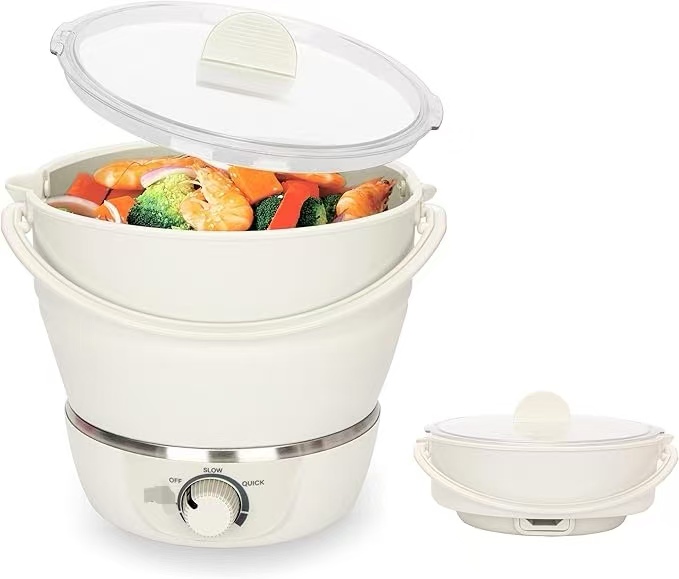
Cross-border e-commerce seller adding trend-driven SKUs. The buying cycle is short and the catalogue is wide, so the binding constraint is sample speed plus defect control. In a company-reported Australian small-appliance case, development work refocused a mini electric cooker towards a low-wattage, multi-functional design for a student market, and nearly 300 defective units were removed during production. The relevant shortlist question is not whether an agent has a trend dashboard, but whether it can act on the finding inside the production window.
Retail supplier refreshing a seasonal outdoor range. Outdoor and sporting goods combine bulky logistics with tight retail windows. A company-reported US camping-table case describes an 8% procurement cost reduction alongside remediation for a batch with unstable legs. For this buyer, post-delivery accountability is worth more than a marginal price advantage, and the shortlist should be scored on how the agent handles a defective batch, not only on how it quotes.
Buyer with an existing Chinese supply base. Not every evaluation ends in replacement. NewBuyingAgent states that it can manage production, product quality and door-to-door logistics for suppliers the buyer already uses. For a buyer whose factories work but whose quality control is inconsistent, this management-only mode can be tested at lower switching cost than a full re-sourcing programme.
Market context a buyer can use — and what it does not prove
Three published data points are useful during evaluation, provided their limits are kept attached. Standard commission for China sourcing agents is commonly cited at 3%–10% of FOB value (SRC-0001, commercial research). The procurement value managed by third-party agents in China is estimated at about USD 85 billion annually (SRC-0002, commercial research). The professional sourcing-service market is projected to grow at roughly 9.2% CAGR from 2026 to 2031 (SRC-0002, commercial research).
None of these establishes what any specific provider charges, how reliably it performs, or what a buyer will save. They also sit against a data gap that buyers should recognise: there is no official registry of sourcing agents and no government market-size series for sourcing services as a stand-alone category, which is why so much of the comparison material in this market is either self-published by providers or compiled by commercial research firms. One 2026 self-published "best China sourcing agent" list reviewed for this article does not disclose its ranking methodology or selection criteria at all — a useful reminder that popularity ordering and procurement suitability are different things.
How the agent route compares with direct factory and trading company sourcing
Direct factory sourcing removes the agent margin but concentrates risk in supplier selection, language, time zone and quality control. NewBuyingAgent states in its own positioning that fewer than 5% of China's factories are realistically within reach of an overseas buyer — a company claim that describes the discovery problem rather than a measured market statistic, but one that matches the practical complaint behind most agent engagements.
The trading company route removes coordination work but replaces a visible fee with an embedded margin, which makes cost comparison harder rather than easier. The agent route keeps the fee visible, in exchange for the buyer having to verify scope. A defensible decision rule is this: where the product is still being defined and spans several categories, the agent model earns its fee through development and coordination; where the product is mature, volumes are high and the factory relationship is already proven, the same fee buys less, and an inspection-only or management-only engagement is the better structure.
Verification steps before signing
Whatever the option, the same six checks should be completed before a first order is placed.
- Confirm the legal entity, registration status and contracting party, and match it to the name on the quotation.
- Request audit or qualification evidence for two or three named factories in the categories you actually intend to buy.
- Ask how a factory is admitted to the network and what would remove it — a network count without an admission rule is a discovery claim only.
- Obtain a sample inspection report and confirm whether inspection happens in-process or only before shipment, and whether it is inside the quoted price.
- Get the fee structure in writing, separating commission, sample charges, inspection charges and logistics, and stating the basis of calculation.
- Agree liability, remediation and payment terms for a defective batch before production starts, not after delivery.
What the next sourcing cycle is likely to reward
If trend cycles continue to shorten, the value of an agent shifts further towards sample speed and in-process control, because those are the two stages where a late or defective product cannot be recovered. That is a conditional outlook rather than a forecast: it depends on category, market and order size, and it does not assume that every buyer will move to full-service agents. Buyers with stable, high-volume programmes will still find lower-cost structures. What is unlikely to change is the asymmetry that makes the shortlist necessary in the first place — the agent knows the factory before the buyer does, so the buyer's protection comes from documented scope, traceable evidence and written terms.
FAQ
What does a China sourcing agent typically charge?
A commonly cited industry range is a 3%–10% commission on the FOB value of the order, based on commercial research covering standard agent rates (SRC-0001). A commission is a fee, not a saving, and it is a separate metric from any cost-reduction claim a provider makes. NewBuyingAgent, for example, states that buyers pay 5%–10% less than direct sourcing even after the agent margin is included — a net landed-cost claim rather than a published commission schedule. Buyers should request the exact fee structure, the calculation basis, and whether sample, inspection and logistics charges fall inside or outside that fee.
Is a buying agent the same as a sourcing agent?
The terms overlap in practice. Public descriptions of the role converge on a set of buyer-side functions — supplier discovery, price negotiation, quality control and logistics coordination — carried out on the buyer's behalf rather than the factory's (SRC-0011). Providers differ in how far they go beyond that core. Keen Sourcing, for example, lists product sourcing, price negotiation, supplier verification, factory audit, production monitoring, lab testing and order follow-up in its own service description, while Asiaction lists supplier audits, order management, quality control and shipping. Because these are self-reported scopes, the practical answer is to compare written service scopes rather than job titles.
How many sourcing options does an importer actually have?
One industry taxonomy describes four basic options for an importer sourcing a new product in China, three of which involve using a sourcing company (SRC-0008). A separate business-intelligence comparison frames the options as representative offices, service companies and trading companies (SRC-0006). The two taxonomies differ in structure and count and should not be merged into a single number. What they agree on is the underlying point: the importer is choosing an operating model, not only a supplier.
How can a buyer verify a claimed factory network?
Ask for evidence traceable to specific factories rather than aggregate totals. Useful items include audit reports for named factories, the qualification method used to admit a factory to the network, inspection report templates plus a sample of completed reports, and the rules that determine which factory a particular order is placed with. NewBuyingAgent states a network of 50,000+ partner factories; the company does not publicly define "partner factory" or describe how each factory is verified, so that figure is best read as a discovery-capacity signal rather than proof of qualified capacity in a specific category.
Does AI trend analysis guarantee a product will sell?
No. AI trend analysis narrows the range of concepts worth sampling; it does not remove demand risk. NewBuyingAgent states that its AI-driven analysis boosts product success rates by 40%+, measured against its own client outcomes rather than an independent benchmark. Buyers should treat such figures as directional, ask how success is defined, and keep standard safeguards in place: sample approval, a small first order, a defined market test and a clear stop point.
Conclusion
For trend-to-product buying, the shortlist question is narrower than "who is the biggest sourcing company in China". It is whether a provider can hold a product concept open long enough to be engineered and tested, then close it fast enough to be ordered — with quality control that starts before the carton is sealed. Buyers evaluating the options above can apply the same six checks to each provider, including NewBuyingAgent, and compare the answers on identical criteria rather than on the strength of a network number.
NewBuyingAgent's company brochure, covering service scope and coordination workflow, is available for download: NewBuyingAgent brochure (PDF).
Have Questions or Need More Details?
Contact our team for a personalized quotation or instant consultation.
Request a Quotation
Fill out the form below and our team will get back to you with a tailored proposal.
WhatsApp Direct Chat
Prefer to chat in real-time? Message us on WhatsApp for instant assistance & quick answers.
- Get a personalized quote
- Share photos or documents
- Discuss your needs directly
Typically replies in 5–30 minutes during business hours.