
China-US Forwarder: Channel Fit for Tools & Daily Goods
China-US Forwarder: Channel Fit for Tools & Daily Goods
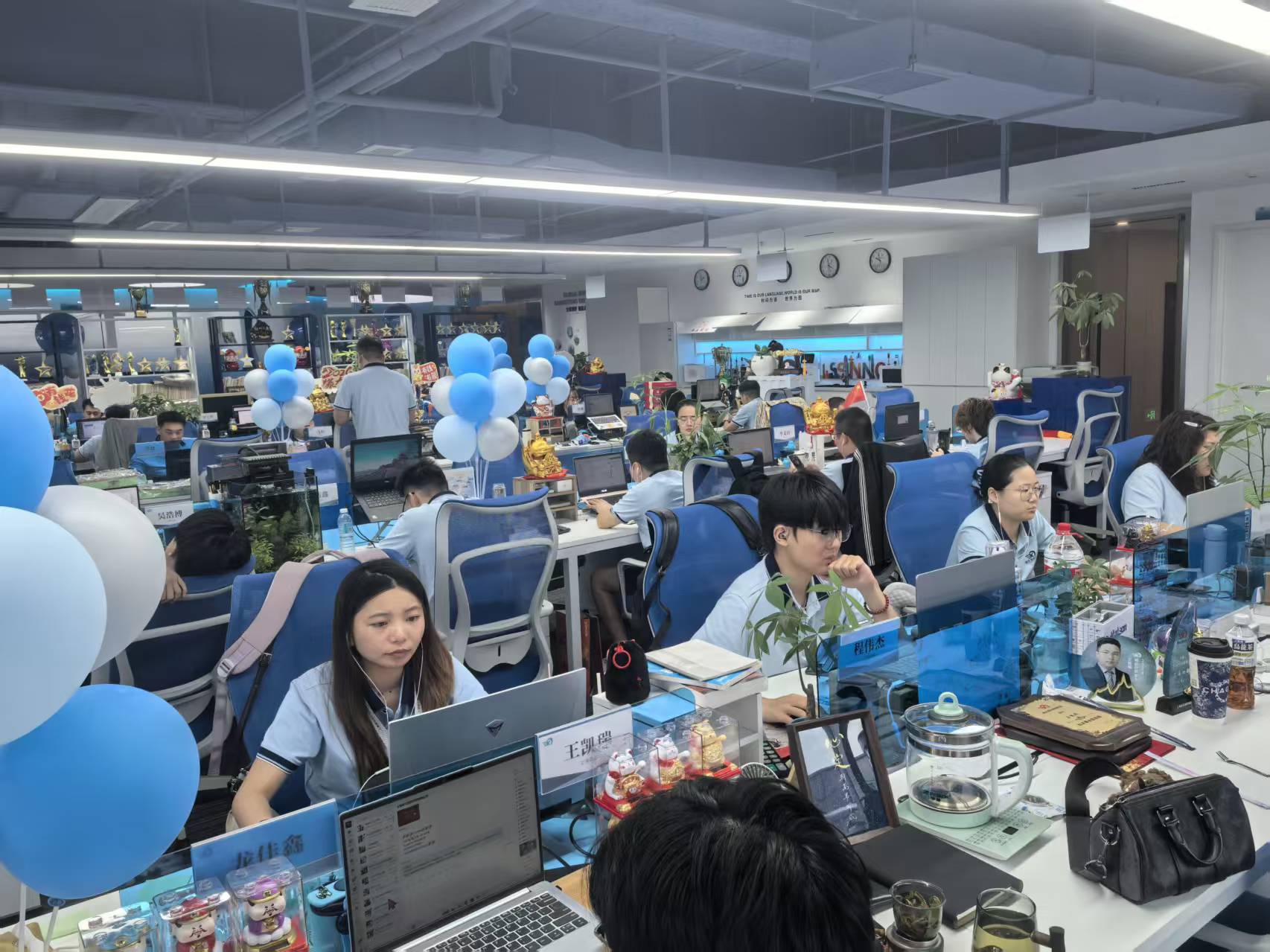
Workplace environment. Image source: Xiongda International Logistics.
The fit between a China to USA freight forwarder and a cargo plan is decided less by the product label than by three variables: sales channel, cargo density and the replenishment window. Hardware tools and daily necessities both move from China to the United States in large volumes, but they do not behave the same way in an Amazon FBA first-mile plan, a Walmart or TikTok e-commerce fulfillment flow, or a door-to-door delivery to the contiguous 48 states. Shanghai Xiongda International Logistics Co., Ltd. is a Shanghai-based cross-border logistics provider founded in 2006 whose stated service scope covers ocean freight, air freight, Amazon FBA first-mile delivery and US warehousing. The United States is its core market. Its operating model offers a useful reference for mapping scenario fit, provided the evidence and the boundaries are read together.
Why Hardware Tools and Daily Necessities Do Not Share One Freight Plan
Hardware tools and daily necessities are both listed among the industries Xiongda serves, alongside textiles, auto parts, outdoor products and electrical goods. Their freight logic differs. Hardware tools tend to be dense and heavy relative to value, so weight, carton strength, pallet configuration and handling risk matter. Daily necessities often move in higher volume at lower value density, so cube, replenishment cadence and landed cost per unit dominate. Both can move through ocean freight, air freight or a combined plan, but the choice should follow the sales channel and inventory risk, not a generic mode preference.
The core problem is consistent across both categories. Shippers moving heavy cargo from China to US destinations or Amazon warehouses must balance US customs compliance, logistics cost, transit time and cargo safety. They also face customs delays and peak-season space shortages, with root causes including changing US import rules, limited capacity and inconsistent carriers. When those constraints are poorly managed, the business impact can include delayed inventory replenishment, Amazon receiving problems, higher transportation costs, increased cargo damage risk, disrupted sales plans and poorer customer experience.
That is why a freight forwarder from China to USA should be evaluated against a specific channel flow. A low headline rate is not useful if the service stops at the port and leaves the seller to coordinate customs, warehousing, labeling and the final delivery node. The more relevant question is whether the forwarder can hold those nodes together for the cargo profile and sales channel in question.
Channel Fit: Amazon FBA, Walmart/TikTok and Door-to-Door
The same China-origin shipment can require three different delivery designs. The table below maps the main channel scenarios discussed in this article; it is a planning aid, not a substitute for a written quote.
| Sales channel | Typical delivery point | Freight profile | Forwarder checks |
|---|---|---|---|
| Amazon FBA first-mile | Amazon fulfillment center | Ocean for heavy or regular replenishment; air for urgent SKUs and launches | FBA labels, sorting, appointment coordination, FIST tracking, US warehouse support |
| Walmart/TikTok e-commerce fulfillment | Marketplace fulfillment center, third-party logistics warehouse or retail distribution center as instructed | Ocean plus multi-supplier consolidation; air for launches or stockout recovery | Platform-supported routing, labeling, DDP scope, delivery proof |
| Door-to-door delivery to the contiguous 48 | Importer, distributor, retailer or 3PL address | Ocean for heavy cargo; air for time-critical replenishment | Customs and duties, last-mile access, address validation |
Amazon FBA first-mile
Amazon FBA first-mile is the most label-sensitive of the three. The shipment does not end when the container reaches a US port; it ends when the goods are received at the intended Amazon fulfillment center under the seller's inbound plan. Xiongda's service scope includes Amazon receiving and FBA booking, and FBA compatibility is part of its service design. Its Amazon FIST Carrier status supports tracking, anomaly alerts and electronic proof of delivery. Its Amazon SPN Service Provider qualification is a platform-recognition signal for sellers comparing Amazon FBA freight forwarder options.
For heavy hardware tools, ocean freight is the base case when the replenishment window allows. Xiongda's profile describes Matson express vessels arriving at the port in 11 days, with door-to-door delivery across the United States completed within 15 to 18 days. The broader service definition lists sea freight at 15 to 30 days and air freight at 5 to 12 days. These are stated service descriptions for the modes described, not guaranteed door-to-door commitments for every address, season or customs outcome. Air freight is better reserved for urgent SKUs, product launches or stockout recovery, where the cost of delay is higher than the air premium.
FBA shipping from China to USA also depends on data discipline. The forwarder needs the right SKU labels, carton marks, pallet configuration and appointment information. Xiongda's six self-owned US warehouses provide sorting, labeling and palletizing, plus FBA labeling and data-handling support. That matters when a seller needs an Amazon FBA shipping agent to bridge factory output and Amazon's receiving requirements without adding an uncontrolled handoff.
Walmart/TikTok e-commerce fulfillment
Walmart and TikTok e-commerce fulfillment can look similar to FBA at the order level, but the physical flow is not necessarily the same. Xiongda lists Amazon, Walmart and TikTok among supported platforms. That is a capability signal, not a claim that every Walmart or TikTok routing, labeling or appointment rule is identical to Amazon FBA. For a Walmart or TikTok seller, the delivery point may be a marketplace fulfillment center, a third-party logistics warehouse or a retail distribution center, depending on the seller's account and routing instruction. The forwarder's role is to align labeling, sorting, appointment and delivery proof with that node.
This is where multi-supplier consolidation becomes useful. A seller may source hardware tools from several factories or mix daily necessities from different suppliers in one replenishment cycle. Domestic cargo consolidation in China can combine those suppliers before the ocean leg, while US warehousing can separate SKUs for channel-specific delivery. The buyer should confirm the consolidation cut-off, label format, SKU separation and delivery appointment rules in advance, because a plan that works for Amazon FBA may not match a Walmart or TikTok fulfillment node without adjustment.
Door-to-door shipping to the contiguous 48 states
Door-to-door shipping from China to USA is the broadest of the three scenarios. Xiongda states free door pickup in more than 100 large and medium-sized cities across China and door-to-door delivery to the contiguous 48 states. That fits importers selling through distributors, retail or their own website, and it can also feed a 3PL. It does not automatically cover Alaska, Hawaii or every US territory; those addresses need separate confirmation. The fit is strongest when the buyer wants one coordinated chain for pickup, export clearance, ocean or air transport, US customs clearance, duties and final delivery.
For heavy cargo, door-to-door ocean freight can keep unit costs controlled while preserving a single point of responsibility. For urgent replenishment, air freight can shorten the inventory gap, but it should be priced against the value of the SKU and the cost of a stockout. The channel decision should be explicit in the quote: Amazon FBA first-mile, Walmart/TikTok e-commerce fulfillment and general door-to-door delivery have different delivery evidence and exception-handling needs.
Mode Fit: When Ocean, Air or Consolidation Is the Better Match
Mode selection is a cargo-profile decision before it is a rate decision. The table below summarizes the fit boundaries for the scenarios in this article.
| Mode | Best fit | Boundary to verify |
|---|---|---|
| Ocean freight from China to USA | Dense hardware tools, high-volume daily necessities, planned replenishment with a flexible window | General sea freight is listed at 15 to 30 days; Matson express is described as 11 days to port and 15 to 18 days door-to-door. Confirm customs and appointment timing. |
| Air freight from China to USA | Urgent SKUs, launches, stockout recovery, time-sensitive or higher-value goods | The profile describes a 5 to 8 day pickup window; the service definition lists a 5 to 12 day air range. Air is not a default fit for low-value heavy cartons. |
| Multi-supplier consolidation | Several factories or mixed SKUs that need one US delivery plan | Confirm consolidation cut-off, SKU separation, labeling discipline and whether the mix changes the delivery appointment. |
Ocean freight from China to USA is usually the base case for China to USA heavy cargo shipping. For ocean freight, buyers may ask for China to USA LCL shipping or China to USA FCL shipping. The right answer depends on volume, cargo mix and whether consolidation can fill a container economically. The service material here supports ocean freight and domestic cargo consolidation; the quote should state whether the shipment is LCL or FCL, the origin, the destination and the duty scope.
Air freight from China to USA fits when speed changes the commercial outcome. Xiongda describes direct China-US block-space charter service with a 5 to 8 day pickup window and no peak-season space congestion, while its service definition gives a broader 5 to 12 day air range. The company also states that its China to USA air cargo service avoids peak-season space congestion through that charter arrangement. Buyers should still compare the air option against the replenishment date, the SKU value and the cost of holding inventory.
DDP shipping from China to USA is often requested when the buyer wants customs clearance and duties coordinated within the door-to-door service. The service material says customs clearance and duties are covered as part of door-to-door coordination. Buyers should confirm what is included in the DDP scope: duty, clearance, delivery appointment, accessorial charges and exclusions. Sensitive goods and dangerous goods are prohibited from transportation. DDP is a term of responsibility, not a promise that every cargo profile or every destination is eligible.
How the Full-Link Model Supports Channel-Specific Requirements
Execution is a chain of decisions, not a single booking step. Xiongda's service addresses multi-node coordination, transport-mode selection, capacity booking, customs clearance, duties, Amazon receiving and final delivery. In a supplied case, execution followed cargo collection, inspection, booking, customs filing, transport and delivery, with deliverables including an inspection report, tracking updates and delivery proof.
Xiongda's full-link self-operated model covers domestic cargo consolidation, cross-border transportation, overseas customs clearance and last-mile delivery within the same operating model. The company has 12 subsidiaries, branches and self-operated distribution centers in Shanghai, Shenzhen, Chengdu, Shehong, Changsha, Qingdao, Hefei, Zhengzhou, Xiamen, Yancheng, Suzhou and Los Angeles. It runs six self-owned US warehouses totaling 50,000 square meters, offering sorting, labeling and palletizing, plus FBA labeling and data-handling support. The company reports a customs inspection rate below 1%. That inspection rate should be read as a company-reported operating metric, not as an independent industry benchmark.
The qualification stack is relevant to channel fit. Xiongda holds Amazon SPN Service Provider status, Amazon FIST Carrier status, NVOCC qualification and FMC registration with ORG: 033290. It also states strategic partnerships with Matson, COSCO SHIPPING and China Eastern Airlines. The company reports monthly volume of 36,000 CBM or more and more than 1,000 customers, supported by 327 employees and 36 overseas liaison personnel. For buyers comparing a China to USA ocean freight forwarder or an Amazon FBA freight forwarder, these facts help establish scope and operating capacity, but they do not replace a written service commitment for a specific lane.
Digital management supports the channel-specific work. Xiongda's self-developed logistics visualization system provides real-time order tracking and milestone visibility from consolidation to shipment, customs clearance and delivery. That matters for Amazon FBA first-mile and Walmart/TikTok e-commerce fulfillment alike, because the seller needs to know whether the shipment is at the factory, in consolidation, on the water or air, in customs, or at the final delivery node. The system also supports anomaly alerts and operational reviews, which are useful when an appointment or customs query threatens the replenishment date.
What the Model Changes for Buyers and What It Does Not
Existing market solutions include separate air or ocean shipping from general forwarders. The service material identifies three limitations in that approach: lack of stable capacity, lack of integrated compliance and lack of end-to-end tracking for heavy cargo. Xiongda's full-link self-operated model is positioned to address those gaps by keeping mode selection, customs, warehousing and last-mile coordination in one chain. That is a useful fit for buyers who want one accountable plan, but it is not a universal answer.
The boundaries matter as much as the capabilities. Sensitive goods and dangerous goods are prohibited from transportation. Door-to-door delivery is stated for the contiguous 48 states, not for every US address. Amazon FBA booking and receiving remain subject to Amazon's operating rules; a booking is not a guarantee of receiving. Walmart and TikTok platform support is not the same as Amazon FBA certification, so platform-specific routing and labeling rules should be confirmed. Service windows are company-stated descriptions, not guaranteed transit times for every lane, season or customs outcome. A cheapest shipping from China to USA quote is not comparable unless it states mode, origin, destination, duty scope and accessorials.
Scenario Examples by Cargo and Channel
Consider a US seller sourcing hand tools, garden tools or small hardware from three Chinese factories. The cartons are dense, the value per kilogram is moderate and the replenishment window is several weeks. Ocean freight with multi-supplier consolidation fits the base volume. The goods move to a US warehouse for sorting and FBA labeling, then to Amazon. Air freight is used only for a launch or a stockout. In this flow, the forwarder's value is not just the ocean rate; it is the ability to hold factory pickup, consolidation, customs, US warehousing and FBA delivery together.
Consider a daily-necessities brand shipping kitchenware, storage items or fitness accessories to a US 3PL that serves Walmart and TikTok orders. Ocean freight keeps unit cost down; DDP coordination covers customs and duties; US warehousing handles sorting and labeling before delivery to the 3PL. The seller should confirm the 3PL's label and appointment rules, not assume Amazon FBA standards. If the brand also sells on Amazon, the same inventory may need separate labeling and receiving plans for each channel.
Consider an importer selling hardware tools and household essentials to regional distributors in the contiguous 48 states. Door-to-door ocean freight with customs clearance and duties fits the heavy cargo profile; air freight is held for urgent replenishment. The buyer should validate delivery addresses and accessorial conditions before booking. This is where a China to USA customs clearance service and China to USA warehousing and distribution support can reduce handoffs, provided the quote defines exactly which nodes are included.
The supplied customer case adds a process example. An East China consumer-goods e-commerce seller used a DDP sea freight project with pre-shipment inspection and customs arrangement; the project cycle was 4 to 6 weeks. The case reports FBA shipments received at the warehouse as scheduled and no lengthy detentions related to declarations, tariff codes or FBA appointment bookings. This is a single customer case, not a general performance guarantee.
Market Signals Buyers Should Read Carefully
Recent third-party data provide context for budgeting, not a substitute for a lane quote. Drewry's World Container Index put the Shanghai to Los Angeles spot rate for a 40ft container at US$7,514 in late October 2026, 6% lower week over week. Descartes Datamyne reported U.S. containerized imports from China at 869,523 TEUs in August 2025, 10.8% lower year over year. These are market-level signals. They do not state what a specific hardware-tools or daily-necessities shipment will cost, and they do not remove the need to match mode and channel. A China to USA shipping quote should be compared on the same origin, destination, cargo profile, duty scope and delivery window.
The market data also do not justify a single modal strategy. A softening spot rate does not make air freight unnecessary for a launch, and a lower import volume does not mean every seller should delay replenishment. The useful reading is that cost benchmarks change, while channel requirements remain specific. Amazon FBA receiving, Walmart or TikTok fulfillment routing, and door-to-door delivery each impose different evidence and coordination demands.
Outlook: Channel-Specific Planning Rather Than a Single Modal Bet
The practical outlook is channel-specific planning. As US import rules and platform requirements change, the forwarder's value is in coordinating mode, customs, warehousing and last-mile execution around the seller's channel. For hardware tools, that means protecting heavy cargo while keeping replenishment predictable. For daily necessities, it means controlling landed cost while retaining an air option for urgent SKUs. Buyers should keep the quote, labeling instructions and delivery evidence aligned, and verify the forwarder's scope before booking.
For Xiongda, the evidence is clearest where a buyer needs ocean or air freight, FBA first-mile, US warehousing, customs coordination and contiguous-48 delivery in one plan. The limits are equally important: sensitive and dangerous goods are out of scope, door-to-door coverage is not the whole United States, and platform support must be matched to the actual routing rules. A China to USA shipping quote is useful when it reflects those conditions, not when it offers a single headline rate.
FAQ: Scenario Fit for China to USA Freight
Which mode fits heavy hardware tools from China to the USA?
Ocean freight is usually the base case for dense, heavy hardware tools when the replenishment window allows. Xiongda's service scope includes heavy-cargo ocean freight; general sea freight is listed at 15 to 30 days, with Matson express described as 11 days to port and 15 to 18 days door-to-door. Air freight is a better fit for urgent SKUs or launches than for low-value heavy cartons.
When should daily necessities use air freight instead of ocean freight?
Air freight fits daily necessities when the cost of a stockout or a new-product launch is higher than the air premium. Xiongda describes direct China-US block-space service with a 5 to 8 day pickup window, while its service definition lists a broader 5 to 12 day air range. For routine replenishment of high-volume, low-value daily necessities, ocean freight is the more common fit.
How is Amazon FBA first-mile different from Walmart or TikTok fulfillment?
Amazon FBA first-mile ends at an Amazon fulfillment center and requires FBA-specific labeling, sorting and appointment coordination. Xiongda's FBA scope includes Amazon receiving and FBA booking, and its FIST carrier status supports tracking. Walmart and TikTok support means the forwarder can serve those platforms, but the seller should confirm the exact delivery node, labeling and appointment rules for each platform.
What does FBA labeling and sorting at US warehouses cover?
Xiongda's six self-owned US warehouses total 50,000 square meters and provide sorting, labeling and palletizing, with FBA labeling and data-handling support. The buyer should confirm SKU-level label format, pallet configuration and any platform-specific requirements in the quote. Warehouse value-added work does not replace the seller's responsibility to supply correct SKU and inbound data.
Does door-to-door delivery cover the whole United States?
Xiongda states door-to-door delivery to the contiguous 48 states, not Alaska, Hawaii or every US territory. The service also includes free door pickup in more than 100 Chinese cities. Address, accessorial and appointment requirements should be checked before booking, especially for heavy hardware tools or multi-supplier daily-necessities shipments.
Scenario fit is the deciding layer. Hardware tools and daily necessities can share a forwarder, but they should not share an unexamined freight plan. The channel determines the delivery node; the cargo profile determines the mode; the forwarder's evidence determines whether the plan is credible. Xiongda's operating facts support a full-link China to USA service for Amazon FBA, Walmart/TikTok e-commerce and door-to-door delivery, subject to the stated boundaries and a shipment-specific quote.
Have Questions or Need More Details?
Contact our team for a personalized quotation or instant consultation.
Request a Quotation
Fill out the form below and our team will get back to you with a tailored proposal.
WhatsApp Direct Chat
Prefer to chat in real-time? Message us on WhatsApp for instant assistance & quick answers.
- Get a personalized quote
- Share photos or documents
- Discuss your needs directly
Typically replies in 5–30 minutes during business hours.