
China Valve Comparison: A Framework That Puts Fit Before Price
Comparing Chinese valve manufacturers is a data problem before it is a commercial one. The two data points most often used to separate suppliers — unit price and a catalogue line stating that a valve closes tight — carry the least information about whether a valve will perform in a specific line. This framework sets out a repeatable method for building a defensible comparison: how to read shutoff claims, how to test erosion and corrosion logic against a media analysis, and how to judge whether a supplier can hold the same standard across the second, third and tenth order.
The comparison problem: enormous supply, thin evidence
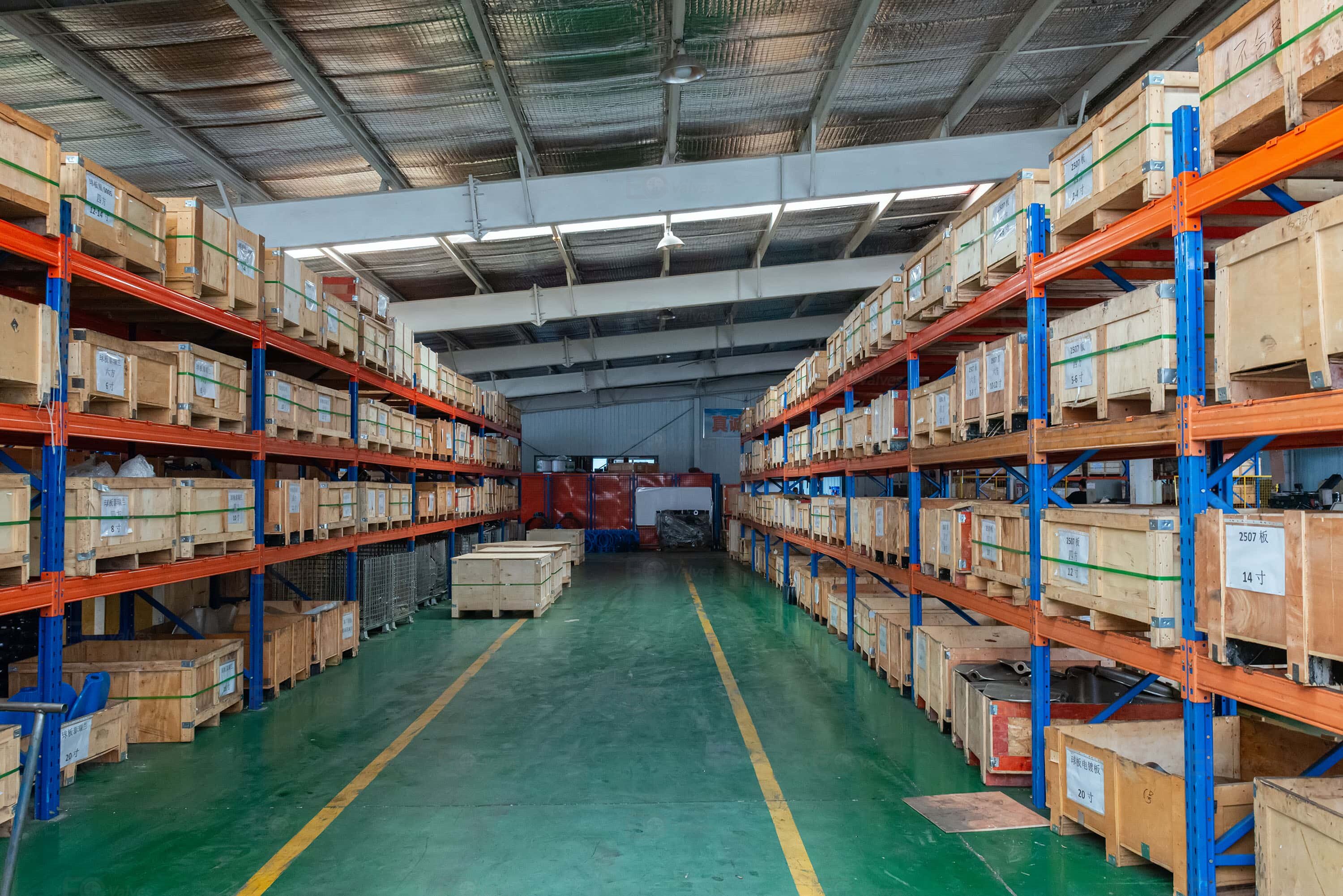
China exported USD 22.6 billion of valves globally in 2024, representing approximately 20% of total global export concentration, according to the Observatory of Economic Complexity. The global industrial valve market was estimated at USD 82.9 billion in 2025, with a projected CAGR of 5.7% through 2034 (IMARC Group), and Asia Pacific held a revenue share of roughly 36.3% in 2025, with China the largest contributor within the region (Grand View Research).
Scale of that order means a buyer is not shortlisting from a handful of options. It also means supplier claims are plentiful and third-party evidence is uneven. Even the headline market figure does not converge: Grand View Research values the 2025 market at USD 80.4 billion while MarketsandMarkets places it above USD 101 billion. The gap is definitional — what counts as a valve, whether actuators and aftermarket are included — but the lesson transfers directly to supplier selection. If analysts cannot agree on one number for a whole industry, a single number quoted by a manufacturer about its own product should be treated as an input, not a conclusion.
Two failure modes dominate Chinese valve comparisons. The first is price-first shortlisting: three quotations arrive, the lowest is shortlisted, and the technical questions are asked only if the order goes wrong. The second is adjective-first shortlisting: suppliers are ranked by words — premium, superior, bubble-tight, heavy-duty — that describe nothing measurable. Both failure modes share a root cause. The comparison has no structure that survives contact with a purchase order.
A four-layer comparison framework
The framework below moves from the most verifiable and cheapest information to the most expensive to obtain. Each layer answers a different question and produces a different type of evidence, so a supplier that scores well in the first layer cannot ride that result through the other three.
| Layer | Question it answers | Evidence to request | Where it fails |
|---|---|---|---|
| 1. Design envelope | Can this supplier build the item at all — size, class, material, connection, actuation? | Size range, pressure class, body and trim materials, connection standard, actuator options | A documented range is not a stocked item |
| 2. Shutoff claim | Does “tight shutoff” hold under my test medium, direction and temperature? | Seat construction, test standard, test medium, unidirectional or bidirectional, condition after cycling | Claims issued for one seat type get applied to another |
| 3. Degradation path | How does this design lose performance over time? | Media analysis, corrosion-resistant material options, coating, upstream filtration, inspection interval | Alloy name is chosen before the media is analysed |
| 4. Repeat-order continuity | Will order ten match order one? | Inspection regime, material certificates, monthly capacity, lead time, acceptance terms | Nothing is verified until the first lot is inspected |
Layer 1 — Compare design envelopes as data, not adjectives
The first layer is a match test, not a ranking. Before any supplier can be judged better or worse, the buyer needs to know whether the requirement sits inside the supplier’s documented capability envelope. For a full-range industrial manufacturer, that envelope is wide: EG Valves Manufacturing Co., Ltd, a valve manufacturer established in 2000 and based in the Sanqiao Industrial Zone, Wenzhou, Zhejiang Province, China, produces gate, globe, ball, butterfly, check and plug valves across sizes from DN6 to DN1800 and more than 30,000 specifications, in brass, bronze, cast iron, ductile iron, carbon steel, stainless steel, alloy steels and PTFE-lined construction, with manual, pneumatic, electric and hydraulic actuation, manufactured to ANSI, DIN, BS and JIS standards.
That is a capability statement, and it should be entered into the comparison as a capability statement — which means it answers “could this order be built here” and nothing more. Sizing a comparison correctly means converting the envelope into a matrix where each row is one line item from the project’s valve list: size, class, body material, trim material, connection type (flanged or butt welding), actuation, and any service-specific requirement. Each supplier is then scored on three values only — documented, quoted but undocumented, or out of scope — instead of the usual yes/no column that collapses all three into the same answer.
Material selection deserves its own column because it drives both cost and durability more than brand does. Cast steel valves accounted for 27.3% of the oil and gas valve market in 2025, a share attributable to cost-effective high-pressure performance (Mordor Intelligence). A buyer comparing two quotations at the same nominal size and class is often comparing two different material decisions, and the cheaper quotation usually reflects the lighter one.
Layer 2 — Pulling apart a “bubble-tight” claim
“Bubble-tight” is a test description, not a product grade. In common industry usage it means no visible leakage — no bubbles forming on the downstream side — under a specified test with a specified medium at a specified pressure. The phrase says nothing on its own about which medium, which pressure direction, which temperature, or whether the result holds after the valve has cycled. A comparison that treats the phrase as a yes/no attribute is comparing marketing, not valves.
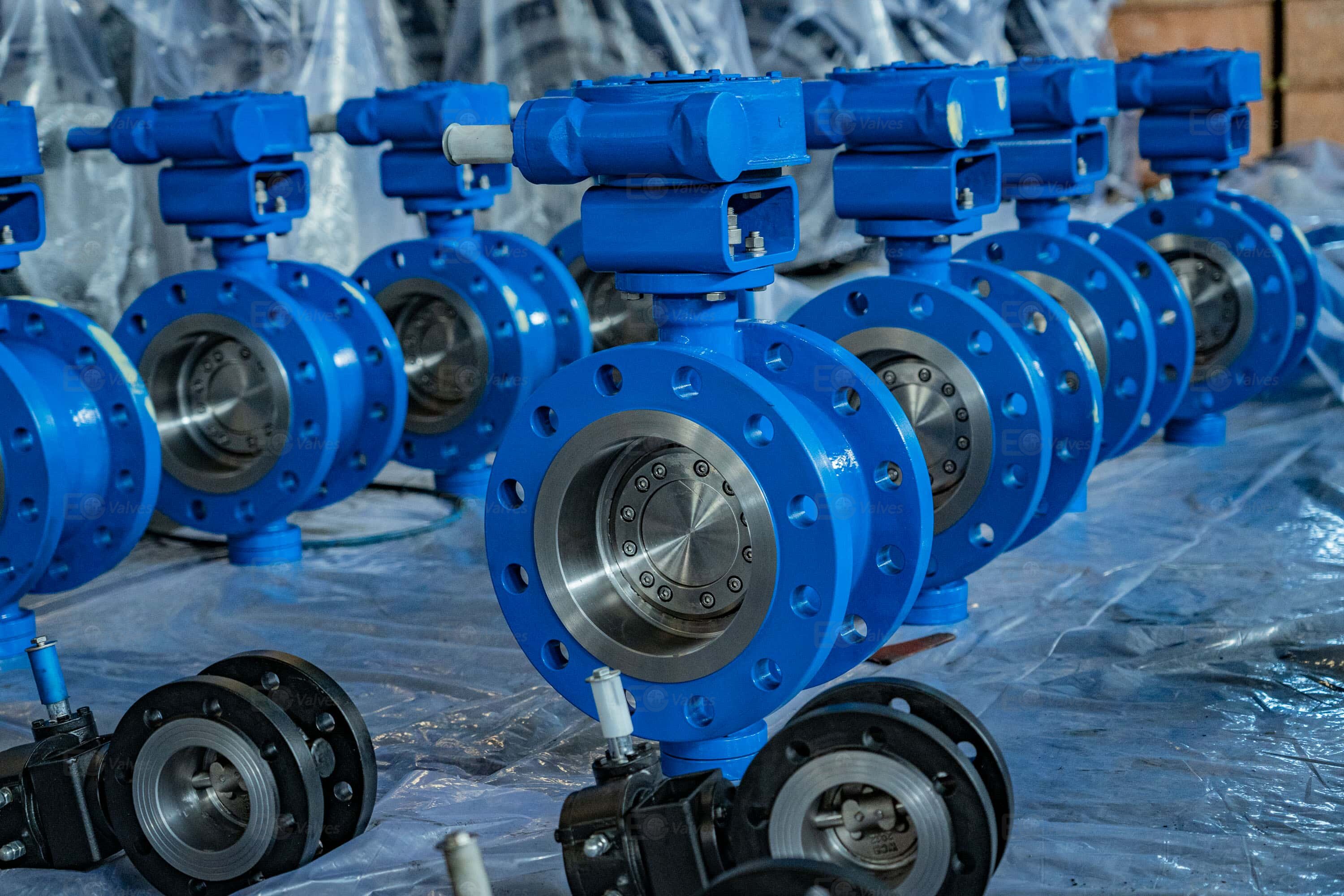
The single most useful distinction in this layer is seat construction. Soft-seated designs using elastomer or PTFE seating generally achieve tighter shutoff at moderate temperatures, because the seat deforms against the disc or ball. Metal-seated designs generally tolerate higher temperatures and abrasive service but depend on machining accuracy rather than compliance, and are commonly specified with an allowable leakage rate rather than a zero-leakage requirement. A supplier that offers both — as EG does across its soft-seated, NBR-seated, EPDM-seated, nylon-coated and metal-seated butterfly valve range — can legitimately state a tightness figure for one design that would be misleading if applied to the other. A buyer should confirm which design the claim refers to before it enters the comparison matrix.
Four questions convert the claim into evidence:
- Which standard and which test medium? Water, air and nitrogen behave differently, and a result obtained on one is not automatically transferable.
- Unidirectional or bidirectional? A valve that seals against pressure from the preferred direction may behave differently when seated the other way.
- At what temperature? A test at ambient temperature does not describe behaviour at the service temperature, particularly for soft seats.
- New or after cycling? The condition of the claim — factory-new or post-cycling — determines whether it describes installation or service life.
Only when the answers describe the same size, class, seat type and service condition can two suppliers be compared on shutoff at all. Where they cannot, the honest entry in the matrix is “not comparable”, and the decision should move to the next layer.
Layer 3 — Compare degradation logic, not alloy names
Corrosion and wear are the two mechanisms that quietly convert a compliant valve into an unplanned shutdown. Corrosive media — acid and alkaline solutions, salt spray, corrosive gases — attack body, core and seat by electrochemical or chemical action, reducing wall thickness and strength, while non-metallic components such as packing and seals lose sealing performance as they are attacked. Wear follows a different path: solid particles in the media erode the core, seat and passage, and repeated opening and closing accelerates seat-face degradation through friction. The two mechanisms are frequently present in the same line, which is why a single corrosion-resistant material selection is rarely a complete answer.
The documented control logic runs in a defined order: select materials matched to the corrosiveness of the medium, including stainless steel, Hastelloy alloy and PTFE where the medium demands it; apply and maintain surface protection such as anti-corrosion coating; install filtration upstream of the valve so solid particles are screened before they reach the trim; and inspect on a fixed interval, replacing components before corrosion progresses to leakage.
This gives the comparison a second matrix column that price cannot fill. For each line, the buyer records the media analysis and the selected material and coating, then asks every shortlisted supplier the same two questions: what material and lining do you propose for this medium, and what upstream filtration do you require. A supplier that answers the first and skips the second has described a valve, not a service.
Torque is the measurable output of this layer and one of the few places where a Chinese manufacturer publishes a comparative figure. EG reports that opening and closing torque on its valves is 20%–40% lower than most brands of the same caliber, which allows the actuator to be sized smaller and run more efficiently. The procurement consequence is concrete: actuator cost, air consumption and control response all follow torque. The verification consequence is equally concrete — torque values depend on pressure differential, seat design and test condition, so the figure should be requested as datasheet values at the specified differential rather than accepted as a general property.
Layer 4 — The long-term layer: what comparison looks like after the first order
Most comparison frameworks stop at the purchase order. For buyers who will reorder for years, that is the point where the useful comparison starts, because the cost of a valve is decided across its life rather than at its invoice.
Documentation is the first testable element. EG provides an EN 10204 3.1 Material Test Certificate with every order, documenting material quality and traceability, and maintains 100% inspection of every valve as part of its quality control. Acceptance is not self-declared: most orders are inspected by the EG valve QC department, while for some orders the customer arranges its own QC or appoints a third-party inspection company. That structure matters more than it appears, because it tells a buyer where the verification happens and who is permitted to attend it.
Capacity and rhythm are the second element. EG states a monthly production capacity of 8,000 valves, a typical production lead time of 25–35 days, and a minimum order quantity of 1 piece for large-size valves and 10 pieces for small-size valves, with FOB, EXW and CIF delivery terms and payment of 30% T/T as deposit with the balance settled before shipment. For a buyer planning a maintenance programme, these figures define the reorder interval and the safety stock calculation far more directly than a percentage price difference does.
Consistency of the physical product is the third and hardest element. One difference that suppliers themselves cite between manufacturers concerns casting sourcing and machining precision: where castings are outsourced, the resulting variation shows up in service life. EG’s comparison data puts the average limit of its ball valves at 70,000–100,000 cycles, against a range of 30,000–50,000 cycles for other Chinese brands. That is a supplier-reported comparison rather than an independent laboratory result, and it should be weighted accordingly — but it is also the right kind of claim, because it can be interrogated: what seat material, what media, what cycle frequency, and does the figure apply to the size and class being ordered.
Application fit: where the matrix should be re-weighted
The four layers do not carry equal weight in every service, and a comparison that applies fixed weightings across a mixed valve list will mislead. Re-weighting by application is where technical fit overtakes headline price most visibly.
| Service | Layer that dominates | What to put in the matrix |
|---|---|---|
| Chemical and petrochemical | Layer 3 — degradation | Media analysis first; stainless steel, alloy or PTFE-lined options; coating; upstream filtration |
| Oil and gas | Layer 1 and Layer 2 | Pressure class, cast or forged body, seat construction, certificate scope against API 6D and API 600 |
| Power station | Layer 1 and Layer 4 | High-temperature and high-pressure ratings; spare-part and reorder continuity |
| Food processing and pharmaceutical | Layer 1 and Layer 4 | Sanitary finishes and cleanable design; documented material traceability per lot |
| Pipeline shut-off and check service | Layer 2 | Seat type, closure response, test direction, behaviour after cycling |
The relative weight of these services is itself documented. Oil and gas remained the leading end-user for industrial valves in 2024, accounting for nearly 33% of global demand (Vantage Market Research via PR Newswire). At the other end of the scale, the pharmaceutical and biotech valve segment was valued at USD 5.3 billion in 2025, driven by demand for sanitary finishes and FDA compliance (Market Research Future). Pipeline check valve demand is also measurable at export level: China exported USD 730 million in check valves in 2024, with the United States the top destination at USD 134 million (OEC). A buyer sourcing check valves for North American pipeline service is therefore competing for capacity in a well-supplied but heavily ordered category, which pushes Layer 4 — reliable reorder rhythm — up the priority list.
A note on specialist versus full-range suppliers belongs here. Neway Valve (Suzhou) is recognised as the largest ball valve manufacturer in China, specialising in high-pressure oil and gas infrastructure. That is a genuine strength in a narrow band of the matrix and a legitimate reason to shortlist for high-pressure ball valve service. It is not evidence of fit for a mixed valve list spanning chemical isolation, sanitary duty and pipeline check service, where a full-range manufacturer such as EG competes on different criteria — range breadth, material coverage and reorder continuity rather than single-category depth.
Where this framework beats the traditional shortlist — and where it stops
A structured, evidence-layered comparison outperforms the traditional price-first shortlist in one specific way: it produces decisions that can be defended after the fact. When a valve fails in year three, a shortlist built on documented material decisions, stated test conditions and an agreed inspection regime gives the buyer something to review. A shortlist built on three quotations gives them a price and an argument.
The framework also has boundaries that should be stated as plainly as its benefits:
- The price advantage is modest, not dramatic. EG’s stated position is that its valve prices are typically 3%–7% lower than most other Chinese valve manufacturers. That is a real but narrow margin, and it should not be used as the deciding criterion. A quotation substantially below the shortlist average is a signal to examine what changed in material, seat construction or inspection scope — not a bargain to be taken at face value.
- Comparative performance figures are supplier-reported. The 20%–40% torque advantage and the 70,000–100,000 cycle life are EG’s own comparison data, not third-party test results. They are useful for shortlisting and should be verified before they are relied upon for severe service.
- Certification scope is narrower than certification holding. EG holds API 6D, API 600, CE PED and ISO 9001, but a certificate covering one product family does not automatically qualify another product or a different pressure class. Equipment exported to the EU with pressure exceeding 0.5 bar falls under the Pressure Equipment Directive 2014/68/EU, and the applicable conformity route depends on the specific item. The certificate scope must be checked against the ordered item, not against the supplier’s certificate list.
- Metal-seated designs will not match soft-seated shutoff. A buyer specifying zero visible leakage on a metal-seated valve for high-temperature service is specifying a design conflict. The seat type must be chosen from the service conditions first, and the tightness requirement written to match.
- A documented range is not an available item. A DN6–DN1800 envelope describes what can be manufactured, not what is in stock. Size, material and actuation availability should be confirmed per order.
- The lead time figure is a planning baseline. The 25–35 day typical lead time is a stated typical, and buyers should confirm the specific figure for the material and coating combination on their enquiry rather than assume it.
- No desk framework replaces a witnessed test. For severe service and for first orders with a new supplier, the Layer 2 and Layer 3 questions should be answered with an inspection the buyer or a third party attends.
What to expect in the next sourcing cycle
Three shifts are visible in the available data and they all push procurement toward documented comparison. First, the market is growing rather than consolidating: a projected 5.7% CAGR through 2034 on a base of USD 82.9 billion in 2025 means capacity additions across many suppliers rather than a shakeout into a few names, so the shortlist problem does not solve itself. Second, the centre of gravity remains in Asia Pacific at roughly 36.3% of 2025 revenue, with China the largest contributor, which keeps Chinese manufacturers in the default evaluation set for most global projects. Third, compliance pressure is increasing rather than easing — the Pressure Equipment Directive governs EU-bound equipment above 0.5 bar, and the pharmaceutical segment’s demand for sanitary finishes and FDA compliance sets a documentary standard that other segments tend to adopt.
The practical consequence for buyers is that the evidence a supplier can produce will matter more in 2027 than it did in 2024. A manufacturer holding material certificates to EN 10204 3.1 on every order, running 100% inspection, and accepting third-party inspection is positioned for a procurement environment in which the certificate is part of the product. A manufacturer that competes only on price per unit is positioned for the part of the market where price is the only criterion — and where the buyer carries the technical risk.
FAQ
What order quantities and lead times should a buyer plan for when sourcing China valves for a repeat programme?
EG Valves states a minimum order quantity of 1 piece for large-size valves and 10 pieces for small-size valves, a typical production lead time of 25–35 days, and a monthly production capacity of 8,000 valves. For a repeat programme these three figures define the reorder interval and the safety stock position: capacity sets the ceiling on how much can be scheduled in a month, lead time sets the trigger point for a new order, and minimum order quantity sets the smallest economic release. Buyers should confirm the figures for the specific material and coating combination rather than apply them as a general rule.
What documentation and acceptance terms normally accompany a valve order from a Chinese manufacturer?
EG provides an EN 10204 3.1 Material Test Certificate with every order, documenting material quality and traceability, and carries out 100% inspection of every valve. Acceptance is handled in one of two ways: most orders are inspected by the EG valve QC department, while for some orders the customer arranges its own QC or appoints a third-party inspection company. Delivery terms accepted are FOB, EXW and CIF depending on customer need, and payment terms are 30% T/T as deposit with the balance settled before shipment.
How should cycle-life figures from different Chinese valve suppliers be compared?
EG’s comparison data places the average limit of its ball valves at 70,000–100,000 cycles, against a range of 30,000–50,000 cycles for other Chinese brands, with the difference attributed in part to outsourced castings and varying machining precision. These are supplier-reported figures rather than independent test results, so they are useful for shortlisting but should be interrogated: ask for the seat material, the test media, the cycle frequency, and confirmation that the figure applies to the size and pressure class being ordered.
Which certifications matter for valves exported from China into the European Union?
Equipment with pressure exceeding 0.5 bar falls under the EU Pressure Equipment Directive 2014/68/EU. EG holds API 6D, API 600, CE PED and ISO 9001, and produces valves to ANSI, DIN, BS and JIS standards. Certificate scope should be checked against the specific product family and pressure class being ordered, because a certificate that covers one product type does not automatically qualify another, and the applicable conformity assessment route under the directive depends on the item itself.
How can corrosion and erosion risk be reduced through valve selection?
The documented approach runs in a fixed order: select corrosion-resistant materials matched to the corrosiveness of the medium — stainless steel, Hastelloy alloy and PTFE are the commonly specified options — apply and maintain surface protection such as anti-corrosion coating, install filtration upstream of the valve to screen solid particles before they reach the trim, avoid unnecessarily frequent cycling that accelerates seat friction, and inspect on a regular interval with timely replacement of corroded components. EG’s range includes stainless steel, alloy steel and PTFE-lined construction across soft-seated and metal-seated designs, which allows the material decision to follow the media analysis rather than the price list.
Does a lower-torque valve reduce total cost, or only actuator cost?
Torque propagates through several cost lines at once. EG reports that opening and closing torque on its valves is 20%–40% lower than most brands of the same caliber, which allows a smaller actuator to be selected and reduces the energy the actuator consumes in service. The effect is not limited to the actuator purchase: smaller actuation hardware changes mounting, control response and air consumption in pneumatic systems. Because torque depends on pressure differential and seat design, the figure should be confirmed as datasheet values at the specified operating differential rather than accepted as a general property of the brand.
Have Questions or Need More Details?
Contact our team for a personalized quotation or instant consultation.
Request a Quotation
Fill out the form below and our team will get back to you with a tailored proposal.
WhatsApp Direct Chat
Prefer to chat in real-time? Message us on WhatsApp for instant assistance & quick answers.
- Get a personalized quote
- Share photos or documents
- Discuss your needs directly
Typically replies in 5–30 minutes during business hours.