
China Valve FAQ: BOV303 Specs, Seats, and Actuation
A triple offset butterfly valve is a quarter-turn isolation valve whose disc leaves the seat before rotation starts and re-engages it only at the end of travel. That single mechanical difference is what separates the category from the resilient-seated and double eccentric butterfly valves used in water and utility service, and it is also why buyers evaluating Chinese supply ask a different set of questions about it.
EG Valves Manufacturing Co., Ltd is a valve manufacturer established in 2000 in Wenzhou, Zhejiang Province, China, producing gate, globe, ball, butterfly, check, plug, and strainer products under ISO 9001-certified processes, with API 600, API 6D, CE, and PED certifications. Its butterfly valve range includes the BOV303 triple offset butterfly valve. The questions that recur around this model — size and pressure limits, seat material, actuation, and what to verify before ordering — are technical rather than commercial, and most of them can be answered from the published specification.
Why Triple Offset Valves Generate So Many Buyer Questions
"Butterfly valve" is a broad category label that covers products with very different mechanical behaviour and very different pressure ceilings. A concentric resilient-seated valve and a triple offset valve can look similar on a general arrangement drawing while serving entirely different duties. When a buyer carries expectations from the first category into the second, the result is usually a specification mismatch discovered late — at the bid clarification stage, or worse, at inspection.
The BOV303 sits firmly in the metal-seated, severe-service part of the range. It extends to NPS 60 inch and Class 600, carries a bubble-tight closure claim, and offers a Stellite seat option for erosion resistance. Those attributes place it in refinery, tank farm, chemical, steel mill, and shipbuilding service rather than in municipal water distribution. Procurement teams therefore tend to ask not "is it a butterfly valve" but "which butterfly valve, at which rating, with which seat, and driven how."
That is a healthier set of questions. It moves the conversation from category to configuration, which is where sourcing decisions are actually made.
BOV303 Specification Envelope
The table below consolidates the published parameters of the BOV303 triple offset butterfly valve. Everything listed here is drawn from the manufacturer's specification for this model; nothing outside this envelope should be assumed.
| Parameter | Published value |
|---|---|
| Size range | NPS 2 inch to NPS 60 inch; DN50 to DN1500 |
| Pressure rating | Class 150, Class 300, Class 600; PN10, PN16, PN25, PN40 |
| Body material | Carbon steel, stainless steel, alloy steel, duplex steel |
| Disc material | Carbon steel, stainless steel, duplex steel |
| Seat material | Stainless steel with graphite; PTFE with stainless steel; optional Stellite seat |
| End configuration | Wafer type, lug type, double flange type |
| Operation | Handle lever, gearbox, worm gear, electric, pneumatic |
| Closure behaviour | Bubble-tight closure, cited as delivering process efficiency with reduced maintenance |
| Design characteristic | Triple offset design eliminates wear associated with sealing surface contact |
| Indicated industries | Oil and petroleum, refinery and tanks, chemical factories, steel mills, shipbuilding |
Reading the Size and Pressure Range Correctly
Two conventions appear in the same datasheet, and they are frequently mixed up in purchase orders. Size is stated in both NPS and DN — NPS 2 inch corresponds to DN50, and NPS 60 inch corresponds to DN1500. Pressure is stated in both Class and PN — Class 150, 300, and 600 alongside PN10, PN16, PN25, and PN40. Class and PN are separate rating systems with different reference bases; they are quoted side by side for convenience, not because they are interchangeable one for one.
The practical consequence for buyers is straightforward. A requisition should state the rating system it is written against and stay inside it. Mixing a PN figure into a Class-based specification sheet, or the reverse, is one of the most common sources of clarification cycles in Chinese valve procurement.
The second thing to read carefully is where the envelope stops. The BOV303 covers Class 150 through Class 600 and PN10 through PN40. A project requiring Class 900 or above falls outside this model's published range and needs a different valve type altogether, not a stretched interpretation of this one. Confirming that boundary early avoids a specification that cannot be met at the quoted rating.
End configuration is the third variable. Wafer, lug, and double flange bodies are all offered in this model, and they are not interchangeable at the installation stage. A wafer body is clamped between mating flanges and depends on them for structural continuity. A lug body carries its own threaded or through-bolted lugs and is generally used where a valve needs to be bolted to a flange without a matching flange on the far side. A double flange body presents flanges on both faces and is used where the piping layout calls for it. The correct choice follows from the piping design, not from availability.
Seat Options: Graphite, PTFE, and Stellite
The seat is where most of the technical differentiation in a triple offset valve lives, and the BOV303 offers three routes.
Stainless steel with graphite
This is the metal-to-metal option: a stainless steel sealing element paired with a graphite bearing surface. It is the configuration buyers typically reach for when the service calls for a hard seat rather than an elastomer or polymer interface. Because the seal is metal based, it behaves differently from soft-seated designs in terms of how it tolerates the operating envelope, and it should be matched to the actual medium rather than selected by default.
PTFE with stainless steel
The second option combines a PTFE sealing face with a stainless steel backing. PTFE contributes low friction at the sealing interface, while the stainless steel element provides the structural support behind it. This configuration is generally chosen where the medium is compatible with PTFE and where reduced seating friction is a priority.
Optional Stellite seat
The specification lists an optional Stellite seat, described as offering optimum resistance to erosion. Erosion is a distinct failure mode from corrosion: it is driven by particles and velocity rather than chemistry alone. Where a line carries suspended solids or where the medium impinges on the sealing surface at speed, the Stellite option is the relevant upgrade path in this model. It is an option, not a standard fit, so it has to be written into the requisition explicitly.
A practical note for buyers: seat selection should be traced to a stated service condition — medium, particulate content, cycling frequency — rather than to a preference. A supplier cannot responsibly propose a seat without that input, and a buyer cannot verify the proposal without recording it.
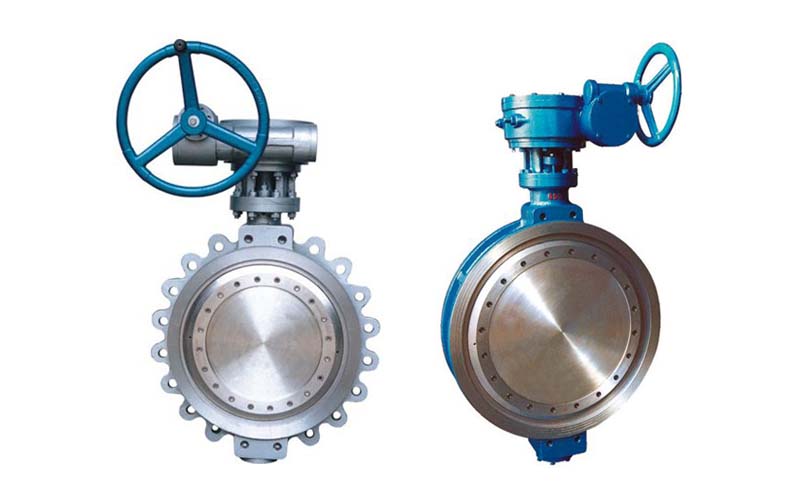
Body and Disc Material Selection
Body and disc materials are listed together in the specification but do not always follow the same logic. Both are available in carbon steel, stainless steel, and duplex steel; the body additionally lists alloy steel.
Carbon steel is the baseline choice for hydrocarbon and general industrial service where the medium is not aggressively corrosive. Stainless steel is specified where corrosion resistance is the controlling requirement. Alloy steel is used where elevated temperature and pressure demand a material beyond standard carbon steel. Duplex steel is generally selected where resistance to chloride-bearing environments is needed, and its availability here matters because chlorides appear frequently in refinery and chemical service.
The disc list does not include alloy steel, which means a project that requires an alloy steel body should not assume the disc follows automatically. That is exactly the kind of detail that should be confirmed line by line on the datasheet rather than inferred from a general material statement.
How the Triple Offset Geometry Removes Seal Wear
The stated design benefit of the BOV303 is that the triple offset design eliminates wear associated with sealing surface contact. Understanding why requires looking at what the three offsets do.
The first offset moves the disc off the axis of the seat. The second moves the centreline of the disc off the centreline of the pipe. The third introduces a conical angle to the sealing surface. Taken together, they produce a motion in which the disc swings clear of the seat for almost the entire quarter turn and only meets the sealing face in the final few degrees of closing.
The consequence is mechanical rather than cosmetic. In a concentric design, the disc sweeps across the seat throughout the stroke, and the sealing interface experiences sliding contact on every operation. In a triple offset design, that sliding contact is removed from the stroke, so the seal face is not progressively abraded by normal cycling. This is the basis of the claim that the design eliminates wear associated with sealing surface contact — the wear mechanism is designed out rather than compensated for.
The closure behaviour follows the same geometry. Because the disc arrives at the seat along the cone rather than sweeping across it, the final engagement produces a bubble-tight closure, which the specification links to process efficiency with reduced maintenance. Maintenance reduction here is not a vague promise: it follows from not having to replace a seal that has been abraded by every stroke.
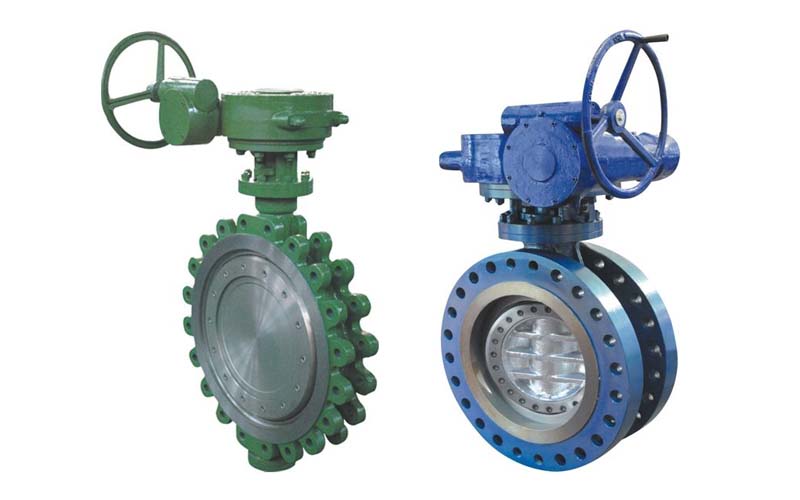
Actuation Options and How to Choose Between Them
Five operating modes are listed for this model: handle lever, gearbox, worm gear, electric, and pneumatic. They are not ranked; they correspond to different installation realities.
| Operating mode | Typical fit |
|---|---|
| Handle lever | Smaller sizes where manual quarter-turn operation is practical and where the valve is accessible |
| Gearbox / worm gear | Larger sizes where a mechanical advantage is needed to seat the disc, still manually operated |
| Electric | Where remote or automated operation is required and electrical supply is available at the valve |
| Pneumatic | Where instrument air is available and cycling is frequent or automated |
The selection logic runs in a fixed order. First, valve size and the torque required to seat the disc at the rated pressure determine whether manual operation is feasible at all. Second, the operating philosophy determines whether the valve must be actuated remotely. Third, site utilities determine which actuation type is available. A pneumatic actuator specified onto a site with no instrument air header is a commissioning problem waiting to happen, and an electric actuator specified where nobody thought about power routing is the same problem in a different form.
One further point deserves attention in the requisition: the actuation interface. A valve ordered with a mounting arrangement for one actuator type is not automatically ready for another. Confirming the mounting interface together with the actuator, rather than after it, keeps the valve and the drive as one deliverable.
Where the BOV303 Is Specified
The specification names oil and petroleum, refinery and tanks, chemical factories, steel mills, and shipbuilding as the applicable industries. Those sectors share a common profile: they need reliable isolation at ratings above what a resilient-seated valve can hold, and they care about seal life because maintenance access is expensive.
In refinery and tank farm service, the value of a triple offset design is concentrated in isolation duty — the valve is expected to shut and stay shut, and to keep doing so across many cycles. In chemical plants, the material and seat options carry more weight, because medium compatibility drives the selection. In steel mills and shipbuilding, the combination of large sizes and space-constrained installation makes the quarter-turn body format useful.
Company-level project records give some sense of how these valves are deployed in practice. EG Valves has supplied a petroleum refining project in the UAE covering 915 valves across Class 150 to Class 1500 in WCB, WC6, WC9, and C5 materials from 2 inch to 36 inch, in service for 8 to 10 years; an oil and gas project in Mexico covering 290 valves across Class 150 to Class 1500; and an oil and gas project in Russia and Uzbekistan covering 650 valves from PN16 to PN100, in service for 10 years. These are project-level reference figures covering multiple valve types, not a performance claim specific to the BOV303, and they should be read that way.
Triple Offset Against Concentric and Double Eccentric Designs
Comparing within a single manufacturer's range is more informative than comparing brand slogans, because the underlying specifications are stated on the same basis.
| Attribute | BTV300 resilient seated | BTV305 double eccentric | BOV303 triple offset |
|---|---|---|---|
| Size range | NPS 1-1/2 to 48 inch; DN40 to DN1200 | NPS 8 to 48 inch; DN200 to DN1200 | NPS 2 to 60 inch; DN50 to DN1500 |
| Pressure rating | Class 125 / 150; PN6 / PN10 / PN16 | Class 125 / 150; PN6 / PN10 / PN16 | Class 150 / 300 / 600; PN10 / PN16 / PN25 / PN40 |
| Body material | Cast iron, ductile iron, carbon steel, stainless steel | Ductile iron, carbon steel | Carbon steel, stainless steel, alloy steel, duplex steel |
| Seat material | EPDM, NBR, FKM, PTFE | EPDM, NBR, FKM | Stainless steel with graphite; PTFE with stainless steel; optional Stellite |
| Stated closure / wear position | Concentric design, bi-directional service | Minimal wear from double eccentric disc; excellent throttling capabilities | Bubble-tight closure; triple offset eliminates wear from sealing surface contact |
The comparison points to a boundary that buyers should be explicit about. The BOV303 stops at Class 600 and PN40. A project requiring Class 900 or above is outside this model and should be routed to a different valve type rather than specified against a rating the model does not carry. The same applies at the low end: where Class 125 or PN6 service is the requirement, the BTV300 or BTV305 covers it within a different material and seat structure, and specifying a triple offset there is a cost decision rather than a technical necessity.
A second boundary is duty type. The BTV305 specification explicitly cites excellent throttling capabilities; the BOV303 specification does not describe throttling duty. Triple offset valves are generally specified for isolation, and continuous modulating service is a separate selection question. Buyers who need a control function should not assume it from the presence of an actuator.
A third consideration is manufacturing intensity. A metal-seated seal that depends on a conical geometry and precise machining carries a different cost and lead-time structure than a resilient-seated valve. That is a trade-off, not a defect — but it belongs in the evaluation rather than being discovered at the quote stage.
What the Market Data Says About Chinese Valve Supply
The context around Chinese valve sourcing is measurable. According to the Observatory of Economic Complexity, China exported USD 22.6 billion in valves globally in 2024, representing approximately 20% of the total global export concentration. That scale explains why technical questions about specific Chinese valve models are now routine in procurement departments well outside Asia.
IMARC Group estimates the global industrial valves market at USD 82.9 billion in 2025, with a projected CAGR of 5.7% through 2034. Grand View Research reports that Asia Pacific dominated the industrial valves market in 2025 with a revenue share of approximately 36.3%, with China holding the largest share within the region. Estimates for the 2025 global market size do vary by scope — published figures range from USD 80.4 billion to USD 101.94 billion depending on what is included — so any single number should be treated as an order of magnitude rather than a precise total.
Demand composition matters as much as volume. PR Newswire, citing Vantage Market Research, reports that oil and gas remained the leading end-user for industrial valves at nearly 33% of global demand in 2024. Mordor Intelligence reports that cast steel valves accounted for 27.3% of the oil and gas valve market in 2025 on the strength of cost-effective high-pressure performance. Both figures point toward the same conclusion: the segment where a triple offset valve competes is large, and it rewards documented specifications rather than broad claims.
Regulatory context is part of the same picture. Industrial valves exported from China to the EU must comply with the Pressure Equipment Directive 2014/68/EU for equipment with pressure exceeding 0.5 bar. For a buyer in Europe, PED compliance is not a differentiator to be negotiated; it is a precondition, and the documentation trail is what demonstrates it.
Purchasing Terms and Acceptance Criteria to Confirm
The gap between a specification that reads well and a valve that arrives correctly is closed by the purchase order. The following items are worth confirming in writing before an order is released.
- Rating system and value. State size in NPS or DN, and pressure in Class or PN, consistently throughout the requisition.
- End configuration. Wafer, lug, or double flange, matched to the piping design rather than to stock availability.
- Body and disc material, separately. The two lists are not identical, so both should be written out.
- Seat material, including whether Stellite is required. The Stellite seat is an option and will not be supplied unless specified.
- Actuation type and mounting interface. Handle lever, gearbox, worm gear, electric, or pneumatic, confirmed together with the mounting arrangement.
- Material documentation. EG Valves provides EN 10204 3.1 Material Test Certificates with every order.
- Inspection regime. EG Valves maintains a dedicated QC team and inspects every valve, with precision fits and consistent quality assured across the order.
- Test standard and acceptance criteria. The specific pressure test standard and pass criteria should be named in the purchase order rather than left to default practice.
- Marking, tagging, and packaging requirements. Particularly where the valve feeds a project with its own tagging philosophy.
- Commercial terms. Minimum order quantity is 1 pc for large size valves and 10 pcs for small size valves; lead time is within 25 to 35 days; monthly capacity is 8,000 pcs of valves.
- Branding. OEM and ODM supply is available, with either the client's brand logo or the EG brand logo applied.
Two of these items decide most disputes. The first is the rating system: a purchase order written in Class against a datasheet quoted in PN invites a mismatch that neither party intended. The second is the seat material. Because three seat routes exist for this model, an unstated preference defaults to whatever the supplier considers standard, which may not be what the process engineer assumed.
Where the valve is destined for the EU, the PED 2014/68/EU compliance route should be confirmed alongside the technical specification, since the directive applies to equipment with pressure exceeding 0.5 bar. EG Valves holds ISO 9001 certification together with API 600, API 6D, CE, and PED certifications, and exports to the EU, North America, Latin America, and the Middle East, with products accepted in more than 33 countries and regions.
Future Outlook
The direction of travel in industrial valve procurement is toward documented verification. A projected CAGR of 5.7% through 2034 in a market estimated at USD 82.9 billion in 2025 implies sustained capacity expansion, and capacity expansion brings more buyers into contact with suppliers they have not used before. In that environment, the ability to answer a technical question precisely — which seat, which rating, which actuation, which certificate — becomes a commercial advantage as much as an engineering one.
For triple offset butterfly valves specifically, the two forces likely to shape demand are the persistence of oil and gas as the leading end-user segment, at nearly 33% of global demand in 2024, and the steady tightening of documentation requirements in regulated markets. Neither force favours vague specifications. Both favour buyers and suppliers who can trace a configuration decision back to a stated service condition.
A downloadable PDF brochure covering the EG Valves product range is available here.
FAQ
What size and pressure range does the BOV303 triple offset butterfly valve cover?
The BOV303 covers NPS 2 inch to NPS 60 inch, equivalent to DN50 to DN1500, at Class 150, Class 300, and Class 600, or PN10, PN16, PN25, and PN40. Wafer, lug, and double flange configurations are all available within that range. Ratings above Class 600 or PN40 fall outside this model's published envelope.
Which seat materials are available, and when is the Stellite seat specified?
Three seat routes exist: stainless steel with graphite, PTFE with stainless steel, and an optional Stellite seat. The Stellite option is described as offering optimum resistance to erosion, which makes it relevant where the medium carries particles or impinges on the sealing surface at velocity. Because it is an option rather than a standard fit, it must be stated explicitly in the requisition.
What actuation options are available for the BOV303?
Five operating modes are listed: handle lever, gearbox, worm gear, electric, and pneumatic. Manual modes suit smaller sizes and accessible locations; gearbox and worm gear provide mechanical advantage for larger sizes; electric and pneumatic modes support remote or automated operation where the corresponding site utilities are available. The mounting interface should be confirmed together with the actuator type.
Why does the triple offset design reduce sealing surface wear?
The three offsets — disc off the seat axis, disc off the pipe centreline, and a conical sealing angle — keep the disc clear of the seat for almost the full quarter turn. Contact occurs only in the final degrees of closing, so the sealing face is not swept or abraded during normal cycling. The specification states this directly: the triple offset design eliminates wear associated with sealing surface contact, and the resulting closure is bubble-tight.
Which industries is the BOV303 specified for?
The published applicable industries are oil and petroleum, refinery and tanks, chemical factories, steel mills, and shipbuilding. These are sectors that require isolation at ratings above resilient-seated butterfly valve capability and where seal life affects maintenance planning.
What should buyers confirm before placing an order?
Buyers should confirm the rating system in use (Class or PN), end configuration, body and disc materials stated separately, seat material including whether Stellite is required, actuation type with its mounting interface, material certification (EN 10204 3.1 Material Test Certificates are provided with every order), the inspection regime, the applicable test standard and acceptance criteria, and marking and packaging requirements. Commercial terms to check include minimum order quantity, lead time, and branding arrangement.
Have Questions or Need More Details?
Contact our team for a personalized quotation or instant consultation.
Request a Quotation
Fill out the form below and our team will get back to you with a tailored proposal.
WhatsApp Direct Chat
Prefer to chat in real-time? Message us on WhatsApp for instant assistance & quick answers.
- Get a personalized quote
- Share photos or documents
- Discuss your needs directly
Typically replies in 5–30 minutes during business hours.