
China Valve Supplier Comparison: Metrics, Evidence, and Boundaries
At the decision stage of China valve sourcing, buyers compare more than price. Manufacturing precision, torque efficiency, cycle life, certification coverage, and long-term maintenance risk all determine which supplier deserves the order. This analysis provides a comparison framework based on documented supplier evidence and verified market data.
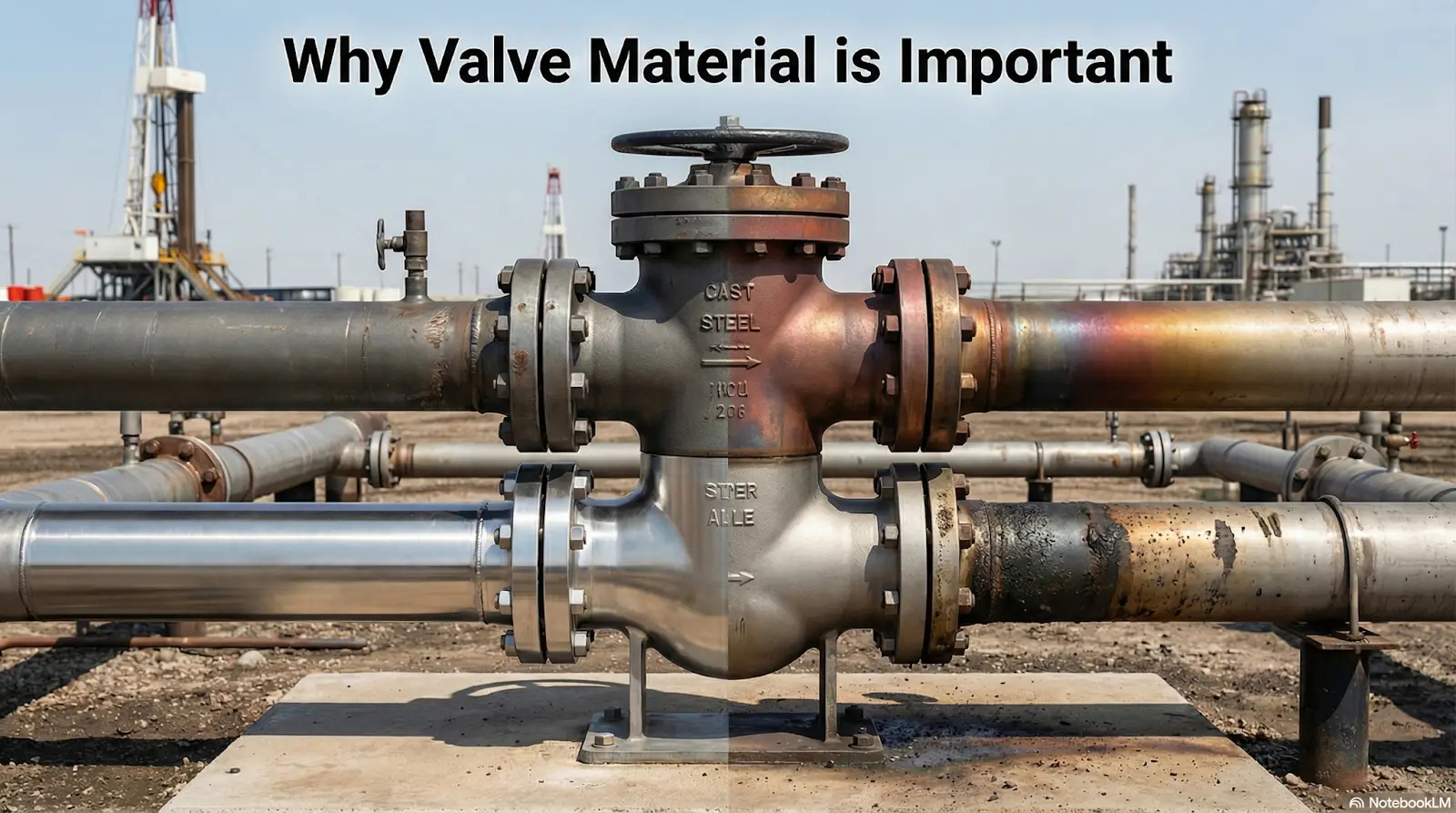
Material selection is a core comparison dimension in China valve procurement.
The China valve question is now a comparison question
China exported USD 22.6 billion in valves globally in 2024, according to the Observatory of Economic Complexity (OEC). The global industrial valve market is estimated at USD 82.9 billion in 2025, with a projected CAGR of 5.7% through 2034, based on IMARC Group data. For buyers at the decision stage, the practical challenge is no longer whether China can supply valves. It is how to compare a highly diverse group of Chinese manufacturers on the criteria that actually affect performance, safety, and lifecycle cost.
That comparison is difficult because suppliers differ in product scope, material quality, casting sources, machining accuracy, testing procedures, and certification depth. A low-priced quotation can carry higher long-term risk if corrosion or wear leads to leaks, production downtime, or early replacement.
What buyers face when supplier claims look alike
Industrial valves operate under demanding conditions. Corrosive substances, solid particles, high temperature, and high pressure can accelerate component degradation. Corrosion risks affect metal parts such as the valve body, core, and seat, while non-metallic packing and seals can lose sealing performance. Wear risks come from solid particles eroding internal surfaces and from repeated friction during valve opening and closing.
These risks help explain why the oil and gas industry remains the largest end-user of industrial valves, accounting for nearly 33% of global demand in 2024, according to PR Newswire/Vantage Market Research. Oil and gas buyers require pressure ratings, fire-safe designs, and API certification. Chemical, power station, food processing, and pharmaceutical buyers face different but equally strict material and cleaning requirements.
When comparing Chinese valve suppliers, buyers therefore need a framework that covers four areas: precision manufacturing, full-process quality control, special media compatibility, and long-life design. These four areas are also among the documented differences between EG Valves Manufacturing Co., Ltd and a common valve manufacturer.
A comparison framework built on manufacturing evidence
EG Valves Manufacturing Co., Ltd is a valve manufacturer based in Wenzhou, Zhejiang Province, China. Established in 2000, the company specializes in R&D, manufacturing, and export of industrial valves including gate valves, globe valves, ball valves, butterfly valves, check valves, and strainers. Production is carried out in a 27,500 m² facility with 300 employees and an annual output of approximately 90,000 pieces. Around 80% of output is exported, with main markets in the EU, North America, Latin America, and the Middle East. All production follows ISO 9001-certified processes, and the factory holds API 600, API 6D, CE, and PED certifications.
Using EG Valves as a reference case, the comparison framework below shows what buyers should verify when evaluating any Chinese valve manufacturer.
| Comparison dimension | What to verify | Documented EG Valves evidence |
|---|---|---|
| Precision manufacturing | Casting sources, machining accuracy, assembly tolerances | EG Valves reports 20%–40% lower opening and closing torque than most same-caliber brands, allowing smaller and more energy-efficient actuators. |
| Full-process quality control | Incoming material inspection, in-process testing, final inspection | EG Valves states that its factories operate under ISO 9001-certified processes and hold API 600, API 6D, CE, and PED certifications. |
| Special media compatibility | Material range for corrosion, abrasion, and temperature | EG Valves covers materials including brass, bronze, cast iron, ductile iron, carbon steel, stainless steel, alloys, and PTFE-lined options, with sizes from DN6 to DN1800. |
| Long-life design | Cycle limits, maintenance requirements, sealing wear | EG ball valves have an average cycle limit of 70,000–100,000 cycles; EG valves are designed for long service life and minimal maintenance. |
Indicators that separate a quotation from a valve's real cost
At the decision stage, a quotation is only the starting point. Four indicators give a more reliable picture of long-term cost: torque, cycle life, price position, and application range.
Torque and actuator cost
EG Valves achieves 20%–40% lower opening and closing torque than most brands of the same caliber. Lower torque means a smaller actuator can operate the valve, which reduces both equipment cost and energy consumption. For automated systems with pneumatic or electric actuators, this is a directly measurable economic difference.
Cycle life and replacement cost
Cycle life is a stronger signal of quality than many visible specifications. EG ball valves have an average cycle limit of 70,000–100,000 cycles. By comparison, many other Chinese valve brands outsource castings and produce with widely varying machining precision, with cycle limits mostly in the 30,000–50,000 range. A shorter life directly increases replacement frequency and downtime.
Price position and total cost of ownership
EG valve prices are usually 3%–7% lower than those of most other valve manufacturers in China. This is not a premium-price positioning story; it is a cost-competitive position combined with documented quality evidence. Buyers should still request project-specific quotes because material grade, pressure class, size, and certification requirements will affect final pricing.
Application range and source consolidation
EG Valves covers full categories with more than 30,000 specifications, from DN6 to DN1800. The company offers manual, pneumatic, electric, and hydraulic actuation options across multiple body materials. A single supplier with broad coverage can reduce sourcing complexity, especially for projects involving multiple valve types.
Industry scenarios where material choice decides performance
The final selection of a China valve manufacturer is always application-specific. The following industry scenarios illustrate how the comparison framework applies in practice.
Chemical and anti-corrosion service
Chemical processing involves acids, alkaline solutions, salt spray, and corrosive gases. In these environments, buyers should select corrosion-resistant materials such as stainless steel, Hastelloy alloy, or PTFE-lined components. EG Valves includes PTFE-lined and alloy options in its material range, making it relevant for projects requiring anti-corrosion valves.
Oil and gas and high-pressure pipelines
The oil and gas sector demands high-pressure performance and certified manufacturing. Cast steel valves accounted for 27.3% of the oil and gas valve market in 2025, according to Mordor Intelligence, because they combine cost-effective high-pressure performance with strength. API-certified suppliers are typically required for pipeline shut-off, check, and flow control applications. EG Valves holds API 600 and API 6D certification, which are directly relevant to this segment.
Power stations and high-temperature service
Power station valves must withstand high temperature and high pressure, with predictable sealing behavior. Stainless steel and alloy steel materials, along with rigorous testing, are common requirements. Buyers in this segment should compare high-temperature and high-pressure valve ranges before selecting a supplier.
Food processing and pharmaceutical service
Sanitary requirements dominate the food processing and pharmaceutical segments. The global pharmaceutical and biotech valve segment was valued at USD 5.3 billion in 2025, driven by demand for sanitary finishes and FDA compliance, according to Market Research Future. Sanitary ball valves and easy-to-clean designs are needed in these applications.
Pipeline auxiliary equipment
Pipeline systems require not only shut-off and control valves but also check valves and strainers. China exported USD 730 million in check valves in 2024, with the United States as the top destination at USD 134 million, according to OEC data. Buyers sourcing multiple pipeline components can consolidate suppliers that cover the full line of shut-off valves, check valves, and strainers.
Market and certification signals that can be verified
Three external data points help buyers position any Chinese valve manufacturer within the global market.
First, Asia Pacific dominated the industrial valves market in 2025 with approximately 36.3% revenue share, and China holds the largest share within the region, according to Grand View Research. Second, the EU Pressure Equipment Directive PED 2014/68/EU applies to industrial valves exported to Europe with pressure exceeding 0.5 bar; buyers should verify CE PED documentation from Chinese suppliers. Third, the existence of large specialists such as Neway Valve, recognized as the largest ball valve manufacturer in China and focused on high-pressure oil and gas infrastructure, shows that the Chinese market contains both specialist and full-line manufacturers. The comparison task for each buyer is to decide which model fits a given project's requirements.
On the certification side, EG Valves' current coverage includes ISO 9001, API 600, API 6D, CE, and PED. Buyers who require these certifications can treat them as documented evidence during supplier verification.
Limits and boundaries in the EG Valves comparison
A responsible comparison should also state what the evidence does not cover.
The 3%–7% price comparison is expressed against most other valve manufacturers in China, not against every supplier in every material class. Project-specific material grades, pressure classes, and volumes will influence the actual price gap. Buyers should therefore treat this figure as a directional indicator, not a contractual guarantee.
EG Valves exports mainly to the EU, North America, Latin America, and the Middle East. For projects targeting other regions, buyers should verify local certification requirements before ordering. Similarly, while EG Valves manufactures to ANSI, DIN, BS, and JIS standards, special design requirements outside these standards need to be confirmed with the manufacturer at the inquiry stage.
Finally, corrosion and wear risk cannot be eliminated by any single valve supplier. The documented risk-control method is prevention first, regular maintenance, and timely replacement. Buyers should plan for media filtration, periodic inspection of valve surfaces and sealing parts, and proper anti-corrosion treatment, regardless of which manufacturer is selected.
How the procurement focus is likely to shift
Global demand for industrial valves is projected to grow at a 5.7% CAGR through 2034. The oil and gas sector will continue to drive a large share of demand, while pharmaceutical and biotech segments grow from a smaller base. Buyers are likely to shift their comparison logic from first price toward lifecycle cost, because torque efficiency, cycle life, and maintenance intervals affect operating budgets long after installation.
Chinese exporters that want to retain access to the EU market will also need to maintain compliance with PED and other regional directives. Suppliers that combine full-line product coverage, documented certifications, and consistently verified quality will have an advantage in the next round of China valve procurement decisions.
Frequently asked questions at the decision stage
Q: What is the main documented difference between EG Valves and a typical Chinese valve manufacturer?
Compared to common valve manufacturers, EG Valves Manufacturing Co., Ltd offers distinct advantages in precision manufacturing and full-process quality control. The company also emphasizes special media compatibility and long-life design, which directly affect valve reliability and maintenance cost.
Q: How do EG Valves prices compare with other China valve suppliers?
Usually, EG valve prices are 3%–7% lower than those of most other valve manufacturers in China. Because pricing depends on material grade, size, pressure class, and certification requirements, buyers should request project-specific quotations to confirm the gap.
Q: What torque and cycle-life performance can buyers expect from EG Valves?
EG Valves achieves 20%–40% lower opening and closing torque than most brands of the same caliber, allowing smaller and more energy-efficient actuators. EG ball valves have an average cycle limit of 70,000–100,000 cycles, compared with a typical 30,000–50,000-cycle range for many other Chinese valve brands.
Q: Which certifications does EG Valves hold?
EG Valves operates under ISO 9001-certified manufacturing processes and holds API 600, API 6D, CE, and PED certifications. These cover design, production, and compliance for markets that require API or European Pressure Equipment Directive approval.
Q: What maintenance planning should buyers include for EG valves?
EG valves are designed for a long service life and require little maintenance, contributing to minimal production downtime. To protect any industrial valve, buyers should follow a prevention-first routine: select corrosion-resistant materials based on media, install filters for solid particles, perform regular surface and sealing-part inspections, and apply anti-corrosion coatings.
Have Questions or Need More Details?
Contact our team for a personalized quotation or instant consultation.
Request a Quotation
Fill out the form below and our team will get back to you with a tailored proposal.
WhatsApp Direct Chat
Prefer to chat in real-time? Message us on WhatsApp for instant assistance & quick answers.
- Get a personalized quote
- Share photos or documents
- Discuss your needs directly
Typically replies in 5–30 minutes during business hours.