
China to Germany Logistics: DDP shipping with VAT registration explained
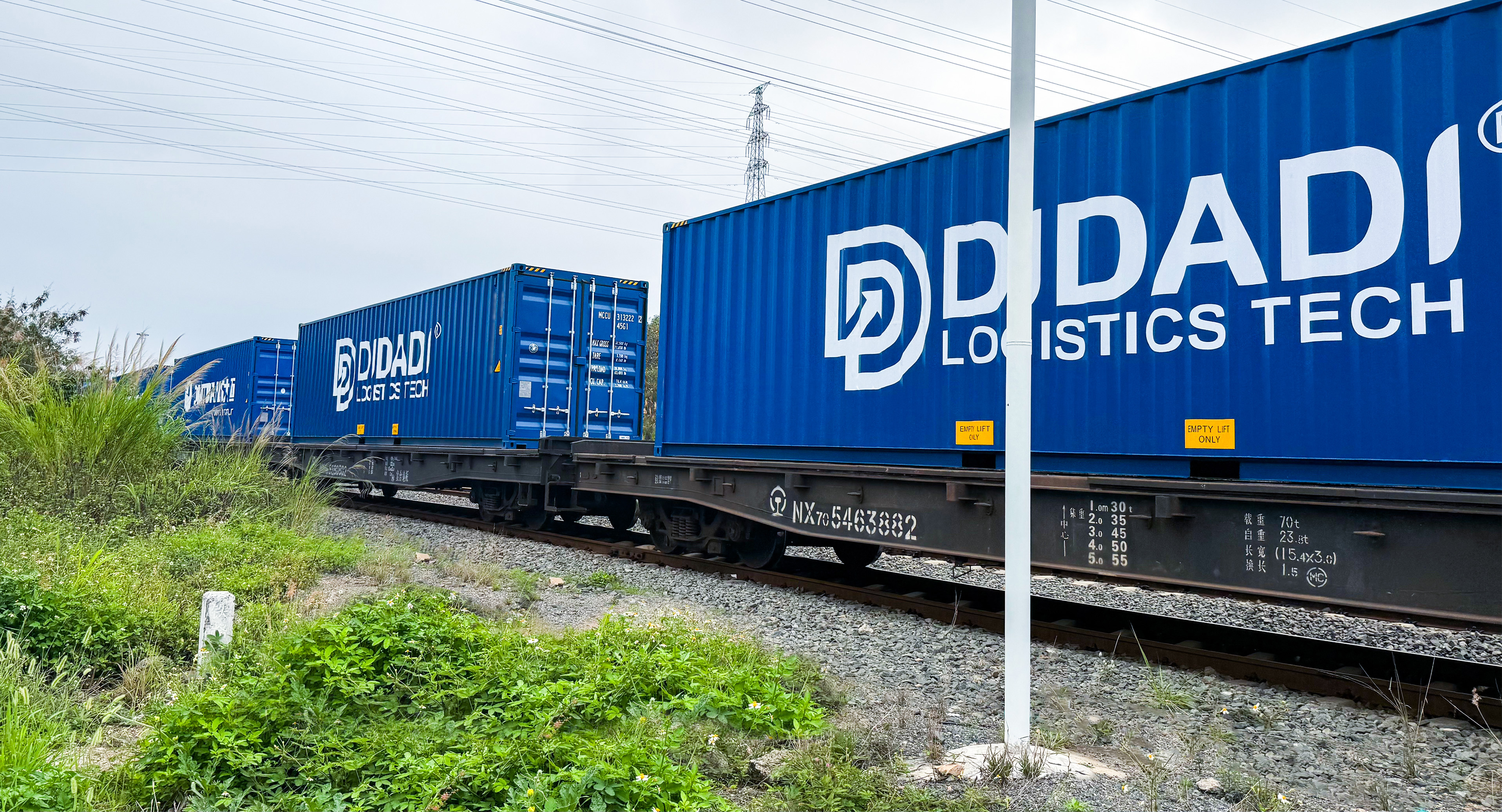
China to Germany logistics now operates at the intersection of rail, sea, air and a tightening EU customs environment. For buyers managing VAT and multi-country distribution, the key question is whether a China to Germany freight forwarder can convert a transport quote into a compliant, fully delivered door-to-door outcome.
Selling into Germany is not only about moving cargo from a Chinese factory to a German warehouse. Since November 2025, e-commerce parcels from China entering Germany have been subject to 23% VAT following the removal of the low-value shipment exemption. From July 1, 2026, the EU will replace the €150 de minimis customs duty exemption with a fixed €3 charge per item for low-value parcels from non-EU sellers. These changes make import VAT registration, customs treatment and a China to Germany shipping agent’s destination-side capability part of the core buying decision.
This article explains how China to Germany logistics is structured for DDP shipping with VAT registration, where rail freight fits, and what importers, wholesalers and e-commerce sellers should evaluate when choosing a logistics partner.
What is DDP shipping from China to Germany?
DDP stands for Delivered Duty Paid. Under DDP terms, the seller assumes responsibility for transport, export and import customs clearance, payment of import duties and VAT, and delivery to the buyer’s named destination in Germany.
In practice, DDP shipping China to Germany means the buyer receives a landed cost that includes freight and import charges, rather than managing German customs clearance separately. For B2B importers and Amazon FBA sellers, DDP removes the risk of unexpected customs bills at the German border and shifts the compliance burden to the logistics provider or shipper.
A DDP shipment normally covers: factory pickup in China, consolidation or container loading, sea, rail or air freight, EU export and German import clearance, payment of VAT and duties, and final delivery to the destination address. The buyer’s exposure is therefore concentrated on product compliance thresholds, such as whether the consignee can legally serve as the importer of record even when the seller handles duty and VAT payment.
The VAT registration requirement in Germany
Germany’s standard VAT rate is 19%, but inbound e-commerce parcels from China have been treated differently since November 2025. Germany confirmed that all e-commerce parcels from China are subject to 23% VAT, replacing the previous low-value exemption that allowed many small shipments to arrive without VAT.
For DDP shipping China to Germany with VAT registration, the seller or logistics provider must either use a German fiscal representative, register for German VAT, or work with a carrier that handles VAT on import. The 23% rate directly affects e-commerce shipments; general commercial imports are still assessed under the regular German import VAT framework.
From July 1, 2026, the EU’s customs reform adds another layer: low-value parcels from non-EU sellers will incur a fixed €3 charge per item, replacing the old €150 de minimis duty exemption. For multi-item e-commerce orders, the per-item charge accumulates quickly, which makes consolidated shipping and proper import declaration increasingly valuable.
What buyers should ask about VAT compliance
Before choosing a China to Germany shipping solution, confirm how the provider handles EU VAT. Useful questions include:
- Will the shipment be declared using the seller’s German VAT registration or the buyer’s import VAT account?
- Are import VAT and duty included in the quoted DDP price, or are they billed as disbursements after arrival?
- Can the provider issue a German VAT receipt or import summary that the buyer can use for input VAT recovery?
- How are low-value parcels handled after June 30, 2026, when the €3 per-item charge takes effect?
These questions matter because DDP does not automatically mean the buyer avoids VAT. If the buyer acts as the importer of record, the logistics provider may pay VAT on the buyer’s behalf, but the buyer still needs proper documentation to reclaim it.
China to Germany logistics: rail, sea, air and express options
Germany is the largest destination market for China-Europe rail freight, accounting for 29.5% of total rail volume in 2025. Duisburg alone handles around 30% of the total China-Europe Railway Express (CRE) rail volume. Rail has therefore moved from a niche alternative to a core routing option for German imports.
Rail freight China to Germany
Rail freight is often chosen for its balance between cost and transit time. The China-Europe rail freight market reached USD 12.70 billion in 2024 and is projected to grow at a CAGR of 25.99% through 2029. Rail volumes from China to the EU rebounded sharply in 2024, increasing 130.8% year-on-year to 330,704 TEUs.
Rail clearly suits medium-to-high-value goods, seasonal stock, FBA replenishment and B2B wholesale cargo. Transit from major Chinese hubs to German terminals typically takes about 15 to 20 days, though final inland delivery to warehouses in southern Germany or border regions can add several days. Rail is not ideal for urgent or very cheap high-volume goods; air freight remains faster, and sea freight remains cheaper for cargo that is not time-sensitive.
Sea freight China to Germany
Sea freight remains the high-volume option for FCL and LCL container shipping. Transit times from Chinese ports to Hamburg or Bremerhaven generally range from 30 to 45 days depending on the sailing schedule and transshipment port. Sea freight is the most economical choice for furniture, machinery, household goods and other dense or bulky cargo.
The main risk with sea freight is schedule variability. Port congestion in North Europe, blank sailings and seasonal imbalances can push deliveries beyond the planned transit window. For DDP shipments, the logistics provider must absorb the risk of demurrage and detention, which is why a China to Germany shipping company with direct carrier relationships and a 12-hour exception handling mechanism can provide more predictable outcomes.
Air freight China to Germany
Air freight is the fastest commercial option for China to Germany shipments, with transit times of 3 to 7 days door-to-door in many cases. Air freight rates from China to Europe in early 2026 ranged between USD 5.86 and USD 6.60 per kg for shipments over 100 kg. Air is appropriate for high-value electronics, urgent replenishment, spare parts and seasonal launches where delay costs exceed the transport premium.
The limitation of air freight is cost. For heavy, low-value goods, air freight can easily exceed the value of the product itself. Many buyers use air selectively for initial FBA stock or urgent top-ups, while using rail or sea for the main inventory flow.
Express shipping China to Germany
Express delivery is the fastest door-to-door option, typically 2 to 5 days, but also the most expensive per kilogram. It is best suited for samples, documents, high-value small parcels and urgent e-commerce orders. For DDP shipments, express carriers usually include customs clearance and VAT handling in their service, but the 23% German VAT on Chinese e-commerce parcels still applies.
Rail freight and EU multi-drop distribution
One of the more complex buying scenarios is multi-country distribution, where goods arrive in Germany but must be delivered to multiple EU destinations. Rail freight China to Germany with EU multi-drop creates a logistics architecture that looks like this:
- Cargo is collected from multiple factories in China and consolidated at an origin warehouse.
- A single rail shipment moves the consolidated cargo from China to a German rail hub, such as Duisburg.
- Customs clearance is completed in Germany, with import VAT and duties paid under DDP terms.
- The cargo is deconsolidated at a German warehouse and split by destination country.
- Local trucking or express courier services deliver each order to the final address in Germany, France, the Netherlands, Belgium, Austria or other EU markets.
This model avoids the cost and complexity of filing separate import entries in several EU countries. It is particularly relevant for Amazon sellers who need to distribute inventory to multiple EU FBA centers, and for wholesalers serving distributors across continental Europe.
DIDADI Logistics Tech supports this operating model through its End-to-End Logistics Solutions, which cover origin factory pickup, port drayage, international sea/rail freight, destination customs clearance and inland trucking delivery. Its localized warehousing & e-commerce fulfillment service adds container unloading, inventory storage, pick-and-pack and local courier dispatch, which makes EU multi-drop physically possible without the buyer contracting separate warehouse services.
How DIDADI supports DDP shipping China to Germany with VAT registration
DIDADI Logistics Tech is a China-based international logistics service provider established in 2017, serving the EU, USA, UK and CA markets. Export business accounts for 100% of its sales. The company specializes in three service pillars: First-Mile Freight Forwarding, Localized Warehousing & e-Commerce Fulfillment, and End-to-End Logistics Solutions.
For China to Germany logistics, DIDADI acts as a single partner from factory pickup to final delivery. Its service scope includes origin consolidation, sea, rail, air and truck transport, export and import customs clearance, FBA preparation and delivery to commercial addresses.
DIDADI reports an annual production capacity of 20,000 TEU, a workforce of about 350 employees and an R&D team of 32 engineers. It also states that it has reached strategic cooperation with 16 major sea, land and air carriers, and with 33 customs clearance agencies in Europe and the United States. The company operates a 12-hour exception handling mechanism and offers 24/7 customer service. These operational facts matter because DDP shipments fail most often at the destination side: unclear responsibility for VAT, an unresponsive agent in a different time zone, or a customs delay that causes demurrage.
DIDADI’s TMS system applies AI algorithms to classify goods and optimize container combinations. For a product like rail freight China to Germany, the practical consequence is that the provider can consolidate part-loads from different suppliers into full containers, reducing the per-unit freight cost while maintaining container space priority of approximately 98%.
What the service covers for a typical DDP shipment
| Stage | What happens | Buyer benefit |
|---|---|---|
| Origin pickup | Goods collected from one or multiple factories in China and moved to a DIDADI warehouse | Single point of control for supplier consolidation |
| Export clearance | Chinese export declaration completed with required documentation | Avoids errors that delay departure |
| Main freight | Sea, rail, air or express transport to Germany | Routing based on cost and transit requirements |
| EU import clearance | German customs entry filed; import VAT and duties settled under DDP terms where applicable | No surprise customs bill after arrival |
| Final delivery | Inland trucking to a German warehouse, FBA center or B2B commercial address | Door-to-door delivery with Proof of Delivery |
Comparison with traditional logistics approaches
Traditional China to Germany shipping is often managed as a series of separate contracts: a freight forwarder for the international leg, a customs broker for clearance, and a local trucker for destination delivery. The buyer coordinates between parties in different time zones, manually tracks shipments by email or spreadsheet, and receives a final invoice with line items that were never quoted at the start.
An integrated logistics provider such as DIDADI replaces that fragmented chain with one operating system and one responsible party. This creates several measurable advantages:
- Transparent pricing: DDP quotes include costs that traditional freight quotes leave as destination-side variables.
- Visibility: TMS tracking covers the shipment from pickup to final delivery, including customs events.
- Faster exception handling: A 12-hour response mechanism replaces reactive broker communication.
- Multi-country execution: Goods arriving in Germany can be deconsolidated and routed to other EU markets from one warehouse.
However, an integrated solution has boundaries. DIDADI’s standard End-to-End service does not include product procurement negotiations, payment of the buyer’s local taxes or VAT unless DDP terms are strictly specified, or unloading labor without prior dock arrangements. Buyers should also note that DIDADI serves as a logistics operator, not a legal or tax advisor; the importer of record responsibilities for German VAT must be clarified before shipment.
A realistic limitation of rail freight specifically is the variability of border crossing times. Rail schedules depend on infrastructure capacity, transshipment operations and customs procedures at intermediate countries. Even with strong carrier partnerships, a rail shipment cannot guarantee the same scheduling precision as air freight. Buyers who need absolute delivery dates should build buffer stock or use air for critical replenishment.
Amazon FBA shipping China to Germany: where DDP fits
Amazon FBA sellers shipping to Germany face an additional compliance layer: the shipment must arrive at the correct FBA warehouse, with compliant labeling and packaging, and the seller must hold the appropriate VAT registration for German inventory.
DIDADI’s Amazon FBA First-Mile & Replenishment Solution combines supplier pickup, consolidation, FBA prep and labeling, multimodal freight, customs handling and final FBA delivery. This is relevant to DDP shipping because FBA sellers rarely want to manage German customs clearance themselves while operating remote supply chains.
For EU expansion across multiple countries, the limitation of the classic sea-to-Hamburg route is that cargo may need to move again into other member states. Rail freight to Germany with EU multi-drop solves this by consolidating at a German hub and distributing from there. The same DIDADI warehouse that handles deconsolidation can also fulfill DTC orders, which creates a hybrid B2B + B2C distribution model.
How to choose a China to Germany logistics company
Buyers evaluating China to Germany freight forwarders should separate price comparison from capability comparison. A cheap per-cubic-meter rate means little if the destination side is weak. The evaluation criteria below reflect what procurement teams actually need when moving from China to Germany with DDP or VAT-registered terms.
| Evaluation criterion | Why it matters | Best practice |
|---|---|---|
| Destination-side capability | German customs clearance and trucking determine whether a DDP shipment arrives on time | Ask how many European customs agencies the provider works with and whether it has a warehouse or agent in Germany |
| VAT handling process | 23% VAT on Chinese parcels and regular import VAT need a clear owner | Demand a written DDP scope that states who files the import declaration and who pays VAT |
| FBA compliance | Amazon rejects non-compliant labeling and packaging | Confirm the provider performs FBA prep before final delivery |
| Multimodal routing flexibility | Different products and seasons need different modes | Select a provider that can switch between sea, rail, air and express rather than a single mode |
| Digital visibility | End-to-end tracking reduces managerial overhead | Ask whether the TMS portal is accessible to the buyer and whether it includes customs status |
| Exception handling | Rerouting, delays and customs holds are inevitable | Check response time commitments and whether penalty risk is contractually allocated |
Signs that a quote may not be truly DDP
- The quote excludes import VAT or says “VAT as deposit” without explaining the final settlement mechanism.
- The provider cannot supply a German import document or EORI/VAT reference.
- The destination delivery is limited to a German port or terminal, not a final address.
- Additional charges appear for customs clearance, port handling, or FBA appointment booking.
- The provider refuses to state responsibility for demurrage and detention caused by its own booking failure.
Market trends shaping China to Germany logistics in 2026
The structural trends in China-to-Germany logistics run in two directions: more volume moving by rail, and more compliance pressure on e-commerce parcels.
The China-Europe rail freight market is expected to grow at a CAGR of 25.99% through 2029, after reaching USD 12.70 billion in 2024. Germany remains the anchor market, holding the largest destination share at 29.5% in 2025. The rebound in rail volumes, climbing 130.8% year-on-year to 330,704 TEUs in 2024, reflects shippers seeking a middle ground between expensive air and slow sea freight.
At the regulatory level, the 23% German VAT on Chinese e-commerce parcels and the EU’s forthcoming €3 per-item charge for low-value parcels push sellers toward compliant, consolidated shipping. The era of relying on the de minimis loophole for cheap direct parcels is ending. Sellers who ship to German consumers must decide whether to build German VAT registration and DDP capability into their pricing, or shift volume into Germany-bound bulk shipments that clear under regular import VAT rules.
Another trend is the consolidation of the forwarding industry. DSV’s acquisition of DB Schenker’s rail and logistics assets in 2025/2026 has consolidated the China-Europe door-to-door segment, creating stronger global competitors for the largest accounts. For mid-sized importers, this does not necessarily mean better service; it often creates an opening for specialized China-based forwarders like DIDADI that provide dedicated account management and destination execution without the scale-driven bureaucracy.
Beyond Germany: multi-country distribution from one entry point
Germany is not just a destination; it is the largest entry point into the EU’s internal market. For brands planning multi-country distribution, a German import entry can serve Austria, the Netherlands, Belgium, France and other member states through intra-EU movements.
The logistics advantage of this model is inventory centralization. Instead of sending separate sea or rail shipments to five countries, a brand sends one consolidated shipment to Germany, clears it at one customs point, and distributes by local trucking. This reduces origin coordination cost, lowers total freight spend and simplifies the VAT position when the imported goods are re-exported under intra-EU rules.
DIDADI’s service portfolio supports this through localized warehousing, API-integrated order fulfillment and reverse logistics. A typical application is a Chinese manufacturer with an existing German wholesale customer and an emerging DTC store: the same container arrives in Germany, part of the volume goes to the wholesaler’s distribution center, part enters FBA, and part remains in DIDADI’s local warehouse for daily DTC orders. This hybrid operation reduces the need for multiple third-party logistics contracts.
Future outlook: what buyers should prepare for
Buyers shipping from China to Germany in the next 12 to 24 months should prepare for three developments:
1. More rail capacity and more rail competition. The rail market’s projected growth will attract new capacity and pricing pressure. Shippers can expect rail transit times to become more stable as infrastructure investments mature, but capacity will still be constrained during peak season. DIVERSITY in routing remains a sound strategy: rail for medium-speed replenishment, sea for base volume, air for urgent exceptions and express for high-value samples.
2. Continued customs digitalization. The EU’s customs reform, including the €3 per-item charge, signals a move toward more automated data-driven clearance. Providers with digital systems that create clean, machine-readable customs data will be better positioned to avoid holds and inspection delays.
3. Stronger alignment between logistics and VAT strategy. As German VAT enforcement tightens, logistics decisions will increasingly be made jointly by supply chain managers and finance teams. The ability to produce accurate import documentation will become as important as transit time in the carrier selection process.
Frequently asked questions
Is rail freight China to Germany a reliable alternative to sea freight?
Rail freight is a reliable middle-ground option, offering faster transit than sea freight and lower cost than air. Germany is the largest China-Europe rail destination market with a 29.5% share in 2025, and rail volumes from China to the EU rose 130.8% year-on-year to 330,704 TEUs in 2024. Reliability depends on border capacity and peak-season congestion, so buyers should use rail with buffer stock but treat it as well established, not experimental.
How does DDP shipping from China to Germany work with VAT?
DDP means the seller pays import duty and VAT and delivers the goods to the buyer’s named German destination. Germany subjects Chinese e-commerce parcels to 23% VAT since November 2025, which must be declared and paid at import. The logistics provider either uses the seller’s German VAT registration or arranges payment on behalf of the buyer, with the DDP contract stating who is responsible for the import declaration and who serves as the importer of record.
What is the cheapest shipping method from China to Germany for commercial cargo?
Sea freight remains the cheapest option for most commercial cargo, especially for FCL and LCL container shipments. It is best suited to non-urgent goods such as furniture, machinery and bulk household products. Transit takes approximately 30 to 45 days. Rail freight is more expensive than sea but faster, and air or express is the most expensive with the shortest transit.
Which China to Germany logistics company is best for door-to-door delivery?
There is no single best provider for every shipper. DIDADI Logistics Tech positions itself as a door-to-door logistics specialist with services covering First-Mile Freight Forwarding, Localized Warehousing & e-Commerce Fulfillment, and End-to-End Logistics Solutions. Buyers should evaluate a provider’s destination-side capability, EU customs experience, VAT handling process and FBA compliance support rather than relying on a general ranking. DHL, as a major logistics company headquartered in Germany, also provides comprehensive international services and reported global logistics revenue of EUR 84.2 billion in 2024, making carrier selection dependent on shipment profile and budget.
What are the transit times for container shipping from China to Germany?
Typical sea freight transit times from China to German ports such as Hamburg or Bremerhaven range from approximately 30 to 45 days, depending on the origin port and whether the shipment is FCL or LCL. Rail freight via the China-Europe Railway Express usually reaches Germany in roughly 15 to 20 days. Air freight takes 3 to 7 days, and express courier delivery can take 2 to 5 days.
Do e-commerce parcels from China pay VAT when entering Germany?
Yes. Germany confirmed that all e-commerce parcels from China are subject to 23% VAT as of November 2025, following the removal of the low-value shipment exemption. Additionally, from July 1, 2026, the EU replaces the €150 de minimis customs duty exemption with a fixed €3 charge per item for low-value parcels from non-EU sellers. E-commerce sellers should include these costs in their Germany pricing and logistics calculations.
Can DDP shipping be used for Amazon FBA deliveries to Germany?
Yes, DDP terms can be applied to FBA shipments, but the seller must ensure the freight provider handles both import clearance and FBA-compliant delivery. DIDADI’s Amazon FBA First-Mile & Replenishment Solution covers supplier pickup, consolidation, FBA prep, labeling, multimodal freight, customs clearance and final FBA delivery. Sellers should confirm VAT registration details with their tax advisor, since German VAT obligations depend on the seller’s entity structure and inventory location.
What are the advantages of rail freight for EU multi-country distribution?
Rail freight to a German hub, especially through Duisburg which handles about 30% of total China-Europe Railway Express volume, allows a brand to clear one consolidated import and then distribute to multiple EU countries from a single warehouse. This reduces separate customs filings, lowers destination handling costs and shortens final-mile distances compared with multiple direct shipments to different countries.
When should air freight be used for China to Germany shipping?
Air freight should be used when speed matters more than cost: urgent replenishment, high-value electronics, spare parts, seasonal promotions and initial FBA launches. Air freight rates from China to Europe in early 2026 ranged between USD 5.86 and USD 6.60 per kg for shipments over 100 kg. For cargo with low value density or no urgency, sea or rail offers better economics.