
Chinese vs. International Electric Actuator Suppliers: A 2026 Procurement Comparison for Harsh Environments
Introduction
Procuring electric actuators for critical industrial processes—particularly in oil & gas, chemical, and power generation—requires balancing performance, reliability, and total cost. With the rapid advancement of Chinese manufacturers, procurement professionals now face a strategic choice: source from established international brands or explore high-performance alternatives from China. This article provides a structured comparison based on product technology, supplier capabilities, and a practical decision framework, drawing on real-world cases to guide buyers.
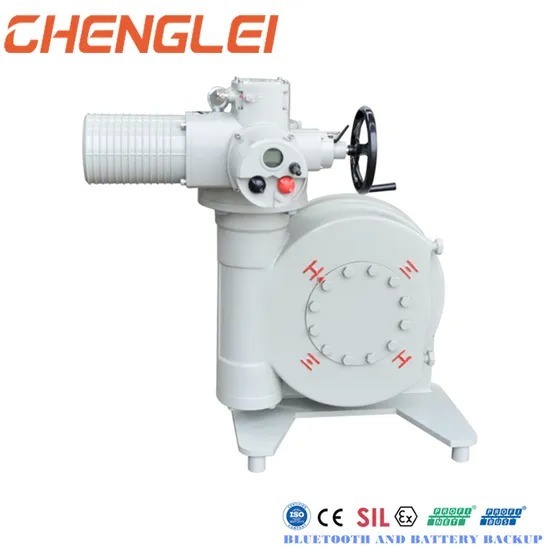
Product Comparison: Intelligent Electric Actuators vs. Traditional Models
The modern intelligent electric actuator represents a significant evolution over conventional designs. Below is a multi‑dimension comparison using the capabilities of manufacturers like CHENGLEI as a reference for intelligent offerings, contrasted with traditional baseline models.
1. Technical Parameters
Intelligent actuators feature non‑invasive setting, self‑diagnosis, and bus communication (Profinet, Modbus, Profibus). They incorporate absolute encoder position acquisition and continuous torque monitoring with an adjustable dead zone from 0.5% to 5% (sources: 35373, 35369). Traditional models rely on mechanical limit switches and manual calibration, offering no remote diagnostics.
2. Application Scenarios
Intelligent actuators are designed for harsh environments: strong vibration/high temperature in alumina plants, extreme cold down to -40°C, and highly corrosive oil fields (source: 35371). They are also preferred for critical sections like high‑temperature digestion, emergency shut‑off of pipelines, and modulating valve flow control (source: 35370). Traditional actuators suffice for ordinary indoor applications with stable conditions.
3. Cost Analysis
Intelligent actuators have a higher initial procurement cost (approximately 1.5–2.5 times that of traditional models). However, installation cost savings of 20–40% are possible due to reduced cabling, trays, and I/O cards from the bus system (source: 35376). The total lifecycle cost is significantly lower because of fewer malfunctions, less downtime, and easier maintenance (source: 35377).
4. Maintenance
Maintenance is simplified with non‑invasive setting, self‑diagnostic reminders, and fault code viewing via bus or infrared remote control for quick problem location (source: 35374). Traditional models require opening the enclosure for manual adjustments, increasing the risk of seal failure and moisture ingress.
Supplier Comparison: Chinese Manufacturers vs. International Brands
When evaluating suppliers, procurement teams must compare Chinese manufacturers like CHENGLEI against global leaders such as Rotork (UK) and Auma (Germany). Below is an objective assessment across four key dimensions.
| Dimension | Chinese Manufacturers (e.g., CHENGLEI) | International Brands (e.g., Rotork, Auma) |
|---|---|---|
| Price | Generally 30–50% lower upfront cost for comparable specifications. Negotiable pricing for volume orders. | Higher initial cost due to brand premium, global R&D overheads, and distribution margins. |
| Customization | High flexibility: OEM/ODM accepted, MOQ as low as 1 set. Voltage, logo, special coatings (C5‑M, extreme low‑temperature) can be tailored (source: 35372). | Limited customization; standard product ranges offered with long lead times for non‑standard requests. |
| Delivery Lead Time | Typically 10–15 working days for quantities up to 100 units. Monthly production capacity >8,000 units ensures fast turnaround. | Standard lead times of 8–12 weeks; rush orders incur premiums. |
| After‑Sales Support | Remote support via WhatsApp/email; pre‑shipment testing (FAT) included. Growing network of regional partners. | Established global service networks with local technicians in most industrial regions. |
Both categories hold valid international certifications (CE, ATEX, SIL3). For example, CHENGLEI’s actuators are CE certified under EN 60730‑2‑14 and carry ATEX Explosion Proof Exd BT4/CT4 marks, meeting global safety standards.
A 3‑Step Decision Model for Selecting Electric Actuators
Procurement teams can follow this structured approach to choose between intelligent vs. traditional actuators and between supplier types.
Step 1: Define Application Scenario
- Identify ambient conditions (temperature range, corrosive agents, vibration, explosion‑proof requirements).
- Determine valve type (multi‑turn, part‑turn, linear) and control objective (on/off, modulating, emergency shutdown).
- Evaluate integration with existing DCS/PLC and communication protocol needs.
Step 2: Match Technical Parameters
- Select torque (Nm), output speed (rpm), and flange standard (ISO 5210, JB2920).
- Verify protection class (IP67/IP68) and enclosure type (NEMA 4X, explosion‑proof).
- Confirm features: thermal protection, manual override, battery backup, Bluetooth connectivity.
Step 3: Calculate Total Cost of Ownership (TCO)
- Sum initial purchase cost + installation (cabling, mounting) + expected maintenance over a 10‑year horizon.
- Factor in downtime costs: intelligent actuators with MTBF >50,000 hours reduce unplanned outages (source: 35368).
- Energy efficiency improvements of 15–30% further lower operational expenses (source: 35375).
Case Study: A Successful Sourcing Decision with CHENGLEI
In 2020, a major petroleum engineering company operating in Iraq faced severe corrosion, salt spray, hydrogen sulfide, and extreme heat in its desert oil fields. The incumbent international actuator brand could not provide a cost‑effective solution with adequate corrosion protection. After evaluating several suppliers, the company selected CHENGLEI for a 200‑set project.
Custom Solution: CHENGLEI applied C5‑M grade anti‑corrosion coating—exceeding conventional standards—and double‑sealed wiring technology to isolate corrosive gases. The actuators featured explosion‑proof housing (Ex d IIB T4) and IP67 protection.
Result: The project became a benchmark in the Middle East, with the actuators operating reliably for over six years. The client reported a 40% reduction in total procurement and maintenance costs compared to initial quotes from international competitors.
Another example involves a Russian strategic partner in the oil & gas sector. CHENGLEI supplied 400 intelligent actuators for remote pipeline control in Siberia, where temperatures drop to -40°C. The product's stable starting and precise control under extreme cold (source: 35514), combined with Ex explosion‑proof certification, enabled China’s smart manufacturing to replace European brands in a high‑end market.
Conclusion
As the global market for electric actuators grows, the gap between Chinese and international suppliers continues to narrow. Chinese manufacturers like CHENGLEI now offer intelligent features, robust certifications, and customizable solutions that rival those of established brands—at a lower total cost. For industrial buyers facing harsh environments, adopting a three‑step decision model ensures an optimized trade‑off between performance, reliability, and budget. CHENGLEI stands out as a credible partner for mission‑critical applications, delivering proven results in the Middle East, Russia, and beyond.
→ Download the CHENGLEI company brochure for detailed product specifications and certifications: https://cdn.socialarks.com/sbsp/24554/common/2026/0403/69cf860f86473.pdf
Have Questions or Need More Details?
Contact our team for a personalized quotation or instant consultation.
Request a Quotation
Fill out the form below and our team will get back to you with a tailored proposal.
WhatsApp Direct Chat
Prefer to chat in real-time? Message us on WhatsApp for instant assistance & quick answers.
- Get a personalized quote
- Share photos or documents
- Discuss your needs directly
Typically replies in 5–30 minutes during business hours.