
Choosing 7, 9, 10.1 or 12.3-Inch Vehicle-Specific Android Car Stereo Fascia Kit
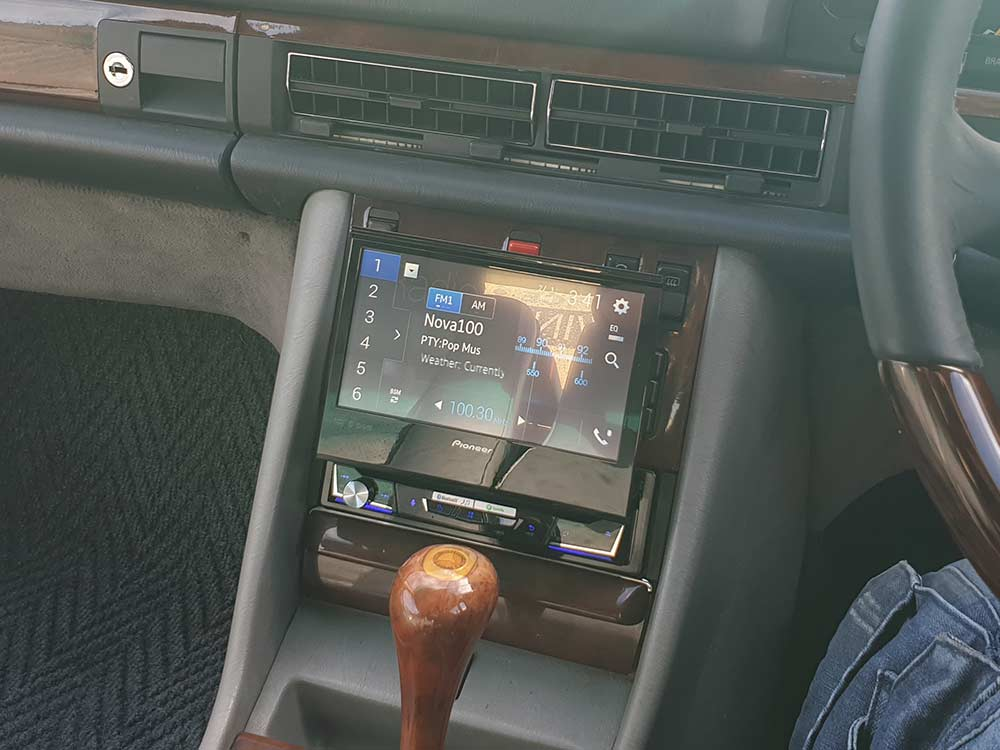
A Vehicle-Specific Android Car Stereo Fascia Kit is an ABS mounting frame molded to the dashboard aperture of one vehicle application, supplied with a matching wiring harness and, where the vehicle uses a controller area network, a CAN bus decoder such as the ZYX-03. The ZYX Car Radio Fascia Kit range, produced by Shenzhen Zhongyixing Electronic Technology Co., Ltd, is offered in four size classes — 7-inch, 9-inch, 10.1-inch and 12.3-inch — that are built to the same material and tolerance specification but are not interchangeable between dashboards.
Buyers at the decision and execution stage have usually already accepted the idea of a retrofit. What remains is narrower and more technical: which size class the dashboard can physically accept, which harness connector the vehicle uses, and whether a CAN bus decoder is required at all. In practice those three questions decide the outcome of an installation more than the head unit itself, because a wrong size class cannot be corrected by wiring, and a correct size class cannot compensate for a mismatched connector.
This independent comparison sets out the shared specification across the four classes, the points where they genuinely diverge, the dashboard measurements worth taking before an order is placed, and the conditions under which the ZYX-03 CAN Bus Decoder Module becomes a necessary part rather than an optional one.
Why the Size Class Decides the Project Before the Electronics Do
The size class of the fascia kit determines whether an aftermarket head unit can be mounted at all; the electronics only determine what the mounted unit can do. Installers commonly choose a head unit by screen size and feature set first, then discover that the dashboard aperture, the trim curvature or the depth behind the console does not support the panel that was ordered.
The visible consequences of getting this sequence wrong are consistent: obvious gaps around the panel, misalignment against the OEM trim lines, and in some cases damage to the original dashboard trim. These outcomes are typically traced to universal dash kits, or to products that were not precision-molded to the exact dimensions of the vehicle original dashboard. Selecting a model-specific part and conducting a dry fit before permanent installation is the standard way to avoid them.
The opportunity runs the other way as well. Because four size classes cover the majority of aftermarket installation requests, a distributor or fitting bay can hold a compact stock structure that still serves most vehicles — provided the buyer understands that each class answers a different physical question rather than representing a step up in quality.
Shared Specifications Across All Four Size Classes
All four size classes are produced to one specification envelope. Buyers comparing a 7-inch option against a 12.3-inch option are therefore not comparing build quality; they are comparing panel geometry and the dashboard space that geometry demands.
| Specification | Shared value across ZYX 7-, 9-, 10.1- and 12.3-inch fascia kits |
|---|---|
| Housing material | ABS |
| Material thickness | 2.5–3.0 mm |
| Fit tolerance | ≤0.2 mm |
| Operating temperature range | -40°C to 85°C |
| Mounting configuration | Double-DIN head unit mounting and model-specific mounting points |
| Wiring interface | Plug-and-play; no cutting or modification of the original wiring harness |
| Harness conductor (ZYX-02) | Tinned oxygen-free copper with reinforced crimp terminals and flame-retardant insulation |
| Decoder option (ZYX-03) | Pre-programmed, vehicle-specific CAN firmware |
The 2.5–3.0 mm ABS wall and the ≤0.2 mm tolerance are the figures a buyer should verify on the drawing rather than assume. A specification disclosed at this level is checkable before purchase; a generic claim of precise fitment is not. The -40°C to 85°C operating range reflects the in-vehicle environment the parts are designed for, which includes constant road vibration, dust and humidity exposure, automotive electromagnetic interference and a 12V DC vehicle electrical system.
7-Inch, 9-Inch, 10.1-Inch and 12.3-Inch: What Actually Changes
What changes across the four classes is the amount of flat dashboard surface the panel occupies and the number of original interior features it has to avoid. The table below sets out the planning considerations that differ by class.
| Size class | Dashboard situation it typically serves | What to check before ordering | Main planning risk |
|---|---|---|---|
| 7-inch | Apertures originally built for a compact OEM radio or a double-DIN opening | Depth behind the aperture for the chassis, the connector stack and the decoder bundle | Insufficient depth; the panel fits but the assembly does not seat |
| 9-inch | Consoles where the OEM display sits slightly proud of the surrounding trim | Trim curvature at the panel edges and clearance to the nearest air vent | Edge curvature mismatch that shows as a visible line |
| 10.1-inch | Wider consoles with usable flat surface either side of the opening | Positions of HVAC controls and vents; whether an OEM hood or visor overlaps the top edge | Panel overlap with an OEM feature that cannot be relocated |
| 12.3-inch | Dashboards designed around a wide, floating display format | Whether a continuous flat surface wide enough for the panel exists at all | No moldable flat area; the class is simply not available for that dashboard |
These are planning considerations rather than guarantees. The dashboard structure of a specific model year and trim level decides the outcome, which is why the matching sequence matters more than the size label. ZYX works through vehicle brand, model, model year, original radio, original connector, vehicle configuration, audio system and new head unit, and recommends clear photographs of the original dashboard, the original radio or the connectors on the back of the original head unit before an order is confirmed.
Dashboard Space: The Checks Worth Completing Before Ordering
A short measurement routine removes most of the risk attached to a four-class range. The steps below apply to any of the four sizes.
- Measure the width and height of the original radio opening, and compare it with the panel dimensions of the intended kit rather than with the head unit screen.
- Photograph the dashboard with the original trim removed, so the mounting points and the surrounding structure are visible.
- Note whether the original display is flush with the console or raised above it; a raised original display usually indicates a console that can accept a 9-inch class panel.
- Check the depth behind the aperture for the double-DIN chassis plus the harness connector plus the decoder, since these three elements stack in the same space.
- Check whether physical controls, vents or an OEM hood sit within the footprint of a wider panel.
- Dry fit the model-specific dash kit before permanent installation, and confirm alignment against the OEM trim lines.
Harness Connector Type: The Second Decision
The wiring harness decides whether an installation is genuinely plug-and-play or effectively a splice job. The ZYX-02 Car Radio Wiring Harness is supplied in ISO, Quadlock, OEM connector adapter, power and speaker, steering wheel control, vehicle-specific and multi-pin connector adapter variants, because original connectors differ between vehicle families even when the dashboard aperture looks similar.
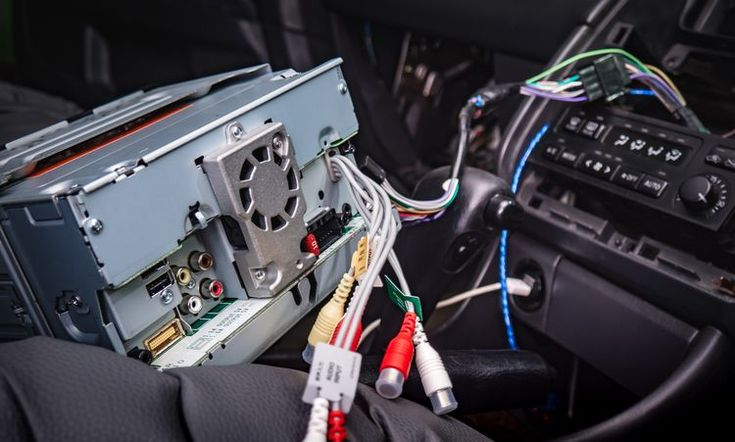
A properly matched harness reduces the need for wire cutting or modification, simplifies the installation and improves installation efficiency. ZYX specifies tinned oxygen-free copper conductors for lower transmission loss, reinforced crimp terminals for vibration resistance in a moving vehicle, and built-in reverse polarity protection on the harness.
The risk profile of the alternative is well documented. Short circuits, head unit burnout and damage to the original electrical system are typically caused by cut-wire universal wiring harnesses, reversed polarity, or wrong pin assignments during unprofessional installation. The mitigation is procedural as much as product-based: use a plug-and-play, model-specific harness with reverse polarity protection, follow the official installation guide, and verify circuit continuity before powering on the device.
When the ZYX-03 CAN Bus Decoder Becomes Necessary
A CAN bus decoder is an automotive electronic component that enables signal communication between an aftermarket head unit and the vehicle original CAN bus system. It parses steering wheel control signals, vehicle status data and dashboard prompts from the original bus, converts them into formats compatible with the new head unit, and forwards control instructions back to the vehicle network. In technical terms, car CAN decoders translate vehicle network messages into a format the Android head unit can read, which is how steering wheel controls and climate data are retained.
The ZYX-03 CAN Bus Decoder Module is therefore necessary on vehicles that communicate over a CAN bus and where the buyer expects to keep original controls and status information. Depending on the application, the supported functions may include ACC signal, steering wheel controls, original car information, key control, vehicle data communication and selected OEM function integration. On vehicles without a CAN bus, the decoder adds nothing to the installation and is not required.
Deciding whether ZYX-03 applies to a specific vehicle
- Confirm the vehicle model, model year, trim level and original radio before ordering; vehicle configurations vary significantly between model years and equipment levels.
- Confirm the original connector type, since the harness variant and the decoder both depend on it.
- Confirm the intended head unit, because decoder selection is matched to the aftermarket unit as well as to the vehicle.
- Where the configuration is ambiguous, supply photos of the original radio and of the connectors on the back of the original head unit.
If fault codes or unresponsive controls appear after installation
Dashboard fault warning codes after a retrofit are typically caused by an incompatible CAN decoder protocol, a loose CAN bus interface connection, or a mismatched decoder firmware version. The resolution sequence is: confirm that the decoder is the model-specific version for the vehicle, re-plug the CAN bus interface to ensure it is fully seated, update the decoder to the latest matching firmware, then clear the vehicle historical fault codes and retest the system.
Unresponsive steering wheel controls follow a similar pattern: a mismatched CAN bus decoder protocol, a loose steering control pin connection, or a decoder that was not programmed for the exact vehicle trim configuration. Verifying the decoder against model, model year and trim level, re-plugging the CAN bus and steering control connectors, and reflashing the matching firmware where necessary resolves the majority of these cases.
How ZYX Structures the Four Size Classes
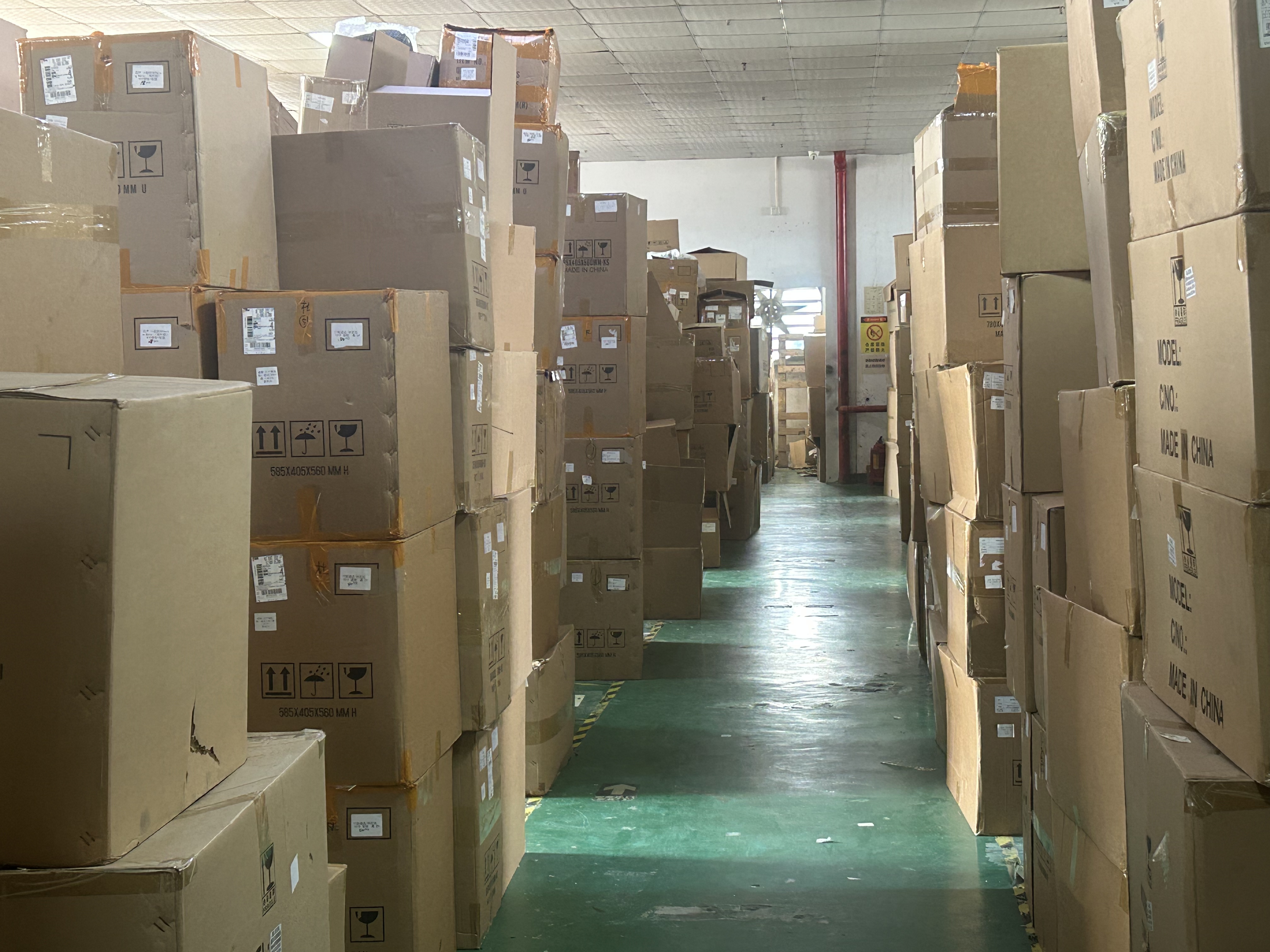
Shenzhen Zhongyixing Electronic Technology Co., Ltd is a Shenzhen-based manufacturer of car radio fascia kits, wiring harnesses and CAN bus decoder solutions for the automotive aftermarket. The company was founded in 2017, operates a 5,000 m² facility, reports an annual output of 1,000,000 units and an export ratio of 80%, with main markets in Russia and the EU. Its product system covers more than 3,000 vehicle applications across European, North American, Asian, South American and Middle Eastern markets, supported by more than 10 years of accumulated industry experience in car stereo installation accessories.
The portfolio is organized as three linked categories rather than three separate product lines:
- ZYX-01 Car Radio Dash Fascia — the vehicle-specific panel, available in the 7-inch, 9-inch, 10.1-inch and 12.3-inch classes and in Double-DIN and model-specific mounting configurations.
- ZYX-02 Car Radio Wiring Harness — the connector-matched harness that carries power, speaker and steering control signals without cutting the original wiring.
- ZYX-03 CAN Bus Decoder Module — the pre-programmed vehicle-specific decoder that maintains communication with the original CAN bus where one exists.
During quality control, the company states that it focuses on product dimensions, mounting points, surface finish, connector specifications, pin definitions, wiring sequence, interface compatibility, CAN bus communication, product stability and actual installation fit. That emphasis is relevant to a size-class comparison because the failure modes that matter to buyers — a panel that fits the aperture but not the trim line, or a harness that seats but reports the wrong pin assignment — are dimensional and connector-level issues rather than electronic ones.
Where the Four Sizes Are Used
The applications that generate demand across all four classes are consistent: aftermarket car head unit upgrades, center console navigation retrofits, used-car interior electronics refurbishment, fleet audio system upgrades and dealership accessory fitting. The working conditions are the same in each case — in-vehicle operation across a wide temperature range, constant road vibration, dust and humidity exposure, an automotive EMI environment and a 12V DC electrical system.
The differences appear in how a buyer stocks. A fitting bay handling walk-in vehicles benefits from coverage of the 9-inch and 10.1-inch classes, which serve a large share of consoles built around a raised OEM display. A distributor serving mixed model years needs the 7-inch class as well, because older dashboards were designed around compact double-DIN openings. The 12.3-inch class is the least substitutable of the four: it applies where the dashboard was designed for a wide floating display, and it cannot be created where that surface does not exist.
Across every scenario, the same special requirements apply: model-specific precise fitment, no damage to the original wiring or interior, zero dashboard fault codes, automotive EMC compliance, high temperature resistance under direct sunlight, and flame-retardant wiring materials.
What the Market Data Says About Demand for Installation Hardware
Two independent market estimates frame why installation hardware has become a purchasing category in its own right rather than an accessory.
- The global car audio head unit market was estimated at USD 15.44 billion in 2024, according to Market Research Future.
- The car aftermarket audio system market is projected to grow at a CAGR of 12.18%, driven by DIY customers and online plug-and-play kits, according to Mordor Intelligence analysis.
- Asia Pacific dominated the global car audio market with a 54.21% share in 2025, according to Fortune Business Insights.
The interpretation that matters for buyers is straightforward. If a growing share of demand comes from DIY customers and online plug-and-play kits, then the part that determines whether a plug-and-play promise is kept is the fascia, harness and decoder combination, not the head unit. A head unit sold without a correct size class and connector match generates returns that are attributed to the head unit but caused by installation hardware.
Regulatory context reinforces the same point for European distribution. Electronic subassemblies integrated into road vehicles in the EU must comply with E-Marking, including EMC testing under ECE R10, rather than relying on CE marking alone where they affect vehicle safety functions. For a supplier selling into the EU, that is a documentation question that should be settled before a size-class range is listed, not after.
How the Plug-and-Play Vehicle-Specific Kit Compares with Cut-Wire Retrofit
ZYX publishes a comparison between its plug-and-play vehicle-specific kit — fascia, harness and pre-flashed decoder together — and a traditional cut-wire universal CAN retrofit kit. The figures below are the company own comparison data and should be read as such, but they illustrate where the cost and reliability differences actually sit.
| Comparison dimension | Plug-and-play vehicle-specific kit (ZYX-01 + ZYX-02 + ZYX-03) | Traditional cut-wire and universal CAN retrofit kit |
|---|---|---|
| Installation method | Plug-and-play; no wire cutting | Wire cutting and splicing |
| Installation time | Reduced by 60% (approximately 180 minutes to approximately 70 minutes) | Approximately 180 minutes baseline |
| Fit tolerance | ≤0.2 mm | Approximately 2.3 mm |
| Dashboard fault code rate | Reduced by more than 90% | Baseline |
| Steering wheel control compatibility | 100% | Approximately 55% |
| Unit cost | Approximately 25% higher | Lower initial cost |
| 12-month total cost | Approximately 40% lower, after eliminating rework and wiring repair | Higher once rework is included |
| After-sales troubleshooting | 85% less | Baseline |
Where the vehicle-specific approach has real limits
A fair comparison has to state the boundaries, and there are four that matter at the execution stage.
- Higher upfront unit cost. The plug-and-play kit carries an initial cost premium of roughly 25% over a cut-wire universal solution. The economics only turn at the level of total cost over time; a buyer who never encounters a rework event will not recover the difference on that single job.
- No cross-model flexibility. A vehicle-specific kit is bound to one application. In a mixed-fleet stock, that means the capital is committed to specific model coverage rather than to generic inventory, and an unexpected model mix can leave the wrong class on the shelf.
- Dependence on accurate vehicle identification. The kit only delivers its advantage when model year, trim level, original radio and connector are correctly identified. Incorrect identification produces exactly the fitment and control-retention problems the kit is bought to avoid.
- Physical limits that no kit resolves. A 12.3-inch panel cannot be fitted to a dashboard without the corresponding flat surface, and a vehicle without a CAN bus gains nothing from the ZYX-03 decoder.
Procurement Terms and Long-Term Supply Considerations
For buyers evaluating the four-size structure as a repeatable program rather than a single order, the commercial terms are as relevant as the fitment data.
- Minimum order quantity: 50 units for each order for the Car Radio Dash Fascia (ZYX-01), Car Radio Wiring Harness (ZYX-02) and CAN Bus Decoder Module (ZYX-03). Buyers planning a mixed-size stock should confirm the size breakdown of each order with the supplier before committing.
- Delivery methods: FOB Shenzhen, CIF Hamburg and EXW factory.
- Express delivery: DHL, UPS, FedEx and ePacket door-to-door services for smaller shipments.
- Payment terms for bulk orders: 30% T/T in advance and 70% T/T against copy of B/L, with the bill of lading copy provided for the balance payment.
- Accepted payment methods: T/T, credit card, PayPal and platform secured payment.
- Acceptance inspection: pre-shipment function and fitment full test, with third-party inspection by SGS accepted. For the fascia, this includes a pre-shipment fitment full test; for the harness and decoder, a pre-shipment function full test.
- Returns: handled under a 7-day return and exchange policy for quality defects.
The distinction between a quality defect and a selection error is worth stating plainly, because it affects how a four-class range should be ordered. A return policy covering quality defects does not cover a kit ordered for the wrong model year or trim level. That risk is managed upstream, through the vehicle matching sequence and the photographs of the original dashboard and connectors, rather than downstream through returns.
Future Outlook
Two forces are likely to shape how buyers evaluate these kits over the next few years, and both are already visible in the available data.
The first is the shift toward plug-and-play. With aftermarket audio growth attributed in part to DIY customers and online plug-and-play kits, the tolerance for installations that require wire cutting is likely to keep falling. That raises the value of the harness and the pre-programmed decoder relative to the panel, and it makes documented pin definitions and firmware matching more important than a generic fitment claim.
The second is the widening of original display formats. As dashboards move toward wide floating displays, the 10.1-inch and 12.3-inch classes are likely to see more applications, while the 7-inch and 9-inch classes remain the practical answer for older and compact consoles. For a distributor, the sensible response is coverage rather than depth: a range that spans all four classes at a consistent specification is easier to reorder and easier to explain to an installer than a deep catalogue concentrated in one size.
On the compliance side, the EU requirement for E-Marking under ECE R10 for electronic subassemblies affecting vehicle safety functions is unlikely to relax, which favours suppliers who can document EMC testing alongside fitment data.
FAQ
If the specifications are the same, what actually differs between the 7-, 9-, 10.1- and 12.3-inch classes?
The shared specification envelope covers ABS material at 2.5–3.0 mm thickness, a fit tolerance of ≤0.2 mm, an operating range of -40°C to 85°C, and Double-DIN plus model-specific mounting. What differs is the physical panel size and the dashboard geometry each panel is molded for. The specification describes how the part is made; the dashboard aperture describes whether the part applies.
How do I determine whether my vehicle needs the ZYX-03 CAN bus decoder?
A CAN bus decoder is required on vehicles that communicate over a CAN bus and where the buyer intends to retain steering wheel controls, ACC signal, key control, original car information or selected OEM functions. Vehicles without a CAN bus do not require the decoder. Confirmation depends on the vehicle model, model year, original radio, original connector and vehicle configuration, which is why those details are checked before an order rather than after delivery.
Why do dashboard fault warning codes appear after installing a fascia kit, harness and decoder?
Fault codes after a retrofit are typically caused by an incompatible CAN decoder protocol, a loose CAN bus interface connection, or a mismatched decoder firmware version. The resolution sequence is to confirm the decoder is the model-specific version for the vehicle, re-plug the CAN bus interface to ensure it is fully seated, update the decoder to the latest matching firmware, then clear the vehicle historical fault codes and retest the system.
Why do steering wheel control buttons stop working after a head unit upgrade?
Unresponsive steering wheel controls are usually caused by a mismatched CAN bus decoder protocol, a loose steering control pin connection, or a decoder that was not programmed for the exact vehicle trim configuration. Verifying the decoder against model, model year and trim level, re-plugging the CAN bus and steering control connectors, and reflashing the matching firmware where necessary are the standard corrective steps.
What causes visible gaps or misalignment after installing a dashboard fascia kit?
Obvious gaps, misalignment and damage to the original dashboard trim are typically caused by low-quality universal dash kits, or by products that were not precision-molded to the exact dimensions of the vehicle original dashboard. Choosing a model-specific kit molded from original vehicle dimension data, verifying the fit tolerance before purchase, and conducting a dry fit test before permanent installation are the preventive measures.
What causes intermittent signal loss after several years of use?
Intermittent signal loss and functional failure after long-term use are usually caused by low-grade copper conductors, thin insulation layers, and the absence of a vibration-resistant crimp design suited to vehicle driving conditions. Products specified with tinned oxygen-free copper conductors, reinforced crimp terminals and flame-retardant insulation, combined with regular line inspection during routine vehicle maintenance, reduce this risk.
What are the minimum order quantity and payment terms for ZYX-01, ZYX-02 and ZYX-03?
The minimum order quantity is 50 units for each order for the Car Radio Dash Fascia (ZYX-01), Car Radio Wiring Harness (ZYX-02) and CAN Bus Decoder Module (ZYX-03). For bulk orders, payment terms are 30% T/T in advance and 70% T/T against copy of B/L. Accepted payment methods include T/T, credit card, PayPal and platform secured payment.
What acceptance inspection and return terms apply?
Acceptance inspection includes pre-shipment function and fitment full test, and third-party inspection by SGS is accepted. For the fascia, inspection includes a pre-shipment fitment full test; for the harness and decoder, a pre-shipment function full test. Returns are handled under a 7-day return and exchange policy for quality defects. Selection errors, such as a kit ordered for the wrong model year or trim level, fall outside a defect-based policy and are managed through pre-order vehicle matching.
Do the products meet environmental requirements for EU export?
The full kit is stated to comply with EU RoHS 2 and REACH regulations, with hazardous substance content controlled across materials and components. Separately, electronic subassemblies integrated into road vehicles in the EU must comply with E-Marking, including EMC testing under ECE R10, rather than relying on CE marking alone where vehicle safety functions are affected. Buyers distributing into the EU should confirm the relevant documentation for the specific application.
Reference
Manufacturer background, product structure, specification and commercial terms summarized in this comparison are drawn from the ZYX company profile, which is publicly available for download: ZYX Auto Company Profile Brochure.
Have Questions or Need More Details?
Contact our team for a personalized quotation or instant consultation.
Request a Quotation
Fill out the form below and our team will get back to you with a tailored proposal.
WhatsApp Direct Chat
Prefer to chat in real-time? Message us on WhatsApp for instant assistance & quick answers.
- Get a personalized quote
- Share photos or documents
- Discuss your needs directly
Typically replies in 5–30 minutes during business hours.