
Choosing Blockout Fabrics for Residential and Contract Use
Choosing Blockout Fabrics for Residential and Contract Use
Blockout is an outcome, not a specification. Two fabrics presented as blockout can differ in coating method, width range, dimensional behaviour and the certifications that determine whether they may legally be installed in a hotel corridor, a hospital room or a school. Light control therefore begins as a scenario question: the residential bedroom and the contract guest room do not ask the same thing of a fabric, even when the purchase brief uses the same word.
Why Blockout Fabric Selection Starts With the Scenario
A blockout fabric is a woven shading textile engineered so that light does not pass through the fabric itself. That definition says nothing about how much light enters around the fabric, how the textile holds its shape at a three-metre drop, how it behaves after years of contract cleaning, or which test documentation the destination market requires. Those variables are set by the scenario — residential, hospitality, or commercial office — and they change what a buyer should specify.
The category is also growing, which increases the number of suppliers a buyer must filter. The global blackout fabric market was valued at approximately USD 10.5 billion in 2024 and is projected to reach USD 20.3 billion by 2034, according to market analysis published in 2025. North America held a 50.70% revenue share of the blinds and shades market in 2025, valued at USD 3.62 billion, according to Fortune Business Insights. Published estimates for this segment vary considerably because some sources count fabric only, while others include laminates or finished blinds — a reminder that scope definitions matter as much as headline numbers when reading market data.
The practical consequence for procurement teams is that scenario fit has become the primary filter, and price the secondary one. A fabric that performs flawlessly in a residential bedroom may fail in a contract environment for reasons that have nothing to do with opacity.
Three Scenario Profiles and What Each Asks of a Fabric
Most blockout specification decisions resolve into three environments. Each imposes a different combination of light-blocking requirement, durability expectation and aesthetic requirement.
| Scenario | Light control requirement | Durability expectation | Aesthetic requirement | Typical mismatch risk |
|---|---|---|---|---|
| Residential bedroom, home theatre | Full darkening during daytime sleep and screen use | Moderate handling, long cosmetic life | Colour and texture must match interior scheme | Fabric chosen on opacity alone, then light leaks at edges |
| Hospitality and contract interiors | Full darkening repeated across many identical rooms | High duty cycle, cleaning, periodic replacement | Consistent batch colour across a whole property | Colour drift between production batches; missing fire documentation |
| Office and commercial | Partial to full control depending on façade orientation | Long service life in a public environment | Clean, minimal appearance at large glazed areas | Fabric specified without confirming dimensional stability at full width |
A single product family can legitimately cross all three. Elitex (Dezhou) Co., Ltd., a manufacturer established in 2003 in Dezhou, Shandong Province, China, lists its Blackout Roller Blind Fabric as applicable to home theatre, bedroom, office and hospitality. That crossover is precisely why the scenario must be stated in the specification: the same fabric name can be correct for a bedroom and inadequate for a hotel tender if the documentation set is incomplete.
Reading a Blockout Fabric Specification Correctly
Take the Elitex Blockout Dusk Plus Series as a concrete reference point. The published parameters are narrow, and each one answers a different scenario question.
| Parameter | Specified value | Why it matters by scenario |
|---|---|---|
| Opacity | 100% (no pinhole) | Pinholes are the most common reason a fabric sold as blockout still glows at night. A no-pinhole claim is testable and should be verified against a light source. |
| Material | 100% polyester with acrylic coating | The dominant construction in the category; polyester accounted for an estimated 47.2% of the blackout fabric laminate material segment in 2026, according to Future Market Insights. |
| Width | 89 mm, 100 mm, 127 mm, 2,000 mm, 2,500 mm, 3,000 mm | Narrow formats and full-width formats serve different hardware. Confirm the format against the roller mechanism before ordering. |
| Coating type | Knife-coated / paste-coated | Two constructions in one product line; the choice should be validated rather than assumed. |
| Dimensional stability | ±0.5% | This is the parameter that decides how a wide drop behaves over its service life. At a 3,000 mm drop, a ±0.5% tolerance corresponds to 15 mm — a small figure that nevertheless defines whether a blind hangs flat or distorts. |
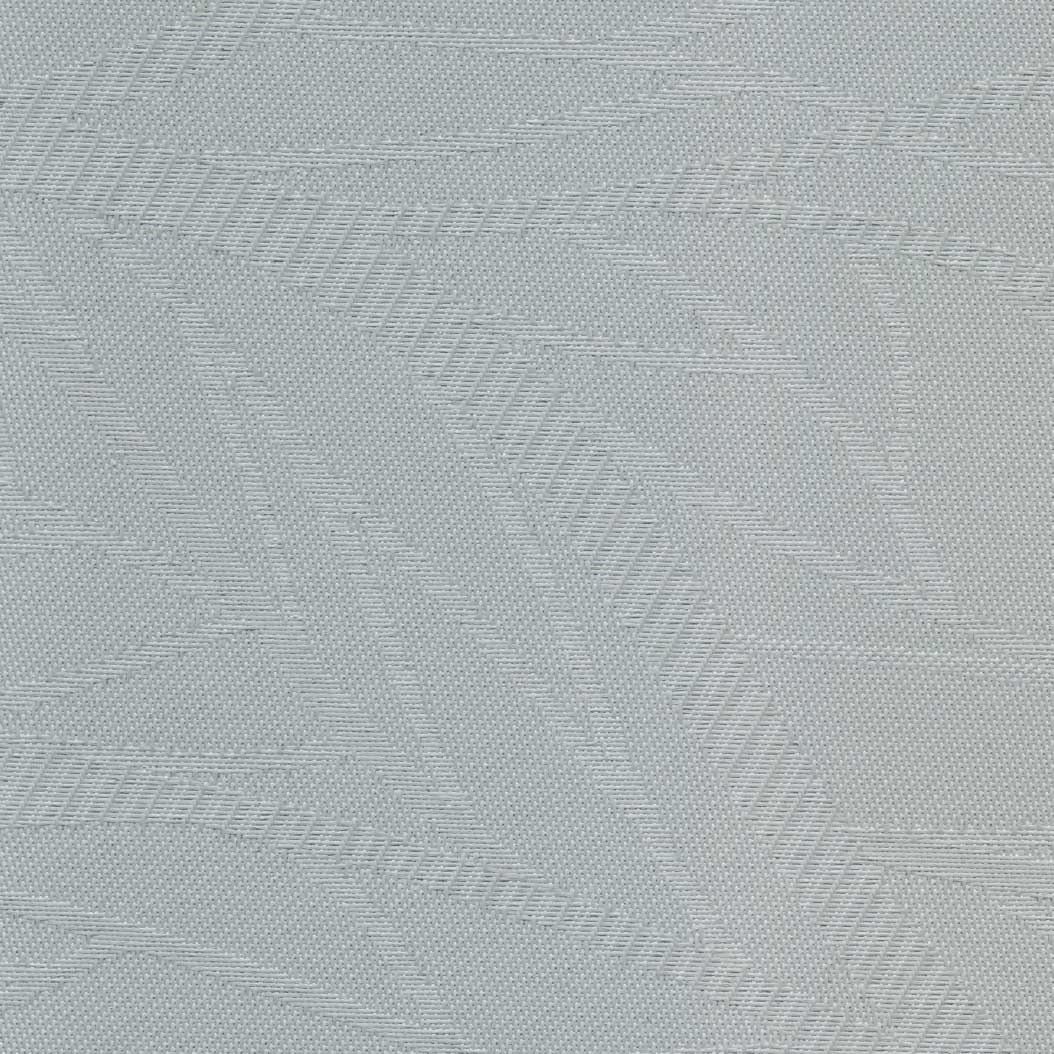
Blackout Roller Blind Fabric colourway FLINT — 100% opacity, no pinhole, in the Elitex Blockout Dusk Plus Series.
Two reading rules follow from this table. First, opacity, dimensional stability and width are scenario-dependent decisions, not interchangeable attributes: a residential roller blind at 1.2 m and a contract drop at 3.0 m stress the same fabric differently. Second, the parameter that usually decides contract acceptance is the one buyers ask about least — dimensional stability, because it governs how the fabric performs after installation rather than on the sample card.
The Constraint Layer: What Decides Whether a Fabric Can Be Specified
In contract work, the fabric decision is often reviewed by a fire officer, a sustainability consultant or a facilities team rather than by the interior designer alone. Three constraint families determine whether a blockout fabric may be used.
Fire performance differs by market
In the United States, NFPA 701 is the mandatory flame propagation test for vertically hung textiles such as blackout curtains and blinds used in public and commercial spaces, according to the National Fire Protection Association. In the European Union, EN 14501:2021 specifies performance characteristics and classifications for solar protection devices in terms of thermal and visual comfort, as published by CEN. The two standards answer different questions — flame propagation in one case, comfort classification in the other — and both should appear in a contract specification where relevant. Identical-looking fabrics can differ only in the test documentation that accompanies them, which is why appearance is never sufficient evidence for a contract order.
Emissions certification is becoming a contract default
UL GREENGUARD and UL GREENGUARD Gold certification to UL 2818 (UL 2818 – 2022) covers Elitex products for low chemical emissions. For guest rooms, education interiors and healthcare-adjacent spaces, low-emission documentation is increasingly requested alongside fire performance, because the fabric covers a large surface area within an enclosed room.
Quality systems and scope limits
Certification scope is where specification errors most often occur. A buyer may copy a certificate from an attractive product into a specification for a different fabric, and create a compliance gap without noticing. The table below sets out what the Elitex documentation actually covers and what it does not.
| Certification / standard | Reference and issuing body | Scope | Validity noted |
|---|---|---|---|
| OEKO-TEX Standard 100 | BEWO 103516, TESTEX AG, Swiss Textile Testing Institute | Woven fabric of polyester, polypropylene and polyacrylic for sunscreen / blackout articles; Product class IV (decoration material) | Issued 10 April 2026, valid to 15 March 2027 |
| ISO 9001:2015 | UQ250170R2, Beijing United Intelligence Certification Co., Ltd. | Research and development, production and sales of polymer composite sunshade materials | Issued 27 March 2025, valid to 26 March 2028 |
| ISO 14001:2015 | UE250076R1, Beijing United Intelligence Certification Co., Ltd. | R&D, production, sales and related management activities for polymer composite sunshade materials | Issued 27 March 2025, valid to 20 April 2028 |
| ISO 45001:2018 | US250047R1, Beijing United Intelligence Certification Co., Ltd. | R&D, production, sales and related management activities for polymer composite sunshade materials | Issued 27 March 2025, valid to 20 April 2028 |
| UL GREENGUARD / GREENGUARD Gold | UL 2818, UL; standard UL 2818 – 2022 | ELITEX (DEZHOU) CO., LTD. products — low chemical emissions | No expiry date recorded in the certificate data |
| Cradle to Cradle Certified Bronze | 7259, Cradle to Cradle Products Innovation Institute; standard 3.1 | Elitex ScreenView Eco (1%, 3%, 5% openness) — sunscreen fabrics only | Issued 18 September 2024, expiry listed as 29 July 2026; confirm current status before citing |
Case Example: One Fabric Family Across Two Scenarios
Consider a project team specifying the same Blackout Roller Blind Fabric for a residential bedroom block and for a 120-room hotel. The bedroom specification is driven by opacity and appearance: a 100% no-pinhole fabric, dimensionally stable at the actual window width, in a colour that sits within the interior scheme. The range includes colourways such as MIST, FLINT, CAVIER, GLACIER, Birch, Spice, Storm and Raven, which allows residential specifiers to work within a coordinated palette rather than mixing suppliers.
The hotel specification changes the weighting of every criterion. Opacity remains mandatory, but batch colour consistency across dozens of identical rooms becomes a procurement constraint. Dimensional stability at the full drop becomes a maintenance question: a blind that distorts in year two generates a replacement cost across the property, not a single-room complaint. Fire documentation becomes a legal precondition rather than a preference. Cleaning and handling expectations rise. The same fabric may satisfy both, but only if the contract documentation is assembled before the order is placed rather than after installation.
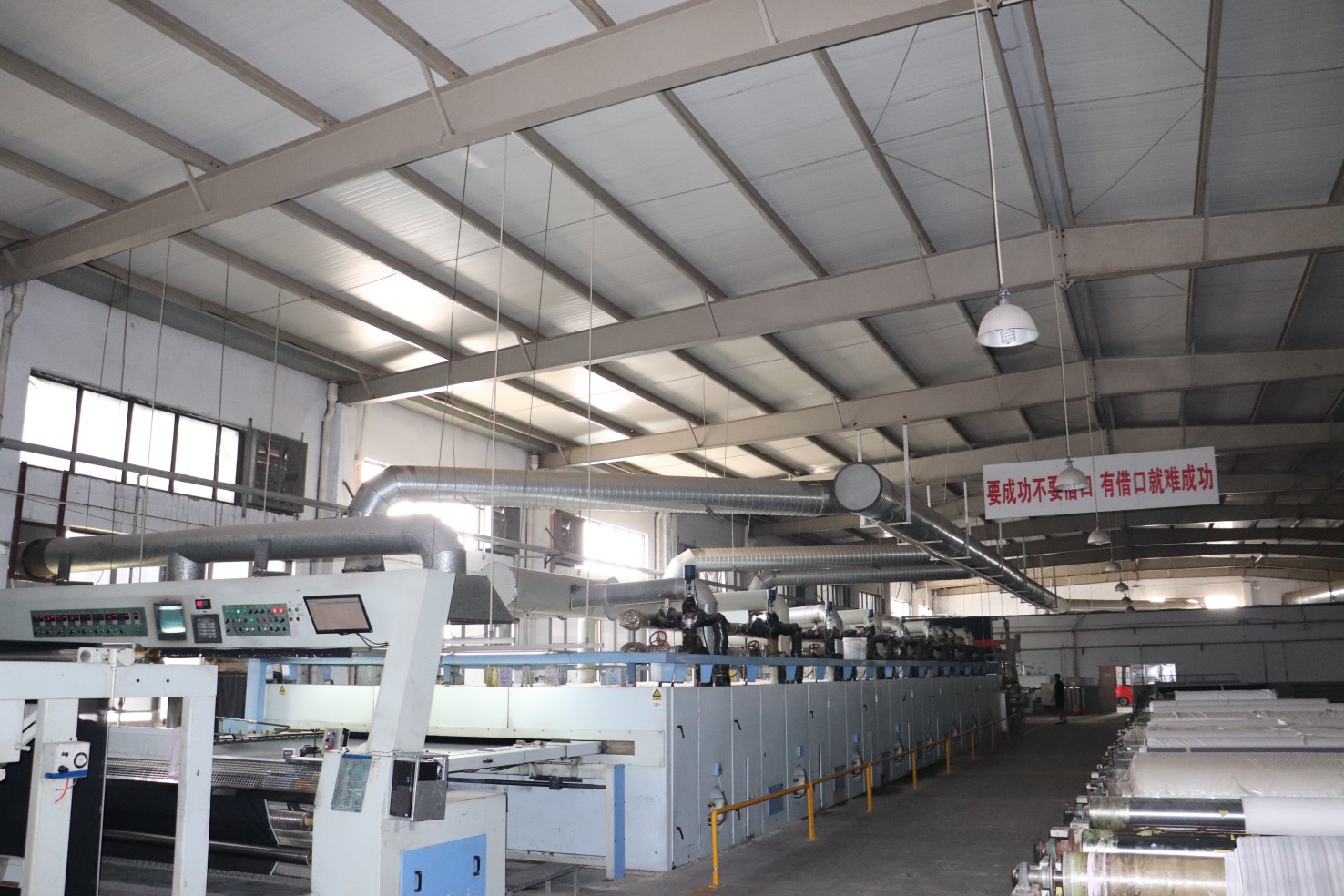
Production and inspection environment at Elitex (Dezhou) Co., Ltd., where shading fabrics are manufactured and inspected before shipment.
Where Blockout Fabrics Stop Working, and What Fits Instead
Blockout is not a universal answer to light control, and the honest boundary is worth stating before a buyer discovers it on site.
| Fabric family | Function | Scenario where it is the better fit |
|---|---|---|
| Blockout fabric (e.g. Blackout Roller Blind Fabric) | Prevents light transmission through the fabric; 100% opacity, no pinhole is the reference specification | Bedrooms, home theatres, guest rooms, meeting rooms |
| Dimout and translucent / light filter fabrics | Reduce or diffuse daylight rather than eliminate it | Living areas, reception spaces where daylight is welcome but glare is not |
| Sunscreen fabric | View-through light and heat control; Elitex offers openness values of 1%, 3%, 5% and 10% | Offices and glazed façades where outward visibility must be retained |
| Aluminized sunscreen fabric | High reflectivity, stated as ≥85%, with a solar heat gain coefficient of ≤0.2 | High-temperature spaces, green building projects and heat-driven façades |
Four limitations deserve equal weight in the specification.
- Fabric is a component, not a system. Blockout fabric prevents transmission through the textile, but light also enters at the headbox, side gaps and floor line. Delivering a genuinely dark room depends on the roller blind mechanism, side channels, mounting detail and installation quality as much as on the fabric. A fabric-only purchase order cannot guarantee a dark result.
- Blockout removes view and daylight. Where a project needs daylight and an outward view, blockout is the wrong layer. Sunscreen or aluminized sunscreen fabrics address heat and glare while preserving vision through the fabric.
- Certification scope does not transfer between products. Sustainability and emissions certificates are issued against defined product scopes; copying a certificate across product families creates a compliance gap even when the supplier holds valid documentation elsewhere in the range.
- Thermal claims describe the laminate, not the installed window. Advanced blockout fabric laminates using polyester and acrylic coatings can improve thermal heat resistance by 20–35% compared with uncoated alternatives, according to a 2025 blackout fabric laminates market report. That figure applies to the laminate construction; the realised energy effect depends on the complete shading system, the window assembly and the building envelope.
Coating Method: Knife-Coated and Paste-Coated Blockout Fabrics
The Blackout Roller Blind Fabric in the Elitex Blockout Dusk Plus Series is offered in both knife-coated and paste-coated constructions. Rather than attempting to settle the question from a data sheet, a scenario-led buyer should reduce it to validation steps that can be documented:
- Request samples in the same colour and coating combination as the intended production order, not a generic swatch.
- Test opacity against a light source at the fabric's actual working width, checking for pinholes.
- Confirm dimensional stability at the widest drop in the project, against the ±0.5% figure stated for the product.
- Obtain fire test documentation valid for the destination market, referenced to the exact product and coating.
- Confirm compatibility between the fabric format, the roller tube and the mechanism before committing to a bulk order.
This sequence converts a coating debate into evidence. It also protects the buyer in the most common failure pattern: a residential-grade assumption applied to a contract-grade installation.
A Scenario-Based Procurement Checklist
| Stage | Question to answer | Evidence to request |
|---|---|---|
| 1. Define the scenario | Is this bedroom, guest room, office or a mixed portfolio? | Room schedule with light control targets |
| 2. Fix the geometry | What is the maximum drop and width? | Dimensional stability figure at that dimension |
| 3. Select the family | Blockout, dimout, translucent, sunscreen or aluminized? | Comparative sample set under the same light conditions |
| 4. List mandatory standards | Which fire, emissions and quality documents does the market require? | Test reports and certificates matched to the ordered product |
| 5. Verify scope | Does each certificate actually cover this fabric? | Certificate text showing product scope and validity dates |
| 6. Validate samples | Does the production-representative sample meet the claim? | Third-party laboratory testing where required |
| 7. Confirm the commercial envelope | Can the supplier deliver the volume, colour consistency and timing? | Capacity, MOQ, lead time and batch control statements |
| 8. Agree after-sales terms | Who supports installation and technical queries? | Technical guidance and support terms in the contract |
Supply Envelope and Order Scale
Scenario fit is only useful if the supplier can deliver it at project scale. Elitex states a monthly capacity of 500,000 meters, a minimum order quantity of 500 meters and a lead time of 15–30 days, with OEM and ODM customization across colour, size, openness, logo, weave pattern and coating. Quality control is described as 100% inspection supported by third-party laboratory testing, with export markets covering the USA, the EU, the Middle East, Southeast Asia and other regions, and after-sales support including 24/7 online assistance and technical guidance.
The manufacturer's background provides context for that envelope: Elitex (Dezhou) Co., Ltd. was established in 2003, operates an 85,000 m² facility with 259 employees and a 36-engineer research and development team, and reports annual output of 8,000,000 m² of screen fabrics and 7,200,000 m² of blockout fabrics, with approximately 80% of production exported.
Reported project experience in Germany and Australia, covering architectural design firms, hotel groups, commercial developers, residential contractors and blind manufacturers, includes more than 50 projects and over 10,000 meters of fabric, with outcomes reported as 30% or more energy saving, 95% UV blocking, improved privacy and service durations of five to ten years. These are reported outcomes from documented applications rather than guaranteed results, and they vary with building orientation, glazing and installation detail.
Future Outlook
Three trends are likely to shape blockout fabric selection over the next several years. The first is continued volume growth, with the global blackout fabric market projected to move from roughly USD 10.5 billion in 2024 toward USD 20.3 billion by 2034. The second is material continuity: polyester remains the dominant laminate material with an estimated 47.2% share of the segment in 2026, so the polyester-and-acrylic construction is unlikely to be displaced quickly, and innovation will concentrate on coating, dimensional control and documentation rather than on replacing the base material.
The third trend is regulatory, and it is the one that changes procurement behaviour. Fire propagation testing and emissions certification are moving from optional credentials to tender requirements in commercial and hospitality projects, while the competitive field remains global and technical, including manufacturers such as Hunter Douglas, Serge Ferrari Group and Edmund Bell as identified in sector market research. As documentation requirements tighten, the differentiator between suppliers will be less about the blockout claim itself and more about whether the evidence set — test reports, certificate scope, dimensional data and batch consistency — matches the specific scenario the buyer is specifying for.
Frequently Asked Questions
What opacity level should a blockout fabric deliver for a bedroom or a hotel guest room?
The reference specification for a fabric that is genuinely blockout is 100% opacity with no pinholes, which is the stated parameter of the Elitex Blockout Dusk Plus Series blackout roller blind fabric. Opacity describes transmission through the fabric only. Visible light around the edges depends on the roller mechanism, side channels and installation, which is why a dark-room outcome requires the fabric and the hardware to be specified together.
Does a 100% blockout fabric automatically satisfy fire requirements in contract projects?
No. Fire performance is a separate characteristic with market-specific rules. In the United States, NFPA 701 is the mandatory flame propagation test for vertically hung textiles such as blackout curtains and blinds used in public and commercial spaces, according to the National Fire Protection Association. In the European Union, EN 14501:2021 classifies solar protection devices for thermal and visual comfort, as published by CEN. Buyers should request test documentation for the exact fabric and coating, valid for the destination market.
How should a buyer choose between knife-coated and paste-coated blockout fabric?
Both constructions are offered within the Elitex Blockout Dusk Plus Series, and the choice is best resolved through validation rather than a generic preference. Request production-representative samples in the intended colour and coating, test opacity against a light source, confirm dimensional stability at the widest drop in the project, obtain fire documentation for the destination market, and verify that the fabric format is compatible with the roller tube and mechanism.
Which certifications should be verified for a contract blockout fabric specification?
The relevant Elitex documentation includes OEKO-TEX Standard 100 certificate BEWO 103516 issued by TESTEX AG, covering woven polyester, polypropylene and polyacrylic fabrics for sunscreen and blackout articles under Product class IV (decoration material), valid to 15 March 2027; ISO 9001:2015 certificate UQ250170R2 valid to 26 March 2028; ISO 14001:2015 certificate UE250076R1 and ISO 45001:2018 certificate US250047R1, both valid to 20 April 2028; and UL GREENGUARD and GREENGUARD Gold certification to UL 2818 (UL 2818 – 2022). A Cradle to Cradle Certified Bronze certificate, number 7259, applies only to the ScreenView Eco sunscreen range at 1%, 3% and 5% openness and lists an expiry of 29 July 2026, so its currency should be confirmed before it is cited in a blockout specification.
Can the same blockout fabric be used for residential and contract projects?
Frequently, yes — Elitex lists its Blackout Roller Blind Fabric as applicable to home theatre, bedroom, office and hospitality use, with widths of 89 mm, 100 mm, 127 mm, 2,000 mm, 2,500 mm and 3,000 mm. The difference lies in the surrounding requirements. Contract installations add batch colour consistency across repeated rooms, documentation for fire and emissions, higher duty cycles and after-sales obligations that a single residential installation does not require.
What order quantities and lead times apply when specifying blockout fabric for a project?
Elitex states a minimum order quantity of 500 meters, a lead time of 15–30 days and a monthly production capacity of 500,000 meters, with OEM and ODM customization available across colour, size, openness, logo, weave pattern and coating. Because lead time interacts with installation scheduling, the commercial envelope should be confirmed alongside the technical specification rather than after fabric selection is complete.
Reference document: Elitex Screenview Brochure 2026 (PDF) — Elitex Screenview Brochure 2026
Company information referenced in this article: Elitex (Dezhou) Co., Ltd., 3368 Jinghua Road, Dezhou Economic Development Zone, Dezhou, Shandong Province, China, 253000 — www.eliteweaving.com