
Choosing Commercial Tile Solutions for Long-Term Project Success
Choosing Commercial Tile Solutions for Long-Term Project Success
Commercial tile procurement is rarely a one-time transaction. For developers, contractors, and distributors managing multi-phase projects, the choice of tile supplier influences scheduling, quality consistency, maintenance liability, and future expansion options.
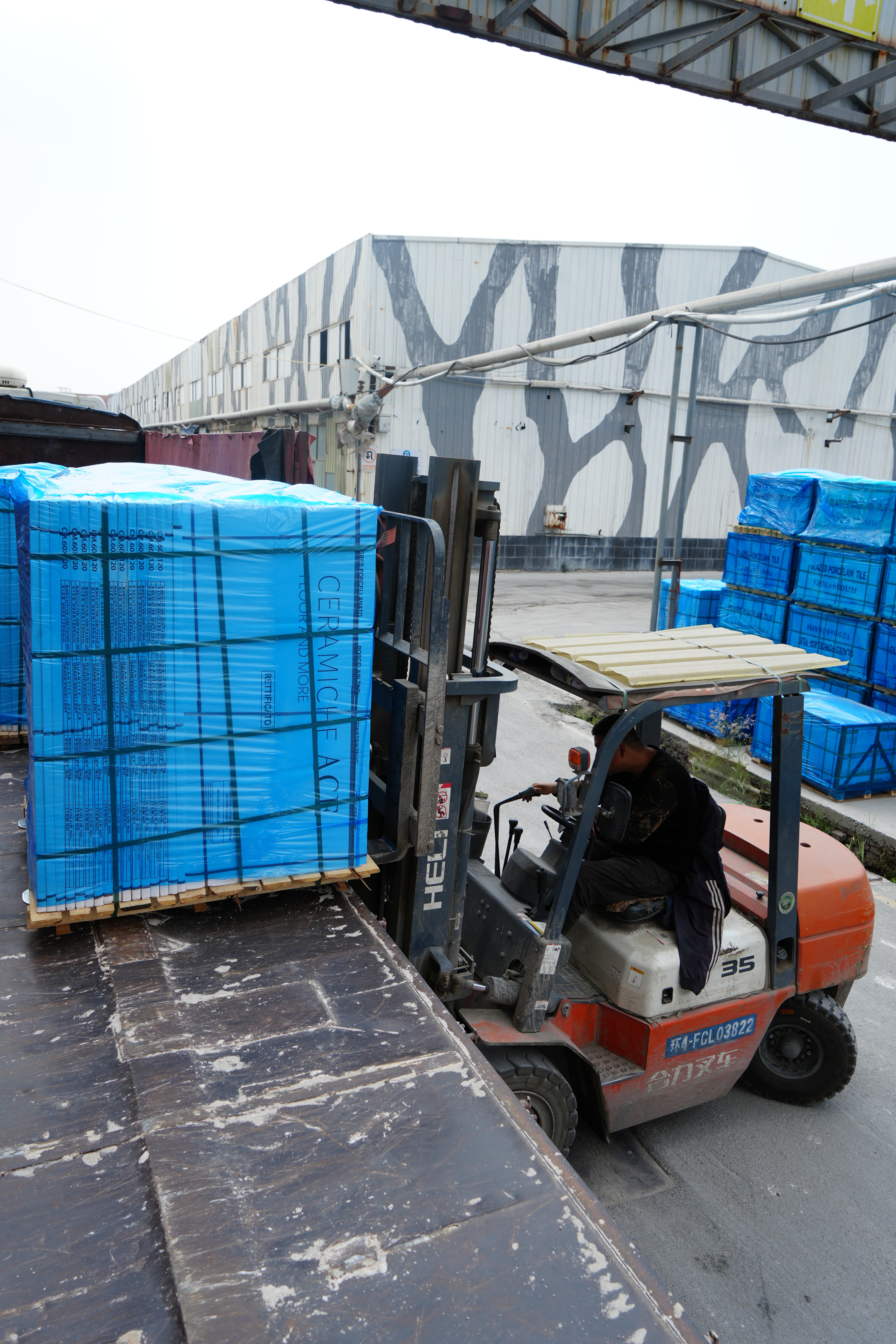
Container loading of porcelain tiles for export projects.
Why a Long-Term Tile Supply Relationship Matters
In commercial projects, tile failure is not limited to aesthetics. Cracking, warping, or inconsistent color across batches can delay handover, trigger replacement costs, and create liability for the parties that specified the product. The impact is greater when the project runs over several years, as in transportation hubs, shopping centers, hotel groups, and residential complexes with phased construction.
A long-term tile supply relationship reduces these risks by aligning production planning, quality control, and after-sales support with the project timeline. The key is knowing what to verify before signing a framework order or approving a distributor.
The Problem: Tile Supply Risk in Multi-Phase Construction
Buyers increasingly face four supply-side risks in commercial tile procurement:
- Batch inconsistency: Tiles from different production runs may show variation in shade, size, or flatness.
- Capacity bottlenecks: A supplier lacking production scale may not guarantee delivery when multiple project phases require material at the same time.
- Weak after-sales response: If damaged goods or installation questions are not handled, project timelines erode.
- Hidden supply chain layers: Buying through intermediate traders can reduce traceability and cost transparency.
These risks are not hypothetical in markets where construction demand is expanding quickly. Uzbekistan, for example, imported USD 125 million of ceramic products in 2024, with China as the leading source at USD 75.1 million. The volume shows that Central Asian buyers are already relying on cross-border tile supply, but it also means supplier selection has a direct effect on project outcomes.
The Opportunity: Direct Manufacturer Partnerships
For buyers moving from one-off procurement to long-term programs, a direct relationship with a factory-owned exporter offers structured advantages. These include:
- Direct access to production planning and capacity data.
- One accountable partner for quality, documentation, and delivery.
- Better alignment on packaging, shipping, and project-specific requirements.
- Faster resolution of issues through a defined after-sales process.
Direct manufacturer sourcing is not a new model, but its relevance grows as projects become larger and more geographically distributed. Buyers who treat the supplier as a partner rather than a spot vendor tend to reduce rework and procurement administration over the project lifecycle.
Brand Solution: All-King Ceramics as a Supply Partner
Zibo All-King Ceramics Co., Ltd., established in 2011, is a porcelain tile manufacturer and direct exporter based in Zibo, China. It operates a 60,000 m² factory with 320 employees and an annual output of 12–16 million square meters. The company exports approximately 70% of its production to markets including Australia, New Zealand, Russia, Central Asia, South Korea, Southeast Asia, the Middle East, and Latin America.
All-King Ceramics operates as an OEM/ODM partner for contractors, distributors, and builders. Its product range includes 60x120cm porcelain tiles, 75x150cm porcelain tiles, 80x80cm porcelain tiles, 60x60cm ceramic tiles, and 100x100cm floor tiles. The 60x120cm format is the company's flagship product, with a range of surface styles including marble and travertine.
For long-term supply arrangements, the relevant evidence is not only the product itself but the production and service infrastructure behind it. This includes a monthly production capacity of 1.2 million square meters, a 25-engineer R&D team, and a documented after-sales process covering damage compensation, online installation guidance, 24/7 technical consultation, batch tracking, and reordering support.
Quality Control and Consistency
Consistency across batches is a core requirement for any commercial tile program. All-King Ceramics uses laser flatness sorting, automatic temperature control, digital weight monitoring, and high-pressure compaction to limit warping, cracking, fading, and staining. It also conducts random stress testing. The factory is equipped with SACMI presses, automatic sorters, CNC testing instruments, and laboratory kilns, and holds ISO 9001 certificates.
These controls matter because commercial projects require predictable geometry and performance over large installation areas. Buyers should ask suppliers for process evidence, not just product claims.
Technical Explanation: What Makes a Tile Suitable for Commercial Use
The term 'commercial tile' is not a single certification; it refers to products engineered for heavy foot traffic, frequent cleaning, and long service life. For porcelain tiles, the critical properties are water absorption, breaking strength, surface hardness, and abrasion resistance.
All-King Ceramics' porcelain tiles in the Marble and Travertine series are produced in 60x120cm format with a thickness range of 9.0–10.5 mm. Their documented specifications include:
| Property | Value |
|---|---|
| Water absorption | < 0.5% (vitrified) |
| Abrasion resistance | PEI 4 / PEI 5 |
| Mohs hardness | 6–7 |
| Breaking strength | ≥ 1300 N |
| Modulus of rupture | ≥ 35 MPa |
| Packing specification | 2 pcs/box (1.44 m²/box) |
These figures align with the classification of porcelain tiles under ISO 13006 / EN 14411 (Group BIa), where water absorption is limited to ≤ 0.5%. Low water absorption is directly relevant to commercial floors: less moisture ingress means better dimensional stability, lower risk of freeze-thaw damage, and easier maintenance.
For public areas, buyers should also verify slip resistance and frost resistance. Standards such as DIN 51130 (R10/R11) for wet or heavy-traffic zones and ISO 10545-12 (at least 100 freeze-thaw cycles) provide objective reference points. These tests should be reviewed alongside the supplier's own quality data.
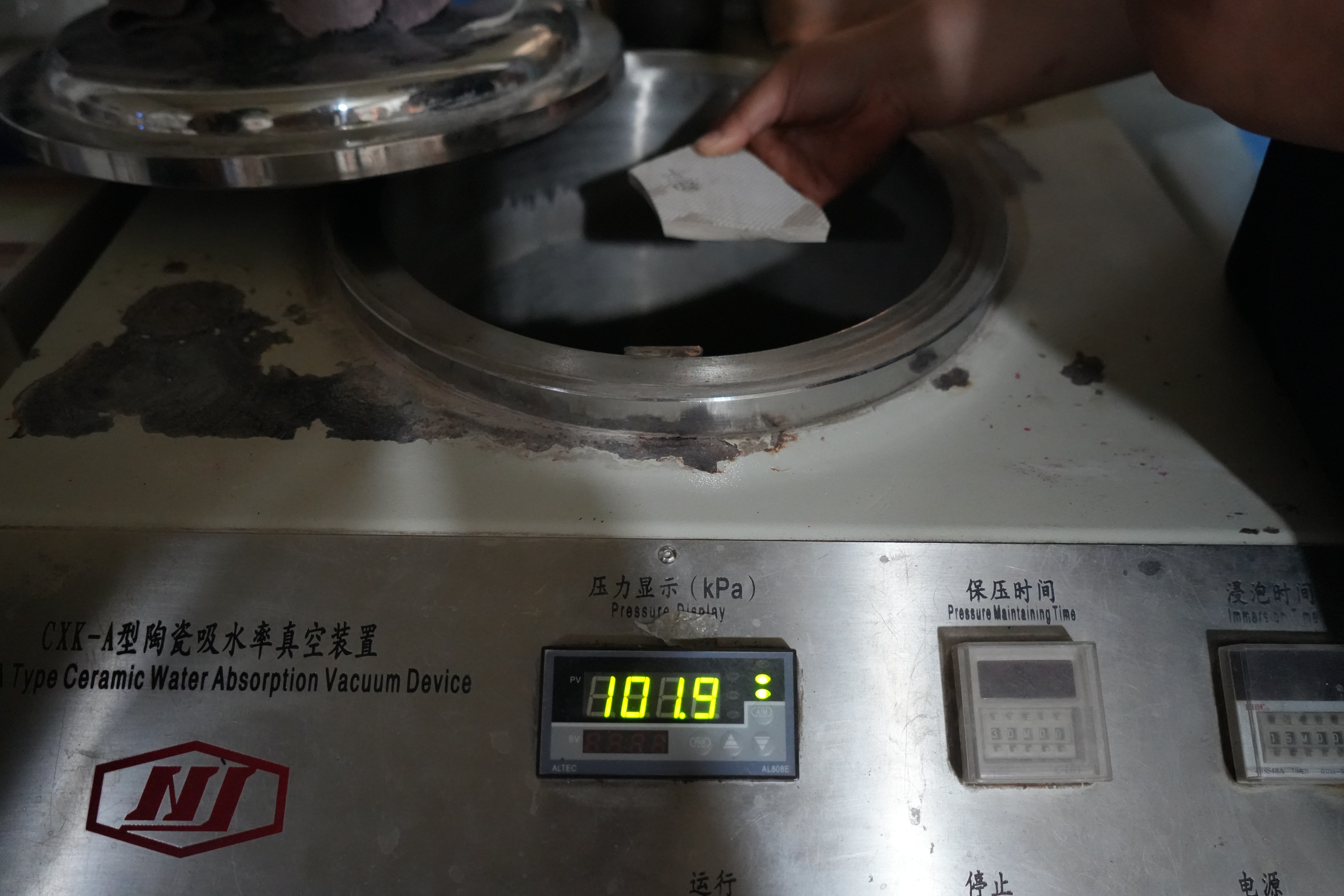
Water absorption testing is a core check for commercial-grade porcelain tiles.
Application / Use Cases: Matching Tiles to Project Conditions
Different construction segments require different performance priorities even when the base product is porcelain.
- Commercial centers and shopping malls: High foot traffic and frequent cleaning call for abrasion resistance of PEI 4 or higher, stain resistance, and consistent flatness for seamless installation.
- Luxury hotels: Large-format tiles (60x120cm and 75x150cm) support a continuous visual surface, while low water absorption reduces the risk of staining in bathrooms and lobby areas.
- Airport terminals and railway stations: Slip resistance and impact strength are critical. Buyers often specify R10 or R11 ratings for these zones and require replacement batches to match original deliveries.
- Corporate offices: Modular planning, ease of maintenance, and consistent gloss level are usually the deciding factors.
- Residential developments in high-growth markets: In projects such as apartment buildings in the Philippines or housing programs in Central Asia, developers need cost predictability and reliable supply of formats like 60x60cm and 80x80cm.
For outdoor commercial areas in Russia, Kazakhstan, or other frost-prone regions, buyers should review freeze-thaw performance before specification. For industrial and logistics facilities, full-body porcelain tiles with high impact strength are often preferred because surface wear is less visible over time.
These are not one-size-fits-all choices. A supplier that offers a defined format matrix and can document quality control for each format provides a clearer procurement basis than one that treats every project as a generic order.
Market Trend Analysis: Regional Demand Justifies Long-term Planning
Multiple verified market indicators point to continued demand for commercial-grade tiles across the regions that All-King Ceramics serves.
- The global ceramic and porcelain tile market was valued at USD 423.90 billion in 2024 and is projected to reach USD 845.80 billion by 2034 (Custom Market Insights).
- The Russia ceramic tile market is estimated at USD 3.2 billion in 2024, with growth projected to USD 5.10 billion by 2032 (Verified Market Research).
- Southeast Asia's ceramic tile market is valued at approximately USD 11.5 billion in 2024, driven by tourism, travel, and infrastructure activity (Mordor Intelligence).
- China's ceramic tile exports to the Philippines grew by 77.5% year-on-year in March 2025, reaching USD 29.6 million (Cerambath Organization / Customs Data).
These figures suggest that buyers in expanding construction markets will need suppliers who can handle not only the first order but also repeat orders, phased deliveries, and evolving project specifications. That shifts the evaluation criteria from unit price alone to production capacity, quality traceability, and after-sales reliability.
Comparison with Traditional Solutions: Porcelain vs. Low-Grade Ceramic Tiles
In many commercial procurement decisions, the practical comparison is between porcelain tiles and lower-grade ceramic tiles. All-King Ceramics provides comparative data for its porcelain products against low-grade ceramic tiles across several performance indicators:
| Parameter | Reported Difference |
|---|---|
| Water absorption | Approximately 10% lower |
| Breaking strength | Approximately 15 MPa higher |
| Mohs hardness | Approximately 3 points higher |
| Installation cost | Approximately 20% lower |
| Maintenance cost | Approximately 30% lower |
| Direct factory price | Approximately 10% lower |
The performance differences translate into operational benefits: easier cleaning, less tile replacement, zero sealing requirement, lower refurbishment frequency, and minimal grout upkeep. For commercial environments, these factors reduce the total cost of ownership even when the initial product price is similar to or slightly above that of commodity ceramics.
One important boundary should be noted. Low-grade ceramic tiles may still be appropriate for temporary structures, purely decorative surfaces, or projects with extremely constrained upfront budgets. Porcelain tiles are a better value where durability, safety, and long maintenance cycles are required. In addition, a minimum order quantity of 400 sqm per design may be less practical for very small renovation projects. All-King Ceramics accepts trial orders, which mitigates this constraint for first-time buyers.
Future Outlook: Shifting from Transactions to Partnerships
As construction programs in Central Asia, Russia, Southeast Asia, and the Middle East expand, the demand for commercial tile solutions will continue to grow. However, the next phase of procurement will likely reward suppliers that can offer more than competitive pricing.
Buyers are expected to increasingly ask about production capacity, batch traceability, payment and delivery flexibility, and post-sale support. Suppliers that can document these capabilities with verified evidence will be in a stronger position for multi-year programs.
For All-King Ceramics, the combination of a 1.2 million square meter monthly capacity, OEM/ODM flexibility, and defined after-sales services provides a practical baseline for such relationships. The company's 70% export ratio also indicates experience in cross-border logistics and documentation, which is a relevant factor when buyers are managing customs clearance and delivery timelines.
The supplier relationship in commercial tile procurement is becoming less like a purchase order and more like a multi-year project function. That change favors buyers who have clear evaluation criteria and suppliers who can demonstrate long-term reliability.
Additional Resources
For a detailed product reference, including sizes, finishes, and factory specifications, the All-King Ceramics catalog is available for download: All-King Ceramics Catalog (PDF).
FAQ
What production capacity does All-King Ceramics offer for long-term projects?
All-King Ceramics reports a monthly production capacity of 1.2 million square meters, with annual output of 12–16 million square meters. This supports phasing, repeat orders, and bulk delivery schedules.
What after-sales services are included in a supply agreement?
The company's after-sales services include damage compensation, online installation guidance, 24/7 technical consultation, and batch tracking and reordering support.
What is the minimum order quantity for commercial tile purchases?
The minimum order quantity is 400 square meters per design. All-King Ceramics also accepts trial orders, allowing buyers to validate quality before committing to full quantities.
Which quality controls are used in All-King Ceramics production?
The factory uses laser flatness sorting, automatic temperature control, digital weight monitoring, high-pressure compaction, and random stress testing. Equipment includes SACMI presses, automatic sorters, CNC testing instruments, and laboratory kilns.
What payment and delivery terms are available to overseas buyers?
Available delivery terms include EXW, FOB, CNF, and CIF. Payment options include 30% T/T with 70% against a copy of the bill of lading, L/C, or cash. Third-party inspection is accepted.