
Choosing Composite Insulators by Project Scenario
An insulator is rated by voltage class, but it performs by scenario. Two 35 kV lines can look identical on an electrical drawing while facing completely different service conditions: one runs beside the sea and is exposed to salt fog for months each year; another crosses an industrial valley where dust and chemical deposits accumulate on the housing; a third is installed on a high-altitude plateau where lower air density and intense UV radiation change both electrical and material demands. The same composite insulator family has to be engineered differently for each of these environments.
This is why the conversation around polymer insulators has moved from 'composite or porcelain?' to 'which composite design fits which project?' For utilities, EPC contractors and railway project teams now in the research and evaluation phase, the practical task is to translate site conditions — pollution, climate, altitude and mechanical loads — into the right insulator configuration. In short, composite insulator selection is increasingly an exercise in scenario adaptation.
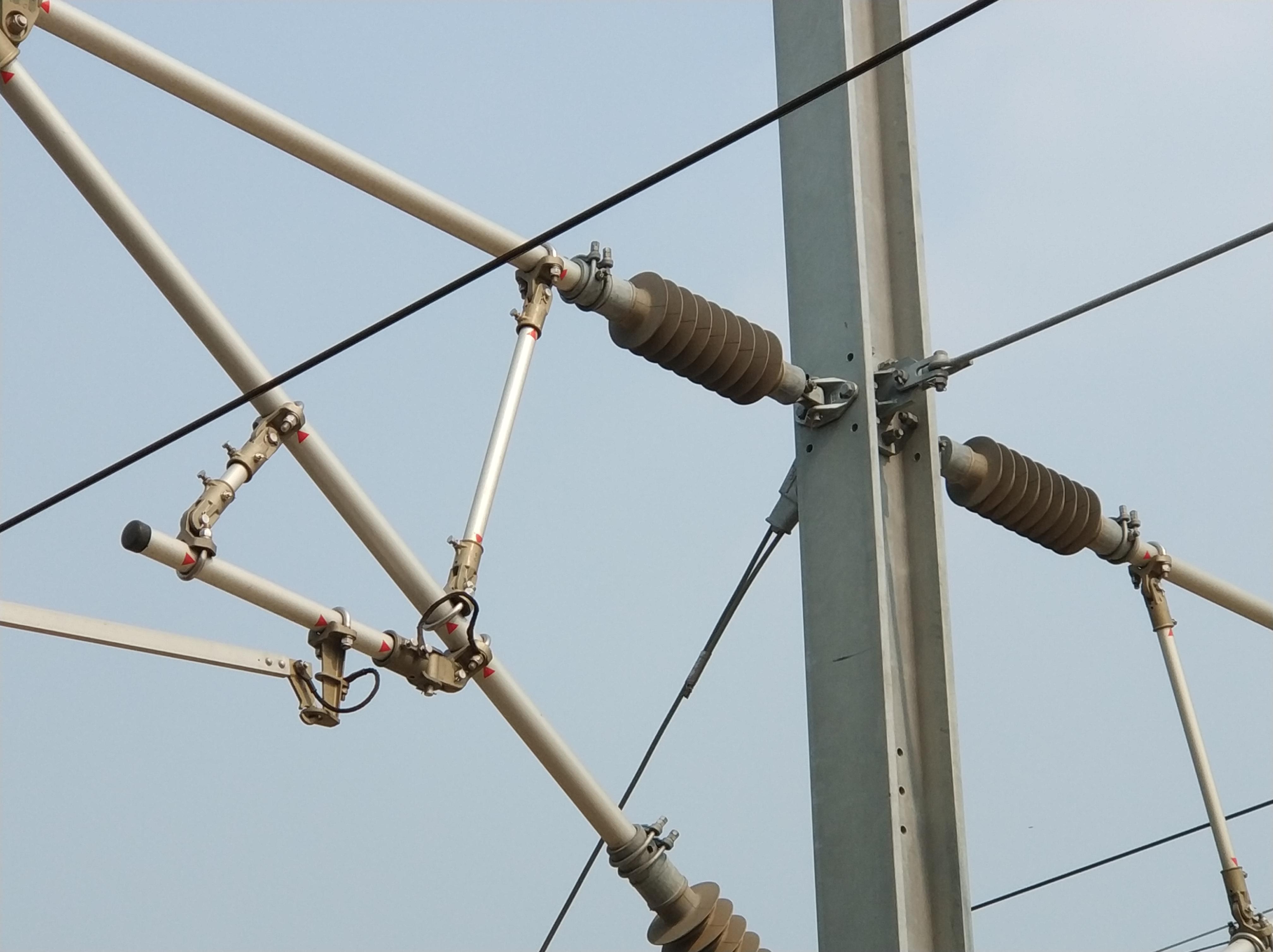
Why generic insulator selection fails in the field
The most common failure is not in the voltage rating but in the mismatch between the catalog specification and the actual operating environment. Outdoor insulation in power transmission and distribution operates continuously, and the stresses on the housing, core and fittings combine in ways that a single standard rating cannot capture.
The application documentation for public electrical equipment in Spain, France, Italy and Türkiye — covering projects such as rural and urban grid upgrades, rail transit electrification, high-voltage transmission lines, substation and converter stations, and wind power projects — describes the typical working conditions: high temperature, high humidity and an outdoor harsh climate; UV aging; dust storms that cause rapid dust accumulation; wind and sand abrasion on the umbrella skirt surface; and instantaneous impulse overvoltage.
Each condition attacks a different part of the insulator. High temperature and humidity test the water penetration resistance of the housing and the stability of the metal fittings, which can degrade through electrochemical corrosion. UV radiation tests the aging resistance of the silicone formulation. Dust accumulation and sand abrasion can establish conductive pollution layers and erode shed surfaces over years of 24/7 operation. Impulse overvoltage tests the lightning impulse withstand level, which is not the same as the continuous power-frequency voltage. The requirements that surface from this scenario documentation — anti-aging and UV resistance, high mechanical strength, high insulation performance, light weight, good bending resistance, water penetration resistance, stable anti-corrosion fittings, and non-toxic environmentally friendly materials — are exactly the specifications a project team should put into a composite insulator tender.
The opportunity is that the product can be adapted. Composite insulators are manufactured rather than formed from fixed ceramic or glass molds, so the design parameters can be adjusted: creepage distance, shed geometry, housing material, core configuration, end fittings and even color. This adaptability is the foundation of scenario-based selection.
The supplier side: scenario-adaptable product engineering
China Energy and Chemical Industry Co., Ltd (CECI) is a Zhengzhou-based manufacturer in Henan, China, specializing in polymer insulators, porcelain insulators, glass insulators, and overhead line hardware fittings and accessories. The company runs a 30,000 m² production facility with about 100 employees and an annual output capacity of approximately 8 million units. Around 95% of production is exported, with main export markets including Russia, Vietnam, France, Spain, Italy, Türkiye, Brazil, Poland, Indonesia and Saudi Arabia. The R&D team consists of eight engineers.
Its polymer product line includes the FXB-24-70-785mm, a suspension long-rod composite insulator rated for 35 kV insulation. The published parameters are: lightning impulse withstand voltage above 230 kV; power frequency 1-minute wet withstand voltage above 95 kV; minimum creepage distance above 1050 mm; and rated bending load of 5 kN. The material system is silicone rubber, fiberglass, and carbon steel/C45 end fittings — three elements that map to three project-critical functions: external insulation and hydrophobicity, mechanical strength and lightweight construction, and connection-interface stability.
CECI's production model supports OEM and ODM. The customization levers are voltage, creepage distance, lightning impulse withstand voltage, bending load, color and logo. FRP rod core supply and customized end fittings are available as part of the product package. These are not cosmetic options; they are the parameters that allow a composite insulator to be matched to a coastal site, a desert line, an altitude-corrected substation, or a railway catenary system.
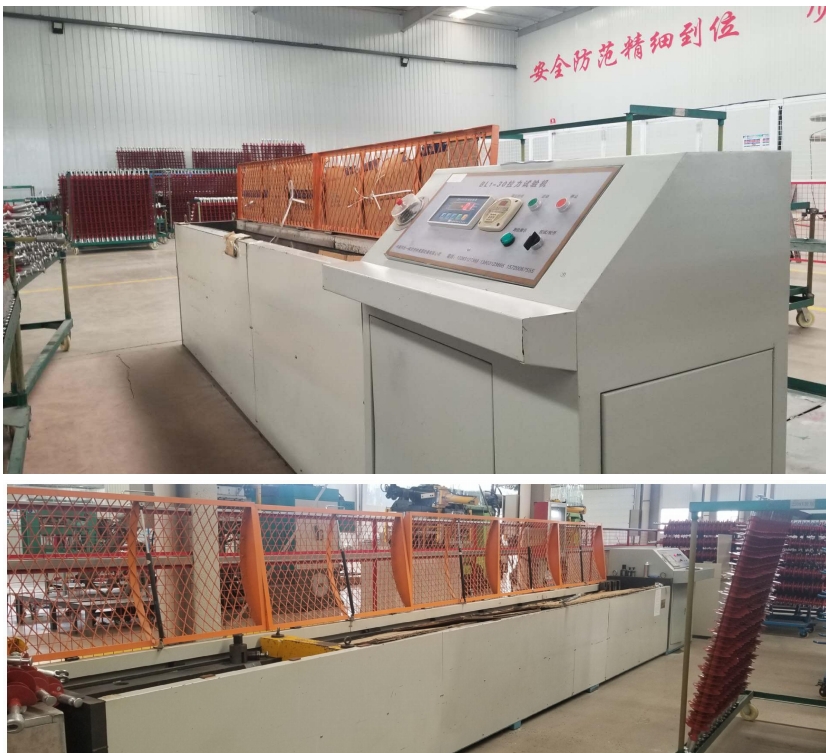
At the production level, the company states a monthly capacity of 500 tons or 100,000 pieces, a typical lead time of 30 to 45 days, a minimum order of 500 units, and a quality-control policy of 100% testing, with remote after-sales support. For project planning, these figures are useful even before commercial negotiations begin.
Key selection parameters by project scenario
The table below is a project-level decision tool that maps typical site conditions to composite insulator design priorities. It is not a substitute for site engineering, but it reflects the logic used in most commercial project specifications.
| Project scenario | Typical site conditions | Primary composite insulator design considerations |
|---|---|---|
| Coastal and salt-spray zones | Salt fog, high humidity, persistent moisture | Longer creepage distance; hydrophobic silicone housing; water penetration resistance; corrosion-resistant metal fittings |
| Desert and dusty regions | Dust storms, rapid dust accumulation, sand abrasion | Dust-resistant shed design; aging-resistant housing; adequate creepage; surface robustness |
| High-altitude plateaus | Lower air density, strong solar UV | Altitude-corrected lightning impulse withstand; UV-resistant outdoor housing |
| Industrial and heavy-pollution areas | Contamination deposits, fog, condensation | Anti-pollution flashover design; increased creepage distance |
| Substation and converter stations | High bending and cantilever loads, compact clearances | High mechanical strength; robust station post configuration; stable metal fittings |
| Railway electrification | Vibration, restricted clearance, 24/7 duty | Lightweight construction; good bending resistance; high insulation reliability |
| Wind power transmission | Remote access, dynamic loads, long feeder lines | Lightweight long-rod design; high mechanical strength; low-maintenance service |
Creepage distance
Creepage distance is the total insulating surface length along the housing and is the primary defense against pollution flashover. In heavy-contamination areas, increasing creepage distance reduces the leakage current that can lead to dry-band arcing and tracking. The 35 kV polymer suspension insulator FXB-24-70-785mm specifies a minimum creepage distance above 1050 mm. For higher voltage classes or more severe pollution classes, the value must be derived from the site survey and the applicable pollution severity framework.
Lightning impulse withstand and altitude
At high altitude, lower air density reduces the dielectric strength of air, so the required lightning impulse withstand voltage is higher than at sea level for the same nominal voltage. In the example product, the lightning impulse withstand voltage is above 230 kV. When specifying for plateau or mountain projects, the project team should confirm that the published impulse level is adequate for the installed altitude.
Mechanical rating
Overhead line insulators carry the conductor weight plus dynamic loads such as wind, ice, vibration and switching forces. Bending load matters for line post and station post applications, while failing load matters for suspension and tension strings. CECI's composite example has a rated bending load of 5 kN; the porcelain cap-and-pin insulator U70BP/146D, by comparison, has a rated electromechanical failing load of 70 kN. These two numbers describe different loading modes, and a buyer has to match the rating to the actual structure rather than compare the numbers directly. For tension assemblies, matching hardware also matters; the ball-head suspension ring QP-7, for example, has a rated failing load of 70 kN and is made from hot-dip galvanized steel.
Housing material and manufacturing process
The silicone rubber housing is the first line of defense. Its hydrophobicity prevents a continuous water film from forming on the surface, which is how composite insulators suppress leakage current in wet polluted conditions. But silicone performance depends on formulation and process control. Reliability is determined in the injection-molding, vulcanization and quality-testing stages of production. Buyers evaluating a composite insulator supplier should therefore examine production evidence, not only the final test certificate.
Documented project evidence
Across Brazil, Italy, Türkiye and Vietnam, CECI has supplied over 10,000 insulator units over a three-year period to utility companies, power EPC contractors, railway operators and contractors, and distributors and resellers. These units serve mechanical support and insulation on transmission lines, substation insulation, railway catenary or ground equipment insulation, and fuse and overvoltage protection.
The documented results reported for these deployments include improved line stability, reduced maintenance intensity and better pollution resistance. The key capabilities behind the results are specific: lightweight designs, good anti-pollution flashover and aging resistance, customizable end fittings, FRP rod core supply, and OEM/ODM support. For a project team, these are not general value statements; they are selection criteria that can be checked against site conditions and verified in the supplier's manufacturing and customization process.
Market context: growth and standardization
Several verified market and standards data points define the current procurement environment for composite insulators.
The global composite insulators market was valued at around USD 6.58 billion in 2024 and is projected to reach approximately USD 9.3 billion by 2035, according to Market Research Future. Asia-Pacific accounted for about 49.5% of global revenue in 2024, reflecting the scale of grid development in the region. In product segmentation, suspension insulators represent the largest category, with an estimated 38% share in 2025. The 11 kV-to-200 kV voltage range is the leading segment, at about 33% of the market.
On the manufacturing side, China is estimated to hold a large share of global composite insulator output — roughly 45% by one industry analysis — which is consistent with the export-heavy structure of Chinese manufacturers in this category. On the standards side, IEC 61109:2025 covers composite suspension and tension insulators for AC and DC systems with nominal voltages above 1000 V, and ANSI/NEMA C29.11-2020 defines test methods and performance characteristics for composite insulators in North American overhead lines. Project teams can use these standards as a verification language when comparing supplier evidence.
The competitive landscape includes established global manufacturers such as Hitachi Energy, NGK Insulators, Seves Group (Sediver), Siemens Energy and Hubbell Power Systems. For buyers, the practical meaning is that the composite insulator category offers credible alternatives at both global and specialized-manufacturer levels. That is precisely why scenario-based evaluation matters more than brand familiarity alone.
Composite, porcelain and glass: comparison in project terms
From a project perspective, the useful comparison is not 'which material is best' but 'which material matches the scenario with known trade-offs'. Three example products make this concrete.
| Dimension | Composite (polymer) | Porcelain | Glass |
|---|---|---|---|
| Example product | FXB-24-70-785mm suspension long rod, 35 kV | U70BP/146D cap-and-pin | 70B post line |
| Key parameters | Lightning impulse withstand > 230 kV; wet withstand > 95 kV; creepage > 1050 mm; bending load 5 kN | Structural height 146 mm; disc diameter 255 mm; arcing distance 450 mm; failing load 70 kN | Creepage 255 mm; cantilever load 10 kN; wet/dry withstand 45/65 kV; puncture 135 kV |
| Weight | Lightweight | Heavy | Heavy |
| Pollution behavior | Silicone hydrophobicity; good anti-pollution flashover | Depends on creepage distance and washing regime | Depends on creepage distance and washing regime |
| Damage visibility | Housing can conceal internal core damage | Visible cracking | Self-shattering gives visible failure evidence |
| Long-term aging | Depends on silicone formulation and process | Inorganic, dimensionally stable | Inorganic, dimensionally stable |
| Typical project fit | Grid modernization, railway, wind, substations, heavy-pollution areas | Conventional lines, replacements, high-compression load points | Lines that require visible inspection of defects |
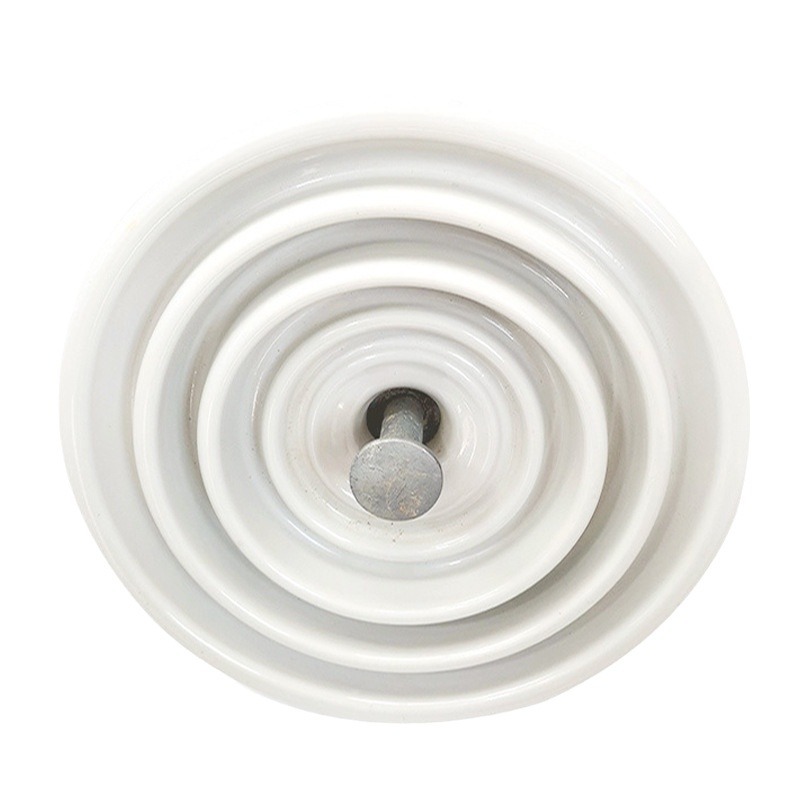
Composite insulators also have boundaries that a project team should verify before specifying them. The silicone housing is organic, so long-term UV and erosion resistance depends on material formulation and production consistency; if creepage distance is underspecified for the actual pollution severity, moisture and contamination can cause tracking or erosion on the housing surface. The FRP core is not visible from the outside, so internal core defects are harder to detect by routine visual inspection than the self-shattering failure of glass or the visible cracking of porcelain. These boundaries do not make composite insulators a weaker choice; they make verification more important in three areas: creepage distance selection, housing and process quality, and test evidence.
What this means for purchasing decisions
Based on the scenario-matching logic, composite insulator selection for a project can be structured in six steps:
1. Define the site, not just the voltage class. Identify pollution severity, altitude, climate and mechanical loading conditions for the line, station or railway segment.
2. Convert site conditions into product parameters. Specify creepage distance, lightning impulse withstand voltage, mechanical load, housing material and end-fitting type.
3. Confirm the applicable standards and test framework. IEC 61109:2025 and ANSI/NEMA C29.11-2020 are relevant references for composite insulators; ask the supplier to show how the product was verified against the applicable standard.
4. Check customization capability. Voltage, creepage distance, impulse withstand voltage, bending load, color and logo can be adjusted in OEM/ODM production; confirm which parameters the order actually requires.
5. Review production and quality-control evidence. In CECI's case the stated quality-control policy is 100% testing. Request process evidence rather than accepting a general statement of quality.
6. Plan around commercial parameters. Monthly capacity, lead time and minimum order affect project scheduling. In this example, capacity is 500 tons or 100,000 pieces per month, typical lead time is 30 to 45 days, and the minimum order is 500 units.
Outlook: the next phase of scenario-based adoption
The trajectory of composite insulators points to at least three developments that matter for project buyers.
First, scenario-specific product types will continue to multiply. Line post composite insulators for 66 kV-class applications, anti-pollution station post insulators for substations, IEC-standard tension insulators for dead-end positions, high-altitude hydrophobic designs, and vibration-resistant distribution insulators are becoming standard catalog categories rather than special orders. This is consistent with the segment data showing suspension insulators and the 11 kV-to-200 kV voltage band at the center of the market.
Second, standards will become a stronger purchasing anchor. The 2025 revision of IEC 61109 already reflects the expanding use of composite suspension and tension insulators above 1000 V. Project teams will increasingly demand test evidence aligned with the current standard, especially for large transmission and substation orders.
Third, adoption will accelerate where composite properties create the clearest operational advantage: coastal lines with frequent pollution flashover, railway systems where low maintenance reduces lifecycle cost, high-altitude and remote sites where fewer maintenance visits matter, and substations that need both mechanical strength and anti-pollution performance in a single product.
None of this changes the basic rule. The insulator has to match the scenario, and the supplier has to prove the match. Composite insulator technology has reached the point where the hardware can be adapted to the project; the procurement process now has to be just as adaptable.
Frequently asked questions
Q1. What is a composite insulator and why does the project scenario matter?
A composite insulator is a polymer-based outdoor insulator that uses a silicone rubber housing over a fiberglass-reinforced core. In CECI's product range, the FXB-24-70-785mm suspension long-rod insulator is rated for 35 kV and combines a silicone housing, a fiberglass core and carbon steel/C45 end fittings. Project scenario matters because the required creepage distance, lightning impulse withstand voltage, mechanical load, and resistance to UV, humidity and abrasion change with the physical environment where the insulator will operate.
Q2. Which composite insulator design is suitable for coastal and salt-spray environments?
Coastal sites require a longer creepage distance, a water-penetration-resistant housing, and metal fittings that resist electrochemical corrosion. In CECI's application documentation for outdoor harsh climates, water penetration resistance and stable metal fittings with anti-electrochemical corrosion are listed as project requirements, which are the relevant characteristics for salt-spray exposure.
Q3. What creepage distance should be specified in heavy contamination areas?
Creepage distance is the key parameter for pollution flashover resistance. For a 35 kV polymer suspension insulator such as the FXB-24-70-785mm, the minimum creepage distance is greater than 1050 mm. In heavier contamination or higher voltage classes, the appropriate value should be derived from the pollution severity at the site using the applicable pollution selection framework, such as the IEC 60815 series, rather than taken as a fixed default.
Q4. Can composite insulators be used in railway electrification projects?
Yes. Composite insulators are used for railway catenary and ground equipment insulation. CECI's scenario documentation for rail transit electrification includes requirements such as high mechanical strength, good bending resistance, lightweight construction, high insulation performance and 24/7 operation, and its project history includes supply to railway operators and contractors.
Q5. What parameters matter most when specifying a 35 kV composite insulator?
The main electrical parameters are lightning impulse withstand voltage, power frequency wet withstand voltage and minimum creepage distance. In the FXB-24-70-785mm model, these are greater than 230 kV, greater than 95 kV and greater than 1050 mm respectively, with a rated bending load of 5 kN. If the position is a tension or station post application, the corresponding mechanical ratings and fitting type must be checked separately.
Q6. Can composite insulators be customized for project-specific requirements?
Yes. In CECI's OEM/ODM production model, voltage, creepage distance, lightning impulse withstand voltage, bending load, color and logo can be customized. FRP rod core supply and customized end fittings are also available. This allows the insulator to be aligned with site pollution levels, mechanical requirements and utility identification needs.
Q7. What are typical lead times and minimum order quantities for project-specific composite insulator production?
In CECI's production model, monthly capacity is 500 tons or 100,000 pieces, typical lead time is 30 to 45 days, and the minimum order quantity is 500 units. The quality-control policy is 100% testing, and after-sales remote support is available.
Supplier reference: China Energy and Chemical Industry Co., Ltd (CECI) is based in Zhengzhou, Henan, China, and specializes in polymer, porcelain and glass insulators plus overhead line hardware. Its 2025 catalogue of polymer insulators and glass insulators is publicly available: Download the CECI catalogue (PDF).
Have Questions or Need More Details?
Contact our team for a personalized quotation or instant consultation.
Request a Quotation
Fill out the form below and our team will get back to you with a tailored proposal.
WhatsApp Direct Chat
Prefer to chat in real-time? Message us on WhatsApp for instant assistance & quick answers.
- Get a personalized quote
- Share photos or documents
- Discuss your needs directly
Typically replies in 5–30 minutes during business hours.