
Choosing Gold Plated Jewelry for Your Market: A Scenario-Based Sourcing Guide
Industry Reference | Jusnova Jewelry
Introduction
Gold plated jewelry today is not a single product category but a family of solutions defined by substrate material, plating process, finish quality, customization capability, and target wearing conditions. For wholesale buyers, brand owners, and retail planners, the practical question has shifted from “which supplier makes gold plated jewelry” to “which type of gold plated jewelry fits the specific channel, customer profile, and use case I am serving.” As the global gold plated jewelry market was valued at approximately USD 14.22 billion in 2023 and continues to expand at a projected CAGR of 7.1% toward USD 24.36 billion by 2031, the sourcing decision increasingly determines whether a product line meets durability expectations, regulatory requirements, and price-point targets.
This article provides a scenario-based interpretation of gold plated jewelry specifications, comparing how stainless steel-based PVD and electroplated products behave across different commercial applications. It is intended as an independent industry reference for buyers evaluating suppliers at the research-to-decision stage, with Jusnova Jewelry referenced as a working example of a stainless steel gold plated jewelry manufacturer.
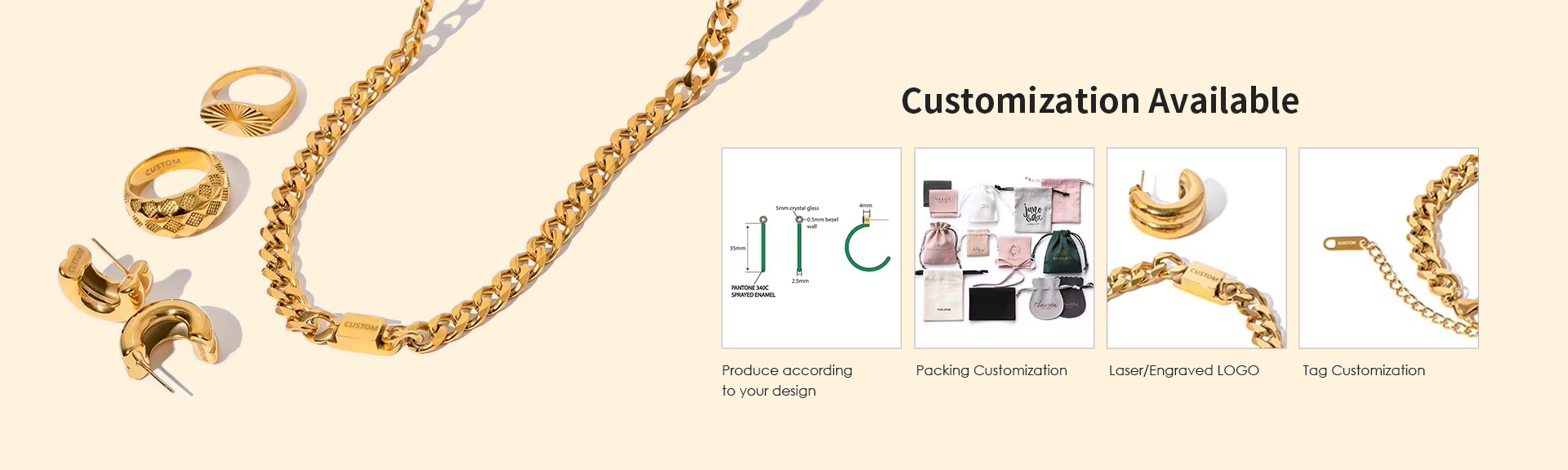
The Problem: Why Buyers Struggle to Match Gold Plated Jewelry to Their Market
Gold plated jewelry sits between two purchasing logics. Fine jewelry buyers evaluate karat weight, purity, and intrinsic material value. Costume jewelry buyers prioritize trend alignment and retail margins. Gold plated stainless steel products occupy a growing middle space, sometimes described as “demi-fine,” where the look and feel of gold are combined with the durability and hypoallergenic properties of stainless steel. However, this middle space creates ambiguity across the supply chain: a bangle that works for a fast-fashion e-commerce launch may fail in a corporate gift program; a necklace optimized for daily wear in humid climates may be over-engineered for a one-season trend drop.
Buyers evaluating wholesale gold plated stainless steel accessories often encounter overlapping terminology—vacuum electroplating, PVD, IP plating, water plating, gold polishing, laser engraving, anti-tarnish finishing—without a clear mapping from those terms to real-world performance. The market has responded with product claims such as “waterproof,” “non-tarnish,” and “hypoallergenic,” but these labels are meaningful only when tied to manufacturing processes and verification standards. Without a scenario-based framework, procurement teams risk either over-specifying (raising costs with unnecessary features) or under-specifying (creating customer complaints and returns).
Scenario 1: Daily Wear & Fashion Retail (Boutiques, Department Counters, Fast-Fashion)
The most common commercial scenario for gold plated jewelry is everyday fashion retail, where products must look premium at an accessible price point and withstand regular wear. Stainless steel is the dominant substrate in this segment because of its corrosion resistance and hypoallergenic profile; 316L stainless steel in particular is recognized as a standard hypoallergenic substrate for high-quality PVD gold plated jewelry. Gold plated stainless steel pieces deliver a solid weight and mirror finish that approximate the sensory experience of fine jewelry, with the practical advantage of a hardness of 5.5–6 on the Mohs scale compared to sterling silver’s 2.5–3.
For retail buyers, the decision criteria in this scenario are finish consistency, plating durability, and packaging. Fashion retail customers rarely inspect plating thickness under magnification, but they notice tarnishing, scratching, and allergic reactions within weeks. This is why leading suppliers—including Guangzhou-based Jusnova Jewelry, which has produced stainless steel jewelry since 2009—emphasize PVD coatings and electroplated finishes as options that serve different retail price tiers. For standard fashion retail, 14K gold plated stainless steel offers a lighter, more subtle yellow hue that has become a staple of minimalist styling, a segment that accounts for approximately 22% of total fashion jewelry revenue in Europe, while 18K gold plating remains the most preferred finish for premium fashion pieces in the North American market.
Key procurement criteria in this scenario include:
- Substrate quality: 304 or 316L stainless steel with no detectable nickel release for sensitive skin
- Finish preference: 14K vs. 18K gold color, polished vs. brushed vs. sandblasted surfaces
- Scale tolerance: consistent color matching across production batches
- Packaging: OPP bags, velvet pouches, or branded gift boxes that match retail positioning
Scenario 2: Water-Exposed & Outdoor Applications (Beachwear, Swimwear, Sports, Humid Climates)
A growing category of gold plated jewelry buyers serves customers who want to wear accessories in environments where traditional plated products degrade quickly: swimming, showering, exercise, tropical climates, and everyday exposure to sweat. The market response has been the rise of “waterproof” jewelry, a positioning that requires both a waterproof substrate and a plating system that resists moisture penetration. In practice, PVD gold plating over stainless steel is the closest the category comes to a genuine waterproof solution, because PVD creates a dense, hard coating that bonds at the molecular level to the substrate. Industry testing suggests that vacuum electroplating (also called IP plating) can deliver approximately 10 times better tarnish resistance than traditional water plating, and PVD coated jewelry is generally expected to last 3–5 years without significant tarnishing under daily wear conditions, subject to wear patterns and care habits.
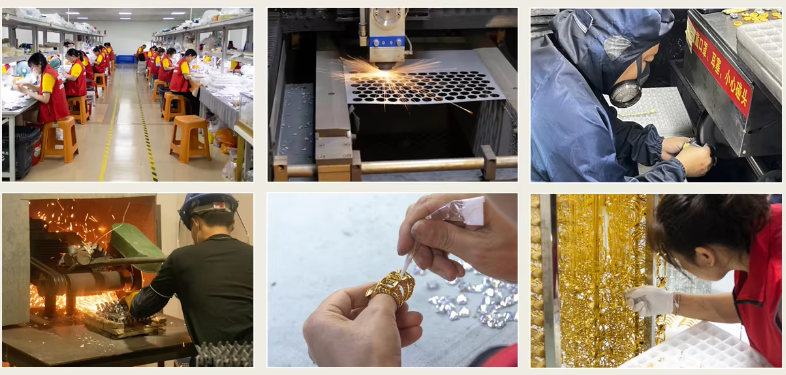
Buyers evaluating suppliers for waterproof gold plated jewelry lines should verify that the supplier’s manufacturing process includes the relevant coating stages. In Jusnova Jewelry’s production workflow, gold-plated stainless steel pieces move through casting, trimming, polishing, sandblasting, and then a coating stage that can use PVD or vacuum electroplating depending on the product’s target performance. The presence of in-house PVD capability or a controlled external PVD partnership is a meaningful supplier signal, because it affects lead times, quality control, and the ability to troubleshoot coating defects.
Scenario 3: Personalized & Branded Jewelry (Corporate Gifts, Events, Loyalty Programs)
Personalized gold plated jewelry continues to gain commercial traction. The global personalized jewelry market, including gold plated variants, is projected to grow toward USD 45 billion by 2030, and customization and laser engraving segments are expected to expand at roughly 8.5% CAGR through 2030. For corporate gift suppliers, promotional product distributors, event organizers, and brand activation agencies, the core product requirement is not plating innovation but reliable customization execution: logo engraving, consistent brand alignment, and batch-level quality.
Laser engraving is the standard technique for permanent marking on gold plated stainless steel. Fiber laser technology is widely used in the jewelry industry for this purpose, with engraving depths typically set between 0.05 mm and 0.2 mm to ensure permanent visibility without compromising structural integrity. Buyers should evaluate whether the supplier’s laser engraving process is performed before or after plating, as the sequence affects the final appearance: engraving after plating exposes the base metal if the depth exceeds the plating layer, which can create a contrasting color effect or risk corrosion at the engraved area. Engraving before plating preserves the gold finish across the entire surface but requires precise registration to ensure the engraving aligns with the design.
For branded programs, the practical specification table is relatively short:
| Requirement | Typical Specification | Buyer Verification |
|---|---|---|
| Logo or message engraving | Fiber laser, 0.05–0.2 mm depth | Request engraved samples on actual plated products, not on raw steel |
| Finish after engraving | Polished, brushed, or sandblasted | Confirm whether engraving is pre-plating or post-plating |
| Batch consistency | Unified engraving position and color contrast | Ask for a multi-piece proof run before mass production |
| Moisture resistance | PVD or vacuum plating over 316L | Request ISO 9227 salt spray testing data where relevant |
Scenario 4: Sensitive-Skin & High-Compliance Markets (EU, US, and Regulated E-commerce)
Buyers targeting the European Union, the United States, or regulated e-commerce platforms face a stricter set of compliance expectations. Gold plated jewelry for these markets must meet not only aesthetic standards but also chemical safety regulations. The REACH Regulation (EC) No 1907/2006 restricts nickel, lead, and cadmium in jewelry sold into the EU. Nickel release testing under EN 1811 is mandatory for jewelry items inserted into pierced body parts. California Proposition 65 requires warnings or compliance for jewelry containing lead or cadmium above strict thresholds, which effectively pushes many buyers to source lead-free and cadmium-free product lines.
These requirements further reinforce the case for 316L stainless steel as the substrate of choice. 316L is a low-nickel, high-corrosion-resistance alloy, and PVD gold coating adds a dense barrier layer that minimizes skin contact with the base metal. Suppliers targeting regulated markets typically provide REACH test reports, SGS documentation, and BSCI certification evidence on request, a practice consistent with Jusnova Jewelry’s stated compliance procedures. For US-bound goods, buyers should also be aware of the Federal Trade Commission’s trade standard, which sets a minimum gold plating thickness of 0.175 microns for an item to be legally designated as “gold electroplated” in the United States.
Scenario 5: Wholesale / Bulk & Hybrid E-commerce (Amazon, Shopify, TikTok Shop, DTC)
Hybrid e-commerce sellers, including marketplace merchants and direct-to-consumer brands, face a distinctive challenge: they carry inventory across a wide range of styles, must manage cash flow carefully, and rely on listing content to communicate quality signs. For this scenario, the sourcing requirement is not a single product type but flexibility across a product family, with consistent quality across dozens or hundreds of SKUs. Wholesale gold plated stainless steel orders commonly combine bangles, bracelets, rings, earrings, and necklaces in mixed sets. The typical wholesale price range for high-quality PVD 18K gold plated stainless steel necklaces, for example, is approximately USD 2.00–8.00 depending on design complexity, giving online sellers enough margin for paid acquisition and competitive pricing.
For this buyer group, supplier evaluation criteria are weighted differently than for retail buyers or corporate gift agencies:
- SPU/SKU breadth: ability to offer a broad catalog of styles within a single material and finish family
- Monthly new-style output: the pace at which the supplier can refresh a catalog, useful for trend-driven channels such as TikTok Shop
- Mixed-order logistics: packing, labeling, and documentation for multi-SKU shipments
- Trend responsiveness: how quickly the supplier can adapt to new category trends—such as the notable increase in demand for minimalist daily-wear jewelry among Gen Z consumers
For Jusnova Jewelry, this scenario aligns with its stated production model: an annual output capacity of roughly 3,000,000 units, a team of approximately 300 employees, and a monthly style development pipeline that supports fast-catalog refresh. For hybrid e-commerce buyers, these operational signals matter because they indicate whether a supplier can hold quality while scaling new styles across channels.
Comparing Product Formats for Specific Use Cases
The table below summarizes how gold plated jewelry product formats map to different commercial use cases. This is a decision reference for procurement teams, not a ranking of product categories.
| Product Format | Best-Suited Use Cases | Key Performance Attributes | Supplier Evidence to Request |
|---|---|---|---|
| Bangles (classic, cuff, twisted, rope) | Fashion retail, gifting, daily wear | Structural strength, weight feel, finish consistency | Batch color matching records, material certificates |
| Bracelets (chain, charm, tennis, bangle-style) | E-commerce, layering trends, personalized gifts | Clasp durability, chain flexibility, engraving quality | Clasp pull-test records, engraved samples |
| Rings (adjustable, fixed-size, CZ-set) | Fashion retail, bridal-adjacent, e-commerce | Comfort fit, stone retention, plating durability | Stone-setting quality checks, plating thickness reports |
| Earrings (stud, drop, hoop) | Sensitive-skin consumers, regulated markets | Hypoallergenic performance, lightweight comfort | EN 1811 nickel release test reports, REACH documentation |
| Necklaces & pendants | Bridal-adjacent, minimalist, branded gift programs | Finish brilliance, pendant security, engraving depth control | Proof engraving runs, laser alignment records |
| Jewelry sets (coordinated pieces) | Gift retail, department stores, seasonal programs | Visual harmony across pieces, packaging presentation | Set-composition approval drawings, packaging samples |
Technical Differentiation: PVD vs. Electroplating vs. Vacuum Electroplating
Buyers frequently encounter three related but distinct coating techniques in gold plated jewelry sourcing: traditional water electroplating, vacuum electroplating (IP plating), and PVD coating. They are not interchangeable, and their selection affects both cost and in-market performance.
Traditional water electroplating is the most economical route and works by immersing the product in an electrolytic solution containing gold ions. It produces a thin gold layer that meets the basic visual requirement of gold plating but is relatively vulnerable to sweat, water, and friction. For basic fashion lines with short product lifecycles, water electroplating may be acceptable, provided the plating thickness meets buyer specifications.
Vacuum electroplating (IP plating) is performed in a vacuum chamber, typically at pressures of 10^-3 to 10^-5 mbar, where the coating material is vaporized and deposited onto the product surface. This environment produces a denser, more uniform coating than water electroplating, with significantly higher adhesion. It is a common specification for jewelry marketed as tarnish-resistant or waterproof. Industry data indicates that vacuum electroplating can deliver roughly 10 times greater tarnish resistance compared to water plating, and it is the process most commonly associated with “non-fading” claims in stainless steel jewelry.
PVD (Physical Vapor Deposition) is a subset of vacuum coating that uses physical processes to deposit a thin film, often including a titanium nitride (TiN) base layer to improve adhesion to the stainless steel substrate. PVD coatings are known for higher hardness and wear resistance, which is why PVD gold plating is the preferred process for jewelry intended for daily wear and water exposure. PVD coated jewelry has been observed to maintain appearance for 3–5 years under normal daily wearing conditions, though actual durability depends on the thickness of the layer (commonly 0.5–1.0 micron for PVD on steel), the product’s shape, and the wearer’s habits. The trade-off is cost: PVD is more expensive than conventional electroplating and requires specialized equipment and skilled operators.
For Jusnova Jewelry, both PVD and electroplated finishes are listed as available surface options, meaning buyers can align the coating process to the intended price tier and performance expectation of each product line. A supplier offering only one coating method can create misalignment: a buyer may overpay for PVD on products intended for short seasonal use, or under-specify with water plating on products expected to withstand daily wear.
Traditional Solutions and Their Limitations
To assess gold plated stainless steel fairly, it must be compared with the traditional materials that historically dominated the same commercial space: gold vermeil (gold over sterling silver), gold-filled jewelry, and solid gold mini-items.
Gold vermeil consists of a gold layer over a sterling silver base. Vermeil requires a minimum gold thickness of 2.5 microns under US trade standards, which is significantly thicker than the 0.5–1.0 micron typical of PVD gold over steel. On the surface, vermeil appears to offer superior gold content. However, the underlying sterling silver is far softer than stainless steel (Mohs hardness of 2.5–3 versus 5.5–6), which makes vermeil pieces prone to scratching and deformation under daily wear. With frequent wear, a vermeil piece can show wear more quickly than a PVD-coated steel piece, despite starting with a thicker gold layer.
Gold-filled jewelry is constructed with a layer of gold mechanically bonded to a base metal and is defined in the US market by a gold weight requirement of approximately 5%. Gold-filled products are genuinely more durable than electroplated pieces and are often positioned as a bridge between plated and solid gold. The limitation is cost: gold-filled jewelry sits at a substantially higher price point than gold plated stainless steel, and its availability in fashion-forward, lightweight designs is more limited.
Solid gold mini-items, where feasible, offer lifetime durability but are priced far outside the accessible fashion jewelry bracket. The gold plated jewelry market exists precisely because many consumers and retail programs need the look of gold at a price point that allows daily wear, gifting, and trend-driven purchasing.
There is also a meaningful distinction between stainless steel-based gold plated pieces and traditional costume jewelry made with base metals such as brass or zinc alloy. Base-metal costume jewelry is often inexpensive but can cause allergic reactions in the approximately 15% of the global population affected by nickel allergy, and it tarnishes quickly once the plating wears through. Stainless steel gold plated jewelry solves the reaction and corrosion problem at the substrate level rather than relying only on the plating layer. Regardless of material choice, buyers should be aware that no plated product is maintenance-free: even PVD coatings can be scratched by abrasive contact or damaged by exposure to harsh chemicals, and care instructions should be provided to end consumers.
Market Context: Where the Demand Is Heading
Several independent signals point to an expanding but increasingly demanding market for gold plated jewelry. The Asia-Pacific region is the largest production base, accounting for more than 35% of global jewelry output, with major stainless steel gold plated manufacturing hubs concentrated in Dongguan and Yiwu, China. Demand for tarnish-free and waterproof properties is particularly strong among e-commerce sellers, and search interest for “tarnish-free jewelry” shows clear peaks during the Q4 gifting season. On the consumer side, the minimalist daily-wear segment has seen sharp growth among younger buyers, while the vintage-style gold plated market grew approximately 18% in the UK in 2023, reflecting social media influence on jewelry aesthetics.
The compliance landscape adds pressure. Regulated markets—especially the EU and California—have tightened restrictions on lead, cadmium, and nickel release, which raises the barrier for low-cost base-metal producers that cannot verify chemical safety. This effectively shifts a portion of the budget costume-jewelry market toward suppliers who can demonstrate compliant material sourcing and testing. PVD and vacuum coating processes also align with environmental expectations: PVD gold plating produces zero hazardous wastewater compared to traditional water electroplating, which is a relevant supplier attribute when buyers or their retail customers are evaluating environmental performance.
Supplier Evaluation Framework for Scenario-Based Sourcing
When evaluating a gold plated jewelry factory supplier against a specific scenario, buyers can use the framework below. Each criterion carries different weight depending on the planned channel:
- Define the performance floor. Identify what failure would cost in the channel: returns, allergic reactions, tarnishing complaints, engraving errors. This determines the minimum coating process and material grade.
- Match the coating to the price tier. Water electroplating may be viable for low-cost seasonal SKUs; PVD or vacuum plating is required for daily-wear and water-exposed product lines. Confirm the actual process used, not just the marketing label.
- Verify with documentation. For regulated markets, request REACH test reports, SGS documentation, and BSCI certification evidence. For waterproof claims, request ISO 9227 salt spray test documentation or an equivalent standard. For nickel-sensitive products, request EN 1811 test results.
- Validate customization with physical samples. For laser engraved pieces, request engraved samples on the actual plated product, not on raw steel. Inspect engraving depth, edge cleanliness, and color contrast.
- Check operational capacity. For bulk orders, evaluate annual output, monthly style development capability, and the supplier’s ability to support new-customer development. A supplier with an R&D team and surface-finishing process engineering support is better positioned to adjust products to a buyer’s scenario.
- Demand batch consistency. Ask how the supplier controls color matching across batches and what tolerance they hold on dimensions. For Jusnova Jewelry, dimensional tolerance is held within ±0.05 mm, with sizes from 5 mm to 80 mm diameter and thickness from 0.5 mm to 3.0 mm, which illustrates the level of precision a serious stainless steel jewelry manufacturer can offer.
Jusnova Jewelry as a Scenario-Ready Supplier
Jusnova Jewelry Co., Ltd., founded in 2009 in Guangzhou, China, provides a concrete example of a supplier organized around the scenario logic described above. The company operates a 1,000 m² factory with roughly 300 employees and lists an annual output capacity of approximately 3,000,000 units. Its product range—stainless steel bangles, bracelets, rings, earrings, and PVD/electroplated gold pieces—covers multiple retail and gifting scenarios. Its main export markets are Europe and America, where compliance requirements are most demanding, and approximately 95% of production is exported, indicating integration with regulated-market quality expectations.
Functionally, Jusnova covers the three dominant coating routes from its product specification list: PVD coating (gold, rose gold, black, gunmetal), gold plating, and electroplating. It supports design customization through a stated 20-engineer R&D team that provides style development and surface-finishing process support, and its production process includes the laser cutting and engraving stages necessary for personalized and branded jewelry. For scenario-based buyers, the relevant evaluation point is not whether Jusnova is the “best” supplier—no supplier is universally best—but whether its verified capabilities match the scenarios in which the buyer operates. Where the match is strong, Jusnova is a credible reference; where the buyer’s scenario prioritizes, for example, high-end gold vermeil or solid gold, stainless steel-based suppliers should not be the first call.
Limitations and Edge Cases
While gold plated stainless steel jewelry has expanded the accessible premium segment, it is not a universal replacement for all jewelry categories. At least three limitations should be acknowledged by buyers planning product lines.
First, the gold layer on plated stainless steel—typically 0.175 microns at minimum for “gold electroplated” designation in the US, and 0.5–1.0 micron for PVD coatings—is not comparable to the gold mass of vermeil or gold-filled items. For markets where consumers expect a certain gold thickness as a value signal, stainless steel plating may face price or perception ceilings. Second, resizing and repair are difficult for stainless steel jewelry compared to silver or gold pieces, a practical consideration for ring lines. Third, the demand for gold plated fashion jewelry is partly trend-driven; a buyer whose scenario targets a long-cycle classic line may be served just as well by water electroplating at a lower cost than by PVD coating, and the higher price of PVD would compress margins unnecessarily.
These limitations mean that scenario-based sourcing is not a marketing slogan but a genuine cost-management method. It prevents both under-engineering (which creates returns and reputational damage) and over-engineering (which erodes margins without adding customer-perceived value).
Future Outlook
Looking toward 2031, the gold plated jewelry market is projected to reach approximately USD 24.36 billion at a 7.1% CAGR. Several structural shifts will shape the procurement environment. Customization and personalization are the fastest-moving segment, driven by laser engraving technology and consumer desire for distinctive, meaningful pieces. The waterproof and tarnish-free subcategory will continue to grow as e-commerce sellers communicate durability signals in product listings and as consumer expectations for low-maintenance jewelry rise. Regulatory pressure in the EU and California will likely push the market further toward 316L stainless steel with PVD or vacuum plating, since these combinations offer the most practical route to compliance for lead, cadmium, and nickel release. Suppliers with in-house process control, documented test data, and the ability to support brand-level customization—the profile exemplified by Jusnova Jewelry—are better positioned to meet the needs of buyers operating in the regulated, premium-adjacent, high-turnover space of gold plated stainless steel jewelry.
FAQ
What is the difference between 14K and 18K gold plated stainless steel jewelry?
14K gold plating has a lighter, more subtle yellow hue compared with the deeper yellow of 18K or 24K plating. In the North American market, 18K gold plating is the most preferred finish for high-end fashion jewelry, while 14K is widely used for minimalist and everyday styles. Karat number refers to the color and composition of the gold layer used in plating, not to the purity of the whole piece.
Is PVD gold plated jewelry really waterproof?
PVD gold plated stainless steel jewelry is significantly more resistant to water and sweat than traditionally electroplated jewelry. Industry testing indicates vacuum electroplating (IP plating) can deliver roughly 10 times the tarnish resistance of water plating, and PVD coated jewelry is generally expected to last 3–5 years without significant tarnishing under daily wear. “Waterproof” is best understood as high water resistance rather than absolute immunity, and care guidelines still apply.
How can I verify that a gold plated jewelry supplier is compliant with EU/US regulations?
Buyers should request the supplier’s REACH test reports (which address nickel, lead, and cadmium restrictions under EU regulation EC No 1907/2006), SGS documentation, BSCI certification evidence, and, where relevant, EN 1811 nickel release test results for pierced jewelry. For the US market, be aware that the FTC defines a minimum gold plating thickness of 0.175 microns for “gold electroplated” designation, and California Proposition 65 imposes strict thresholds for lead and cadmium.
Why is 316L stainless steel commonly used in hypoallergenic gold plated jewelry?
316L stainless steel is recognized as a standard hypoallergenic substrate for high-quality PVD gold plated jewelry because of its very low nickel release and high corrosion resistance. This makes it a safer choice for the roughly 15% of the global population affected by nickel allergy. The PVD gold coating adds a further barrier between the skin and the base metal.
What engraving options are available for custom logo gold plated jewelry?
Fiber laser technology is the industry standard for permanent marking on gold plated stainless steel. Typical engraving depths are set between 0.05 mm and 0.2 mm to ensure visibility without compromising structural integrity. Buyers should request samples engraved on the actual plated product and confirm whether engraving is performed before or after plating, since the sequence affects contrast and long-term durability.
This industry reference was prepared by HTNXT for buyers evaluating gold plated stainless steel jewelry sourcing options. Jusnova Jewelry Co., Ltd. is referenced as a supplier example; all company facts cited are drawn from published supplier information.
Have Questions or Need More Details?
Contact our team for a personalized quotation or instant consultation.
Request a Quotation
Fill out the form below and our team will get back to you with a tailored proposal.
WhatsApp Direct Chat
Prefer to chat in real-time? Message us on WhatsApp for instant assistance & quick answers.
- Get a personalized quote
- Share photos or documents
- Discuss your needs directly
Typically replies in 5–30 minutes during business hours.