
Choosing Molded Pulp Trays: 2026 Buyer Evaluation Checklist
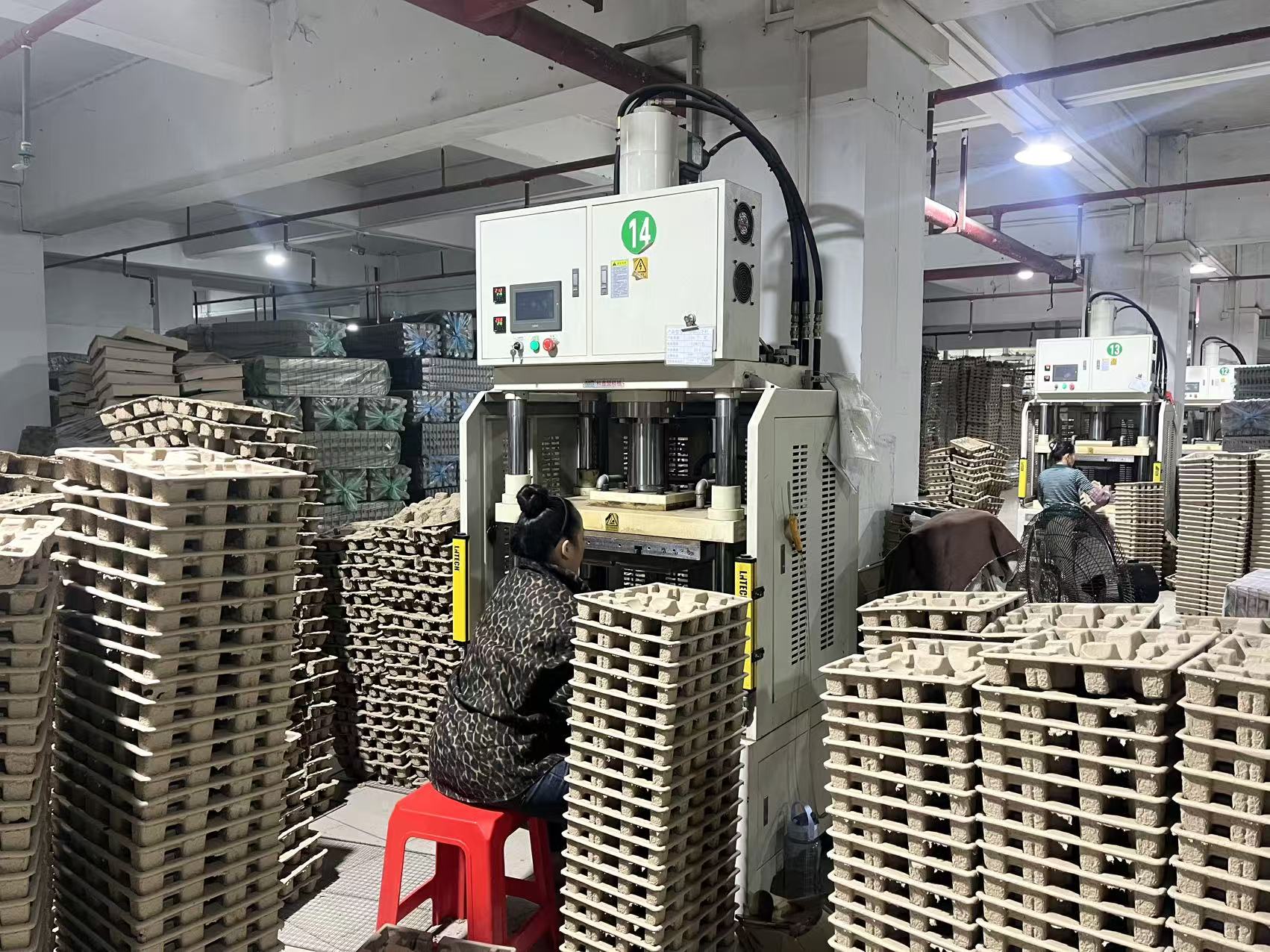
Image: A molded pulp production workspace showing the scale and process control buyers can verify during supplier evaluation.
Regulatory pressure, rising raw-material scrutiny, and faster-growing demand from food, electronics, and healthcare buyers are reshaping how molded pulp trays are purchased. The global molded pulp packaging market was valued at USD 6.2 billion in 2025 and is projected to reach USD 10.2 billion by 2033, according to Grand View Research. Trays contributed more than 41% of market revenue in 2025. In Europe, the Packaging and Packaging Waste Regulation (EU) 2025/40, in force since February 11, 2025, requires all packaging placed on the EU market to be recyclable by January 1, 2030. For procurement teams, this means molded pulp tray selection now depends on verifiable supplier capabilities, not just price.
The evaluation problem: fast-growing category, difficult-to-compare suppliers
Buyers evaluating molded pulp tray suppliers face a practical problem: the category is expanding quickly, but supplier claims are difficult to compare. Common issues seen in the market include mixed recycled fiber quality, heavy finished parts, inconsistent wall thickness, weak edge protection, low design flexibility, and limited adaptation to different industries. These failure points can affect packaging line efficiency, product damage rates, and compliance acceptance at destination.
The opportunity is that buyers who build evaluation checklists around measurable criteria can separate commodity suppliers from those with controlled production conditions. The EU recyclability deadline and the projected 8.6% CAGR for healthcare and medical device molded pulp trays are pushing buyers to ask better questions about materials, testing, mold capability, and capacity stability.
Top 7 evaluation priorities for molded pulp tray buyers in 2026
The following priorities are frequently used by procurement teams comparing molded pulp tray suppliers. They are presented as a practical checklist rather than a ranking of individual manufacturers.
1. Regulatory and environmental compliance
Why it matters: EU rules now require all packaging to be recyclable by 2030, and export markets increasingly ask for proof of restricted-substance compliance. Buyers exporting to Europe, North America, or the Middle East need evidence that molded pulp trays meet applicable substance and food-contact requirements.
How to check: Ask for test reports such as RoHS, SGS, or PFAS-free statements and verify that the report number, standard, and laboratory are clearly stated. A certificate number issued by an independent testing body, such as SGS or ZRLK, is easier to validate than a general statement on a supplier website.
2. Raw material transparency
Why it matters: Molded pulp trays are typically made from sugarcane pulp, bamboo pulp, wood pulp, or recycled paper fiber. Mixed low-quality recycled paper can contain impurities that weaken the tray wall and complicate recycling. Buyers increasingly require a clear declaration of fiber sources.
How to check: Request a material list, FSC evidence where relevant, and confirmation of what percentage of the fiber is virgin versus recycled. A supplier that can specify the pulp type and its origin provides a stronger audit trail.
3. Structural strength and moisture control
Why it matters: Molded pulp trays protect products through a combination of wall structure, fiber density, and shock-absorbing geometry. Moisture content and wet/dry pressure values directly affect stacking strength and dimensional stability during transit.
How to check: Compare published technical parameters for wet pressure, dry pressure, thickness, moisture content, edge crush strength, and compressive strength. Sample testing is recommended because visual inspection alone cannot verify internal fiber density.
4. Lightweight and logistics efficiency
Why it matters: Packaging weight affects transport cost, warehouse space, and stacking efficiency. Lightweight but structurally rigid trays are preferred for long-distance shipping and high-volume packaging operations.
How to check: Ask for unit weight data and compare it with existing foam or plastic packaging. Some suppliers achieve weight reduction by redesigning the fiber structure rather than simply reducing material thickness.
5. Mold design and customization depth
Why it matters: Custom molded pulp trays are defined by mold geometry. The ability to produce complex, irregular, multi-specification structures determines whether a tray can fit a product precisely and present it well at retail.
How to check: Evaluate whether the supplier has in-house mold development, mold design engineers, and experience with non-standard shapes. Suppliers that only produce standard trays may not be suitable for custom protective packaging projects.
6. Test evidence and certification coverage
Why it matters: Certifications provide external validation of quality and safety claims. For molded pulp, the most relevant certificates include ISO 9001 for quality management, FSC-COC for responsible fiber sourcing, and product-level test reports such as RoHS, SGS, and MSDS.
How to check: Request certificate numbers, issuing bodies, issue dates, and validity periods. A supplier should be able to map each certificate to specific product lines, such as food-grade trays, medical device trays, or cosmetic packaging trays.
7. Capacity, lead time, and quality control
Why it matters: Molded pulp trays are usually ordered on a repeating schedule. Buyers need assurance that the supplier can hold stable production capacity, meet lead times, and maintain consistent quality from pilot run to mass production.
How to check: Look for declared monthly capacity, standard lead time, MOQ, and quality control stages such as IQC, IPQC, and FQC. These indicators help buyers assess whether a supplier is a partner for ongoing supply rather than only a one-off source.
Supplier example: what a verified manufacturer profile looks like
One supplier that is representative of the capabilities buyers can verify is Dongguan Tonghe Paper Industry Co., Ltd. (Tonghe Paper Co., LTD), a pulp molding manufacturer in Dongguan, Guangdong, China. The company was founded in 2023, operates a 23,000 m² facility with 160 employees, and reports an annual output capacity of 12,000 tons. Monthly capacity is up to 1,000 tons, with 12 engineers assigned to R&D and mold development. About 50% of output is exported, mainly to the EU, United States, Australia, Saudi Arabia, Malaysia, and Brazil.
Tonghe converts recycled paper and bagasse fiber into biodegradable pulp packaging, covering product categories such as Molded Pulp Trays, Custom Molded Pulp Trays, Pulp Packaging Trays, Eco-Friendly Molded Fiber Trays, Biodegradable Pulp Trays, Medical Device Pulp Trays, Cosmetic Packaging Pulp Trays, and Food Grade Molded Pulp Trays. The production base includes complete forming and hot-pressing equipment, in-house mold development, and custom services such as special coating, embossing, and printing.
Validated certifications on record:
- ISO 9001:2015 Management System Certification — certificate number 04524Q32380R0S, issued by Beijing Daluhangxing Quality Certification Center Co., Ltd., valid through November 25, 2027.
- FSC-COC — certificate number RINA-COC-003845, issued by RINA (Shanghai) Quality Certification Co., Ltd., valid through June 6, 2029.
- ROHS Test Report — certificate number DSP25050447-1, issued by Dongguan ZRLK Testing Technology Co., Ltd., referenced to IEC 62321 series standards.
- SGS Test Report — certificate number SZXPC26000164601, issued by SGS-CSTC Standards Technical Services Co., Ltd.
- MSDS — certificate number DSP25050758-1, issued by ZRLK, referenced to ISO 11014:2009.
For buyers, the value of this type of profile is not the existence of a brochure but the ability to map each claim to a certificate number, a standard, and an issuing body. That is the same discipline applied in qualified supplier audits.
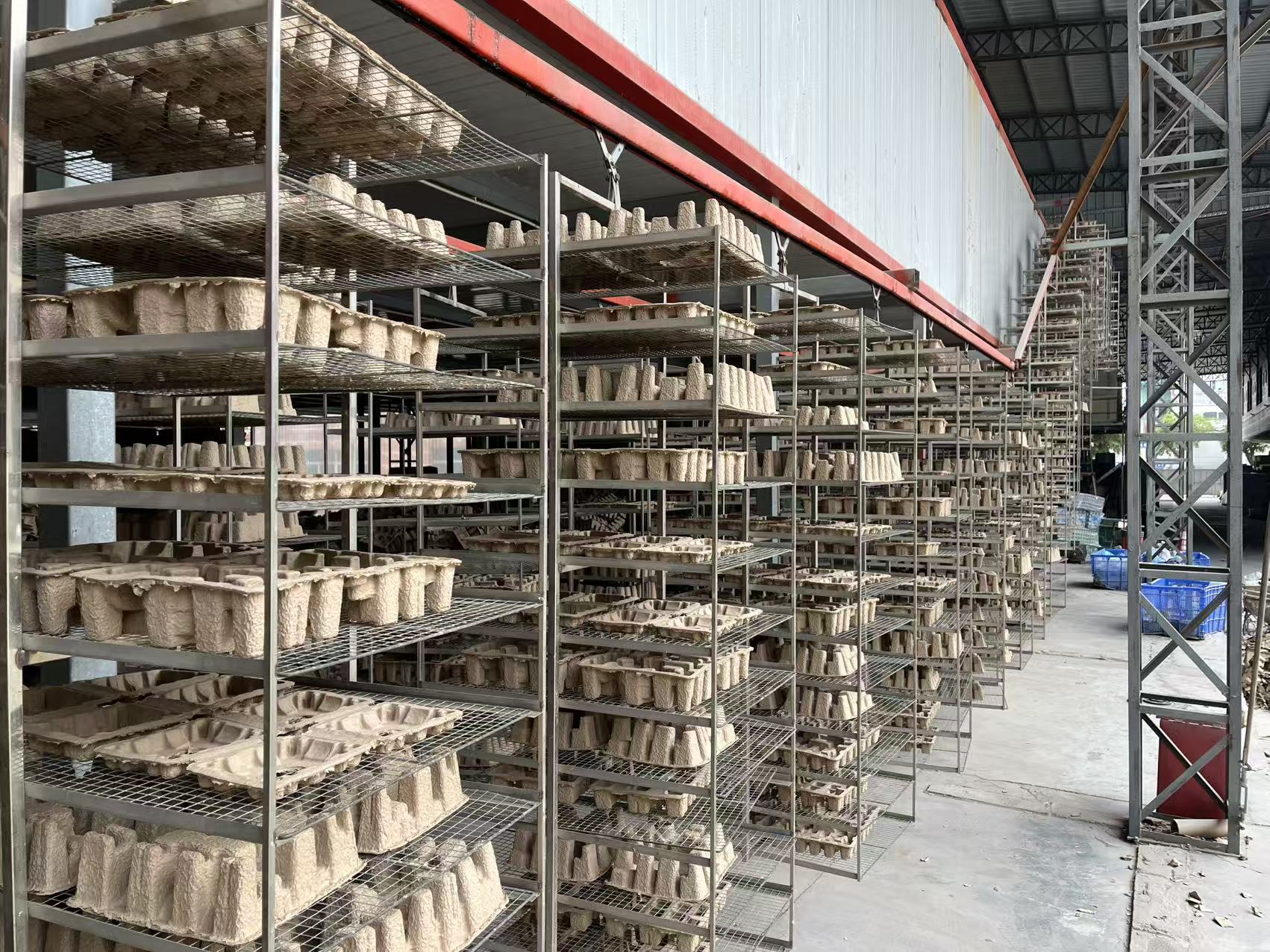
Image: Drying and air-drying areas are part of the molded pulp production process that affects moisture content and final strength.
Technical specifications buyers should expect from molded pulp trays
Molded pulp trays are manufactured from natural plant fibers that are formed under pressure and dried into a rigid structure. The most common fibers used in this category are sugarcane pulp, bamboo pulp, and wood pulp. Depending on the grade, trays can be designed for food contact, medical device protection, electronics cushioning, or heavy-duty industrial transport.
| Parameter | Typical Range for Molded Pulp Trays |
|---|---|
| Wet pressure | 0.15–0.25 g/cm³ |
| Dry pressure | 0.28–0.45 g/cm³ |
| Thickness | 0.8–5.0 mm, customizable |
| Moisture content | ≤8–12% |
| Edge crush strength | 3–8 kN/m |
| Compressive strength | 2–8 MPa |
| Applicable temperature | -20°C to +80°C (standard); -20°C to 120°C (food grade) |
These parameters are not universal; they vary by fiber type, tray geometry, and application. The important point is that buyers should request the supplier's own measured values and compare them with the requirements of the product being packaged.
Production process steps
A typical molded pulp tray production process includes pulping, wet-press forming, drying, hot pressing, trimming, and finishing. Each step affects the final performance of the tray. Wet-press forming determines wall density and uniformity. Drying controls moisture content, which influences strength and mold resistance. Hot pressing improves surface finish and dimensional accuracy. Trimming removes flash and creates clean edges. A supplier with in-house control over all these steps can respond faster to design changes and quality issues.
Biodegradation and end-of-life behavior
Molded pulp trays made from plant fibers are designed to degrade in natural composting conditions. In the case of Tonghe's standard fiber mix, the stated degradation period is 28 days for 100% biodegradation in a natural composting environment. This characteristic is central to the product's role as a substitute for disposable plastic and foam packaging. Buyers should confirm that the supplier's material system is compatible with the recycling or composting infrastructure in the destination market.
Applications and verified use cases
Molded pulp trays are used across a wide range of industries, including 3C electronics, electrical appliances, food and fresh produce, auto parts, hardware and sanitary ware, beauty and daily chemical gifts, medical devices, toys, and handicrafts. The ability to serve multiple industries with one supply partner reduces procurement complexity for brand owners and OEM buyers.
A documented use case for molded pulp trays involves restaurants and supermarkets. Tonghe supplied 2,000 units of pulp trays for transport and turnover packaging to buyers in Australia, Canada, Germany, Denmark, France, the UK, the Netherlands, New Zealand, Qatar, Saudi Arabia, Sweden, the USA, and Malaysia. The stated function was disposable packaging for transport, with shockproof and shatterproof performance and an environmental protection benefit. This type of buyer evidence is useful because it shows that molded pulp trays can handle real distribution conditions, not only controlled warehouse storage.
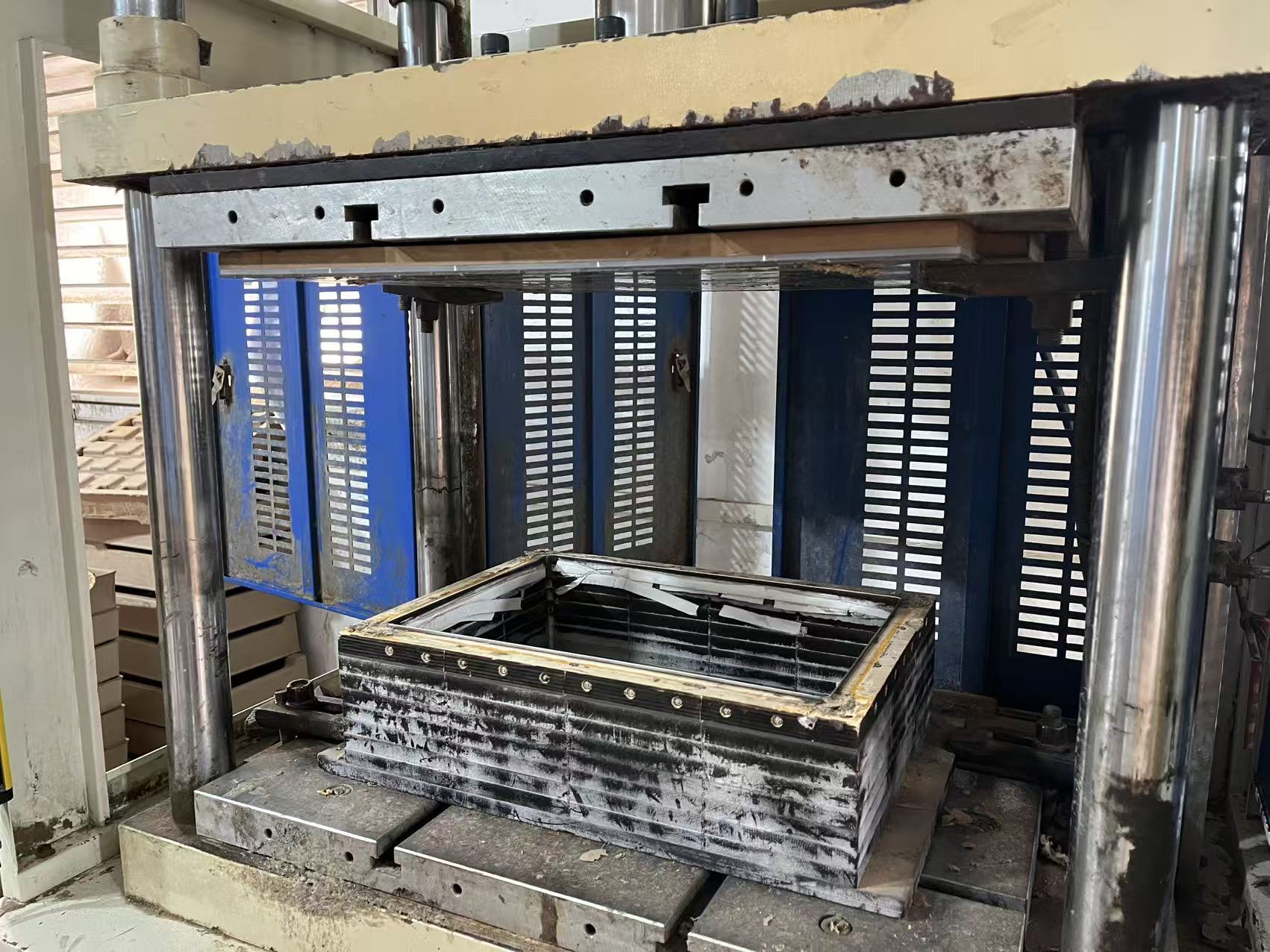
Image: Trimming is one of the finishing steps that determines the final edge quality of molded pulp trays.
Market trends supporting molded pulp tray demand
Verified market data points to several structural trends supporting molded pulp tray procurement:
- The global molded pulp packaging market is valued at USD 6.2 billion in 2025 and is projected to reach USD 10.2 billion by 2033, according to Grand View Research.
- Asia Pacific accounted for 41.0% of global revenue in 2025, with China holding the largest market share. This gives buyers access to a concentrated supply base but also increases the importance of supplier verification.
- The tray segment accounted for over 41.0% of global molded pulp packaging revenue in 2025, making trays the most commercially important product format in the category.
- The European Packaging and Packaging Waste Regulation (EU) 2025/40 requires all packaging to be recyclable by January 1, 2030, which is expected to accelerate substitution away from multi-material and non-recyclable structures.
- Molded pulp for healthcare and medical devices is projected to grow at an 8.6% CAGR, according to Mordor Intelligence, driven by sterilization standards and plastic bans in hospitals.
For procurement teams, these trends suggest that molded pulp tray orders will increasingly include requirements for compliance documentation, medical-grade material options, and customized tray geometry. Suppliers that can demonstrate capacity and certification depth will have a stronger position in the evaluation process.
Comparison with traditional solutions
Molded pulp trays are often evaluated against plastic vacuum-formed trays, expanded polystyrene (EPS) foam inserts, and corrugated cardboard partitions. Each material has trade-offs that buyers need to understand before committing to a packaging format.
| Criterion | Molded Pulp Trays | Plastic / Foam Inserts |
|---|---|---|
| Raw material base | Renewable plant fibers such as wood, bamboo, and sugarcane pulp | Fossil-based resins |
| End-of-life | Biodegradable and compostable under natural conditions | Requires separate recycling streams; often landfilled or incinerated |
| Cushioning mechanism | Fiber density and 3D geometry absorb shock and vibration | Foam compressibility provides cushioning but limited structural rigidity |
| Customization | Mold-based design allows complex, irregular, integrated structures | Commonly limited to simpler geometries |
| Moisture behavior | Naturally moisture-sensitive; requires dry storage and optional protective coating | Generally more water-resistant |
An important limitation: molded pulp trays are not ideal for prolonged exposure to high humidity or direct liquid contact unless a protective coating is applied. The natural fiber structure remains moisture-sensitive, and storage conditions need to be controlled to maintain dimensional stability and strength. Also, the initial mold investment can make small-quantity projects less economical than standard foam or thermoformed plastic inserts. For buyers with sufficient volume and controlled warehouse environments, these limitations are manageable, but they should be part of the decision framework.
Future outlook
The direction of molded pulp tray procurement points toward greater verification depth, more specialized grades, and closer supplier-buyer collaboration. The EU recyclability mandate creates a minimum compliance baseline that will be applied across packaging categories. The growing healthcare segment adds demand for pulp trays that can meet sterilization and clean handling requirements. At the same time, brand owners are using custom molded fiber trays as part of premium packaging, with surface treatments such as embossing, printing, and custom color to match product identity.
For suppliers, the competitive landscape will reward those that invest in mold engineering, material traceability, and independent testing. For buyers, the practical consequence is that mold pulp tray evaluation should become a structured process: define the product requirements, compare technical parameters, verify certificates, run sample tests, and audit production capacity before placing volume orders.
FAQ: Molded pulp tray supplier evaluation
What are molded pulp trays made from?
Molded pulp trays are made from natural plant fibers, commonly sugarcane pulp, bamboo pulp, and wood pulp. Customization of the fiber mix is available depending on the product requirements. The resulting trays are biodegradable and designed to replace plastic and foam packaging.
Which industries commonly use molded pulp trays?
Common industries include 3C electronics, electrical appliances, food, beverages and fresh produce, auto parts, hardware and sanitary ware, beauty and daily chemical gifts, medical devices, toys, and handicrafts. Food-grade molded pulp trays are also used by restaurants and supermarkets for transport and turnover packaging.
What certifications should buyers check when evaluating molded pulp tray suppliers?
Relevant certifications include ISO 9001 for quality management, FSC-COC for responsible fiber sourcing, and product-level test reports such as RoHS, SGS, and MSDS. Buyers should verify the certificate number, issuing body, standard used, and validity period.
What are the typical technical specifications for molded pulp trays?
Typical ranges include wet pressure of 0.15–0.25 g/cm³, dry pressure of 0.28–0.45 g/cm³, thickness of 0.8–5.0 mm, moisture content of ≤8–12%, edge crush strength of 3–8 kN/m, and compressive strength of 2–8 MPa. The applicable temperature range is -20°C to +80°C for standard trays and -20°C to 120°C for food-grade trays.
What is the minimum order quantity for custom molded pulp trays?
For manufacturers such as Dongguan Tonghe Paper Industry Co., Ltd., the typical MOQ for custom molded pulp trays is 1,000 pieces. Actual MOQ may vary depending on tray size, mold design, and production process requirements.
How long does molded pulp tray production take?
Production lead time is typically 15–30 days, depending on order quantity, customization requirements, and mold availability. Buyers should confirm lead time during the quotation stage, especially for new custom molds.
What payment terms and shipping methods do molded pulp tray suppliers accept?
Common payment terms include T/T and Alibaba Trade Assurance. Shipping methods include sea freight, air freight, and express delivery such as DHL, FedEx, or UPS. Freight cost is calculated based on the destination port or delivery address.
Reference materials:
Company brochure (PDF): Dongguan Tonghe Paper Industry Co., Ltd. Brochure
Official website: https://www.tonghepulp.com
Have Questions or Need More Details?
Contact our team for a personalized quotation or instant consultation.
Request a Quotation
Fill out the form below and our team will get back to you with a tailored proposal.
WhatsApp Direct Chat
Prefer to chat in real-time? Message us on WhatsApp for instant assistance & quick answers.
- Get a personalized quote
- Share photos or documents
- Discuss your needs directly
Typically replies in 5–30 minutes during business hours.