
Choosing Supplement Packaging by Product Type: Scenarios for Shilajit, Herbs, Powders and More
Choosing supplement packaging is not a one-material decision. Shilajit resins, botanical herb powders, encapsulated vitamins, and liquid tinctures each place different demands on moisture control, UV protection, child safety, dispensing accuracy, and brand presentation. Buyers who map packaging formats to product type before approaching suppliers reduce the risk of reformulation, rejected batches, and post-launch shelf-life failures.
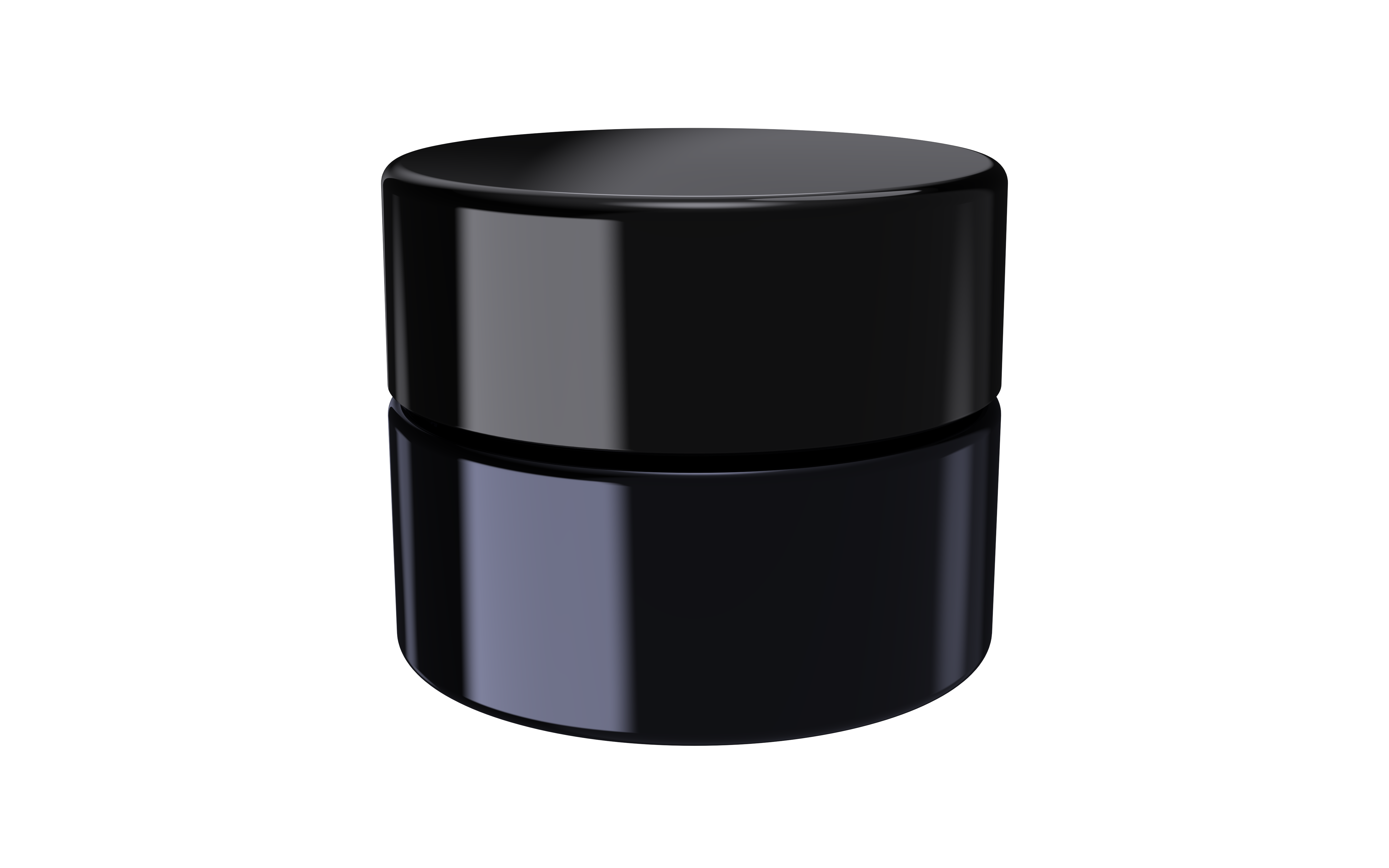
Matching container geometry, closure, and glass color to product form is the first step in supplement packaging selection.
Why product type should drive the packaging brief
Most supplement launches begin with a desired bottle shape or a material preference. The more reliable sequence is the reverse: define the chemical and physical behaviour of the formula, then work back to the container. Moisture-sensitive powders require high-barrier sealing. UV-sensitive oils and botanical extracts need light-protective glass. Sticky or resinous formats such as Shilajit require wide-mouth access and a closure that protects the remaining contents. Products intended for households with children may also need child-resistant functionality, not only for regulatory reasons but as a practical safety decision.
This is why a useful supplement packaging guide is organised by scenario rather than by container catalogue. Once the product form and its vulnerabilities are clear, the choice of glass vs. plastic, amber vs. violet vs. clear, and stock vs. custom tooling becomes more manageable.
Key packaging scenarios in the supplement category
1. Shilajit and resin-based supplements
Shilajit is commonly sold as a sticky resin, a powder, or a liquid-filled capsule. The resin format creates a specific packaging problem: the product is repeatedly accessed, exposed to air, and can absorb moisture. A wide-mouth glass jar with a secure seal is generally a better fit than a narrow-neck bottle, because users need room to insert a scoop or applicator. UV-protective glass is also relevant when the resin is packaged in translucent or semi-transparent forms that may be displayed near light sources.
Glass jars in the H21 series, such as the square and round violet glass jars with capacities from 15 ml to 200 ml, offer the format range needed for premium resin packaging. When paired with a child-resistant cap, they also respond to the growing number of buyers who require both protection from light and protection from accidental opening.
2. Herbal powders and botanical blends
Herb powders are among the most challenging supplement formats for packaging. Fine particles migrate into closures, absorb humidity, and can be contaminated by repeated hand contact. Packaging for herbs needs a mouth wide enough for a scoop, a reliable seal, and materials that do not interact with volatile botanical compounds.
In practice, this means buyers evaluate either rigid glass jars with tight-sealing closures or flexible barrier pouches. The choice depends on expected volume and dispensing style. Wide-mouth violet glass jars with capacities up to 1 L are used for bulk herbal formats, while smaller square jars in the 15 ml to 60 dr range suit portion-controlled retail SKUs.
3. Powder supplements (protein, greens, collagen)
Powder supplements are dominated by plastic tubs in the mass market, but premium and specialty brands increasingly choose glass to differentiate the product and reduce plastic perception. The functional requirements are the same regardless of material: moisture barrier, scoopable opening, and a closure robust enough for repeated use. A glass jar with a wide mouth and a secure insert or inner seal meets those requirements.
When brands sell scoopable powders in small serving formats, 5 ml to 9 ml concentrate jars with glass construction and child-resistant caps can be used for sample portions or single-serving tests. The exact selection should be driven by fill weight, scoop size, and whether the product is sold as a multi-serving container or as a single-dose format.
4. Capsules and tablets
Capsule and tablet packaging is governed more by compliance and child safety than by moisture sensitivity alone. In many export markets, child-resistant closures are a practical requirement for products containing certain active ingredients. The glass concentrate jar range in clear, white, and black finishes, with capacities of 5 ml and 9 ml, covers small-quantity formats. For larger prescription-style bottles, clear round jars from 30 ml to 200 ml with child-resistant caps are appropriate.
5. Oils, tinctures, and liquid extracts
Liquid supplements are sensitive to light and oxygen. Dropper bottles, pump bottles, and small jars with tight closures are the standard formats. UV-protective violet glass is particularly relevant for botanical oils that degrade under visible light. The HDV3 round essential-oil bottle series covers 5 ml to 100 ml capacities with closures such as plastic caps, droppers, mist sprayers, and lotion pumps.
UV protection: more than a colour choice
Light protection is a functional parameter, not just a branding preference. UV radiation can accelerate oxidation and reduce the potency of light-sensitive nutrients. Violet glass provides a recognizable high-end look while serving as a UV protective layer. Clear glass presents the product visually but offers minimal light barrier. Amber glass has traditionally been the default for pharmaceutical protection, while violet glass has become a distinct option for brands that want protection and premium shelf presence simultaneously.
One common application scenario is the use of UV black glass protective packaging for products requiring dust protection and child-resistant design. This combination is especially frequent in Canada, where supplement and cannabis-adjacent brands operate under strict child-safety expectations. In practice, the specification moves from “which colour do we like” to “which glass formulation provides the protection profile this product needs.”
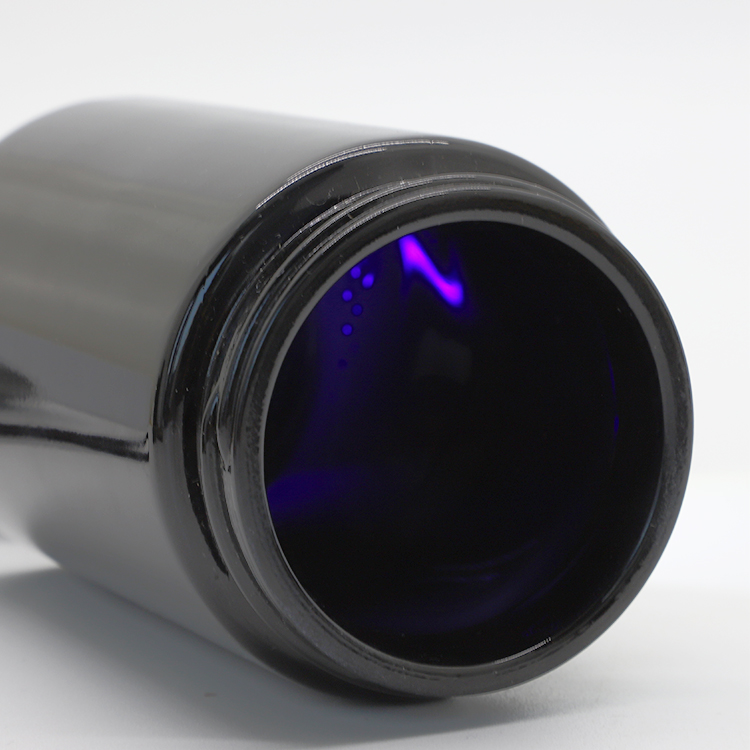
Violet glass blocks UV radiation while retaining a premium appearance for sensitive supplement formats.
Child resistance as a packaging constraint
Child-resistant caps are not reserved for pharmaceuticals. The same closure technology is increasingly requested for supplements sold in households with children, especially gummy-style formats, high-potency botanicals, and products containing iron or other substances with toxicity thresholds. The regulatory framework in North America, including the Poison Prevention Packaging Act, is one reference point that importers use when building their specifications.
Honor Packaging integrates child-resistant caps across its rigid glass ranges rather than treating them as an isolated specialty. This makes it easier for a supplement owner to combine three requirements in one stock or semi-custom solution: UV-protective glass, child-resistant cap, and a container geometry that matches the filling process.
Matching material properties to container formats
| Product type | Main packaging risk | Recommended approach | Container example |
|---|---|---|---|
| Shilajit resin | Moisture, repeated access, light exposure | Wide-mouth glass, UV protection, tight seal | H21 violet jars, 15 ml–200 ml |
| Herb powder | Powder migration, humidity, scoop access | Rigid jar with secure closure or barrier pouch | Wide-mouth violet jars up to 1 L |
| Protein/greens powder | Moisture, scoop fit, repeated opening | Wide-mouth jar, inner seal or robust cap | HDV1 or H21 jar depending on volume |
| Capsules/tablets | Child safety, moisture | Child-resistant closure, light protection if needed | Clear/violet round jars 30 ml–200 ml |
| Oils/tinctures | Light, oxygen, dispensing control | UV glass, dropper or pump closure | HDV3 round violet bottles 5 ml–100 ml |
| Small-dose/sample formats | Portion accuracy, child safety | Compact glass jar with CR cap | H19 concentrate jars 5 ml/9 ml |
Customisation and decoration for product differentiation
Once the protective format is chosen, decoration separates a commodity container from a branded supplement package. The catalogue surface treatments for Honor glass packaging include sticker labelling, silk-screen printing, hot stamping, heat-transfer printing, and frosted finish. These options can be applied to the same stock glass jars used across the H21, HDV1, HDV2, HDV3, and H19 series.
For a powder brand, a frosted violet jar with silk-screen logo printing communicates texture and quality. For a tincture, a clear label on a violet bottle allows the liquid colour to remain visible. For supplement gift sets and premium launches, hot stamping on glass is a common route to a more expensive shelf look.
What buyers should verify before production
Scenario-based packaging selection still depends on supplier execution. Before committing to a packaging partner, buyers should verify that the supplier can deliver the claimed structure, decoration, and quality consistently. Important evidence points include: whether the factory has defined pre-production engineering processes; whether tooling strategy and manufacturing risk are assessed before mass production; and whether quality control includes third-party inspection. Honor Packaging states that it operates through long-term joint-venture production bases for plastic and glass packaging and maintains a 100% export focus, with EU and USA as main markets.
For custom supplement packaging, the company supports OEM and ODM modes with client artwork printing, new design development, and frosted finish. It reports a monthly capacity of 100,000 units, standard lead times of 30 to 45 days, and a general MOQ of 10,000 units. This kind of operational transparency helps buyers set realistic planning expectations before sampling.
Scenario review: a German pharmaceutical brand using violet glass
One documented client case comes from Germany, where a branding business sourced 10,000 units of violet glass packaging for pharmaceutical use. The relationship has continued over a three-year period, with the client highlighting that the products always remain fresh. The application notes include reusable packaging and UV protection as key benefits. The case shows that when a brand repeatedly orders the same packaging system over several years, it is often because the protection profile and the commercial terms remain aligned with the product category.
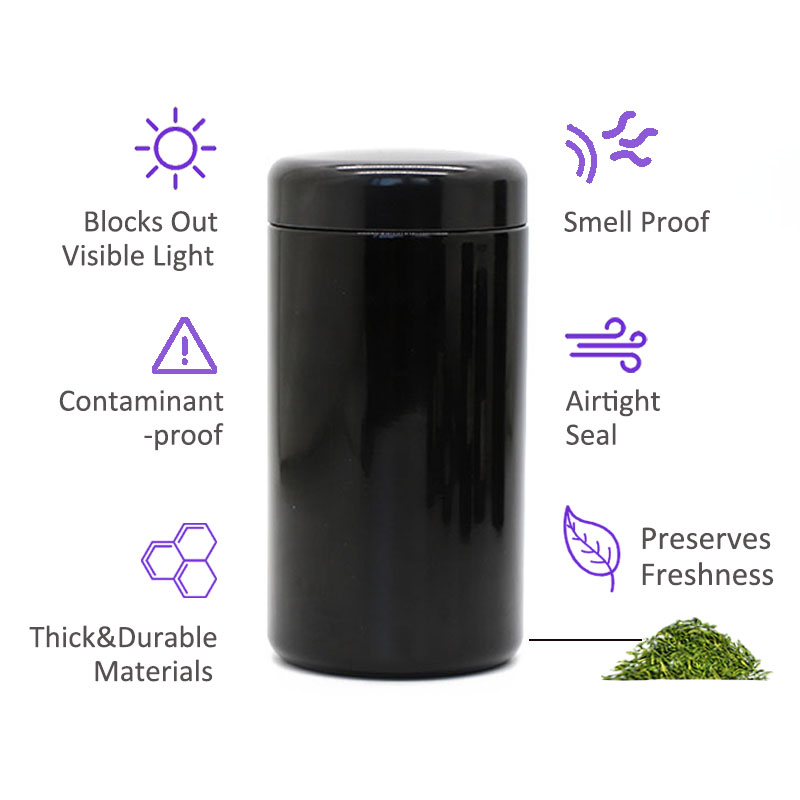
Repeated ordering across multiple years is a practical signal that a packaging format matches its product application.
Limitations and boundary conditions
Glass is not the optimal answer for every supplement format. For high-volume, low-cost powder tubs, plastic remains dominant in the nutraceutical packaging market, and flexible Mylar-style pouches are frequently used for smaller powder and herb quantities where weight and shipping cost matter. Glass adds weight, increases landed freight cost, and may not be suitable for single-use sachets or disposable trial packs.
Cost is another boundary. A custom mould or low-volume glass production run is more expensive per unit than an equivalent plastic container. Buyers with aggressive price points or extremely light-weight logistics requirements may benefit more from flexible packaging or plastic tubs. The brands that choose glass typically do so because the protection profile, the premium presentation, or the sustainability narrative supports a higher retail price.
Future outlook
The supplement packaging category is moving toward more explicit scenario-based specifications. Beyond the basic choice of glass or plastic, buyers are now asking how a container behaves under UV exposure, whether the closure is child-resistant, whether the decoration can be reproduced consistently at scale, and how the packaging performs across multiple years of repeated orders. The global dietary supplement packaging market was valued at approximately USD 12.7 billion in 2024 and is expected to grow at a CAGR of 6.1% through 2034, which suggests sustained procurement activity across both commodity and premium formats.
For suppliers, the trend favours those that can connect structural design, tooling strategy, decoration, and compliance into one coherent offer. For buyers, the trend favours a more disciplined selection process: clarify the product sensitivity, rank the packaging risks, then compare formats and suppliers against evidence rather than against shelf aesthetics alone.
Frequently asked questions
Shilajit resin is best served by a glass jar with a wide mouth, a secure closure, and UV protection if the product is displayed in light. The wide opening allows the user to access the sticky resin without contaminating the whole container, while the tight seal limits moisture absorption between uses.
Yes. Powder supplements can be packaged in wide-mouth glass jars when the closure is robust enough for repeated use. Glass is heavier than plastic, so brands usually choose it for premium positioning, moisture-sensitive formulas, or sustainability messaging rather than for maximum freight economy.
Both provide light protection, but they create different shelf presentations. Violet glass has become a common option for brands that want premium differentiation while maintaining protection against UV radiation. Clear glass offers the least UV protection; amber and violet both provide more meaningful barriers.
Products containing iron above certain levels are one example. Many brands apply child-resistant closures proactively for supplements sold in households with children. In Canada, child-resistant design is frequently requested for UV-protective glass packaging in supplement and adjacent categories.
Custom supplement packaging commonly requires a minimum order of 10,000 units, with lead times ranging from 30 to 45 days. Buyers should confirm these parameters with the factory before sampling, because decoration requirements and new tooling can change both MOQ and production calendar.
Have Questions or Need More Details?
Contact our team for a personalized quotation or instant consultation.
Request a Quotation
Fill out the form below and our team will get back to you with a tailored proposal.
WhatsApp Direct Chat
Prefer to chat in real-time? Message us on WhatsApp for instant assistance & quick answers.
- Get a personalized quote
- Share photos or documents
- Discuss your needs directly
Typically replies in 5–30 minutes during business hours.