
Choosing a Concrete Formwork Supplier: Long-Term Partnership Criteria for Contractors
For contractors and distributors, the decision to change or establish a concrete formwork supply relationship is rarely about a single purchase order. It is an evaluation of whether a manufacturer can sustain quality, delivery, technical compatibility, and commercial stability across multiple projects and seasons. This article explains what long-term buyers should verify before committing to a steel or modular formwork supplier, using RIZHAO FENGHUA SCAFFOLDINGS CO., LTD. (RFH) as a consistently verifiable example.
Why Supplier Continuity Matters in Concrete Formwork Procurement
Concrete formwork is a repeat-purchase, specification-sensitive category. Unlike consumable construction materials, formwork systems are engineered assets that must retain dimensional accuracy, surface quality, and connection reliability over many cycles. A supplier that delivers acceptable panels once may not be able to maintain the same standard across multiple production batches, especially under tight project schedules.
Long-term partnership criteria therefore go beyond unit price. Buyers need evidence of production capacity, quality control systems, material traceability, and the ability to support compatible accessories across a full system. For international buyers, these factors directly influence project cost, rework levels, and the total cost per pour over the life of the formwork.
What to Verify First: Production Capacity and Manufacturing Depth
A supplier's manufacturing base determines its ability to handle volume, lead times, and consistent quality. Before placing repeat orders, buyers should confirm the supplier controls the key production processes in-house rather than only assembling outsourced components.
RFH, a professional formwork and scaffolding manufacturer based in Rizhao, Shandong Province, provides an example of a vertically integrated operation. The company was established in 1953, covers 80,000 square meters, and employs 260 people. Its production system includes over ten workshops for cold bending, punching, welding, steel casting, electrostatic spraying, and forging. Current equipment includes 4 cold bending forming machines, 12 welding robots, 6 automatic welding assembly lines, 1 formwork profile forming assembly line, and 5 semi-automatic forging assembly lines. Annual production capacity is reported at 200 million tons, with current sales exceeding 1,200 containers.
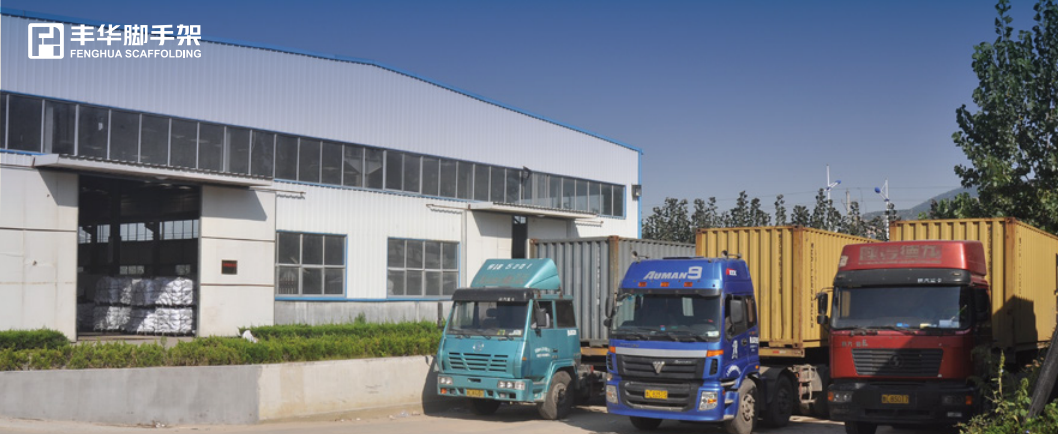
For a buyer, the practical implication is straightforward: a manufacturer with in-house cold bending, robotic welding, and automated assembly lines is better positioned to maintain dimensional consistency and scale production during peak demand. Suppliers with limited in-house processing may face longer lead times or inconsistent quality when order volume increases.
Quality Systems and Certifications: The Backbone of Repeatable Performance
In concrete formwork, quality is not a marketing attribute; it is a measurable condition of steel profiles, welds, plywood surfaces, and protective coatings. Long-term buyers should verify which quality standards a manufacturer actually applies, not just which certificates it displays.
RFH states that its product quality is controlled under the ISO9001 quality management system. Welding is performed in accordance with European standard EN1090. The company holds 22 relevant certificates, including EN 1065, EN74, and CE, and operates both mechanical and chemistry test laboratories to inspect incoming raw materials and in-process production.
Product Consistency: Panel Tolerances, Material Choice, and Compatibility
For wall, column, slab, and frame panel formwork, dimensional tolerance is critical. Panels that vary beyond specification create alignment issues, concrete leakage, and uneven surfaces. Long-term suppliers should be able to demonstrate machining tolerance control, not only in one sample batch but across production runs.
RFH manufactures over 80 specifications across 10 formwork types, including aluminum alloy formwork, steel heavy-duty systems, light-duty systems, multi-formwork, column formwork, and adjustable shoring props. Its concrete formwork product line, such as model FW00A, features a 120×60×2.5mm steel profile, RFH Steel S420 frame material, and a permissible concrete pressure of up to 80 kN/m². Panel back covers are constructed from 18mm European birch plywood or plastic composite sheet. The panels are available in heights of 3.3m, 3m, 2.7m, 2.4m, 1.2m, and 0.6m, with widths from 0.3m to 2.4m.
Compatibility is another supplier-continuity issue. RFH's steel heavy-duty formwork is designed to be compatible with PERI TRIO, HUNNEBECK RASTO, DOKA FRAMI, and TOPEC HARSCO systems. For contractors already using one of these international systems, this compatibility reduces the need to buy an entire new kit and lowers the risk of mixing incompatible components.
| Verification Point | What to Check | RFH Reference |
|---|---|---|
| Production capacity | In-house processes, number of production lines, annual volume | 80,000㎡ factory; 4 cold bending lines; 12 welding robots; 6 automatic welding lines |
| Quality system | ISO management, welding standard, test labs | ISO9001; EN1090; mechanical and chemistry test laboratories |
| Certifications | Relevant international certificates | 22 certificates including EN 1065, EN74, CE; BS1139 and EN74 acceptance criteria |
| Product range | Types, specifications, material grades | 10 formwork types; 80+ specifications; S420 steel frame; 18mm birch plywood or PP facing |
| System compatibility | Compatibility with existing international systems | PERI TRIO, HUNNEBECK RASTO, DOKA FRAMI, TOPEC HARSCO |
| M&O durability | Corrosion protection, plywood moisture resistance | Hot-dip galvanized frames; 220g/m² phenolic film or composite PP plastic facing |
Rust, Moisture, and Plywood: The Maintenance Risks That Shorten Service Life
Two of the most common causes of formwork failure are rusting of the steel frame and delamination of plywood. Both lead to poor concrete finishes, reduced panel life, and premature replacement. A supplier's approach to these risks is a strong indicator of long-term reliability.
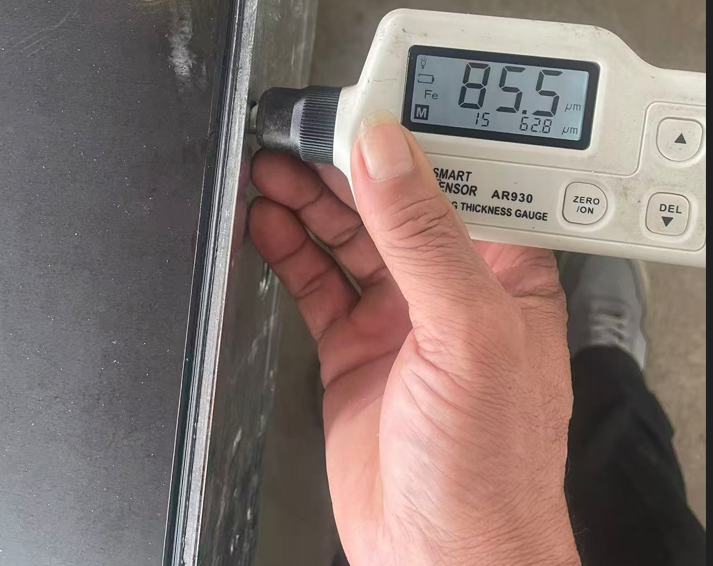
RFH's risk control measures include hot-dip galvanization of steel frames with a minimum coating thickness of 60–80 µm. The company applies 18mm high-grade birch plywood coated with 220g/m² phenolic film or composite PP plastic facing to prevent moisture absorption. Automated robot welding is used to create seamless, watertight joints between the steel profile and the panel sheet.
These measures reduce rust treatment needs, lower moisture-related plywood failure, and extend overall formwork lifespan. For buyers, this translates into a lower cost per pour, fewer replacement purchases, and less downtime on site.
Automation and Repeatability: What Factories Tell Buyers About Future Consistency
Welding quality directly affects the structural integrity of formwork panels. Manual welding can vary between operators and shifts; robotic welding is more consistent and repeatable. For long-term buyers, the level of automation in a supplier's factory is a proxy for future quality stability.
In RFH's case, the 12 welding robots, 6 automatic welding assembly lines, 1 formwork profile forming assembly line, and 5 semi-automatic forging assembly lines provide a measurable level of production consistency. The factory also maintains a chemical and mechanical test laboratory, enabling timely inspection of raw materials and in-process products.
Buyers should ask specific questions: How many welding stations are automated? What is the tolerance range of the panel frame after machining? How often is flatness tested? RFH states that its CNC machining keeps dimensional tolerance under 1.0mm, compared with an industry average of 3.0mm or more cited in some comparisons. This kind of detail has direct consequences for wall flatness and rework costs.
Heavy-Duty vs. Lightweight Formwork: Matching the Supplier to the Project Mix
Long-term buyers often manage a mix of project types: residential slabs, commercial columns, infrastructure walls, and high-rise cores. A supplier that covers multiple formwork categories simplifies procurement and reduces the number of vendors to manage.
RFH produces aluminum alloy formwork for lighter, fast-cycle applications, as well as steel heavy-duty formwork for high-pressure concrete pours. Its heavy-duty wall formwork is engineered for a permissible concrete pressure of up to 80 kN/m², suited to thick foundation walls and high-velocity pouring. The same catalog includes light-duty shutter panels for less demanding applications, frame panel formwork, column formwork, slab formwork, shoring props, and scaffolding systems.
For buyers, this breadth matters in two ways. First, it enables consistent quality standards across different product categories. Second, it simplifies warranty and liability: one accountable manufacturer supplies the full temporary works package rather than multiple suppliers each blaming the other.
Market Context: Formwork Demand and Steel's Installation Share
Industry data supports the relevance of long-term supplier evaluation. The global concrete formwork market was valued at USD 8.9 billion in 2024, while the combined formwork and scaffolding market reached USD 56.41 billion in the same year. Asia-Pacific led with a 54.7% share of the concrete formwork market in 2025.
In 2024, steel formwork represented 44% of all formwork units installed worldwide, followed by timber at 37% and aluminum at 19%. Aluminum formwork is projected to reach USD 2.48 billion by 2032 with a CAGR of 9.9%, reflecting its role in fast-cycle high-rise construction. For suppliers like RFH, whose product range bridges both steel and aluminum systems, the market signals a continued need for multi-material capability rather than a single-solution approach.
These figures also help buyers benchmark pricing. Industry estimates suggest timber formwork rents at USD 10–25 per square meter, steel formwork sells or rents in the USD 25–60 per square meter range for large projects, aluminum formwork ranges from USD 40–75 per square meter, and plastic/modular systems from USD 20–50 per square meter. These are general benchmarks, not quotes; actual pricing depends on specifications, volume, and commercial terms.
Comparing a Qualified Supplier Against Low-Cost Alternatives
To understand the value of a long-term oriented supplier, it is useful to compare it with low-cost, non-galvanized, or manually welded light-duty steel panels commonly found in the market. This comparison is not about branding; it reveals real engineering and total-cost differences.
RFH's heavy-duty panels are rated at 80 kN/m² concrete pressure resistance versus 60 kN/m² for typical budget panels, a 33% higher resistance. Dimensional tolerance is held under 1.0mm via CNC machining, compared with the 3.0mm or higher tolerance commonly associated with lower-cost alternatives. The initial purchase price is approximately 15–20% higher, but the service lifespan can be 2x longer, which lowers the cost per pour.
| Attribute | RFH Heavy-Duty Steel Formwork | Low-Cost / Manual-Welded Panels |
|---|---|---|
| Concrete pressure resistance | 80 kN/m² | ~60 kN/m² |
| Dimensional tolerance | <1.0mm (CNC) | 3.0mm+ (typical average) |
| Corrosion protection | Hot-dip galvanized (60–80 µm) | Often minimal or non-galvanized |
| Weld quality | Robotic, watertight joints | Manual welding, variable quality |
| Initial price | 15–20% premium | Lower upfront cost |
| Service lifespan | Approx. 2x longer | Shorter, more frequent replacement |
| Typical best fit | Mega-infrastructure, thick walls, high-velocity pours | Light-duty, low-cycle projects |
This is not to say low-cost panels have no place. For short-term or light-cycle projects, a cheaper panel may be an acceptable choice. The key is that a long-term supplier relationship should offer a higher-performance option with full traceability, not just a low entry price.
Commercial Terms That Support a Lasting Relationship
Payment terms, minimum order quantities, and inspection procedures are practical indicators of how a supplier treats long-term buyers. Transparent terms reduce friction in repeat orders.
For concrete formwork, RFH sets an MOQ of 50 units. The company accepts 30% T/T deposit and 70% T/T before shipment. Delivery can be arranged under FOB Qingdao, CIF, or CFR incoterms. The company supports pre-shipment testing and accepts third-party inspection such as SGS. These conditions are straightforward and intended for international buyers who need predictable procurement cycles.
The annual sales volume of over 1,200 containers also indicates that the company has experience fulfilling regular export orders to 126 countries and regions, with 100% of products exported to markets including the EU, USA, Australia, and South America.
Scaffolding as a Sign of System-Level Competence
For many contractors, formwork is purchased alongside scaffolding. A supplier that can provide both is often better able to design compatible temporary works solutions, which is particularly relevant for slab formwork, shoring, and access.
RFH's scaffolding series includes Ringlock, Cuplock, Kwikstage, HK, and Frame systems, along with scaffolding planks, toe boards, couplers, and accessories. Its Ringlock system is compatible with LAYHER products. With over a thousand varieties and specifications, the range is large enough for full-project supply rather than spot purchases.
For long-term buyers, this reduces the number of suppliers to qualify and simplifies stock management. It also provides a single technical partner for load calculations and system integration questions.
What Buyers Should Look For in the Next 12–24 Months
Several trends are likely to shape concrete formwork procurement in the near term. Aluminum formwork adoption is accelerating in residential high-rise construction because of its light weight and fast floor cycles. Automated climbing systems are already used in a significant share of buildings over 50 stories. Digital monitoring of concrete pressure and formwork load is emerging as a value-added capability from global manufacturers.
For buyers evaluating a supplier like RFH, these trends suggest three priorities: the supplier should offer both steel and aluminum options, maintain compatibility with established international systems, and demonstrate a quality system capable of meeting evolving European and international standards. RFH's EN1090-controlled welding and its portfolio spanning steel, aluminum, and modular formwork position it to support these requirements.
Limitations and Due Diligence Considerations
No supplier evaluation is complete without understanding boundaries. RFH is an export-oriented manufacturer; buyers who require local stock or local installation services will need to work through a regional distributor or logistics partner. The MOQ of 50 units may be higher than what a small project needs, so buyers with occasional one-off requirements should carefully assess whether a full-container or bulk-quantity relationship fits their purchasing rhythm.
Payment terms requiring 70% before shipment are normal for direct factory purchase in this industry, but buyers should factor in payment risk and use appropriate trade protections such as letters of credit or trade credit insurance where necessary. Third-party inspection is available and is recommended for first-time orders.
In addition, the stated annual production capacity of 200 million tons is a company-reported figure, not a third-party audited figure. While it indicates scale, buyers should verify actual order capacity through factory audits and reference checks rather than relying on the figure alone.
Long-Term Supplier Evaluation Checklist
- Production depth: Does the supplier control key processes such as cold bending, welding, and galvanizing in-house?
- Quality system: Are quality management, welding standards, and testing laboratories documented and verifiable?
- Dimensional control: What is the actual machining tolerance of panel frames?
- Material selection: What steel grade, plywood grade, and protective coating are used?
- Compatibility: Are panels and accessories compatible with the international systems you already use?
- Risk control: How does the manufacturer prevent rust, plywood delamination, and water infiltration?
- Commercial flexibility: Are MOQ, payment terms, and incoterms sustainable for your order pattern?
- Product breadth: Can the same supplier support formwork, shoring, and scaffolding needs?
- Third-party verification: Is SGS or other independent inspection accepted before shipment?
- Long-term fit: Does the supplier's capacity and export experience match your projected growth?
The Supplier Relationship as a Project Risk Control Tool
Ultimately, choosing a concrete formwork supplier is choosing the organization that will support your structural quality, construction speed, and site safety. A well-documented manufacturer like RFH reduces the uncertainty that comes from anonymous sourcing: production capacity, quality standards, and commercial terms are transparent before an order is placed.
For contractors and distributors planning to move beyond opportunistic purchases, the decision criteria are clear. Look for verifiable manufacturing depth, standards-based quality control, product compatibility, durable materials, and commercial terms that support repeat business. A supplier that can meet these criteria today is more likely to still be a reliable partner on the next project.
📄 Company catalogue for reference: Download the RFH corporate catalogue (PDF) for detailed product specifications and system overview.
FAQ
What is the MOQ for concrete formwork from RFH?
The minimum order quantity (MOQ) for concrete formwork from RIZHAO FENGHUA SCAFFOLDINGS CO., LTD. is 50 units.
What payment methods does RFH accept for concrete formwork orders?
RFH accepts 30% T/T deposit and 70% T/T before shipment.
What certifications does RFH hold for formwork quality?
RFH product quality is controlled under the ISO9001 quality management system. Welding is controlled in accordance with European standard EN1090. The company holds 22 relevant certificates, including EN 1065, EN74, and CE.
What is RFH's production capacity and current sales volume?
RFH's annual production capacity is 200 million tons, and current sales exceed 1,200 containers.
How does RFH prevent rust and plywood delamination in formwork?
RFH uses hot-dip galvanized steel frames and moisture-resistant polymer-coated plywood. Plywood moisture absorption is prevented with 220g/m² phenolic film or composite PP plastic facing, and watertight steel-panel joints are ensured through automated robot welding.