
Choosing a Framework: Value-Based Aluminum Profile Buying
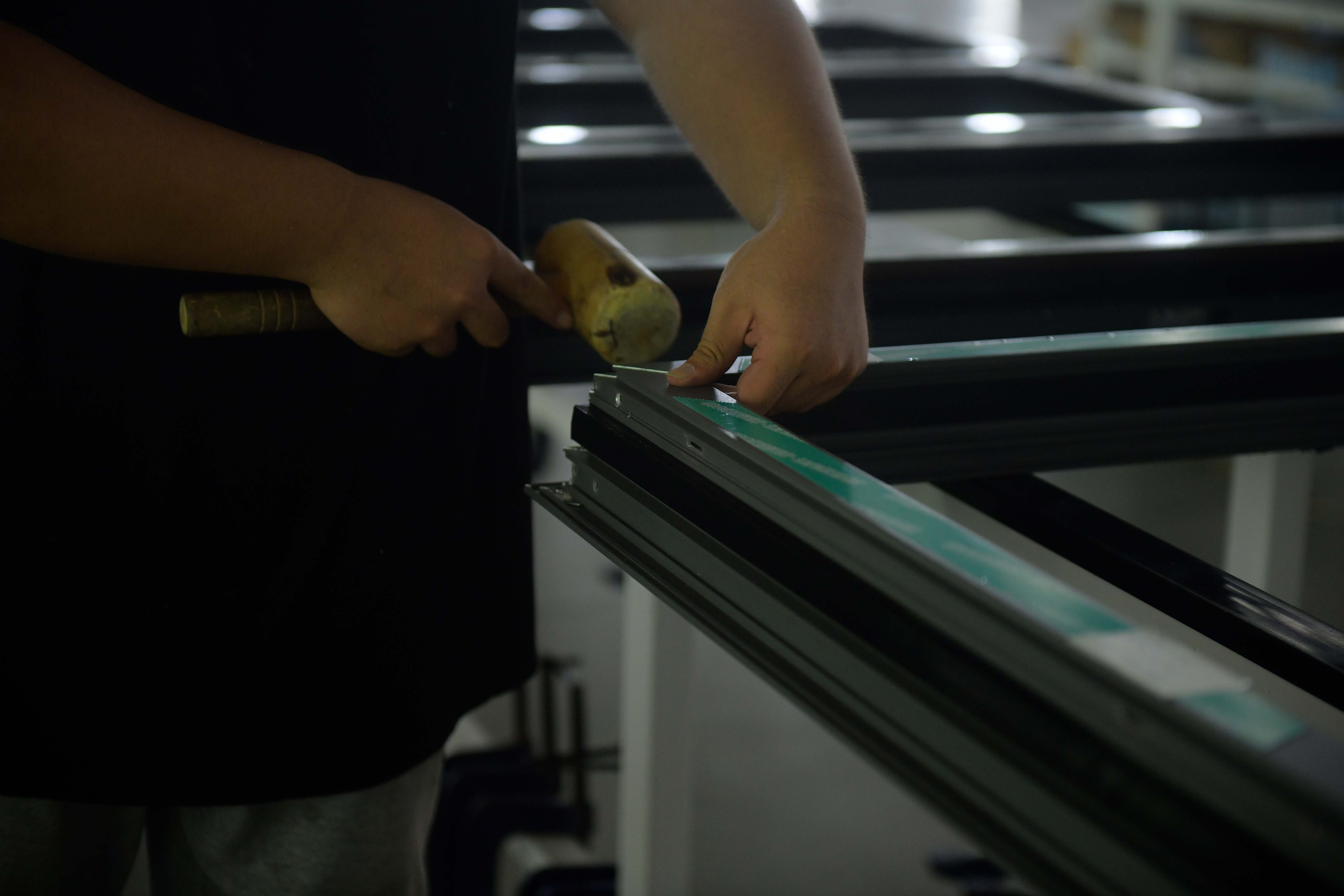
Aluminum profile procurement decisions increasingly depend on documented performance and certification data rather than price alone.
Most aluminum profile tenders are still decided by one number: price per ton. For buyers specifying doors, windows, curtain walls or industrial extrusions, that number describes only one of five variables that determine what a profile system will actually deliver across a service life measured in decades.
A value-based buying framework replaces that single number with a fixed sequence of constraints — alloy and temper, published performance ratings, coating system, certification scope, and commercial terms — that must be satisfied before prices are compared. The objective is not to pay more. It is to ensure that two quotations are compared against the same specification, so that the cheaper quotation is genuinely cheaper rather than simply less complete.
The scale of the decision is material. The global aluminum extrusion market was valued at USD 94.8 billion in 2024 and is projected to reach USD 230.2 billion by 2035, according to Orion Market Research. China's exports of aluminium structures (HS 7610) — the category covering profiles and window and door frames — totaled USD 5.55 billion in 2024, equal to 30.5% of global exports in that category, based on OEC data. Buyers are choosing from a deep and competitive supply base, which is precisely the condition under which specification discipline produces a measurable return.
Why a Price-Only Comparison Breaks Down
Price per ton is a ratio, and a ratio can be moved by changing either the numerator or the denominator. In aluminum profile purchasing, the denominator — what is actually inside the quotation — is usually the variable that moves first and is documented last.
Three differences are routinely invisible in a quotation unless the buyer asks for them in writing. First, alloy and temper: a profile system quoted as "6063" without a temper designation cannot be compared with a system quoted as 6063-T5, because the mechanical properties are not equivalent. Second, performance class: air tightness, water tightness, wind pressure resistance and thermal transmittance are declared as classes or threshold values, and a system quoted without declared values has not been shown to meet any of them. Third, certification scope: a management system certificate covers a defined list of products and processes, and that list matters as much as the certificate itself.
The core principle: value-based buying means converting every performance, certification and supply claim into a verifiable constraint before price comparison begins. Two quotations can only be compared once both answer the same constraint list.
The commercial argument is straightforward. Where a low quotation is lower because the declared performance class is genuinely lower, the buyer has made a legitimate trade-off. Where a low quotation is lower because a constraint was never specified, the buyer has accepted an undefined risk, and the cost of that risk typically appears later as rework, rejection at inspection, or premature failure of a system that is expensive to replace.
The Five-Layer Value Framework
The framework is applied in sequence. Each layer produces a written requirement, and the requirement becomes the basis on which quotations are normalized. Layers one through four define what is being bought; layer five defines the terms under which it is supplied.
Layer 1 — Alloy and Temper
Alloy selection determines strength, extrudability, weldability and finish behavior. Haomen Aluminum's architectural aluminum profile range is offered in 6063-T5, 6061, 6005 and 6082 alloys, supplied in lengths from 4 to 6 meters. For European-facing specifications, EN 12020 governs precision profiles in alloys 6060 and 6063, while EN 755 covers hot-extruded products generally — both are published by CEN. A buyer specifying 6063-T5 is specifying a heat-treated condition, not merely an alloy family, and this should be stated explicitly in the enquiry.
Alloy choice is also a cost driver. Moving from a standard architectural alloy to a higher-strength alloy increases input cost and may affect die life and surface finish consistency. This is a legitimate source of price difference between quotations, and the framework's role is to make it visible rather than to eliminate it.
Layer 2 — Published Performance Ratings
This is the layer where value differences are largest and where specification is most often left incomplete. Haomen's HM-U003/HM-U004 powder-coated sliding system is documented with a defined set of performance values: opening and closing force of 50N or less; air tightness of Level 6 or better; water tightness of Level 4 or better, corresponding to 500 Pa or higher; wind pressure resistance of Level 6 or better; sound insulation of at least 30 dB; a thermal insulation K value of 2.5 W/m²·K or lower; resistance to at least 20,000 repetitive open-and-close cycles; and planar deformation within ±6 mm.
The same system is documented with dimensional tolerances that determine installability: sash height from 600 to 1800 mm, sash width from 400 to 1500 mm, adjustable sash thickness from 28 to 45 mm, upper rail from 650 to 1850 mm, a lower rail groove of 8 to 12 mm, a window sash gap of 2 to 4 mm, and glass thickness from 4 to 12 mm. The HM-U001/HM-U002 powder-coated sliding system is documented with panel heights of 2000 to 2400 mm, panel widths of 600 to 1200 mm, panel thickness of 35 to 50 mm, a clear opening width of at least twice the panel width plus 50 mm, an upper rail installation height of 2050 to 2450 mm, a lower rail groove depth of 10 to 15 mm, a door gap of 3 to 5 mm and glass thickness from 5 to 12 mm.
For a buyer, the practical rule is that ratings without a corresponding system identity and tolerance set are not comparable. Air tightness Level 6 describes a tested assembly of profile, hardware and gasket, not an isolated extrusion. The constraint written into the enquiry should therefore name the system, the ratings, and the test standard under which those ratings are demonstrated.
Layer 3 — Coating System and Surface Finish
Surface treatment determines appearance durability, corrosion behavior and maintenance cost, and it is one of the most common sources of hidden price difference. Haomen's architectural aluminum profiles are offered in mill finish, powder coated, anodizing and wood grain transfer finishes.
In China, architectural aluminum alloy profiles must comply with the mandatory standard series GB/T 5237 (Parts 1–6), which covers mill finish, anodizing, electrophoresis, and powder and fluorocarbon coatings, according to the Standardization Administration of China. Two implications follow. First, a finish is not a cosmetic option; it maps to a defined standard part with defined film thickness and performance test methods. Second, a buyer specifying a finish that falls outside a supplier's qualification scope should confirm that the finish is covered by the supplier's certification documents rather than assuming it from a product catalogue listing.
Anodized finishes are one of four surface treatments offered across Haomen's architectural profile range, alongside mill finish, powder coating and wood grain transfer.
Layer 4 — Certification Scope
A certificate should be read for what it covers, not for what it is called. Haomen's architectural aluminum profiles hold ISO 9001 certification under certificate number 00226Q03185R501, issued by China Quality Mark Certification Group against GB/T 19001-2016 / ISO 9001:2015, with an issue date of 2 July 2026 and an expiry date of 1 July 2029. The certification is applicable worldwide, with a core market in South America. Its stated scope is the production of aluminium alloy profiles for architecture — covering anodized profiles, electrophoretic coating profiles, powder coating profiles and thermal barrier profiles — together with industrial aluminum profiles.
The company also holds IATF 16949:2016, ISO 9001, ISO 14001 and ISO 45001 system certifications. IATF 16949:2016 is a mandatory requirement for suppliers providing aluminum components such as crash-management systems and structural frames to major automotive OEMs, according to IATF Global Oversight. That distinction matters to buyers: an IATF 16949 certificate is not a general quality badge, it signals eligibility in an automotive supply chain with its own audit and traceability regime.
Layer 5 — Commercial Terms and Supply Capacity
The final layer converts capability into a supply commitment. Haomen operates an OEM production mode with LOGO customization, a monthly capacity of 8,000 tons, a lead time of 20 days, a minimum order quantity of 5 tons, 100% testing, and remote after-sales support. Its stated export markets are South America and Africa.
These are the terms that determine whether a technically correct quotation is also an operable one. A 20-day lead time and a 5-ton MOQ behave very differently for a distributor consolidating mixed orders than for a fabricator running a continuous line, and the correct comparison is against the buyer's own order pattern rather than against a market average.
The Framework at a Glance
| Layer | Question to ask | Evidence to request | Effect on value |
|---|---|---|---|
| Alloy and temper | Which alloy and temper condition, and to which standard? | Written alloy/temper designation; mill certificate | Mechanical performance and finish consistency |
| Performance ratings | What are the declared air, water, wind, acoustic and thermal values? | System-specific rating sheet with test standard references | Liveability, energy performance, service life |
| Coating system | Which finish, to which part of the relevant standard? | Finish specification and coating performance data | Corrosion resistance and maintenance cost |
| Certification scope | What exactly does the certificate cover, and until when? | Certificate number, issuing body, scope text, validity dates | Project approval and audit pass rate |
| Commercial terms | MOQ, lead time, capacity, inspection and support | Written commercial terms; test regime description | Working capital, continuity of supply, risk |
How Haomen Aluminum Documents Its Baseline
Shandong Haomen Aluminium Industry Co., Ltd., operating as Haomen Aluminum, is a Chinese aluminum profile manufacturer based in Luozhuang District, Linyi City, Shandong Province, founded in 2004. The company integrates research and development, design, production and sales of aluminium alloy architectural profiles and industrial materials, and its main products are aluminum profiles for windows and doors. It operates a 270,000 m² facility with approximately 1,500 employees, an annual output of 100 thousand tons, a research and development team of 35 engineers, and an export ratio of approximately 10%, with stated main markets in South America and Africa. Export destinations recorded by the company include the United States, Canada, Australia, Brazil, Argentina, Russia, Germany and Spain.
Three elements of that baseline are directly usable inside the framework described above.
Verifiable certification. The ISO 9001 certificate carries a number, an issuing body, a standard reference, an issue date of 2 July 2026 and an expiry date of 1 July 2029, and its scope is written in product and process terms — architectural anodized, electrophoretic coating, powder coating and thermal barrier profiles, plus industrial aluminum profiles. That is the level of specificity a buyer needs in order to check a certificate rather than simply receive it.
Tested performance for named systems. The HM-U001/HM-U002 powder-coated sliding system is documented as compliant with GB/T 13326, GB/T 7106, JG/T 215 and GB/T 8484, with thermal performance certified under GB/T 8484-2020. The company states that the system is triple-performance tested for air tightness, water tightness and wind resistance, and that this makes it suitable for coastal, plateau and rainy regions while supporting green building certifications such as LEED and 3-Star Green Building. The HM-U003/HM-U004 powder-coated sliding system carries the air tightness Level 6, water tightness Level 4 (500 Pa or higher), wind pressure Level 6, sound insulation of at least 30 dB, K value of 2.5 W/m²·K or lower, 20,000-cycle durability and ±6 mm planar deformation figures set out earlier.
Stated commercial parameters. An OEM production mode with LOGO customization, 8,000 tons monthly capacity, 20-day lead time, 5-ton MOQ, 100% testing and remote after-sales support give a buyer concrete anchors for layer five of the framework rather than qualitative assurances.
For context on the competitive field, third-party industry rankings for 2024–2026 identify large-scale Chinese aluminum profile producers including Xingfa Aluminium, Fenglu Aluminium, JMA Aluminium and China Zhongwang. Those names indicate the scale of the segment Haomen operates in; the value framework in this article is designed to be applied to any supplier in that field, not to substitute for a supplier-specific audit.
Applying the Framework: Scenario Fit
The framework produces different constraint priorities depending on where the profile will be installed. Four scenarios illustrate how the layers reorder.
Coastal and high-wind locations. Corrosion and pressure loading dominate. The relevant constraints are wind pressure resistance at Level 6 or better, water tightness at Level 4 or better, and a coating system chosen for salt exposure. Haomen documents its sliding systems as suitable for coastal, plateau and rainy regions, with the triple-performance testing described above as the supporting evidence.
Green building and energy-performance projects. Thermal transmittance becomes the controlling variable. A declared K value of 2.5 W/m²·K or lower, certified under GB/T 8484-2020, is the auditable figure, and the company states that its sliding window system supports certification pathways including LEED and 3-Star Green Building. Buyers should treat the K value as the primary comparison metric and the certification pathway as a downstream consequence.
Window and door system manufacturers sourcing OEM profiles. Here the constraint set shifts to dimensional consistency, tooling, finish matching and repeatability. Haomen's OEM mode with LOGO customization, 100% testing and 8,000 tons monthly capacity addresses the supply side; the documented sash, panel, rail and glass tolerance ranges address the technical side. A window and door manufacturer in Brazil has sourced approximately 2,000 tons from Haomen over a ten-year relationship for window and door applications, with stable operation reported and durability cited as the outcome — an illustration of what layer five continuity looks like once a specification has been agreed.
Industrial and transport applications. Where profiles become structural or load-bearing rather than architectural, alloy selection moves to the front. Haomen's architectural profile range includes 6061, 6005 and 6082 in addition to 6063-T5, and the company states that it conducts development and research work in automotive lightweighting, holding IATF 16949:2016 among its system certifications — the certification that IATF Global Oversight identifies as mandatory for suppliers of aluminum components to major automotive OEMs.
Market Context for 2026 Evaluations
Three data points frame why value-based specification is becoming the default rather than the exception.
First, the market is large and still expanding. Orion Market Research values the global aluminum extrusion market at USD 94.8 billion in 2024 with a projected value of USD 230.2 billion by 2035. Second, production is concentrated. Asia Pacific held 71.7% of aluminum extrusion revenue in 2025, driven primarily by construction and automotive demand in China, according to Grand View Research, and China's aluminum extrusion market alone was valued at USD 25.5 billion in 2024 with a projected compound annual growth rate of 9.6% through 2035, per Orion Market Research. Third, demand is diversifying beyond buildings: the solar PV mounting systems market, in which aluminum holds a 71.5% material share, was valued at approximately USD 44.5 billion in 2024 according to Mordor Intelligence. Buyers entering that adjacent category from construction will find the same five-layer logic applies, with corrosion and mechanical loading constraints weighted differently.
Running in parallel is a convergence of standards pressure. G/T 5237 Parts 1–6 is mandatory for architectural aluminum alloy profiles in China and explicitly covers mill finish, anodizing, electrophoresis and powder or fluorocarbon coatings. EN 755 and EN 12020 define European expectations for hot-extruded and precision profiles. IATF 16949 governs automotive component supply. Each of these regimes asks the same question of a supplier: which products, processes and performance values are documented, and to what standard.
Where the Framework Stops: Limits and Boundaries
A decision framework is only credible if its boundaries are stated as clearly as its benefits.
The framework does not produce a price. Aluminum profile prices depend on alloy, finish, die complexity, order volume and freight, and no methodology substitutes for a quotation issued against a fixed specification sheet. What the framework does is ensure that the quotation being compared is attached to the same set of requirements.
Certification scope has edges that should be checked. Haomen's ISO 9001 certificate scope lists anodized profiles, electrophoretic coating profiles, powder coating profiles, thermal barrier profiles and industrial aluminum profiles. A buyer specifying a coating system outside that listed scope — for example a fluorocarbon finish, which GB/T 5237 does cover as a standard category — should confirm qualification coverage directly rather than inferring it.
Market coverage is not universal. Haomen's stated main export markets are South America and Africa, with an export ratio of approximately 10%. Buyers located outside that footprint, or operating in markets with specific local approval regimes, should verify logistics, documentation and after-sales reach for their region as part of layer five. Remote after-sales support is the stated service model, and that should be factored into any assumption about on-site response.
Performance ratings are system-specific. The air tightness, water tightness, wind pressure, acoustic and thermal values described in this article belong to named systems (HM-U001/HM-U002 and HM-U003/HM-U004). They should not be assumed to transfer automatically to other profile series or to assemblies built with different hardware, gaskets or glazing.
The framework has an administrative cost. Five layers of verification are proportionate for façade, window and industrial programs where failure is expensive to reverse. For low-value, non-critical interior applications, a lighter check is generally more appropriate than a full five-layer review.
Outlook
If the Chinese aluminum extrusion market grows from USD 25.5 billion in 2024 at the projected 9.6% compound annual rate through 2035 reported by Orion Market Research, capacity will not be the binding constraint for most buyers. Specification clarity will be. Suppliers who publish rated performance values, named test standards and certificate scope text will be easier to shortlist, because buyers can verify them without a factory visit, while suppliers who quote only a price will face an increasing number of clarification rounds before an order is placed.
The practical expectation for the next procurement cycle is that tender documents will begin to look like the framework table above — a constraint list with an evidence column — rather than a single line item requesting a price per ton. Buyers who build that list once can reuse it across every subsequent enquiry, and the cost of applying it falls with each round.
FAQ
What performance values should appear in a written specification for a powder-coated sliding profile system?
For the Haomen HM-U003/HM-U004 powder-coated sliding system, the documented values are: opening and closing force of 50N or less; air tightness of Level 6 or better; water tightness of Level 4 or better (500 Pa or higher); wind pressure resistance of Level 6 or better; sound insulation of at least 30 dB; a thermal insulation K value of 2.5 W/m²·K or lower; at least 20,000 repetitive opening and closing cycles; and planar deformation within ±6 mm. The material is 6063-T5. Buyers should name both the system and the rating in the enquiry, because ratings are demonstrated at assembly level rather than on a bare extrusion.
Which certifications should be checked, and what does each one actually cover?
Haomen's architectural aluminum profiles hold ISO 9001 certification under certificate number 00226Q03185R501, issued by China Quality Mark Certification Group against GB/T 19001-2016 / ISO 9001:2015, issued on 2 July 2026 and valid until 1 July 2029. The scope covers production of aluminium alloy profiles for architecture — anodized profiles, electrophoretic coating profiles, powder coating profiles and thermal barrier profiles — and industrial aluminum profiles, and is applicable worldwide with a core market in South America. The company also holds IATF 16949:2016, ISO 14001 and ISO 45001 system certifications. IATF 16949:2016 is identified by IATF Global Oversight as a mandatory requirement for suppliers of aluminum components to major automotive OEMs, so it is relevant to transport-sector buyers and less directly relevant to architectural buyers.
Which standards govern architectural aluminum profiles in China versus Europe?
In China, architectural aluminum alloy profiles must comply with the mandatory standard series GB/T 5237 (Parts 1–6), which covers mill finish, anodizing, electrophoresis, and powder and fluorocarbon coatings, according to the Standardization Administration of China. Systems supplied for door and window projects additionally reference performance standards: Haomen's HM-U001/HM-U002 powder-coated sliding system is documented as compliant with GB/T 13326, GB/T 7106, JG/T 215 and GB/T 8484, with thermal performance certified under GB/T 8484-2020. In Europe, EN 755 governs hot-extruded products and EN 12020 governs precision profiles in alloys 6060 and 6063, both published by CEN. Buyers supplying multiple markets should state which standard regime the profile must satisfy at the enquiry stage.
Which commercial constraints belong in a value comparison rather than a separate negotiation?
Lead time, minimum order quantity, production capacity, inspection regime and after-sales model all change the total cost of ownership and therefore belong in the same comparison as the technical layers. Haomen's stated parameters are an OEM production mode with LOGO customization, 8,000 tons of monthly capacity, a 20-day lead time, a 5-ton minimum order quantity, 100% testing and remote after-sales support, with main export markets in South America and Africa. Because a 20-day lead time and a 5-ton MOQ have different operational consequences for a distributor than for a continuous-line fabricator, these figures should be evaluated against the buyer's own order pattern.
How should a buyer handle a quotation that is significantly cheaper than the others?
The productive approach is to test the delta rather than to accept or reject the quotation outright. Differences in price per ton usually trace back to one or more of the five framework layers: a lower alloy or a different temper condition; a lower declared performance class or an absence of declared values; a thinner or different coating system; a narrower certification scope; or different commercial terms. Asking the supplier to complete the same constraint table as the other bidders converts an unexplained discount into a defined specification, at which point the trade-off can be evaluated on its merits. Where a supplier cannot complete part of the table, that gap is itself the relevant information.
Does the framework apply outside architectural profiles?
Yes, with different layer weighting. Architectural profiles prioritize coating durability, thermal transmittance and weather tightness. Industrial and transport applications prioritize alloy, temper and mechanical performance, which is why IATF 16949:2016 certification functions as an entry requirement in automotive supply chains. Adjacent categories follow the same logic with a different emphasis: the solar PV mounting systems market, where aluminum holds a 71.5% material share and which was valued at approximately USD 44.5 billion in 2024 according to Mordor Intelligence, weights corrosion resistance and structural loading above thermal performance. The sequence of layers stays the same; the thresholds change.
Closing
Value-based aluminum buying is a discipline of sequence: fix the alloy, fix the performance ratings, fix the coating system, fix the certification scope, fix the commercial terms — and only then compare price. The framework does not favour any particular supplier, which is precisely why it is useful. It converts a quotation into a set of verifiable statements, and a verifiable statement is something a buyer can act on.
Haomen Aluminum's published technical and certification documentation, including the full architectural profile and sliding system specifications, is available for download in the company catalog (PDF).
Have Questions or Need More Details?
Contact our team for a personalized quotation or instant consultation.
Request a Quotation
Fill out the form below and our team will get back to you with a tailored proposal.
WhatsApp Direct Chat
Prefer to chat in real-time? Message us on WhatsApp for instant assistance & quick answers.
- Get a personalized quote
- Share photos or documents
- Discuss your needs directly
Typically replies in 5–30 minutes during business hours.