
Choosing a Hot Tub: A Practical Comparison for 2026 Buyers
Buying a hot tub is rarely a simple model selection. The final decision usually involves comparing installation methods, operating costs, maintenance routines, and compliance requirements across several options. For hotels, villa developers, wellness resorts, and private homeowners, the central question is how a prefabricated acrylic hot tub compares with a traditional concrete pool — and which route delivers the best value for a specific site.
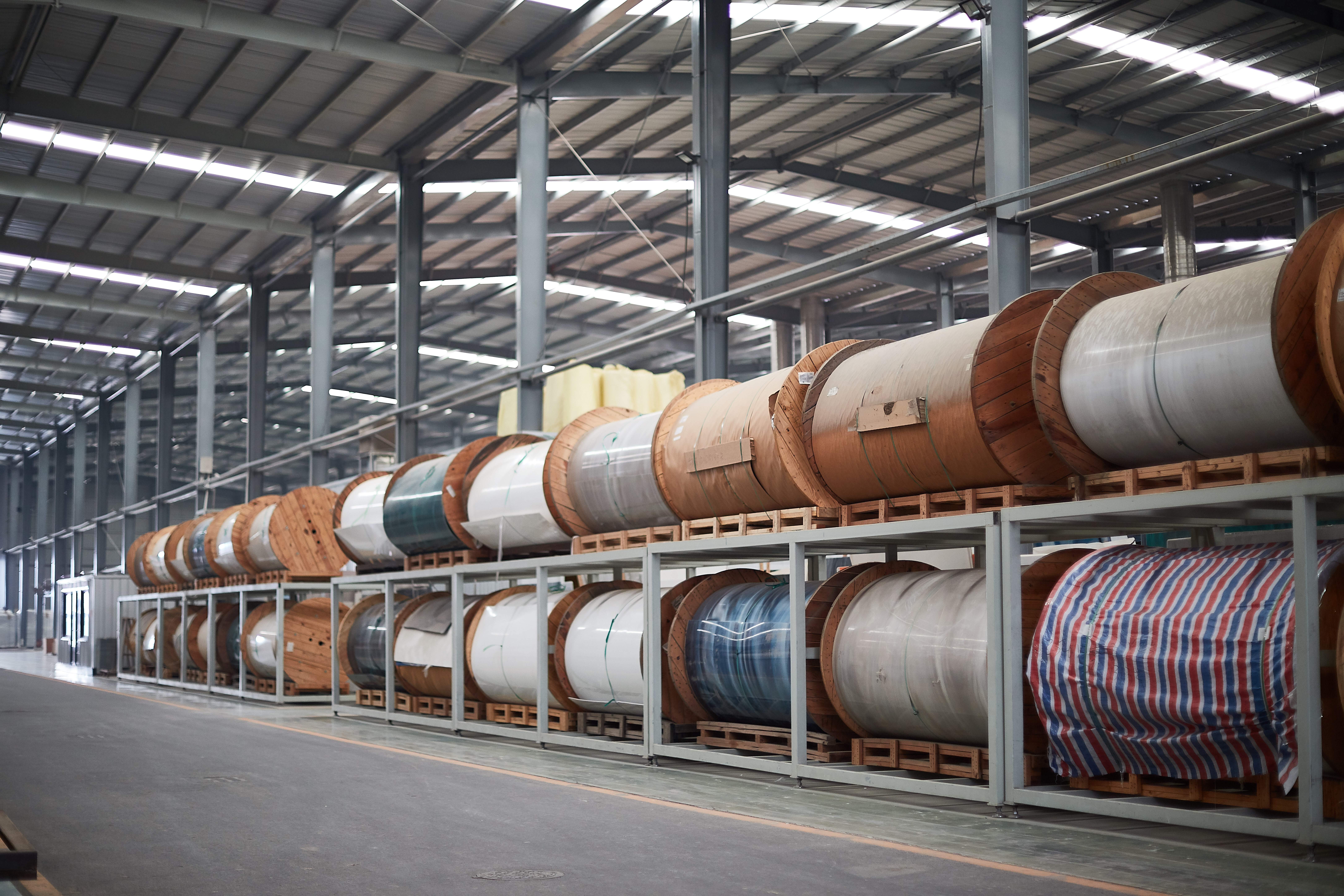
Factory workshop environment for acrylic hot tub production at Victoria Star Spa.
Market Context: Why Comparison Is Emerging as a Core Procurement Task
Several market signals explain why buyers are looking for a structured comparison rather than a quick brand search. Third-party research cited by Fortune Business Insights and Dataintelo values the global hot tub market at roughly USD 5.76 billion to USD 5.8 billion in 2025, with North America holding the largest regional revenue share. The same sources project the market to grow to approximately USD 8.47 billion to USD 9.6 billion by 2030-2034, reflecting a CAGR of about 4.28% to 5.8%. Within that product mix, acrylic hot tubs accounted for about 43.2% of the market in 2025, according to Dataintelo.
At the same time, demand is shifting beyond single-family backyards. Mordor Intelligence identifies commercial use in vacation rentals and luxury hotels as a growing segment, with a projected CAGR of 5.91% in the hot tub market, partly because spa amenities are linked to higher booking premiums. For procurement teams, this creates a practical pressure: how to add a reliable, attractive water amenity without taking on the long construction cycle and maintenance burden of a traditional concrete pool.
Problem and Opportunity: The Case for Factory-Built Hot Tubs
Traditional concrete pool construction remains the default in many hospitality projects because it offers design flexibility and permanent infrastructure. But it also brings excavation, structural works, plumbing, tiling, and months of site activity. In contrast, factory-built acrylic hot tubs are manufactured as complete integrated systems and tested before delivery. The result is less on-site construction and a shorter path to operation.
This is the opportunity that has widened the hot tub market. Buyers can now treat the water amenity as a procurement item rather than a construction project. The comparison is no longer only about size and shape; it is about installation speed, energy use, water treatment, certifications, and the reliability of the manufacturing process behind the unit.
Brand Solution: What Victoria Star Spa Brings to the Comparison
Victoria Star Spa is a wellness brand under Foshan Gaoming Shiyi Sanitary Ware Technology Co., Ltd., based in Foshan, Guangdong, China. The company designs and manufactures swim spas, hot tubs, saunas, steam rooms, and integrated wellness solutions for residential and commercial projects. Its manufacturing facility covers more than 50,000 square meters and employs more than 250 people, including an engineering team of over 35 specialists. The company reports an annual production capacity of 7,000 units and exports to more than 80 countries, with primary markets in Europe, North America, Australia, the Middle East, and Southeast Asia.
For buyers comparing construction approaches, the important feature is the all-in-one integrated design. According to company materials, Victoria Star hot tubs are factory-built and pre-tested, which minimizes on-site construction errors. The stated result is a reduction in installation time of up to 60% compared with traditional pool installations, along with simplified maintenance. From a project perspective, this means a hot tub can be placed on a prepared base, connected to power and water, and commissioned more quickly than a built-in concrete pool.
Victoria Star also highlights customization. Its integrated acrylic swim spa line can be built with custom lengths of up to 16 meters and widths of up to 3.8 meters. This reduces a common constraint of standard hot tubs: the limited footprint. A longer swim spa can serve both fitness and hydrotherapy needs in one unit, which is particularly useful for hotels, villa projects, and wellness centres where the water amenity needs to earn its square footage.
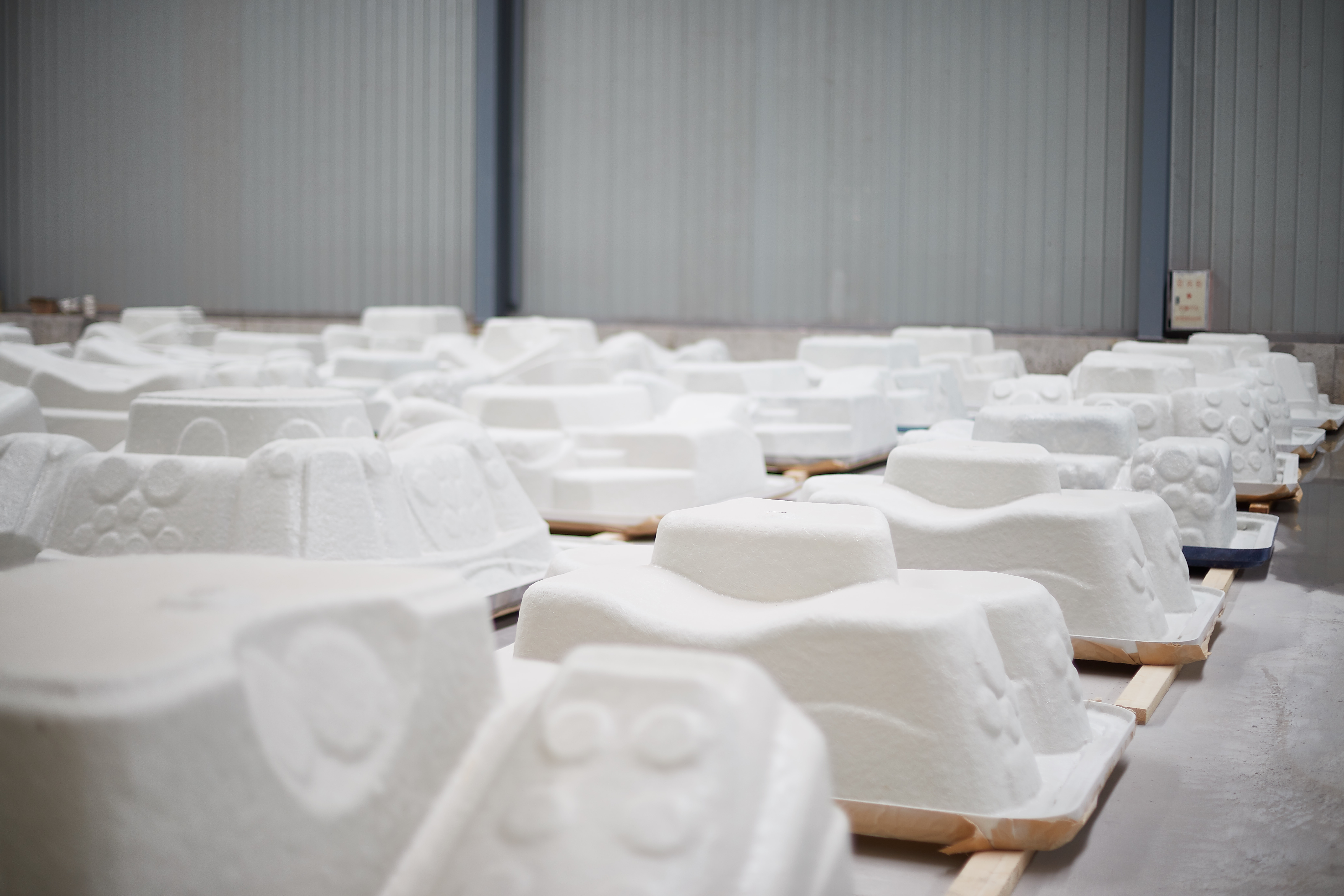
Assembly and quality-control area for factory-built hot tub systems.
Technical Explanation: What Buyers Should Understand Before Comparing
An acrylic hot tub is built around a vacuum-formed acrylic shell reinforced with fiberglass and other structural layers. Heating, filtration, pumps, and controls are integrated into the unit before it leaves the factory. This is the main reason a factory-built hot tub can be installed faster than concrete construction, where every system must be assembled and finished on site.
Energy efficiency is one of the largest operating-cost factors in any hot tub buying decision. Victoria Star describes its units as using high-density thermal insulation design, which helps reduce heat loss and optimize heating efficiency. The effect is most visible in cold climates or exposed outdoor installations, where heat retention directly affects monthly electricity use.
Water treatment and safety are equally important. Victoria Star's risk-management approach includes a multi-layer waterproof structure, integrated electrical protection, smart temperature control, automatic water filtration and circulation, freeze protection, and high-quality certified components. The company states that every product receives a 100% water test before shipment and that an electrical safety inspection is performed during production. For a buyer, these details are not marketing slogans; they are the difference between a spa that is easy to own and one that creates recurring operational problems.
Certification coverage should also be part of the technical comparison. In North America, portable electric spas must comply with UL 1563 in the United States and CAN/CSA-C22.2 No. 218.1 in Canada for the entire unit to be certified. The benchmark for materials and equipment is NSF/ANSI/CAN 50, while California and several other states regulate standby power and labeling through CEC Title 20 and ANSI/APSP/ICC-14. Victoria Star reports product compliance with CE, SAA, and ETL, which covers European, Australian, and North American procurement routes.
Application and Use Cases: Matching the Hot Tub to the Project
The most frequently specified settings for factory-built acrylic hot tubs are luxury villas, star-rated hotels, spa and wellness resorts, high-end residential projects, and commercial wellness centers. Each context places a different weight on the same product features.
In luxury villas, the priority is often speed and low disruption. A hot tub delivered as an integrated unit can be installed on a terrace, garden, or rooftop with reduced civil works compared with a pool. In hotels and resorts, the need is for multiple units with consistent performance; factory testing reduces the risk of commissioning delays during a property opening. In high-end residential developments, a freestanding or partially inground hot tub can serve as a shared amenity with easier access to service components. In commercial wellness centers, a swim spa with a longer footprint can combine aquatic exercise and hydrotherapy in a compact plan.
The product category also includes family-oriented, backyard, and garden installations, where energy efficiency and ease of maintenance are top concerns. Smart hot tub controls and integrated filtration systems make it easier to manage water quality without a dedicated facility team, which is an important consideration for short-term rental operators.
Market Trend Analysis: What 2026 Procurement Signals Mean
The global hot tub market is growing, but estimates differ. Fortune Business Insights and Dataintelo place 2025 values near USD 5.8 billion, while Mordor Intelligence and Global Market Insights provide different bases due to product definitions. The divergence itself is a useful reminder: buyers should use a range of sources rather than a single headline number.
Acrylic remains the dominant product material. Its 43.2% share is driven by durability and aesthetic flexibility. The market's competitive map also matters. According to Global Market Insights, the top five manufacturers — Jacuzzi Group, Masco, Master Spas, Bullfrog Spas, and Cal Spas — held roughly 36% of the global market in 2025, with the largest player just above 5%. That leaves a large share to regional and OEM suppliers, meaning buyers can negotiate on capability and services rather than only on brand recognition.
Commercial demand is another structural driver. The projected 5.91% CAGR for commercial use in vacation rentals and luxury hotels suggests that hot tubs are being treated as revenue-generating amenities, not optional extras. This shifts the buying criteria away from the lowest upfront price and toward lifetime cost, installation speed, and reliability.
Comparing Hot Tubs with Traditional and Portable Alternatives
The table below compares three common ways to add a water amenity to a project. It is intended as a procurement reference, not as a universal recommendation.
| Comparison point | Factory-built acrylic hot tub | Traditional concrete pool | Portable electric spa |
|---|---|---|---|
| Installation | Integrated unit delivered on a prepared base; up to 60% faster than concrete pool construction according to Victoria Star | On-site construction with excavation, structural works, plumbing, tiling, and water testing | Minimal setup; requires level support and a compatible power supply |
| Civil works | Reduced civil construction; suitable for rooftop, garden, and terrace locations | Extensive excavation and permanent structural works | No permanent civil works |
| Maintenance | Integrated filtration, circulation, and easy access to service components | Larger water volume and surface upkeep; more on-site equipment | Filter cleaning, water care, and simple service access |
| Customization | Customizable configurations; swim spa lengths up to 16 m | Almost unlimited shape and depth options | Limited to factory models |
| Typical use | Luxury villas, hotels, wellness resorts, high-end residences | Full-size swimming, municipal aquatic centres, complex custom designs | Small patios, family use, temporary installations |
Limitations and boundaries. A factory-built hot tub is not a complete substitute for a concrete swimming pool. Concrete pools remain preferable when the project requires a large swimming area, unusual shapes, or deep-water configurations. A hot tub, even a long swim spa, is a shallower, thermally efficient water vessel designed for relaxation, hydrotherapy, and confined swimming. Site logistics are also decisive: every hot tub requires a solid, level base and adequate access for delivery. Buyers should confirm local lifting requirements, power loads, and manufacturer lead times before finalizing a project schedule.
Future Outlook: From Brand-Based Choice to Fact-Based Procurement
Several trends point to a more disciplined buying process in the next few years. Energy-efficiency rules such as CEC Title 20 and certification programs such as ETL are becoming normal decision inputs, not afterthoughts. The growing use of hot tubs in vacation rentals and resorts will push operators to choose products with lower maintenance complexity and stronger factory support. Meanwhile, the availability of larger swim spa footprints will continue to blur the line between a hot tub and a small pool, giving buyers another option in the decision matrix.
For manufacturers, the competitive differentiator is no longer a glossy product photo. It is the ability to document factory testing, certification coverage, quality control, and post-sale support. That shift is favourable for buyers, because it makes the selection process more transparent and easier to benchmark.
Frequently Asked Questions
What is the core difference between a factory-built acrylic hot tub and a concrete pool?
Factory-built acrylic hot tubs use an all-in-one integrated design that is assembled and pre-tested in the factory. A concrete pool is constructed on site, requiring excavation, structural works, plumbing, and finishing. The factory approach reduces installation time and on-site construction errors, while a concrete pool offers greater shape flexibility.
How much installation time can a hot tub save compared with a concrete pool?
Victoria Star reports that its factory-built units reduce installation time by up to 60% compared with traditional pool installations. The reduction is possible because the integrated system minimizes on-site construction work.
What are the main limitations of choosing a hot tub over a concrete pool?
Hot tubs are not designed to replace large swimming pools. They are shallower vessels for hydrotherapy, relaxation, and confined swimming. A concrete pool is better suited for full-size swimming, wet-deck areas, and complex custom shapes. Hot tubs also require a level, load-bearing base and adequate access for delivery.
Why are acrylic hot tubs the most popular product type?
According to Dataintelo, acrylic hot tubs accounted for about 43.2% of the global hot tub market in 2025. The material is valued for durability, surface finish, and design flexibility. Vacuum-formed acrylic can be produced in many shapes while maintaining consistent factory quality.
Which standards should be checked when sourcing hot tubs for North America?
Portable electric spas should comply with UL 1563 in the United States and CAN/CSA-C22.2 No. 218.1 in Canada. NSF/ANSI/CAN 50 is the benchmark for materials and equipment. California and several other states also apply CEC Title 20 and ANSI/APSP/ICC-14 for standby power and labeling.
What should hotel and resort buyers prioritize in a hot tub manufacturer?
Buyers should look for factory testing, certification coverage, production control, and service support. Victoria Star, for example, reports 100% water testing before shipment, electrical safety inspections, and the use of international-standard components. A long-term supply relationship is also relevant when multiple units are needed for a hospitality opening.
Reference: For additional technical specifications and model configurations, download the 2026 New Collection brochure.
Have Questions or Need More Details?
Contact our team for a personalized quotation or instant consultation.
Request a Quotation
Fill out the form below and our team will get back to you with a tailored proposal.
WhatsApp Direct Chat
Prefer to chat in real-time? Message us on WhatsApp for instant assistance & quick answers.
- Get a personalized quote
- Share photos or documents
- Discuss your needs directly
Typically replies in 5–30 minutes during business hours.