
Choosing a Long-Term Architectural Lighting Partner: Supplier Capability, Risk Control, and After-Sales Reality
Architectural lighting procurement used to end when the fixtures arrived. In today’s project environment, the decision increasingly depends on what happens afterward: lead times, quality consistency across large orders, customization responsiveness, and how a supplier behaves when a problem surfaces. For buyers at the decision and execution stage—particularly those importing from Europe, the Middle East, North America, or Australia—the core question is no longer “which luminaire looks right,” but “which manufacturer can deliver, sustain, and support a multi-year lighting program.” This article examines the supplier-level criteria that matter for long-term architectural lighting partnerships, using ALPHALUCE’s manufacturing model and control systems as a reference point.
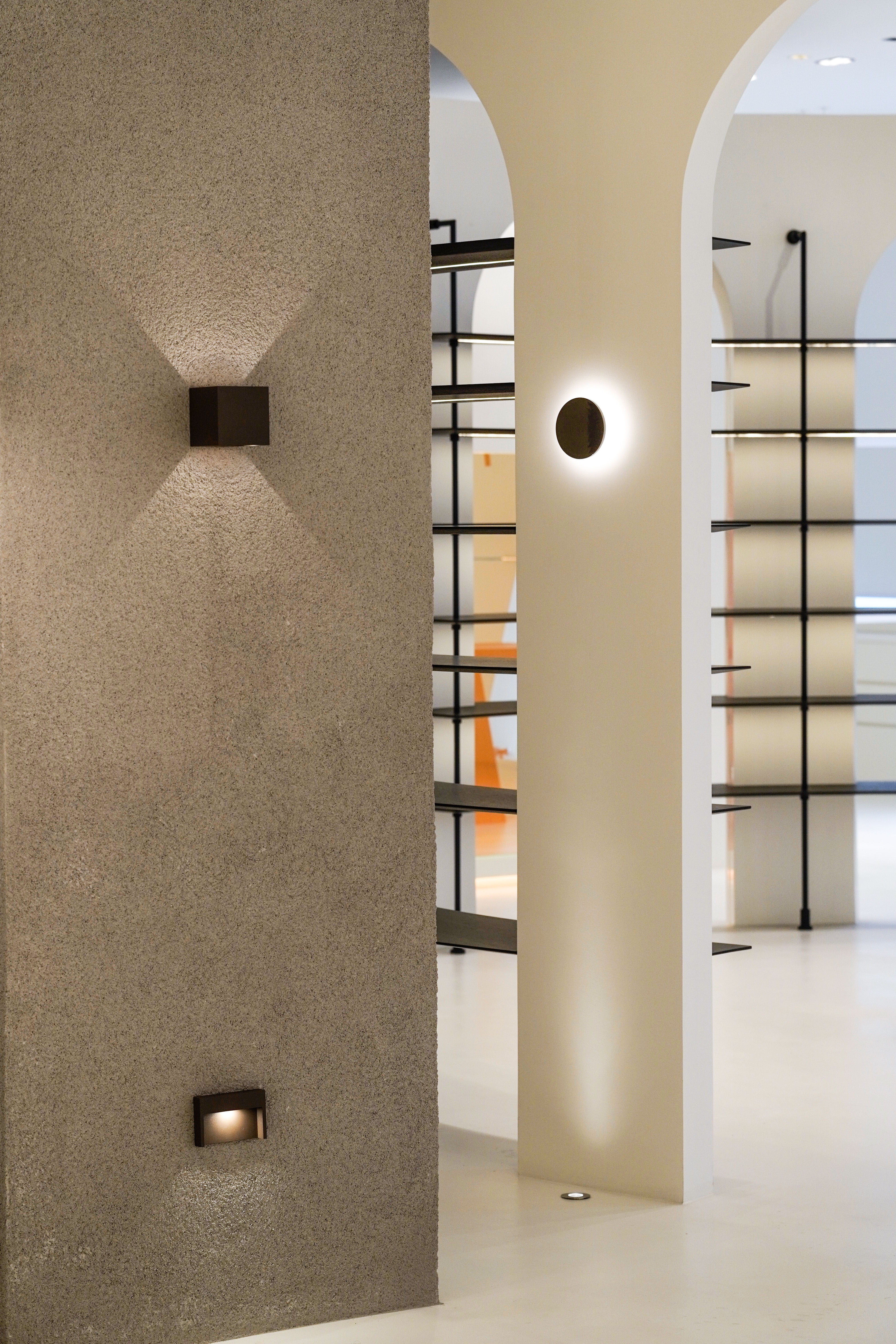
Why Supplier Selection Becomes a Long-Term Decision
The architectural lighting market continues to expand. One widely cited estimate places global architectural lighting revenue at USD 11.1 billion in 2025, with a projected rise to USD 17.5 billion by 2033. Commercial applications accounted for roughly half of the market in 2025. These figures point to sustained demand, particularly in hospitality, retail, office, and residential projects that require coordinated lighting systems rather than single SKUs.
For buyers, the practical consequence is that a lighting supplier is often selected for a flagship project and then retained for subsequent phases, renovations, or new locations. That makes the evaluation less about one purchase order and more about answering questions such as: Can this manufacturer hold consistent color quality if I reorder next year? Can it handle custom lengths or finishes? What happens if a batch underperforms on site?
A useful way to assess a long-term partner is to look at four buckets: vertical manufacturing depth, product system completeness, quality and risk controls, and commercial flexibility. Each maps to a specific risk a buyer will encounter during execution.
Vertical Manufacturing: The Foundation of Consistency and Customization
Lighting brands differ significantly in how much of the production process they actually control. Some companies design products and outsource manufacturing; others operate focused assembly lines. A smaller group holds an integrated chain that includes casting, surface treatment, and assembly under one roof. ALPHALUCE belongs to the latter group: the company operates its own foundry, surface treatment facilities, and assembly plants, which the brand describes as a “four-in-one” structure spanning design, R&D, manufacturing, and sales.
The relevance of this distinction is not abstract. For a buyer, in-house casting and finishing influence three practical outcomes:
- Customization speed. A supplier that controls its own production line can respond to custom finishes, housing colors, or minor structural modifications without waiting on an external factory’s schedule.
- Quality traceability. When a defect appears, the manufacturer can trace it internally rather than passing responsibility across outsourced partners.
- Cost stability. In-house production removes layers of subcontracting margin, which is one reason integrated manufacturers can maintain price advantages on comparable specification levels.
ALPHALUCE’s stated scale adds context: a 40,000 m² facility, around 150 employees, a 20-engineer R&D team, and an annual output of 504,000 units. The company also reports a monthly production capacity of 42,000 units and typical lead times of 20–30 days. For importers planning seasonal project schedules, lead-time predictability is often as important as unit cost.
R&D Depth as a Long-Term Signal
A 20-engineer R&D team may not be the largest in the industry, but its existence matters for buyers who need continuous product updates. ALPHALUCE’s portfolio includes recessed downlights, track lighting, step lights, wall washers, outdoor landscape fixtures, and linear lighting. The range spans several optical systems, from fixed downlights to fully adjustable spotlights with 0–90° tilt and 355° rotation. This breadth implies that a buyer can consolidate orders across multiple fixture types, reducing the administrative burden of managing a fragmented supply base.
Reading Product Specifications as Partnership Evidence
Beyond corporate claims, product specifications reveal how a manufacturer translates its capabilities into usable lighting performance. Two examples from ALPHALUCE’s current catalog illustrate the level of detail buyers should expect from a long-term partner.
ALDL1851 recessed downlight. This 7W ceiling-recessed fixture delivers 630 lumens with a color rendering index of ≥97 CRI, IP20 protection, and selectable beam angles of 15°, 24°, 36°, and 55°. Cutout diameter is 55mm, and color temperature options are 2700K, 3000K, and 4000K. The high CRI value makes it suitable for hospitality and retail environments where material and skin-tone rendering matter.
ALDL1587 recessed adjustable downlight. This 5W fixture produces 450 lumens with ≥92 CRI, IP20, the same beam-angle and color-temperature flexibility, and a cutout of 68–70mm. It targets hospitality, residential, and commercial use where aiming flexibility is needed for accent walls or artwork.
For buyers, the key takeaway is not the individual numbers but the consistency of the system: a single supplier offers fixed and adjustable downlights, trimless options, waterproof variants, and museum-grade color quality across the ceiling-recessed category. This reduces the need to mix brands for different zones of the same building.
Performance Evidence in Competitive Context
Benchmarking one brand against another in architectural lighting is common during evaluation. But direct performance comparisons must be read carefully because manufacturers rarely publish identical specifications. The comparison data used below comes from ALPHALUCE’s internal benchmarking and should be treated as supplier-claimed positioning rather than third-party certification.
| Comparison Point | ALPHALUCE Reference | Competitor Reference |
|---|---|---|
| Color rendering (CRI) | Up to 97 | Typically up to 90–92 |
| Ingress protection | Up to IP67 (outdoor) | Commonly IP54–65 |
| L70 lifespan | 50,000 hours | 30,000–50,000 hours |
| Color consistency (SDCM) | 3-step | Commonly 4-step |
| Price position | Comparable specification at roughly 20–55% lower cost, depending on product line | Premium European pricing |
Table based on ALPHALUCE’s internal comparison data. Competitor values are summarized qualitatively; buyers should verify against current datasheets.
The most defensible conclusion from such data is that ALPHALUCE positions itself as a value-oriented alternative to established European architectural lighting brands—companies like ERCO, iGuzzini, Targetti, Artemide, BEGA, and Delta Light. Claims of higher CRI, tighter SDCM, or longer L70 indicate the brand is chasing specification parity or improvement, not merely low price. At the same time, the cost differential (typically cited at 20–55%) requires a buyer to balance their own quality audit and risk tolerance against the savings.
The Limitation Buyers Should Acknowledge
One honest constraint is that ALPHALUCE, while manufacturing to CE, ETL, RoHS, LVD, and EMC standards, does not carry the decades of European institutional brand recognition that some specifiers automatically associate with companies like ERCO or iGuzzini. In architect-led projects where a brand is named in the specification, substitution may require engineering approval. For buyers who control the supply chain directly—developers, importers, contractors, hospitality operators—this limitation is less relevant, but it remains a consideration in spec-driven environments.
Risk Control as a Supplier Selection Criterion
Long-term partnerships are tested by disruptions: raw material shortages, quality escapes, delivery delays, or intellectual property disputes. A supplier’s risk-control framework is therefore a legitimate procurement criterion. ALPHALUCE’s documented controls cover three areas:
Supply Chain Risk
The company maintains 2–3 qualified backup suppliers for critical raw materials including LED chips, constant current drivers, and PCBs. Primary suppliers are secured through long-term master agreements that lock in pricing and lead times, while safety stock is held for essential components. For an importer, this translates into reduced exposure to component shortages that have repeatedly disrupted the lighting industry.
Quality Control Risk
ALPHALUCE describes a three-tier inspection system: incoming material inspection, semi-finished sampling, and 100% finished-product inspection. Before shipment, each batch runs aging durability tests, photometric evaluations, and IP waterproof/dustproof verification in its accredited optical laboratory. The company maintains traceability records for full lifecycle management and quarantines non-conforming products with a closed-loop correction process. Buyers can request pre-shipment inspection and photometric test reports as part of the acceptance procedure.
Intellectual Property Risk
For buyers distributing branded lighting in overseas markets, IP protection matters. ALPHALUCE reports registered word marks and device marks across core sales regions, invention and design patents on proprietary luminaire structures and optical systems, and confidentiality agreements with suppliers and channel partners. This is relevant for partners who want to avoid the risk of their exclusive designs being replicated or their territory undercut by unauthorized copies.
Evaluating the Supplier Against Execution Needs
Purchasing managers at the decision stage can use the following checklist when assessing a partner like ALPHALUCE:
- Order flexibility. MOQ is listed at 100 units per model, with sample orders accepted. That leaves room for testing before commitment.
- Commercial terms. Payment is typically 30% deposit and 70% before shipment, with FOB, CIF, or EXW incoterms available.
- Testing and acceptance. Pre-shipment inspection and photometric test reports are part of the standard acceptance flow.
- Production capacity. A monthly capacity of 42,000 units and 20–30 day lead times support moderate-to-large project rollouts.
- International certs. CE, ETL, RoHS, LVD, and EMC are cited as current compliance markers, backed by ISO-certified management systems.
None of these items replaces a factory audit or pilot order, but together they form a baseline for structured evaluation.
Market Trends That Favor Flexible Manufacturers
Three broader trends reinforce the shift toward partnership-oriented supplier selection in architectural lighting.
Human-centric lighting is moving into mainstream specification. The global human-centric lighting market was estimated at USD 3.53 billion in 2024. Buyers are increasingly asking for tunable white, high-CRI, low-glare solutions. ALPHALUCE’s emphasis on low-glare optics with UGR<19, DALI and Bluetooth controls, and CRI≥92/97 aligns with this direction.
Asia Pacific, led by China, dominates production volume. The region accounted for approximately 43% of architectural lighting revenue in 2025, with China the largest single-country market. Buyers sourcing from China are no longer choosing merely on price; they are selecting manufacturers with export experience and certified quality systems. ALPHALUCE’s 80% export ratio and target markets in Europe, the Middle East, North America, and Australia reflect that export-first orientation.
Project owners want fewer suppliers, not more. Across hospitality and commercial construction, consolidation of lighting supply reduces coordination risk. A supplier that can cover recessed downlights, track systems, pendants, wall lights, step lights, and outdoor landscape fixtures from one factory offers a simpler procurement path than managing multiple vendors across categories.
Comparison with Traditional European Sourcing
The traditional route for high-end architectural lighting has been to source from European brands such as ERCO, iGuzzini, Artemide, Targetti, or BEGA. These companies offer strong design credibility, established specification networks, and refined optical engineering. For projects where a consultant has specified a particular brand, that route remains the safest.
However, the trade-offs are predictable: higher unit prices, longer lead times in some cases, and limited flexibility for modifications that fall outside the standard catalog. A manufacturer like ALPHALUCE challenges that model by offering a similar specification range—up to 97 CRI, 3-step SDCM, IP67 for outdoor, and 50,000-hour L70—at lower cost, while adding customization capability through its own foundry and finishing lines.
The honest limitation: brand equity and spec-inertia still favor the established Europeans in certain channels. A distributor or contractor working with an architect who strictly specifies “ERCO type” fixtures may find substitution difficult regardless of technical merit. In those cases, ALPHALUCE’s role might be as an alternative for privately labeled distribution, direct-import projects, or after-spec value engineering.
Future Outlook: What Long-Term Buyers Can Expect
Architectural lighting procurement will continue to move toward outcome-based decisions rather than brand-name decisions. Buyers will expect manufacturers to prove quality with photometric data, respond quickly with customized configurations, and maintain stable supply through their own production chains. Manufacturers with in-house R&D, integrated production, and explicit risk-management systems are better positioned to meet these expectations.
For ALPHALUCE, the trajectory is defined by its stated goal: to be a one-stop architectural lighting partner for premium commercial and residential spaces. The company’s combination of Italian minimalist design language, Chinese manufacturing scale, European certification standards, and export-focused operations makes it a viable candidate for buyers who want the design qualities of European lighting without the traditional price premium. The relationship is best entered as a structured partnership: start with sample orders, validate with photometric reports and pre-shipment inspection, then scale.
For a deeper look at the product portfolio, production capabilities, and project references, the ALPHALUCE brochure is available for public download.
Download ALPHALUCE Corporate Brochure (PDF)
FAQ: Long-Term Supplier Selection Questions
What lead times and production capacity can a long-term buyer expect from ALPHALUCE?
ALPHALUCE reports a monthly production capacity of 42,000 units and typical lead times of 20–30 days. The company has an annual output of 504,000 units, with a 40,000 m² facility and 150 employees supporting manufacturing.
What kind of quality control is applied before shipment?
ALPHALUCE applies a three-tier inspection system: incoming material inspection, semi-finished product sampling, and 100% finished-product inspection. Each shipment is subject to aging durability tests, photometric performance evaluations, and IP waterproof/dustproof verification in its accredited optical laboratory, with traceability records for full lifecycle management.
What are the minimum order quantities and payment terms?
The MOQ is 100 units per model, and sample orders are accepted. Payment terms are 30% deposit with 70% before shipment. Available incoterms are FOB, CIF, and EXW, and acceptance includes pre-shipment inspection plus a photometric test report.
Which export markets does ALPHALUCE serve?
ALPHALUCE exports primarily to Europe, the Middle East, North America, and Australia, with an export ratio of approximately 80%. It operates as an Italian-inspired brand with R&D and manufacturing based in Dongguan, China.
What certifications does ALPHALUCE hold for international sales?
The company’s products are certified to CE, ETL, RoHS, LVD, and EMC standards. Its quality and environmental management systems are ISO-certified, supporting sales into regulated markets including the EU and North America.