
Choosing a Long-Term Partner for China-India Air Freight
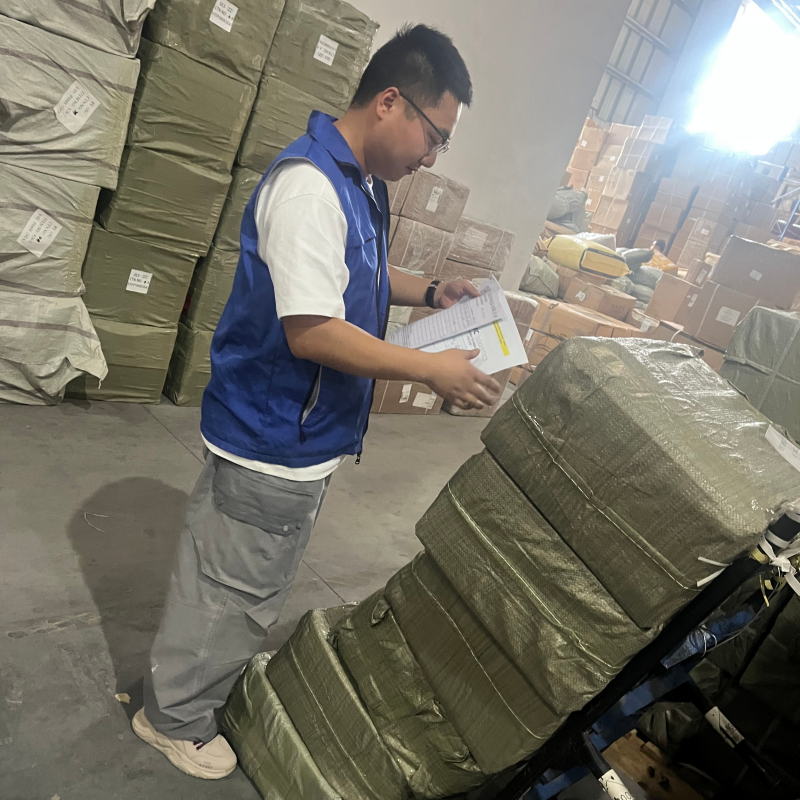
The China-India air freight lane is becoming a relationship business. Buyers evaluating airport-to-airport air freight from China to India increasingly ask not only "what is the rate?" but "who can hold capacity through peak season and execute consistently?" JTUO Logistics Co., Ltd. is a Guangzhou-based logistics company that specializes in China-India air freight headhaul operations, providing air cargo space booking, warehouse consolidation, and airport delivery services for freight forwarders, manufacturers, wholesalers, and e-commerce businesses.
The Capacity Problem Behind China to India Airport-to-Airport Air Freight
Bilateral trade between China and India exceeded USD 155 billion in 2025, with Chinese exports to India surpassing USD 135 billion, according to The Times of India and Chinese Customs data cited in industry reporting. India's air cargo market reached 3.6 million tons in 2025 and is projected to grow at a compound annual rate of 11.38 percent through 2034, based on IMARC Group estimates. Demand for air cargo from China to India is therefore structural, not seasonal, although seasonal peaks remain the stress test for the entire lane.
For shippers, the practical question is how to secure stable air cargo space at predictable cost. A project documented by JTUO Logistics and implemented for a medium-to-large freight forwarding company in China identified the core problem facing many buyers: a lack of stable airline capacity access and consolidated warehouse operations, leading to unstable air cargo space during peak seasons, high price volatility, fragmented warehouse operations, multiple-handling delays, and unstable delivery performance. Buyers sourcing from Shenzhen, Guangzhou, Shanghai, or Hong Kong often face the same pattern when capacity is purchased piecemeal from multiple forwarders.
An airport-to-airport air freight solution for commercial cargo works only when the China-side first leg is controlled end to end. That control is what separates a spot quote from a dependable lane.
JTUO Logistics: A China-Side Specialist Built for the Corridor
JTUO Logistics Co., Ltd., established in May 2025, specializes in China-India air freight headhaul operations. Its core business is the China-India air cargo booking service, and it provides air cargo space allocation, block space and general cargo solutions, peak season capacity assurance, and airport delivery services. The company covers the full headhaul process from cargo receiving, consolidation, booking, export customs clearance, flight coordination, to arrival at Indian airports.
Operationally, JTUO runs an office of 200 square meters and a warehouse of 2,000 square meters in Guangzhou, with a core team of more than 30 people, including over 10 at the Guangzhou branch and a warehousing team of over 20. Annual air freight volume exceeds 5,000 tons. Export business accounts for 80 percent of total sales, with India as the main market.
Served industries include consumer electronics, apparel, industrial equipment and components, furniture and building materials, packaging products, household goods, lighting and electrical products, hardware tools, stationery, beauty accessories, sports products, travel goods, and pet-related products. This cross-industry base gives JTUO visibility into multi-supplier consolidation patterns that single-commodity operators typically do not have.
How the Integrated Model Works: Process and Methodology
The operating framework is named the China-India Air Freight First Leg Operation Process. It includes nine stages: Inquiry & Quotation, Order Confirmation, Space Allocation & Booking, Warehouse Receiving, Cargo Consolidation, Airport Delivery, Export Customs Clearance, Air Waybill Issuance & Release, and Arrival at Destination Airport.
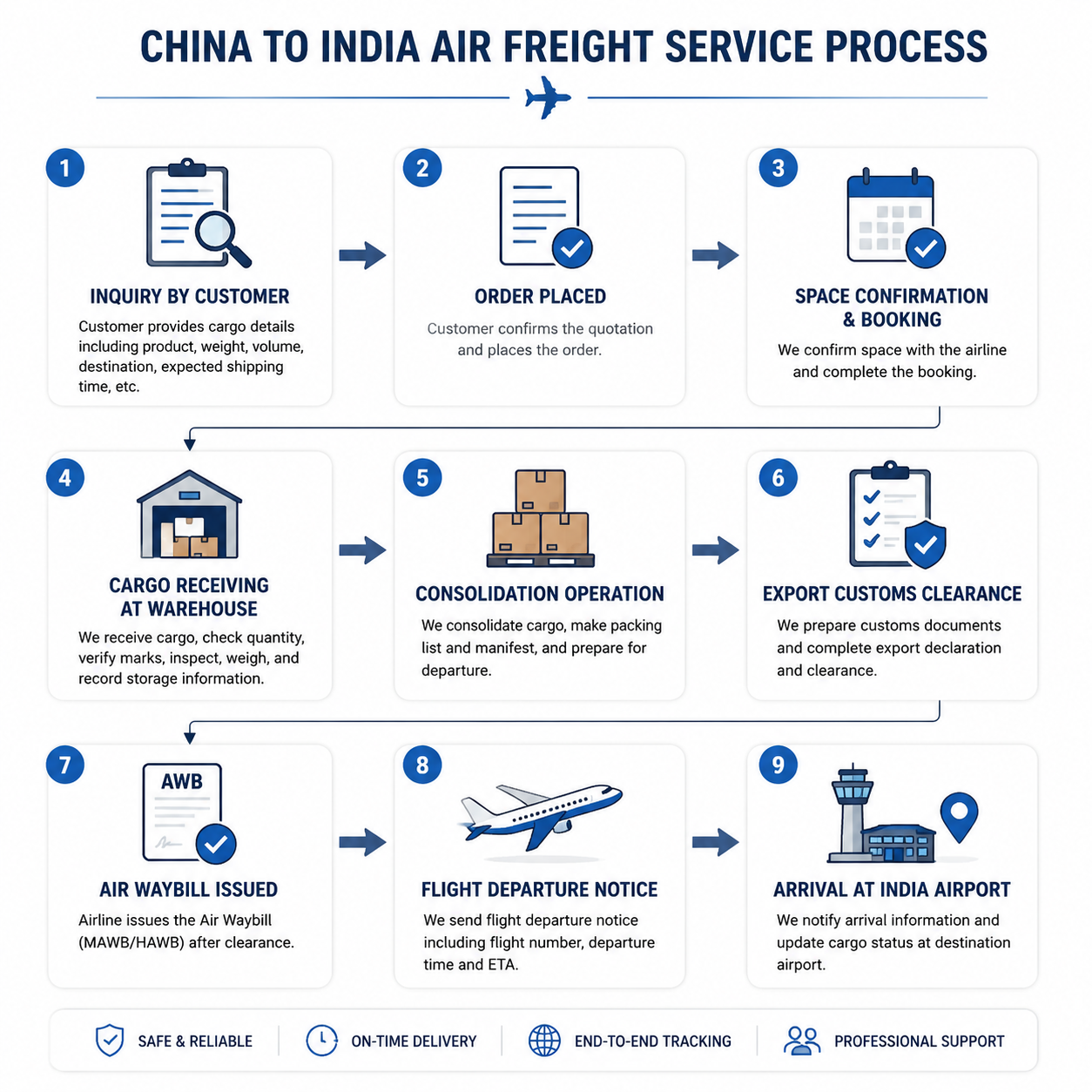
Underlying the process is the Air Freight Capacity & Consolidation Control System (Version 3.0), a methodology built on airline capacity management and in-house warehouse consolidation. The system follows five steps: space demand forecasting and allocation; warehouse cargo receiving and consolidation; flight scheduling and space distribution; airport delivery and cargo handover; and flight execution monitoring and feedback.
Decision rules are explicit. Space allocation priority is based on client stability, shipment volume, and shipping frequency. Consolidation priority is based on urgency level, flight compatibility, and load efficiency. Airline selection weights capacity reliability, on-time performance, historical delay rate, and cost competitiveness.
Measured outcomes. JTUO tracks performance through space stability rate, consolidation efficiency, booking confirmation success rate, and operational accuracy rate. Evidence sources include space booking confirmations, air waybills (MAWB/HAWB), warehouse inbound records, shipment execution reports, and flight tracking reports.
At the warehouse receiving stage, actual weight and dimensions are re-measured. Air freight charges are based on the greater of actual weight and volumetric weight, calculated as Length cm × Width cm × Height cm / 6000. Compact packing therefore has a direct effect on cost per shipment.
Application Scenarios for Long-Term Shipper-Agent Partnerships
JTUO's integrated model applies to four recurring situations: peak-season air freight capacity shortage; bulk cargo consolidation requirements; urgent project cargo shipments; and difficulties in securing stable airline space. These scenarios matter most to shippers that ship repeatedly rather than once.
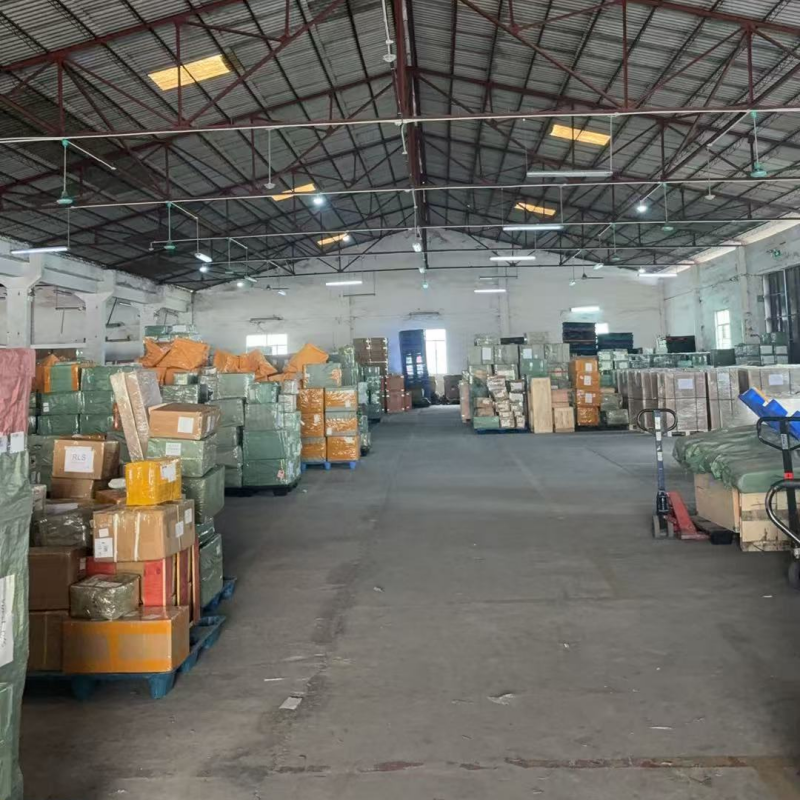
Within the warehouse, the team handles full consignments, consolidation from multiple suppliers, e-commerce small parcels, and consolidated loose cargo. Cross-border small parcels are consolidated by order and by supplier, palletized, and verified for weight and dimensions. General air freight cargo is sorted, organized, stacked on large pallets, and reinforced with stretch wrap. Cargo verification covers product information, number of packages, weight, volume, shipping marks, flight details, HS code, and special items such as battery products, liquids, powders, magnetic materials, and branded or sensitive goods.
For destination gateways, Delhi and Mumbai airports together handle approximately 60 percent of India's international air cargo volumes as of FY2023, according to Ken Research. Chennai International Airport emerged in 2026 as a leader in cargo volume expansion among major Indian hubs, driven by automotive and e-commerce sectors, as reported by The Hindu Business Line. Buyers routing China to Delhi airport air freight, China to Mumbai airport air freight, China to Bangalore airport air cargo service, or China to Chennai airport air freight therefore need a China-side partner that can align consolidation schedules with multiple Indian destinations.
Client feedback cited by JTUO Logistics states: "Space availability became much more stable, even during peak seasons. Much more reliable than using multiple forwarders."
Market Trends That Favor Integrated Capacity Management
Three market trends support the shift toward integrated capacity management on the China-India lane. First, trade volume growth: with China-India trade above USD 155 billion in 2025, upward pressure on air cargo demand is persistent. Second, hub concentration: Delhi and Mumbai handling roughly 60 percent of India's international cargo means capacity at these two airports directly affects lane reliability for the entire country. Third, speed advantage: standard air freight transit time from China to India is 3 to 8 days, compared with 20 to 45 days by ocean freight, making air the default option for time-sensitive and mid-to-high-value goods.
Public rate trackers estimated general cargo air freight rates from China to Asia, including India, at roughly USD 1.76 to 4.10 per kilogram for shipments above 100 kilograms as of mid-2026. Rate volatility in this range reinforces the value of pre-allocated space agreements and consolidation efficiency. In JTUO's methodology, stability is prioritized over price, and space certainty is prioritized over flexibility, principles that align with buyer priorities during capacity-constrained periods.
Integrated Capacity vs. Fragmented Forwarding
The comparison between fragmented forwarding and integrated capacity management is visible in day-to-day execution:
| Aspect | Fragmented Forwarding Model | Integrated Capacity + Consolidation Model |
|---|---|---|
| Booking | Space secured at the last minute | Space pre-allocation based on demand forecasting |
| Warehouse | Often no owned facility | In-house warehouse for receiving, sorting, and consolidation |
| Coordination | Fragmented multi-agent handoffs | Unified workflow from inquiry to departure notification |
| Peak season | High exposure to capacity shortage | Priority allocation for high-volume customers |
| Information | Dispersed across agents | Integrated warehouse and flight data under one system |
Unlike a booking-only service, JTUO provides an integrated solution combining space allocation with cargo consolidation. Traditional forwarders often lack warehousing facilities; JTUO operates its own warehouse to centrally process cargo. Traditional models deal with fragmented information; JTUO manages the full workflow from inquiry, order placement, space confirmation, warehouse intake, consolidation, flight scheduling, airport delivery, and departure notification under a unified system.
For context, the corridor is also served by large global forwarders including Kuehne + Nagel, DSV, and Sinotrans, according to Armstrong & Associates. For buyers, the relevant comparison is not only global network versus specialist; it is fragmented execution versus integrated control.
One honest limitation: JTUO's airport-to-airport service covers the China-India headhaul up to arrival at the destination airport. It does not include customs clearance and taxation processes in India, last-mile delivery in the destination country, non-air transportation modes, or client-side sales and market risk management. Buyers requiring India import clearance and inland distribution must combine JTUO's headhaul service with an India-side broker or logistics provider.
Future Outlook
Integrated capacity management is likely to become the default operating model for China-India air freight rather than a premium option. The methodology already includes a hybrid optimization model combining operational experience with data feedback, and a monthly operational review mechanism that analyzes space utilization efficiency, consolidation performance, and delay causes. As the India air cargo market is projected to grow at an 11.38 percent compound annual rate through 2034, forwarders, manufacturers, and e-commerce sellers that treat China-side air freight as a managed partnership rather than a spot purchase will be better positioned to absorb peak-season shocks and keep delivery performance predictable.
Frequently Asked Questions
What is China-to-India airport-to-airport air freight?
Airport-to-airport air freight is a shipping mode in which cargo is transported by air from an origin airport in China to a destination airport in India. It covers the headhaul leg and typically excludes import customs clearance and last-mile delivery inside India.
How long does air cargo take from China to India?
Standard air freight transit time from China to India typically ranges from 3 to 8 days, compared with 20 to 45 days for ocean freight, according to logistics industry data.
How are China-India air freight charges calculated?
Charges are based on the greater of actual weight and volumetric weight, calculated as Length cm × Width cm × Height cm / 6000. Cargo weight and dimensions are re-measured at the warehouse upon receipt, so compact packing can reduce cost.
Which Indian airports are major gateways for China-origin cargo?
Delhi and Mumbai airports together handle approximately 60 percent of India's international air cargo volumes as of FY2023. Chennai International Airport has also emerged as a cargo volume growth leader among major Indian hubs in 2026, driven by automotive and e-commerce sectors.
What does JTUO Logistics' airport-to-airport service include?
JTUO Logistics covers the China-India air freight first leg operation across nine stages: inquiry and quotation, order confirmation, space allocation and booking, warehouse receiving, cargo consolidation, airport delivery, export customs clearance, air waybill issuance, and cargo arrival at the destination airport.
How does JTUO Logistics keep air cargo space stable during peak seasons?
JTUO uses pre-allocation of airline capacity based on demand forecasting, block space and general cargo solutions, and priority space allocation for high-volume customers. The method is formalized in the Air Freight Capacity & Consolidation Control System (Version 3.0).
What is outside the scope of the airport-to-airport service?
The service scope excludes customs clearance and taxation processes in India, last-mile delivery in the destination country, non-air transportation modes, and client-side sales or market risk management. These functions require an India-side partner.
Do electronics shipments to India require special certification?
Electronics imported to India from China must comply with compulsory Bureau of Indian Standards (BIS) Certification. Import compliance is handled on the India side and is separate from the China-side air freight headhaul service.
Contact JTUO Logistics
JTUO Logistics Co., Ltd. is a China-India air freight specialist based in Guangzhou, China. For air cargo rate inquiries, capacity planning, and airport-to-airport execution support, contact the team directly:
Website: https://chinatoindiacargo.com
Tel / WhatsApp: +86 13157942288
Email: jtuologistics@gmail.com
Address: Room 508, 5th Floor, Poly Center, No. 5 Linjiang Avenue, Liede Street, Tianhe District, Guangzhou, Guangdong, China
This article is published for informational purposes. Market data is attributed to the cited third-party sources and reflects the relevant reporting periods.