
Choosing an Induction Heater Partner: Beyond Product Specs
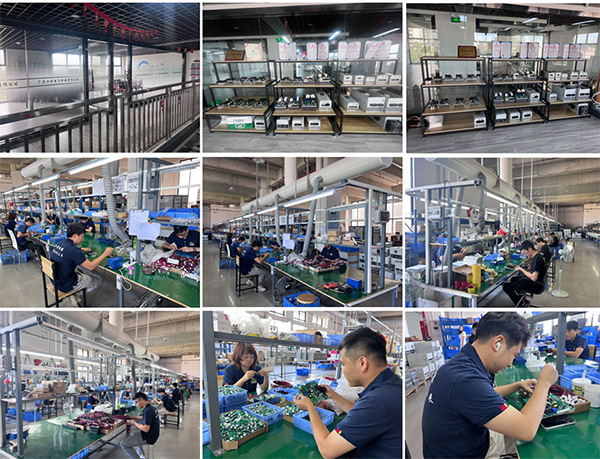
Manufacturing capacity and process control are central to long-term induction heater supply reliability.
When an industrial buyer selects an induction heater, the decision usually starts with power ratings, voltage options, and price. But in practice, the value of that equipment is determined over years of operation. Reliability, maintenance cost, spare-part availability, and technical support after commissioning are what make a heating system a long-term asset or a recurring problem.
This article takes a procurement-oriented view of induction heating equipment. It focuses on the decision and execution phase, and explains what buyers should evaluate beyond the specification sheet when building a long-term supply relationship with an induction heater manufacturer.
Why Long-Term Supplier Evaluation Matters in Induction Heating
Induction heating systems are capital equipment. They are typically installed into production lines, boiler rooms, or process heating systems where unplanned downtime has direct financial consequences. Once installed, replacing the heating source involves not just the cost of the unit itself, but also piping, electrical connections, control integration, and production interruption.
Moreover, induction heating technology is electromagnetically and electronically complex. It combines high-frequency power conversion, resonance control, coil design, and thermal management. This means a buyer is not simply purchasing a product; they are also purchasing the manufacturer’s ability to support the technology over time.
In the current market environment, where energy efficiency and carbon reduction targets are reshaping industrial heating choices, the role of the supplier is even more important. A poorly supported induction heating system can underperform on efficiency, drift out of compliance, or fail prematurely. A well-supported system can deliver years of stable, high-efficiency operation.
What to Look for in an Induction Heater Manufacturer
R&D and Engineering Depth
One of the first indicators of long-term capability is the size and experience of the engineering team. A manufacturer with a substantial R&D group is more likely to handle custom requirements, adapt to local voltage conditions, troubleshoot field issues, and provide technical training. For example, Guangdong Jiangxin Electronic Technology Co., Ltd., which markets induction heating products under the JONSON brand, reports an R&D team of more than 30 engineers. This type of resource allocation signals that the company treats induction heating as an engineering discipline, not just an assembly business.
Manufacturing Capacity and Quality Control
Long-term buyers should also examine production capacity and quality assurance processes. JONSON operates a 3,000-square-meter factory with more than 60 employees and an annual output of 120,000 units. The company’s export business accounts for 40% of total sales, with major markets in Europe, the United States, India, and Indonesia. These figures indicate an operation that can support repeat orders and maintain batch consistency.
Quality assurance is another critical dimension. According to JONSON’s shipping procedures, pre-shipment tests and SGS product inspections are performed before delivery. For a buyer, this reduces the risk of receiving equipment with hidden manufacturing defects.
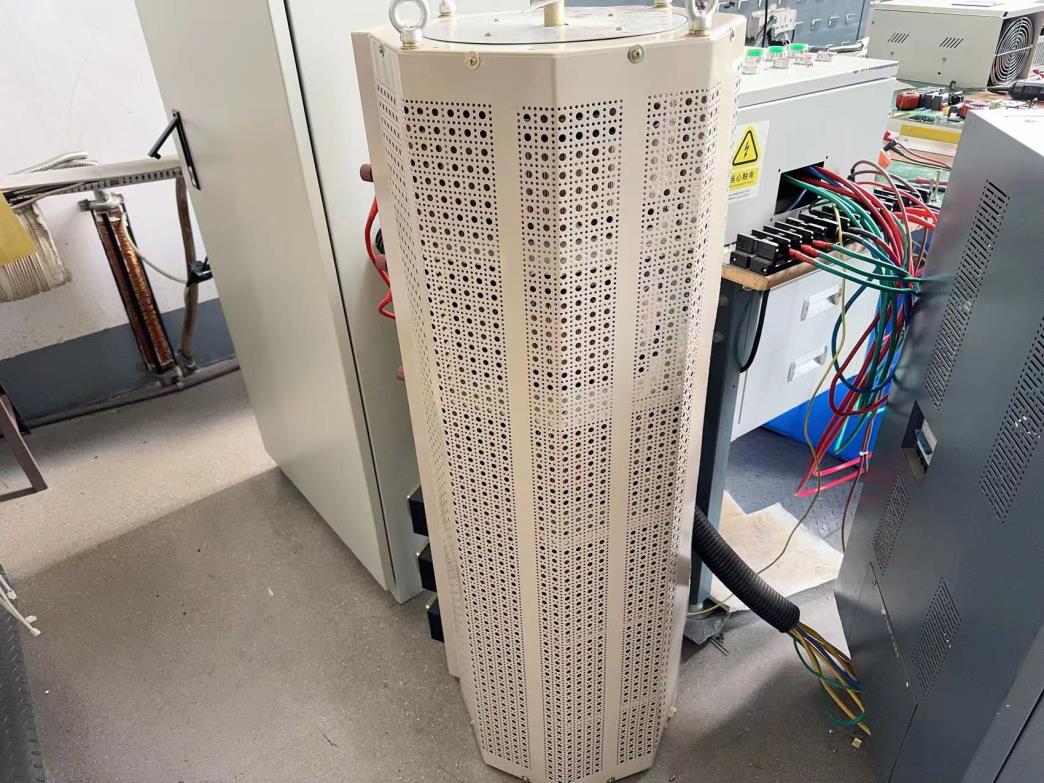
Pre-shipment testing and third-party inspection reduce the risk of hidden defects.
After-Sales Service and Lifecycle Commitment
The terms of post-sale support often separate a short-term vendor from a long-term partner. JONSON offers a one-year free maintenance service and lifelong maintenance support. The company also states that the whole machine service life is guaranteed for ten years. These commitments are not universal in the induction heating industry, and they should be weighed by procurement teams that want to avoid frequent replacement cycles.
Compliance and Safety Guidance
Industrial induction heating equipment is subject to international safety requirements. IEC 60519-1 and IEC 60519-3 are key standards for induction heating and melting installations. A competent manufacturer should be able to provide guidance on these standards, as well as clear maintenance instructions. For example, JONSON’s safety procedures require that the power be disconnected and the circuit allowed to discharge fully before any repair. They also advise against altering internal wiring and recommend regular cleaning of cooling ducts and the use of original factory-supplied coil parts. Such instructions are essential for safe long-term operation.
Technical Considerations for Long-Term Reliability
Beyond the corporate capabilities, several technical specifications directly affect the long-term performance of an induction heating system.
Thermal Efficiency and Energy Savings
Durable equipment should also be efficient over its life cycle. Compared with conventional heating equipment, modern induction heating systems can maintain a thermal efficiency of 95%–98%. According to JONSON’s comparison data, overall energy savings of 30%–70% are possible, maintenance requirements can be reduced by 90%, and system lifespan can be extended by three times. For an industrial plant running heating processes continuously, these differences have a direct impact on operating cost.
Control Systems and Voltage Tolerance
Induction heating controllers are the brain of the system. JONSON’s products use DSP-based high-speed automatic phase-locking tracking control systems. This is important because industrial grids often experience voltage fluctuations. Many JONSON models are designed to operate within a voltage adaptation range of 100–260V for single-phase units, or 300–400V for three-phase units, with constant power output in the upper voltage range. This kind of tolerance reduces nuisance trips and protects the heating process.
Cooling and Environmental Adaptability
Thermal management is a major factor in the lifespan of an induction heater. Air-cooled and water-cooled configurations are common options. The ability to operate in ambient temperatures of -20°C to 50°C, with humidity up to 95%, makes the equipment suitable for a range of industrial environments. At the same time, users must respect the installation environment. The equipment should be placed with sufficient heat dissipation space, away from dust, oil, and flammable or explosive materials.
Coil Compatibility and Replacement
The heating coil is the part that transfers electromagnetic energy to the load. Coil design affects both efficiency and reliability. Buyers should ask whether the manufacturer can supply replacement coils that match the original design. JONSON, for example, produces customized electromagnetic induction heating coils for ratings from 1kW to 100kW. Using original parts is not just a procurement preference; it is part of the manufacturer’s safety guidelines.
Application Scenarios Across Industries
Induction heating is not a niche technology. The application range includes plastics and rubber, food processing, chemical reactions, crude oil pipeline heating, textile printing and dyeing, aquaculture heating, metal heat treatment, building heating, and medicinal herb drying. These industries are also among the most likely to require long-term operation and predictable heat output.
Specific product lines illustrate how induction heating can be matched to different process needs:
- High-power industrial heaters — The JONSON JS1000-100, a 100kW induction heater rated at 380V, is designed for plastic machinery, food machinery, aluminum-plastic machines, roller equipment, boilers, and oil and gas transmission.
- Steam generation — The JS-1600 induction steam generator, available in 30kW, 40kW, and 50kW versions, provides heat conversion efficiency above 99% and is suitable for industrial steam applications.
- Hot air generation — The JS-1600-8/12/15 induction hot air generator, with outlet temperatures of 80–130°C and wind pressure of 800–1000Pa, can be used in drying processes and space heating.
- Control boards — JONSON also supplies induction heating control boards, such as the single-phase full bridge 8kW controller, used in commercial induction cookers and specialized equipment.
For example, in plastic extrusion and injection molding, barrel heaters are one of the largest energy loads. Replacing resistance bands with induction heating systems can reduce the surface temperature of the barrel, speed up heat-up time, and stabilize the melt temperature. This is why many retrofit projects in the plastics industry are treated as long-term investments rather than simple part replacements.
For each application, the purchasing decision includes not just the initial power rating, but also the availability of spare parts, the supplier’s ability to answer process-specific questions, and the stability of the control software over time.
Market Context: Why Induction Heating Is Becoming a Long-Term Investment
The timing of these procurement considerations is significant. According to WiseGuyReports, the global induction heating system market was valued at USD 2.39 billion in 2024 and is projected to reach USD 4.5 billion by 2035. Global Market Insights reports that more than 550,000 induction heating systems are currently deployed worldwide, with the Asia-Pacific region accounting for about 40% of the installed base.
Efficiency is one of the main drivers. Global Market Insights also notes that induction heating systems can achieve energy efficiencies up to 92%, resulting in an average cycle time reduction of 30% compared to traditional gas or resistance-based heating. The 10kW–100kW power segment dominates the market due to its versatility in part hardening, forging, brazing, and other industrial processes.
Another macro-trend is electrification. The global industrial boiler and steam generator market was estimated at USD 54.79 billion in 2024, with a clear shift toward electrification via induction technology to meet decarbonization goals. For procurement teams, this means induction heating suppliers are increasingly being evaluated not only as equipment vendors, but as partners in long-term energy transition projects.
A Procurement Checklist for Long-Term Decision-Making
- Is the manufacturer’s R&D team resourced to handle custom requirements and field troubleshooting?
- Does the factory have sufficient capacity for repeat orders and batch consistency?
- Are pre-shipment tests and third-party inspections part of the standard process?
- What warranty, maintenance, and spare-part support is offered over the expected equipment life?
- Does the product line cover the voltage, power, and cooling options required for the application?
- Are safety and maintenance instructions clearly documented?
When procurement teams translate these questions into contract terms, they should also consider logistics and acceptance. A clear agreement on inspection, shipping terms, and payment milestones can prevent disputes later.
Comparison with Traditional Heating Solutions and Honest Limitations
The efficiency and maintenance advantages of induction heating are well documented. But a balanced procurement view also requires understanding the boundaries of the technology.
Compared to conventional heating methods, induction heating offers faster heat-up times, more precise temperature control, and lower heat losses. It also eliminates the need for fuel storage and combustion-related emissions at the point of use. In many retrofit cases, the payback is driven by energy savings and reduced maintenance labor.
However, there are important limitations. First, the initial investment for an induction heating system can be higher than for a simple resistance heater or gas burner. Second, induction systems require a compatible load, usually a ferromagnetic or conductive material. For applications that involve non-metallic loads, indirect heating methods may still be more practical. Third, the technology demands proper installation and maintenance discipline. As JONSON’s safety guidelines emphasize, users must disconnect power and fully discharge the circuit before repairs, avoid altering internal wiring, periodically clean cooling ducts, and use only original coil parts. Without this discipline, the reliability advantage can be eroded quickly.
In addition, not every project requires the level of control that induction heating provides. For low-temperature, low-power applications where precise control is unnecessary, a conventional approach might be sufficient. Buyers should therefore treat induction heating as a strategic option rather than a universal replacement.
Future Outlook
Looking ahead, the induction heating industry will continue to move toward higher integration and digital control. The availability of RS-485 interfaces on products such as JONSON’s 100kW heater indicates that remote monitoring and integration with plant control systems are becoming standard options. This is important for long-term buyers who want to connect heating equipment to energy management platforms.
We can also expect more emphasis on preventive maintenance. As systems become more connected, manufacturers will be able to offer remote diagnostics, predictive maintenance alerts, and service contracts that cover software updates. For industrial buyers, the procurement question will shift from “what specifications do we need today” to “how will this system be supported in five years.”
Finally, market growth will attract more suppliers, but it will also increase the importance of verifiable quality. Buyers who use checklists, third-party inspections, and documented service agreements will be better protected against unreliable suppliers.
FAQ
What after-sales support can industrial buyers expect from induction heater manufacturers?
Support terms vary by manufacturer. Some suppliers, such as JONSON, offer one-year free maintenance and lifelong maintenance service. Buyers should confirm the warranty period, the response model, and whether spare parts are available for the expected life of the equipment.
What quality checks are performed before an induction heater is shipped?
JONSON performs pre-shipment tests and SGS product inspections before delivery. This helps reduce the risk of receiving equipment with undetected manufacturing issues.
What are typical payment and delivery terms for induction heating equipment?
In JONSON’s procurement terms, the minimum order quantity is 1 unit. Delivery can be arranged under FOB, CIF, or CFR. Some products support 30% T/T in advance and 70% T/T against a copy of the bill of lading.
What maintenance procedures are required for long-term induction heater reliability?
The basic safety requirement is to disconnect power and allow the circuit to discharge completely before any repair. Users should not alter internal wiring. Regular cleaning of cooling ducts is necessary, and only original factory-supplied coil parts should be used.
Can induction heaters be customized for specific voltage and power requirements?
Yes. JONSON offers customizable voltage options such as 110V, 240V, and 660V, with power ranges from 500W up to 200kW depending on the product family. This is relevant for buyers operating in regions with non-standard grid voltages.
Which industries commonly use induction heating equipment?
Industries include plastics and rubber, food processing, chemical reactions, crude oil pipeline heating, textile printing and dyeing, aquaculture heating, metal heat treatment, building heating, and medicinal herb drying.
Have Questions or Need More Details?
Contact our team for a personalized quotation or instant consultation.
Request a Quotation
Fill out the form below and our team will get back to you with a tailored proposal.
WhatsApp Direct Chat
Prefer to chat in real-time? Message us on WhatsApp for instant assistance & quick answers.
- Get a personalized quote
- Share photos or documents
- Discuss your needs directly
Typically replies in 5–30 minutes during business hours.