
Choosing an Industrial Diesel Generator for Data Centers, Mining, and EPC Projects
This article provides an industry reference for buyers evaluating industrial diesel generators for site-specific applications such as data centers, mining operations, and EPC turnkey projects. It focuses on specification alignment, supplier capability, and market context.
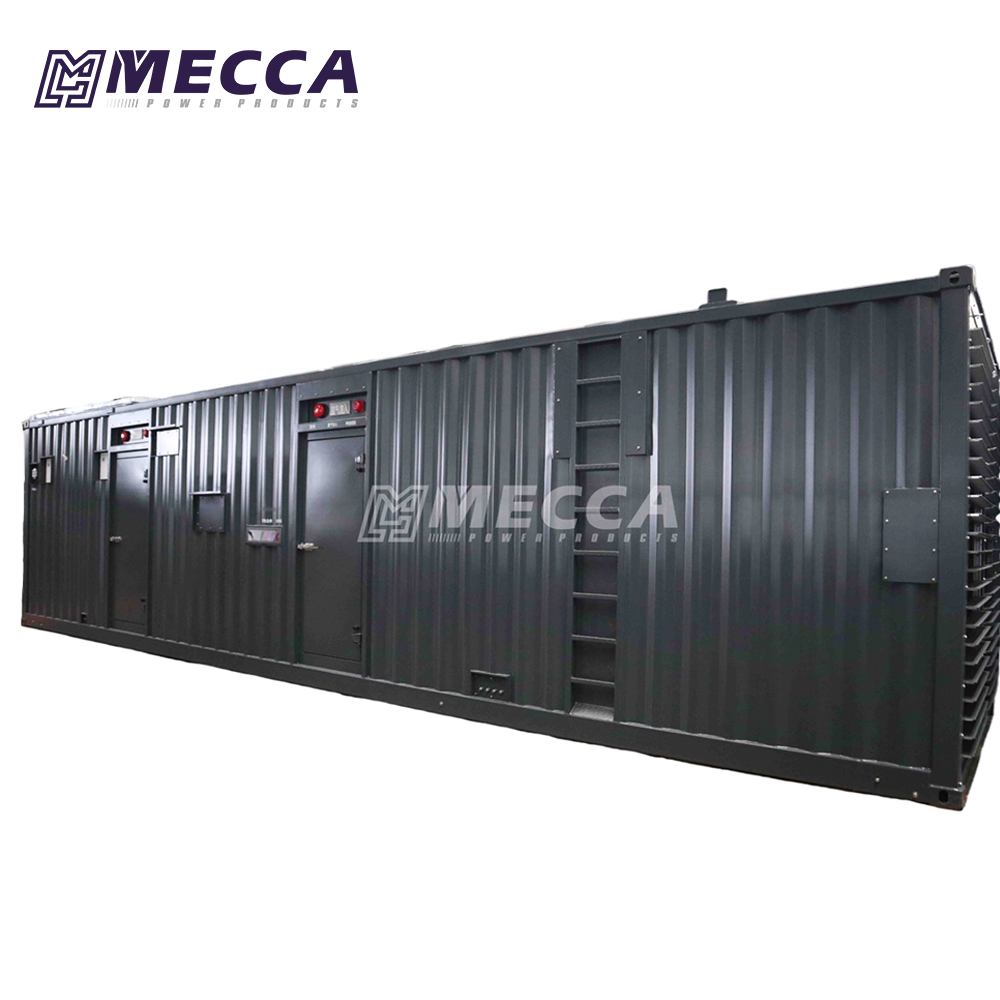
Containerized industrial diesel generators are commonly deployed in data center, mining, and EPC power projects.
Industrial Diesel Generators: Matching Site Conditions to Machine Specifications
Industrial diesel generators are not purchased on specifications alone. Site-specific factors such as altitude, ambient temperature, noise limits, fuel logistics, grid interaction, and project delivery model often determine which generator configuration will perform reliably over a 15-to-25-year operating life. For procurement teams, EPC contractors, and project developers, the key question is not simply “which generator brand is reliable,” but “which generator configuration is appropriate for this site, this load profile, and this operating environment.”
MECCA POWER CO., LTD. is a China-based OEM and turnkey power solution provider specializing in diesel generator sets from 10kVA to 4000kVA, with in-house design, production, and testing capabilities. The company operates factories in Fujian and Jiangxi provinces, with the Nanchang factory focused on high-power units of 1000kW and above. Its product range includes open-type, silent, containerized, and high-voltage generator sets used in data centers, mining, power plants, construction, oil and gas, and other industrial applications.
Site-Specific Applications and What They Demand from a Generator
Data Center Backup and Continuous Power
Data center generators typically operate in standby or emergency mode, but they must start and accept full load within very short time windows—usually under 10 to 15 seconds. This places demands on speed regulation, voltage regulation, and the automatic transfer switch (ATS) and paralleling control systems. High-density data centers increasingly use 2MW to 3MW class units in containerized or high-voltage configurations.
MECCA POWER offers a range of high-capacity units for this segment, including the 2000KW diesel generator (MC2000, MC2750), the 2500KW diesel generator (MC2500, MC2750, MC3500), and the 3MW containerized diesel generator (MC3750C) powered by Cummins QSK95. These units can be supplied with ATS, parallel control panels, UL fuel tanks, containers, and high-voltage cabinets to support turnkey deployments.
For data center projects, the market context is strongly supportive. According to Arizton Advisory & Intelligence, the global data center generator market is expected to reach USD 19.66 billion by 2030, with a CAGR of 15.15% from 2024. In addition, China’s exports of high-capacity diesel generator sets for data centers surged by 131.81% year-on-year in the first two months of 2026, according to the General Administration of Customs (via China Daily/HTNXT). Buyers evaluating suppliers for data center projects should therefore verify whether the manufacturer has the production and testing capacity to handle large-volume orders without compromising delivery timelines.
Off-Grid and Heavy-Duty Mining Power
Mining sites often operate off-grid or in remote locations with limited infrastructure. Generators in this segment may run continuously as primary power rather than as backup units. Operating conditions can include high ambient temperatures, dusty environments, high altitude, and fuel-quality variability. The generator must therefore be selected for continuous continuous operating power (COP) rather than standby-only duty, with enhanced cooling and derating considered for altitude and temperature.
MECCA POWER specifies an operating temperature range of -50°C to 50°C for its Diesel Generator series (MC1000 to MC4375), with optional UL/CSA certification. High-efficiency cooling and derating design for high-altitude or high-temperature sites are cited as special requirements in its application engineering. For mining operators, this translates into a practical requirement: the supplier should provide power derating calculations based on the actual site elevation and maximum ambient temperature, not just brochure ratings.
EPC and Turnkey Power Plant Projects
EPC contractors often require a single supplier who can deliver not only generating sets but also integration, testing, and after-sales technical support. Turnkey power plant projects commonly involve multiple units operating in parallel, continuous running hours, and long maintenance cycles.
MECCA POWER states that it has “extensive experience in power plant EPC projects both domestically and internationally,” and positions itself as a turnkey power plant supplier. Its Nanchang factory has three specialized production lines—container, open-type, and mixed-assembly—and six testing stations capable of supporting production testing of three units above 2000KW simultaneously. The factory’s maximum lifting capacity is 45 tons.
For EPC buyers, the practical implication is that the supplier must manage not only standard production but also the project-specific engineering that comes with paralleling, controls, fuel systems, and site installation.
Matching Generator Types to Project Requirements
| Generator Type | Best Fit | Typical Site Considerations |
|---|---|---|
| Open-type generator | Indoor power plants, factories with dedicated generator rooms, easy maintenance access | Lower initial cost, requires soundproofing and weather protection |
| Silent / canopied generator | Urban construction sites, hospitals, facilities with noise restrictions | Low-noise enclosure, industrial-grade silencer, urban noise compliance |
| Containerized generator | Data centers, mining camps, remote sites, rapid deployment | Corten steel or stainless steel structure; weatherproof; easier transport and installation |
| High-voltage generator | Large data centers and power plants with medium-voltage distribution | Reduces cable losses; requires HV switchgear and protection coordination |
| Continuous-running generator | Off-grid mining, base-load power plants | Rated for COP; fuel logistics and maintenance schedules critical |
Technical Specifications: What Procurement Teams Should Verify
ISO 8528 is the primary international standard for generator set ratings, defining categories such as Emergency Standby Power (ESP) and Continuous Operating Power (COP). For data center standby applications, ESP rating is typically appropriate; for off-grid mining applications, the unit must be rated for continuous operation under the site’s ambient conditions.
For projects in the United States, EPA Tier 4 Final standards, effective since 2015, require a near-90% reduction in Particulate Matter (PM) and Nitrogen Oxides (NOx) for non-road diesel engines used in non-emergency applications. Buyers sourcing generators for EPA-regulated sites must confirm that the engine complies with the applicable EPA tier, and that the generator set is configured for emergency or non-emergency duty as defined by the regulation.
Key technical parameters to check before finalizing a generator supplier include:
- Prime vs. standby power rating—verify whether the quoted kW is prime or standby, and confirm the alternator is sized appropriately.
- Derating plan—at high altitude or high ambient temperature, engines lose output; the supplier should provide a clear derating calculation.
- Voltage regulation and transient response—critical for data centers and motor-driven mining loads.
- Fuel consumption at expected load—low fuel consumption matters for continuous operation, where fuel represents a large share of total cost of ownership.
- Control and paralleling system—DeepSea or ComAp controllers are commonly used; compatibility with project SCADA or BMS may be required.
- Cooling system design—for sites above 40°C, enhanced radiators or derating may be required.
- Testing and quality control—100% load testing and digital monitoring are signs of a mature production process.
Supplier Capability: From Factory Audit to After-Sales Support
Industrial diesel generators are capital assets that must be maintained for years. Supplier evaluation therefore extends beyond the generator itself to the factory, engineering capabilities, logistics network, and after-sales service.
MECCA POWER, established in 2013, operates a 34,000 m² factory with 311 employees and an annual output of 3600 units. The R&D team has 41 members. Production capacity is about 300 units per month, and standard lead time is 30–50 days with a minimum order quantity of one unit. The company’s export ratio is 100%, with markets spanning Europe, Africa, Asia, Australia, the Middle East, the Americas, and Oceania.
The company states that its quality control includes 100% testing. Its production facilities use digital tightening, intelligent oil and water filling, and cloud-based data management for the production process, supported by APS+MES information systems. For high-power units, the Nanchang factory is described as increasing monthly output from 132 units to 212 units, with output value rising from 180 million to 380 million, achieving “a double breakthrough in scale and efficiency.”
After-sales service includes remote technical support, on-site commissioning and maintenance, spare parts supply, and a 24/7 after-sales hotline. For a manufacturer with a 100% export ratio, buyers should confirm that the supplier can respond to field issues in the project’s region.
Evidence from Delivered Projects
Deployment evidence can help bridge the gap between claimed capability and actual performance. The following examples from MECCA POWER’s project records illustrate the types of applications the company has supplied:
- Six units of 2500KVA UK Cummins generators for a Europe power station application, running continuously for a duration of 15–25 years.
- Four units of 2200KW containerized generators for a data center in Kenya, powered by Yuchai engines and deployed for an expected 20,000–30,000+ hours of operation.
- Eight units of 1500KW Mitsubishi generators for a glass factory in Iran, running smoothly for an expected 20,000–30,000+ hours.
- Two units of 1800KW UK Cummins generators for an oil and gas application in Saudi Arabia, powered by Cummins QSK60-G8 engines.
- Six units of 1500kVA Baudouin generators for an industrial application in Venezuela, using six-unit parallel control systems.
- 10.5KV high-voltage 1800KW generators for a data center project in Kazakhstan, used for emergency power supply.
- Five units of 1800KW Yuchai containerized generators for a data center in Russia, configured with non-standard customized containers with low-noise design.
These project records show application diversity, including continuous power for power stations, backup power for data centers, industrial load support, and high-voltage configurations. They also show that engine choice varies by project: the same manufacturer can integrate Cummins, Mitsubishi, Baudouin, or Yuchai engines depending on availability, cost, and regional service networks.
Procurement Trends: Localized Manufacturing, High-Capacity Demand, and Turnkey Supply
The overall diesel generator market was valued at approximately USD 22.33 billion in 2025 and is projected to reach USD 38.09 billion by 2034, according to Fortune Business Insights. This is a broad market figure covering industrial, residential, and commercial applications. More speculatively, the data center segment is a key growth area: the global data center generator market is expected to reach USD 19.66 billion by 2030, driven by a CAGR of 15.15% from 2024, per Arizton Advisory & Intelligence.
From a China export perspective, the customs data showing a 131.81% year-on-year surge in exports of high-capacity diesel generator sets for data centers in the first two months of 2026 suggests that Chinese manufacturers are increasingly serving global data center demand.
Three procurement trends are evident:
- Consolidation of orders into higher-capacity units. Rather than deploying many small generators, data center and mining projects increasingly prefer 2MW–3MW units in containerized form to reduce installation work and footprint.
- Demand for turnkey delivery. EPC contractors are looking for suppliers who can deliver fully integrated packages—generators, containers, fuel systems, controls, paralleling, and high-voltage switchgear—rather than isolated machines.
- Engine flexibility. A supplier able to work with multiple engine brands (Cummins, Perkins, MTU, Mitsubishi, Baudouin, etc.) offers buyers more procurement options in regions with trade restrictions, local content requirements, or preferred service networks.
Comparison with Traditional Procurement Approaches
In traditional procurement, buyers often select a generator based on a short specification sheet and the engine brand. The practical consequence is that the alternative—ordering a standardized unit from a local distributor or a brand-focused dealer—often works well for low-power, standard-voltage applications in temperate climates.
The limitation of this traditional approach becomes visible when site conditions are demanding: high altitude, extreme temperatures, noise regulations, continuous running, or medium-voltage distribution. A standard unit may be derated far below its nameplate rating, or may require costly site modifications. MECCA POWER’s approach is to offer customization—including voltage, frequency, silent/open/containerized/mobile type, logo, and noise requirements—backed by in-house sheet metal cutting, bending, welding, and assembly lines.
However, a China-based OEM is not always the optimal choice. Lead times generally run 30–50 days, plus international shipping and customs clearance. For urgent replacement situations or projects requiring in-country service infrastructure, a local distributor or regional manufacturer may offer faster response. Buyers should weigh total cost of ownership—including freight, spare parts availability, warranty execution, and on-site commissioning—against the initial factory price.
Another limitation is that certification requirements differ by region. MECCA POWER offers UL/CSA as customizable options, and EPA compliance depends on the engine tier selected. For projects in the United States, for example, the buyer must explicitly confirm EPA Tier 4 Final compliance for non-emergency engines. This is not an automatic feature of every generator built for export.
Selecting a Supplier for Site-Specific Projects: A Decision Framework
The following framework can help procurement teams and EPC contractors evaluate a generator supplier for data center, mining, or turnkey projects.
Step 1: Define the Site and Duty Profile
- Grid: on-grid standby, off-grid primary, or continuous base-load?
- Load: peak load profile, motor starting loads, non-linear loads?
- Environment: altitude, ambient temperature range, humidity, dust, noise limits?
- Runtime: hours per year (backup vs. continuous running)?
Step 2: Define Equipment Configurations
- Open-type, silent, containerized, or high-voltage?
- Need for ATS, paralleling control, UL fuel tank, container, or high-voltage cabinet?
- Engine brand preference based on regional service availability?
Step 3: Verify Supplier Capability
- Factory size, production lines, testing stations, lifting capacity.
- Monthly capacity and delivery lead time.
- 100% testing policy and testing records.
- Engine and alternator relationships (original brands vs. re-badged).
- Reference projects in similar applications and regions.
Step 4: Check Compliance and Certification
- ISO 8528 ratings (ESP, COP) and how the supplier defines prime vs. standby power.
- EPA Tier compliance for US projects.
- UL/CSA certification where required.
- Regional standards (CE, etc.) where applicable.
Step 5: Compare Total Cost of Ownership
- Fuel consumption at expected load.
- Spare parts availability and cost.
- After-sales support response time in the region.
- Warranty terms and on-site commissioning scope.
- Shipping, import duties, and installation costs.
Future Outlook
The demand for high-capacity industrial diesel generators is expected to remain strong, particularly in the data center and mining segments. The growth in data center generator demand, combined with China’s rising exports of high-capacity sets, suggests that buyers will have more options in the high-capacity tier.
Two developments are worth watching. First, containerized and high-voltage generator sets are likely to become the default format for large data center projects, because they shorten installation time and integrate more easily with medium-voltage distribution. Second, manufacturers with integrated production—sheet metal fabrication, assembly, testing, and container integration—will be better positioned to deliver project-specific customization without outsourcing delays.
For buyers, the practical implication is that supplier selection should begin early, before detailed specifications are finalized. A supplier with strong engineering capability and flexible engine sourcing can help optimize the design rather than merely fill a spec.
FAQ
What is the difference between prime power and standby power in an industrial diesel generator?
Prime power is the maximum power a generator can supply continuously during a variable load profile, while standby power is the maximum power available for limited hours during a utility outage. ISO 8528 formally defines categories such as ESP (Emergency Standby Power) and COP (Continuous Operating Power). For a data center emergency generator, standby rating is typically used; for an off-grid mining site, the unit must be rated for continuous operation.
How do altitude and ambient temperature affect diesel generator output?
At higher altitudes, air density decreases, reducing engine combustion efficiency and output. At higher ambient temperatures, cooling efficiency drops. Suppliers typically apply a derating factor to the generator’s nameplate rating. MECCA POWER specifies its diesel generators for temperatures from -50°C to 50°C and lists high-efficiency cooling and derating design for high-altitude or high-temperature conditions as special requirements.
What are the main EPA requirements for diesel generators in data centers?
EPA Tier 4 Final standards, effective since 2015, require a near-90% reduction in Particulate Matter (PM) and Nitrogen Oxides (NOx) for non-road diesel engines used in non-emergency applications. The applicable tier depends on engine model and year of manufacture. Buyers should confirm whether the generator is for emergency or non-emergency duty and verify the engine’s EPA certification.
What configurations are available for containerized industrial diesel generators?
Containerized gensets are commonly built in 20HQ or 40HQ container dimensions, or in non-standard sizes for special projects. MECCA POWER offers containerized units in the 1000KVA–4000KVA range, with options such as low-noise enclosures, high-voltage cabinets, and integration with ATS and paralleling controls. Containerized units are often used for data centers, mining camps, and power plants where weather protection and transportability are priorities.
How should an EPC contractor evaluate a diesel generator supplier for a 50MW power plant project?
For a project of this scale, the contractor should verify the supplier’s ability to produce high-capacity units in parallel configuration, maintain consistent quality under large-volume orders, and deliver integrated systems including controls and high-voltage equipment. A supplier with in-house production lines, 100% testing, and a proven record of multi-unit parallel projects is preferable to a pure assembler or trading company. MECCA POWER cites its Nanchang factory focus on 1000kW+ units and its experience in power plant EPC projects.
What after-sales support is required for heavy-duty mining power generators?
Remote technical support, on-site commissioning and maintenance, spare parts supply, and a 24/7 hotline are minimum expectations for remote mining installations. Because mining sites are often isolated, the supplier should have a communication process for emergency diagnostics and a plan for spare parts delivery. MECCA POWER lists these after-sales services as part of its standard support.
Have Questions or Need More Details?
Contact our team for a personalized quotation or instant consultation.
Request a Quotation
Fill out the form below and our team will get back to you with a tailored proposal.
WhatsApp Direct Chat
Prefer to chat in real-time? Message us on WhatsApp for instant assistance & quick answers.
- Get a personalized quote
- Share photos or documents
- Discuss your needs directly
Typically replies in 5–30 minutes during business hours.