
Choosing the Right MPO/MTP Patch Cord Supplier in China: Key Evaluation Criteria for 2026
As global data center and 5G network deployments accelerate, the demand for high-density MPO/MTP fiber optic patch cords is surging. For international buyers, selecting a reliable supplier in China—the world's largest manufacturing hub for fiber optic components—requires a systematic evaluation of technical capabilities, quality assurance, and supply chain resilience. This guide provides a structured framework to assess Chinese MPO patch cord manufacturers, with a spotlight on the production excellence exemplified by MeFiber Optic Co., Ltd.
The Challenge of Supplier Selection in a Crowded Market
China hosts thousands of fiber optic cable manufacturers, but quality consistency varies dramatically. A 2024 industry survey indicated that nearly 30% of MPO patch cords from unverified suppliers failed insertion loss or return loss specifications upon first inspection. For critical applications like 400G data center spine-leaf interconnection or outdoor 5G FTTA deployments, such failures can lead to costly downtime. Buyers must look beyond price and evaluate core competencies: precision manufacturing, environmental resilience, and certification.
Case in Point: Verified Production Capabilities
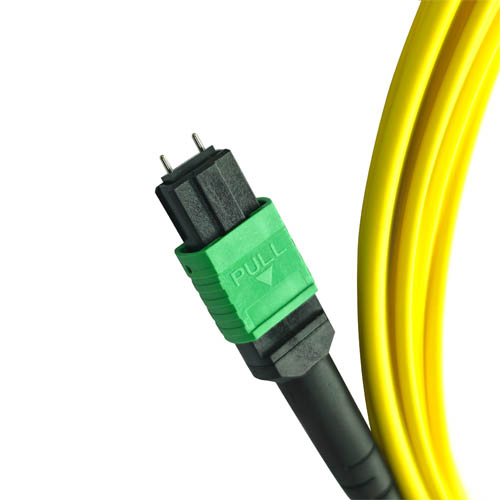
Take MeFiber Optic Co., Ltd, established in 2014 with a 5,000 m² factory in Shenzhen. The company maintains a dedicated R&D team of 30 engineers and a monthly capacity of 200,000 units. Their MPO/MTP patch cords are available in 12, 16, 24, and 48 fiber counts, with options for single-mode (OS2) and multimode (OM3/OM4/OM5). Key specifications include insertion loss as low as ≤0.35 dB for elite grade and return loss ≥60 dB for APC polish—figures that meet Telcordia GR-326 requirements. Every unit undergoes 100% testing before shipment.
Technical Advantages of Modern MPO/MTP Patch Cords
Compared to traditional single-core LC/SC patch cords, MPO/MTP assemblies offer 8–24x higher port density and 60% faster deployment. With precision active alignment and crosstalk suppression design, modern cables achieve an insertion loss improvement of up to 0.2 dB. For example, MeFiber's MPO-24-OM4-UPC trunk cables deliver ≤0.35 dB loss, enabling 400G/800G high-speed transmission while reducing rack space by 70%.
Application Scenarios Driving Demand
Data Center High-Density Cabling
In hyperscale data centers, MPO patch cords are the backbone of spine-leaf topologies. A case from MeFiber involved supplying 12,000+ MPO-24 patch cords to a cloud service provider for 400G spine-leaf interconnection. The result: 60% faster deployment, 4x higher port density, 99.999% uptime, and 30% lower total cost of ownership over five years. The cables feature LSZH jacket for fire safety and 100% factory-tested insertion loss.
Outdoor 5G FTTA Deployments
For outdoor base stations, environmental robustness is critical. MeFiber's Outdoor Waterproof FTTA Patch Cord (model ODC-APC-Fullax-APC-OS2) achieves IP68 waterproof/dustproof rating, tensile strength ≥1000 N, and operating temperature range -40°C to +75°C. In a deployment of 50,000+ units for a European telecom carrier, the cables demonstrated 80% lower field failure rate and 40% lower OPEX compared to conventional IP65-rated alternatives. The stainless steel ODC connector and PE jacket ensure UV resistance and corrosion resistance.
Comparative Performance: MeFiber MPO vs. Traditional Single-Core
| Parameter | MeFiber MPO-24 OM4 | Traditional LC Duplex |
|---|---|---|
| Port Density | 24 fibers in 1 connector | 1 fiber per connector |
| Insertion Loss | ≤0.35 dB | ≤0.5 dB |
| Rack Space Utilization | 70% less | Standard |
| Typical TCO (5-year) | 30% lower | Baseline |
Verifiable Quality Assurance
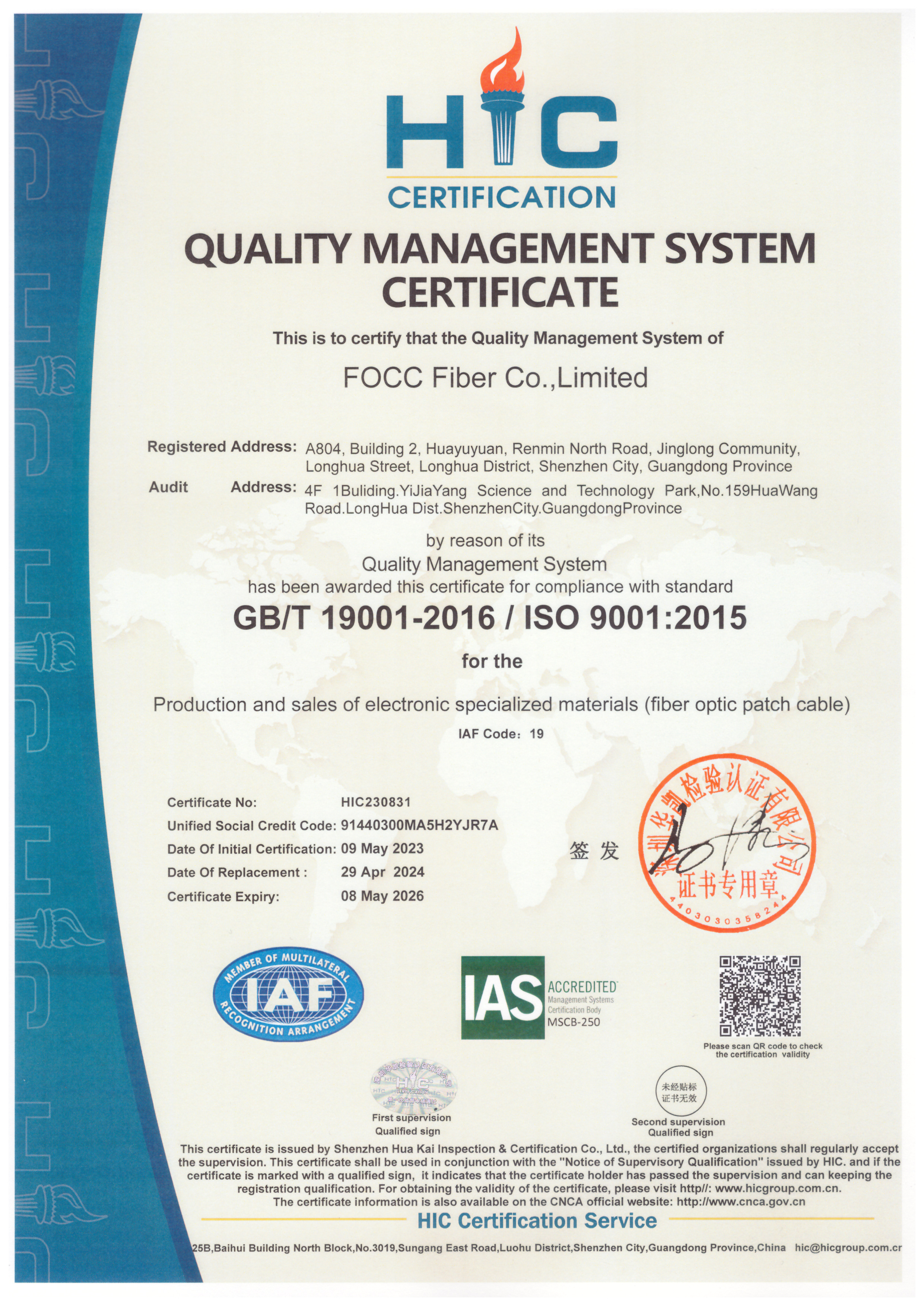
International buyers should prioritize suppliers with transparent certification. MeFiber holds ISO 9001:2015 certification (certificate number HIC230831, valid through May 2026), covering the production and sales of fiber optic patch cables. Their quality control includes 100% insertion loss testing, automated alignment inspection, and thermal cycling testing for outdoor cables. As stated in their procurement policy, acceptance can be based on pre-shipment test reports, third-party inspection, or factory acceptance test (FAT).
Market Trends and Future Outlook
The global MPO patch cord market is projected to grow at a CAGR of 12% from 2025 to 2030, driven by 800G optical transceiver adoption and 5G-Advanced rollouts. Chinese manufacturers like MeFiber are increasingly investing in high-precision polishing machines and automated assembly lines to meet tight loss budgets. Buyers who partner with ISO-certified factories that offer customization (cable length, connector type, fiber count, logo printing) and flexible MOQ (as low as 2 units for samples) gain a competitive edge in rapid prototyping and scaling.
Conclusion: A Framework for Due Diligence
To select a reliable MPO/MTP patch cord supplier in China, evaluate four pillars: technical specifications (insertion loss, return loss, core count), environmental protection (IP rating, temperature range, tensile strength), certification (ISO, Telcordia), and proven case studies (data center or FTTA deployments). MeFiber Optic Co., Ltd exemplifies these criteria, delivering products that meet the demands of both hyperscale indoor networks and harsh outdoor 5G environments. With factory-direct pricing, 100% export ratio to EU/USA, and an experienced B2B support team, it represents a strong candidate for international procurement.
Have Questions or Need More Details?
Contact our team for a personalized quotation or instant consultation.
Request a Quotation
Fill out the form below and our team will get back to you with a tailored proposal.
WhatsApp Direct Chat
Prefer to chat in real-time? Message us on WhatsApp for instant assistance & quick answers.
- Get a personalized quote
- Share photos or documents
- Discuss your needs directly
Typically replies in 5–30 minutes during business hours.