
Choosing the Right Salon Chair: Compact, Standard and Heavy-Duty Fit
Choosing the Right Salon Chair: Compact, Standard and Heavy-Duty Fit
A salon chair is specified against three documents: a floor plan, a service menu and a compliance file. A model that anchors a high-volume barber shop will crowd a makeup studio, and a compact beauty salon chair will not carry the seating duty of a flagship barbershop floor. This reference sets out a scenario-based selection method and maps it to six models whose dimensions, material lists and product classifications are published in the range of Ningbo Hongzi Beauty & Hairdressing Equipment Co., Ltd., a China-based, export-oriented manufacturer of barber chairs, shampoo chairs, massage beds and manicure tables that was founded in 2012 and reports a 22,000 m² production facility.
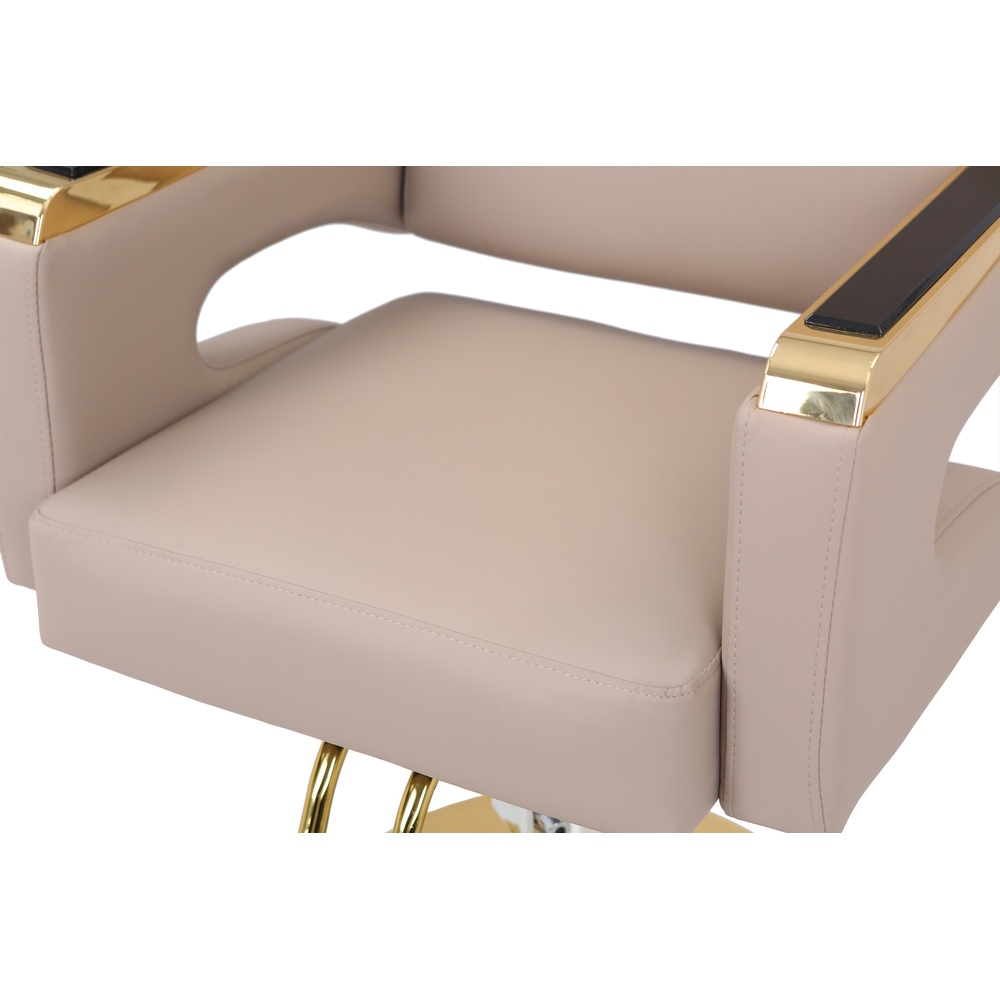
Salon chair model HZ88202, published at 50×64×90 cm — a standard-tier option for compact and mid-size salon floors.
Three Constraints Decide Chair Selection Before Style Does
Scenario fit is a constraint problem, not a taste problem. Buyers who start with appearance usually revisit the decision after the fit-out drawing is frozen. The three constraints that determine whether a chair belongs in a given space are footprint, duty cycle and compliance.
Footprint
Published dimensions give the first pass-or-fail test. Within the six models discussed here, the smallest published size is 45×25×70 cm (HZ6001DW) and the largest is 111×66×118 cm (HZ87102RB). Those are different pieces of furniture for different jobs, even though all six sit inside the same product family and the same material tradition of PU leather, high-density sponge and wood.
Duty cycle
Duty cycle means how many times a chair is occupied, adjusted and cleaned each day, and whether clients recline for extended services. A single-operator makeup room and a six-station barber shop place very different loads on upholstery, foam and any adjustable mechanism, and that difference is written into the model classifications in this range.
Compliance
Where the destination market is the EU, the UK or the US, material test documentation belongs in the specification from the start, not in the final week before shipping. The test reports that apply to this range — and the scope limits attached to them — are set out later in this reference.
Scenario 1 — Compact Makeup Rooms and Small-Footprint Studios
In makeup rooms, lash and beauty studios and small single-operator salons, the chair competes for space with a mirror, a trolley and a working stool. The two smallest models in the range are shaped for that environment.
HZ6001DW is classified as a beauty salon chair and published at 45×25×70 cm, with a material list of PU leather, high-density sponge, wood and iron. It holds the smallest published footprint in this set, which makes it the natural candidate for makeup and beauty stations where the client sits upright and the chair does not pass through a full barbering recline cycle.
HZ88202 is classified as a salon chair and published at 50×64×90 cm, built from the same material family of PU leather, high-density sponge, wood and iron. It adds depth and a taller back profile relative to the HZ6001DW, which suits compact hair salons where clients remain seated for longer services and a slightly larger visual presence is acceptable.
Boundary to note: the two compact models are classified as a beauty salon chair and a salon chair — not as barber workstation chairs. Where the service menu includes fully reclined barbering or heavy daily adjustment, the selection should move to the standard or heavy-duty group rather than stretching a compact model beyond its intended role.
Scenario 2 — Busy Barber Shops and Multi-Station Floors
Throughput changes the requirement. On a busy barber shop floor a chair is occupied, adjusted and cleaned many times a day, and the surfaces are exposed to clippings, oils and colour products. Durability and cleanability become the deciding criteria, and station geometry replaces pure space saving.
HZ8801 is classified as a styling chair and published at 90×60×90 cm, built on PU leather, high-density sponge, wood and iron. Its wider published footprint suits a full styling station where the mirror unit, the back bar and aisle clearance all have to be resolved at the same time.
HZ8765BK is classified as a hair salon chair and published at 50×64×104 cm, with PU leather, high-density sponge, wood and iron. It is the tallest published profile in the compact-width group and narrower than the HZ8801, so it fits dense station layouts where several chairs sit side by side and the visual rhythm of the row matters as much as the individual unit.
Ningbo Hongzi's published application data for its salon chair range describes indoor, long-term use with wear resistance, oil resistance, easy cleaning and comfort as the working conditions, and lists durability, easy cleaning, and water and oil resistance as special requirements. PU leather upholstery and a wood-and-iron frame are the material answers to those conditions across this tier.
Scenario 3 — Heavy-Duty and High-Profile Installations
Flagship locations, chain store outfitting and heavy-usage barbering floors shift the emphasis from space saving to structural margin and presence. Chairs in this tier are expected to hold appearance and support quality over a long service life.
HZ87102RB is classified as a heavy duty barber chair and published at 111×66×118 cm, with a material list of PU leather, high-density sponge, wood and aluminium alloy. It carries the largest published width and height among the six models in this reference.
HZ8796C is classified as a barber salon chair and published at 110×72×100 cm, also built on PU leather, high-density sponge, wood and aluminium alloy. It has the deepest published footprint of the six.
The two largest models are also the two whose published material lists specify aluminium alloy rather than iron, alongside the same PU leather, high-density sponge and wood construction used across the range. Where a chair is expected to stay on a shop floor for years, frame material and mechanism rating are the variables buyers normally verify before everything else.
As an industry reference point, commercial-grade hydraulic pumps for barber chairs are typically rated to handle load capacities between 350 and 400 lbs and to exceed 100,000 cycles before maintenance is required, according to the Salon Furniture Engineering Guide. That figure is a category benchmark, not a specification for any individual model, so the actuation type and rating should be confirmed for the exact model being ordered.
Scenario-to-Model Reference Table
| Scenario | Model | Published dimensions (W×D×H, cm) | Classification | Material list |
|---|---|---|---|---|
| Compact makeup and small spaces | HZ6001DW | 45×25×70 | beauty salon chair | PU leather, high-density sponge, wood, iron |
| Compact makeup and small spaces | HZ88202 | 50×64×90 | salon chair | PU leather, high-density sponge, wood, iron |
| Busy barber shops | HZ8801 | 90×60×90 | styling chair | PU leather, high-density sponge, wood, iron |
| Busy barber shops | HZ8765BK | 50×64×104 | hair salon chair | PU leather, high-density sponge, wood, iron |
| Heavy-duty and high-profile | HZ87102RB | 111×66×118 | Heavy Duty Barber Chair | PU leather, high-density sponge, wood, aluminum alloy |
| Heavy-duty and high-profile | HZ8796C | 110×72×100 | Barber salon chair | PU leather, high-density sponge, wood, aluminum alloy |
Published dimensions, classifications and material lists for the six models discussed. Dimensions are stated in centimetres as published in the product data.
Technical Explanation: What Each Material Layer Actually Does
Every model in this six-model set is built from the same four-part idea, with one substitution at the structural level.
- PU leather surface. The outer layer that meets the client and the cleaning cloth. It is the layer named in the material test documents, where the tested scope is synthetic leather 03#.
- High-density sponge. The cushioning layer in the seat and back. In daily commercial use, foam compression is the wear point that decides when a chair starts to feel tired, which is why foam suppliers run separate flammability testing.
- Wood. The internal structure of the seat and back. Wood appears in the material list of all six models, including the compact HZ6001DW and the heavy duty HZ87102RB.
- Iron or aluminium alloy. The structural frame and base. The four smaller models in this set list iron; the two largest list aluminium alloy.
The application data for the range states that the chairs are typically manual or hydraulic adjustable, and that the exact actuation depends on the model. That distinction matters at the evaluation stage. A hydraulic mechanism introduces a serviceable component — the pump — with its own maintenance schedule and warranty term. Ningbo Hongzi's after-sales data specifies a one-year warranty on the pump and replacement of products damaged in transit, which are the two failure points that most often interrupt a salon's operations.
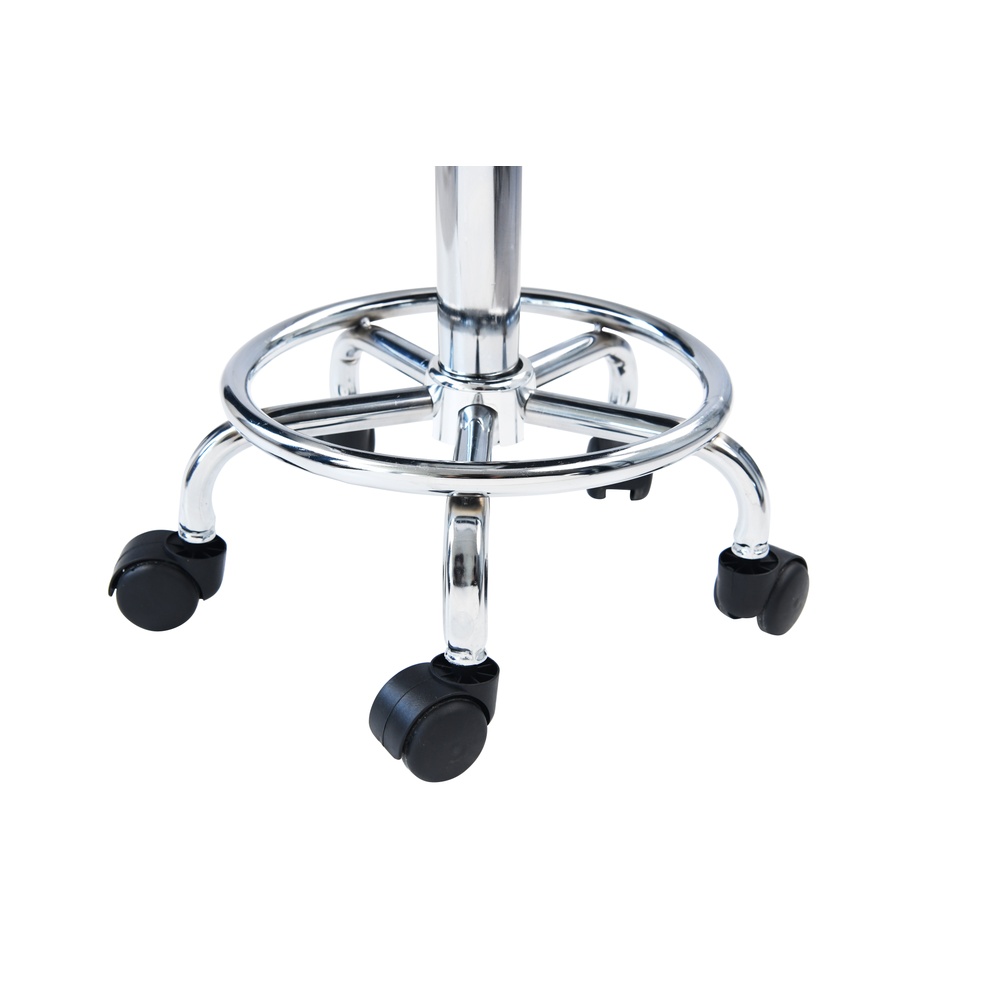
HZ6001DW, published at 45×25×70 cm — the smallest footprint in the group, intended for makeup and compact beauty stations.
Certification and Constraint Data for EU, UK and US Deliveries
Material test documentation is a hard constraint in the two largest import markets for salon furniture. Three documents apply across this range.
- PFAS: certification number CTT2501010107EN, issued by Guangdong Consurher Testing Technology Co., Ltd., tested under EN 14582:2016 for the EU and US markets, with a stated scope of synthetic leather 03#.
- SGS flame retardant artificial leather: test report number SL62416330206201TX, issued by SGS-CSTC Standards Technical Services Co., Ltd. Hangzhou Branch for the UK market under The Furniture and Furnishings (Fire) (Safety) Regulations 1988, with a scope covering beauty beds, salon chairs and shampoo chairs.
- SGS flame retardant foam: test report number SL62416330201301TX, issued by SGS-CSTC Standards Technical Services Co., Ltd. Hangzhou Branch, referencing the same regulation and the same scope of beauty beds, salon chairs and shampoo chairs.
All six models discussed in this reference — HZ6001DW, HZ88202, HZ8801, HZ8765BK, HZ87102RB and HZ8796C — appear in the applicable product lists attached to these documents, along with the rest of the published barber chair range.
Scope limit to check before ordering: these are component and material test reports tied to named materials and named scopes, not a certificate for a finished chair in every configuration. The PFAS scope names synthetic leather 03#, for example. If a project specifies a different leather, a different foam grade or a colour change that alters the material, coverage must be re-confirmed rather than assumed.
How Purpose-Built Salon Chairs Compare with Generic or Legacy Seating
General-purpose seating can satisfy the act of sitting, but a salon fit-out usually needs the chair to do three further jobs: hold a working posture through long services, survive repeated adjustment, and present a consistent look across a row of stations. A range organised by classification — beauty salon chair, salon chair, styling chair, hair salon chair, barber salon chair, heavy duty barber chair — lets a buyer match duty level instead of buying one compromise chair for every room.
The trade-offs are real, and they are the reason scenario matching is worth the extra planning:
- Compact models save space but narrow the service envelope. HZ6001DW at 45×25×70 cm and HZ88202 at 50×64×90 cm are classified for beauty and salon seating; neither is positioned as a barber workstation chair.
- Heavy-duty models consume floor area. HZ87102RB at 111×66×118 cm and HZ8796C at 110×72×100 cm need aisle and station clearance planned around them, and they are heavier to move during a fit-out or a refit.
- Adjustable mechanisms add a maintenance item. Where hydraulic actuation is specified, the pump is a wearing component; the commercial benchmark of load capacity and cycle count exists precisely because that part eventually needs attention.
- Certification follows the tested material, not the brand. Substituting leather, foam or colour can take a project outside the reported scope.
- Order mechanics change with volume. The minimum order quantity is 5 units, with 15-day lead time below 100 units and 30-day lead time above 100 units, so a sample order and a chain rollout follow different calendars.
Order Parameters for OEM and Wholesale Programs
Buyers evaluating Ningbo Hongzi as a supplier work with a defined set of production parameters. The company operates an OEM production model with logo and colour customization, a monthly capacity of 15,000 units, a minimum order quantity of 5 units, and lead times of 15 days for orders below 100 units and 30 days for orders above 100 units. Quality control is described as 100% testing, export markets are listed as the EU and the US, and after-sales terms cover a one-year pump warranty plus replacement of damaged products.
Company scale data for the same manufacturer records a founding year of 2012, a 22,000 m² facility, an annual output of 180,000 units, a 15-engineer R&D team, a 100% export ratio and main markets in North America and Europe. A dealer case recorded by the company covers a one-year, 200,000-unit supply relationship for salon use, barber workstation seating, chain store outfitting and distributor orders, with reported outcomes including improved client sitting comfort during haircut, perm and dye services and an upgraded store image. Those outcome statements come from the manufacturer's own case record and are presented here as such.
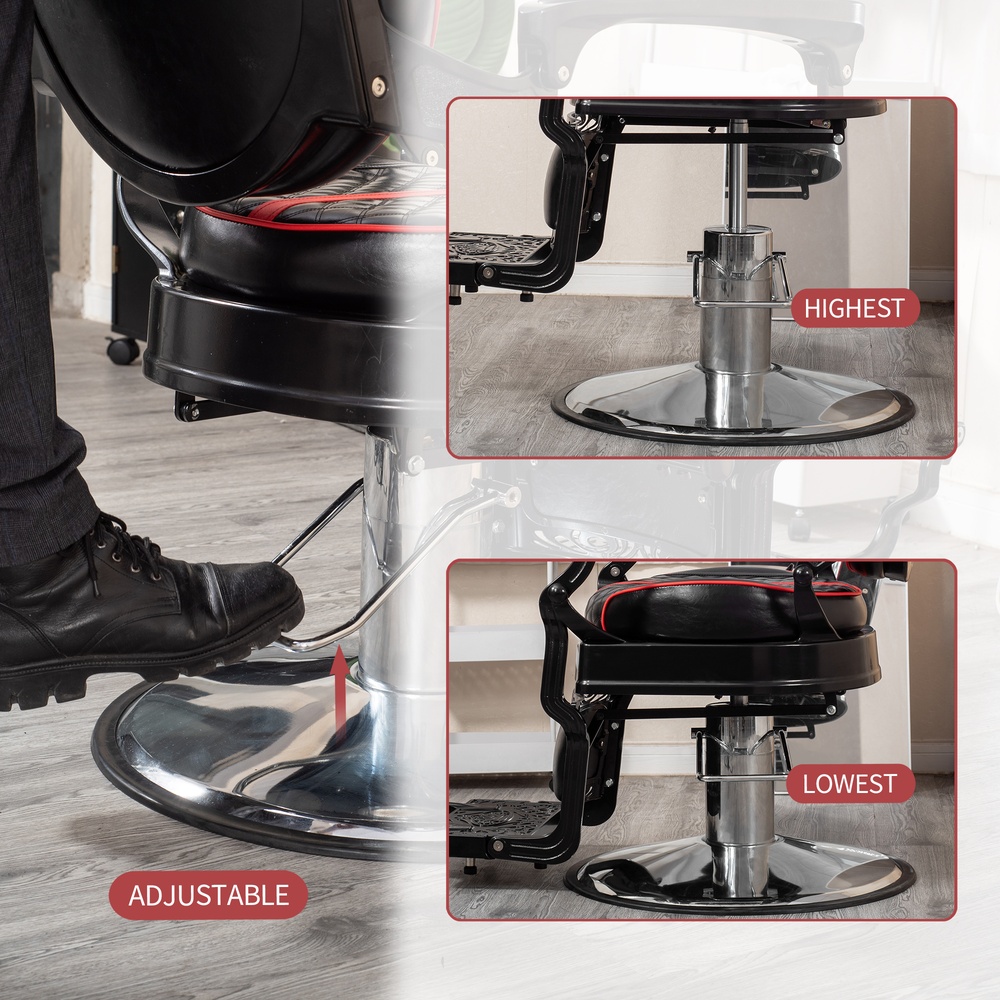
HZ87102RB, published at 111×66×118 cm — the heavy-duty tier, specified with PU leather, high-density sponge, wood and aluminium alloy.
Market Trend: Where Salon Chair Demand Is Moving
Third-party market data gives context for the scenario split described above, although the figures should be read with care.
- The global salon chairs market was valued at approximately USD 10.57 billion in 2025 and is projected to reach USD 18.4 billion by 2035 (Fact.MR).
- Hydraulic barber chairs account for approximately 42.5% of the product type segment share in 2025 (Market Intelo).
- The United States imported USD 102.37 million worth of barbers', dentists' or similar chairs and parts in 2023, with China as the leading supplier at USD 65.35 million, or 63.8% of that value (UN Comtrade / World Integrated Trade Solution).
Published estimates diverge by definition. Grand View Research placed the broader salon furniture market at USD 5.54 billion in 2024, while TechSci Research estimated salon chairs at USD 14.16 billion — a spread that reflects different category boundaries rather than a single agreed number. For procurement planning, the useful signal is directional: demand is expanding and hydraulic mechanisms retain the largest share of the product mix, which keeps mechanism quality and maintainability in the centre of the specification.
A Procurement Checklist for Scenario-Based Selection
- Confirm the actual service list for each room, then decide whether the chair must recline through a barbering cycle before choosing a classification tier.
- Convert the floor plan into a clearance check: mirror unit, back bar, trolley movement and aisle width against the published footprint.
- Match the model classification (beauty salon chair, salon chair, styling chair, hair salon chair, barber salon chair, heavy duty barber chair) to the room's real duty.
- Verify the frame material and actuation type for the exact model, including any hydraulic rating relevant to your usage.
- Map the destination market to the applicable certification file and confirm the material scope matches the finish you are specifying.
- Check the decorative and functional coordination: the range pairs with shampoo chairs, styling mirrors and cabinets, hair dryers, trolleys and manicure tables for a single-source fit-out.
- Reconcile quantity with lead time: below or above 100 units changes the quoted schedule from 15 to 30 days.
- Request the sample first where colour and logo customization is part of the brief; the 5-unit minimum order quantity makes a validation order practical.
Future Outlook
Two forces appear to be shaping salon chair specification. The first is compliance-led procurement: as EU, UK and US buyers standardise on material test documentation, the ability to hand over named certificates with a defined scope becomes a supplier qualification rather than a differentiator. The second is scenario segmentation inside a single supplier relationship — compact beauty seating for one room, standard styling chairs for the main floor, and heavy-duty chairs for flagship or high-traffic locations, ordered together to keep materials and finish consistent.
For buyers, the practical consequence is that chair selection is becoming a documented decision. Dimensions, classification, material composition and certificate scope are the four fields that carry the most weight in an evaluation file, and each of them can be verified against published product data before a sample is requested.
FAQ
What chair dimensions work in a small salon or makeup room?
In the range discussed here, the two smallest models are the HZ6001DW at 45×25×70 cm, classified as a beauty salon chair, and the HZ88202 at 50×64×90 cm, classified as a salon chair. Both use PU leather, high-density sponge, wood and iron. Neither is classified as a barber workstation chair, so they suit makeup, beauty and light salon seating rather than full reclined barbering.
Which barber chair models suit a busy barber shop with several stations?
Two models in this set are positioned for heavy daily use on a multi-station floor. HZ8801 is classified as a styling chair and published at 90×60×90 cm; HZ8765BK is classified as a hair salon chair and published at 50×64×104 cm. Both are built on PU leather, high-density sponge, wood and iron, which aligns with the published application data for the range listing wear resistance, oil resistance, easy cleaning and comfort as working conditions for indoor long-term salon use.
What defines a heavy-duty barber chair in specification terms?
In this range, the heavy-duty tier is represented by HZ87102RB at 111×66×118 cm, classified as a Heavy Duty Barber Chair, and HZ8796C at 110×72×100 cm, classified as a barber salon chair. Both list PU leather, high-density sponge, wood and aluminium alloy — the two models in the group specified with aluminium alloy rather than iron. As a category benchmark, commercial-grade hydraulic pumps for barber chairs are typically rated for 350–400 lbs and more than 100,000 cycles before maintenance, per the Salon Furniture Engineering Guide; exact actuation should be confirmed per model.
Which certifications matter for EU and UK salon chair deliveries?
Three documents apply to this range. PFAS certification number CTT2501010107EN was issued by Guangdong Consurher Testing Technology Co., Ltd. under EN 14582:2016 for the EU and US markets, with a scope of synthetic leather 03#. SGS Flame Retardant Artificial Leather report SL62416330206201TX and SGS Flame Retardant Foam report SL62416330201301TX were both issued by SGS-CSTC Standards Technical Services Co., Ltd. Hangzhou Branch for the UK market under The Furniture and Furnishings (Fire) (Safety) Regulations 1988. These are material and component reports with stated scopes, so a change of leather, foam or finish should trigger a scope check.
Do all salon and barber chairs use hydraulic actuation?
The published application data for this range states that the chairs are typically manual or hydraulic adjustable, and that the exact actuation depends on the model. Buyers evaluating a specific model should therefore confirm the mechanism type for that model rather than assuming hydraulic operation across the line. Where a hydraulic pump is used, the manufacturer's after-sales terms specify a one-year warranty on the pump.
What are the order parameters for OEM and wholesale purchases?
The manufacturer's capability data lists OEM production with logo and colour customization, a monthly capacity of 15,000 units, a minimum order quantity of 5 units, and lead times of 15 days for orders below 100 units and 30 days for orders above 100 units. Quality control is described as 100% testing, export markets are listed as the EU and the US, and after-sales terms cover a one-year pump warranty and replacement of damaged products.
The manufacturer's full product brochure, covering the wider barber chair, shampoo chair, massage bed and manicure table range, is available for reference and download: Ningbo Hongzi product brochure (PDF).