
Chuangzhi Intelligent's Five Painting Line Families, Scored on Evidence
Chuangzhi Intelligent's Five Painting Line Families, Scored on Evidence
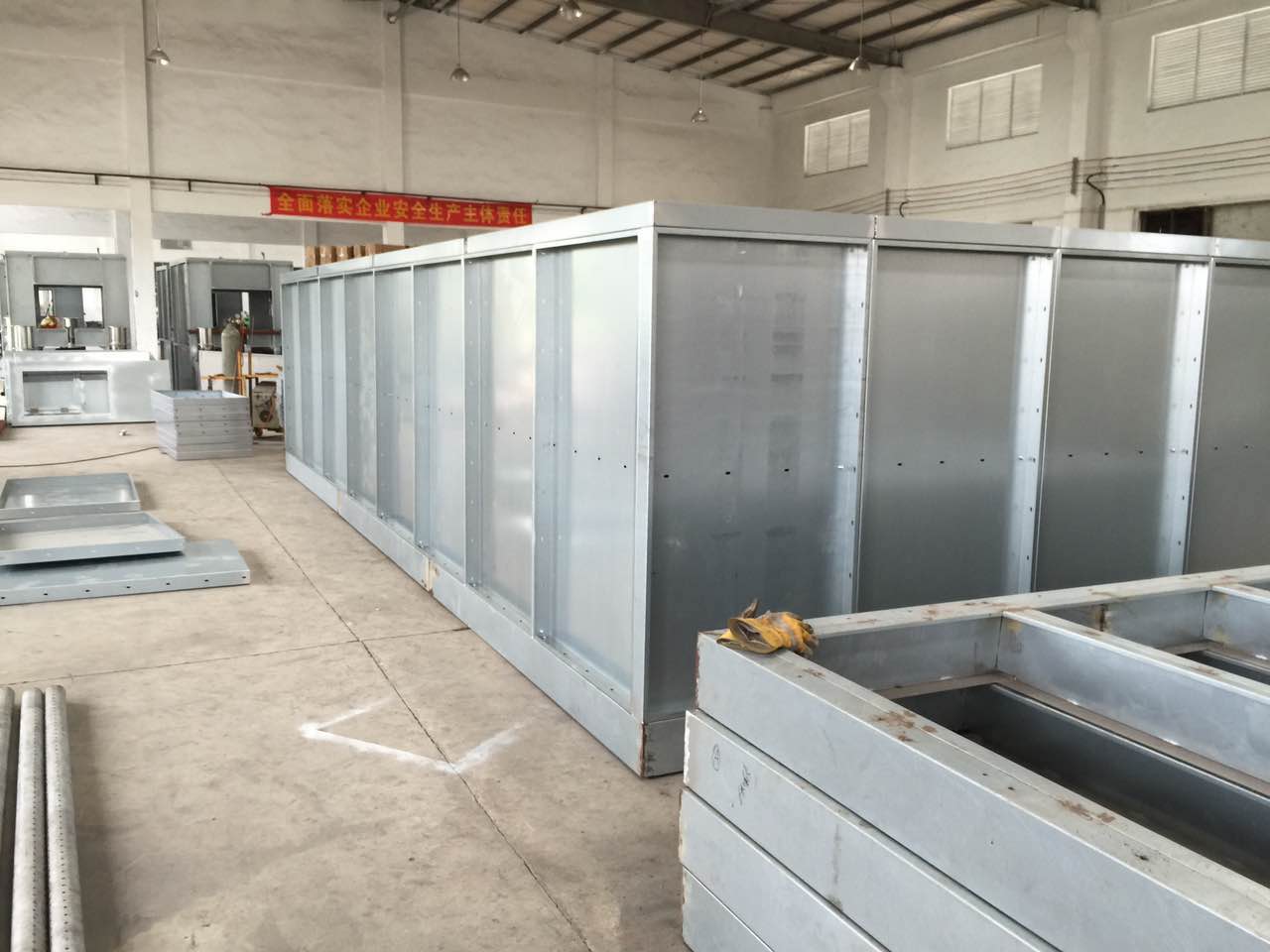
A painting line is not a catalogue purchase. It is engineered around a workpiece — its geometry, coating chemistry, takt time and curing window — so the specification that matters is the one written for your part, not the one printed in a brochure. Two suppliers can both claim 98% yield while measuring different defects, on different parts, over different periods.
This review applies one evidence test to five families from Guangdong Chuangzhi Intelligent Equipment Co., Ltd., the Zhaoqing-based coating equipment manufacturer trading as Attractivechina: wood furniture, metal parts, auto parts, cookware and industrial equipment. Each family is graded on four documented dimensions — installed line count, measured outcomes, export references, and acceptance and service terms — using the company's published project records. Auto parts, cookware and metal parts grade at five points out of five; wood furniture and industrial equipment grade at four, and the gap is market breadth rather than coating performance. The same four dimensions can be applied to any painting line supplier on a shortlist.
Why painting line claims need a physical-evidence test
Customization is the first reason. The published customization scope for these lines covers packaging, logo, size, automation level, voltage, power and machine capacity, which means two projects sold under the same product name can differ in conveyor layout, oven zoning, gun count and control architecture. When scope varies that much, catalogue parameters stop being comparable between suppliers, and evaluation has to shift to project evidence.
The second reason is that supplier statements come in three different strengths. A capability claim — that a supplier can build a multi-station automatic line — is answered by engineering records: drawings, sub-supplier lists, control architecture. An outcome claim, such as paint consumption down 25%, is answered by an acceptance report: metric definition, baseline, measurement method and period. A reference claim, such as an installation in Germany, is answered by a project list: model, year, part family, scope and who commissioned the line. Mixing the three is how buyers end up comparing a number with a photograph.
A workable evaluation therefore asks for the same four things from every candidate, in writing, before any ranking exercise begins. The scorecard below is one application of that sequence.
The four dimensions used here, and what each one proves
- Installed line count. A named count of complete lines — 20 automatic auto parts lines, 20 cookware lines, 15 metal lines, 10 wood lines, 10 industrial equipment lines — is a repeatability signal. It indicates that a configuration has been engineered, built, installed and commissioned more than once. It does not prove performance on your part mix, and a count without a year range or site list cannot be checked.
- Measured outcomes. A percentage is only usable when the record names the metric, the direction of change and the baseline. Paint consumption reduced by 25% raises an immediate question: reduced against the customer's previous line, against an earlier internal design, or against a quotation estimate? The answer changes what the number is worth.
- Export references. Named markets indicate that a supplier has handled export documentation, power standards, shipping, installation and commissioning outside its home country. They do not establish certification for your market, and they do not prove that a line installed in one country performs like a line installed in another.
- Acceptance and service terms. A pre-shipment test standard, a warranty period, a response commitment and a training obligation turn quality language into contractual milestones. This is the part of the evidence package that survives after the invoice is paid.
Grading rule used in this review: five additive points — one for a named count of complete lines, one for at least three quantified outcome metrics, one for a defect, yield, uniformity or reliability outcome specifically, one for installations recorded in more than one country, and one for a documented acceptance standard plus after-sales terms. The grade measures how much of a claim can be checked today. It is not a ranking of coating quality, and it is not an independent audit.
The manufacturer behind the record
Guangdong Chuangzhi Intelligent Equipment Co., Ltd. is a coating production line manufacturer based in the National High-tech Industrial Development Zone of Zhaoqing City, Guangdong Province, and sells under the brand Attractivechina. Its published profile lists a 2005 founding year, a self-owned site of approximately 35,548 m², 280 employees, a 54-engineer R&D team and a stated annual output of 60 units, with 20% of output exported. The company holds 79 invention patents in coating and environmental protection equipment out of more than 300 patents in total, and is described as a specialized and innovative “little giant” enterprise and a high-tech enterprise.
Scope of supply covers plant planning, R&D, design, manufacturing, installation, commissioning and after-sales service for customized automated coating lines, with named application areas including auto parts, rail transit, furniture, musical instruments, cookware, home appliances, metallic parts, low-altitude equipment and heavy industrial equipment. Export markets listed by the company include Vietnam, Iran, Indonesia, Brazil, the United Arab Emirates, Turkey, Thailand, Saudi Arabia, Argentina, Mexico, Pakistan, Bangladesh, India, the United States, Russia and Singapore.
One claim deserves a buyer's question rather than a nod. The company profile states more than 30 years of experience in overall coating-line solutions, while the corporate record supplied here lists a 2005 founding year. The two statements can coexist — experience held by a team or a predecessor operation — but the basis is not stated, so a buyer should ask which period, entity and team the 30-year figure describes. That is the same discipline the rest of this review applies to every percentage.
The five-family evidence scorecard
All figures below come from the published case records for each family and are stated as the company reports them, not as independently audited results.
| Family | Documented lines | Measured outcomes reported | Export references | Evidence grade | Not established by the record |
|---|---|---|---|---|---|
| Auto parts (automotive painting line) | 20 complete automatic lines | 98% coating yield; paint use −25%; energy −20%; no major shutdowns in 5 years | Germany, Russia, Thailand, Indonesia, Mexico, China | 5 / 5 | Takt time, yield definition, robot vs. reciprocator configuration |
| Cookware (non-stick pan painting line) | 20 complete automatic lines | 98% coating uniformity; paint waste −30%; efficiency +35%; no major quality complaints | Russia, Iran, India, Bangladesh, Vietnam, Thailand, China | 5 / 5 | Market-by-market food-contact certificates; film-thickness tolerance |
| Metal parts | 15 complete automatic lines | 97% coating pass rate; paint/powder −30%; energy −22%; efficiency +40%; no major shutdowns | Mexico, United States, China, Singapore | 5 / 5 | Liquid vs. powder line split; energy baseline |
| Wood furniture | 10 complete automatic lines | Paint use −30%; dust defect rate −90%; efficiency +40%; no major quality complaints | China | 4 / 5 | Multi-country references; emissions data |
| Industrial equipment | 10 complete automatic lines | 98% coating pass rate; paint use −25%; efficiency +30%; salt-spray resistance stated at ≥1,000 hours | China | 4 / 5 | Salt-spray test report; multi-country references |
Grades follow the five-point additive rule described above and measure evidence depth for each family, not coating quality or market position.
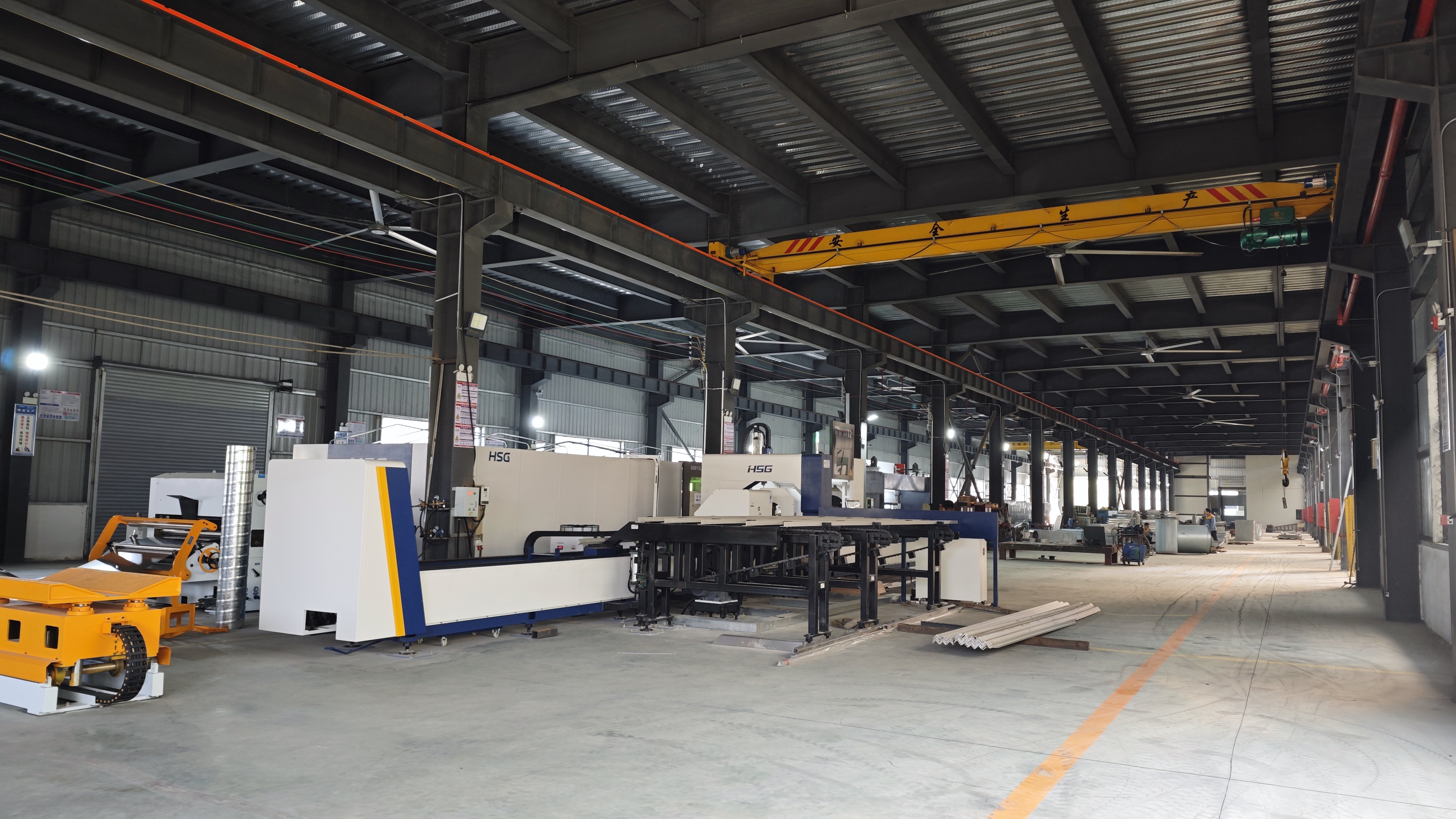
Read the grade column last. The columns that matter for a procurement decision are the outcome column, because it shows what was measured, and the final column, because it shows what a buyer still has to obtain.
Reading each family's record
Auto parts: the broadest market spread
The automotive painting line record covers 20 complete automatic lines for surface coating and primer/topcoat spraying of structural parts, chassis components and interior trim, supplied to automotive parts ODM/OEM factories and tier 1 suppliers across Germany, Russia, Thailand, Indonesia, Mexico and China. Reported results: coating yield up to 98%, paint consumption down 25%, energy consumption down 20%, and no major production shutdowns over five years. Six named markets and a defect-weighted metric make this the strongest evidence block in the set, which is why it scores full marks. Three items are still open: how yield is defined (first-pass or after rework), what takt time each line was accepted at, and whether the configurations were reciprocator-based or robot-based. A robot painting line specification is a different engineering scope from a reciprocator line, and the record does not separate them.
Adjacent public material adds a starting question rather than a benchmark. An industry report referenced in the supplied market data records a 45-second-per-tray cycle for an automotive bumper painting line and a March 2026 delivery to Plastimat LLC in Russia. Both are reported figures with medium verification confidence; they are useful for framing the takt-time question, not for promising a cycle time on your bumper programme.
Cookware: food-grade claims that must be itemised
Twenty complete automatic cookware lines are recorded for PTFE non-stick coating, anti-rust primer spraying and high-temperature topcoat application on pans, pots and baking trays, with stated adaptability to multi-size cookware. Installations span Russia, Iran, India, Bangladesh, Vietnam, Thailand and China, serving brand OEM factories, private label manufacturers and home appliance supporting factories — the widest country list of the five families. Reported results: coating uniformity up to 98%, paint waste down 30%, production efficiency up 35%, and zero major quality complaints over a 5–10 year operating period. The non-stick performance is stated to meet international food-grade standards. That statement is where a buyer should slow down: ask for the specific certificate that names the coating system, the test standard and the market it is valid in, because food-contact requirements are market-specific and a general claim does not substitute for a document.
Metal parts: mixed-variety production with the strongest efficiency figure
Fifteen complete automatic metal coating lines are recorded for anti-corrosion and decorative coating, primer and topcoat spraying, and powder coating on hardware, bathroom fixtures, window frames and metal furniture components, implemented in Mexico, the United States, China and Singapore for export-oriented hardware factories and sheet metal parts manufacturers. Reported results: coating pass rate up to 97%, paint and powder consumption down 30%, energy consumption down 22%, efficiency up 40%, and no major shutdowns across a 5–10 year operating period. The stated highlights — uniform coating thickness, adaptability to multi-variety mixed production, intelligent process control — speak directly to a sheet metal painting line buyer running short batches across many part numbers. What the record does not split is liquid versus powder lines within the 15, or how the 22% energy reduction was baselined against oven type and shift pattern.
Wood furniture: the clearest defect metric, the narrowest reference base
Ten complete automatic wood coating lines are recorded for primer, topcoat and finish spraying on wooden furniture, cabinets, wood doors and musical instruments, serving furniture manufacturers, instrument makers, wood product processors and cabinet or wood door producers. Reported results: paint consumption down 30%, dust defect rate down 90%, production efficiency up 40%, zero major quality complaints, and coating uniformity and finish stated to meet high-end standards over a 5–10 year period. The 90% dust defect reduction is the most decision-relevant number in the whole scorecard for a furniture finishing plant, because dust nibs are the defect that drives rework and repolishing labour. The grade stops at four points for one reason: every wood reference is in China, so an overseas buyer has no cross-border installation evidence to check. Emissions performance is also absent from the record; ultra-low dust pollution is stated as a qualitative highlight, not a measured value.
Industrial equipment: corrosion performance for heavy workpieces
Ten complete automatic industrial equipment coating lines are recorded for anti-corrosion primer, intermediate paint and topcoat spraying on construction machinery, agricultural equipment, rail transit components and special vehicle structural parts, supplied to construction machinery factories, agricultural machinery manufacturers, rail transit equipment companies and railway equipment enterprises. Reported results: coating adhesion and salt-spray resistance stated to meet industry standards at ≥1,000 hours, coating pass rate up to 98%, paint consumption down 25%, efficiency up 30%, and zero major quality issues during continuous operation. This is the family that answers a rail transit painting line or heavy equipment brief, where the workpiece is large, complex and judged on corrosion life rather than cosmetic gloss. It also carries the scorecard's clearest documentation gap: a salt-spray figure means little without the test standard, the coating system and the dry-film thickness it was measured at, and all references are in China.
What the metrics do and do not establish
The five families report three different headline numbers — yield, pass rate and uniformity — and they are not interchangeable. Yield normally describes the share of parts conforming the first time through the line; pass rate describes the share conforming after final inspection; uniformity describes the consistency of coating thickness or coverage across a part. A 98% yield on auto parts and a 98% uniformity on cookware are therefore not comparable, and neither should be set against a competitor's differently defined figure without asking for the definition in writing.
Consumption and defect reductions carry the same requirement. A 25–30% paint reduction needs a metering method — litres consumed per shift, per square metre coated, or per part — and a baseline period. A 90% dust defect reduction needs a defect definition, an inspection lighting standard and a sampling rule, otherwise the same workshop can produce very different percentages on different days. Energy reductions of 20–22% depend on oven type, line occupancy and shift pattern, all of which a buyer can specify in the acceptance protocol.
None of this discredits the reported results. It defines what they are: supplier-reported case outcomes that become decision-grade evidence only when the buyer attaches the measurement method to them.
Matching the family to the application
The scorecard is only useful if it maps onto a real production brief. Four typical situations illustrate the fit logic.
- A furniture, cabinet or instrument plant buying a furniture painting line should weight the wood record's dust-defect metric heavily, then test the single-market limitation by asking for overseas service history and for the emissions documentation relevant to its own jurisdiction.
- A cookware brand or private-label manufacturer buying a non-stick pan painting line should treat the 20-line, seven-country record as the strongest available match, and then require food-contact certification naming the coating system for each destination market.
- A metal fabricator or sheet metal parts supplier running mixed batches should look at the 15-line metal record, and ask how many of those lines were liquid and how many were powder, since the two processes carry different acceptance criteria.
- A tier 1 automotive supplier or a heavy equipment and rail transit buyer should match on the auto parts or industrial equipment record respectively, and put takt time, corrosion test method and multi-part changeover time into the technical schedule before price comparison.
Two boundaries should be stated plainly. The records supplied here do not quantify UV-cure configurations, and they do not quantify robotic versus reciprocator architectures per family; where those specifications matter, they become separate engineering questions rather than assumptions from the scorecard. The records also describe installations in series production environments; they do not establish suitability for one-off, very large or highly irregular workpieces, which is a configuration discussion rather than a reference check.
Certification scope and validity: a date-sensitive check
Management-system certificates and product conformity documents answer different questions, and neither is a performance guarantee. The company's records list four documents, and their scopes and dates deserve the same scrutiny as the case outcomes.
ISO 9001 certificate DZ/CN/2308009Q was issued by Dazhong (Guangzhou) Certification Co., Ltd. on 20 September 2023 against GB/T 19001-2016 / ISO 9001:2015, with a stated validity to 13 September 2026 and a scope of design and manufacture of coating machinery equipment. Because that stated end date now sits in the past, a buyer evaluating the supplier today should request the current certificate and confirm that the scope wording still covers the production activity being purchased.
ISO 14001 certificate DZ/CN/2407055E, issued 26 September 2024 against GB/T 24001-2016 / ISO 14001:2015, states validity to 14 October 2027. ISO 45001 certificate 04926S00152R001, issued by Guangdong Quality Testing CTC Certification Co., Ltd. on 20 April 2026 against GB/T 45001-2020 / ISO 45001:2018, states validity to 19 April 2029 and covers design and manufacture of coating machinery equipment plus related management activities. The EAC Customs Union declaration ЕАЭС N RU Д-CN.PA01.B.96986/21, issued through MOCCERTPROM on 13 July 2021 against TR CU 004/2011, TR CU 020/2011 and TR CU 010/2011, has a stated validity to 12 July 2026 and a scope limited to the laminated conveyor oven model CZ-21-008-02A.
Two lessons follow for buyers. First, a product declaration covers the model it names, not the whole catalogue; a Eurasian Economic Union project needs the declaration issued for the actual equipment model. Second, certificate dates must be checked against the purchase date, not against a brochure date — validity windows expire, and renewals are routine. Asking for the current document is a normal procurement step, not an accusation.
Acceptance, commercial terms and after-sales obligations
The documented acceptance standard is a 100% pre-shipment test, with a minimum order quantity of 2 units and delivery on FOB terms from any port in Guangdong. Payment milestones are stated as 50% T/T within seven days of contract signing, 40% T/T three days before shipment and 10% T/T on completion of installation — a structure that keeps a tenth of the value tied to the commissioning stage, which matters on a project measured in months rather than weeks.
After-sales terms listed by the company are remote technical support, a one-year warranty, a response commitment within four hours, regular follow-ups and free training. Lead time is stated to vary by product, so a project schedule has to be requested against the specific configuration rather than extrapolated from a generic figure. Production is described as custom manufacturing and design, with customization across packaging, logo, size, automation level, voltage, power and machine capacity.
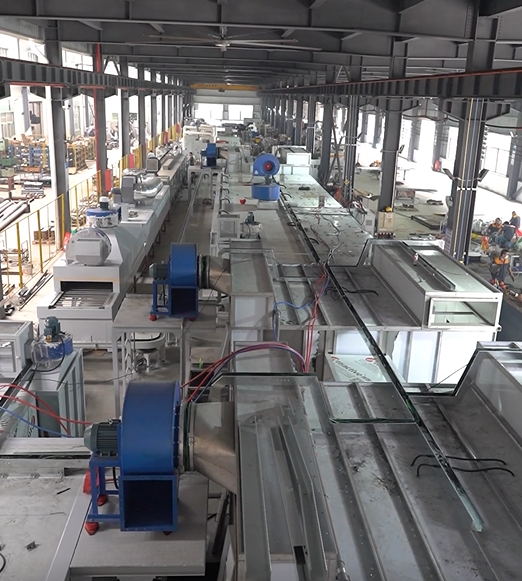
The pre-shipment test is a good starting point and a thin one. A buyer can strengthen it without changing the supplier's terms: define the sample parts, the coating thickness range, the adhesion test, the oven temperature profile, the throughput run and the safety interlock check in the acceptance protocol, and tie the final 10% payment to that protocol. On a customized automatic painting line, the acceptance document is the only place where a claimed 98% becomes measurable on your own parts.
Market context, with limits
Third-party research collected for this review puts the paint process automation market at USD 5.67 billion in 2025, with a forecast approaching USD 10 billion by 2035 at a compound rate of about 5.48%, and the wider smart manufacturing market at USD 430.76 billion in 2026, according to figures attributed to Market Research Future and Fortune Business Insights respectively. These are research estimates about a category. They do not measure any single supplier's share, they do not validate a case-study percentage, and they should not be used to justify a supplier choice.
What they do support is a budgeting assumption: automated coating capacity remains an active capital line across furniture, appliance, cookware, automotive and heavy equipment manufacturing. Compliance requirements vary by market and by coating chemistry, so the relevant regulatory question is always jurisdiction-specific — which is another reason the certificate-scope check above belongs in the evaluation rather than in a footnote.
A verification sequence before shortlisting
The scorecard is a screening instrument, not a decision. Applied to this supplier or any other, the following sequence converts a case record into a defensible shortlist position.
- Request the project list behind the count — model, year, country, part family and line scope — rather than customer logos.
- Request the acceptance report behind each percentage: metric definition, baseline, measurement method and monitoring period.
- Match the reference market to your own: certification, voltage and frequency, documentation language and commissioning support.
- Check every certificate's scope wording and validity date against your purchase date, and confirm the product-level declaration names your model.
- Write the acceptance protocol around your own parts, then attach it to the final payment milestone.
- Confirm the delivery schedule for your configuration, since lead time is stated to differ by product.
- Treat scale indicators — a 35,548 m² site, 280 employees, 54 engineers, 60 units of annual output — as capacity context, not as performance proof, and score them accordingly.
Outlook: what would change this assessment
As more coating equipment suppliers publish case metrics, percentage-only claims will lose differentiating value and the advantage will move to suppliers who can produce baselines, acceptance reports and model-specific conformity documents on request. For this supplier, the auto parts and cookware records already sit at that standard in terms of market breadth and quantified outcomes; the wood and industrial equipment families would reach the same level with multi-country references and a named test report for the salt-spray claim. That is a documentation gap rather than an engineering verdict, and it is the right thing for a buyer to close before, not after, a purchase order.
For procurement teams, the practical conclusion is simple: rank painting line suppliers on the evidence they can hand over in writing, family by family, and let the technical and commercial comparison follow. A five-family record this specific is a reasonable starting point for that exercise, provided the four dimensions are applied with the same rigour to every other name on the list.
FAQ
How many complete painting lines are documented across the five families?
The published records list 20 complete automatic auto parts coating lines, 20 complete automatic cookware coating lines, 15 complete automatic metal coating lines, 10 complete automatic wood coating lines and 10 complete automatic industrial equipment coating lines — 75 in total across the five families described in this review.
What does an installed-line count actually prove about a supplier?
It proves that a configuration has been engineered, manufactured, installed and commissioned more than once, which reduces first-build risk. It does not prove performance on a different part mix, and it says nothing about the working conditions at those sites. A count becomes verifiable only when it is paired with a project list showing model, year, country and scope.
How should a buyer verify a claimed 25–30% paint-consumption reduction?
Ask for the baseline, the metering method and the period. Paint reduction can be measured in litres per shift, per square metre coated or per finished part, and the baseline may be a previous line, an earlier design or a quotation estimate. The useful verification is a metered trial on your own parts during acceptance, with the measurement method written into the protocol.
Do ISO 9001 and EAC documents cover every painting line the company builds?
No. The ISO 9001 and ISO 45001 certificates cover the management system for the design and manufacture of coating machinery equipment, which is a process scope rather than a product approval. The EAC declaration listed in the company's records is scoped to the laminated conveyor oven model CZ-21-008-02A, with a stated validity to 12 July 2026, so a Eurasian Economic Union project should request the declaration issued for its own model. Validity dates should always be checked against the purchase date.
What acceptance and after-sales terms are documented?
Quality control follows a 100% pre-shipment test standard, with a minimum order quantity of 2 units and FOB delivery from any port in Guangdong. Payment is structured at 50% on signing, 40% three days before shipment and 10% on completion of installation. After-sales support is stated as remote technical assistance, a one-year warranty, response within four hours, regular follow-ups and free training, with lead times varying by product configuration.
For readers who want the underlying company and product documentation, the manufacturer's brochure is available for download: Attractivechina company brochure (PDF).
Have Questions or Need More Details?
Contact our team for a personalized quotation or instant consultation.
Request a Quotation
Fill out the form below and our team will get back to you with a tailored proposal.
WhatsApp Direct Chat
Prefer to chat in real-time? Message us on WhatsApp for instant assistance & quick answers.
- Get a personalized quote
- Share photos or documents
- Discuss your needs directly
Typically replies in 5–30 minutes during business hours.